

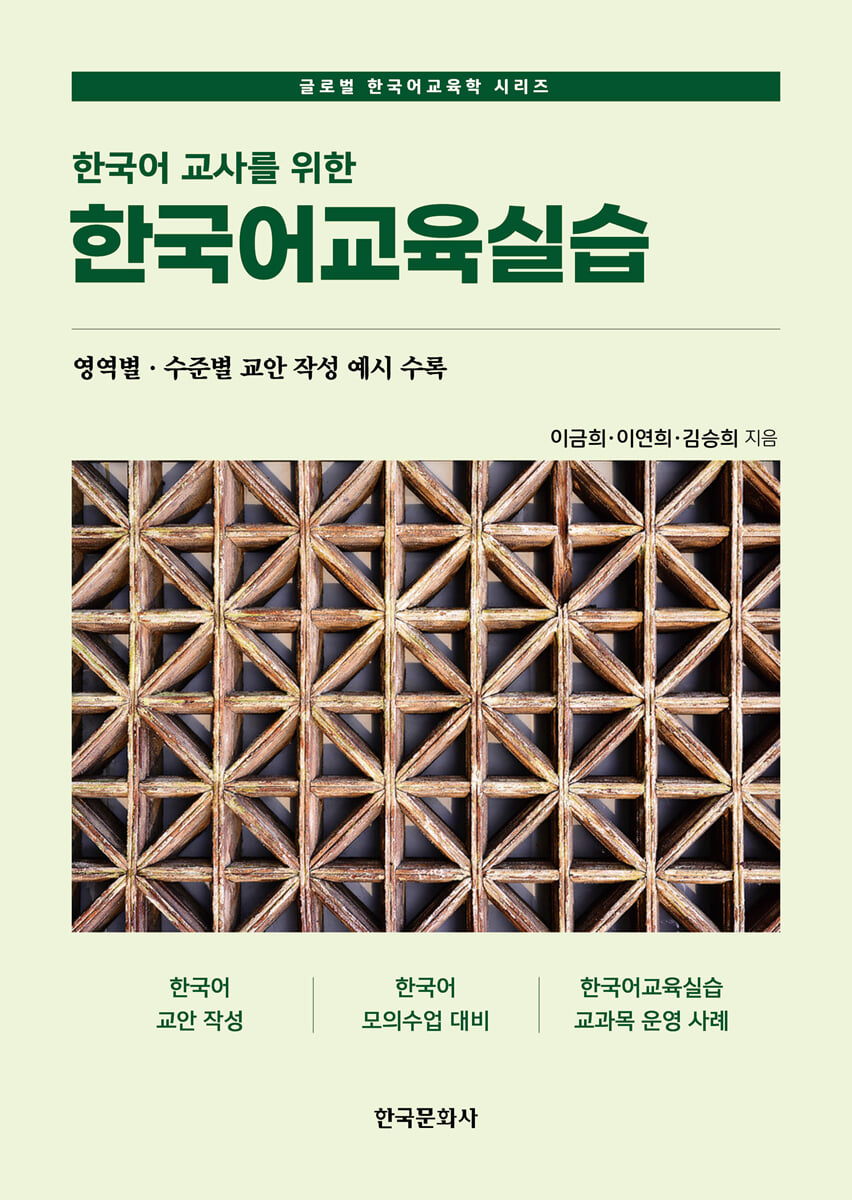
Korean Language Teaching Practical Training for Korean Language Teachers
 |
Description
Book Introduction
Those who wish to become Korean language teachers spend a long time studying and researching various fields of Korean language education theories, acquiring knowledge of Korean language, teaching theories, and teaching methods.
I picture myself meeting learners in the field soon and teaching them well.
This book is for prospective Korean language teachers who dream of such a wonderful dream and are taking the 'Korean Language Teaching Practice' course, which is a must-take course to obtain a Korean language teacher qualification. It is a book not only for the professors who run the course, but also for the learners who must take the 'Korean Language Teaching Practice' course to obtain a teacher qualification, and for all Korean language teachers who are concerned about how to apply educational theory to the educational field.
This book was written in accordance with the National Institute of the Korean Language's guidelines for the 'Korean Language Education Practice' curriculum, and is structured into three parts: 'Part 1: Overview of Korean Language Education Practice,' 'Part 2: Theory of Korean Language Education Practice,' and 'Part 3: Practice of Korean Language Education Practice.'
From understanding the subject of 'Korean Language Education Practice' to the educational principles and lesson plan writing methods required to actually teach learners in the field, and even the actual class itself, it covers everything so that even inexperienced teachers can sufficiently anticipate the educational field and design classes.
In particular, the lecture materials for content-based and functional classes on letters, vocabulary, grammar, speaking, listening, reading, and writing are divided into beginner, intermediate, and advanced levels, allowing students to understand the teaching content and methods appropriate for each level.
I picture myself meeting learners in the field soon and teaching them well.
This book is for prospective Korean language teachers who dream of such a wonderful dream and are taking the 'Korean Language Teaching Practice' course, which is a must-take course to obtain a Korean language teacher qualification. It is a book not only for the professors who run the course, but also for the learners who must take the 'Korean Language Teaching Practice' course to obtain a teacher qualification, and for all Korean language teachers who are concerned about how to apply educational theory to the educational field.
This book was written in accordance with the National Institute of the Korean Language's guidelines for the 'Korean Language Education Practice' curriculum, and is structured into three parts: 'Part 1: Overview of Korean Language Education Practice,' 'Part 2: Theory of Korean Language Education Practice,' and 'Part 3: Practice of Korean Language Education Practice.'
From understanding the subject of 'Korean Language Education Practice' to the educational principles and lesson plan writing methods required to actually teach learners in the field, and even the actual class itself, it covers everything so that even inexperienced teachers can sufficiently anticipate the educational field and design classes.
In particular, the lecture materials for content-based and functional classes on letters, vocabulary, grammar, speaking, listening, reading, and writing are divided into beginner, intermediate, and advanced levels, allowing students to understand the teaching content and methods appropriate for each level.
- You can preview some of the book's contents.
Preview
index
preface
Note
Part 1 - Overview of Korean Language Education Practice
Ⅰ.
Korean Language Education Practice Objectives and Structure
1.
outline
2.
target
3.
Operating Instructions
1) Criteria for course opening
2) Practical course composition and operation standards
Ⅱ.
Korean Language Curriculum and Instructional Design
1.
Understanding the Korean Language Curriculum
1) International Standard Korean Language Curriculum
2) Korean Standard Curriculum
3) Korean Language (KSL) curriculum
4) Sejong Institute Curriculum
2.
Understanding Instructional Design
Ⅲ.
Understanding class structure
1.
Korean language education institutions
1) Domestic Korean language education institutions
2) Overseas Korean language education institutions
2.
Korean language teacher
1) The concept of Korean language teachers
2) Qualifications of Korean language teachers
3) Qualifications of Korean language teachers
3.
Korean language learners
1) Categories of Korean language learners
2) Characteristics of Korean language learners
Part 2 - Korean Language Education Practice Theory
Ⅰ.
Principles of Korean language classes
1.
outline
2.
Principles of grade-based classes
3.
Principles of functional classes
Ⅱ.
Designing Korean Language Classes
1.
outline
2.
characteristic
3.
Class model
Ⅲ.
Writing lecture notes
1.
outline
2.
Principles and methods of writing lecture notes
3.
Procedure for writing lecture notes
4.
Points to note when writing lecture notes
5.
Actual lecture notes
1) Self-study lecture material
2) Beginner Grammar Lecture Notes
3) Intermediate Grammar Lecture Notes
4) Beginner Vocabulary Lecture Notes
5) Intermediate Vocabulary Lecture Notes
6) Beginner Listening Lecture Notes
7) Intermediate Speaking Lecture Notes
8) Intermediate Writing Lecture Notes
9) Advanced Reading Lecture Notes
Part 3 - Korean Language Education Practice
Ⅰ.
Lecture observation
1.
outline
2.
Operating Instructions
3.
category
1) Type
2) Pros and cons and precautions by type
4.
Lecture Observation Procedures
1) Before attending the lecture
2) Lecture observation
3) After observing the lecture
Ⅱ.
mock class
1.
outline
2.
category
1) Face-to-face mock classes
2) Non-face-to-face mock classes
3.
procedure
1) Before the mock class
2) Mock class
3) After the mock class
4.
Note
5.
Real-life examples of mock classes
Ⅲ.
Teaching practice
1.
outline
2.
category
1) Face-to-face teaching practice
2) Non-face-to-face lecture practice
3.
procedure
1) Before teaching practice
2) Teaching practice
3) After the teaching practice
4.
The reality of teaching practice
References
supplement
1) Reference site
2) Mock class form
3) Lecture observation and lecture practice forms
Note
Part 1 - Overview of Korean Language Education Practice
Ⅰ.
Korean Language Education Practice Objectives and Structure
1.
outline
2.
target
3.
Operating Instructions
1) Criteria for course opening
2) Practical course composition and operation standards
Ⅱ.
Korean Language Curriculum and Instructional Design
1.
Understanding the Korean Language Curriculum
1) International Standard Korean Language Curriculum
2) Korean Standard Curriculum
3) Korean Language (KSL) curriculum
4) Sejong Institute Curriculum
2.
Understanding Instructional Design
Ⅲ.
Understanding class structure
1.
Korean language education institutions
1) Domestic Korean language education institutions
2) Overseas Korean language education institutions
2.
Korean language teacher
1) The concept of Korean language teachers
2) Qualifications of Korean language teachers
3) Qualifications of Korean language teachers
3.
Korean language learners
1) Categories of Korean language learners
2) Characteristics of Korean language learners
Part 2 - Korean Language Education Practice Theory
Ⅰ.
Principles of Korean language classes
1.
outline
2.
Principles of grade-based classes
3.
Principles of functional classes
Ⅱ.
Designing Korean Language Classes
1.
outline
2.
characteristic
3.
Class model
Ⅲ.
Writing lecture notes
1.
outline
2.
Principles and methods of writing lecture notes
3.
Procedure for writing lecture notes
4.
Points to note when writing lecture notes
5.
Actual lecture notes
1) Self-study lecture material
2) Beginner Grammar Lecture Notes
3) Intermediate Grammar Lecture Notes
4) Beginner Vocabulary Lecture Notes
5) Intermediate Vocabulary Lecture Notes
6) Beginner Listening Lecture Notes
7) Intermediate Speaking Lecture Notes
8) Intermediate Writing Lecture Notes
9) Advanced Reading Lecture Notes
Part 3 - Korean Language Education Practice
Ⅰ.
Lecture observation
1.
outline
2.
Operating Instructions
3.
category
1) Type
2) Pros and cons and precautions by type
4.
Lecture Observation Procedures
1) Before attending the lecture
2) Lecture observation
3) After observing the lecture
Ⅱ.
mock class
1.
outline
2.
category
1) Face-to-face mock classes
2) Non-face-to-face mock classes
3.
procedure
1) Before the mock class
2) Mock class
3) After the mock class
4.
Note
5.
Real-life examples of mock classes
Ⅲ.
Teaching practice
1.
outline
2.
category
1) Face-to-face teaching practice
2) Non-face-to-face lecture practice
3.
procedure
1) Before teaching practice
2) Teaching practice
3) After the teaching practice
4.
The reality of teaching practice
References
supplement
1) Reference site
2) Mock class form
3) Lecture observation and lecture practice forms
Publisher's Review
1.
outline
Prospective Korean language teachers need to acquire Korean language pedagogical theory through the curriculum and, before entering the field, they need to go through a practice process where they can directly experience the educational field and conduct classes as if they were in an actual field.
In this respect, Korean language teaching practice provides aspiring Korean language teachers with an opportunity to apply the theories and practices of Korean language education previously learned at Korean language teacher training institutions such as universities and credit banks to the field and to self-evaluate themselves as prospective teachers.
Even if you have extensive knowledge of Korean language educational theory, if you don't understand the actual educational field, you will inevitably make many mistakes when you enter the field.
Therefore, it is essential to gain understanding and experience of the field before going into the educational field.
Korean language teaching practice is a required subject for institutions that train prospective Korean language teachers and is also a legally required area for obtaining a Korean language teacher certification.
In general, Korean language teaching practice refers to the entire process of observing Korean language education sites and practicing directly on site.
However, in the Korean language teacher certification acquisition requirements set forth in the National Language Basic Act, Korean language teaching practice refers to a subject that involves teaching practice such as actually teaching in a Korean language education setting or observing an educational setting.
According to Table 1, which lists the required credits and hours for each field required to obtain a Korean language teacher qualification, Korean language teaching practice falls under one of the five fields, and requires 3 (2) credits for undergraduate or graduate courses at universities and at least 20 hours for Korean language education training courses.
The Korean language teaching practice courses offered by each university, graduate school, and Korean language education training program are currently offered under various names, such as 'Korean Language Teaching Practice as a Foreign Language', 'Korean Language Education Observation and Mock Class', 'Korean Language Class Observation and Field Practice', 'Korean Language Class Observation and Teaching Practice', 'Mock Class', and 'Korean Language Lecture Observation and Practice'.
2.
target
The goal of Korean language teaching practice is to familiarize prospective Korean language teachers with the various educational principles learned at Korean language education training institutions through field experience.
It aims to provide various situations that may arise in the relationship between teachers and learners in the educational field and to develop the ability of prospective teachers to solve problems that arise in such situations.
Prospective teachers need not only to acquire theories about what and how to teach Korean language learners, but also to practice applying those theories in the field.
If this practice is not done, many difficulties may arise in the educational field.
When a teacher first steps into the classroom, he or she faces challenges such as how to explain educational content, how to conduct classes, and how to treat students.
Additionally, when teaching to actual learners, many unexpected situations arise that the teacher cannot anticipate.
In these situations, teachers must operate classes flexibly and lead students without difficulty.
To acquire these skills, you need time to experience the teaching methods of experienced Korean language teachers as an instructor, not as a learner.
In this way, the Korean language teaching practice aims to provide prospective teachers with preliminary experience in the educational field and thereby acquire the qualifications and capabilities to become teachers.
As we enter the 21st century, interest in the Korean language and culture is growing worldwide.
In this situation, the number of learners seeking to learn Korean is increasing explosively both domestically and internationally, and there is a lot of interest and demand for training Korean language teachers to teach them.
Korean language teachers must acquire a variety of theoretical knowledge about the Korean language and Korean language education, and must also possess the technical skills to effectively teach this knowledge to learners.
In this respect, training excellent Korean language teachers is not an easy task.
'Korean Language Education Practice' is a course that combines various courses taken at Korean language education training institutions and practices how to put the theoretical knowledge acquired into practice in actual educational settings.
It is also a subject that allows students to acquire not only Korean language teaching skills but also overall teaching skills such as classroom management.
Although there are already several textbooks on the market for teaching Korean language teaching practice, the reason I decided to write a similar book again is because, while running the Korean language teaching practice course for many years in the Department of Korean Language Education, I was concerned about what content prospective teachers need, what points they should focus on in teaching, and how to provide a more vivid understanding of the field.
What makes this textbook a little different from other textbooks is that it includes the characteristics of each Korean language education institution and the characteristics of learners, with the intention of helping prospective teachers understand the overall situation of Korean language education, and presents a variety of practical principles and lesson plans for Korean language classes by level and area.
The authors of this paper have over 20 years of experience in Korean language education, and have extensive experience in operating and teaching Korean language training institutions.
This textbook is a compilation of the various concerns and educational outcomes I experienced while teaching a Korean language education course in graduate school.
The publication of this textbook was the result of the hard work of many people. I would especially like to express my gratitude to the master's and doctoral students in the Department of Korean Language Education at Sungkyunkwan University who kindly allowed me to use their teaching materials and videos created in their Korean Language Education Practical Training course.
August 2024
All authors
outline
Prospective Korean language teachers need to acquire Korean language pedagogical theory through the curriculum and, before entering the field, they need to go through a practice process where they can directly experience the educational field and conduct classes as if they were in an actual field.
In this respect, Korean language teaching practice provides aspiring Korean language teachers with an opportunity to apply the theories and practices of Korean language education previously learned at Korean language teacher training institutions such as universities and credit banks to the field and to self-evaluate themselves as prospective teachers.
Even if you have extensive knowledge of Korean language educational theory, if you don't understand the actual educational field, you will inevitably make many mistakes when you enter the field.
Therefore, it is essential to gain understanding and experience of the field before going into the educational field.
Korean language teaching practice is a required subject for institutions that train prospective Korean language teachers and is also a legally required area for obtaining a Korean language teacher certification.
In general, Korean language teaching practice refers to the entire process of observing Korean language education sites and practicing directly on site.
However, in the Korean language teacher certification acquisition requirements set forth in the National Language Basic Act, Korean language teaching practice refers to a subject that involves teaching practice such as actually teaching in a Korean language education setting or observing an educational setting.
According to Table 1, which lists the required credits and hours for each field required to obtain a Korean language teacher qualification, Korean language teaching practice falls under one of the five fields, and requires 3 (2) credits for undergraduate or graduate courses at universities and at least 20 hours for Korean language education training courses.
The Korean language teaching practice courses offered by each university, graduate school, and Korean language education training program are currently offered under various names, such as 'Korean Language Teaching Practice as a Foreign Language', 'Korean Language Education Observation and Mock Class', 'Korean Language Class Observation and Field Practice', 'Korean Language Class Observation and Teaching Practice', 'Mock Class', and 'Korean Language Lecture Observation and Practice'.
2.
target
The goal of Korean language teaching practice is to familiarize prospective Korean language teachers with the various educational principles learned at Korean language education training institutions through field experience.
It aims to provide various situations that may arise in the relationship between teachers and learners in the educational field and to develop the ability of prospective teachers to solve problems that arise in such situations.
Prospective teachers need not only to acquire theories about what and how to teach Korean language learners, but also to practice applying those theories in the field.
If this practice is not done, many difficulties may arise in the educational field.
When a teacher first steps into the classroom, he or she faces challenges such as how to explain educational content, how to conduct classes, and how to treat students.
Additionally, when teaching to actual learners, many unexpected situations arise that the teacher cannot anticipate.
In these situations, teachers must operate classes flexibly and lead students without difficulty.
To acquire these skills, you need time to experience the teaching methods of experienced Korean language teachers as an instructor, not as a learner.
In this way, the Korean language teaching practice aims to provide prospective teachers with preliminary experience in the educational field and thereby acquire the qualifications and capabilities to become teachers.
As we enter the 21st century, interest in the Korean language and culture is growing worldwide.
In this situation, the number of learners seeking to learn Korean is increasing explosively both domestically and internationally, and there is a lot of interest and demand for training Korean language teachers to teach them.
Korean language teachers must acquire a variety of theoretical knowledge about the Korean language and Korean language education, and must also possess the technical skills to effectively teach this knowledge to learners.
In this respect, training excellent Korean language teachers is not an easy task.
'Korean Language Education Practice' is a course that combines various courses taken at Korean language education training institutions and practices how to put the theoretical knowledge acquired into practice in actual educational settings.
It is also a subject that allows students to acquire not only Korean language teaching skills but also overall teaching skills such as classroom management.
Although there are already several textbooks on the market for teaching Korean language teaching practice, the reason I decided to write a similar book again is because, while running the Korean language teaching practice course for many years in the Department of Korean Language Education, I was concerned about what content prospective teachers need, what points they should focus on in teaching, and how to provide a more vivid understanding of the field.
What makes this textbook a little different from other textbooks is that it includes the characteristics of each Korean language education institution and the characteristics of learners, with the intention of helping prospective teachers understand the overall situation of Korean language education, and presents a variety of practical principles and lesson plans for Korean language classes by level and area.
The authors of this paper have over 20 years of experience in Korean language education, and have extensive experience in operating and teaching Korean language training institutions.
This textbook is a compilation of the various concerns and educational outcomes I experienced while teaching a Korean language education course in graduate school.
The publication of this textbook was the result of the hard work of many people. I would especially like to express my gratitude to the master's and doctoral students in the Department of Korean Language Education at Sungkyunkwan University who kindly allowed me to use their teaching materials and videos created in their Korean Language Education Practical Training course.
August 2024
All authors
GOODS SPECIFICS
- Date of issue: August 25, 2024
- Page count, weight, size: 300 pages | 174*245*20mm
- ISBN13: 9791169192330
- ISBN10: 1169192335
You may also like
카테고리
korean


korean

![ELLE 엘르 스페셜 에디션 A형 : 12월 [2025]](http://librairie.coreenne.fr/cdn/shop/files/b8e27a3de6c9538896439686c6b0e8fb.jpg?v=1766436872&width=3840)


