

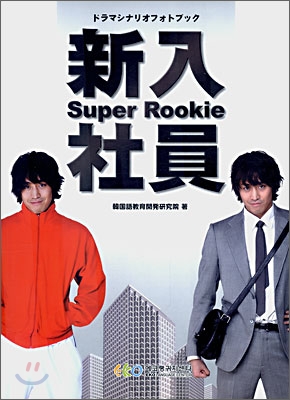
New Company Super Rookie
 |
Description
Book Introduction
"The New Employee," which aired in Korea in 2005, is a drama that shows the various aspects of young Koreans living in this era, such as social phenomena, family life, friendships, and love between men and women. Through the worries and thoughts of the main characters in this drama, as well as their various expressions and interesting speech patterns, it helps learn Korean and understand Korean culture.
Scenes from the drama are included in color, allowing you to learn living Korean while watching Korean dramas, and it is structured so that you can naturally learn vocabulary and expressions that appear in conversations.
Scenes from the drama are included in color, allowing you to learn living Korean while watching Korean dramas, and it is structured so that you can naturally learn vocabulary and expressions that appear in conversations.
index
まえがみ
The original book and the way
PART Ⅰ Basic knowledge theory
mother sound
合成母音
sound of original sound
sound
Korean language and sound development
Korean language
Korean language and anti-communist language
辭書の順序
PART Ⅱ ドラマ「New People Company」のご紹介
キャストの相關圖
スト-リ-
PART Ⅲ New People Company Member: Chapter 1 Talk and Chapter 20 Talk about it.
Episo-do 01 Hello?
Episo-do 02 How are you doing today?
Episodo 03 Unemployed Friends
Episo-do 04 I told you to just fall down, right?
カルチャ-チップ 01 Unemployed and unemployed
Episo-do 05 What does it matter?
Episo-do 06 Just enough to cool your head
Episo-do 07 You don't get what you sow
Episo-do 08 I'll buy you a drink later
カルチャ-チップ 02 Transportation
Episo-do 09 Ten Million Words
Episodo 10 So I got dumped by a man
Episode 11 I almost got fooled
Episo-do 12 I couldn't sleep a wink all night
カルチャ-チップ 03 New Employee Training
Episo-do 13 What did you smell?
Episodo 14 I'll take care of it
Episodo 15 Why are you touching my inferiority complex?
Episo-do 16 Just give me strength
カルチャ-チップ 04 Jajangmyeon and Eumsi Delivery Culture
Episo-do 17 I'm sorry for worrying you
エピソ-ド 18 I'm sorry
Episo-do 19 I guess I'm the type that's weak to the elements
Episodo 20 Hitting the weak point
カルチャ-チップ 05 Food stalls
Episodo 21 You're like this in everything
Episodo 22 That's not it
Episo-do 23 You won't believe it, but it's true
Episo-do 24 Don't let the water get cloudy, get out quickly
カルチャ-チップ 06 Ramen
Episo-do 25 Are you saying we should have a game?
Episodo 26 Isn't life like a blessing in disguise?
Episo-do 27 Now that I hear it, that's true
Episodo 28 Nayama Roll That's just my constitution
カルチャ-チップ 07 Company dinner culture
エピソ-ド 29 What kind of money is this?
Episo-do 30 End it today!
I heard you turned 31.
Episodo 32 You die and I die
カルチャ-チップ 08 Informal and polite speech
Episo-do 33 Can't you forgive me just this once?
Episo-do 34 It's been a bed of thorns all this time
Episodo 35 This Could Be a One-Of-A-Kind Opportunity
Episo-do 36 Even if I said that they make meju with red beans, I wouldn't believe it
カルチャ-チップ 09 Jjimjilbang
Episo-do 37 also saw and picked mulberries
エピソ-ド 38 I'll be thirty the day after tomorrow.
エピソ-ド 39 It’s quite the method.
Episodo 40 I had an eye for people
カルチャ-チップ 10 confrontation
PART Ⅳ 付錄
ドラマ「New People Company」の揷入曲:非飛
?譯
Korean language education and education system
エコランゲ-ジ-センタ-のKorean language study base and teaching materials
The original book and the way
PART Ⅰ Basic knowledge theory
mother sound
合成母音
sound of original sound
sound
Korean language and sound development
Korean language
Korean language and anti-communist language
辭書の順序
PART Ⅱ ドラマ「New People Company」のご紹介
キャストの相關圖
スト-リ-
PART Ⅲ New People Company Member: Chapter 1 Talk and Chapter 20 Talk about it.
Episo-do 01 Hello?
Episo-do 02 How are you doing today?
Episodo 03 Unemployed Friends
Episo-do 04 I told you to just fall down, right?
カルチャ-チップ 01 Unemployed and unemployed
Episo-do 05 What does it matter?
Episo-do 06 Just enough to cool your head
Episo-do 07 You don't get what you sow
Episo-do 08 I'll buy you a drink later
カルチャ-チップ 02 Transportation
Episo-do 09 Ten Million Words
Episodo 10 So I got dumped by a man
Episode 11 I almost got fooled
Episo-do 12 I couldn't sleep a wink all night
カルチャ-チップ 03 New Employee Training
Episo-do 13 What did you smell?
Episodo 14 I'll take care of it
Episodo 15 Why are you touching my inferiority complex?
Episo-do 16 Just give me strength
カルチャ-チップ 04 Jajangmyeon and Eumsi Delivery Culture
Episo-do 17 I'm sorry for worrying you
エピソ-ド 18 I'm sorry
Episo-do 19 I guess I'm the type that's weak to the elements
Episodo 20 Hitting the weak point
カルチャ-チップ 05 Food stalls
Episodo 21 You're like this in everything
Episodo 22 That's not it
Episo-do 23 You won't believe it, but it's true
Episo-do 24 Don't let the water get cloudy, get out quickly
カルチャ-チップ 06 Ramen
Episo-do 25 Are you saying we should have a game?
Episodo 26 Isn't life like a blessing in disguise?
Episo-do 27 Now that I hear it, that's true
Episodo 28 Nayama Roll That's just my constitution
カルチャ-チップ 07 Company dinner culture
エピソ-ド 29 What kind of money is this?
Episo-do 30 End it today!
I heard you turned 31.
Episodo 32 You die and I die
カルチャ-チップ 08 Informal and polite speech
Episo-do 33 Can't you forgive me just this once?
Episo-do 34 It's been a bed of thorns all this time
Episodo 35 This Could Be a One-Of-A-Kind Opportunity
Episo-do 36 Even if I said that they make meju with red beans, I wouldn't believe it
カルチャ-チップ 09 Jjimjilbang
Episo-do 37 also saw and picked mulberries
エピソ-ド 38 I'll be thirty the day after tomorrow.
エピソ-ド 39 It’s quite the method.
Episodo 40 I had an eye for people
カルチャ-チップ 10 confrontation
PART Ⅳ 付錄
ドラマ「New People Company」の揷入曲:非飛
?譯
Korean language education and education system
エコランゲ-ジ-センタ-のKorean language study base and teaching materials
Publisher's Review
Recently, as Korean dramas and movies have been gaining much attention in Japan, interest in the Korean language is also growing by the day.
Reflecting this high level of interest, books related to Korea are also pouring out.
In keeping with this trend, the Korean Language Education Development Institute has published "New Employee," a Korean language course taught through drama.
"New Employee," a Korean drama series, allows you to learn living Korean while watching Korean dramas, and is designed to help you naturally learn vocabulary and expressions that appear in conversations.
We also made it possible to learn Korean language and culture in a fun and relaxed way without being too formal.
Going forward, the Korean Language Education Development Institute plans to publish a series of Korean language study materials that can be learned through various Korean dramas and movies.
And I will do my best to pave the way so that interest in Korea can develop beyond a passing fad into a love and affection for Korea.
Composition of the textbook
Description of the situation: Describes the background or situation to help understand the scene.
Dialogue: We've selected dialogues that are important to the story development and also help you learn Korean expressions.
To accurately convey the meaning of the lines, a Japanese translation has been included.
Various expressions: Selected based on colloquial expressions frequently used by Koreans.
Idiomatic expressions, proverbs,
You can even learn expressions of the new generation in a fun way.
A word from Kangho: A collection of vivid expressions, vivid expressions, and expressions that can be applied directly to daily life.
We've made it possible to use natural Korean.
Korean Culture: Introducing current Korean social phenomena and culture as depicted in dramas.
Regarding the use of textbooks
One class can last about two hours (100 minutes), and the levels range from beginner to advanced.
This allows teachers to adjust lessons to suit the level of each student.
- First, watch the relevant part of the drama.
Watch the scene for about 15 minutes, connecting the parts before and after.
- Summarize the entire content of the drama you watched and guess the parts that come before and after it.
- While reading the dialogue in the textbook, explain the situation and meaning.
The teacher may also provide supplementary explanations of grammatical aspects appropriate to each stage.
- Once you understand the entire content, focus on studying ‘Various Expressions’ and ‘A Word from the Strongest Man.’
We will learn 'Various Expressions' and 'A Word from the Strongest' with a focus on understanding their meaning and find out if there are similar expressions in Japanese.
Focus on what meaning it has and in what context it is used.
In advanced classes, you can also use expressions you've learned in newspaper articles or other dramas as supplementary material.
- Let's read the conversation again.
Have students read with emotion, and have them imitate the intonation and pronunciation while watching the drama.
Memorize your lines and act them out as if they were real.
- For homework, write a short essay using the Korean expressions you learned in ‘Various Expressions’ and ‘A Word from Kangho.’
Or have them create a conversation using the expressions they have learned.
- ‘Korean culture’ places importance on conveying content.
First, the teacher uses the pictures in the textbook or pictures prepared in advance to have students guess what the picture is and what it means.
Based on the learners' guesses, the teacher conveys the overall cultural content.
For intermediate and advanced students, have them read other materials in Korean and discuss cultural differences compared to Japanese.
As homework, you could have students write about the differences or similarities between the two cultures.
- After learning about the heat and degree, you can review by giving pictures of several scenes and choosing the most impressive scenes and creating a conversation using the expressions you learned.
Reflecting this high level of interest, books related to Korea are also pouring out.
In keeping with this trend, the Korean Language Education Development Institute has published "New Employee," a Korean language course taught through drama.
"New Employee," a Korean drama series, allows you to learn living Korean while watching Korean dramas, and is designed to help you naturally learn vocabulary and expressions that appear in conversations.
We also made it possible to learn Korean language and culture in a fun and relaxed way without being too formal.
Going forward, the Korean Language Education Development Institute plans to publish a series of Korean language study materials that can be learned through various Korean dramas and movies.
And I will do my best to pave the way so that interest in Korea can develop beyond a passing fad into a love and affection for Korea.
Composition of the textbook
Description of the situation: Describes the background or situation to help understand the scene.
Dialogue: We've selected dialogues that are important to the story development and also help you learn Korean expressions.
To accurately convey the meaning of the lines, a Japanese translation has been included.
Various expressions: Selected based on colloquial expressions frequently used by Koreans.
Idiomatic expressions, proverbs,
You can even learn expressions of the new generation in a fun way.
A word from Kangho: A collection of vivid expressions, vivid expressions, and expressions that can be applied directly to daily life.
We've made it possible to use natural Korean.
Korean Culture: Introducing current Korean social phenomena and culture as depicted in dramas.
Regarding the use of textbooks
One class can last about two hours (100 minutes), and the levels range from beginner to advanced.
This allows teachers to adjust lessons to suit the level of each student.
- First, watch the relevant part of the drama.
Watch the scene for about 15 minutes, connecting the parts before and after.
- Summarize the entire content of the drama you watched and guess the parts that come before and after it.
- While reading the dialogue in the textbook, explain the situation and meaning.
The teacher may also provide supplementary explanations of grammatical aspects appropriate to each stage.
- Once you understand the entire content, focus on studying ‘Various Expressions’ and ‘A Word from the Strongest Man.’
We will learn 'Various Expressions' and 'A Word from the Strongest' with a focus on understanding their meaning and find out if there are similar expressions in Japanese.
Focus on what meaning it has and in what context it is used.
In advanced classes, you can also use expressions you've learned in newspaper articles or other dramas as supplementary material.
- Let's read the conversation again.
Have students read with emotion, and have them imitate the intonation and pronunciation while watching the drama.
Memorize your lines and act them out as if they were real.
- For homework, write a short essay using the Korean expressions you learned in ‘Various Expressions’ and ‘A Word from Kangho.’
Or have them create a conversation using the expressions they have learned.
- ‘Korean culture’ places importance on conveying content.
First, the teacher uses the pictures in the textbook or pictures prepared in advance to have students guess what the picture is and what it means.
Based on the learners' guesses, the teacher conveys the overall cultural content.
For intermediate and advanced students, have them read other materials in Korean and discuss cultural differences compared to Japanese.
As homework, you could have students write about the differences or similarities between the two cultures.
- After learning about the heat and degree, you can review by giving pictures of several scenes and choosing the most impressive scenes and creating a conversation using the expressions you learned.
GOODS SPECIFICS
- Date of issue: December 28, 2006
- Page count, weight, size: 185 pages | 520g | Checking size
- ISBN13: 9788991869301
- ISBN10: 8991869300
You may also like
카테고리
korean


korean

![ELLE 엘르 스페셜 에디션 A형 : 12월 [2025]](http://librairie.coreenne.fr/cdn/shop/files/b8e27a3de6c9538896439686c6b0e8fb.jpg?v=1766436872&width=3840)


