

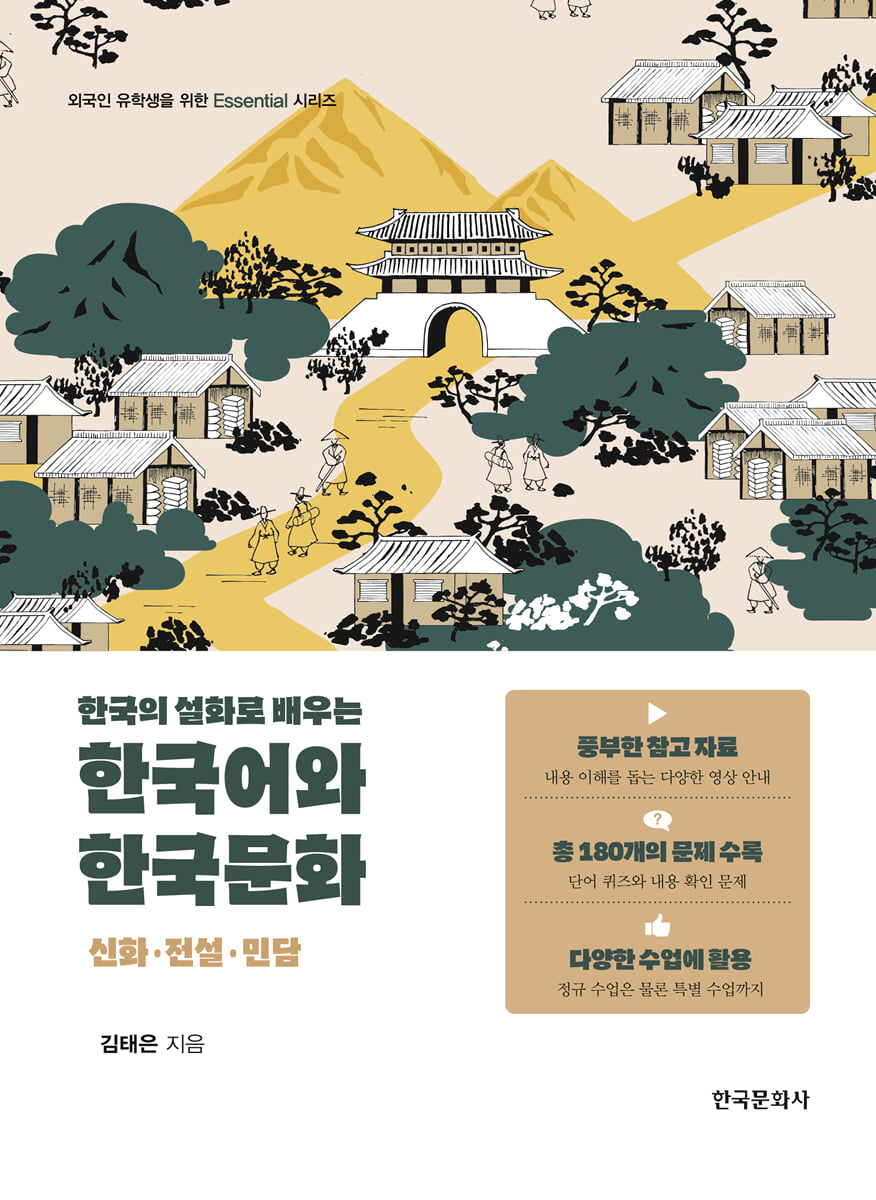
Learning Korean and Culture through Korean Tales - Myths, Legends, and Folktales
 |
Description
Book Introduction
This textbook is designed to be used in 15-week regular undergraduate and graduate school classes, irregular classes at Korean language institutes for intermediate and higher level international students, and special classes at family centers and migrant worker centers. The content is organized in an easy-to-understand manner based on a variety of topics.
We also provide various videos that can be referenced to help Korean learners understand the content.
This textbook presents the stories in the order of 'myths, legends, and folktales,' but it is also acceptable to begin with folktales, which are based on plots and themes widely distributed around the world, and then proceed to legends and then myths.
Additionally, if after-class activities are focused on comparing stories and cultures from the learners' home countries through learner-centered speaking and presentation classes, more active participation can be encouraged.
We also provide various videos that can be referenced to help Korean learners understand the content.
This textbook presents the stories in the order of 'myths, legends, and folktales,' but it is also acceptable to begin with folktales, which are based on plots and themes widely distributed around the world, and then proceed to legends and then myths.
Additionally, if after-class activities are focused on comparing stories and cultures from the learners' home countries through learner-centered speaking and presentation classes, more active participation can be encouraged.
- You can preview some of the book's contents.
Preview
index
preface
How to use this book
I.
myth
Lesson 1: The Dangun Myth
Lesson 2: The Jumong Myth
Lesson 3: The God of Fate, Baby Gam Eun-jang
Lesson 4: Baridegi, the God of the Underworld
II.
legend
Lesson 5 The King's Ears Are Donkey Ears
Lesson 6 Yeonorang and Seonyeo
Lesson 7: Fool Ondal
Lesson 8: Asadal and Asanyeo
Lesson 9: The Mother Who Became a Dog
III.
folk tales
Top 10 Rabbit Match
Lesson 11: Heungbu and Nolbu
Episode 12: The Cowherd and the Weaver Girl
Lesson 13: The Brothers Who Became the Sun and the Moon
Lesson 14: Sad Grandmother's Flower
The Man Who Became a Cow
Round of 16: Old Man with a Hunchback
Lesson 17: The Fairy and the Woodcutter
Round of 18: The Great Snail
Lesson 19: The Tiger Who Became a Filial Son
20th class Baby General Uturi
Correct answer
References
How to use this book
I.
myth
Lesson 1: The Dangun Myth
Lesson 2: The Jumong Myth
Lesson 3: The God of Fate, Baby Gam Eun-jang
Lesson 4: Baridegi, the God of the Underworld
II.
legend
Lesson 5 The King's Ears Are Donkey Ears
Lesson 6 Yeonorang and Seonyeo
Lesson 7: Fool Ondal
Lesson 8: Asadal and Asanyeo
Lesson 9: The Mother Who Became a Dog
III.
folk tales
Top 10 Rabbit Match
Lesson 11: Heungbu and Nolbu
Episode 12: The Cowherd and the Weaver Girl
Lesson 13: The Brothers Who Became the Sun and the Moon
Lesson 14: Sad Grandmother's Flower
The Man Who Became a Cow
Round of 16: Old Man with a Hunchback
Lesson 17: The Fairy and the Woodcutter
Round of 18: The Great Snail
Lesson 19: The Tiger Who Became a Filial Son
20th class Baby General Uturi
Correct answer
References
Into the book
Lesson 17: The Fairy and the Woodcutter
Learning Objectives
1.
You can think about how the deer repaid the woodcutter's kindness in 'The Fairy and the Woodcutter' and express your opinion on this.
2.
After reading 'The Fairy and the Woodcutter', you can think about whether there are parts that can be interpreted differently due to changes in the times, and present your findings.
Open your mind
1.
Let's read the title and imagine what the story is about.
2.
Do you have any folk tales from your country featuring "fairies" and "beauties"? Let's read them and compare them to the story of "The Fairy and the Woodcutter."
Read and understand
Once upon a time, there lived a hardworking woodcutter.
The woodcutter was working hard cutting down trees in the mountain that day too.
But suddenly a deer that had been being chased by a hunter came running.
“Lumberjack, please save me.
The hunter is chasing.
“Please hide me.”
The woodcutter hid the deer behind a tree.
Then, just as the deer said, the hunter came running and asked the woodcutter.
“Has a deer come here?”
The woodcutter answered.
“Oh, a deer? It went over there.”
The woodcutter lied to the hunter by pointing his finger in the opposite direction where the deer was hiding.
Thanks to the woodcutter, the deer was not caught by the hunter.
The deer said to the woodcutter.
“Thank you so much, Woodcutter.
I want to repay you for your kindness.
As the moon grows larger, beautiful fairies will descend from the sky to the pond to bathe.
The woodcutter hides one of the wings that the fairies have taken off while they are bathing.
And marry a fairy who cannot ascend to heaven and live happily ever after.
But no matter how sad the fairy is, never give her the winged robe until the child turns three.”
The woodcutter, who had not been able to get married until then, could not believe what the deer said and said '㉡'. Then, on a day when the moon grew big, he hid behind a rock and waited for night to come.
But what was going on? The story the deer told was true.
The woodcutter crept over and stole one of the fairy's wings.
As dawn broke, the fairies finished bathing and began to dress.
But one of the fairies had no clothes and could not ascend to heaven.
The woodcutter did as the deer told him and brought the fairy home and married her.
As time passed, the fairy and the woodcutter had two sons.
The woodcutter was still not rich, but he had more days to smile as he raised children with his wife.
But the fairy began to miss her heavenly family more and more often.
“I miss my parents and sisters in heaven so much.
“My family will be so happy when they see the children I gave birth to….”
The woodcutter felt heartbroken when he saw the fairy sobbing.
'Yeah, I can imagine how worried my wife's family must be.
'Now that I have two children, I think it's okay to tell her.' Thinking this, the woodcutter told the story of how he stole the fairy's clothes and gave her the winged clothes.
“I hope you find some comfort in looking at these clothes.
Now let's live happily together here."
But the next day, when the woodcutter returned home in the evening after chopping wood, there was no one at home.
The fairy wore wings and took all the children to heaven.
The woodcutter was very sad.
I couldn't stand to see my wife and children.
There were many days when I went up the mountain and just looked at the sky without doing anything, and then came back home.
But the deer from before appeared in the woodcutter's dream and said:
“Lumberjack, I told you not to give the fairy the winged clothes until she had three children. Why did you do that?” After the woodcutter stole the fairy’s clothes, the fairies are now afraid and won’t come down to earth.
But let's lower the basket into the pond.
When the moon grows bigger again, the woodcutter hides well near the pond and gets into the basket.
Then you will be able to ascend to heaven.”
The woodcutter did as the deer told him, hid at night when the moon was full and climbed into the basket.
The basket rose into the sky, and the woodcutter was able to meet his wife and children there.
“Dad! I really missed you.”
“Honey! I missed you too!”
The woodcutter was reunited with his wife and children and lived happily ever after in heaven.
Words and expressions
Complete the sentences by inserting the appropriate word into the parentheses.
1.
My brother gave me money ( ) from his pants pocket.
2.
( ) of course you will be punished for stealing someone else's stuff.
3.
There are many different kinds of fish living in our school ( ).
Check the contents
1.
Why did the woodcutter steal the fairy's clothes?
① To take a bath in the pond
② I thought I would become rich if I sold the wing clothes.
activity
In the past, lumberjack behavior was not considered a problem, but in modern society it can be a serious crime.
Let's find the problematic part of the woodcutter's behavior.
Organize
1.
This story is about a deer that received help from a woodcutter and wanted to repay the favor.
2.
Things that were possible in the past may become crimes in modern society.
We need to think about the changes in perception that can change over time.
Learning Objectives
1.
You can think about how the deer repaid the woodcutter's kindness in 'The Fairy and the Woodcutter' and express your opinion on this.
2.
After reading 'The Fairy and the Woodcutter', you can think about whether there are parts that can be interpreted differently due to changes in the times, and present your findings.
Open your mind
1.
Let's read the title and imagine what the story is about.
2.
Do you have any folk tales from your country featuring "fairies" and "beauties"? Let's read them and compare them to the story of "The Fairy and the Woodcutter."
Read and understand
Once upon a time, there lived a hardworking woodcutter.
The woodcutter was working hard cutting down trees in the mountain that day too.
But suddenly a deer that had been being chased by a hunter came running.
“Lumberjack, please save me.
The hunter is chasing.
“Please hide me.”
The woodcutter hid the deer behind a tree.
Then, just as the deer said, the hunter came running and asked the woodcutter.
“Has a deer come here?”
The woodcutter answered.
“Oh, a deer? It went over there.”
The woodcutter lied to the hunter by pointing his finger in the opposite direction where the deer was hiding.
Thanks to the woodcutter, the deer was not caught by the hunter.
The deer said to the woodcutter.
“Thank you so much, Woodcutter.
I want to repay you for your kindness.
As the moon grows larger, beautiful fairies will descend from the sky to the pond to bathe.
The woodcutter hides one of the wings that the fairies have taken off while they are bathing.
And marry a fairy who cannot ascend to heaven and live happily ever after.
But no matter how sad the fairy is, never give her the winged robe until the child turns three.”
The woodcutter, who had not been able to get married until then, could not believe what the deer said and said '㉡'. Then, on a day when the moon grew big, he hid behind a rock and waited for night to come.
But what was going on? The story the deer told was true.
The woodcutter crept over and stole one of the fairy's wings.
As dawn broke, the fairies finished bathing and began to dress.
But one of the fairies had no clothes and could not ascend to heaven.
The woodcutter did as the deer told him and brought the fairy home and married her.
As time passed, the fairy and the woodcutter had two sons.
The woodcutter was still not rich, but he had more days to smile as he raised children with his wife.
But the fairy began to miss her heavenly family more and more often.
“I miss my parents and sisters in heaven so much.
“My family will be so happy when they see the children I gave birth to….”
The woodcutter felt heartbroken when he saw the fairy sobbing.
'Yeah, I can imagine how worried my wife's family must be.
'Now that I have two children, I think it's okay to tell her.' Thinking this, the woodcutter told the story of how he stole the fairy's clothes and gave her the winged clothes.
“I hope you find some comfort in looking at these clothes.
Now let's live happily together here."
But the next day, when the woodcutter returned home in the evening after chopping wood, there was no one at home.
The fairy wore wings and took all the children to heaven.
The woodcutter was very sad.
I couldn't stand to see my wife and children.
There were many days when I went up the mountain and just looked at the sky without doing anything, and then came back home.
But the deer from before appeared in the woodcutter's dream and said:
“Lumberjack, I told you not to give the fairy the winged clothes until she had three children. Why did you do that?” After the woodcutter stole the fairy’s clothes, the fairies are now afraid and won’t come down to earth.
But let's lower the basket into the pond.
When the moon grows bigger again, the woodcutter hides well near the pond and gets into the basket.
Then you will be able to ascend to heaven.”
The woodcutter did as the deer told him, hid at night when the moon was full and climbed into the basket.
The basket rose into the sky, and the woodcutter was able to meet his wife and children there.
“Dad! I really missed you.”
“Honey! I missed you too!”
The woodcutter was reunited with his wife and children and lived happily ever after in heaven.
Words and expressions
Complete the sentences by inserting the appropriate word into the parentheses.
1.
My brother gave me money ( ) from his pants pocket.
2.
( ) of course you will be punished for stealing someone else's stuff.
3.
There are many different kinds of fish living in our school ( ).
Check the contents
1.
Why did the woodcutter steal the fairy's clothes?
① To take a bath in the pond
② I thought I would become rich if I sold the wing clothes.
activity
In the past, lumberjack behavior was not considered a problem, but in modern society it can be a serious crime.
Let's find the problematic part of the woodcutter's behavior.
Organize
1.
This story is about a deer that received help from a woodcutter and wanted to repay the favor.
2.
Things that were possible in the past may become crimes in modern society.
We need to think about the changes in perception that can change over time.
--- From the text
Publisher's Review
Rich reference material
Various video guides to help you understand the content
A total of 180 problems are included.
Word quizzes and content review questions
Use in various classes
From regular classes to special classes
Who would benefit from reading this book?
Intermediate and higher level learners at the Korean Language Institute
International students currently enrolled in undergraduate or graduate school
Married immigrants and foreign workers who want to read old stories with their children
preface
Education on the Korean language and culture based on folktales has been consistently researched and published as its value and usefulness have been proven.
However, because the tale itself contained unfamiliar and difficult words and expressions, it was not easy for Korean language learners to approach it.
Also, from the instructor's perspective, it was inevitable that a lot of time would be spent preparing materials to make classes easy and interesting.
This textbook is designed to be used in 15-week regular undergraduate and graduate school classes, irregular classes at Korean language institutes for intermediate and higher level international students, and special classes at family centers and migrant worker centers. The content is organized in an easy-to-understand manner based on a variety of topics.
We also provide various videos that can be referenced to help Korean learners understand the content.
This textbook presents the stories in the order of 'myths, legends, and folktales,' but it is also acceptable to begin with folktales, which are based on plots and themes widely distributed around the world, and then proceed to legends and then myths.
Additionally, if after-class activities are focused on comparing stories and cultures from the learners' home countries through learner-centered speaking and presentation classes, more active participation can be encouraged.
I hope this textbook will be useful in Korean language education settings, and I would like to express my gratitude to Director Jo Jeong-heum, Assistant Manager Jin Na-gyeong, and Supervisor Kim Mo-ryeong for their assistance in publishing it, as well as to Teacher Kim Young-ji for her proofreading.
2023.
01.
06.
Author Kim Tae-eun
Various video guides to help you understand the content
A total of 180 problems are included.
Word quizzes and content review questions
Use in various classes
From regular classes to special classes
Who would benefit from reading this book?
Intermediate and higher level learners at the Korean Language Institute
International students currently enrolled in undergraduate or graduate school
Married immigrants and foreign workers who want to read old stories with their children
preface
Education on the Korean language and culture based on folktales has been consistently researched and published as its value and usefulness have been proven.
However, because the tale itself contained unfamiliar and difficult words and expressions, it was not easy for Korean language learners to approach it.
Also, from the instructor's perspective, it was inevitable that a lot of time would be spent preparing materials to make classes easy and interesting.
This textbook is designed to be used in 15-week regular undergraduate and graduate school classes, irregular classes at Korean language institutes for intermediate and higher level international students, and special classes at family centers and migrant worker centers. The content is organized in an easy-to-understand manner based on a variety of topics.
We also provide various videos that can be referenced to help Korean learners understand the content.
This textbook presents the stories in the order of 'myths, legends, and folktales,' but it is also acceptable to begin with folktales, which are based on plots and themes widely distributed around the world, and then proceed to legends and then myths.
Additionally, if after-class activities are focused on comparing stories and cultures from the learners' home countries through learner-centered speaking and presentation classes, more active participation can be encouraged.
I hope this textbook will be useful in Korean language education settings, and I would like to express my gratitude to Director Jo Jeong-heum, Assistant Manager Jin Na-gyeong, and Supervisor Kim Mo-ryeong for their assistance in publishing it, as well as to Teacher Kim Young-ji for her proofreading.
2023.
01.
06.
Author Kim Tae-eun
GOODS SPECIFICS
- Date of issue: February 28, 2023
- Page count, weight, size: 152 pages | 190*260*20mm
- ISBN13: 9791169190923
- ISBN10: 1169190928
You may also like
카테고리
korean


korean

![ELLE 엘르 스페셜 에디션 A형 : 12월 [2025]](http://librairie.coreenne.fr/cdn/shop/files/b8e27a3de6c9538896439686c6b0e8fb.jpg?v=1766436872&width=3840)


