

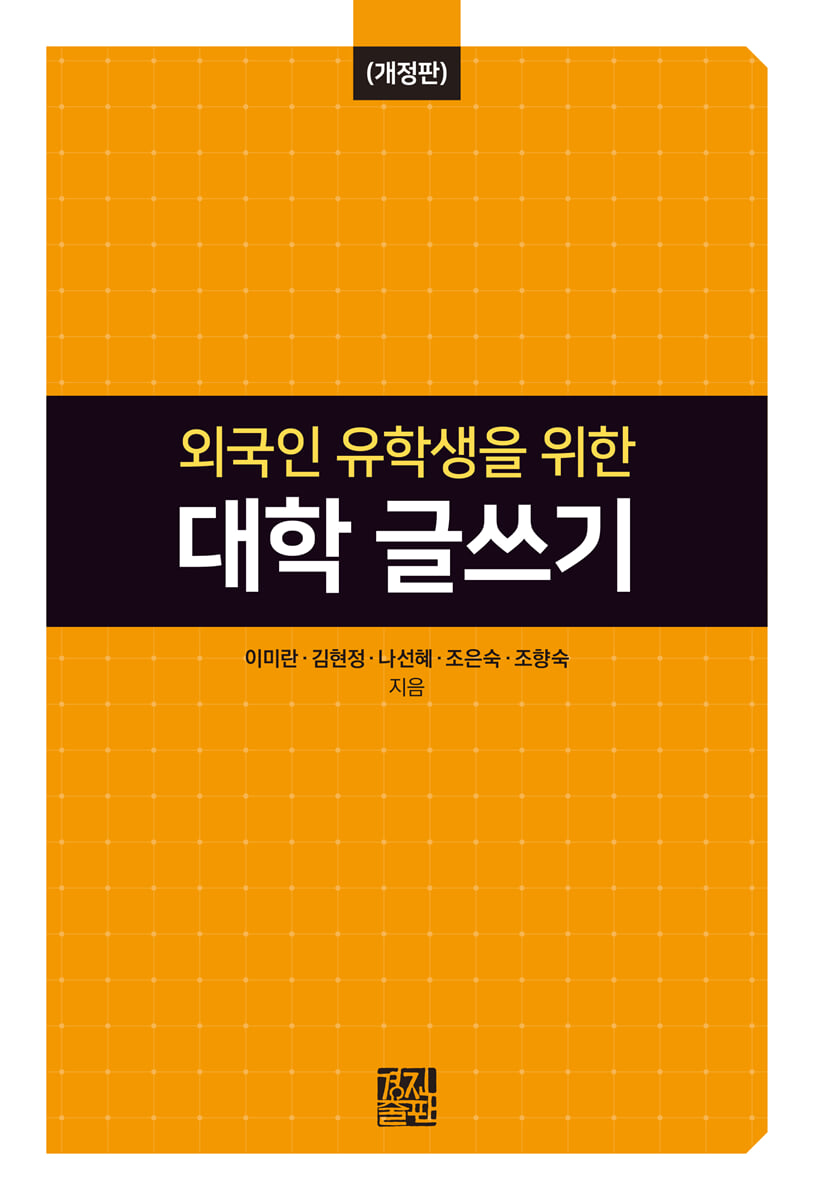
College Writing for International Students
 |
Description
Book Introduction
A writing textbook to provide practical assistance to international students.
This book was designed to directly assist international students with the writing skills necessary for their university life in Korea.
Although many Korean writing books for foreigners have been developed to date, most of them are closer to Korean grammar books, focus on providing examples of writing, or are more like study guides for the Korean Language Proficiency Test, making it difficult for international students to receive practical help with the writing skills necessary for university life.
This book sets the writing level for international students attending university and focuses on solving the problems they face in Korean writing, especially in report writing.
It also explains the format and rules of the Korean language, focusing on grammar that foreigners can easily confuse. It also shows the process of composing paragraphs and completing a piece of writing in a structural manner, making it more accessible to the writing required at university.
This book was designed to directly assist international students with the writing skills necessary for their university life in Korea.
Although many Korean writing books for foreigners have been developed to date, most of them are closer to Korean grammar books, focus on providing examples of writing, or are more like study guides for the Korean Language Proficiency Test, making it difficult for international students to receive practical help with the writing skills necessary for university life.
This book sets the writing level for international students attending university and focuses on solving the problems they face in Korean writing, especially in report writing.
It also explains the format and rules of the Korean language, focusing on grammar that foreigners can easily confuse. It also shows the process of composing paragraphs and completing a piece of writing in a structural manner, making it more accessible to the writing required at university.
- You can preview some of the book's contents.
Preview
index
Part 1: Understanding Korean Sentences
Chapter 1: Understanding and Writing Sentences Correctly
1.
Characteristics of Korean sentences
2.
Understand the sentence correctly
Chapter 2 Sentence Expansion
1.
The sentence that hugs and the sentence that hugs
2.
Connected sentences
3.
Expression of tense in sentence expansion
Write a paragraph in Chapter 3
1.
Things to keep in mind when writing a central sentence
2.
Things to keep in mind when writing supporting sentences
3.
The process of writing a paragraph
4.
Paragraph organization based on the location of the main content
5.
Write a paragraph
Part 2: How to Write
Chapter 1: Compare and Contrast
1.
What is compare and contrast?
2.
Reading examples using comparison and contrast
3.
Writing Using Comparison and Contrast
Chapter 2 Classification and Analysis
1.
What is classification and analysis?
2.
Reading examples using classification and analysis
3.
Writing Using Classification and Analysis
Chapter 3 Description and Narrative
1.
What are description and narrative?
2.
Reading examples using description and narrative
3.
Writing using description and narrative
Chapter 4 Definition
1.
What is justice?
2.
Read examples using the definition
3.
Writing using definitions
Part 3 Types of Writing
Chapter 1: Writing an outline and structure for the text
1.
Structure of the text
2.
Write an outline
Chapter 2: Argumentative Writing
1.
What is a claim?
2.
Constructing an Argument
3.
Argumentative writing
Chapter 3: Writing a Review
1.
What is a review?
2.
Composing an essay
3.
Write a review
Chapter 4: Writing a Critical Essay
1.
What is a critical essay?
2.
Composing a Critical Essay
3.
Writing a critique
Chapter 5: Writing a Self-Introduction
1.
What is a self-introduction?
2.
Composing a Self-Introduction
3.
Writing a self-introduction
supplement
Chapter 1: Notes on Writing a Report
1.
Report Writing Ethics
2.
Correct citation and citation methods
3.
How to cite sources
4.
Things to keep in mind when collecting data
Chapter 2: Precautions for Writing Answers to the Korean Language Proficiency Test
1.
Purpose and Evaluation Areas of the Test of Proficiency in Korean
2.
Writing section of the Test of Proficiency in Korean II
Chapter 1: Understanding and Writing Sentences Correctly
1.
Characteristics of Korean sentences
2.
Understand the sentence correctly
Chapter 2 Sentence Expansion
1.
The sentence that hugs and the sentence that hugs
2.
Connected sentences
3.
Expression of tense in sentence expansion
Write a paragraph in Chapter 3
1.
Things to keep in mind when writing a central sentence
2.
Things to keep in mind when writing supporting sentences
3.
The process of writing a paragraph
4.
Paragraph organization based on the location of the main content
5.
Write a paragraph
Part 2: How to Write
Chapter 1: Compare and Contrast
1.
What is compare and contrast?
2.
Reading examples using comparison and contrast
3.
Writing Using Comparison and Contrast
Chapter 2 Classification and Analysis
1.
What is classification and analysis?
2.
Reading examples using classification and analysis
3.
Writing Using Classification and Analysis
Chapter 3 Description and Narrative
1.
What are description and narrative?
2.
Reading examples using description and narrative
3.
Writing using description and narrative
Chapter 4 Definition
1.
What is justice?
2.
Read examples using the definition
3.
Writing using definitions
Part 3 Types of Writing
Chapter 1: Writing an outline and structure for the text
1.
Structure of the text
2.
Write an outline
Chapter 2: Argumentative Writing
1.
What is a claim?
2.
Constructing an Argument
3.
Argumentative writing
Chapter 3: Writing a Review
1.
What is a review?
2.
Composing an essay
3.
Write a review
Chapter 4: Writing a Critical Essay
1.
What is a critical essay?
2.
Composing a Critical Essay
3.
Writing a critique
Chapter 5: Writing a Self-Introduction
1.
What is a self-introduction?
2.
Composing a Self-Introduction
3.
Writing a self-introduction
supplement
Chapter 1: Notes on Writing a Report
1.
Report Writing Ethics
2.
Correct citation and citation methods
3.
How to cite sources
4.
Things to keep in mind when collecting data
Chapter 2: Precautions for Writing Answers to the Korean Language Proficiency Test
1.
Purpose and Evaluation Areas of the Test of Proficiency in Korean
2.
Writing section of the Test of Proficiency in Korean II
Publisher's Review
In Part 1 [Understanding Korean Sentences], the characteristics of Korean sentences are explained in an easy-to-understand manner to help you write Korean sentences correctly.
And I expanded these sentences to make them into one-paragraph pieces.
Part 2 [Writing Methods] is designed to help students learn writing techniques commonly used in reports, such as 'comparison and contrast,' 'classification and analysis,' 'description and narrative,' and 'definition.' It also includes examples that will help foreign students understand Korean culture or introduce their own culture to Korean students.
Part 3 [Types of Writing] first explains how to structure an essay by writing an outline, and then explains the most frequently requested writing methods in college, such as argumentative essays, essays, critiques, and self-introductions, with specific examples so that international students can easily understand them.
And in Appendix Chapter 1, we provide detailed guidance on what to keep in mind when writing a report, especially writing ethics and how to collect and cite reference materials. Chapter 2 explains the types of questions that appear in the Korean Language Proficiency Test writing section, such as ‘Completing a practical sentence, completing a short essay, explaining research results, and writing your own thoughts,’ and provides guidance on what to focus on when writing an answer.
I hope that through this book, international students will receive practical help in the writing activities required for university life and will also experience improvements in their Korean writing skills.
And I expanded these sentences to make them into one-paragraph pieces.
Part 2 [Writing Methods] is designed to help students learn writing techniques commonly used in reports, such as 'comparison and contrast,' 'classification and analysis,' 'description and narrative,' and 'definition.' It also includes examples that will help foreign students understand Korean culture or introduce their own culture to Korean students.
Part 3 [Types of Writing] first explains how to structure an essay by writing an outline, and then explains the most frequently requested writing methods in college, such as argumentative essays, essays, critiques, and self-introductions, with specific examples so that international students can easily understand them.
And in Appendix Chapter 1, we provide detailed guidance on what to keep in mind when writing a report, especially writing ethics and how to collect and cite reference materials. Chapter 2 explains the types of questions that appear in the Korean Language Proficiency Test writing section, such as ‘Completing a practical sentence, completing a short essay, explaining research results, and writing your own thoughts,’ and provides guidance on what to focus on when writing an answer.
I hope that through this book, international students will receive practical help in the writing activities required for university life and will also experience improvements in their Korean writing skills.
GOODS SPECIFICS
- Publication date: February 25, 2021
- Page count, weight, size: 232 pages | 436g | 153*224*14mm
- ISBN13: 9788959967957
- ISBN10: 8959967955
You may also like
카테고리
korean


korean

![ELLE 엘르 스페셜 에디션 A형 : 12월 [2025]](http://librairie.coreenne.fr/cdn/shop/files/b8e27a3de6c9538896439686c6b0e8fb.jpg?v=1766436872&width=3840)


