

Understanding Errors Made by Second Language Korean Learners
 |
Description
Book Introduction
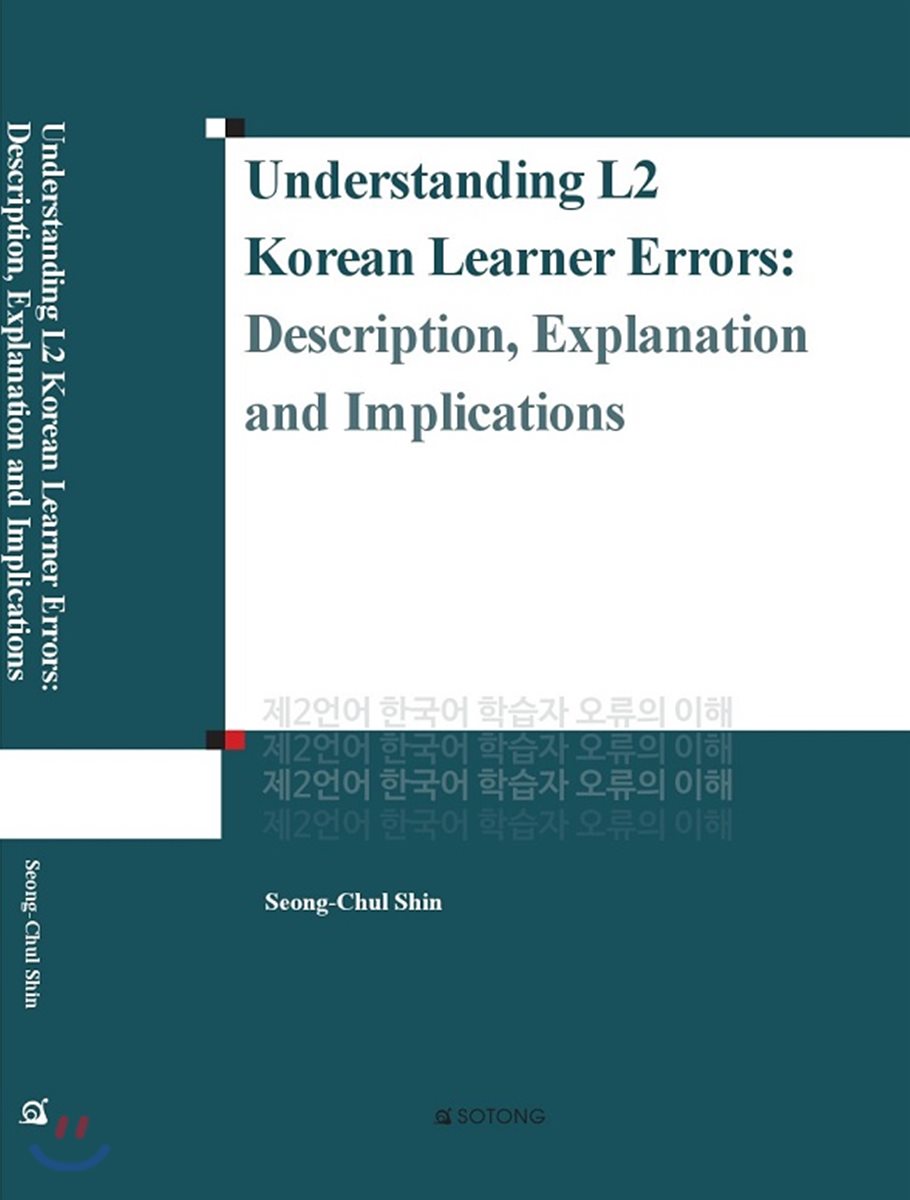
This book addresses errors frequently made by learners of Korean as a second or foreign language from three aspects: vocabulary, spelling, and grammar.
The beginning and development of error research in foreign language education and the error research in Korean language education were examined.
In addition, the advantages and disadvantages of error research were outlined, and the educational implications of error research were described by examining the procedures and steps of error research, such as collecting error data, describing errors, and explaining the causes of errors.
Regarding the methodology of error research, the necessity of a qualitative approach for error analysis and classification and a statistical quantitative research method for measuring error frequency and error rate were discussed.
In addition, the most important step in error research was to discuss the types and sources of errors, and the necessity and tasks of corrective education were presented as a way to deal with learners' errors.
We briefly summarize the research on Korean language errors that has been conducted so far, and describe, explain, and discuss some important and common findings regarding high-frequency Korean grammar, vocabulary, and spelling errors frequently made by English-speaking learners.
This book is written in English and provides a Korean summary along with an English index for a wider readership, including undergraduate and graduate students, and established researchers in Korea and abroad who are studying the acquisition, learning, and teaching of the Korean language.
This book, Understanding L2 Korean Learner Errors, deals with errors made by learners of Korean as a second or foreign language at three levels: orthography, lexicon and grammar.
This book identifies and describes a variety of high frequency error types and explains the causes of the errors.
It further investigates sources that cause errors by employing descriptive, contrastive, psycholinguistic theories and techniques while dealing with pedagogical implications and presenting focused instructional strategies for selected key error types.
Laying out the basics for any understanding of error analysis as well as presenting important topics around high frequency error types and a survey of error analysis undertaken in Korean, Understanding L2 Korean Learner Errors is an ideal resource for researchers and postgraduate students who are working on the analysis of Korean language learners' errors.
This book is an insightful reference for anyone who is interested in the teaching and learning of the Korean language.
The beginning and development of error research in foreign language education and the error research in Korean language education were examined.
In addition, the advantages and disadvantages of error research were outlined, and the educational implications of error research were described by examining the procedures and steps of error research, such as collecting error data, describing errors, and explaining the causes of errors.
Regarding the methodology of error research, the necessity of a qualitative approach for error analysis and classification and a statistical quantitative research method for measuring error frequency and error rate were discussed.
In addition, the most important step in error research was to discuss the types and sources of errors, and the necessity and tasks of corrective education were presented as a way to deal with learners' errors.
We briefly summarize the research on Korean language errors that has been conducted so far, and describe, explain, and discuss some important and common findings regarding high-frequency Korean grammar, vocabulary, and spelling errors frequently made by English-speaking learners.
This book is written in English and provides a Korean summary along with an English index for a wider readership, including undergraduate and graduate students, and established researchers in Korea and abroad who are studying the acquisition, learning, and teaching of the Korean language.
This book, Understanding L2 Korean Learner Errors, deals with errors made by learners of Korean as a second or foreign language at three levels: orthography, lexicon and grammar.
This book identifies and describes a variety of high frequency error types and explains the causes of the errors.
It further investigates sources that cause errors by employing descriptive, contrastive, psycholinguistic theories and techniques while dealing with pedagogical implications and presenting focused instructional strategies for selected key error types.
Laying out the basics for any understanding of error analysis as well as presenting important topics around high frequency error types and a survey of error analysis undertaken in Korean, Understanding L2 Korean Learner Errors is an ideal resource for researchers and postgraduate students who are working on the analysis of Korean language learners' errors.
This book is an insightful reference for anyone who is interested in the teaching and learning of the Korean language.
index
introduction
Chapter 1: Overview of Error Research in Second Language Learners
Chapter 2 Types, Frequency, and Causes of Grammatical Errors
Chapter 3: Substitution Errors in Nominative-Accusative Particles
Chapter 4: Substitution Errors in the Investigation of the Place of Occupation
Chapter 5: Knowledge of High-Frequency Grammar Errors
Chapter 6: Difficulty Recognition for High-Frequency Grammar Errors
Chapter 7 Procedural Strategies and Perceptions of Corrective Education
Chapter 8: Intensive Corrective Education Strategies
Chapter 9 Types, Frequency, and Causes of Vocabulary Errors
Chapter 10: Lexical Errors Due to Semantic Similarity
Chapter 11: Investigating the Acceptability of Vocabulary Items
Chapter 12: Types, Frequency, and Causes of Spelling Errors in Australian Korean Learners
Chapter 13: Types, Frequency, and Causes of Spelling Errors in English-Speaking Korean Learners
Korean summary
References
Search
Chapter 1: Overview of Error Research in Second Language Learners
Chapter 2 Types, Frequency, and Causes of Grammatical Errors
Chapter 3: Substitution Errors in Nominative-Accusative Particles
Chapter 4: Substitution Errors in the Investigation of the Place of Occupation
Chapter 5: Knowledge of High-Frequency Grammar Errors
Chapter 6: Difficulty Recognition for High-Frequency Grammar Errors
Chapter 7 Procedural Strategies and Perceptions of Corrective Education
Chapter 8: Intensive Corrective Education Strategies
Chapter 9 Types, Frequency, and Causes of Vocabulary Errors
Chapter 10: Lexical Errors Due to Semantic Similarity
Chapter 11: Investigating the Acceptability of Vocabulary Items
Chapter 12: Types, Frequency, and Causes of Spelling Errors in Australian Korean Learners
Chapter 13: Types, Frequency, and Causes of Spelling Errors in English-Speaking Korean Learners
Korean summary
References
Search
GOODS SPECIFICS
- Date of issue: July 31, 2017
- Page count, weight, size: 252 pages | 152*215*20mm
- ISBN13: 9791186453483
- ISBN10: 1186453486
You may also like
카테고리
korean


korean

![GQ KOREA Mark (Monthly): December [2025]](http://librairie.coreenne.fr/cdn/shop/files/8ef265dbbfbf186523ed75ba7319009d.jpg?v=1765340328&width=3840)


