

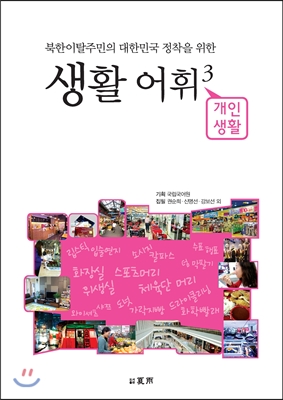
3 Living Vocabulary Tips for North Korean Defectors Settling in South Korea
 |
Description
Book Introduction
As of March 2012, the number of North Korean defectors settled in South Korea is approximately 23,500.
North Korean defectors face various difficulties after entering South Korea due to language differences between North and South Korea.
Among them, they have a very difficult time due to the unfamiliar vocabulary of South Korea.
In particular, the numerous foreign words and languages place a great burden on the language life of North Korean defectors.
This textbook was published to help North Korean defectors who have difficulty learning unfamiliar South Korean vocabulary.
When selecting vocabulary, we interviewed 93 North Korean defectors and received their help.
In addition, a North Korean defector verification team was formed to verify the content and practicality of the textbook, and the results of several satisfaction surveys targeting North Korean defectors were reflected in the textbook to enhance its suitability for the field.
This book 「Ⅲ.
The "Personal Life" section contains information on "clothing, food, housing, shopping, cosmetics, and beauty salons," and as a practical textbook, it provides a lot of information essential for daily life by linking it to real life.
Each unit is composed of 'introduction to the main unit, introduction to the sub-unit, vocabulary study, communication situations, Korean language culture, practice problems, conclusion of the sub-unit, and taking a break.'
North Korean defectors face various difficulties after entering South Korea due to language differences between North and South Korea.
Among them, they have a very difficult time due to the unfamiliar vocabulary of South Korea.
In particular, the numerous foreign words and languages place a great burden on the language life of North Korean defectors.
This textbook was published to help North Korean defectors who have difficulty learning unfamiliar South Korean vocabulary.
When selecting vocabulary, we interviewed 93 North Korean defectors and received their help.
In addition, a North Korean defector verification team was formed to verify the content and practicality of the textbook, and the results of several satisfaction surveys targeting North Korean defectors were reflected in the textbook to enhance its suitability for the field.
This book 「Ⅲ.
The "Personal Life" section contains information on "clothing, food, housing, shopping, cosmetics, and beauty salons," and as a practical textbook, it provides a lot of information essential for daily life by linking it to real life.
Each unit is composed of 'introduction to the main unit, introduction to the sub-unit, vocabulary study, communication situations, Korean language culture, practice problems, conclusion of the sub-unit, and taking a break.'
- You can preview some of the book's contents.
Preview
index
1.
garments
(1) Buy clothes
(2) Dressing up, washing
2.
food
(1) Eating out
(2) Buying food
3.
dwelling
(1) Kitchen and bathroom
(2) Living room and bedroom
4.
shopping
(1) Find out product information
(2) Buying things
5.
cosmetics
(1) Find out about cosmetics
(2) Cosmetics fraud
6.
beauty salon
Hairdo
garments
(1) Buy clothes
(2) Dressing up, washing
2.
food
(1) Eating out
(2) Buying food
3.
dwelling
(1) Kitchen and bathroom
(2) Living room and bedroom
4.
shopping
(1) Find out product information
(2) Buying things
5.
cosmetics
(1) Find out about cosmetics
(2) Cosmetics fraud
6.
beauty salon
Hairdo
Kwon Soon-hee: Professor of Korean Language Education, Jeonju National University of Education
Shin Myeong-seon: Professor of Korean Language Education at Inha University
Kang Bo-seon: Researcher at the Korean Language Education Research Institute, Seoul National University
Jeong Seong-hun: Ph.D. in Linguistics, Seoul National University
Kim Byeong-o: Ph.D. in Language Education from Chonbuk National University
So Mi-young: Ph.D. in Language Education, Jeonbuk National University
Kim Mi-jin: Ph.D. candidate in the Department of Language Education at Jeonbuk National University
Jang Yong-su: Ph.D. candidate in the Department of Language Education at Jeonbuk National University
Shim Ji-seon: Teacher at Nangsang Elementary School
Song Min-young: Ph.D. candidate in Korean Language Education at Inha University
Lim Hwa-jeong: Ph.D. candidate in Korean Language Education at Inha University
Kim Da-eun: Master's degree in Korean Language Education from Seoul National University
Park Jin-hee: Master's degree in Korean Language Education from Seoul National University
Cha Kyung-mi: Master's degree in Korean Language Education from Seoul National University
Kim Cheol-hee: Master's degree in Korean Language Education, Inha University
An Su-jin: Master's candidate in Korean language education at Inha University; Kwon Soon-hee: Professor in Korean language education at Jeonju National University of Education
Shin Myeong-seon: Professor of Korean Language Education at Inha University
Kang Bo-seon: Researcher at the Korean Language Education Research Institute, Seoul National University
Jeong Seong-hun: Ph.D. in Linguistics, Seoul National University
Kim Byeong-o: Ph.D. in Language Education from Chonbuk National University
So Mi-young: Ph.D. in Language Education, Jeonbuk National University
Kim Mi-jin: Ph.D. candidate in the Department of Language Education at Jeonbuk National University
Jang Yong-su: Ph.D. candidate in the Department of Language Education at Jeonbuk National University
Shim Ji-seon: Teacher at Nangsang Elementary School
Song Min-young: Ph.D. candidate in Korean Language Education at Inha University
Lim Hwa-jeong: Ph.D. candidate in Korean Language Education at Inha University
Kim Da-eun: Master's degree in Korean Language Education from Seoul National University
Park Jin-hee: Master's degree in Korean Language Education from Seoul National University
Cha Kyung-mi: Master's degree in Korean Language Education from Seoul National University
Kim Cheol-hee: Master's degree in Korean Language Education, Inha University
An Su-jin: Master's degree in Korean Language Education, Inha University
Shin Myeong-seon: Professor of Korean Language Education at Inha University
Kang Bo-seon: Researcher at the Korean Language Education Research Institute, Seoul National University
Jeong Seong-hun: Ph.D. in Linguistics, Seoul National University
Kim Byeong-o: Ph.D. in Language Education from Chonbuk National University
So Mi-young: Ph.D. in Language Education, Jeonbuk National University
Kim Mi-jin: Ph.D. candidate in the Department of Language Education at Jeonbuk National University
Jang Yong-su: Ph.D. candidate in the Department of Language Education at Jeonbuk National University
Shim Ji-seon: Teacher at Nangsang Elementary School
Song Min-young: Ph.D. candidate in Korean Language Education at Inha University
Lim Hwa-jeong: Ph.D. candidate in Korean Language Education at Inha University
Kim Da-eun: Master's degree in Korean Language Education from Seoul National University
Park Jin-hee: Master's degree in Korean Language Education from Seoul National University
Cha Kyung-mi: Master's degree in Korean Language Education from Seoul National University
Kim Cheol-hee: Master's degree in Korean Language Education, Inha University
An Su-jin: Master's candidate in Korean language education at Inha University; Kwon Soon-hee: Professor in Korean language education at Jeonju National University of Education
Shin Myeong-seon: Professor of Korean Language Education at Inha University
Kang Bo-seon: Researcher at the Korean Language Education Research Institute, Seoul National University
Jeong Seong-hun: Ph.D. in Linguistics, Seoul National University
Kim Byeong-o: Ph.D. in Language Education from Chonbuk National University
So Mi-young: Ph.D. in Language Education, Jeonbuk National University
Kim Mi-jin: Ph.D. candidate in the Department of Language Education at Jeonbuk National University
Jang Yong-su: Ph.D. candidate in the Department of Language Education at Jeonbuk National University
Shim Ji-seon: Teacher at Nangsang Elementary School
Song Min-young: Ph.D. candidate in Korean Language Education at Inha University
Lim Hwa-jeong: Ph.D. candidate in Korean Language Education at Inha University
Kim Da-eun: Master's degree in Korean Language Education from Seoul National University
Park Jin-hee: Master's degree in Korean Language Education from Seoul National University
Cha Kyung-mi: Master's degree in Korean Language Education from Seoul National University
Kim Cheol-hee: Master's degree in Korean Language Education, Inha University
An Su-jin: Master's degree in Korean Language Education, Inha University
Publisher's Review
Features of this book
1.
By grouping learning vocabulary into semantic fields, you can learn vocabulary in relation to other vocabulary rather than learning it individually.
2.
By presenting learning vocabulary within a communication context, North Korean defectors were able to accurately understand and use the meaning of the vocabulary as well as its actual usage.
3.
By introducing Korean language culture related to learning vocabulary, we can understand the meaning of vocabulary within a cultural context.
4.
By exposing proper nouns, foreign words, and foreign languages as they are, we have provided practical assistance to North Korean defectors in adapting to South Korean society.
5.
By providing North Korean vocabulary corresponding to the learning vocabulary, North Korean defectors can easily understand the meaning of the learning vocabulary through North Korean vocabulary.
6.
By using a lot of pictures and illustrations, North Korean defectors can learn vocabulary quickly and enjoyably.
7.
The meaning of learning vocabulary was explained in a simple and easy way to help North Korean defectors understand.
1.
By grouping learning vocabulary into semantic fields, you can learn vocabulary in relation to other vocabulary rather than learning it individually.
2.
By presenting learning vocabulary within a communication context, North Korean defectors were able to accurately understand and use the meaning of the vocabulary as well as its actual usage.
3.
By introducing Korean language culture related to learning vocabulary, we can understand the meaning of vocabulary within a cultural context.
4.
By exposing proper nouns, foreign words, and foreign languages as they are, we have provided practical assistance to North Korean defectors in adapting to South Korean society.
5.
By providing North Korean vocabulary corresponding to the learning vocabulary, North Korean defectors can easily understand the meaning of the learning vocabulary through North Korean vocabulary.
6.
By using a lot of pictures and illustrations, North Korean defectors can learn vocabulary quickly and enjoyably.
7.
The meaning of learning vocabulary was explained in a simple and easy way to help North Korean defectors understand.
GOODS SPECIFICS
- Date of publication: June 26, 2012
- Page count, weight, size: 128 pages | 442g | 210*300*20mm
- ISBN13: 9788976998972
- ISBN10: 8976998979
You may also like
카테고리
korean


korean

![GQ KOREA Mark (Monthly): December [2025]](http://librairie.coreenne.fr/cdn/shop/files/8ef265dbbfbf186523ed75ba7319009d.jpg?v=1765340328&width=3840)


