

Teaching Korean to Foreigners
 |
Description
Book Introduction
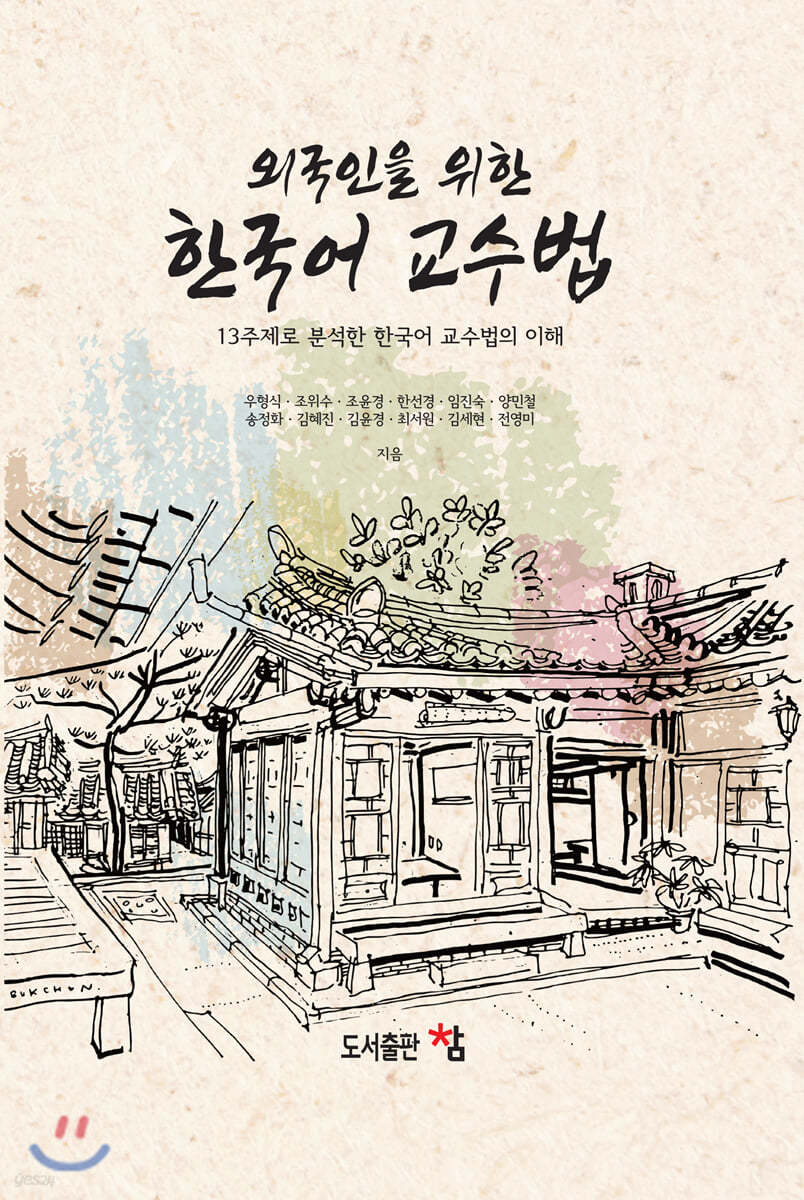
This book was written to summarize the theoretical validity and practical value of teaching methods currently being used in Korean language education, focusing on the current state of research and application.
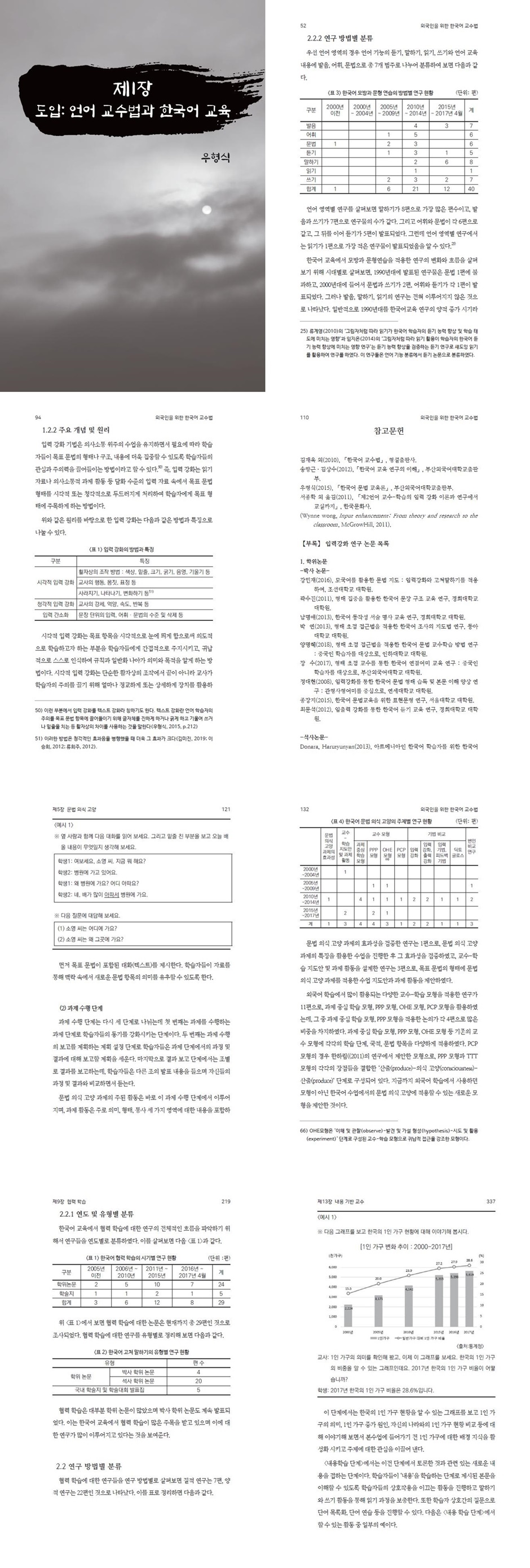
In 『Korean Language Teaching Methods for Foreigners』, the flow of language teaching methods is briefly examined from a general perspective, and 12 topics are selected as notable teaching methods in Korean language education, including imitation and sentence pattern practice, input flood, input reinforcement, raising grammar awareness, rephrasing, listening and rewriting, processing teaching, cooperative learning, meaning negotiation, strategic learning, task activities, and content-centered teaching, and the research trends and issues related to their actual application are described.
Through this, it was organized so that each Korean language teaching method can be understood to be applicable in the Korean language education field.
In 『Korean Language Teaching Methods for Foreigners』, the flow of language teaching methods is briefly examined from a general perspective, and 12 topics are selected as notable teaching methods in Korean language education, including imitation and sentence pattern practice, input flood, input reinforcement, raising grammar awareness, rephrasing, listening and rewriting, processing teaching, cooperative learning, meaning negotiation, strategic learning, task activities, and content-centered teaching, and the research trends and issues related to their actual application are described.
Through this, it was organized so that each Korean language teaching method can be understood to be applicable in the Korean language education field.
index
preface
Chapter 1: Introduction: Language Teaching Methods and Korean Language Education (Woo Hyung-sik)
Chapter 2: Imitation and Sentence Practice (Im Jin-sook)
Chapter 3: Input Flood (Yang Min-cheol)
Chapter 4: Input Enhancement (Kim Hye-jin)
Chapter 5: Raising Grammar Awareness (Kim Yun-kyung)
Chapter 6: Rephrasing (Kim Se-hyeon)
Chapter 7: Listen and Rewrite (Choi Seo-won)
Chapter 8: Professor Han Seon-gyeong
Chapter 9: Collaborative Learning (Im Jin-sook and Kim Se-hyeon)
Chapter 10: Negotiation of Meaning (Cho Yun-gyeong)
Chapter 11: Strategic Learning (Jo Wi-su)
Chapter 12: Task-Based Language Teaching (Song Jeong-hwa)
Chapter 13: Content-Based Teaching (Jeon Young-mi)
Chapter 14 Conclusion: Summary and Challenges
Chapter 1: Introduction: Language Teaching Methods and Korean Language Education (Woo Hyung-sik)
Chapter 2: Imitation and Sentence Practice (Im Jin-sook)
Chapter 3: Input Flood (Yang Min-cheol)
Chapter 4: Input Enhancement (Kim Hye-jin)
Chapter 5: Raising Grammar Awareness (Kim Yun-kyung)
Chapter 6: Rephrasing (Kim Se-hyeon)
Chapter 7: Listen and Rewrite (Choi Seo-won)
Chapter 8: Professor Han Seon-gyeong
Chapter 9: Collaborative Learning (Im Jin-sook and Kim Se-hyeon)
Chapter 10: Negotiation of Meaning (Cho Yun-gyeong)
Chapter 11: Strategic Learning (Jo Wi-su)
Chapter 12: Task-Based Language Teaching (Song Jeong-hwa)
Chapter 13: Content-Based Teaching (Jeon Young-mi)
Chapter 14 Conclusion: Summary and Challenges
Detailed image
GOODS SPECIFICS
- Date of issue: August 17, 2020
- Page count, weight, size: 372 pages | 150*220*30mm
- ISBN13: 9791188572267
- ISBN10: 1188572261
You may also like
카테고리
korean


korean

![GQ KOREA Mark (Monthly): December [2025]](http://librairie.coreenne.fr/cdn/shop/files/8ef265dbbfbf186523ed75ba7319009d.jpg?v=1765340328&width=3840)


