

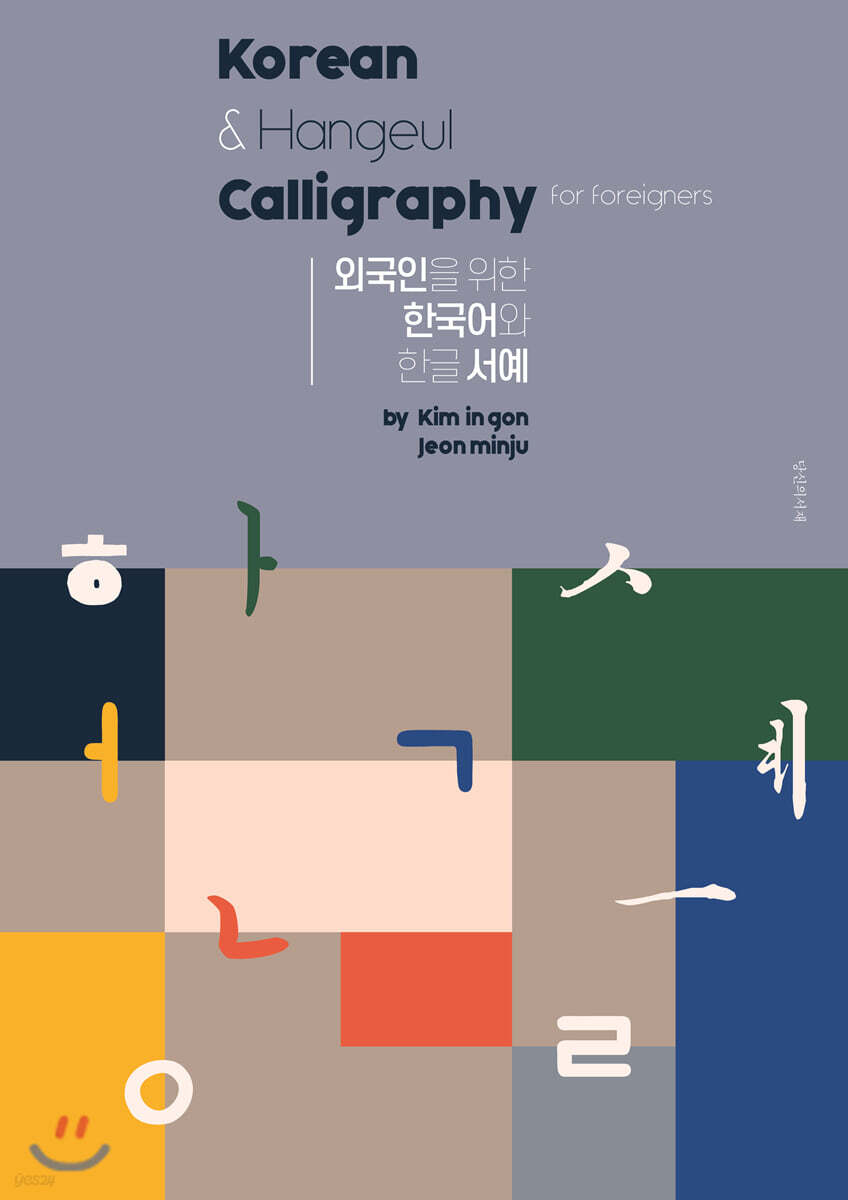
Korean & Hangeul Calligraphy for foreigners
 |
Description
Book Introduction
Foreign youth are as interested in K-pop as they are in
A customized textbook that teaches you how to write Korean with a brush!
The Korean Wave, which is driven by K-pop, Korean food, and dramas, has led to an explosion of interest in the Korean language among foreign youth.
This book was created for foreigners who want to learn Korean directly, and for Koreans who want to introduce Korean culture, Korean language, and Korean calligraphy to foreigners.
To help you learn Hangul easily, we will explain in an easy-to-understand way the process of Hangul's creation, which is derived from Korea's founding myth, the Taegeukgi, and the symbols of the three elements of heaven, earth, and man: circle (○), square (□), and angle (△).
In particular, the interest is doubled by adding the Korean calligraphy section (printed and palace fonts) and allowing the experience of writing directly with a brush.
It is a customized textbook as calligraphy experiences are often included in various Korean-related events abroad.
By experiencing the geometric artistry of Hangul with a brush, you will become more interested in it and gain a deeper understanding of Korean culture.
Calligraphy has consistently been of interest to foreigners living in Korea, although it is a minority.
However, due to the nature of calligraphy, there are no instructors who can teach it in English, so the demand is not being met.
Since Korean calligraphy is not very different from the basic techniques of Chinese character calligraphy, this English version of Korean calligraphy (also in Korean) is expected to be an essential reference book for calligraphy instructors, both domestically and internationally, as well as for calligraphy instructors, who have recently been gaining popularity among the younger generation.
In 2018, the National Assembly passed the 『Act on the Promotion of Calligraphy』.
It stipulates policies for popularizing calligraphy, including establishing a basic plan for the promotion of calligraphy, supporting calligraphy education, conducting field surveys, training professional personnel, and supporting corporations and organizations for the promotion of calligraphy.
Accordingly, it is expected that interest in calligraphy will increase in Korea as well.
A customized textbook that teaches you how to write Korean with a brush!
The Korean Wave, which is driven by K-pop, Korean food, and dramas, has led to an explosion of interest in the Korean language among foreign youth.
This book was created for foreigners who want to learn Korean directly, and for Koreans who want to introduce Korean culture, Korean language, and Korean calligraphy to foreigners.
To help you learn Hangul easily, we will explain in an easy-to-understand way the process of Hangul's creation, which is derived from Korea's founding myth, the Taegeukgi, and the symbols of the three elements of heaven, earth, and man: circle (○), square (□), and angle (△).
In particular, the interest is doubled by adding the Korean calligraphy section (printed and palace fonts) and allowing the experience of writing directly with a brush.
It is a customized textbook as calligraphy experiences are often included in various Korean-related events abroad.
By experiencing the geometric artistry of Hangul with a brush, you will become more interested in it and gain a deeper understanding of Korean culture.
Calligraphy has consistently been of interest to foreigners living in Korea, although it is a minority.
However, due to the nature of calligraphy, there are no instructors who can teach it in English, so the demand is not being met.
Since Korean calligraphy is not very different from the basic techniques of Chinese character calligraphy, this English version of Korean calligraphy (also in Korean) is expected to be an essential reference book for calligraphy instructors, both domestically and internationally, as well as for calligraphy instructors, who have recently been gaining popularity among the younger generation.
In 2018, the National Assembly passed the 『Act on the Promotion of Calligraphy』.
It stipulates policies for popularizing calligraphy, including establishing a basic plan for the promotion of calligraphy, supporting calligraphy education, conducting field surveys, training professional personnel, and supporting corporations and organizations for the promotion of calligraphy.
Accordingly, it is expected that interest in calligraphy will increase in Korea as well.
index
Chapter Ⅰ Learning Korean
1.
What is Korean 12
1) The birth of Hangul 2) The principle of Hangul's creation
2.
18 before learning Korean
1) Korean traditional thought
2) The idea of the three elements of heaven, earth, and man and the Taegeukgi
3) The meaning of the three beats and three three plates
4) Symbols representing heaven, earth and man
3.
Learning the Basics of Korean 26
1) 14 initial sounds and pronunciation
2) 10 mother symbols and pronunciation of the middle sound
3) The last sound, the father symbol and pronunciation
4.
Korean Practical 50
1) Grammar
2) Honorifics
3) Practical Korean
Chapter Ⅱ Basics of Korean Calligraphy
1.
What is Korean Calligraphy? 62
1) Definition of calligraphy
2) Development of writing instruments
3) East Asian calligraphy
4) Korean calligraphy
2.
74 Materials for Calligraphy
1) Brush
2) Paper (Korean paper, Korean paper)
3) Eat
4) Inkstone
5) Inscription, question mark, and other preparations
3.
How to Use a Brush 84
1) How to hold a brush
2) Writing posture
3) How to use the brush (brush strokes)
4.
The remaining preparation process 92
1) Making ink
2) Paper folding
Chapter Ⅲ Korean Calligraphy Practice
1.
Basic Symbols, Mother Symbols, Son and Father Symbols 96
2.
Writing in woodblock-type script 98
1) Characteristics of woodblock prints (block prints)
2) Symbol practice
·Writing basic symbols
·Writing mother symbols (vowels)
·Write the son/father symbol (consonant)?
3) Korean language practice
·Combination letters of son and mother symbols?
·Combination letters of son and mother/father symbols?
3.
Writing in the Palace Style (Palace Style) 132
1) Characteristics of the court type
2) Symbol practice
·Writing basic symbols
·Writing mother symbols (vowels)
·Writing the son and father symbols (consonants)
3) Korean practice
·Combination letters of son and mother symbols?
·Combined letters of son and mother/father symbols
1.
What is Korean 12
1) The birth of Hangul 2) The principle of Hangul's creation
2.
18 before learning Korean
1) Korean traditional thought
2) The idea of the three elements of heaven, earth, and man and the Taegeukgi
3) The meaning of the three beats and three three plates
4) Symbols representing heaven, earth and man
3.
Learning the Basics of Korean 26
1) 14 initial sounds and pronunciation
2) 10 mother symbols and pronunciation of the middle sound
3) The last sound, the father symbol and pronunciation
4.
Korean Practical 50
1) Grammar
2) Honorifics
3) Practical Korean
Chapter Ⅱ Basics of Korean Calligraphy
1.
What is Korean Calligraphy? 62
1) Definition of calligraphy
2) Development of writing instruments
3) East Asian calligraphy
4) Korean calligraphy
2.
74 Materials for Calligraphy
1) Brush
2) Paper (Korean paper, Korean paper)
3) Eat
4) Inkstone
5) Inscription, question mark, and other preparations
3.
How to Use a Brush 84
1) How to hold a brush
2) Writing posture
3) How to use the brush (brush strokes)
4.
The remaining preparation process 92
1) Making ink
2) Paper folding
Chapter Ⅲ Korean Calligraphy Practice
1.
Basic Symbols, Mother Symbols, Son and Father Symbols 96
2.
Writing in woodblock-type script 98
1) Characteristics of woodblock prints (block prints)
2) Symbol practice
·Writing basic symbols
·Writing mother symbols (vowels)
·Write the son/father symbol (consonant)?
3) Korean language practice
·Combination letters of son and mother symbols?
·Combination letters of son and mother/father symbols?
3.
Writing in the Palace Style (Palace Style) 132
1) Characteristics of the court type
2) Symbol practice
·Writing basic symbols
·Writing mother symbols (vowels)
·Writing the son and father symbols (consonants)
3) Korean practice
·Combination letters of son and mother symbols?
·Combined letters of son and mother/father symbols
Into the book
In this book, Hangul represents the members of a family.
During the day, the father works outside, so only the children and the mother are at home, and at night, the head of the household returns from work and all family members gather together.
In particular, the reason that children were represented only as sons is because the social structure of the Joseon Dynasty at the time Hangul was created was a patriarchal society.
--- p.14
Koreans follow an unspoken custom of deciding all matches in a best-of-three format, called "Samse Pan."
The reason is that three factors are involved in every decision made in human life.
I think the first game is decided by heaven and the second game is decided by the earth.
When heaven and earth have agreed on their will, there is no longer any room for human intervention, so we must humbly follow suit.
However, the hidden meaning of the Three Worlds is that only when the will of heaven and earth are not in agreement are humans given the opportunity to determine their own destiny.
--- p.22
In Asia, calligraphy refers to the practice of writing with a brush rather than a pen.
Oriental calligraphy began with the use of hieroglyphs, ancient scripts like those of Egypt and Maya.
Calligraphy has evolved over time and become a field of art.
The artistry of modern calligraphy is evaluated from several perspectives.
--- p.62
Regardless of the font, font size, or type of Hangul symbol, even if you only write one stroke, it goes through a three-step process.
The beginning part is called the beginning of the writing, the middle part is called the middle part, and the process of finishing the writing is called the end part.
--- p.88
The court-style script, like the woodblock type, begins with a reversed stroke and ends with a curved stroke.
However, the inversion and rotation are not done in a straight line like in the woodblock print, but rather draw lines in the shape of fishhooks.
During the day, the father works outside, so only the children and the mother are at home, and at night, the head of the household returns from work and all family members gather together.
In particular, the reason that children were represented only as sons is because the social structure of the Joseon Dynasty at the time Hangul was created was a patriarchal society.
--- p.14
Koreans follow an unspoken custom of deciding all matches in a best-of-three format, called "Samse Pan."
The reason is that three factors are involved in every decision made in human life.
I think the first game is decided by heaven and the second game is decided by the earth.
When heaven and earth have agreed on their will, there is no longer any room for human intervention, so we must humbly follow suit.
However, the hidden meaning of the Three Worlds is that only when the will of heaven and earth are not in agreement are humans given the opportunity to determine their own destiny.
--- p.22
In Asia, calligraphy refers to the practice of writing with a brush rather than a pen.
Oriental calligraphy began with the use of hieroglyphs, ancient scripts like those of Egypt and Maya.
Calligraphy has evolved over time and become a field of art.
The artistry of modern calligraphy is evaluated from several perspectives.
--- p.62
Regardless of the font, font size, or type of Hangul symbol, even if you only write one stroke, it goes through a three-step process.
The beginning part is called the beginning of the writing, the middle part is called the middle part, and the process of finishing the writing is called the end part.
--- p.88
The court-style script, like the woodblock type, begins with a reversed stroke and ends with a curved stroke.
However, the inversion and rotation are not done in a straight line like in the woodblock print, but rather draw lines in the shape of fishhooks.
--- p.132
GOODS SPECIFICS
- Publication date: December 25, 2019
- Page count, weight, size: 176 pages | 398g | 176*250*20mm
- ISBN13: 9791189141202
- ISBN10: 1189141205
You may also like
카테고리
korean


korean

![GQ KOREA Mark (Monthly): December [2025]](http://librairie.coreenne.fr/cdn/shop/files/8ef265dbbfbf186523ed75ba7319009d.jpg?v=1765340328&width=3840)


