

Understanding Korean Traditional Culture through Questions and Answers
 |
Description
Book Introduction
A book that kills two birds with one stone, capturing both the Korean language and Korean culture!
As you converse, you will learn Korean and traditional Korean culture fluently!
The best textbook for use in Korean language education institutions, academies, etc.
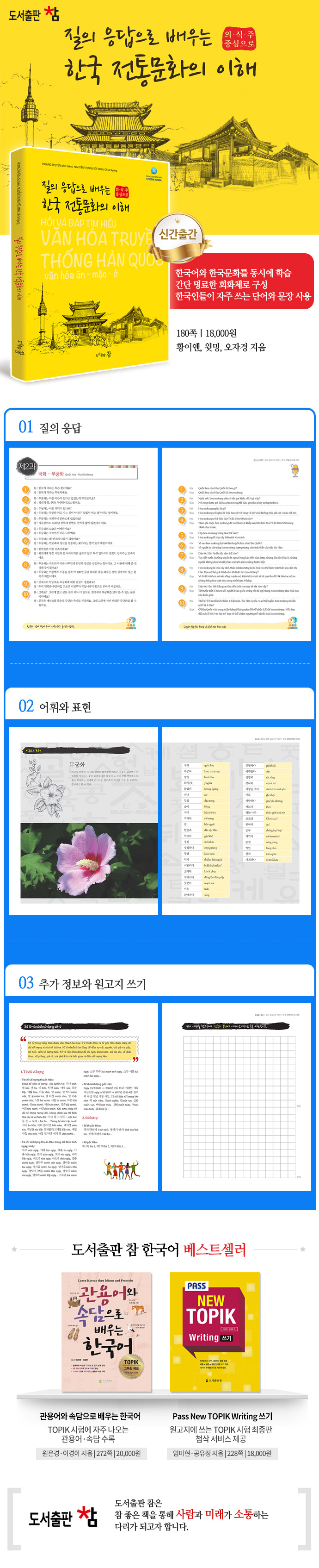
This Korean language textbook was created by native Vietnamese Korean professors and Korean editors, allowing you to learn about Korean traditional culture in both Vietnamese and Korean.
Starting with the Republic of Korea, the book covers the Taegeukgi, Mugunghwa, and the national anthem in the introduction, and then goes on to explain in detail housing culture, food, dining etiquette, and hanbok, focusing on food, clothing, and shelter.
It consists of questions and answers between Vietnamese and Korean people, so learners can learn expressions closer to real life by following the conversation.
Additionally, because we compare and discuss Korean and Vietnamese traditional cultures, we have the advantage of learning about the cultural differences and similarities between Korea and Vietnam.
For each topic, after the questions and answers, you can learn related vocabulary. If additional explanation of the topic is needed, related information is provided after the vocabulary.
This has the effect of allowing learners to associate related vocabulary in a chain and apply it in real life.
At the end, there is a manuscript sheet so that students can organize their topics and write about them.
It is composed of a total of 27 lessons covering conversation, vocabulary, and writing, making it an optimal customized study book that can also be used as a textbook at Korean language education institutions or academies.
As you converse, you will learn Korean and traditional Korean culture fluently!
The best textbook for use in Korean language education institutions, academies, etc.
This Korean language textbook was created by native Vietnamese Korean professors and Korean editors, allowing you to learn about Korean traditional culture in both Vietnamese and Korean.
Starting with the Republic of Korea, the book covers the Taegeukgi, Mugunghwa, and the national anthem in the introduction, and then goes on to explain in detail housing culture, food, dining etiquette, and hanbok, focusing on food, clothing, and shelter.
It consists of questions and answers between Vietnamese and Korean people, so learners can learn expressions closer to real life by following the conversation.
Additionally, because we compare and discuss Korean and Vietnamese traditional cultures, we have the advantage of learning about the cultural differences and similarities between Korea and Vietnam.
For each topic, after the questions and answers, you can learn related vocabulary. If additional explanation of the topic is needed, related information is provided after the vocabulary.
This has the effect of allowing learners to associate related vocabulary in a chain and apply it in real life.
At the end, there is a manuscript sheet so that students can organize their topics and write about them.
It is composed of a total of 27 lessons covering conversation, vocabulary, and writing, making it an optimal customized study book that can also be used as a textbook at Korean language education institutions or academies.
- You can preview some of the book's contents.
Preview
index
introduction
Part 1: Countries of the Korean Peninsula - Korea
Lesson 1: Republic of Korea
Lesson 2 Chrysanthemum - Rose of Sharon
Lesson 3 National Flag - Taegeukgi
Lesson 4: National Anthem
Lesson 5: Hangeul and King Sejong
Lesson 6 Currency
Lesson 7 Weather
Part 2: Korean Housing Culture
Lesson 8: Traditional Houses
Lesson 9 Heating Facilities - Ondol
Lesson 10 Types of Rental Accommodations
Lesson 11 Accommodation
Lesson 12: Housing Rental System
Lesson 13: Moving
Lesson 14: Characteristics of Jeju Island Houses
Part 3: Korean Food Culture
Lesson 15 Everyday Food
Lesson 16 Representative Foods
Lesson 17: Table Setting
Lesson 18 Dining Etiquette
Lesson 19 Things to keep in mind when eating
Lesson 20 Dining Etiquette
Lesson 21: Drinking Culture
Part 4: Traditional Korean Costumes
Lesson 22: Introduction to Hanbok
Lesson 23 Adult Hanbok
Lesson 24 Children's Hanbok
Lesson 25: The Beauty of Hanbok
Lesson 26: The Meaning of Hanbok Colors
Lesson 27: Traditional Clothing
List of words and expressions
References
Part 1: Countries of the Korean Peninsula - Korea
Lesson 1: Republic of Korea
Lesson 2 Chrysanthemum - Rose of Sharon
Lesson 3 National Flag - Taegeukgi
Lesson 4: National Anthem
Lesson 5: Hangeul and King Sejong
Lesson 6 Currency
Lesson 7 Weather
Part 2: Korean Housing Culture
Lesson 8: Traditional Houses
Lesson 9 Heating Facilities - Ondol
Lesson 10 Types of Rental Accommodations
Lesson 11 Accommodation
Lesson 12: Housing Rental System
Lesson 13: Moving
Lesson 14: Characteristics of Jeju Island Houses
Part 3: Korean Food Culture
Lesson 15 Everyday Food
Lesson 16 Representative Foods
Lesson 17: Table Setting
Lesson 18 Dining Etiquette
Lesson 19 Things to keep in mind when eating
Lesson 20 Dining Etiquette
Lesson 21: Drinking Culture
Part 4: Traditional Korean Costumes
Lesson 22: Introduction to Hanbok
Lesson 23 Adult Hanbok
Lesson 24 Children's Hanbok
Lesson 25: The Beauty of Hanbok
Lesson 26: The Meaning of Hanbok Colors
Lesson 27: Traditional Clothing
List of words and expressions
References
Detailed image
Into the book
Lesson 20 Dining Etiquette Phong t?c khi đai khach
1.
Q: I heard that the way people pay when eating together varies slightly from country to country. How is it in Korea?
Answer: In Korea, when a man and a woman eat, the man usually pays.
Vietnamese people too, right?
2.
Moon: Yes.
But when four or five people gather for a meal, who pays for the meal?
Answer: It's often done by older people.
But it can vary depending on the situation.
For example, people who are financially well-off may pay, or people who have had a good day may invite their friends and treat them to a meal.
3.
Q: But if we do that, wouldn't it be a burden on both the person buying the meal and the person receiving the meal?
Answer: That could be the case.
So these days, there are more and more cases where people pay for the food they eat.
4.
Q: Is that what you call “going Dutch”?
A: Yes, these days it has become common for young people to split their meal expenses by “going Dutch.”
5.
Q: Going Dutch is convenient because it doesn't burden either party, but I don't think it's very affectionate.
A: Yes, you might feel that way.
6.
Q: Then what about meals at work?
Answer: When employees have a simple meal together, it is often the person with the higher position who pays.
7.
Q: What about company dinners?
Answer: When we have a company dinner, we usually pay for it with the company dinner expenses.
When several people eat together, they either collect membership fees in advance or divide the meal cost among the number of people and collect the money after the meal.
8.
Q: Do you do the same thing when you eat with business associates?
Answer: No.
Usually, the person who has to entertain or makes a meal appointment pays first.
9.
Q: So, are there any rules for paying for meals in Korea?
Answer: No.
There's no such thing, but if I paid for the meal this time, it's common for the other person to pay for the meal next time.
10.
Moon: Vietnamese people do that too.
I guess both countries have similar dining etiquette?
A: Yes, I think so too.
Pair up with a friend and talk and interpret.
1.
H?i: Toi nghe noi la khi nhi?u ng??i cung ?n, cach th?c tr? ti?n ? m?in??c it nhi?u co s? khac bi?t.
Ng??i Han Qu?c th? nao?
đap : ? Han Qu?c, khi m?t chang trai va co gai đi ?nv?i nhau, th??ng ng??i tr? ti?ns? la chang trai.
Ng??i Vi?t Nam c?ng th? What is it?
2.
H?i : ?.
Nh?ng ai s? tr? ti?nn?u co kho?ng 4 -5 ng??i cung ?n?
đap: Ph?nl?n la do ng??i nhi?u tu?ih?n thanh toan.
Nh?ng c?ng tuy tr??ng h?p.
Vi d?, ng??id? d? h?ns? tr? ti?n, ho?c ai đo co vi?ct?t đang m?ng c?ng co th? khao b?n be.
3.
H?i: Nh?ng n?uv?y, ch?ng ph?is? khi?n cho c? ng??im?i va ng??i đ??c ?nc?m th?y ng?i sao?
đap : C?ng co th? nh? v?y.
Th? nen g?n đay b?t đ?u ph? bi?n thoi quen ai ?n ng??in?y tr?.
4.
H?i: Cai đo g?i la "dutch pay - chia ra đ? tr?" ph?i khong?
đap : ?, hi?n nay l?p tr? đ?u coi vi?c chia ra đ? tr? ti?n ?n la binh th??ng.
5.
H?i: Gop ti?n tr? nh? th? giup m?i ng??i đ? ng?i nh?ng co v? khong đ??c tinh c?m.
đap : ?, m?i ng??i ch?cc?ng c?m th?y nh? th?.
6.
H?i : V?y vi?c ti?p đai ?nu?ng ? n?i lam vi?c nh? th? nao?
đap : N?u la b?a ?n đ?n gi?nc?am?t nhom nhan vien, th??ng ng??i co ch?cv? cao h?ns? tr? ti?n.
7.
H?i: Con khi lien hoan c? cong ty?
đap : N?u la lien hoan t?p th?, s? tr? b?ng ti?n qu? c?a cong ty.
Con n?u khong, khi đong ng??i cung ?n, s? thu ti?n tr??c ho?c sau khi ?n, chia đ?u ti?n ?n tuy theo s? ng??ir?i gom l?i đ? than toan.
8.
H?i : Khi ?nc?mv?i đ?i tac kinh doanh c?ng th? a?
đap : Khong.
Th??ng thi minh ph?im?i ng??i ta, ho?c ng??ih?n đi ?ns? ph?i tr? ti?n.
9.
H?i : N?uv?y, co qui t?c nao đ??c đ?t ra cho vi?c tr? ti?n ?n ? Han Qu?c khong?
đap : Khong.
Khong co qui t?c nh? v?y, nh?ng theo l?, n?ul?n nay ng??i nay tr? ti?n ?n thi l?n sau g?p, ng??i khac s? tr?.
10.
H?i : Ng??i Vi?t Nam c?ng th?.
Hinh nh? t?tc? cac phep t?c khi đai khach c?a Vi?t Nam va Han Qu?c đ?u kha gi?ng nhau nh??
đap : ?, toi c?ng ngh? v?y.
Luy?nt?ph?i tho?i va d?ch noi theo c?p.
1.
Q: I heard that the way people pay when eating together varies slightly from country to country. How is it in Korea?
Answer: In Korea, when a man and a woman eat, the man usually pays.
Vietnamese people too, right?
2.
Moon: Yes.
But when four or five people gather for a meal, who pays for the meal?
Answer: It's often done by older people.
But it can vary depending on the situation.
For example, people who are financially well-off may pay, or people who have had a good day may invite their friends and treat them to a meal.
3.
Q: But if we do that, wouldn't it be a burden on both the person buying the meal and the person receiving the meal?
Answer: That could be the case.
So these days, there are more and more cases where people pay for the food they eat.
4.
Q: Is that what you call “going Dutch”?
A: Yes, these days it has become common for young people to split their meal expenses by “going Dutch.”
5.
Q: Going Dutch is convenient because it doesn't burden either party, but I don't think it's very affectionate.
A: Yes, you might feel that way.
6.
Q: Then what about meals at work?
Answer: When employees have a simple meal together, it is often the person with the higher position who pays.
7.
Q: What about company dinners?
Answer: When we have a company dinner, we usually pay for it with the company dinner expenses.
When several people eat together, they either collect membership fees in advance or divide the meal cost among the number of people and collect the money after the meal.
8.
Q: Do you do the same thing when you eat with business associates?
Answer: No.
Usually, the person who has to entertain or makes a meal appointment pays first.
9.
Q: So, are there any rules for paying for meals in Korea?
Answer: No.
There's no such thing, but if I paid for the meal this time, it's common for the other person to pay for the meal next time.
10.
Moon: Vietnamese people do that too.
I guess both countries have similar dining etiquette?
A: Yes, I think so too.
Pair up with a friend and talk and interpret.
1.
H?i: Toi nghe noi la khi nhi?u ng??i cung ?n, cach th?c tr? ti?n ? m?in??c it nhi?u co s? khac bi?t.
Ng??i Han Qu?c th? nao?
đap : ? Han Qu?c, khi m?t chang trai va co gai đi ?nv?i nhau, th??ng ng??i tr? ti?ns? la chang trai.
Ng??i Vi?t Nam c?ng th? What is it?
2.
H?i : ?.
Nh?ng ai s? tr? ti?nn?u co kho?ng 4 -5 ng??i cung ?n?
đap: Ph?nl?n la do ng??i nhi?u tu?ih?n thanh toan.
Nh?ng c?ng tuy tr??ng h?p.
Vi d?, ng??id? d? h?ns? tr? ti?n, ho?c ai đo co vi?ct?t đang m?ng c?ng co th? khao b?n be.
3.
H?i: Nh?ng n?uv?y, ch?ng ph?is? khi?n cho c? ng??im?i va ng??i đ??c ?nc?m th?y ng?i sao?
đap : C?ng co th? nh? v?y.
Th? nen g?n đay b?t đ?u ph? bi?n thoi quen ai ?n ng??in?y tr?.
4.
H?i: Cai đo g?i la "dutch pay - chia ra đ? tr?" ph?i khong?
đap : ?, hi?n nay l?p tr? đ?u coi vi?c chia ra đ? tr? ti?n ?n la binh th??ng.
5.
H?i: Gop ti?n tr? nh? th? giup m?i ng??i đ? ng?i nh?ng co v? khong đ??c tinh c?m.
đap : ?, m?i ng??i ch?cc?ng c?m th?y nh? th?.
6.
H?i : V?y vi?c ti?p đai ?nu?ng ? n?i lam vi?c nh? th? nao?
đap : N?u la b?a ?n đ?n gi?nc?am?t nhom nhan vien, th??ng ng??i co ch?cv? cao h?ns? tr? ti?n.
7.
H?i: Con khi lien hoan c? cong ty?
đap : N?u la lien hoan t?p th?, s? tr? b?ng ti?n qu? c?a cong ty.
Con n?u khong, khi đong ng??i cung ?n, s? thu ti?n tr??c ho?c sau khi ?n, chia đ?u ti?n ?n tuy theo s? ng??ir?i gom l?i đ? than toan.
8.
H?i : Khi ?nc?mv?i đ?i tac kinh doanh c?ng th? a?
đap : Khong.
Th??ng thi minh ph?im?i ng??i ta, ho?c ng??ih?n đi ?ns? ph?i tr? ti?n.
9.
H?i : N?uv?y, co qui t?c nao đ??c đ?t ra cho vi?c tr? ti?n ?n ? Han Qu?c khong?
đap : Khong.
Khong co qui t?c nh? v?y, nh?ng theo l?, n?ul?n nay ng??i nay tr? ti?n ?n thi l?n sau g?p, ng??i khac s? tr?.
10.
H?i : Ng??i Vi?t Nam c?ng th?.
Hinh nh? t?tc? cac phep t?c khi đai khach c?a Vi?t Nam va Han Qu?c đ?u kha gi?ng nhau nh??
đap : ?, toi c?ng ngh? v?y.
Luy?nt?ph?i tho?i va d?ch noi theo c?p.
--- p.129
Publisher's Review
Every language has a culture and history!
"Understanding Korean Traditional Culture through Questions and Answers" covers a variety of topics related to Korean food, clothing, and shelter culture, enabling learners to acquire a rich vocabulary and understand the cultural background.
This book is likely to resonate with Vietnamese learners because it is structured so that Vietnamese and Koreans discuss the cultural differences and similarities between the two countries and share various topics.
As Vietnam and Korea engage in significant economic and cultural exchanges, I hope this book will serve as a foundation for breaking down barriers between the two countries and forging a path toward becoming partners in the present and future.
"Understanding Korean Traditional Culture through Questions and Answers" covers a variety of topics related to Korean food, clothing, and shelter culture, enabling learners to acquire a rich vocabulary and understand the cultural background.
This book is likely to resonate with Vietnamese learners because it is structured so that Vietnamese and Koreans discuss the cultural differences and similarities between the two countries and share various topics.
As Vietnam and Korea engage in significant economic and cultural exchanges, I hope this book will serve as a foundation for breaking down barriers between the two countries and forging a path toward becoming partners in the present and future.
GOODS SPECIFICS
- Date of publication: December 6, 2019
- Page count, weight, size: 200 pages | 414g | 188*257*9mm
- ISBN13: 9791188572175
- ISBN10: 1188572172
You may also like
카테고리
korean


korean

![GQ KOREA Mark (Monthly): December [2025]](http://librairie.coreenne.fr/cdn/shop/files/8ef265dbbfbf186523ed75ba7319009d.jpg?v=1765340328&width=3840)


