

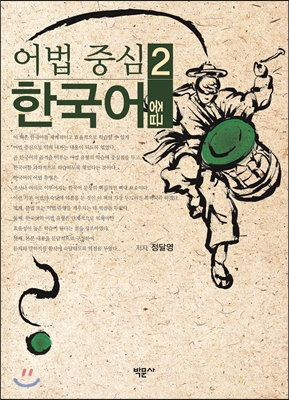
Grammar-focused Korean 2 Intermediate
 |
Description
Book Introduction
The content is organized to focus on grammar so that you can learn Korean systematically and efficiently.
It consists of three volumes: beginner, intermediate, and advanced.
First, the emphasis was placed on awakening grammar or grammar types.
Grammar types are the skeleton and framework of a sentence, which is mainly composed of particles and endings.
This book emphasizes that in order to learn accurate Korean, you must master the basic grammar.
Second, it was emphasized that learning Korean grammar types in stages is the most efficient way to learn them.
It was emphasized that learners should always keep in mind that the most efficient way to learn Korean is to start with easy grammar frequently used in everyday sentences and then gradually move on to more difficult grammar.
Third, the text is structured primarily in a question-and-answer format, with an emphasis on simultaneously mastering listening and speaking skills.
The content of the text has been carefully considered to help learners master speaking skills through listening to content in classroom teaching and learning, self-study, recordings, or meeting Koreans.
It consists of three volumes: beginner, intermediate, and advanced.
First, the emphasis was placed on awakening grammar or grammar types.
Grammar types are the skeleton and framework of a sentence, which is mainly composed of particles and endings.
This book emphasizes that in order to learn accurate Korean, you must master the basic grammar.
Second, it was emphasized that learning Korean grammar types in stages is the most efficient way to learn them.
It was emphasized that learners should always keep in mind that the most efficient way to learn Korean is to start with easy grammar frequently used in everyday sentences and then gradually move on to more difficult grammar.
Third, the text is structured primarily in a question-and-answer format, with an emphasis on simultaneously mastering listening and speaking skills.
The content of the text has been carefully considered to help learners master speaking skills through listening to content in classroom teaching and learning, self-study, recordings, or meeting Koreans.
index
Intermediate level
Lesson 1: Infinitive Verbs
1.1 Short negative form “an”
1.2 Long negative form “-ji ida”
1.3 The negative form of the impossible sign “nail”
1.4 Choice of Impossible and Indefinite
1.5 Long negative forms “-ji ida”, “-ji mot ada”
Lesson 2 Subject Honorifics
2.1 The subject honorific “-si-” in the sentence “-ida”
2.2 Subject honorifics in adjective and verb sentences
Lesson 3: Respect for the listener
3.1 Formal Respect for the Listener
3.2 Informal Listener Respect
3.3 Overlapping of honorifics between the listener and the subject
Lesson 4: The Listener's Respect
4.1 Informal speech
4.2 Listener's speech is not polite or polite
4.3 Conversation between superiors and subordinates
Lesson 5: Past tense
5.1 Past tense indication when the stem ends with the vowel “ㅏ”
5.2 Past tense notation when the final vowel of the stem is “ㅗ”
5.3 Past tense notation when the final vowel of the stem is “ㅏ/ㅓ” without a final consonant
5.4 Past tense notation when the final vowel of the stem is other than “ㅏ, ㅗ”
5.5 Past tense of the verb “-hada”
Lesson 6 Interrogative Forms
6.1 Formal question endings
6.2 Informal question endings
6.3 Presumptive interrogative endings
6.4 Questions asking for intent or permission
Lesson 7 Imperative
7.1 Formal expression of commands or requests
7.2 Informal Expressions of Commands or Requests
7.3 Negative expressions in the imperative form
Lesson 8: Cheong-type
8.1 Formal request type
8.2 Informal request type
8.3 Informal speech request type
8.4 Negative request type
8.5 Lowering the negative request type
Lesson 9: Expressing Intention
9.1 Indicating the speaker's intention
9.2 Listener Intention Questions
9.3 Intentional Questions for Superiors
Lesson 10 Modifiers
10.1 Action modifiers
10.2 Degree modifiers of adjectives
10.3 Emphasis of action modifiers
10.4 Best Degree Modifiers
Lesson 11: Direction, Means, and Qualification Indications
11.1 Directional sign investigation
11.2 Investigation of means and tools indications
11.3 Qualification and Identity Verification
Lesson 12 Timekeeping
12.1 Time display investigation
12.2 Investigating start and end time indications
12.3 Period indicator
12.4 Frequency and order indicators
12.5 Conversation Practice
Lesson 13: Spatial Location, Destination, and Opponent
13.1 Positional particles and verbs
13.2 Destination marking particles and verbs
13.3 Relative Indication Particles and Verbs
Lesson 14: Location of Action, Starting Point and Ending Point
14.1 Investigation of the location of the action
14.2 Starting point indication investigation
14.3 Investigation of the destination display
Lesson 15: Conjunctive particles of nouns
15.1 Selective Access Survey
15.2 Connection Survey
15.3 Investigating relative display connections
Lesson 16: Simultaneous and Sequential Connections
16.1 Simultaneous connecting endings of adjectives
16.2 Sequential connecting verb endings
16.3 Sequential Constraint Connective Endings of Verbs
Lesson 17: Simultaneous Connection of Movements
17.1 Simultaneous connection of actions
17.2 Simultaneous progression of actions
17.3 Conversation Practice
Lesson 18: Connection of Reasons and Causes
18.1 Reason and Cause Connective Endings (1)
18.2 Reason and Cause Connective Endings (2)
18.3 Reason and Cause Connective Endings (3)
18.4 Causal Relationship Expressions in Everyday Conversation
Lesson 19 Conditional Connection
19.1 Conditional connective endings of states
19.2 Conditional connective endings of action
19.3 Signs of Conditional Hope
19.4 Indirect conditional connective endings
Lesson 20: Connecting Requirements
20.1 Required Conditional Conjunction Endings
20.2 Phenotype of essential conditions (1)
20.3 Phenotype of essential conditions (2)
20.4 Reviewing the Use of Necessary Conditional Expressions
Search
Lesson 1: Infinitive Verbs
1.1 Short negative form “an”
1.2 Long negative form “-ji ida”
1.3 The negative form of the impossible sign “nail”
1.4 Choice of Impossible and Indefinite
1.5 Long negative forms “-ji ida”, “-ji mot ada”
Lesson 2 Subject Honorifics
2.1 The subject honorific “-si-” in the sentence “-ida”
2.2 Subject honorifics in adjective and verb sentences
Lesson 3: Respect for the listener
3.1 Formal Respect for the Listener
3.2 Informal Listener Respect
3.3 Overlapping of honorifics between the listener and the subject
Lesson 4: The Listener's Respect
4.1 Informal speech
4.2 Listener's speech is not polite or polite
4.3 Conversation between superiors and subordinates
Lesson 5: Past tense
5.1 Past tense indication when the stem ends with the vowel “ㅏ”
5.2 Past tense notation when the final vowel of the stem is “ㅗ”
5.3 Past tense notation when the final vowel of the stem is “ㅏ/ㅓ” without a final consonant
5.4 Past tense notation when the final vowel of the stem is other than “ㅏ, ㅗ”
5.5 Past tense of the verb “-hada”
Lesson 6 Interrogative Forms
6.1 Formal question endings
6.2 Informal question endings
6.3 Presumptive interrogative endings
6.4 Questions asking for intent or permission
Lesson 7 Imperative
7.1 Formal expression of commands or requests
7.2 Informal Expressions of Commands or Requests
7.3 Negative expressions in the imperative form
Lesson 8: Cheong-type
8.1 Formal request type
8.2 Informal request type
8.3 Informal speech request type
8.4 Negative request type
8.5 Lowering the negative request type
Lesson 9: Expressing Intention
9.1 Indicating the speaker's intention
9.2 Listener Intention Questions
9.3 Intentional Questions for Superiors
Lesson 10 Modifiers
10.1 Action modifiers
10.2 Degree modifiers of adjectives
10.3 Emphasis of action modifiers
10.4 Best Degree Modifiers
Lesson 11: Direction, Means, and Qualification Indications
11.1 Directional sign investigation
11.2 Investigation of means and tools indications
11.3 Qualification and Identity Verification
Lesson 12 Timekeeping
12.1 Time display investigation
12.2 Investigating start and end time indications
12.3 Period indicator
12.4 Frequency and order indicators
12.5 Conversation Practice
Lesson 13: Spatial Location, Destination, and Opponent
13.1 Positional particles and verbs
13.2 Destination marking particles and verbs
13.3 Relative Indication Particles and Verbs
Lesson 14: Location of Action, Starting Point and Ending Point
14.1 Investigation of the location of the action
14.2 Starting point indication investigation
14.3 Investigation of the destination display
Lesson 15: Conjunctive particles of nouns
15.1 Selective Access Survey
15.2 Connection Survey
15.3 Investigating relative display connections
Lesson 16: Simultaneous and Sequential Connections
16.1 Simultaneous connecting endings of adjectives
16.2 Sequential connecting verb endings
16.3 Sequential Constraint Connective Endings of Verbs
Lesson 17: Simultaneous Connection of Movements
17.1 Simultaneous connection of actions
17.2 Simultaneous progression of actions
17.3 Conversation Practice
Lesson 18: Connection of Reasons and Causes
18.1 Reason and Cause Connective Endings (1)
18.2 Reason and Cause Connective Endings (2)
18.3 Reason and Cause Connective Endings (3)
18.4 Causal Relationship Expressions in Everyday Conversation
Lesson 19 Conditional Connection
19.1 Conditional connective endings of states
19.2 Conditional connective endings of action
19.3 Signs of Conditional Hope
19.4 Indirect conditional connective endings
Lesson 20: Connecting Requirements
20.1 Required Conditional Conjunction Endings
20.2 Phenotype of essential conditions (1)
20.3 Phenotype of essential conditions (2)
20.4 Reviewing the Use of Necessary Conditional Expressions
Search
GOODS SPECIFICS
- Date of publication: February 20, 2014
- Page count, weight, size: 476 pages | 350g | 160*232*30mm
- ISBN13: 9788998468194
- ISBN10: 8998468190
You may also like
카테고리
korean


korean

![GQ KOREA Mark (Monthly): December [2025]](http://librairie.coreenne.fr/cdn/shop/files/8ef265dbbfbf186523ed75ba7319009d.jpg?v=1765340328&width=3840)


