

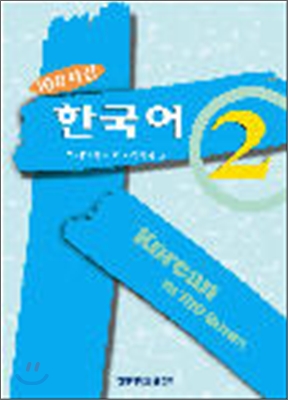
100 Hours Korean 2
 |
Description
Book Introduction
This book is one level higher than 『100 Hours Korean 1』, and like 『100 Hours Korean 1』, it helps you master Korean in a short period of time and also understand Korean culture.
Publisher's Review
It consists of 25 units, and each unit is composed of the unit title, learning objectives, listening and practice, vocabulary, pronunciation practice, key grammar, tasks and activities, grammar explanations, culture, and vocabulary/grammar and index.
The objectives for each unit are presented with a focus on the communication skills and tasks that learners should learn in each unit.
For listening and practice, appropriate everyday conversations were presented at the basic level. Before the conversations, illustrations related to the content of the conversations and questions about the illustrations were placed to encourage learners to engage with the content of the conversations with interest.
Additionally, the content of each conversation is included at the end of each conversation to help learners easily understand the context, situation, and content of the conversation.
Vocabulary is presented by selecting essential vocabulary for each topic of each unit and providing translations in the learner's native language to make the meaning easier to understand.
Pronunciation practice is designed to help students learn the pronunciation rules that are essential for beginners by extracting pronunciation examples from the dialogues in each unit.
The main grammar is presented in a step-by-step manner suitable for beginners, with the main grammar and sentence structures presented in the dialogues of each unit.
Assignments and activities are designed to enable students to complete tasks that are aligned with the topic and learning objectives of each unit through a variety of communication activities.
In the grammar explanation, the meaning and usage of the major grammar and sentence patterns covered previously are explained in the learner's native language, followed by example sentences translated into Korean and the learner's native language.
Culture was presented in each unit through explanations, real-life photos, and drawings when it was deemed necessary for understanding Korean in relation to the unit's topic.
The vocabulary and grammar index presents the main vocabulary and grammar/sentence patterns covered in each unit, along with information on the page number on which they were presented.
This textbook is more effective when used in conjunction with the supplementary textbook, "Reading Korean for Beginners (Yonsei University Press)," which includes principles of the Korean alphabet and intensive pronunciation practice.
The objectives for each unit are presented with a focus on the communication skills and tasks that learners should learn in each unit.
For listening and practice, appropriate everyday conversations were presented at the basic level. Before the conversations, illustrations related to the content of the conversations and questions about the illustrations were placed to encourage learners to engage with the content of the conversations with interest.
Additionally, the content of each conversation is included at the end of each conversation to help learners easily understand the context, situation, and content of the conversation.
Vocabulary is presented by selecting essential vocabulary for each topic of each unit and providing translations in the learner's native language to make the meaning easier to understand.
Pronunciation practice is designed to help students learn the pronunciation rules that are essential for beginners by extracting pronunciation examples from the dialogues in each unit.
The main grammar is presented in a step-by-step manner suitable for beginners, with the main grammar and sentence structures presented in the dialogues of each unit.
Assignments and activities are designed to enable students to complete tasks that are aligned with the topic and learning objectives of each unit through a variety of communication activities.
In the grammar explanation, the meaning and usage of the major grammar and sentence patterns covered previously are explained in the learner's native language, followed by example sentences translated into Korean and the learner's native language.
Culture was presented in each unit through explanations, real-life photos, and drawings when it was deemed necessary for understanding Korean in relation to the unit's topic.
The vocabulary and grammar index presents the main vocabulary and grammar/sentence patterns covered in each unit, along with information on the page number on which they were presented.
This textbook is more effective when used in conjunction with the supplementary textbook, "Reading Korean for Beginners (Yonsei University Press)," which includes principles of the Korean alphabet and intensive pronunciation practice.
GOODS SPECIFICS
- Date of issue: June 25, 2004
- Page count, weight, size: 223 pages | Checking size
- ISBN13: 9788971416549
- ISBN10: 8971416548
You may also like
카테고리
korean


korean

![GQ KOREA Mark (Monthly): December [2025]](http://librairie.coreenne.fr/cdn/shop/files/8ef265dbbfbf186523ed75ba7319009d.jpg?v=1765340328&width=3840)


