

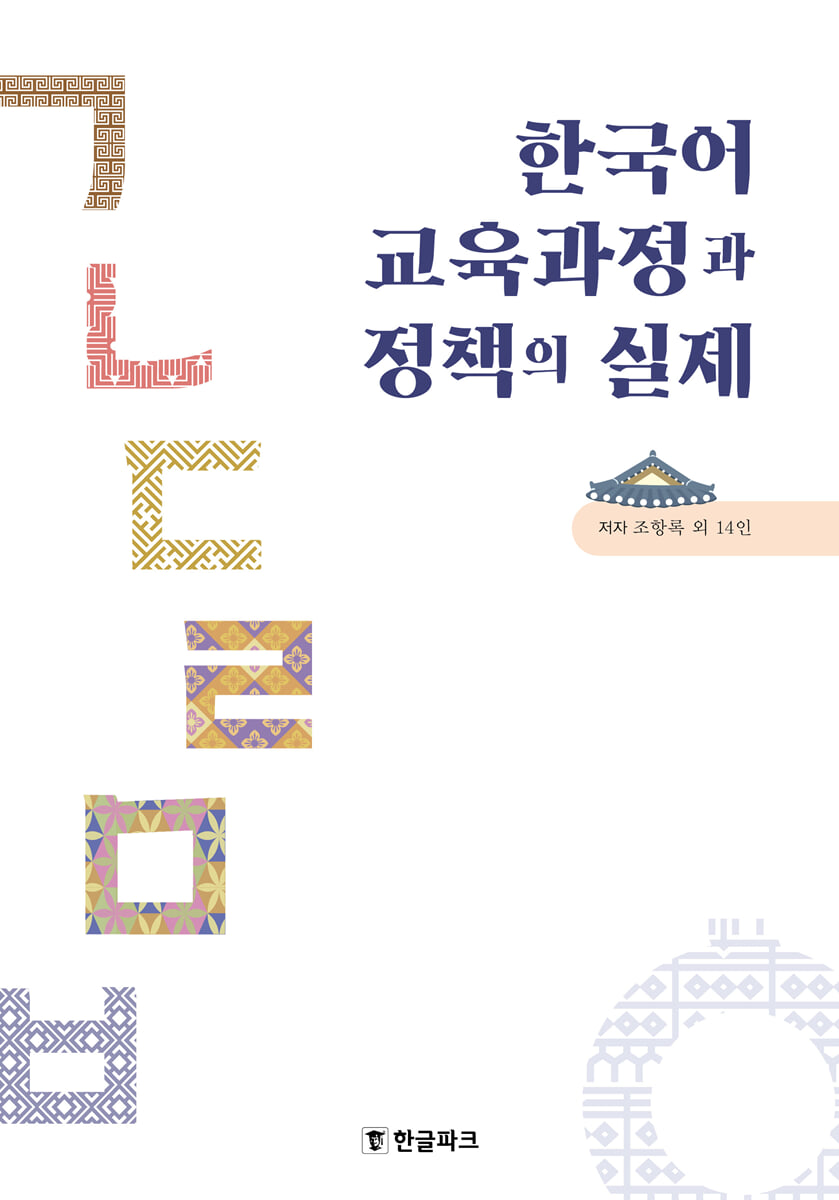
Korean language curriculum and policy in practice
 |
Description
Book Introduction
This book examines the reality of Korean language education curriculum and policies, discusses laws, systems, policies related to Korean language education, and the reality of Korean language education in the field, and aims to contribute to setting the direction of Korean language education, while also assisting in establishing the government's Korean language education policy.
Korean language education, which had been developed primarily by the private sector for a long time, began to see full-scale government involvement in the 1990s, and since the 2000s, various government departments have been playing various roles in Korean language education.
These changes in the field pose many challenges for Korean language education researchers, and the curriculum and policies discussed in this book are precisely those challenges.
Part 1 of this book focuses on discussions about the curriculum related to the Korean language education field, which has undergone significant changes over time, and Part 2 focuses on discussions about Korean language education policy.
Because education in Korea has long been focused solely on national education for the people, Korean language education for foreigners has not been included in the scope of education policy.
However, as time passed, the target of education led by the state was not limited to the citizens, but also included immigrants in Korea and Korean language learners from all over the world in various types.
This soon led to various government departments participating in Korean language education policy, and naturally, policy discussions became active in the Korean language education community.
This book focuses on practical discussions of curriculum and policy rather than theoretical ones.
Since Korean language education is a field-oriented applied discipline, I believe that discussions about practice are just as meaningful as discussions about theory.
The material covered in this book will serve as valuable resources for discussions on Korean language curriculum and policy.
Korean language education, which had been developed primarily by the private sector for a long time, began to see full-scale government involvement in the 1990s, and since the 2000s, various government departments have been playing various roles in Korean language education.
These changes in the field pose many challenges for Korean language education researchers, and the curriculum and policies discussed in this book are precisely those challenges.
Part 1 of this book focuses on discussions about the curriculum related to the Korean language education field, which has undergone significant changes over time, and Part 2 focuses on discussions about Korean language education policy.
Because education in Korea has long been focused solely on national education for the people, Korean language education for foreigners has not been included in the scope of education policy.
However, as time passed, the target of education led by the state was not limited to the citizens, but also included immigrants in Korea and Korean language learners from all over the world in various types.
This soon led to various government departments participating in Korean language education policy, and naturally, policy discussions became active in the Korean language education community.
This book focuses on practical discussions of curriculum and policy rather than theoretical ones.
Since Korean language education is a field-oriented applied discipline, I believe that discussions about practice are just as meaningful as discussions about theory.
The material covered in this book will serve as valuable resources for discussions on Korean language curriculum and policy.
- You can preview some of the book's contents.
Preview
index
introduction
Part 1 Korean Language Curriculum
01 Academic Identity of Korean Language Education: Implications for Curriculum and Policy Discussions (Provisions)
02 Academic Purpose Korean Language Curriculum (Jeong Seo-young)
03 Social Integration Program Korean Language Curriculum (Jeong Hye-ran)
04 Korean Language Education Course for Migrant Workers in Korea (Lee Soon-ae)
05 Korean Arts and Culture Education for Korean Language Learners (Woo Seung-hee)
06 Korean Language Major Curriculum at a University in Thailand (Hwa-Hyeon Ahn)
07 Korean Culture Education at Mongolian Schools in Korea (Jambal Minjinrham)
Part 2 Korean Language Education Policy
08 Progress in Multicultural Society and Language Policy in Korea (Jeong Ho-seon)
09 Youth with Immigration Backgrounds and Korean Language Education Policy (Jeong Seo-yoon)
10. Identity of Vietnamese Marriage Immigrant Women through Narrative Exploration (Park Seon-yeong)
Policies and Education Systems for Students with Migrant Backgrounds in 11 European Countries (Lee Yu-in)
12. Policy for Korean Language Teachers as a Foreign Language (Kim Min-su)
13. King Sejong Institute's Policy for Promoting Korean Language Abroad (Sonpyeong)
14. Policy for Training Teachers of Native Languages as Foreign Languages in Korea and China (Yoo Ju-myeong)
15 Korean Interculturalism and Social Integration Policy (Kang Byeong-seok)
Part 1 Korean Language Curriculum
01 Academic Identity of Korean Language Education: Implications for Curriculum and Policy Discussions (Provisions)
02 Academic Purpose Korean Language Curriculum (Jeong Seo-young)
03 Social Integration Program Korean Language Curriculum (Jeong Hye-ran)
04 Korean Language Education Course for Migrant Workers in Korea (Lee Soon-ae)
05 Korean Arts and Culture Education for Korean Language Learners (Woo Seung-hee)
06 Korean Language Major Curriculum at a University in Thailand (Hwa-Hyeon Ahn)
07 Korean Culture Education at Mongolian Schools in Korea (Jambal Minjinrham)
Part 2 Korean Language Education Policy
08 Progress in Multicultural Society and Language Policy in Korea (Jeong Ho-seon)
09 Youth with Immigration Backgrounds and Korean Language Education Policy (Jeong Seo-yoon)
10. Identity of Vietnamese Marriage Immigrant Women through Narrative Exploration (Park Seon-yeong)
Policies and Education Systems for Students with Migrant Backgrounds in 11 European Countries (Lee Yu-in)
12. Policy for Korean Language Teachers as a Foreign Language (Kim Min-su)
13. King Sejong Institute's Policy for Promoting Korean Language Abroad (Sonpyeong)
14. Policy for Training Teachers of Native Languages as Foreign Languages in Korea and China (Yoo Ju-myeong)
15 Korean Interculturalism and Social Integration Policy (Kang Byeong-seok)
GOODS SPECIFICS
- Publication date: November 28, 2023
- Page count, weight, size: 380 pages | 175*250*30mm
- ISBN13: 9791167340436
- ISBN10: 1167340434
You may also like
카테고리
korean


korean

![GQ KOREA Mark (Monthly): December [2025]](http://librairie.coreenne.fr/cdn/shop/files/8ef265dbbfbf186523ed75ba7319009d.jpg?v=1765340328&width=3840)


