

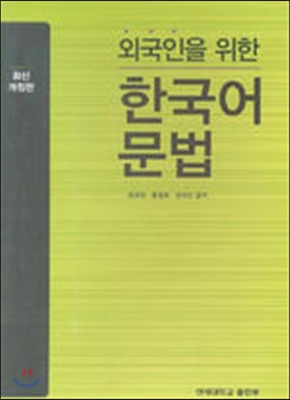
Korean Grammar for Foreigners
 |
Description
Book Introduction
This book is designed to be a reference for anyone who is just starting to learn Korean or has more advanced knowledge.
And it has the characteristic of being a textbook written in dictionary format so that learners can easily access it.
In this latest revision, we have tried to supplement almost all the grammar that learners need to know and need, except for special things like gore and dialect, and we have also paid attention to the arrangement problem to make it easier to look up.
And the practice problems were included as an appendix.
And it has the characteristic of being a textbook written in dictionary format so that learners can easily access it.
In this latest revision, we have tried to supplement almost all the grammar that learners need to know and need, except for special things like gore and dialect, and we have also paid attention to the arrangement problem to make it easier to look up.
And the practice problems were included as an appendix.
index
At the beginning of the book
Heading
Chapter 1: Characteristics of Korean Grammar and Sentence Structure
1. Parts of speech in Korean
2. Grammatical features of the Korean language
3. Basic structure of Korean sentences
1) Basic sentence structure
2) Materials for sentence components
3) The form of Korean sentence structure
Chapter 2 Nouns
1. Function of a noun
2. Types of nouns
3. Dependent nouns
1) Nouns that are always used dependently
2) A noun that is an independent noun but is used dependently
Chapter 3 Pronouns
1. Personal pronouns
2. Demonstrative nouns
Chapter 4 Investigation
1. Yangsu Temple
1) Korean positive numeral
2) Chinese character positive numeral
2. Ordinal numbers
1) Korean ordinal numbers
2) Chinese character ordinal numerals
Chapter 5 Verbs
1. Action verbs
2. Stative verbs
3. Verb '-ida'
4. Verb 'to be'
5. Verb conjugation
1) How to use
2) Types of use
3) Suffix of conjugation
4) Irregular verbs
Chapter 6: Adjectives
1. Indicative adjective
2. Detective Su-gwan
3. Sexual Correlation Detective
Chapter 7 Adverbs
1. Classification by meaning
1) Adverb of time
2) Adverbs of frequency
3) General adverbs
4) Adverb of degree
2. Classification by word formation method
1) Original adverb
2) Derivative adverb
3) Unidentifiable adverb
4) Conjunction adverb
5) Onomatopoeia and mimetic adverbs
3. Adverbial form of verb by conjugation
4. Position of adverbs
Chapter 8 Interjections
1. Expresses the speaker's instinctive surprise or feeling.
2. Used when calling or answering someone.
3. There are words that I use habitually when speaking.
Chapter 9 Investigation
1. Particle
1) Nominative particle
2) Objective particle
3) Particle
4) Attributive particle
5) Sub-investigation
6) Vocative particle
2. Connection investigation
Chapter 10 Tenses
1. Expression using the conjugation ending of the final form
1) Present tense
2) Past tense
3) Future tense
4) Progressive
Chapter 11 Honorifics and Politeness
1. Subject honorifics
2. Relative honorifics
1) Formal
2) Informal
3. Expression of pitch using vocabulary
Chapter 12 Denial
1. Negation of descriptive and interrogative sentences
2. Negation of imperative and request sentences
3. Negation by word
4. Negatives used in confirmatory questions
Chapter 13 Special Expressions Using Conjugative Endings
1. Concluding suffix
1) Endings with special usage
2. Connective endings
3. Adjectival endings
4. Noun endings
Chapter 14 Auxiliary Verbs
1. Auxiliary verbs of progress
2. Auxiliary verbs of conclusion
3. Auxiliary verbs of service
4. Auxiliary verbs of attempt
5. Auxiliary verbs of repetition
6. Auxiliary verbs of possession
7. Auxiliary verbs of hope
8. Auxiliary verbs of state
9. Negative auxiliary verbs
10. Impossible auxiliary verbs
Chapter 15 Passive and Causative Voices
1. Passive
1) Single-type passive
2) Long-term passive
2. Sadong
1) Single-syllable verb
2) Jang Hyeong-sa-dong
Chapter 16: Speaking
1. Direct speech
2. Indirect speech
1) Characteristics of indirect speech
2) Omission of citation particles and formal verbs
Chapter 17 Prefixes and Suffixes
1. Prefix
2. Suffix
Reference punctuation marks
References
Search
Heading
Chapter 1: Characteristics of Korean Grammar and Sentence Structure
1. Parts of speech in Korean
2. Grammatical features of the Korean language
3. Basic structure of Korean sentences
1) Basic sentence structure
2) Materials for sentence components
3) The form of Korean sentence structure
Chapter 2 Nouns
1. Function of a noun
2. Types of nouns
3. Dependent nouns
1) Nouns that are always used dependently
2) A noun that is an independent noun but is used dependently
Chapter 3 Pronouns
1. Personal pronouns
2. Demonstrative nouns
Chapter 4 Investigation
1. Yangsu Temple
1) Korean positive numeral
2) Chinese character positive numeral
2. Ordinal numbers
1) Korean ordinal numbers
2) Chinese character ordinal numerals
Chapter 5 Verbs
1. Action verbs
2. Stative verbs
3. Verb '-ida'
4. Verb 'to be'
5. Verb conjugation
1) How to use
2) Types of use
3) Suffix of conjugation
4) Irregular verbs
Chapter 6: Adjectives
1. Indicative adjective
2. Detective Su-gwan
3. Sexual Correlation Detective
Chapter 7 Adverbs
1. Classification by meaning
1) Adverb of time
2) Adverbs of frequency
3) General adverbs
4) Adverb of degree
2. Classification by word formation method
1) Original adverb
2) Derivative adverb
3) Unidentifiable adverb
4) Conjunction adverb
5) Onomatopoeia and mimetic adverbs
3. Adverbial form of verb by conjugation
4. Position of adverbs
Chapter 8 Interjections
1. Expresses the speaker's instinctive surprise or feeling.
2. Used when calling or answering someone.
3. There are words that I use habitually when speaking.
Chapter 9 Investigation
1. Particle
1) Nominative particle
2) Objective particle
3) Particle
4) Attributive particle
5) Sub-investigation
6) Vocative particle
2. Connection investigation
Chapter 10 Tenses
1. Expression using the conjugation ending of the final form
1) Present tense
2) Past tense
3) Future tense
4) Progressive
Chapter 11 Honorifics and Politeness
1. Subject honorifics
2. Relative honorifics
1) Formal
2) Informal
3. Expression of pitch using vocabulary
Chapter 12 Denial
1. Negation of descriptive and interrogative sentences
2. Negation of imperative and request sentences
3. Negation by word
4. Negatives used in confirmatory questions
Chapter 13 Special Expressions Using Conjugative Endings
1. Concluding suffix
1) Endings with special usage
2. Connective endings
3. Adjectival endings
4. Noun endings
Chapter 14 Auxiliary Verbs
1. Auxiliary verbs of progress
2. Auxiliary verbs of conclusion
3. Auxiliary verbs of service
4. Auxiliary verbs of attempt
5. Auxiliary verbs of repetition
6. Auxiliary verbs of possession
7. Auxiliary verbs of hope
8. Auxiliary verbs of state
9. Negative auxiliary verbs
10. Impossible auxiliary verbs
Chapter 15 Passive and Causative Voices
1. Passive
1) Single-type passive
2) Long-term passive
2. Sadong
1) Single-syllable verb
2) Jang Hyeong-sa-dong
Chapter 16: Speaking
1. Direct speech
2. Indirect speech
1) Characteristics of indirect speech
2) Omission of citation particles and formal verbs
Chapter 17 Prefixes and Suffixes
1. Prefix
2. Suffix
Reference punctuation marks
References
Search
GOODS SPECIFICS
- Date of issue: July 30, 2014
- Page count, weight, size: 305 pages | 153*224*30mm
- ISBN13: 9788971419458
- ISBN10: 8971419458
You may also like
카테고리
korean


korean

![GQ KOREA Mark (Monthly): December [2025]](http://librairie.coreenne.fr/cdn/shop/files/8ef265dbbfbf186523ed75ba7319009d.jpg?v=1765340328&width=3840)


