

A Guide to Practical Korean Writing (Beginner-Intermediate)
 |
Description
Book Introduction
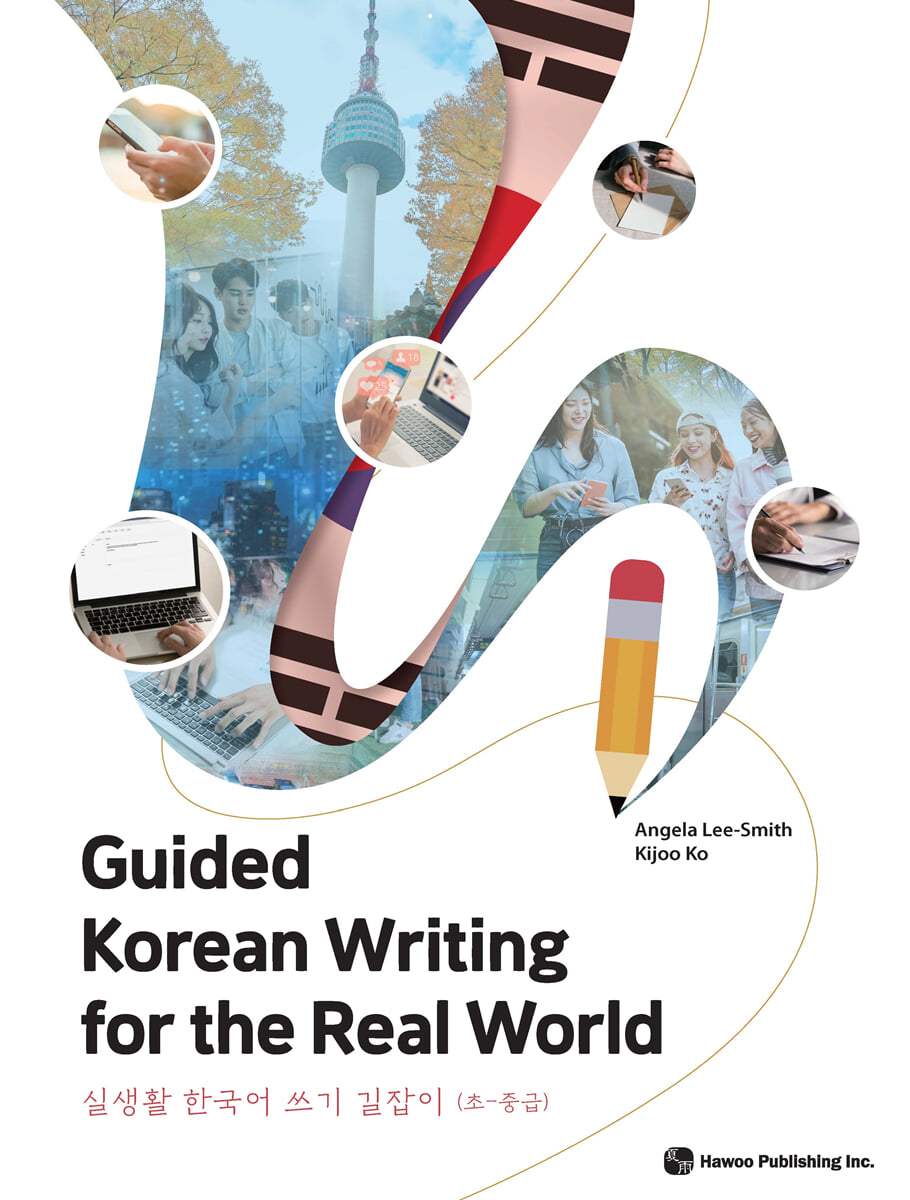
In today's digital age, text communication has become an integral part of our lives, spanning a variety of platforms such as email, chat, text messaging, and social media.
To effectively explore these real-world writing situations, this book provides step-by-step writing activities designed to equip elementary school Korean language learners with essential written communication skills at low- to mid-proficiency levels.
This book focuses on five important writing skills: introduction and explanation, inquiry and request, narration and explanation, evaluation and report, and argument and persuasion.
Each skill is explored through five comprehensive lessons to provide learners with a thorough understanding of Korean writing.
To effectively explore these real-world writing situations, this book provides step-by-step writing activities designed to equip elementary school Korean language learners with essential written communication skills at low- to mid-proficiency levels.
This book focuses on five important writing skills: introduction and explanation, inquiry and request, narration and explanation, evaluation and report, and argument and persuasion.
Each skill is explored through five comprehensive lessons to provide learners with a thorough understanding of Korean writing.
index
Introduction
Functions and Topics
1.1 Self-Introduction
1.2 Hobbies and Interests
1.3 Daily Routines
1.4 Home and School
1.5 Giving Directions
2.1 Invitations
2.2 Making reservations and appointments
2.3 Joining Clubs
2.4 Emails and Letters
2.5 Buying Things
3.1 Personal Daily Journal
3.2 Congratulations and Thanks
3.3 Refusals and Apologies
3.4 Filling Out Forms
3.5 Plans
4.1 Reviewing Places
4.2 Shopping Reviews
4.3 Reviewing Activities
4.4 Appreciation Reports
4.5 Travel Reviews Reviewing Trips
5.1 For and Against
5.2 Advice
5.3 Argument and Suggestion
5.4 Persuasion
5.5 Notices
Confusing Spacing
Confusing Spelling
Confusing Foreign Word Notation
Functions and Topics
1.1 Self-Introduction
1.2 Hobbies and Interests
1.3 Daily Routines
1.4 Home and School
1.5 Giving Directions
2.1 Invitations
2.2 Making reservations and appointments
2.3 Joining Clubs
2.4 Emails and Letters
2.5 Buying Things
3.1 Personal Daily Journal
3.2 Congratulations and Thanks
3.3 Refusals and Apologies
3.4 Filling Out Forms
3.5 Plans
4.1 Reviewing Places
4.2 Shopping Reviews
4.3 Reviewing Activities
4.4 Appreciation Reports
4.5 Travel Reviews Reviewing Trips
5.1 For and Against
5.2 Advice
5.3 Argument and Suggestion
5.4 Persuasion
5.5 Notices
Confusing Spacing
Confusing Spelling
Confusing Foreign Word Notation
Publisher's Review
1.
Learning Objectives and Actionable Statements
Every lesson begins with clearly defined learning objectives and corresponding can-do statements.
These objectives describe what you will achieve by the end of each lesson, and the can-do statements set performance standards for your writing skills.
2.
Useful vocabulary, grammar, and expressions
This section provides a comprehensive overview of commonly used expressions and grammar patterns in the writing topics covered in each lesson.
Familiarizing yourself with these essential language elements beforehand will help you understand writing samples and prepare you for subsequent writing activities.
3.
Sample writing
Each lesson provides two to three writing samples that serve as benchmarks for assessing your writing skills and as examples from which you can learn.
After completing the course, you can aim for writing at a similar level to these samples, using them as a guide to track your progress and identify areas for improvement.
4.
Practice before writing
Pre-writing exercises form an initial guiding step toward achieving your intended learning goals.
At this stage, you brainstorm ideas, organize your thoughts, practice relevant vocabulary and expressions, and draft sentences or paragraphs.
5.
Writing interpersonal relationships
Actual written communication often involves exchanging ideas, sending messages, and responding to others.
This section describes practice problems that simulate interpersonal communication scenarios.
You can improve your interpersonal communication skills in writing by practicing written interactions that may occur in your daily life.
6.
Presentation Writing
Often, you'll need to create website content, write advertisements or reports, or create PowerPoint presentations for your audience.
This section provides readers with tasks to recreate and customize real-world situations.
7.
Writing Tips
In this section you will find descriptions of writing conventions, mechanics, idiomatic expressions, phrases, and cultural practices.
Learning Objectives and Actionable Statements
Every lesson begins with clearly defined learning objectives and corresponding can-do statements.
These objectives describe what you will achieve by the end of each lesson, and the can-do statements set performance standards for your writing skills.
2.
Useful vocabulary, grammar, and expressions
This section provides a comprehensive overview of commonly used expressions and grammar patterns in the writing topics covered in each lesson.
Familiarizing yourself with these essential language elements beforehand will help you understand writing samples and prepare you for subsequent writing activities.
3.
Sample writing
Each lesson provides two to three writing samples that serve as benchmarks for assessing your writing skills and as examples from which you can learn.
After completing the course, you can aim for writing at a similar level to these samples, using them as a guide to track your progress and identify areas for improvement.
4.
Practice before writing
Pre-writing exercises form an initial guiding step toward achieving your intended learning goals.
At this stage, you brainstorm ideas, organize your thoughts, practice relevant vocabulary and expressions, and draft sentences or paragraphs.
5.
Writing interpersonal relationships
Actual written communication often involves exchanging ideas, sending messages, and responding to others.
This section describes practice problems that simulate interpersonal communication scenarios.
You can improve your interpersonal communication skills in writing by practicing written interactions that may occur in your daily life.
6.
Presentation Writing
Often, you'll need to create website content, write advertisements or reports, or create PowerPoint presentations for your audience.
This section provides readers with tasks to recreate and customize real-world situations.
7.
Writing Tips
In this section you will find descriptions of writing conventions, mechanics, idiomatic expressions, phrases, and cultural practices.
GOODS SPECIFICS
- Date of issue: January 15, 2024
- Page count, weight, size: 270 pages | 188*257*20mm
- ISBN13: 9791167481184
- ISBN10: 1167481186
You may also like
카테고리
korean


korean

![GQ KOREA Mark (Monthly): December [2025]](http://librairie.coreenne.fr/cdn/shop/files/8ef265dbbfbf186523ed75ba7319009d.jpg?v=1765340328&width=3840)


