

Learning Korean through stories
 |
Description
Book Introduction
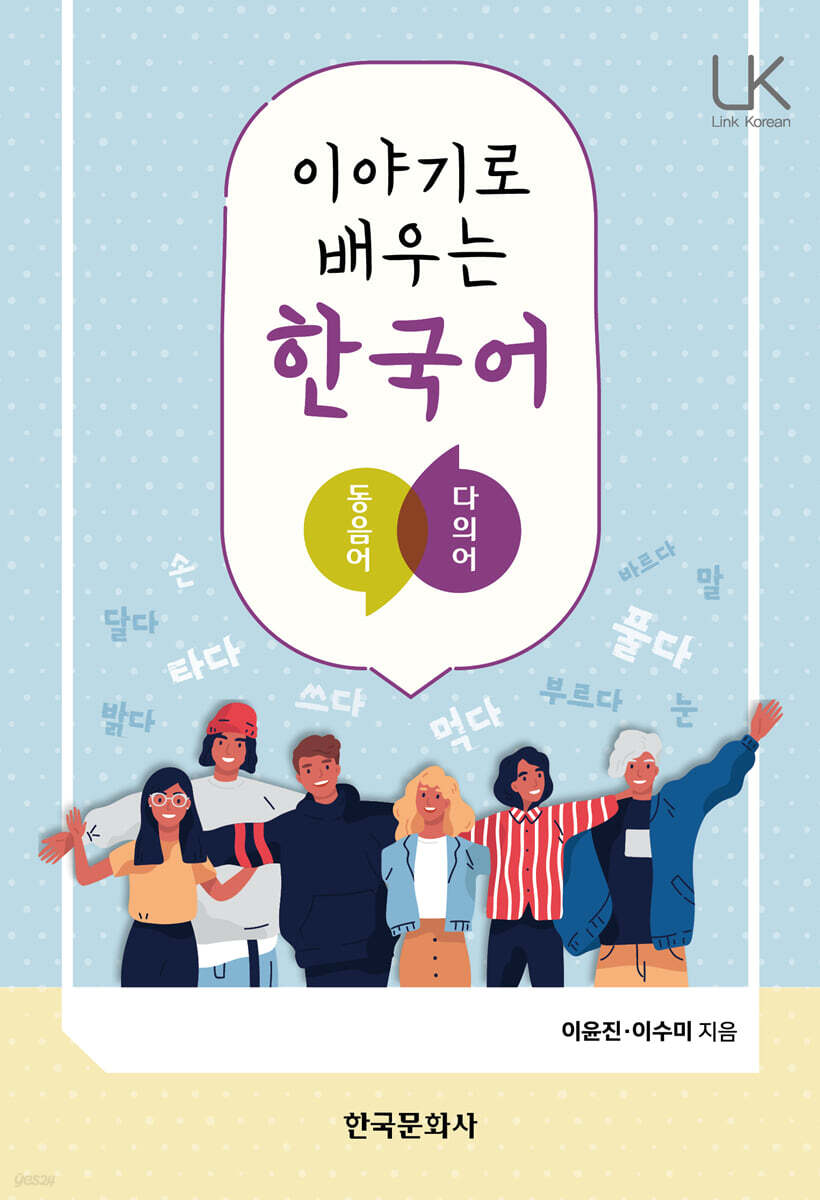
『Learn Korean through Stories』 is a book that allows you to learn Korean naturally by reading a story.
Everyone knows that vocabulary is important in learning Korean.
In order to properly understand and use vocabulary, you must also know 'the multiple meanings of a single word' and 'words that have the same pronunciation but different meanings'.
The entire story of 『Learning Korean through Stories』 contains 30 homonyms and polysemous words frequently used by Koreans.
You can read the 30 episodes of "Learn Korean through Stories" in order, or you can start by finding and reading the episodes that contain homonyms or polysemous words that you want to study.
Everyone knows that vocabulary is important in learning Korean.
In order to properly understand and use vocabulary, you must also know 'the multiple meanings of a single word' and 'words that have the same pronunciation but different meanings'.
The entire story of 『Learning Korean through Stories』 contains 30 homonyms and polysemous words frequently used by Koreans.
You can read the 30 episodes of "Learn Korean through Stories" in order, or you can start by finding and reading the episodes that contain homonyms or polysemous words that you want to study.
- You can preview some of the book's contents.
Preview
index
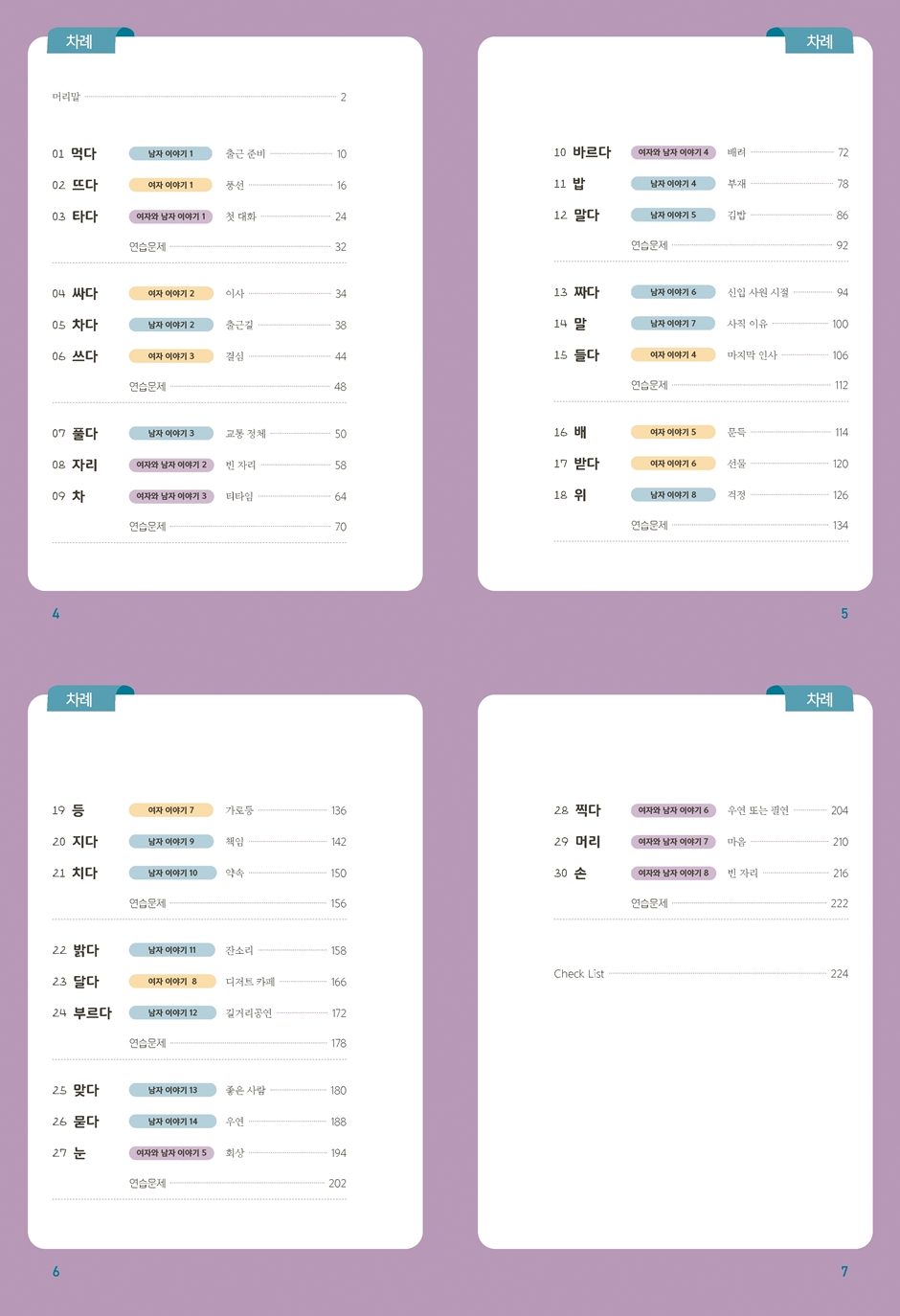
01 Eating Man Story 1 Getting Ready for Work
02 The Story of a Girl Who Knitted 1 Balloon
03 Tada Woman and Man Story 1 First Conversation
Practice problems
04 Cheap Woman Story 2 Moving
05 Chada Man Story 2 On the way to work
06 The Story of a Woman Who Writes 3 Decision
Practice problems
07 Solda Man Story 3 Traffic Jam
08 Seats Woman and Man Story 2 Empty Seats
09 Women and Men Talk 3 Tea Time
Practice problems
10 Barda Women and Men Stories 4 Consideration
11 Bob Man Story 4 Absence
12 Malda Man Story 5 Kimbap
Practice problems
13 The Story of a Man Who Was a Squeezer 6 When He Was a New Employee
14. The Man Who Talked 7 Reasons for Resignation
15 Listen to the Woman's Story 4 Final Greetings
Practice problems
16 Times Woman Story 5 Suddenly
17 Received a Woman's Story 6 Gift
18th Man's Story 8 Worries
Practice problems
19th Girl's Story 7 Streetlight
20 Lost Man Story 9 Responsibility
21 Chida Man Story 10 Promises
Practice problems
22 Bright Man Story 11 Nagging
23 Sweet Woman Story 8 Dessert Cafe
24 Calling Man Story 12 Street Performance
Practice problems
25 Right Man Story 13 Good Man
26 Ask a Man Story 14 Chance
27 Snow Woman and Man Story 5 Flashback
Practice problems
28 Take a picture of a woman and a man talking 6 Coincidence or fate
29 Head Woman and Man Story 7 Heart
30 Hands Woman and Man Story 8 Empty Seat
Practice problems
Check List
02 The Story of a Girl Who Knitted 1 Balloon
03 Tada Woman and Man Story 1 First Conversation
Practice problems
04 Cheap Woman Story 2 Moving
05 Chada Man Story 2 On the way to work
06 The Story of a Woman Who Writes 3 Decision
Practice problems
07 Solda Man Story 3 Traffic Jam
08 Seats Woman and Man Story 2 Empty Seats
09 Women and Men Talk 3 Tea Time
Practice problems
10 Barda Women and Men Stories 4 Consideration
11 Bob Man Story 4 Absence
12 Malda Man Story 5 Kimbap
Practice problems
13 The Story of a Man Who Was a Squeezer 6 When He Was a New Employee
14. The Man Who Talked 7 Reasons for Resignation
15 Listen to the Woman's Story 4 Final Greetings
Practice problems
16 Times Woman Story 5 Suddenly
17 Received a Woman's Story 6 Gift
18th Man's Story 8 Worries
Practice problems
19th Girl's Story 7 Streetlight
20 Lost Man Story 9 Responsibility
21 Chida Man Story 10 Promises
Practice problems
22 Bright Man Story 11 Nagging
23 Sweet Woman Story 8 Dessert Cafe
24 Calling Man Story 12 Street Performance
Practice problems
25 Right Man Story 13 Good Man
26 Ask a Man Story 14 Chance
27 Snow Woman and Man Story 5 Flashback
Practice problems
28 Take a picture of a woman and a man talking 6 Coincidence or fate
29 Head Woman and Man Story 7 Heart
30 Hands Woman and Man Story 8 Empty Seat
Practice problems
Check List
Detailed image
Publisher's Review
The features of 『Learn Korean through Stories』 are as follows.
- It's fun because the main character's daily life episodes (30 episodes) are connected to form one whole story.
- Illustrations that show scenes and situations make the story easier to understand.
- You can naturally learn the practical usage of 30 major homonyms and polysemy words in Korean.
- A wealth of practice problems are provided so you can review and confirm what you have studied.
preface
『Learn Korean through Stories』 was developed to help you learn Korean naturally through reading a story.
There are two main characters (a man and a woman) in 『Learn Korean through Stories』.
30 episodes from the main characters' daily lives make up one story.
The main characters in the story go about their daily lives, grow as they participate in society, and seriously think about their dreams.
The daily life and life that the main character in the story encounters are ordinary yet special.
If you read while imagining yourself as the main character, you can immerse yourself in the story more realistically.
The entire story contains 30 homonyms and synonyms that are frequently used by Koreans.
For example, in the expressions 'to eat breakfast' and 'to decide', these expressions were presented naturally within the story so that readers could infer the meaning of 'eat' on their own.
As another example, in 'to write' and 'to put on a hat', the word '쓰다' is written and pronounced the same, but is a completely different word.
In 『Learning Korean through Stories』, these vocabulary words are made easy to understand through situations and context.
Everyone knows the importance of vocabulary in learning Korean.
In order to properly understand and use vocabulary, you must also know 'the multiple meanings of a single word' and 'words that have the same pronunciation but different meanings'.
A word that has multiple meanings is called a polysemy.
Knowing polysemy allows you to use vocabulary appropriately in context.
Also, 'words that have the same pronunciation or spelling but completely different meanings' are 'homonyms'.
In 'eat pear', 'ride a boat/ship', and 'have a stomachache', 'pear' is a very representative example of a homonym.
In 『Learning Korean through Stories』, we also provide practical practice problems so that you can check your understanding of homonyms and polysemy.
Practice problems will be useful for learning the meaning and use of Korean vocabulary in context.
You can read the 30 episodes of 『Learn Korean through Stories』 in order, but you can also start by finding and reading the episodes that contain homonyms or polysemous words you want to study.
This book can be used in a variety of ways to suit your Korean language learning method.
I hope that 『Learning Korean through Stories』 will help you become interested in studying Korean vocabulary and find methods and strategies for learning Korean vocabulary.
- It's fun because the main character's daily life episodes (30 episodes) are connected to form one whole story.
- Illustrations that show scenes and situations make the story easier to understand.
- You can naturally learn the practical usage of 30 major homonyms and polysemy words in Korean.
- A wealth of practice problems are provided so you can review and confirm what you have studied.
preface
『Learn Korean through Stories』 was developed to help you learn Korean naturally through reading a story.
There are two main characters (a man and a woman) in 『Learn Korean through Stories』.
30 episodes from the main characters' daily lives make up one story.
The main characters in the story go about their daily lives, grow as they participate in society, and seriously think about their dreams.
The daily life and life that the main character in the story encounters are ordinary yet special.
If you read while imagining yourself as the main character, you can immerse yourself in the story more realistically.
The entire story contains 30 homonyms and synonyms that are frequently used by Koreans.
For example, in the expressions 'to eat breakfast' and 'to decide', these expressions were presented naturally within the story so that readers could infer the meaning of 'eat' on their own.
As another example, in 'to write' and 'to put on a hat', the word '쓰다' is written and pronounced the same, but is a completely different word.
In 『Learning Korean through Stories』, these vocabulary words are made easy to understand through situations and context.
Everyone knows the importance of vocabulary in learning Korean.
In order to properly understand and use vocabulary, you must also know 'the multiple meanings of a single word' and 'words that have the same pronunciation but different meanings'.
A word that has multiple meanings is called a polysemy.
Knowing polysemy allows you to use vocabulary appropriately in context.
Also, 'words that have the same pronunciation or spelling but completely different meanings' are 'homonyms'.
In 'eat pear', 'ride a boat/ship', and 'have a stomachache', 'pear' is a very representative example of a homonym.
In 『Learning Korean through Stories』, we also provide practical practice problems so that you can check your understanding of homonyms and polysemy.
Practice problems will be useful for learning the meaning and use of Korean vocabulary in context.
You can read the 30 episodes of 『Learn Korean through Stories』 in order, but you can also start by finding and reading the episodes that contain homonyms or polysemous words you want to study.
This book can be used in a variety of ways to suit your Korean language learning method.
I hope that 『Learning Korean through Stories』 will help you become interested in studying Korean vocabulary and find methods and strategies for learning Korean vocabulary.
GOODS SPECIFICS
- Publication date: June 30, 2021
- Page count, weight, size: 232 pages | 328g | 130*190*20mm
- ISBN13: 9791166850301
- ISBN10: 1166850307
You may also like
카테고리
korean


korean

![GQ KOREA Mark (Monthly): December [2025]](http://librairie.coreenne.fr/cdn/shop/files/8ef265dbbfbf186523ed75ba7319009d.jpg?v=1765340328&width=3840)


