

Korean User Guide for Korean Learners 1
 |
Description
Book Introduction
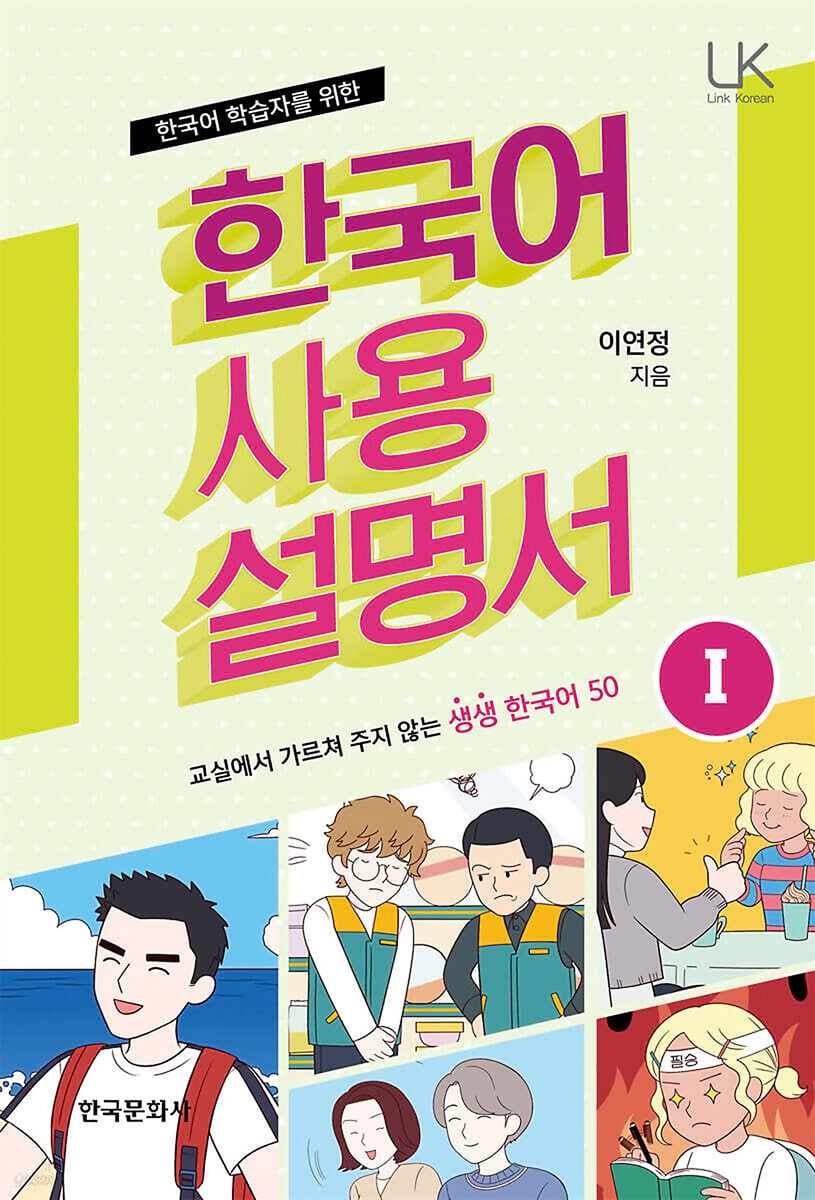
"Korean Language User's Guide for Korean Learners I" is a practical Korean language book that carefully selects and compiles Korean cultural and conversational expressions that Korean learners frequently make mistakes in and are curious about.
This book is packed with the most Korean and practical expressions frequently used by Koreans in their daily lives, vivid expressions that are fully imbued with Korean culture, and seemingly trivial but essential expressions that are easily mistaken.
This book is packed with the most Korean and practical expressions frequently used by Koreans in their daily lives, vivid expressions that are fully imbued with Korean culture, and seemingly trivial but essential expressions that are easily mistaken.
- You can preview some of the book's contents.
Preview
index
preface
Read a book like this!
1.
Expressions that Korean learners often get wrong
'에' and '에서', which change their meaning if used incorrectly
One person ate three servings of pork belly?
Please go to Seongsu Station, not Sangsu Station.
'I' is polite.
There are quite a few 'oppa' and 'unnie' in Korea.
Wear pants, wear a watch, and wear glasses!
There are a lot of pens, pencils, and erasers in the pencil case.
Goodbye? Goodbye!
The more I use 'here/there/over there', the more confusing it gets
The more I use 'come' and 'go', the more confusing they become.
2.
Awkward expressions frequently used by Korean language learners
You should say 'our' mother, not 'my' mother!
'He' and 'She' that don't exist in Korea
The difference between 'I' and 'I am'
Teacher, shall we go have lunch together!?
Is 'you' a polite form of 'you'?
'Thank you' and 'Thank you'
'That's' that the other person must know to use
Why I Say 'Okay'
Between 'hurt' and 'dad'
Oh my! You're so feminine!
3.
Korean people say this!
I was so busy that I was 'out of my mind'.
I'm not hungry, I'm just 'bored'.
I can't open my mouth when I'm standing in front of foreigners.
Stop beating around the bush and tell me!
It's hard to make a living.
You have a lasting effect!
I decided to study Korean.
Just because a bag has long straps doesn't mean it's always successful.
You really have a big liver!
It's completely ruined.
4.
Expressions that take you one step further into Korean culture
Laughing and crying because of seaweed soup!
You are very charming.
Let's eat together later!
Have you eaten?
Would you like a glass of soju?
Why are you so clueless?
The soup is really refreshing!
I've grown very fond of you over the years.
That's because you have a blind spot in your eyes.
The house I saw yesterday keeps catching my eye.
5.
Expressions that confuse Korean language learners
What? The 'egg' came?
Dear customer, your iced Americano has arrived!
You're soft tofu? I'm bibimbap!
How did you come?
Excuse me, how old are you?
Oh my legs! Oh my back!
Just like that.
Where are you going?
The sky and the sea are really blue.
It's not that I'm sad, it's just that I feel sorry.
Read a book like this!
1.
Expressions that Korean learners often get wrong
'에' and '에서', which change their meaning if used incorrectly
One person ate three servings of pork belly?
Please go to Seongsu Station, not Sangsu Station.
'I' is polite.
There are quite a few 'oppa' and 'unnie' in Korea.
Wear pants, wear a watch, and wear glasses!
There are a lot of pens, pencils, and erasers in the pencil case.
Goodbye? Goodbye!
The more I use 'here/there/over there', the more confusing it gets
The more I use 'come' and 'go', the more confusing they become.
2.
Awkward expressions frequently used by Korean language learners
You should say 'our' mother, not 'my' mother!
'He' and 'She' that don't exist in Korea
The difference between 'I' and 'I am'
Teacher, shall we go have lunch together!?
Is 'you' a polite form of 'you'?
'Thank you' and 'Thank you'
'That's' that the other person must know to use
Why I Say 'Okay'
Between 'hurt' and 'dad'
Oh my! You're so feminine!
3.
Korean people say this!
I was so busy that I was 'out of my mind'.
I'm not hungry, I'm just 'bored'.
I can't open my mouth when I'm standing in front of foreigners.
Stop beating around the bush and tell me!
It's hard to make a living.
You have a lasting effect!
I decided to study Korean.
Just because a bag has long straps doesn't mean it's always successful.
You really have a big liver!
It's completely ruined.
4.
Expressions that take you one step further into Korean culture
Laughing and crying because of seaweed soup!
You are very charming.
Let's eat together later!
Have you eaten?
Would you like a glass of soju?
Why are you so clueless?
The soup is really refreshing!
I've grown very fond of you over the years.
That's because you have a blind spot in your eyes.
The house I saw yesterday keeps catching my eye.
5.
Expressions that confuse Korean language learners
What? The 'egg' came?
Dear customer, your iced Americano has arrived!
You're soft tofu? I'm bibimbap!
How did you come?
Excuse me, how old are you?
Oh my legs! Oh my back!
Just like that.
Where are you going?
The sky and the sea are really blue.
It's not that I'm sad, it's just that I feel sorry.
Publisher's Review
Structure of this book
1.
Intro
Look at the illustration and imagine the conversation.
2.
Grammar & Vocabulary/Expressions
Organize the grammar, vocabulary, and expressions used in the conversation.
All grammar, vocabulary, and expressions in the conversation are at the TOPIK Beginner+α level.
3.
conversation
Read the dialogue out loud as if you were acting it out, recalling what you guessed.
Try role-playing with your friends.
4.
Mini lecture
Bolster your Korean knowledge of key expressions with mini-lectures.
If you read the mini-lectures carefully, your knowledge of Korean culture and expressions will expand.
5.
1 minute speech
Try speaking for one minute on a related topic.
Wouldn't it be better if I recorded what I said or studied it with my friends?
6.
Quiz
This is a corner to check what you have learned so far.
Are you confident you can get 100 points?
preface
It's been over a decade since I started dreaming of becoming a person who teaches Korean as a foreign language.
I have taught a diverse range of students from many different countries and have watched them grow at an incredible rate in their Korean language skills.
That is why the connections I have with students who I have met through the common denominator of 'Korean' are invaluable, and I feel great pride as a Korean language teacher.
〈Korean User Guide for Korean LearnersⅠ〉 is a 'Korean Practical Guide' that carefully selects Korean cultural and conversational expressions that Korean learners frequently make mistakes in and are curious about.
This book is packed with the most Korean and practical expressions frequently used by Koreans in their daily lives, vivid expressions that are fully imbued with Korean culture, and seemingly trivial but essential expressions that are easily mistaken.
By adding sections for each expression, such as “Dialogue, Grammar, Vocabulary/Expressions, Mini-Lessons, Quizzes, and 1-Minute Speaking,” we have enabled you to learn the most Korean culture and expressions in a short amount of time and use them in real life.
〈Korean User Guide for Korean LearnersⅠ〉 is a book for Korean learners who are at a beginner level or higher and can read and write Korean.
This book will provide beginner-level Korean learners with a foundation for advancing to the intermediate level, while intermediate learners will be able to speak Korean more naturally and authentically.
This book is also written for those who teach Korean as a foreign language.
I wanted to provide some small help to Koreans who engage in language exchanges with foreigners in Korean, and to teachers who struggle to teach Korean in Korea and abroad.
This book aims to serve as a guide for learning Korean by introducing key Korean expressions that foreigners most want to know and often get wrong.
What's the biggest question foreigners ask when learning Korean? It's, "Will Koreans actually use the expressions I've learned?"
Students who learn Korean on their own also worry about whether the expressions they learn will work in Korea.
Knowing better than anyone else how these learners feel, I've carefully selected only authentic Korean expressions that Koreans use on a daily basis from the perspective of a native Korean speaker who has taught Korean to foreigners for many years.
Therefore, I am confident that this book will be the only practical Korean language book that best meets the needs of learners.
They say there is no royal road to language learning.
However, for those Korean learners who have already studied Korean in various ways and want to upgrade their Korean language skills, we would like to provide a shortcut.
And I hope that “Korean Language User Guide for Korean Learners I” will be a ray of light for those people.
Finally, I cannot forget those who helped me publish this book.
I would like to express my sincere gratitude to author Lee Ji-young, who encouraged me to plan and write “Korean Language User Guide for Korean Learners I,” and to the staff of Korean Culture Publishing, including Director Jo Jeong-heum and Editor Kim Joo-ri, who graciously permitted publication and worked hard to ensure that this book came out into the world in such a wonderful form.
Dongbaek (Dongbaek) in Yongin in 2021, at the crossroads of spring
Author Lee Yeon-jeong
It has been tens of years since I started dreaming of becoming a 'person who teaches Korean as a foreign language'.
Until now, I have taught a variety of students with different nationalities and have watched them grow at an amazing pace in the field of Korean language.
That is why the relationship with the students I met under the common denominator of 'Korean' is invaluable, and I feel great pride as a Korean language instructor.
〈Korean User's Manual for Korean Learners Ⅰ〉 is a 'Practical Book for Korean' compiled with carefully selected Korean culture and conversational expressions that Korean learners often use incorrectly and are curious about.
This book contains the most Korean and practical expressions that Koreans frequently use in their daily lives, vivid expressions showing Korean culture with no change, and key expressions that seem trivial but easy to be mistaken.
Each expression is provided with a 〈conversation sentence, grammar, vocabulary/expression, mini lecture, quiz, 1 minute speaking〉 section, allowing you to learn the most Korean culture and expressions and use them in real life with little time.
〈Korean User's Manual for Korean Learners Ⅰ〉 is a book for Korean learners with a level of 'beginner or higher' who can read and write Korean.
This book will allow Korean learners at the beginner level to establish a foothold to the intermediate level, and intermediate learners to speak more Korean-like Korean naturally.
This book is also written for those who teach Korean as a foreign language.
I wanted to give a little help to Koreans who exchange languages with foreigners in Korean and teachers who struggle to teach Korean at home and abroad.
Through this book, I want to become a guide for Korean speaking education by telling key Korean expressions that foreigners most want to know and often use incorrectly.
When learning Korean, what are foreigners the most curious about? That is, 'Will Koreans actually use the expressions I have learned?' Students who are learning Korean by self-study also worry about whether the expressions they have studied will work in Korea.
Knowing the minds of these learners better than anyone else, I carefully selected only the real Korean expressions that Korean people use every day from the perspective of a teacher who is a native Korean speaker and has been teaching Korean to foreigners for many years.
Therefore, I am confident that this book will be the one and only practical book for Korean that is closest to the needs of learners.
It is said that there is no royal road to language learning.
However, I would like to guide the shortcut to Korean learners who have already been exposed to studying Korean in various ways and want to upgrade their Korean level to the next one.
And I hope that 〈Korean User's Manual for Korean Learners Ⅰ〉 will be a light for such people.
Finally, I cannot forget those who helped me with this book.
I express my deepest gratitude to author Ji Young Lee, who encouraged me to plan and write 〈Korean User's Manual for Korean Learners Ⅰ〉, and those involved in Hankook Publishing House including Editor Joo Ri Kim and Jeong heum Cho, department head of Hankook Publishing House, who was willing to allow publication and worked hard to make this book appear in a wonderful way.
2021 Yongin Dongbaek, on the road where spring comes
Author Yeon Jeong Lee
1.
Intro
Look at the illustration and imagine the conversation.
2.
Grammar & Vocabulary/Expressions
Organize the grammar, vocabulary, and expressions used in the conversation.
All grammar, vocabulary, and expressions in the conversation are at the TOPIK Beginner+α level.
3.
conversation
Read the dialogue out loud as if you were acting it out, recalling what you guessed.
Try role-playing with your friends.
4.
Mini lecture
Bolster your Korean knowledge of key expressions with mini-lectures.
If you read the mini-lectures carefully, your knowledge of Korean culture and expressions will expand.
5.
1 minute speech
Try speaking for one minute on a related topic.
Wouldn't it be better if I recorded what I said or studied it with my friends?
6.
Quiz
This is a corner to check what you have learned so far.
Are you confident you can get 100 points?
preface
It's been over a decade since I started dreaming of becoming a person who teaches Korean as a foreign language.
I have taught a diverse range of students from many different countries and have watched them grow at an incredible rate in their Korean language skills.
That is why the connections I have with students who I have met through the common denominator of 'Korean' are invaluable, and I feel great pride as a Korean language teacher.
〈Korean User Guide for Korean LearnersⅠ〉 is a 'Korean Practical Guide' that carefully selects Korean cultural and conversational expressions that Korean learners frequently make mistakes in and are curious about.
This book is packed with the most Korean and practical expressions frequently used by Koreans in their daily lives, vivid expressions that are fully imbued with Korean culture, and seemingly trivial but essential expressions that are easily mistaken.
By adding sections for each expression, such as “Dialogue, Grammar, Vocabulary/Expressions, Mini-Lessons, Quizzes, and 1-Minute Speaking,” we have enabled you to learn the most Korean culture and expressions in a short amount of time and use them in real life.
〈Korean User Guide for Korean LearnersⅠ〉 is a book for Korean learners who are at a beginner level or higher and can read and write Korean.
This book will provide beginner-level Korean learners with a foundation for advancing to the intermediate level, while intermediate learners will be able to speak Korean more naturally and authentically.
This book is also written for those who teach Korean as a foreign language.
I wanted to provide some small help to Koreans who engage in language exchanges with foreigners in Korean, and to teachers who struggle to teach Korean in Korea and abroad.
This book aims to serve as a guide for learning Korean by introducing key Korean expressions that foreigners most want to know and often get wrong.
What's the biggest question foreigners ask when learning Korean? It's, "Will Koreans actually use the expressions I've learned?"
Students who learn Korean on their own also worry about whether the expressions they learn will work in Korea.
Knowing better than anyone else how these learners feel, I've carefully selected only authentic Korean expressions that Koreans use on a daily basis from the perspective of a native Korean speaker who has taught Korean to foreigners for many years.
Therefore, I am confident that this book will be the only practical Korean language book that best meets the needs of learners.
They say there is no royal road to language learning.
However, for those Korean learners who have already studied Korean in various ways and want to upgrade their Korean language skills, we would like to provide a shortcut.
And I hope that “Korean Language User Guide for Korean Learners I” will be a ray of light for those people.
Finally, I cannot forget those who helped me publish this book.
I would like to express my sincere gratitude to author Lee Ji-young, who encouraged me to plan and write “Korean Language User Guide for Korean Learners I,” and to the staff of Korean Culture Publishing, including Director Jo Jeong-heum and Editor Kim Joo-ri, who graciously permitted publication and worked hard to ensure that this book came out into the world in such a wonderful form.
Dongbaek (Dongbaek) in Yongin in 2021, at the crossroads of spring
Author Lee Yeon-jeong
It has been tens of years since I started dreaming of becoming a 'person who teaches Korean as a foreign language'.
Until now, I have taught a variety of students with different nationalities and have watched them grow at an amazing pace in the field of Korean language.
That is why the relationship with the students I met under the common denominator of 'Korean' is invaluable, and I feel great pride as a Korean language instructor.
〈Korean User's Manual for Korean Learners Ⅰ〉 is a 'Practical Book for Korean' compiled with carefully selected Korean culture and conversational expressions that Korean learners often use incorrectly and are curious about.
This book contains the most Korean and practical expressions that Koreans frequently use in their daily lives, vivid expressions showing Korean culture with no change, and key expressions that seem trivial but easy to be mistaken.
Each expression is provided with a 〈conversation sentence, grammar, vocabulary/expression, mini lecture, quiz, 1 minute speaking〉 section, allowing you to learn the most Korean culture and expressions and use them in real life with little time.
〈Korean User's Manual for Korean Learners Ⅰ〉 is a book for Korean learners with a level of 'beginner or higher' who can read and write Korean.
This book will allow Korean learners at the beginner level to establish a foothold to the intermediate level, and intermediate learners to speak more Korean-like Korean naturally.
This book is also written for those who teach Korean as a foreign language.
I wanted to give a little help to Koreans who exchange languages with foreigners in Korean and teachers who struggle to teach Korean at home and abroad.
Through this book, I want to become a guide for Korean speaking education by telling key Korean expressions that foreigners most want to know and often use incorrectly.
When learning Korean, what are foreigners the most curious about? That is, 'Will Koreans actually use the expressions I have learned?' Students who are learning Korean by self-study also worry about whether the expressions they have studied will work in Korea.
Knowing the minds of these learners better than anyone else, I carefully selected only the real Korean expressions that Korean people use every day from the perspective of a teacher who is a native Korean speaker and has been teaching Korean to foreigners for many years.
Therefore, I am confident that this book will be the one and only practical book for Korean that is closest to the needs of learners.
It is said that there is no royal road to language learning.
However, I would like to guide the shortcut to Korean learners who have already been exposed to studying Korean in various ways and want to upgrade their Korean level to the next one.
And I hope that 〈Korean User's Manual for Korean Learners Ⅰ〉 will be a light for such people.
Finally, I cannot forget those who helped me with this book.
I express my deepest gratitude to author Ji Young Lee, who encouraged me to plan and write 〈Korean User's Manual for Korean Learners Ⅰ〉, and those involved in Hankook Publishing House including Editor Joo Ri Kim and Jeong heum Cho, department head of Hankook Publishing House, who was willing to allow publication and worked hard to make this book appear in a wonderful way.
2021 Yongin Dongbaek, on the road where spring comes
Author Yeon Jeong Lee
GOODS SPECIFICS
- Publication date: May 28, 2021
- Page count, weight, size: 184 pages | 363g | 153*225*20mm
- ISBN13: 9791166850318
- ISBN10: 1166850315
You may also like
카테고리
korean


korean

![GQ KOREA Mark (Monthly): December [2025]](http://librairie.coreenne.fr/cdn/shop/files/8ef265dbbfbf186523ed75ba7319009d.jpg?v=1765340328&width=3840)


