

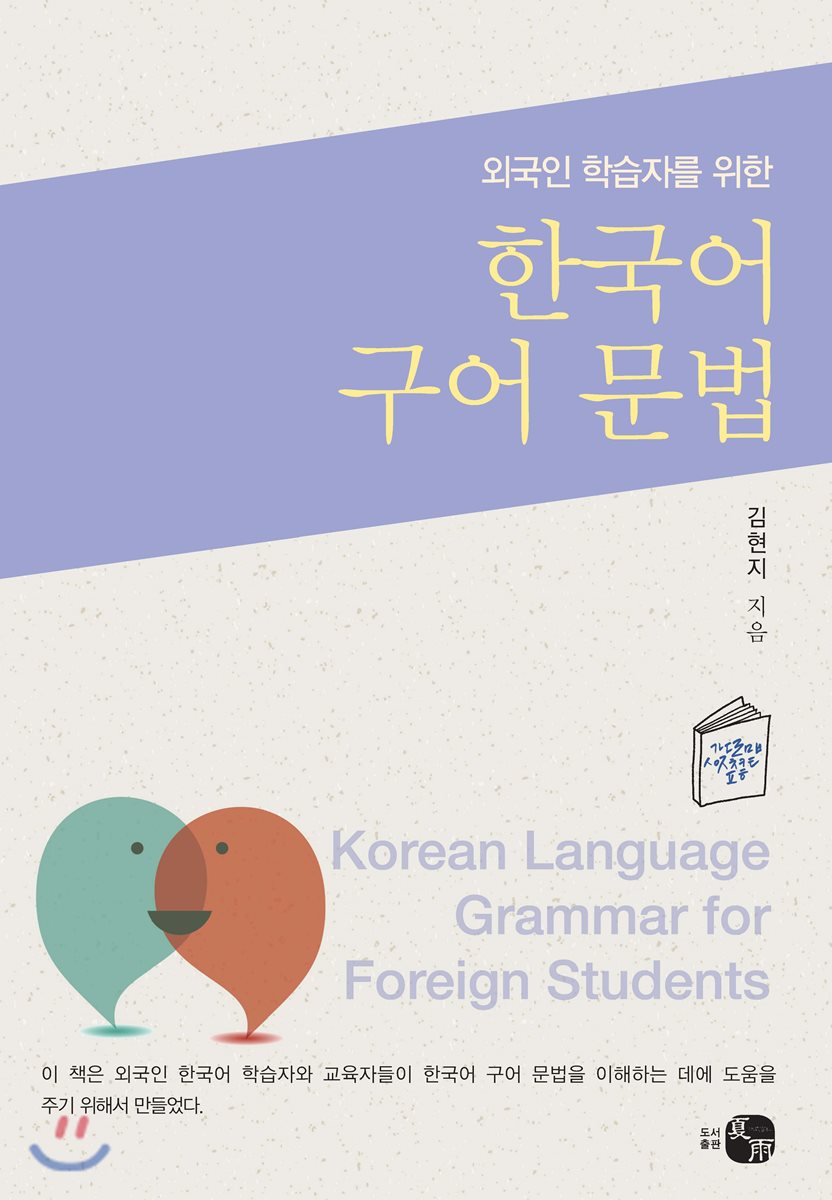
Korean spoken grammar
 |
Description
Book Introduction
This book consists of a total of 13 chapters.
Chapter 1 discusses what Korean spoken grammar is, and Chapter 2 presents specific educational content for teaching spoken grammar.
Chapter 3 examines spelling variations that appear in spoken language, Chapter 4 examines spoken vocabulary, Chapter 5 examines interjections used in spoken language, and Chapter 6 examines discourse markers.
Chapter 7 discusses the matching expression, Chapter 8 discusses the lump expression, Chapter 9 discusses the fragment sentence, and Chapter 10 discusses the interrogative form.
Chapter 11 examines word order inversion, a characteristic type that appears in spoken language, and Chapter 12 examines omission and repetition.
Finally, Chapter 13 concludes the book by discussing future directions for the teaching of spoken grammar.
I hope that readers will gain a little insight into Korean spoken grammar through this book and broaden their understanding of the Korean language.
Through this book, readers will learn what expressions Koreans use in everyday conversation and what forms they take in speaking, and will be able to view speaking from a grammatical perspective.
Chapter 1 discusses what Korean spoken grammar is, and Chapter 2 presents specific educational content for teaching spoken grammar.
Chapter 3 examines spelling variations that appear in spoken language, Chapter 4 examines spoken vocabulary, Chapter 5 examines interjections used in spoken language, and Chapter 6 examines discourse markers.
Chapter 7 discusses the matching expression, Chapter 8 discusses the lump expression, Chapter 9 discusses the fragment sentence, and Chapter 10 discusses the interrogative form.
Chapter 11 examines word order inversion, a characteristic type that appears in spoken language, and Chapter 12 examines omission and repetition.
Finally, Chapter 13 concludes the book by discussing future directions for the teaching of spoken grammar.
I hope that readers will gain a little insight into Korean spoken grammar through this book and broaden their understanding of the Korean language.
Through this book, readers will learn what expressions Koreans use in everyday conversation and what forms they take in speaking, and will be able to view speaking from a grammatical perspective.
index
At the beginning of the book
Recommendation
Chapter 1.
The identity of spoken grammar
1.1.
Concept and nature of spoken grammar
1.2.
The need for oral grammar education
1.3.
The relationship between spoken grammar and other grammars
1.4.
Content elements of spoken grammar
Chapter 2.
Contents of oral grammar education
2.1.
Educational content through comparison with octopuses
2.2.
Educational content centered on spoken language units
2.3.
Educational content considering the perspectives of perception and use
2.4.
Specific teaching content of spoken grammar
Chapter 3.
Spelling variants
3.1.
The concept of spelling variations
3.2.
Types of spelling variations
Chapter 4.
colloquial vocabulary
4.1.
The concept of spoken vocabulary
4.2.
directive expressions
4.3.
Conjunctive adverb
4.4.
Adverb of degree
4.5.
Various adverbs
Chapter 5.
Gantusa
5.1.
The concept of a sniper
5.2.
Types of fighters
Chapter 6.
Discourse marker
6.1.
The concept of discourse markers
6.2.
Topic starter discourse marker
6.3.
Discourse markers for topic connection
6.4.
Discourse markers for topic change
Chapter 7.
Matching expression
7.1.
The concept of the expression of a match
7.2.
Expression of a response according to intonation
7.3.
Expression of response according to the intention of the speaker
Chapter 8.
lump expression
8.1.
Category of lump expression
8.2.
Chunk expressions according to discourse situation
8.3.
Other lump expressions
Chapter 9.
Carved patterns
9.1.
The concept of sculpture
9.2.
Types of carvings
Chapter 10.
Interrogative form
10.1.
The concept of interrogative form
10.2.
Types of interrogative sentences
10.3.
Interrogative discourse function
Chapter 11.
Word order transposition
11.1.
The concept of word order transposition
11.2.
Types of word order transposition
11.3.
The discourse function of word order inversion
Chapter 12.
Omission and repetition
12.1.
The concept of omission and repetition
12.2.
Realization of omission
12.3.
Realization aspect of repetition
Chapter 13.
Direction of development in oral grammar education
13.1.
Integrated instruction of oral grammar elements
13.2.
Companion Research for the Advancement of Spoken Grammar Education
* References
Recommendation
Chapter 1.
The identity of spoken grammar
1.1.
Concept and nature of spoken grammar
1.2.
The need for oral grammar education
1.3.
The relationship between spoken grammar and other grammars
1.4.
Content elements of spoken grammar
Chapter 2.
Contents of oral grammar education
2.1.
Educational content through comparison with octopuses
2.2.
Educational content centered on spoken language units
2.3.
Educational content considering the perspectives of perception and use
2.4.
Specific teaching content of spoken grammar
Chapter 3.
Spelling variants
3.1.
The concept of spelling variations
3.2.
Types of spelling variations
Chapter 4.
colloquial vocabulary
4.1.
The concept of spoken vocabulary
4.2.
directive expressions
4.3.
Conjunctive adverb
4.4.
Adverb of degree
4.5.
Various adverbs
Chapter 5.
Gantusa
5.1.
The concept of a sniper
5.2.
Types of fighters
Chapter 6.
Discourse marker
6.1.
The concept of discourse markers
6.2.
Topic starter discourse marker
6.3.
Discourse markers for topic connection
6.4.
Discourse markers for topic change
Chapter 7.
Matching expression
7.1.
The concept of the expression of a match
7.2.
Expression of a response according to intonation
7.3.
Expression of response according to the intention of the speaker
Chapter 8.
lump expression
8.1.
Category of lump expression
8.2.
Chunk expressions according to discourse situation
8.3.
Other lump expressions
Chapter 9.
Carved patterns
9.1.
The concept of sculpture
9.2.
Types of carvings
Chapter 10.
Interrogative form
10.1.
The concept of interrogative form
10.2.
Types of interrogative sentences
10.3.
Interrogative discourse function
Chapter 11.
Word order transposition
11.1.
The concept of word order transposition
11.2.
Types of word order transposition
11.3.
The discourse function of word order inversion
Chapter 12.
Omission and repetition
12.1.
The concept of omission and repetition
12.2.
Realization of omission
12.3.
Realization aspect of repetition
Chapter 13.
Direction of development in oral grammar education
13.1.
Integrated instruction of oral grammar elements
13.2.
Companion Research for the Advancement of Spoken Grammar Education
* References
GOODS SPECIFICS
- Date of publication: December 21, 2018
- Pages, weight, size: 212 pages | 408g | 152*220*20mm
- ISBN13: 9791188568413
- ISBN10: 1188568418
You may also like
카테고리
korean


korean

![GQ KOREA Mark (Monthly): December [2025]](http://librairie.coreenne.fr/cdn/shop/files/8ef265dbbfbf186523ed75ba7319009d.jpg?v=1765340328&width=3840)


