

Let's play with seasonal words 365 days a year
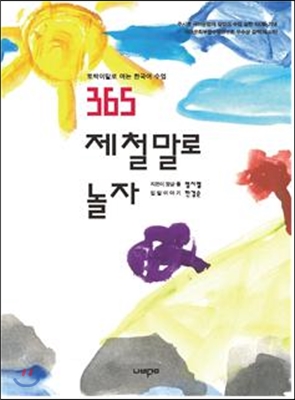 |
Description
Book Introduction
By finding and underlining the stems of sounds, stems of meaning, and stems of work, and filling in the blanks and wings given on each page of the book with short writings and jigsaw puzzles according to the expansion of meaning, your vocabulary will naturally grow.
Every time you underline, every time you compose a short piece of writing, every time you draw a jigsaw puzzle, your mental dictionary opens at a speed of 80 milliseconds.
Every time you underline, every time you compose a short piece of writing, every time you draw a jigsaw puzzle, your mental dictionary opens at a speed of 80 milliseconds.
index
Opening remarks
What is learning? | How do we stack the months? | The dream and challenge of the Korean calendar | Why learn seasonal words?
First Yard | Hanbwaldal (January) The month that smiles brightly in the spirit of the New Year
Second Yard | Spring Month (February) A month of new buds sprouting in the warm sunlight
Third Yard | Onbomdal (March) - A month when delicious spring vegetables whet your appetite
Fourth Yard | Rainbow Moon (April) The Moon Rising in the Rain of Love in the Flower Garden
Fifth Yard | May, the watery moon that welcomes summer
The Sixth Yard | The Full Summer Month (June), the month when rice paddies are vibrant and vibrant
Seventh Yard | The Hottest Month (July) - The Coolest Month in the Waters of Hanongot
The Eighth Yard | The Fall Month (August) A month of sweaty, blazing sun, welcoming autumn.
The ninth yard | The whole autumn month (September) will come, the Chuseok moon will be falling
The Tenth Yard | The Tenth Month (October) The Month of Autumn Harvest and the Fall Leaves
The Eleventh Yard | The Winter Moon (November) The month when the first snow falls and the winter breezes begin to blow.
The Twelfth Yard | December, the Long Night of Mistletoe, the Story of the Gossip Moon
Help article
View learning activities | Find refined words | The power of thinking in the Korean calendar | After-school (special activity) writing club's annual guidance centered on seasonal words
The story of the philosophy of mathematics that is revealed every month
Korean story contained in the seventh day of the week
Seasonal food every month
Play of the Month
Making a book of self-study every month
What is learning? | How do we stack the months? | The dream and challenge of the Korean calendar | Why learn seasonal words?
First Yard | Hanbwaldal (January) The month that smiles brightly in the spirit of the New Year
Second Yard | Spring Month (February) A month of new buds sprouting in the warm sunlight
Third Yard | Onbomdal (March) - A month when delicious spring vegetables whet your appetite
Fourth Yard | Rainbow Moon (April) The Moon Rising in the Rain of Love in the Flower Garden
Fifth Yard | May, the watery moon that welcomes summer
The Sixth Yard | The Full Summer Month (June), the month when rice paddies are vibrant and vibrant
Seventh Yard | The Hottest Month (July) - The Coolest Month in the Waters of Hanongot
The Eighth Yard | The Fall Month (August) A month of sweaty, blazing sun, welcoming autumn.
The ninth yard | The whole autumn month (September) will come, the Chuseok moon will be falling
The Tenth Yard | The Tenth Month (October) The Month of Autumn Harvest and the Fall Leaves
The Eleventh Yard | The Winter Moon (November) The month when the first snow falls and the winter breezes begin to blow.
The Twelfth Yard | December, the Long Night of Mistletoe, the Story of the Gossip Moon
Help article
View learning activities | Find refined words | The power of thinking in the Korean calendar | After-school (special activity) writing club's annual guidance centered on seasonal words
The story of the philosophy of mathematics that is revealed every month
Korean story contained in the seventh day of the week
Seasonal food every month
Play of the Month
Making a book of self-study every month
Publisher's Review
The power of thinking comes from the native language, Malsemmori (dictionary in the head).
This book proudly shows that our language is used on par with the languages of neighboring countries by comprehensively covering the twelve native Korean names for the months of the year and the names of the days of the week.
The stem words (related words) of the twelve months and the seasonal words can be used to plan your vocabulary learning every month.
The seasonal learning work of teaching, learning, and enjoying this gives you better vocabulary and sentence structure through familiar hands-on learning with seasonal vocabulary.
365 Seasonal Horse As you learn more and more, habits become ingrained in you, so learning becomes easier.
The easy teaching and learning (classes) create the ability (leisure) and make learning enjoyable for the child.
The four seasons of spring, summer, fall, and winter are each made up of six seasons (solar terms) that correspond to three months.
Soon, the story of 365 days a year and 24 seasons will bloom.
Spring is warm when you take out the best seeds that make up the basis of the end of the month, regardless of these.
Summer is hot.
Autumn is cold.
Winter is cold.
These seed shapes form the basis of the vocabulary of the seasonal language.
This book contains basic materials for preparing a 365-day plan for the twelve months of the year, such as learning greetings for the twelve months, stories about warm breath, Korean stories on the seventh day, seasonal foods for each month, seasonal sayings (proverbs) for this month, games for this month, making a monthly study guide, and annual guidance plans for the after-school (special activity) writing club.
By finding and underlining the stems of sounds, stems of meaning, and stems of work that are not concerned with these, and filling in the blanks and wings given on each page of the book with short writings and jigsaw puzzles according to the expansion of meaning, the vocabulary to organize and decorate words will naturally grow.
Every time you underline, every time you compose a short piece of writing, every time you draw a jigsaw puzzle, your mental dictionary opens at a speed of 80 milliseconds.
Each time, your verbal skills will grow and your foundation for learning Korean will become stronger.
Therefore, this book covers the basic Korean vocabulary and grammar that children interested in learning a foreign language at a higher level need to learn in a writing format (narrative style).
This is a must-read book to help you overcome your Korean language ignorance.
This book proudly shows that our language is used on par with the languages of neighboring countries by comprehensively covering the twelve native Korean names for the months of the year and the names of the days of the week.
The stem words (related words) of the twelve months and the seasonal words can be used to plan your vocabulary learning every month.
The seasonal learning work of teaching, learning, and enjoying this gives you better vocabulary and sentence structure through familiar hands-on learning with seasonal vocabulary.
365 Seasonal Horse As you learn more and more, habits become ingrained in you, so learning becomes easier.
The easy teaching and learning (classes) create the ability (leisure) and make learning enjoyable for the child.
The four seasons of spring, summer, fall, and winter are each made up of six seasons (solar terms) that correspond to three months.
Soon, the story of 365 days a year and 24 seasons will bloom.
Spring is warm when you take out the best seeds that make up the basis of the end of the month, regardless of these.
Summer is hot.
Autumn is cold.
Winter is cold.
These seed shapes form the basis of the vocabulary of the seasonal language.
This book contains basic materials for preparing a 365-day plan for the twelve months of the year, such as learning greetings for the twelve months, stories about warm breath, Korean stories on the seventh day, seasonal foods for each month, seasonal sayings (proverbs) for this month, games for this month, making a monthly study guide, and annual guidance plans for the after-school (special activity) writing club.
By finding and underlining the stems of sounds, stems of meaning, and stems of work that are not concerned with these, and filling in the blanks and wings given on each page of the book with short writings and jigsaw puzzles according to the expansion of meaning, the vocabulary to organize and decorate words will naturally grow.
Every time you underline, every time you compose a short piece of writing, every time you draw a jigsaw puzzle, your mental dictionary opens at a speed of 80 milliseconds.
Each time, your verbal skills will grow and your foundation for learning Korean will become stronger.
Therefore, this book covers the basic Korean vocabulary and grammar that children interested in learning a foreign language at a higher level need to learn in a writing format (narrative style).
This is a must-read book to help you overcome your Korean language ignorance.
GOODS SPECIFICS
- Date of issue: February 25, 2010
- Page count, weight, size: 340 pages | 176*248mm
- ISBN13: 9791185429052
- ISBN10: 1185429050
You may also like
카테고리
korean


korean

![ELLE 엘르 스페셜 에디션 A형 : 12월 [2025]](http://librairie.coreenne.fr/cdn/shop/files/b8e27a3de6c9538896439686c6b0e8fb.jpg?v=1766436872&width=3840)


