

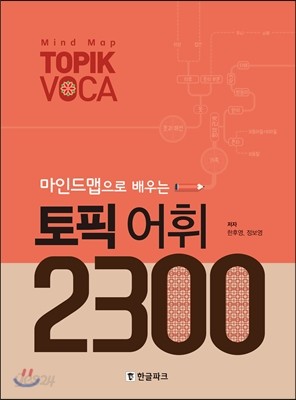
2300 Topic Vocabulary Words Learned with Mind Maps
 |
Description
Book Introduction
Although there have been many Korean language textbooks for learning vocabulary, there are few that provide vocabulary learning strategies.
This book is a vocabulary textbook that allows you to learn vocabulary through mind maps.
By utilizing semantic fields, you can learn vocabulary that is grouped into one semantic field, and you can also effectively learn synonyms and antonyms by utilizing related vocabulary.
You can learn vocabulary by focusing on meaning through the topic-based mind maps presented in the textbook, which can help you memorize and remember words.
The National Institute of the Korean Language has divided approximately 2,300 words from the intermediate level TOPIK vocabulary into 47 topics and organized them into DAY 80.
So, you can learn intermediate essential vocabulary in 80 days.
To help you use the vocabulary you've learned, we've included conversations and sentences that are actually used in everyday life, and we've included translations in English, Japanese, and Chinese to help you understand the meaning of the words.
In addition to the learning vocabulary, we also provide collocations, synonyms, and antonyms to enrich vocabulary learning. The final section of DAY includes practice problems to help students review their vocabulary. To ensure learning is engaging and enjoyable, we've included assignment-style practice problems.
‘Vocabulary Boost’ was included to help you learn Chinese characters, considering that the proportion of Chinese characters increases as you progress to intermediate and advanced levels.
This book is a vocabulary textbook that allows you to learn vocabulary through mind maps.
By utilizing semantic fields, you can learn vocabulary that is grouped into one semantic field, and you can also effectively learn synonyms and antonyms by utilizing related vocabulary.
You can learn vocabulary by focusing on meaning through the topic-based mind maps presented in the textbook, which can help you memorize and remember words.
The National Institute of the Korean Language has divided approximately 2,300 words from the intermediate level TOPIK vocabulary into 47 topics and organized them into DAY 80.
So, you can learn intermediate essential vocabulary in 80 days.
To help you use the vocabulary you've learned, we've included conversations and sentences that are actually used in everyday life, and we've included translations in English, Japanese, and Chinese to help you understand the meaning of the words.
In addition to the learning vocabulary, we also provide collocations, synonyms, and antonyms to enrich vocabulary learning. The final section of DAY includes practice problems to help students review their vocabulary. To ensure learning is engaging and enjoyable, we've included assignment-style practice problems.
‘Vocabulary Boost’ was included to help you learn Chinese characters, considering that the proportion of Chinese characters increases as you progress to intermediate and advanced levels.
- You can preview some of the book's contents.
Preview
index
DAY1 Family
DAY2 Appearance and Personality 1
DAY3 Appearance and Personality 2
DAY4 Clothes and Fashion 1
DAY5 Clothes and Fashion 2
DAY6 Dating and Marriage 1
DAY7 Love and Marriage 2
DAY8 Emotions 1
DAY9 Emotions 2
DAY 10 Weather and Seasons 1
DAY 11 Weather and Seasons 2
DAY 12 Transportation 1
DAY 13 Transportation 2
DAY 14 Money and Banks
DAY 15 Health and Disease 1
DAY 16 Review Problem 1
DAY 17 Health and Disease 2
DAY 18 Health and Disease 3
DAY19 Body and Senses
DAY20 Travel and Leisure 1
DAY 21 Travel and Leisure 2
DAY 22 Travel and Leisure 3
DAY23 Exercise and Sports
DAY24 Performances and Arts
DAY25 FOOD 1
DAY26 FOOD 2
DAY27 FOOD 3
DAY28 FOOD 4
DAY29 Shopping
DAY30 Children and Adolescents
DAY31 Life
DAY 32 Review Problem 2
DAY33 School 1
DAY34 School 2
DAY35 Work and Career
DAY 36 Work Life 1
DAY 37 Work Life 2
DAY38 Success and Failure
DAY39 Thought 1
DAY40 Thought 2
DAY41 Movement 1
DAY42 Movement 2
DAY43 Movement 3
DAY44 Movement 4
DAY45 Individuals and Society 1
DAY46 Individual and Society 2
DAY47 Attitude 1
DAY48 Review Problem 3
DAY49 Attitude 2
DAY50 Status 1
DAY51 STATUS 2
DAY 52 Problems and Solutions/Requests and Refusals
DAY 53 Persuasion and Argument/Praise and Punishment
DAY 54 Time 1
DAY 55 Time 2
DAY 56 Number and Sheep 1
DAY 57 Number and Sheep 2
DAY58 Location and Direction
DAY59 Order and Scope
DAY60 Location
DAY61 House 1
DAY62 House 2
DAY63 Things
DAY64 Review Problem 4
DAY65 Computers and Communication
DAY66 Newspaper/Broadcast/Publishing
DAY67 Incidents and Accidents 1
DAY68 Incidents and Accidents 2
DAY69 Economy 1
DAY70 Economy 2
DAY71 Country/Law/Politics
DAY72 Language 1
DAY73 Language 2
DAY74 Greetings and Etiquette
DAY75 Tradition and History
DAY76 Plants and Animals
DAY77 Nature and Scenery
DAY78 Environment/Religion
DAY79 Academics
DAY80 Review Problem 5
●Practice Problem Answers
●Index
DAY2 Appearance and Personality 1
DAY3 Appearance and Personality 2
DAY4 Clothes and Fashion 1
DAY5 Clothes and Fashion 2
DAY6 Dating and Marriage 1
DAY7 Love and Marriage 2
DAY8 Emotions 1
DAY9 Emotions 2
DAY 10 Weather and Seasons 1
DAY 11 Weather and Seasons 2
DAY 12 Transportation 1
DAY 13 Transportation 2
DAY 14 Money and Banks
DAY 15 Health and Disease 1
DAY 16 Review Problem 1
DAY 17 Health and Disease 2
DAY 18 Health and Disease 3
DAY19 Body and Senses
DAY20 Travel and Leisure 1
DAY 21 Travel and Leisure 2
DAY 22 Travel and Leisure 3
DAY23 Exercise and Sports
DAY24 Performances and Arts
DAY25 FOOD 1
DAY26 FOOD 2
DAY27 FOOD 3
DAY28 FOOD 4
DAY29 Shopping
DAY30 Children and Adolescents
DAY31 Life
DAY 32 Review Problem 2
DAY33 School 1
DAY34 School 2
DAY35 Work and Career
DAY 36 Work Life 1
DAY 37 Work Life 2
DAY38 Success and Failure
DAY39 Thought 1
DAY40 Thought 2
DAY41 Movement 1
DAY42 Movement 2
DAY43 Movement 3
DAY44 Movement 4
DAY45 Individuals and Society 1
DAY46 Individual and Society 2
DAY47 Attitude 1
DAY48 Review Problem 3
DAY49 Attitude 2
DAY50 Status 1
DAY51 STATUS 2
DAY 52 Problems and Solutions/Requests and Refusals
DAY 53 Persuasion and Argument/Praise and Punishment
DAY 54 Time 1
DAY 55 Time 2
DAY 56 Number and Sheep 1
DAY 57 Number and Sheep 2
DAY58 Location and Direction
DAY59 Order and Scope
DAY60 Location
DAY61 House 1
DAY62 House 2
DAY63 Things
DAY64 Review Problem 4
DAY65 Computers and Communication
DAY66 Newspaper/Broadcast/Publishing
DAY67 Incidents and Accidents 1
DAY68 Incidents and Accidents 2
DAY69 Economy 1
DAY70 Economy 2
DAY71 Country/Law/Politics
DAY72 Language 1
DAY73 Language 2
DAY74 Greetings and Etiquette
DAY75 Tradition and History
DAY76 Plants and Animals
DAY77 Nature and Scenery
DAY78 Environment/Religion
DAY79 Academics
DAY80 Review Problem 5
●Practice Problem Answers
●Index
Detailed image

Publisher's Review
1.
You can study with a focus on meaning through topic-based mind maps.
2.
Intermediate topic vocabulary is systematically organized into 47 topics.
3.
Includes examples of conversations and sentences actually used in everyday life.
4.
Translations have been published in three languages: English, Japanese, and Chinese.
5.
Includes salmon, synonyms and antonyms.
6. You can check your skills with practice problems that confirm the vocabulary you learned on a daily basis.
7.
A corner has been created for learning Chinese characters, which are gradually gaining importance.
■ Structure of this book
title
The daily learning volume is organized by DAY, categorizing the main vocabulary of the intermediate to advanced level.
Target vocabulary
Vocabulary is presented in the order of 'A, B, C' by topic of each unit to make it easy to find.
Foreign words are marked separately.
We also provide synonyms, antonyms, and related expressions for the target vocabulary to help you use the vocabulary.
Example
Contains spoken dialogues and written sentences that demonstrate the actual use of the target vocabulary.
Vocabulary growing
Among the target vocabulary, we selected Chinese characters with high controllability and explained their meanings. We also provided examples of words in which the characters are used in the beginner-intermediate vocabulary to help students remember their meanings.
We've also indicated which unit of the textbook the example vocabulary appears in, making it easy to find.
Practice problems
The section for reviewing learned vocabulary includes various types of problems, such as assignments, conversation practice, and sentence completion, to help learners learn with interest and curiosity.
Review questions
This section reviews the vocabulary learned over the past two weeks and uses example sentences from each unit as problems.
You can study with a focus on meaning through topic-based mind maps.
2.
Intermediate topic vocabulary is systematically organized into 47 topics.
3.
Includes examples of conversations and sentences actually used in everyday life.
4.
Translations have been published in three languages: English, Japanese, and Chinese.
5.
Includes salmon, synonyms and antonyms.
6. You can check your skills with practice problems that confirm the vocabulary you learned on a daily basis.
7.
A corner has been created for learning Chinese characters, which are gradually gaining importance.
■ Structure of this book
title
The daily learning volume is organized by DAY, categorizing the main vocabulary of the intermediate to advanced level.
Target vocabulary
Vocabulary is presented in the order of 'A, B, C' by topic of each unit to make it easy to find.
Foreign words are marked separately.
We also provide synonyms, antonyms, and related expressions for the target vocabulary to help you use the vocabulary.
Example
Contains spoken dialogues and written sentences that demonstrate the actual use of the target vocabulary.
Vocabulary growing
Among the target vocabulary, we selected Chinese characters with high controllability and explained their meanings. We also provided examples of words in which the characters are used in the beginner-intermediate vocabulary to help students remember their meanings.
We've also indicated which unit of the textbook the example vocabulary appears in, making it easy to find.
Practice problems
The section for reviewing learned vocabulary includes various types of problems, such as assignments, conversation practice, and sentence completion, to help learners learn with interest and curiosity.
Review questions
This section reviews the vocabulary learned over the past two weeks and uses example sentences from each unit as problems.
GOODS SPECIFICS
- Publication date: November 10, 2016
- Page count, weight, size: 516 pages | 908g | 170*230*35mm
- ISBN13: 9788955187649
- ISBN10: 8955187645
You may also like
카테고리
korean


korean

![GQ KOREA Mark (Monthly): December [2025]](http://librairie.coreenne.fr/cdn/shop/files/8ef265dbbfbf186523ed75ba7319009d.jpg?v=1765340328&width=3840)


