

One Pick Topic 2
 |
Description
Book Introduction
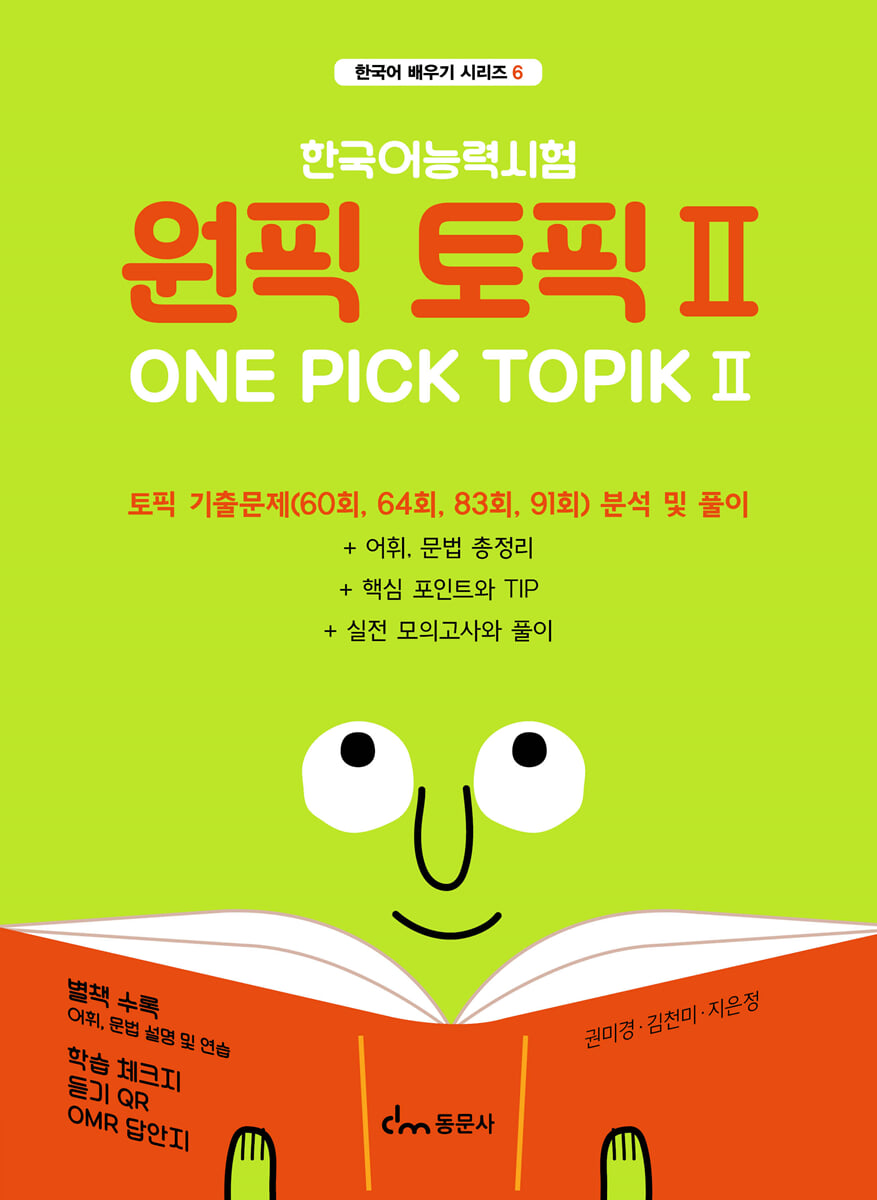
We developed a textbook to help foreign learners of various nationalities prepare for the TOPIK II test efficiently and systematically in a short period of time.
This book is a 15-week textbook, and from [Week 1] to [Week 14], it presents strategies by dividing the previous questions from TOPIK 60, 64, 83, and 91 by type.
Additionally, [Week 15] consists of mock exam questions so that you can practice for the actual exam.
This book is a 15-week textbook, and from [Week 1] to [Week 14], it presents strategies by dividing the previous questions from TOPIK 60, 64, 83, and 91 by type.
Additionally, [Week 15] consists of mock exam questions so that you can practice for the actual exam.
index
PART 1 TOPIK II Past Exam Questions (60th, 64th, 83rd, 91st) and Practice by Type
Week 1 Listening 1-12
Key Point 1: Types of Graphs
ㆍ Type-specific strategies
ㆍ Try solving past exam questions
Week 2 Listening 13-24
Key Point 2 Adverb
ㆍ Type-specific strategies
ㆍ Try solving past exam questions
Week 3 Listening Questions 25-32
Key Point 3: Expressions that indicate intention/purpose
ㆍ Type-specific strategies
ㆍ Try solving past exam questions
Week 4 Listening Questions 33-40
Key Point 4: Expressions that Express Attitude/Behavior
ㆍ Type-specific strategies
ㆍ Try solving past exam questions
Week 5 Listening Questions 41-50
Key Point 5: Expressions that Express Feelings
ㆍ Type-specific strategies
ㆍ Try solving past exam questions
Week 6 Writing #51-52
Key Point 6: Spacing
ㆍ Type-specific strategies
ㆍ Try solving past exam questions
Week 7 Writing #53
Key Point 7: How to Use Manuscript Paper
ㆍ Type-specific strategies
ㆍ Try solving past exam questions
Week 8 Writing #54
Key Point 8: Expressions that frequently appear in written language/graphs
ㆍ Type-specific strategies
ㆍ Try solving past exam questions
Week 9 Readings 1-8
Key Point 9 Similar Grammar Expressions/Expressions that frequently appear in the topic/Expressions that can be used interchangeably
ㆍ Type-specific strategies
ㆍ Try solving past exam questions
Week 10 Readings 9-15
Key Point 10 Expressions with Dual Meanings
ㆍ Type-specific strategies
ㆍ Try solving past exam questions
Week 11 Readings 16-22
Key Point 11: Expressions Related to the Body
ㆍ Type-specific strategies
ㆍ Try solving past exam questions
Week 12 Readings 23-31
Headlines from Topic 12 Key Points
ㆍ Type-specific strategies
ㆍ Try solving past exam questions
Week 13 Readings 32-41
Key Point 13: Finding the Topic
ㆍ Type-specific strategies
ㆍ Try solving past exam questions
Week 14 Readings 42-50
Key Point 14: Foreign Words
ㆍ Type-specific strategies
ㆍ Try solving past exam questions
PART 2 Mock Exam
Week 15 mock exam
hearing
write
Reading
supplement
Mock exam answers and solutions
OMR answer sheet
hearing
write
Reading
Week 1 Listening 1-12
Key Point 1: Types of Graphs
ㆍ Type-specific strategies
ㆍ Try solving past exam questions
Week 2 Listening 13-24
Key Point 2 Adverb
ㆍ Type-specific strategies
ㆍ Try solving past exam questions
Week 3 Listening Questions 25-32
Key Point 3: Expressions that indicate intention/purpose
ㆍ Type-specific strategies
ㆍ Try solving past exam questions
Week 4 Listening Questions 33-40
Key Point 4: Expressions that Express Attitude/Behavior
ㆍ Type-specific strategies
ㆍ Try solving past exam questions
Week 5 Listening Questions 41-50
Key Point 5: Expressions that Express Feelings
ㆍ Type-specific strategies
ㆍ Try solving past exam questions
Week 6 Writing #51-52
Key Point 6: Spacing
ㆍ Type-specific strategies
ㆍ Try solving past exam questions
Week 7 Writing #53
Key Point 7: How to Use Manuscript Paper
ㆍ Type-specific strategies
ㆍ Try solving past exam questions
Week 8 Writing #54
Key Point 8: Expressions that frequently appear in written language/graphs
ㆍ Type-specific strategies
ㆍ Try solving past exam questions
Week 9 Readings 1-8
Key Point 9 Similar Grammar Expressions/Expressions that frequently appear in the topic/Expressions that can be used interchangeably
ㆍ Type-specific strategies
ㆍ Try solving past exam questions
Week 10 Readings 9-15
Key Point 10 Expressions with Dual Meanings
ㆍ Type-specific strategies
ㆍ Try solving past exam questions
Week 11 Readings 16-22
Key Point 11: Expressions Related to the Body
ㆍ Type-specific strategies
ㆍ Try solving past exam questions
Week 12 Readings 23-31
Headlines from Topic 12 Key Points
ㆍ Type-specific strategies
ㆍ Try solving past exam questions
Week 13 Readings 32-41
Key Point 13: Finding the Topic
ㆍ Type-specific strategies
ㆍ Try solving past exam questions
Week 14 Readings 42-50
Key Point 14: Foreign Words
ㆍ Type-specific strategies
ㆍ Try solving past exam questions
PART 2 Mock Exam
Week 15 mock exam
hearing
write
Reading
supplement
Mock exam answers and solutions
OMR answer sheet
hearing
write
Reading
Publisher's Review
Recently, the number of foreigners wishing to enter domestic universities and graduate schools for academic purposes has been steadily increasing.
Currently, more than 200,000 foreigners are studying at various higher education institutions, including technical colleges, universities, and graduate schools.
In order for foreigners to enter universities in Korea, they need to have a score on the Test of Proficiency in Korean (TOPIK), which is administered and administered directly by the Korean government. Generally, a score of Level 3 or higher is required for university admission, and a score of Level 4 or higher is required for graduation.
As the importance of TOPIK grows, the need for a systematic TOPIK test preparation book is also growing.
To address this, the writing team developed a textbook that would enable international learners of various nationalities to prepare for the TOPIK II exam efficiently and systematically in a short period of time.
This book is a 15-week textbook, and from [Week 1] to [Week 14], it presents strategies by dividing the previous questions from TOPIK 60, 64, 83, and 91 by type.
Additionally, [Week 15] consists of mock exam questions so that you can practice for the actual exam.
In addition, 2,150 frequently appearing vocabulary words and 50 grammar points from TOPIK Ⅱ were compiled into a separate volume.
In particular, in vocabulary learning, learners were allowed to find and write their native language words on their own.
And grammar is presented with examples so that learners can easily understand grammar and use it through practice problems.
Important expressions and terms that are frequently asked and must be known are presented in and .
Additionally, the school system was designed to allow students to check their learning progress by completing the course in 15 weeks, and individual students by completing the course in 2 weeks.
Currently, more than 200,000 foreigners are studying at various higher education institutions, including technical colleges, universities, and graduate schools.
In order for foreigners to enter universities in Korea, they need to have a score on the Test of Proficiency in Korean (TOPIK), which is administered and administered directly by the Korean government. Generally, a score of Level 3 or higher is required for university admission, and a score of Level 4 or higher is required for graduation.
As the importance of TOPIK grows, the need for a systematic TOPIK test preparation book is also growing.
To address this, the writing team developed a textbook that would enable international learners of various nationalities to prepare for the TOPIK II exam efficiently and systematically in a short period of time.
This book is a 15-week textbook, and from [Week 1] to [Week 14], it presents strategies by dividing the previous questions from TOPIK 60, 64, 83, and 91 by type.
Additionally, [Week 15] consists of mock exam questions so that you can practice for the actual exam.
In addition, 2,150 frequently appearing vocabulary words and 50 grammar points from TOPIK Ⅱ were compiled into a separate volume.
In particular, in vocabulary learning, learners were allowed to find and write their native language words on their own.
And grammar is presented with examples so that learners can easily understand grammar and use it through practice problems.
Important expressions and terms that are frequently asked and must be known are presented in and .
Additionally, the school system was designed to allow students to check their learning progress by completing the course in 15 weeks, and individual students by completing the course in 2 weeks.
GOODS SPECIFICS
- Date of issue: March 10, 2025
- Page count, weight, size: 624 pages | 188*257*35mm
- ISBN13: 9791163286646
- ISBN10: 1163286648
You may also like
카테고리
korean


korean

![GQ KOREA Mark (Monthly): December [2025]](http://librairie.coreenne.fr/cdn/shop/files/8ef265dbbfbf186523ed75ba7319009d.jpg?v=1765340328&width=3840)


