

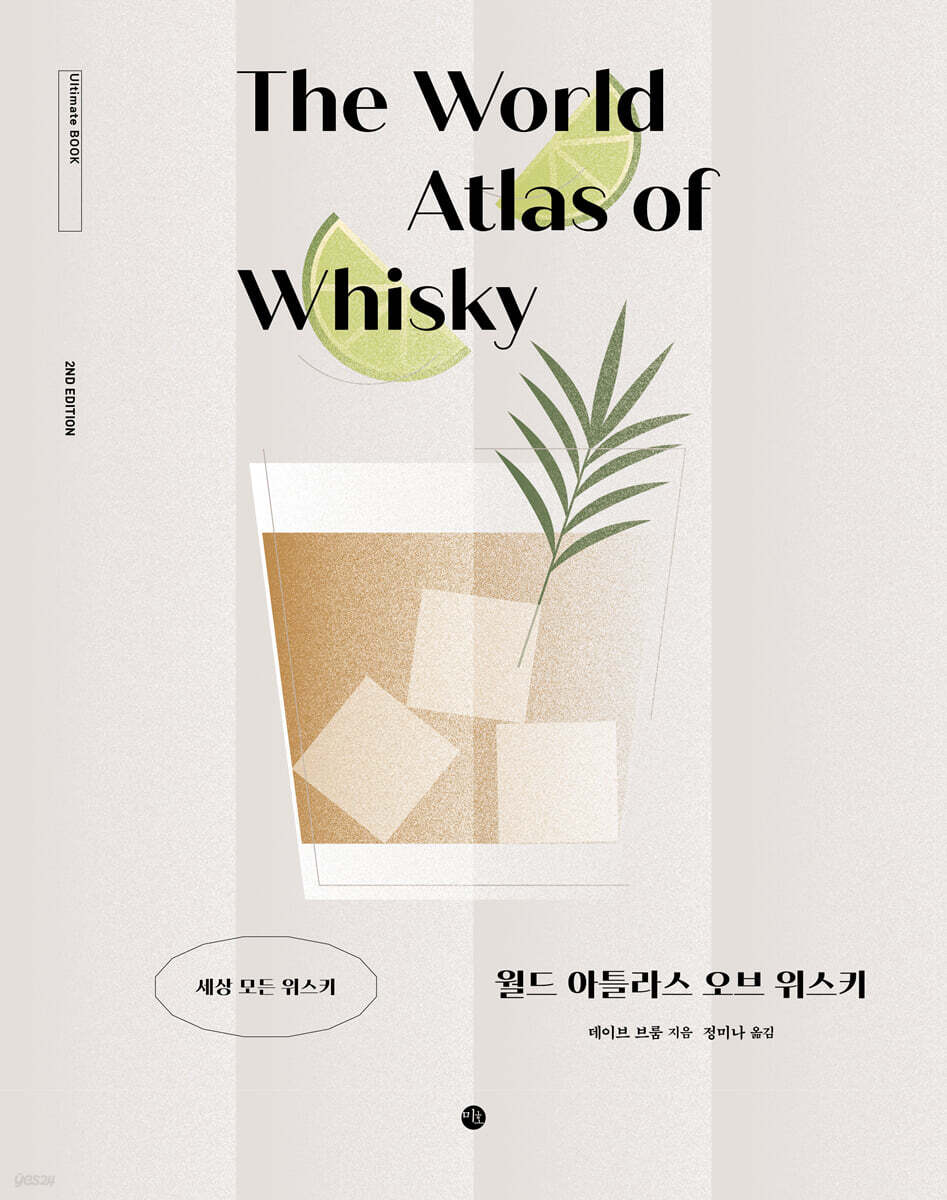
World Atlas of Whisky
 |
Description
Book Introduction
The world-renowned Atlas series
Talking about today's whiskey
The 'World Atlas' series delves deep into 'drinks' such as wine, tea, coffee, gin, and beer, providing reliable knowledge.
Among them, Miho presents the Korean version of the classic 『World Atlas of Whisky』.
This book will serve as a faithful guide, providing useful information to both beginners and enthusiasts of Korean whiskey.
Over the past decade, whiskey has undergone numerous changes and become dynamic.
Although whiskey has a long history and has been loved for a long time, the whiskey boom has not subsided as the number of beginners and enthusiasts has increased recently.
Even with the new distilleries opening up one after another, there is constant debate and reflection on what constitutes truly delicious whiskey, good whiskey.
This is truly a whiskey renaissance, and in times like these, reliable guides and textbooks are crucial.
Dave Broome, a world authority on whiskey, traveled around the world, tasting and judging distilleries, and created a flavor map.
A trusted author and the world's best series have come together to create an 'Encyclopedia of Whiskey' like no other.
Talking about today's whiskey
The 'World Atlas' series delves deep into 'drinks' such as wine, tea, coffee, gin, and beer, providing reliable knowledge.
Among them, Miho presents the Korean version of the classic 『World Atlas of Whisky』.
This book will serve as a faithful guide, providing useful information to both beginners and enthusiasts of Korean whiskey.
Over the past decade, whiskey has undergone numerous changes and become dynamic.
Although whiskey has a long history and has been loved for a long time, the whiskey boom has not subsided as the number of beginners and enthusiasts has increased recently.
Even with the new distilleries opening up one after another, there is constant debate and reflection on what constitutes truly delicious whiskey, good whiskey.
This is truly a whiskey renaissance, and in times like these, reliable guides and textbooks are crucial.
Dave Broome, a world authority on whiskey, traveled around the world, tasting and judging distilleries, and created a flavor map.
A trusted author and the world's best series have come together to create an 'Encyclopedia of Whiskey' like no other.
- You can preview some of the book's contents.
Preview
index
introduction
Entering
Note
What is whiskey?
The World of Whiskey
Manufacturing of malt whiskey
Production of grain whiskey
Single Pot Still Irish Whiskey
The production of Kentucky and Tennessee whiskey
Terroir
zest
How to taste
Flavor Camp
Single Malt Whiskey Flavor Map
The Granite City
Speyside
South Speyside
Ben Lines Distillery Cluster
Dufftown Distillery Cluster
Kiss East Border
Rosyth Distillery Cluster
Elgin West
Highland
Southern Highlands
Central Highlands
Eastern Highlands
Northern Highlands
Western Highlands
Rowland
Islay
South Coast
East Coast
Central and Western
Other islands
Orkney Islands
Campbelltown
Scotch blend
Ireland
japan
USA
Kentucky
Tennessee
Craft Distillery
Canada
Other producing countries
europe
Central Europe
Northern Europe
South Africa
South America
India and the Far East
australia
Flavor Camp List
Glossary
index
Recommendation
Excellent and authoritative.
- The Telescope
Simply put, the best book ever written about whiskey.
- Lar
The ultimate whiskey book! A must-read for any drinker.
- Forbes
The perfect reference book for any whiskey lover's bookshelf.
- Whiskey Magazine
Entering
Note
What is whiskey?
The World of Whiskey
Manufacturing of malt whiskey
Production of grain whiskey
Single Pot Still Irish Whiskey
The production of Kentucky and Tennessee whiskey
Terroir
zest
How to taste
Flavor Camp
Single Malt Whiskey Flavor Map
The Granite City
Speyside
South Speyside
Ben Lines Distillery Cluster
Dufftown Distillery Cluster
Kiss East Border
Rosyth Distillery Cluster
Elgin West
Highland
Southern Highlands
Central Highlands
Eastern Highlands
Northern Highlands
Western Highlands
Rowland
Islay
South Coast
East Coast
Central and Western
Other islands
Orkney Islands
Campbelltown
Scotch blend
Ireland
japan
USA
Kentucky
Tennessee
Craft Distillery
Canada
Other producing countries
europe
Central Europe
Northern Europe
South Africa
South America
India and the Far East
australia
Flavor Camp List
Glossary
index
Recommendation
Excellent and authoritative.
- The Telescope
Simply put, the best book ever written about whiskey.
- Lar
The ultimate whiskey book! A must-read for any drinker.
- Forbes
The perfect reference book for any whiskey lover's bookshelf.
- Whiskey Magazine
Detailed image
.JPG)
Into the book
If ever there was a time when a comprehensive book on whiskey was needed, it is now.
The world of whiskey has become more dynamic than ever in recent times.
What's driving this dynamism? One reason is the rapidly expanding whiskey boom.
A growing number of people around the world are becoming aware of the quality, individuality and value of whisky.
Despite the recent rise in the price and value of whiskey, especially bourbon, whiskey maintains a stronghold that other distilled spirits cannot break down.
The whiskey industry is not only increasing production and capacity to meet growing demand, but is also building new distilleries.
--- p.6
Terroir is a concept that encompasses many fields, including soil science, geography, applied soil science, microbiology, solar radiation, and meteorology.
The key to terroir lies in the location.
It emphasizes the specific point on earth where something originates, whether it be a vine or an individual distillery site.
To take Dufftown as an example again, Glenfiddich, The Balvenie and Kininvee all have their own terroirs, as do Moltrach and Glendulan.
Terroir exists even in the forest.
Swiss oak and Spanish oak have different flavors.
Trees on shady slopes have a different flavor than trees on sunny slopes.
--- p.20
Each entry in this book is accompanied by tasting notes for a selection of sampled whiskies, categorized into flavor camps.
This flavor map allows you to compare and contrast similar whiskies, and also gives you a sense of how a distiller can alter flavor maps by changing the aging method or the type of oak barrel used (or by utilizing either method).
I recommend comparing whiskies from the same flavor camp by choosing one you're already familiar with and one you're new to.
Take a moment to consider what is similar and what is different.
There's no need to overcomplicate things by using fancy expressions.
You can describe it in simple terms like it has a fruity or smoky scent or it is light.
Then you can find another whiskey and keep trying to express it again and again.
--- p.24
Scottish whiskey is distilled to capture the flavors of the land.
The coconut scent of gorse, the pea-shell smell of gorse and wet seaweed scattered on the hot sand, the delicate scent of hibiscus flowers.
The spicy scent of heather, swamp thyme, and the oiliness of mowed grass.
The myriad scents of peat: smokehouses, beach bonfires, oyster shells, salt water, and more.
Exotic aromas of tea, coffee, sherry, raisins, cumin, cinnamon, and nutmeg.
While there is a chemical basis for the creation of all these scents, there is also a significant cultural role.
--- p.32
Some people dismiss Japanese whiskey as a mere copycat, citing the Japanese's obsession with Scottish whiskey production. This is a grossly incorrect notion.
The goal set from the beginning in Japan was to create a Japanese style.
There is also a common belief that Japanese whiskey is a whiskey that is cut off from the land and only boasts of its craftsmanship, but this too is a misconception when examined closely.
It is true that Japanese whiskey makers initially relied on science.
But what else could we do? Should we wait for 200 years for the wisdom of the people to accumulate? In 1923, when Shinjiro Tori founded Yamazaki, Japan's first dedicated whiskey distillery, he and the distiller he hired, Masataka Taketsuru, started from scratch.
Suntory and Nikka, two companies founded by visionary men, still dominate Japan's distilling industry today, but their dreams were rooted in science.
--- p.212
Kentucky gave 18th-century settlers a head start in whiskey production by granting them free land in exchange for corn cultivation. Farm distilleries became small distilleries, and by the early 19th century, barrels of whiskey were being shipped through Ohio to Mississippi, and from there to New Orleans.
It was a haphazard, unsystematic process, and was simply aged in barrels for however long it took before it could reach the market, but it's safe to say that this was the first style of whiskey to be intentionally aged in oak barrels.
The person who contributed most to changing this situation was the Scot, James Crowe.
From 1825 until his death 31 years later, he established consistency in whiskey production by introducing scientific precision such as sourmashing, sugar content measurement, and acidity testing.
The world of whiskey has become more dynamic than ever in recent times.
What's driving this dynamism? One reason is the rapidly expanding whiskey boom.
A growing number of people around the world are becoming aware of the quality, individuality and value of whisky.
Despite the recent rise in the price and value of whiskey, especially bourbon, whiskey maintains a stronghold that other distilled spirits cannot break down.
The whiskey industry is not only increasing production and capacity to meet growing demand, but is also building new distilleries.
--- p.6
Terroir is a concept that encompasses many fields, including soil science, geography, applied soil science, microbiology, solar radiation, and meteorology.
The key to terroir lies in the location.
It emphasizes the specific point on earth where something originates, whether it be a vine or an individual distillery site.
To take Dufftown as an example again, Glenfiddich, The Balvenie and Kininvee all have their own terroirs, as do Moltrach and Glendulan.
Terroir exists even in the forest.
Swiss oak and Spanish oak have different flavors.
Trees on shady slopes have a different flavor than trees on sunny slopes.
--- p.20
Each entry in this book is accompanied by tasting notes for a selection of sampled whiskies, categorized into flavor camps.
This flavor map allows you to compare and contrast similar whiskies, and also gives you a sense of how a distiller can alter flavor maps by changing the aging method or the type of oak barrel used (or by utilizing either method).
I recommend comparing whiskies from the same flavor camp by choosing one you're already familiar with and one you're new to.
Take a moment to consider what is similar and what is different.
There's no need to overcomplicate things by using fancy expressions.
You can describe it in simple terms like it has a fruity or smoky scent or it is light.
Then you can find another whiskey and keep trying to express it again and again.
--- p.24
Scottish whiskey is distilled to capture the flavors of the land.
The coconut scent of gorse, the pea-shell smell of gorse and wet seaweed scattered on the hot sand, the delicate scent of hibiscus flowers.
The spicy scent of heather, swamp thyme, and the oiliness of mowed grass.
The myriad scents of peat: smokehouses, beach bonfires, oyster shells, salt water, and more.
Exotic aromas of tea, coffee, sherry, raisins, cumin, cinnamon, and nutmeg.
While there is a chemical basis for the creation of all these scents, there is also a significant cultural role.
--- p.32
Some people dismiss Japanese whiskey as a mere copycat, citing the Japanese's obsession with Scottish whiskey production. This is a grossly incorrect notion.
The goal set from the beginning in Japan was to create a Japanese style.
There is also a common belief that Japanese whiskey is a whiskey that is cut off from the land and only boasts of its craftsmanship, but this too is a misconception when examined closely.
It is true that Japanese whiskey makers initially relied on science.
But what else could we do? Should we wait for 200 years for the wisdom of the people to accumulate? In 1923, when Shinjiro Tori founded Yamazaki, Japan's first dedicated whiskey distillery, he and the distiller he hired, Masataka Taketsuru, started from scratch.
Suntory and Nikka, two companies founded by visionary men, still dominate Japan's distilling industry today, but their dreams were rooted in science.
--- p.212
Kentucky gave 18th-century settlers a head start in whiskey production by granting them free land in exchange for corn cultivation. Farm distilleries became small distilleries, and by the early 19th century, barrels of whiskey were being shipped through Ohio to Mississippi, and from there to New Orleans.
It was a haphazard, unsystematic process, and was simply aged in barrels for however long it took before it could reach the market, but it's safe to say that this was the first style of whiskey to be intentionally aged in oak barrels.
The person who contributed most to changing this situation was the Scot, James Crowe.
From 1825 until his death 31 years later, he established consistency in whiskey production by introducing scientific precision such as sourmashing, sugar content measurement, and acidity testing.
--- p.232
Publisher's Review
250 distilleries, 750 bottles of whiskey
From traditional whiskey brands to emerging craft distilleries
There are countless whiskey distilleries and brands in the world.
Thanks to the whiskey boom, new brands are still opening one after another.
Who could possibly take on the task of comparing and organizing whiskies scattered across the globe? Dave Broome, the world's one-of-a-kind whisky explorer, has dedicated himself to popularizing whisky knowledge through various books and magazines.
In 2013, he won the IWSC Communicator of the Year Award and was twice named Writer of the Year in the Glebfiddich Award for Mainstream Literature.
This book covers whisky producers from around the world, including Scotland, Ireland, Japan, the United States, and Canada, in detail and in depth.
This is an opportunity to immerse yourself in the world of whiskey, with a map showing the locations of major whiskey producing countries and regions, and a flavor map to help you truly appreciate the flavors.
We showcase single malt whiskies from Aberfeldy to Yamazaki, superb blended whiskies from Johnnie Walker to Hibiki, and top bourbons and rye whiskies from Buffalo Trace to Wild Turkey, along with innovative whiskies from a growing number of craft distillers.
Over 750 carefully selected whiskies are presented with tasting notes written by Dave Broome himself.
Understand the history, types, and flavors of whiskey
A map to explore the new world of whiskey
Whether you're an expert or a beginner, you need a guide to thoroughly understand the essentials.
Opening this book will give you a comprehensive overview of the history and production methods of whiskey around the world, as well as the beliefs and working methods of various whiskey distilleries, their past and future.
The second edition, published in Korean, is packed with information you won't want to miss, featuring a number of exciting newcomers to the whiskey scene.
From traditional whiskey brands to emerging craft distilleries
There are countless whiskey distilleries and brands in the world.
Thanks to the whiskey boom, new brands are still opening one after another.
Who could possibly take on the task of comparing and organizing whiskies scattered across the globe? Dave Broome, the world's one-of-a-kind whisky explorer, has dedicated himself to popularizing whisky knowledge through various books and magazines.
In 2013, he won the IWSC Communicator of the Year Award and was twice named Writer of the Year in the Glebfiddich Award for Mainstream Literature.
This book covers whisky producers from around the world, including Scotland, Ireland, Japan, the United States, and Canada, in detail and in depth.
This is an opportunity to immerse yourself in the world of whiskey, with a map showing the locations of major whiskey producing countries and regions, and a flavor map to help you truly appreciate the flavors.
We showcase single malt whiskies from Aberfeldy to Yamazaki, superb blended whiskies from Johnnie Walker to Hibiki, and top bourbons and rye whiskies from Buffalo Trace to Wild Turkey, along with innovative whiskies from a growing number of craft distillers.
Over 750 carefully selected whiskies are presented with tasting notes written by Dave Broome himself.
Understand the history, types, and flavors of whiskey
A map to explore the new world of whiskey
Whether you're an expert or a beginner, you need a guide to thoroughly understand the essentials.
Opening this book will give you a comprehensive overview of the history and production methods of whiskey around the world, as well as the beliefs and working methods of various whiskey distilleries, their past and future.
The second edition, published in Korean, is packed with information you won't want to miss, featuring a number of exciting newcomers to the whiskey scene.
GOODS SPECIFICS
- Date of issue: March 25, 2023
- Format: Hardcover book binding method guide
- Page count, weight, size: 336 pages | 1,668g | 235*251*24mm
- ISBN13: 9791169256339
- ISBN10: 1169256333
You may also like
카테고리
korean


korean

![ELLE 엘르 스페셜 에디션 A형 : 12월 [2025]](http://librairie.coreenne.fr/cdn/shop/files/b8e27a3de6c9538896439686c6b0e8fb.jpg?v=1766436872&width=3840)


