

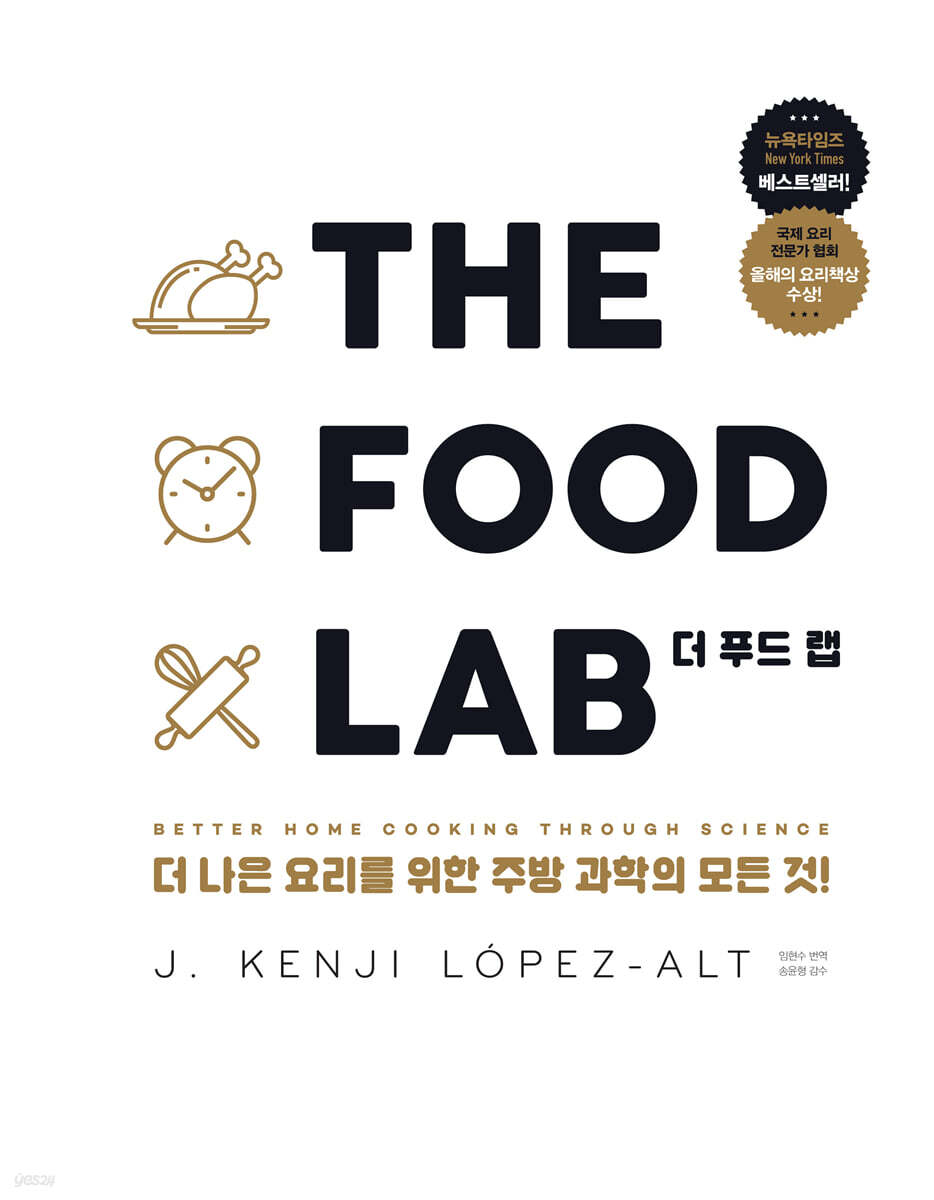
THE FOOD LAB
 |
Description
Book Introduction
A New York Times bestseller! Winner of the James Beard Award in the General Cooking category!
Winner of the International Association of Culinary Professionals (IACP) Cookbook of the Year Award!
#1 Bestseller in the 'Celebrity & TV Show Cookbooks' category on Amazon.com (www.amazon.com)!
"Cooking is never about 'feeling' or 'hand taste.'"
"THE FOOD LAB" is a collection of perfect recipes, crafted through experimentation, exploration, and research to achieve the perfect taste, just like science!
We are exposed to countless foods and recipes through various channels, including television, video media like YouTube, and even social media.
However, these various cooking methods often have conflicting opinions.
When the opinions of so-called "experts" clash like this, we, the average person, can't help but feel confused about which opinion is correct. Author J., an MIT graduate, self-proclaimed nerd, and renowned chef and food writer, is a leading figure in the United States and around the world.
Kenzie Lopez-Alt (J.
Kenji Lopez-Alt challenges common cooking misconceptions, conducts experiments to obtain accurate results, and perfects recipes based on the results.
This book will not only help you cook well, but also help you understand and appreciate the process and principles of cooking.
From simple breakfast dishes to quick-cooking dishes like broths and steaks, to steaks, stews, pastas, and salads, let's delve into the world of kitchen science for better cooking with recipes loved by Americans and loved by us Koreans too.
Winner of the International Association of Culinary Professionals (IACP) Cookbook of the Year Award!
#1 Bestseller in the 'Celebrity & TV Show Cookbooks' category on Amazon.com (www.amazon.com)!
"Cooking is never about 'feeling' or 'hand taste.'"
"THE FOOD LAB" is a collection of perfect recipes, crafted through experimentation, exploration, and research to achieve the perfect taste, just like science!
We are exposed to countless foods and recipes through various channels, including television, video media like YouTube, and even social media.
However, these various cooking methods often have conflicting opinions.
When the opinions of so-called "experts" clash like this, we, the average person, can't help but feel confused about which opinion is correct. Author J., an MIT graduate, self-proclaimed nerd, and renowned chef and food writer, is a leading figure in the United States and around the world.
Kenzie Lopez-Alt (J.
Kenji Lopez-Alt challenges common cooking misconceptions, conducts experiments to obtain accurate results, and perfects recipes based on the results.
This book will not only help you cook well, but also help you understand and appreciate the process and principles of cooking.
From simple breakfast dishes to quick-cooking dishes like broths and steaks, to steaks, stews, pastas, and salads, let's delve into the world of kitchen science for better cooking with recipes loved by Americans and loved by us Koreans too.
- You can preview some of the book's contents.
Preview
index
INTRODUCTION Kitchen Nerd
If my grandfather was an organic chemist and my father a microbiologist, I was a novice researcher. ㅣ What's in this book? ㅣ The Key to Proper Kitchen Science ㅣ What is Cooking? ㅣ Essential Kitchen Tools ㅣ Basic Pantry
PART 1 The Science of Breakfast - Eggs and Dairy
Everything you need to know about buying and storing eggs, from The Food Lab | Boiled Eggs | Fried Eggs | Scrambled Eggs, Two Ways to Make Them | Omelettes | Bacon | Crispy Potato Cakes (Rösti) | Potato Hash | Buttermilk Pancakes | Homemade Ricotta Cheese | Waffles | Buttermilk Biscuits | Sticky Buns
PART 2 The Science of Broth - Soups and Stews
Broth | How to Make Creamy Vegetable Soup Without a Recipe | Grilled Cheese Sandwiches and Quick Tomato Soup | Two Ways to Make French Onion Soup | Chicken with Dumplings | Pot Roast | Pan-Braised Chicken | In Search of the Ultimate Chili Stew | Vegetarian Chili Stew | Texas Chili Con Carne | Chili Verde
PART 3 The Science of Quick-Cooking Foods - Steaks, Chops, Chicken, and Fish
Everything You Need to Know About Beef Steaks from The Food Lab | Dry-Aged Beef | New Tenderloin Steak Recipe | Pan Sauces | Béarnaise Sauce | Grilled Ribeye (or T-Bone, Porterhouse, or Strip Steak) for Two | Marinated Steaks for Grilling or Pan-Searing | The Best Fajitas | Fancy Pork Chop | Fancy Chicken Cuts | Fish-Free Salmon | Beer Coolers, Plastic Bags, and the Science of Sous Vide | Cooler-Cooked Cheeseburgers
PART 4 The Science of Vegetables - Blanching, Searing, Braising, Glazing, and Roasting
Basic Vegetable Recipe #1: Blanching/Steaming ㅣ Basic Vegetable Recipe #2: Searing/Sautéing ㅣ Basic Vegetable Recipe #3: Braising ㅣ Basic Vegetable Recipe #4: Glazing ㅣ Basic Vegetable Recipe #5: Roasting/Broiling ㅣ : Potatoes ㅣ This is the ultimate potato casserole ㅣ Mashed Potatoes
PART 5 The Science of Ground Meat - Meatballs, Meatloaf, Sausage Links, and Burgers
Everything You Need to Know About Ground Meat from The Food Lab | : Cooking Sausages | : Classic American Meatloaf | Italian Meatballs in Tomato Sauce | My wife kisses me every night when she comes home.
ㅣ Press and press ㅣ Big, thick, juicy burgers grilled on the grill
PART 6 The Science of Grilling Meats - Chicken, Turkey, and Ribs
Roasting Poultry | Everything You Need to Know About Buying, Storing, and Cooking Poultry from The Food Lab | Poultry Recipe #1: (My Favorite Method) Slit and Flatten the Belly | Poultry Recipe #2: (If You Have Time) Cut and Cook by Cut
ㅣ Poultry Recipe #3: (For a Traditional Appearance) Hot Steel Pan ㅣ Turkey Roast ㅣ For the Perfectionist: Two Thanksgiving Turkey Recipes ㅣ Classic Stuffing with Sage and Sausage ㅣ Super Easy Cranberry Sauce ㅣ The Food Lab's Guide to Beef Roasts ㅣ The Food Lab's Guide to Buying, Storing, and Cooking Lamb ㅣ Super Crispy Pork Shoulder Roast ㅣ Pork Crown Roast ㅣ Glazed Pork Tenderloin ㅣ Slow-Roasted Porchetta
PART 7 The Science of Pasta - Tomato Sauce, Macaroni
Pasta Traditions ㅣ The Best Way to Cook Pasta ㅣ : Italian-American Pasta Sauces ㅣ Mother Sauce #1: Olive Oil and Garlic ㅣ Shrimp and Garlic Pasta ㅣ Mother Sauce #2: Classic Red Sauce ㅣ Mother Sauce #3: Pesto ㅣ Mother Sauce #4: Cream Sauce ㅣ Really Gooey Mac and Cheese Made on the Stovetop ㅣ Mother Sauce #5: Ragù Bolognese ㅣ : Oven Pasta ㅣ Creamy Spinach and Mushroom Lasagna ㅣ Oven-Baked Mac and Cheese ㅣ How to Make Risotto Even More Delicious
PART 8 The Science of Salads - Greens and Oils
Choosing Greens for Salads | Salad Dressings | Dressing Type #1: Vinaigrette | Dressing Type #2: Mayonnaise-Based Dressings | Classic American Potato Salad | Marinated Kale Salad | Dressing Type #3: Dairy-Based Dressings | Chopped Salads
PART 9 The Science of Frying - Batter and Breading
What is 'Frying'? ㅣ Coating Style 1: Flour Coating ㅣ Coating Style 2: Breadcrumb Coating ㅣ Coating Style 3: Beer Batter ㅣ Coating Style 4: Thin Batter ㅣ French Fries ㅣ : Acknowledgements
INDEX
If my grandfather was an organic chemist and my father a microbiologist, I was a novice researcher. ㅣ What's in this book? ㅣ The Key to Proper Kitchen Science ㅣ What is Cooking? ㅣ Essential Kitchen Tools ㅣ Basic Pantry
PART 1 The Science of Breakfast - Eggs and Dairy
Everything you need to know about buying and storing eggs, from The Food Lab | Boiled Eggs | Fried Eggs | Scrambled Eggs, Two Ways to Make Them | Omelettes | Bacon | Crispy Potato Cakes (Rösti) | Potato Hash | Buttermilk Pancakes | Homemade Ricotta Cheese | Waffles | Buttermilk Biscuits | Sticky Buns
PART 2 The Science of Broth - Soups and Stews
Broth | How to Make Creamy Vegetable Soup Without a Recipe | Grilled Cheese Sandwiches and Quick Tomato Soup | Two Ways to Make French Onion Soup | Chicken with Dumplings | Pot Roast | Pan-Braised Chicken | In Search of the Ultimate Chili Stew | Vegetarian Chili Stew | Texas Chili Con Carne | Chili Verde
PART 3 The Science of Quick-Cooking Foods - Steaks, Chops, Chicken, and Fish
Everything You Need to Know About Beef Steaks from The Food Lab | Dry-Aged Beef | New Tenderloin Steak Recipe | Pan Sauces | Béarnaise Sauce | Grilled Ribeye (or T-Bone, Porterhouse, or Strip Steak) for Two | Marinated Steaks for Grilling or Pan-Searing | The Best Fajitas | Fancy Pork Chop | Fancy Chicken Cuts | Fish-Free Salmon | Beer Coolers, Plastic Bags, and the Science of Sous Vide | Cooler-Cooked Cheeseburgers
PART 4 The Science of Vegetables - Blanching, Searing, Braising, Glazing, and Roasting
Basic Vegetable Recipe #1: Blanching/Steaming ㅣ Basic Vegetable Recipe #2: Searing/Sautéing ㅣ Basic Vegetable Recipe #3: Braising ㅣ Basic Vegetable Recipe #4: Glazing ㅣ Basic Vegetable Recipe #5: Roasting/Broiling ㅣ : Potatoes ㅣ This is the ultimate potato casserole ㅣ Mashed Potatoes
PART 5 The Science of Ground Meat - Meatballs, Meatloaf, Sausage Links, and Burgers
Everything You Need to Know About Ground Meat from The Food Lab | : Cooking Sausages | : Classic American Meatloaf | Italian Meatballs in Tomato Sauce | My wife kisses me every night when she comes home.
ㅣ Press and press ㅣ Big, thick, juicy burgers grilled on the grill
PART 6 The Science of Grilling Meats - Chicken, Turkey, and Ribs
Roasting Poultry | Everything You Need to Know About Buying, Storing, and Cooking Poultry from The Food Lab | Poultry Recipe #1: (My Favorite Method) Slit and Flatten the Belly | Poultry Recipe #2: (If You Have Time) Cut and Cook by Cut
ㅣ Poultry Recipe #3: (For a Traditional Appearance) Hot Steel Pan ㅣ Turkey Roast ㅣ For the Perfectionist: Two Thanksgiving Turkey Recipes ㅣ Classic Stuffing with Sage and Sausage ㅣ Super Easy Cranberry Sauce ㅣ The Food Lab's Guide to Beef Roasts ㅣ The Food Lab's Guide to Buying, Storing, and Cooking Lamb ㅣ Super Crispy Pork Shoulder Roast ㅣ Pork Crown Roast ㅣ Glazed Pork Tenderloin ㅣ Slow-Roasted Porchetta
PART 7 The Science of Pasta - Tomato Sauce, Macaroni
Pasta Traditions ㅣ The Best Way to Cook Pasta ㅣ : Italian-American Pasta Sauces ㅣ Mother Sauce #1: Olive Oil and Garlic ㅣ Shrimp and Garlic Pasta ㅣ Mother Sauce #2: Classic Red Sauce ㅣ Mother Sauce #3: Pesto ㅣ Mother Sauce #4: Cream Sauce ㅣ Really Gooey Mac and Cheese Made on the Stovetop ㅣ Mother Sauce #5: Ragù Bolognese ㅣ : Oven Pasta ㅣ Creamy Spinach and Mushroom Lasagna ㅣ Oven-Baked Mac and Cheese ㅣ How to Make Risotto Even More Delicious
PART 8 The Science of Salads - Greens and Oils
Choosing Greens for Salads | Salad Dressings | Dressing Type #1: Vinaigrette | Dressing Type #2: Mayonnaise-Based Dressings | Classic American Potato Salad | Marinated Kale Salad | Dressing Type #3: Dairy-Based Dressings | Chopped Salads
PART 9 The Science of Frying - Batter and Breading
What is 'Frying'? ㅣ Coating Style 1: Flour Coating ㅣ Coating Style 2: Breadcrumb Coating ㅣ Coating Style 3: Beer Batter ㅣ Coating Style 4: Thin Batter ㅣ French Fries ㅣ : Acknowledgements
INDEX
Detailed image
Publisher's Review
It's not about cooking 'feel' or 'hand taste'
Join the ranks of science!
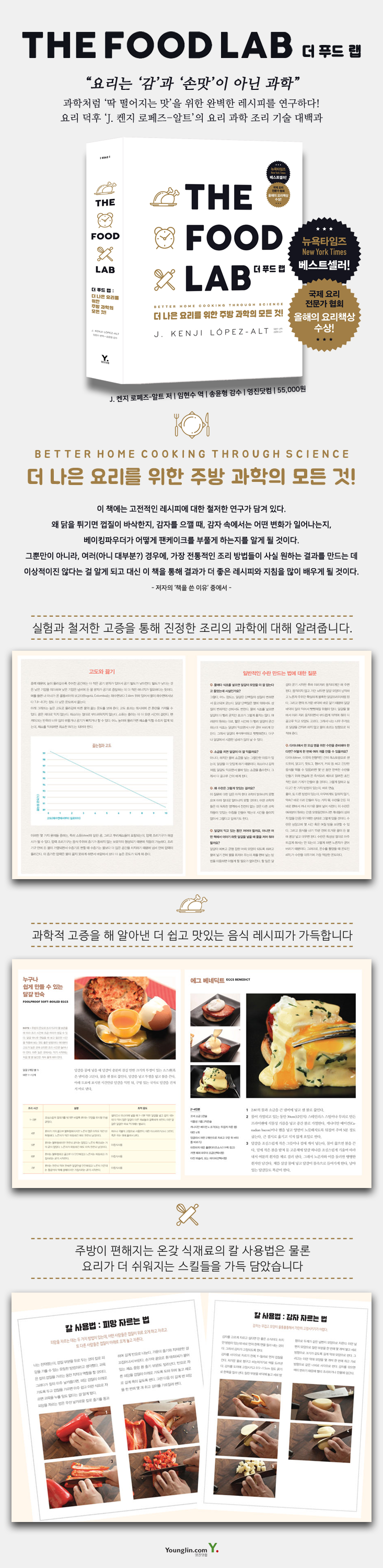
This book contains thorough research on classic recipes.
You'll learn why fried chicken gets crispy skin, what happens inside a potato when you mash it, and how baking powder makes pancakes rise.
Not only that, but in many (if not most?) cases, you'll find that the most traditional cooking methods aren't actually ideal for producing the results you want, and instead, you'll learn many recipes and instructions in this book that will produce better results.
Sometimes there are experiments that you can easily do at home.
All of these experiments are suitable for parties, and most of them are suitable for children too.
So if you're thinking about trying this experiment, I highly recommend doing it with people around you.
- From 'Why I Wrote This Book'
Have you ever wondered how long to boil an egg to get a perfectly hard-boiled egg with a perfectly set yolk or a runny, creamy yolk? Have you ever wondered if searing the outside of a steak, as those celebrity chefs on TV cookbooks suggest, really keeps the meat juicy and tender?
If you thought you were soaking sliced onions in cold water to get rid of their pungent, acrid taste, you were wrong.
If you thought adding oil when boiling pasta was to prevent the noodles from sticking together, you were wrong.
It tells you about these wrong common sense ideas and the correct way to correct them.
Kenji experimented, explored, and researched everything he was curious about.
As a result, we found out what changes occur every 30 seconds while boiling an egg and how to make the most delicious hard-boiled/soft-boiled eggs.
There are many ways to read this book.
If the word 'science' gives you a headache and makes you dizzy, you can boldly think about this part and just read the cooking recipes that are condensed with the author's know-how.
Also, if you don't like cooking, but enjoy reading about kitchen science, science common sense, or cooking essays, you might consider just reading the book and not following the recipes.
Or, you can just look for the recipe you want and cook it as needed.
The author welcomes any reader.
This thick and informative book will be a friendly and sometimes talkative friend to all readers, bringing them one step closer to 'cooking' and 'science.'
Cooking becomes easier and faster
A complete guide to cooking techniques!
For those who are new to cooking and are not familiar with it, the first thing they worry about before starting to cook is 'what should I have in my kitchen?'
Especially for those who believe that they can only cook well if they are well-equipped.
But there are so many cooking utensils on the Internet, and some of them are too expensive.
If you keep thinking about which products are right for you and how much you need to fill in to make cooking easier, you'll likely give up on cooking before you even start.
This book, "THE FOOD LAB," begins with the kitchen tools that are essential for your kitchen.
Before you start cooking, carefully research the necessary preparations, such as which knife is right for you, which products offer the best value, and how to avoid unnecessary expenses.
And, it also explains how to use a knife, a common concern for those who are not good at cooking, with detailed step-by-step photos for each ingredient, such as mushrooms, potatoes, and carrots.
In addition, we will provide clear answers to any questions you may have while preparing ingredients or cooking through 'QnA'.
If you're a clumsy cook and find yourself spending a whole day just making a few simple dishes, you can quickly "level up" to become a kitchen expert by practicing with the kitchen skills Kenji teaches you.
【 Target Readership 】
- Ordinary people who want to know the scientific explanation of cooking, not just folklore or tradition.
- General public who want to learn various dishes using systematic recipes
Join the ranks of science!
This book contains thorough research on classic recipes.
You'll learn why fried chicken gets crispy skin, what happens inside a potato when you mash it, and how baking powder makes pancakes rise.
Not only that, but in many (if not most?) cases, you'll find that the most traditional cooking methods aren't actually ideal for producing the results you want, and instead, you'll learn many recipes and instructions in this book that will produce better results.
Sometimes there are experiments that you can easily do at home.
All of these experiments are suitable for parties, and most of them are suitable for children too.
So if you're thinking about trying this experiment, I highly recommend doing it with people around you.
- From 'Why I Wrote This Book'
Have you ever wondered how long to boil an egg to get a perfectly hard-boiled egg with a perfectly set yolk or a runny, creamy yolk? Have you ever wondered if searing the outside of a steak, as those celebrity chefs on TV cookbooks suggest, really keeps the meat juicy and tender?
If you thought you were soaking sliced onions in cold water to get rid of their pungent, acrid taste, you were wrong.
If you thought adding oil when boiling pasta was to prevent the noodles from sticking together, you were wrong.
It tells you about these wrong common sense ideas and the correct way to correct them.
Kenji experimented, explored, and researched everything he was curious about.
As a result, we found out what changes occur every 30 seconds while boiling an egg and how to make the most delicious hard-boiled/soft-boiled eggs.
There are many ways to read this book.
If the word 'science' gives you a headache and makes you dizzy, you can boldly think about this part and just read the cooking recipes that are condensed with the author's know-how.
Also, if you don't like cooking, but enjoy reading about kitchen science, science common sense, or cooking essays, you might consider just reading the book and not following the recipes.
Or, you can just look for the recipe you want and cook it as needed.
The author welcomes any reader.
This thick and informative book will be a friendly and sometimes talkative friend to all readers, bringing them one step closer to 'cooking' and 'science.'
Cooking becomes easier and faster
A complete guide to cooking techniques!
For those who are new to cooking and are not familiar with it, the first thing they worry about before starting to cook is 'what should I have in my kitchen?'
Especially for those who believe that they can only cook well if they are well-equipped.
But there are so many cooking utensils on the Internet, and some of them are too expensive.
If you keep thinking about which products are right for you and how much you need to fill in to make cooking easier, you'll likely give up on cooking before you even start.
This book, "THE FOOD LAB," begins with the kitchen tools that are essential for your kitchen.
Before you start cooking, carefully research the necessary preparations, such as which knife is right for you, which products offer the best value, and how to avoid unnecessary expenses.
And, it also explains how to use a knife, a common concern for those who are not good at cooking, with detailed step-by-step photos for each ingredient, such as mushrooms, potatoes, and carrots.
In addition, we will provide clear answers to any questions you may have while preparing ingredients or cooking through 'QnA'.
If you're a clumsy cook and find yourself spending a whole day just making a few simple dishes, you can quickly "level up" to become a kitchen expert by practicing with the kitchen skills Kenji teaches you.
【 Target Readership 】
- Ordinary people who want to know the scientific explanation of cooking, not just folklore or tradition.
- General public who want to learn various dishes using systematic recipes
GOODS SPECIFICS
- Date of publication: June 28, 2017
- Format: Hardcover book binding method guide
- Page count, weight, size: 960 pages | 2,742g | 223*290*50mm
- ISBN13: 9788931455625
- ISBN10: 8931455623
You may also like
카테고리
korean


korean

![GQ KOREA Mark (Monthly): December [2025]](http://librairie.coreenne.fr/cdn/shop/files/8ef265dbbfbf186523ed75ba7319009d.jpg?v=1765340328&width=3840)


