

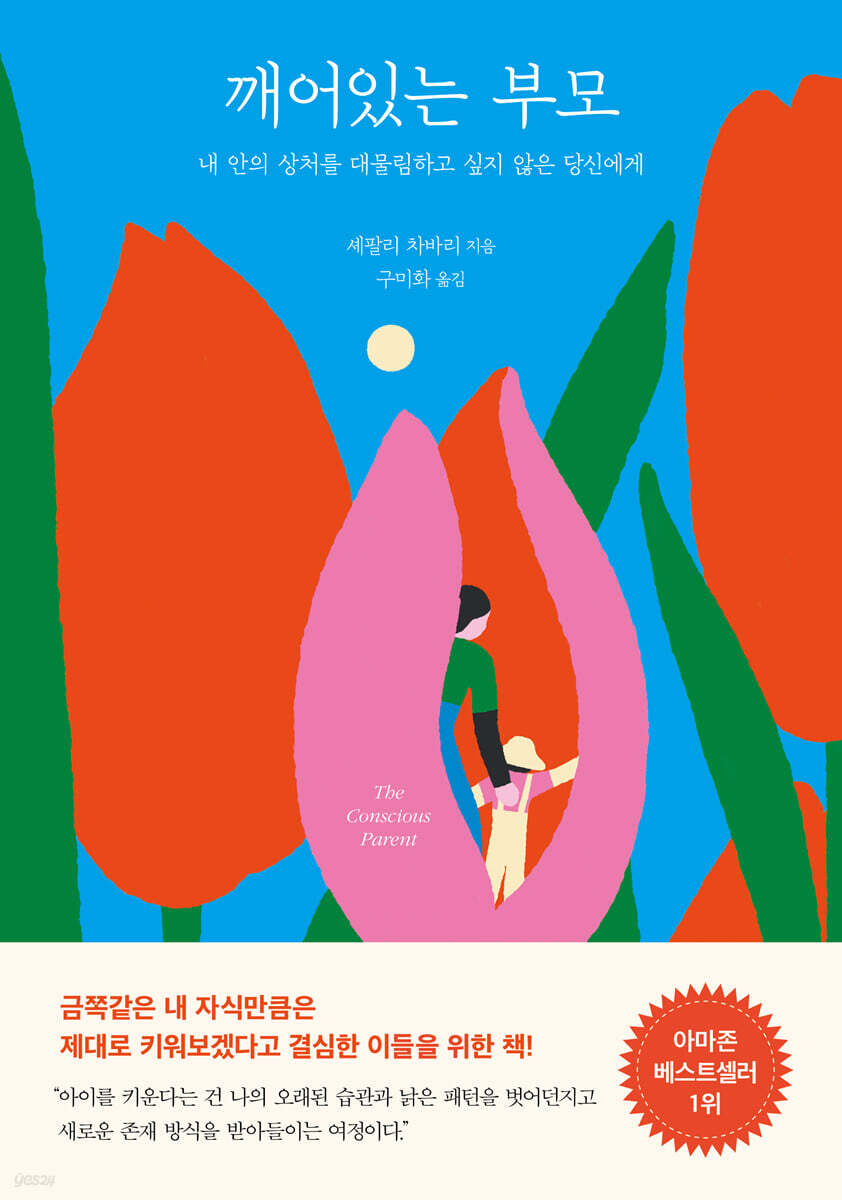
Awake parents
 |
Description
Book Introduction
A book for those who are determined to raise their precious children properly! #1 Amazon bestseller, New York Times bestseller Oprah Winfrey recommends the Dalai Lama!! Must-Read Books Before Becoming a Parent A new concept parenting book that proposes a new paradigm for good parents! This book immediately rose to number one on Amazon's bestseller list and a New York Times bestseller list, receiving enthusiastic attention and praise from numerous parents, teachers, and clinical psychologists, establishing itself as a bible for new parenting concepts in the 21st century. Dr. Shefali Chabari, who was born in India, received her doctorate in clinical psychology from Columbia University, and runs a counseling practice in New York, combines Western psychology with Eastern mindfulness, which she encountered as a child, to propose a "conscious parenting method" that allows both parents and children to grow and heal, and to awaken their inner potential. His argument, counseling cases, and scientific evidence that 'mindfulness' and 'awakening' are essential for modern people, especially for parents raising children, have garnered deep sympathy and become a hot topic in 'The Oprah Winfrey Show' and TED talks. The author emphasizes that the key to the relationship between parents and children is not one where the parents teach unilaterally, but rather a reciprocal relationship where the parents and children learn together. These days, MZ generation parents and parents-to-be try to maintain a friendly relationship rather than an authoritarian one. However, the reality of parenting is not easy, and it is easy to become overwhelmed by the flood of parenting information. The author poses the following questions to parents who are determined to raise their children properly, but soon become exhausted and frustrated, and suggests fundamental parenting methods that can be implemented in everyday life right now. “How can we raise our children well, free from our ego and anxious psychological state?” The author says that while children may seem to constantly test and challenge their parents' limits, all of these actions actually help them rediscover forgotten aspects of themselves and release hidden grievances. This means that only after parents realize and overcome the emotional legacy and unhealed wounds they have unknowingly inherited can they accept their children as they are, purely. The author emphasizes that "conscious parenting" is absolutely necessary in this day and age, based on her own trial and error as a mother raising a child, as well as her counseling experience with parents struggling with their children's problems, teenagers struggling with their relationships with their parents, and countless adults suffering from emotional wounds they never knew they had. This book helps parents who blame their children for their behavioral problems or complain that they don't know what to do turn their gaze inward and realize old wounds and long-standing habits. If you start to realize that the cause of your child's outburst may lie with you, not with the child, you can develop a relationship that fosters a close bond with your child and awakens their potential. For this reason, this book is best read before becoming a parent, but it will also be the best parenting book for parents who already have children and are raising them, and for all parents who do not want to pass on unresolved inner wounds to their children. |
- You can preview some of the book's contents.
Preview
index
introduction
Author's Note: To all parents in the world
Chapter 1: The Magic Between Parents and Children
A child's soul has its own unique resonance.
Everyone raises a child without knowing much at first.
Parents who want to communicate with their children must first connect with themselves.
Build strong bonds between family members
Awareness Changes Your Relationship with Your Child
Chapter 2: Special Reasons Why Children Come to Their Parents
How do children awaken their parents?
How to learn conscious parenting?
Awake parents aren't made overnight.
Chapter 3: A Child Who Wants to Be Recognized by His Parents
Acceptance vs. Rejection
Children are not meant to fulfill their parents' fantasies and dreams.
Let's not raise children by molding them into the same mold.
As the parent that a child needs
Chapter 4: Breaking Free from the Ego
How does the ego work?
① Ego obsessed with image | ② Ego obsessed with perfection | ③ Ego obsessed with status |
④ Ego obsessed with conformity | ⑤ Ego obsessed with control
You can escape the clutches of the ego.
Chapter 5: Parents Growing Up with Their Children
Why Parents Frequently Lose Their Temper When Interacting with Their Children
Find the emotional legacy you inherited without even realizing it.
How can we embrace pain?
How to help your child manage pain on their own
Now that you have become aware of your unconsciousness, take it one step at a time.
Anxiety: What if it can't be avoided?
Chapter 6: Life's Wise Guide
If your parents keep getting angry and anxious
Children don't have to try to earn their parents' trust.
Life is neutral, interpretation is optional
Practice breaking free from the shadows of the past
'Good' and 'bad' experiences
Chapter 7: The Challenge of a Lifetime: Raising a "Hateful Three-Year-Old"
Raising a newborn
A journey of self-discovery
A precious opportunity to get back into your rhythm
When I start walking, the whole world is mine
A time to sow the seeds of moderation
Chapter 8: From Leading Role to Supporting Role: The Growth Opportunities Parents Have
A Parent's Challenge for Middle School Students: Just Watching
A Parent's Challenge for High School Students: Providing Absolute Trust and Support
Why You Should Resist the Temptation to Control
Chapter 9: On the Recklessness of Becoming a Parent
A very special role given to mothers
Becoming a parent means accepting that everyone progresses at different speeds.
Chapter 10: Overcoming the Wounds Within and Facing Your Child as a Whole Person
If a person who grew up feeling inadequate becomes a parent,
If you have learned that you have to please others to be accepted,
If you haven't been able to be honest with yourself until now
'Bad' behavior is actually a search for innate goodness.
Our wounds are not our true selves.
Chapter 11: A Family That Is Happy Just by Existing
If you want to feel at ease, you have to worry
Where does fear of the present come from?
Try being alone and still
The most important moment is right here, right now.
Chapter 12: The Wonder of Ordinariness
Do we welcome our child's ordinariness?
A life mired in the overproduction error
Let go of the impatience to 'do' something
Back to basics
A life that reflects the child's appearance
Chapter 13: Letting Go of Expectations
Respecting the child's innate nature
How should we set expectations for our children?
What you can realistically expect from your child
Focus on the process rather than the outcome
There are appropriate types of praise.
Children learn by following what their parents do.
Chapter 14: Creating Space for Awakening in Your Child's Life
Let's create a quiet space in your child's daily routine.
Tell your child an empowering story
Expressing gratitude to your child is the most powerful parenting technique.
Chapter 15: Connecting with Your Child While Being True to Your Being
Parental Behaviors That Ruin Efforts to Connect with Their Children
Is it the child's behavior or his existence that we acknowledge?
Just be there
Chapter 16: How to Deal with Your Child's Mistakes
Don't judge your child's behavior arbitrarily.
The Secret to Turning Mistakes into Mental Treasures
Let's accept our children's mistakes with joy.
Chapter 17: The Two Wings of Discipline: Observation and Intervention
No bird soars without restraint.
Why You Need to Stay on Your toes When Disciplining Your Child
Don't avoid conflict, value it.
How to Discipline Effectively
Rules about rules
Why Teaching is More Effective Than Punishment
A troublemaker child has emotional distress.
Parents are also responsible for their children's behavior.
Why a Lovely Child Turns into a Rebellious Child
The backlash of scare tactics
How to set limits by saying "No"
Timing is important in shaping behavior.
In closing, a great legacy to leave to our children
We are all in the same boat
To be a parent who is faithful to the present
Appendix 11 Questions for Awake Parents
: Moving forward in a state of awakening by asking and answering questions yourself
Author's Note: To all parents in the world
Chapter 1: The Magic Between Parents and Children
A child's soul has its own unique resonance.
Everyone raises a child without knowing much at first.
Parents who want to communicate with their children must first connect with themselves.
Build strong bonds between family members
Awareness Changes Your Relationship with Your Child
Chapter 2: Special Reasons Why Children Come to Their Parents
How do children awaken their parents?
How to learn conscious parenting?
Awake parents aren't made overnight.
Chapter 3: A Child Who Wants to Be Recognized by His Parents
Acceptance vs. Rejection
Children are not meant to fulfill their parents' fantasies and dreams.
Let's not raise children by molding them into the same mold.
As the parent that a child needs
Chapter 4: Breaking Free from the Ego
How does the ego work?
① Ego obsessed with image | ② Ego obsessed with perfection | ③ Ego obsessed with status |
④ Ego obsessed with conformity | ⑤ Ego obsessed with control
You can escape the clutches of the ego.
Chapter 5: Parents Growing Up with Their Children
Why Parents Frequently Lose Their Temper When Interacting with Their Children
Find the emotional legacy you inherited without even realizing it.
How can we embrace pain?
How to help your child manage pain on their own
Now that you have become aware of your unconsciousness, take it one step at a time.
Anxiety: What if it can't be avoided?
Chapter 6: Life's Wise Guide
If your parents keep getting angry and anxious
Children don't have to try to earn their parents' trust.
Life is neutral, interpretation is optional
Practice breaking free from the shadows of the past
'Good' and 'bad' experiences
Chapter 7: The Challenge of a Lifetime: Raising a "Hateful Three-Year-Old"
Raising a newborn
A journey of self-discovery
A precious opportunity to get back into your rhythm
When I start walking, the whole world is mine
A time to sow the seeds of moderation
Chapter 8: From Leading Role to Supporting Role: The Growth Opportunities Parents Have
A Parent's Challenge for Middle School Students: Just Watching
A Parent's Challenge for High School Students: Providing Absolute Trust and Support
Why You Should Resist the Temptation to Control
Chapter 9: On the Recklessness of Becoming a Parent
A very special role given to mothers
Becoming a parent means accepting that everyone progresses at different speeds.
Chapter 10: Overcoming the Wounds Within and Facing Your Child as a Whole Person
If a person who grew up feeling inadequate becomes a parent,
If you have learned that you have to please others to be accepted,
If you haven't been able to be honest with yourself until now
'Bad' behavior is actually a search for innate goodness.
Our wounds are not our true selves.
Chapter 11: A Family That Is Happy Just by Existing
If you want to feel at ease, you have to worry
Where does fear of the present come from?
Try being alone and still
The most important moment is right here, right now.
Chapter 12: The Wonder of Ordinariness
Do we welcome our child's ordinariness?
A life mired in the overproduction error
Let go of the impatience to 'do' something
Back to basics
A life that reflects the child's appearance
Chapter 13: Letting Go of Expectations
Respecting the child's innate nature
How should we set expectations for our children?
What you can realistically expect from your child
Focus on the process rather than the outcome
There are appropriate types of praise.
Children learn by following what their parents do.
Chapter 14: Creating Space for Awakening in Your Child's Life
Let's create a quiet space in your child's daily routine.
Tell your child an empowering story
Expressing gratitude to your child is the most powerful parenting technique.
Chapter 15: Connecting with Your Child While Being True to Your Being
Parental Behaviors That Ruin Efforts to Connect with Their Children
Is it the child's behavior or his existence that we acknowledge?
Just be there
Chapter 16: How to Deal with Your Child's Mistakes
Don't judge your child's behavior arbitrarily.
The Secret to Turning Mistakes into Mental Treasures
Let's accept our children's mistakes with joy.
Chapter 17: The Two Wings of Discipline: Observation and Intervention
No bird soars without restraint.
Why You Need to Stay on Your toes When Disciplining Your Child
Don't avoid conflict, value it.
How to Discipline Effectively
Rules about rules
Why Teaching is More Effective Than Punishment
A troublemaker child has emotional distress.
Parents are also responsible for their children's behavior.
Why a Lovely Child Turns into a Rebellious Child
The backlash of scare tactics
How to set limits by saying "No"
Timing is important in shaping behavior.
In closing, a great legacy to leave to our children
We are all in the same boat
To be a parent who is faithful to the present
Appendix 11 Questions for Awake Parents
: Moving forward in a state of awakening by asking and answering questions yourself
Detailed image
.jpg)
Into the book
Being a perfect parent is a mirage.
There are no perfect parents or perfect children in this world.
Of course, any parent would want to do their best to raise their child, but when it comes to actual practice, they face various difficulties.
This book, "Awake Parents," was written to help parents solve problems in those difficult moments.
--- From the author's note
Raising a child is a journey of shedding old habits and worn-out patterns and embracing new ways of being.
The tremendous opportunity to develop into a more enlightened parent always humbles me.
--- From the author's note
Many parents come to me not because they want to know how to grow, but because they want answers to their child's "problem behaviors."
They expect me to wave a magic wand and transform their children into good, sound young people.
---From Chapter 1, “The Magic Between Parents and Children”
When we recognize that our children's inappropriate behaviors are actually signals that require more vigilance from us as parents, we can see the opportunities for change they present.
Rather than reacting reflexively to our children's behavior, let's look within ourselves and ask ourselves why we're getting upset.
When you ask yourself questions like that, space is created for awareness to arise.
---From Chapter 2, “Special Reasons Why Children Come to Their Parents”
Most people will be puzzled if I tell them that both blame and approval are the same means of control.
Even when we praise or celebrate a child's success, we are prone to expressing either approval or criticism.
Children quickly notice this and it affects their self-esteem.
---From Chapter 3, “Children Who Want to Be Recognized by Their Parents”
If parents cannot tolerate their own shortcomings and are reluctant to expose their weaknesses, the child will learn to hide his or her shortcomings and cover them up.
But what children really need to learn is that “perfection is an ideal dreamed of by fools.”
---From Chapter 4, "Breaking Up with the Ego"
How can parents provide for their children if they don't first fill their own well? Unless parents are fully filled, they will try to fill it through their children.
Without even realizing it, we will be teaching our children to live with the burden of unrecognized fears, the loss of being left behind, and the lies we have forgotten.
---From Chapter 5, “Parents Growing Up with Their Children”
Elizabeth confided in me:
"If I'd only had David, how terribly selfish of a parent would I have been? Thanks to Deacon, I've learned to accept things that are unconventional and different, and I'm so grateful for that."
---From Chapter 6, "Life's Wise Guide"
The reason children kick and bite their parents is simply because they don't know how to say, "I'm mad at Mom" or "I'm mad at Dad."
When a child cries, whines, and thrashes as if he or she is angry, it is actually like he or she is crying out, “Help me, I’m really in so much pain.”
---From Chapter 7, "The Challenge of a Lifetime: Raising a 'Ugly Three-Year-Old'"
I also know that once my daughter becomes a teenager, I will have to let go of my ego's need to interfere with her every little thing.
I can already hear a voice saying this in my mind.
“I still have many stories to tell you, and many realizations to share.
But I know it's past time for long speeches.
Now it's time to truly write your own life!”
---From Chapter 8, “From Leading Role to Supporting Role: Opportunities for Growth as a Parent”
Being a parent is one of the most difficult things a human can experience.
Consider a mother raising a child who simply won't sleep even at 3 a.m.
She has her second child breastfeeding in her arms and she has to be at work by 9 in the morning.
Meanwhile, her husband expects her to be enchanting in bed and look the most beautiful in the world.
---From Chapter 9, “On the Recklessness of Becoming a Parent”
Most 'bad' behavior is like a child crying out for help.
They act in extreme ways because they cannot get what they want through normal means.
In such cases, another option a child can choose is to give in to their parents' demands and become a 'filial son', 'filial daughter', or 'yes man'.
---From Chapter 10, “Overcoming the Wounds Within Me and Facing My Child as a Whole Person”
When parents focus on what they feel is lacking in every moment, their children will also begin to see the world through the lens of lack.
The reason we feel empty when we look around is because we are used to finding things we lack.
We are so unaccustomed to living without feeling like we lack anything that we fail to discover the richness of the world.
---From Chapter 11, "A Family Happy Just by Existing"
Many parents complain to me like this.
“But we want to show the child only the best.
Is that wrong? Why can't I send my child to ballet, tennis, or swimming lessons?" I'm not saying we should limit children's desire to explore.
Encouraging your child to explore is a way to value their very existence.
What I'm emphasizing is that parents need to help their children understand that their worth isn't determined by their abilities.
---From Chapter 12, “The Wonder of Ordinariness”
Whenever we feel that our children should excel by participating in many activities, let us ask ourselves:
Is this to help the child discover their true self, or is it to feel vicarious satisfaction as a parent? If we feel dissatisfied when our child's abilities aren't perfect, no matter how devoted we pretend to be and hide our feelings, that dissatisfaction won't subside.
As a result, children grow up to be adults who judge their worth based on external criteria such as grades, appearance, connections, possessions, career, wealth, and spouse.
---From Chapter 13, "Letting Go of Expectations"
Children can fully connect with their inner being if they are just taught to do so.
Even teenagers can do it! However, parents of teenagers often feel helpless in the face of their child's aggression and want to ignore them.
As a result, children become more deeply immersed in devices such as smartphones and computers.
We need to bring our teenagers back to a state of calm.
It's never too late to start.
---Chapter 14: "Creating Awakening Space in Your Child's Life"
When I finally came to my senses, I asked myself:
"Why did you get so upset about what your child said? Should I have taken away the opportunity to honestly express my disappointment just to make him feel grateful?" I could have waited for his disappointment to subside and then taught him a lesson.
But instead of giving the child a chance to calm down, I was so eager to ease the helplessness that the child's words, "bad mom," had stirred up in me that I shifted the blame onto the child.
---From Chapter 15, “Communicating with a Child While Being True to One’s Existence”
One day my daughter said to me:
“I had an accident, Mom.
I left the cap of my marker pen open and it left a huge stain on my bed.
“I’m sorry,” I told my daughter, telling her how brave she was to “confess.”
Then he taught me how to remove the stain.
My daughter now knows that if she can be honest about anything, her mother will recognize her courage.
So whenever they eat candy they promised not to eat or whenever their friends hide something from the teacher, they confide in me.
---From Chapter 16, "How to Deal with Your Child's Mistakes"
If you don't learn how to manage your emotions as a child, especially how to respond appropriately when told "no," you may not be able to manage depressed feelings as an adult.
So, they either throw tantrums like two-year-olds or binge drink, claiming it's a more adult way of doing things.
But most people don't realize how harmful this behavior is.
In reality, all these behaviors arise from an inability to control oneself and to accept reality as it is.
There are no perfect parents or perfect children in this world.
Of course, any parent would want to do their best to raise their child, but when it comes to actual practice, they face various difficulties.
This book, "Awake Parents," was written to help parents solve problems in those difficult moments.
--- From the author's note
Raising a child is a journey of shedding old habits and worn-out patterns and embracing new ways of being.
The tremendous opportunity to develop into a more enlightened parent always humbles me.
--- From the author's note
Many parents come to me not because they want to know how to grow, but because they want answers to their child's "problem behaviors."
They expect me to wave a magic wand and transform their children into good, sound young people.
---From Chapter 1, “The Magic Between Parents and Children”
When we recognize that our children's inappropriate behaviors are actually signals that require more vigilance from us as parents, we can see the opportunities for change they present.
Rather than reacting reflexively to our children's behavior, let's look within ourselves and ask ourselves why we're getting upset.
When you ask yourself questions like that, space is created for awareness to arise.
---From Chapter 2, “Special Reasons Why Children Come to Their Parents”
Most people will be puzzled if I tell them that both blame and approval are the same means of control.
Even when we praise or celebrate a child's success, we are prone to expressing either approval or criticism.
Children quickly notice this and it affects their self-esteem.
---From Chapter 3, “Children Who Want to Be Recognized by Their Parents”
If parents cannot tolerate their own shortcomings and are reluctant to expose their weaknesses, the child will learn to hide his or her shortcomings and cover them up.
But what children really need to learn is that “perfection is an ideal dreamed of by fools.”
---From Chapter 4, "Breaking Up with the Ego"
How can parents provide for their children if they don't first fill their own well? Unless parents are fully filled, they will try to fill it through their children.
Without even realizing it, we will be teaching our children to live with the burden of unrecognized fears, the loss of being left behind, and the lies we have forgotten.
---From Chapter 5, “Parents Growing Up with Their Children”
Elizabeth confided in me:
"If I'd only had David, how terribly selfish of a parent would I have been? Thanks to Deacon, I've learned to accept things that are unconventional and different, and I'm so grateful for that."
---From Chapter 6, "Life's Wise Guide"
The reason children kick and bite their parents is simply because they don't know how to say, "I'm mad at Mom" or "I'm mad at Dad."
When a child cries, whines, and thrashes as if he or she is angry, it is actually like he or she is crying out, “Help me, I’m really in so much pain.”
---From Chapter 7, "The Challenge of a Lifetime: Raising a 'Ugly Three-Year-Old'"
I also know that once my daughter becomes a teenager, I will have to let go of my ego's need to interfere with her every little thing.
I can already hear a voice saying this in my mind.
“I still have many stories to tell you, and many realizations to share.
But I know it's past time for long speeches.
Now it's time to truly write your own life!”
---From Chapter 8, “From Leading Role to Supporting Role: Opportunities for Growth as a Parent”
Being a parent is one of the most difficult things a human can experience.
Consider a mother raising a child who simply won't sleep even at 3 a.m.
She has her second child breastfeeding in her arms and she has to be at work by 9 in the morning.
Meanwhile, her husband expects her to be enchanting in bed and look the most beautiful in the world.
---From Chapter 9, “On the Recklessness of Becoming a Parent”
Most 'bad' behavior is like a child crying out for help.
They act in extreme ways because they cannot get what they want through normal means.
In such cases, another option a child can choose is to give in to their parents' demands and become a 'filial son', 'filial daughter', or 'yes man'.
---From Chapter 10, “Overcoming the Wounds Within Me and Facing My Child as a Whole Person”
When parents focus on what they feel is lacking in every moment, their children will also begin to see the world through the lens of lack.
The reason we feel empty when we look around is because we are used to finding things we lack.
We are so unaccustomed to living without feeling like we lack anything that we fail to discover the richness of the world.
---From Chapter 11, "A Family Happy Just by Existing"
Many parents complain to me like this.
“But we want to show the child only the best.
Is that wrong? Why can't I send my child to ballet, tennis, or swimming lessons?" I'm not saying we should limit children's desire to explore.
Encouraging your child to explore is a way to value their very existence.
What I'm emphasizing is that parents need to help their children understand that their worth isn't determined by their abilities.
---From Chapter 12, “The Wonder of Ordinariness”
Whenever we feel that our children should excel by participating in many activities, let us ask ourselves:
Is this to help the child discover their true self, or is it to feel vicarious satisfaction as a parent? If we feel dissatisfied when our child's abilities aren't perfect, no matter how devoted we pretend to be and hide our feelings, that dissatisfaction won't subside.
As a result, children grow up to be adults who judge their worth based on external criteria such as grades, appearance, connections, possessions, career, wealth, and spouse.
---From Chapter 13, "Letting Go of Expectations"
Children can fully connect with their inner being if they are just taught to do so.
Even teenagers can do it! However, parents of teenagers often feel helpless in the face of their child's aggression and want to ignore them.
As a result, children become more deeply immersed in devices such as smartphones and computers.
We need to bring our teenagers back to a state of calm.
It's never too late to start.
---Chapter 14: "Creating Awakening Space in Your Child's Life"
When I finally came to my senses, I asked myself:
"Why did you get so upset about what your child said? Should I have taken away the opportunity to honestly express my disappointment just to make him feel grateful?" I could have waited for his disappointment to subside and then taught him a lesson.
But instead of giving the child a chance to calm down, I was so eager to ease the helplessness that the child's words, "bad mom," had stirred up in me that I shifted the blame onto the child.
---From Chapter 15, “Communicating with a Child While Being True to One’s Existence”
One day my daughter said to me:
“I had an accident, Mom.
I left the cap of my marker pen open and it left a huge stain on my bed.
“I’m sorry,” I told my daughter, telling her how brave she was to “confess.”
Then he taught me how to remove the stain.
My daughter now knows that if she can be honest about anything, her mother will recognize her courage.
So whenever they eat candy they promised not to eat or whenever their friends hide something from the teacher, they confide in me.
---From Chapter 16, "How to Deal with Your Child's Mistakes"
If you don't learn how to manage your emotions as a child, especially how to respond appropriately when told "no," you may not be able to manage depressed feelings as an adult.
So, they either throw tantrums like two-year-olds or binge drink, claiming it's a more adult way of doing things.
But most people don't realize how harmful this behavior is.
In reality, all these behaviors arise from an inability to control oneself and to accept reality as it is.
---From Chapter 17, “The Two Wings of Discipline: Observing and Intervening”
Publisher's Review
Why do we keep getting upset?
First, recognize the roots of inner anxiety and old shadows.
We each think we're doing our best as parents, and in reality, most parents are good people who deeply care for their children.
The reason we force our will on our children is never because we lack affection.
According to the author, it is simply a lack of 'awareness'.
Let's take a closer look at the author's real-life parenting mistakes.
One day, when I picked up my daughter after school, she asked if we wanted to go to the park.
I answered no.
Then the child asked if he could go to the library again.
I said no again.
Finally, when asked if I could meet up with my friends and hang out, I said no.
I explained why it didn't work all three times.
“We have to prepare dinner.” “Daddy will be home soon.” “We have a lot to do in the evening.” But the child pouted and started to complain with a sullen expression.
“Mom is bad.
You're not letting me do anything.
I'm really annoyed today.
“I’m bored.”
That day, I had to understand my daughter's disappointment and watch her learn to control her emotions on her own, but I failed to do so.
My ego kicked in and I scolded my daughter for being 'selfish' and 'rude'.
He didn't stop there and went on to lecture us about the importance of expressing gratitude.
All the while, I felt guilty.
The more I scolded my child, the more guilty I felt, and the more I scolded him, trying to shift the guilt onto him.
When I finally came to my senses, I asked myself:
"Why did I get so upset about what my child said? Should I have taken away the opportunity to honestly express my disappointment in order to make him feel grateful?" the author asks, sharing an episode of his own in the book.
“I could have waited for the child’s disappointment to subside and then taught him a lesson.
But instead of giving the child a chance to calm down, I was so eager to ease the helplessness that the child's words, "bad mom," had stirred up in me that I shifted the blame onto the child."
We tend to scold our children when they are overcome with strong emotions.
We say this in the hope that if we speak strongly, the child's emotions will magically disappear and we will no longer see the harsh attitude or unpleasant appearance.
“Don’t be angry.” “You shouldn’t be jealous.” “Stop being depressed!” But when we say things like this, the child’s negative emotions are pushed to the back of their mind, and the child grows up disconnected from their own feelings.
And one day you will pay the price for denying your feelings.
If not during the teenage years, then later, some event or relationship may resurface suppressed emotions, and the adult child may feel embarrassed because he or she has never properly dealt with such emotions.
If parents fail to show empathy for all the emotions their children experience, the child will live in fear of those emotions.
How do children awaken their parents?
Special reasons why children come to their parents
Children uncover the remnants of old emotions within their parents, bringing to light feelings that had sunk into the abyss and remained unconscious.
Ultimately, as parents, we need to look at ourselves through our children's eyes to understand what parts of ourselves need more growth.
Let's look at a representative parenting case that the author actually consulted on.
Jessica was a diligent student and an ideal daughter until she was fourteen.
But over the next two years, it became a terrible headache for my mother.
He lied, stole, frequented clubs, and smoked.
He was rude, rebellious, and even violent.
Mom Anya was overcome with anxiety as she watched Jessica's emotions change from moment to moment.
Then one day, when he could no longer suppress his emotions, he took out his anger on his daughter.
He yelled, screamed, and hurled obscenities that a child should not hear.
Anya trained her daughter Jessica in exactly the way she had promised herself she would be perfect.
The idea was to create a small robot that had no emotional expression at all, had an incredibly strong sense of responsibility, and was perfectly self-controlled and disciplined.
But Jessica, who has a completely different soul from Anya, only followed Anya's strict ways for a very short time during her childhood.
As the child grew a little older, he began to rebel as if he had been waiting for it.
Jessica was completely out of her mind and her emotions were going from one extreme to the other.
The more the child rebelled, the more oppressive Anya became.
Unable to bear it any longer, Jessica resorted to self-harm.
All Anya saw in her daughter's actions was the wounds she had received from her parents' anger, coldness, and betrayal as a child.
Anya failed to recognize that Jessica's rebellious behavior was a desperate cry for help, and instead saw it as an act that undermined her authority as a parent.
This brought back the feelings of helplessness and worthlessness that my parents instilled in me as a child.
But now, instead of trying to be the perfect daughter she used to be, she became a parent herself and fought against her child.
The sad truth is that she's fighting with the wrong person.
According to the author, Jessica's delinquency gave Anya the opportunity to revisit her childhood anger and emotional wounds as part of her journey to becoming an conscious parent.
So I could finally scream to my heart's content and let out all my pent-up emotions.
When we recognize that our children's inappropriate behaviors are actually signals that require more vigilance from us as parents, we can see the opportunities for change they present.
Rather than reacting reflexively to our children's behavior, let's look within ourselves and ask ourselves why we're getting upset.
If you ask yourself questions like that, you will create space for awareness to arise.
From the right way to communicate to healing your wounded inner self.
Building a Strong Muscle of Awareness
Why do children often kick and bite their parents? The author says it's simply because they don't know how to say, "I'm angry because of Mommy" or "I'm angry because of Dad."
When a child cries, whines, and kicks as if he or she is angry, it is like he or she is crying out, “Help me, I am in so much pain.”
Therefore, it is said that we must teach moderation so that children do not go beyond their limits.
The child's reaction will vary depending on the developmental stage and personality, but no matter what action the parent takes, the child must be taught the limits that should not be crossed.
It is emphasized that the parents' keen awareness at the moment of parenting will guide them in deciding which method to choose.
At this point, the author says that what's important for parents who are awake is not always being affectionate and expressive.
“Awake parents do not tolerate inappropriate behavior in their children, nor do they always put their children’s needs ahead of their own.
Letting them act wildly like wild animals without regard for those around them is like raising a little monster.
For this reason, it is very important to teach children to control their emotions while appropriately suppressing what they truly want.
“There needs to be a balance between being a little flexible and never being flexible when necessary.” According to the author, being a good parent is as important as being able to set boundaries by firmly saying “no” to your children, as it is to accept and embrace them.
But there is one thing to remember here.
The author says that knowing moderation and limits requires the strong muscle of awareness, or being an awake parent.
Training for moderation ultimately involves being aware of each moment.
The more parents keep this in mind, the more they can teach their children to be self-controlled without destroying their souls, and the more they can communicate with their children in an conscious manner when exercising parental authority, thereby fostering their growth.
The problem isn't the children, it's the parents' unconsciousness.
“You can’t love a child while hating yourself!”
According to the author, when parents lack awareness, it is the children who pay the harsh price.
It is said that in many cases, people become unhappy, such as becoming spoiled or dependent, or in serious cases, becoming dependent on drugs or engaging in various problematic behaviors, and being labeled as such.
The reason children grow up this way is because parents unconsciously pass on their unresolved needs, unfulfilled expectations, and frustrated dreams to their children.
Although they do not do this with bad intentions, parents are shackling their children to the emotional legacy they inherited from their parents.
The unconscious has such characteristics that it is passed down from generation to generation until it is integrated into consciousness.
For example, if we were bullied as children, unless we address that pain, as parents we will be unable to bear the sight of our child suffering from bullying and will react irrationally.
In such situations, it is easy to instill in children the false belief that they cannot manage their emotions on their own or that they should never appear weak in any situation.
Then, the child learns to be strong and unwavering, even though he or she does not actually feel strong.
Parents' many issues surrounding power and control are passed on to their children in countless subtle ways.
To become an awakened parent, it is crucial to break the vicious cycle of passing on suffering.
When we vent our anxieties on our children, they end up carrying all of our unresolved, old emotions.
It also means that the child will act without being able to maintain focus.
Parents become even more upset when their child acts like that, and eventually a vicious cycle of suffering is passed down.
As you read this book, you may often feel uncomfortable.
“Am I a bad parent?” “Are you asking me to go back to my childhood and look at my wounds again?” you might respond with these rejections.
At this point, the author suggests paying attention to the energy of that emotion.
At that time, let's sit still for a moment and observe the moment when emotions arise.
As you do this, you will find yourself naturally resolving your uncomfortable emotions, and as you do so, the message this book is trying to convey will begin to resonate with you more deeply.
Children are not meant to fulfill their parents' fantasies and dreams!
If you don't want to pass on your inner wounds to your child,
My children and I should be considered independent beings.
When children are just their natural selves, they are not swayed by their parents' obsessions.
At this time, children are not very interested in things that adults are obsessed with, such as other people's attention, success, or advancement.
Also, I am not anxious about jumping into the world, and I am willing to take any risks to experience life.
Therefore, the author says that when raising a child, we must keep in mind that the child is not 'my alter ego' but 'a soul with its own unique resonance'.
For that reason, it is important to separate the identities of the child and me as a parent.
Children are not objects that parents can own or possess in any way.
If we understand this deeply and sincerely, we will be able to accommodate our child's needs instead of trying to accommodate our child's needs as a parent.
Often, parents tend to project their own thoughts and expectations onto their children rather than fulfilling their children's needs.
Even when parents have good intentions to help their children be true to their innate selves, they often fall into the trap of unconsciously imposing their own goals.
The result is often, although not intentionally, a broken spirit in the child.
This is why many children struggle, cause problems, and suffer as they grow up.
For example, if a parent is highly successful professionally, it is easy to expect that their child will also be highly successful.
Parents who have artistic sensibilities will also want to encourage their children to develop their talents in the arts.
If parents did well in school, they have a strong expectation that their children will also be very smart.
Conversely, if the parents were not very good at studying and had a difficult life, they would do whatever it takes to eliminate the possibility of their child becoming like them.
Parents want to do what they think is best for their children.
But in the process of pursuing it, we easily forget that the most important thing is the right of each person to exist in their own way, the right to live according to their own unique temperament.
A global trend toward "conscious parenting"
How to learn conscious parenting?
A book for those who are determined to raise their precious children properly.
In the parenting methods used up until now, parents have been the ones who discipline, guide, and teach their children in a one-way manner.
Because parents unknowingly pass on psychological pain and emotions to their children, traditional parenting books only provide tips on controlling this and emergency response methods for problem behavior.
But expert counselor Dr. Shefali Chabari turns traditional notions of parenting on their head.
The key point between parents and children is that it is not a one-sided relationship where the parents teach the child, but a reciprocal relationship where the parents and children learn together.
This book teaches parents how to move beyond one-way communication and develop a reciprocal relationship with their children by learning how to look within themselves.
It also suggests a parenting method that allows parents to come down from the altar of their authoritative ego and realize their own true nature first, thereby awakening their children's potential.
The goal of mindful parenting is not to change a child's specific behavior, such as 'how to get a child to sleep well' or 'how to get a child to eat well.'
According to the author, the goal of this book is to lay a spiritual foundation for the lives of both children and parents.
Only then will a fundamental change occur in the way parents treat their children, and as a result, children will become aware of their true selves and become true to themselves, and their behavior will naturally change.
Changes in behavior are a natural consequence of changes in relationships.
The author says that specific parenting styles do not matter as long as parenting is done in an conscious state.
If the foundation is solid, the life built on it will also be solid.
Instead, the author says that to be an aware parent, you must keenly observe your own behavior when you are with your child.
This is because we can immediately recognize the moment when our unconscious words and actions and emotionally imprinted habits appear.
The author says that the path to becoming an awakened parent is not for the faint of heart.
It is only permitted to those who are brave enough to experience a close bond with their child.
The author says that the reason children come to their parents is to 'make the parents aware of the wounds in their hearts and to gather the courage to overcome the limitations caused by those wounds.'
As we become aware of how we have been dragged into the past without even realizing it, conscious parenting gradually becomes possible.
Until then, no matter how hard you try to raise your child with awareness, the unconscious will seep in.
Even at the slightest stimulation of a child.
Children constantly mirror the words and actions of their parents, even when they are not thinking about it.
By doing so, children are on the same side as their parents in that they provide them with an opportunity to awaken from their unconsciousness.
Every child deserves to have conscious parents.
So shouldn't we, at least as parents strive to change their children, be transformed by our children? The author says that through this book, he hopes to offer practical help, like throwing a lifeline, to parents struggling to get by day by day, especially those with teenage children.
The author says that after counseling many teenagers, he became convinced of one thing.
No matter how difficult it may be to communicate with your teenager, it's never too late to repair your relationship.
First, recognize the roots of inner anxiety and old shadows.
We each think we're doing our best as parents, and in reality, most parents are good people who deeply care for their children.
The reason we force our will on our children is never because we lack affection.
According to the author, it is simply a lack of 'awareness'.
Let's take a closer look at the author's real-life parenting mistakes.
One day, when I picked up my daughter after school, she asked if we wanted to go to the park.
I answered no.
Then the child asked if he could go to the library again.
I said no again.
Finally, when asked if I could meet up with my friends and hang out, I said no.
I explained why it didn't work all three times.
“We have to prepare dinner.” “Daddy will be home soon.” “We have a lot to do in the evening.” But the child pouted and started to complain with a sullen expression.
“Mom is bad.
You're not letting me do anything.
I'm really annoyed today.
“I’m bored.”
That day, I had to understand my daughter's disappointment and watch her learn to control her emotions on her own, but I failed to do so.
My ego kicked in and I scolded my daughter for being 'selfish' and 'rude'.
He didn't stop there and went on to lecture us about the importance of expressing gratitude.
All the while, I felt guilty.
The more I scolded my child, the more guilty I felt, and the more I scolded him, trying to shift the guilt onto him.
When I finally came to my senses, I asked myself:
"Why did I get so upset about what my child said? Should I have taken away the opportunity to honestly express my disappointment in order to make him feel grateful?" the author asks, sharing an episode of his own in the book.
“I could have waited for the child’s disappointment to subside and then taught him a lesson.
But instead of giving the child a chance to calm down, I was so eager to ease the helplessness that the child's words, "bad mom," had stirred up in me that I shifted the blame onto the child."
We tend to scold our children when they are overcome with strong emotions.
We say this in the hope that if we speak strongly, the child's emotions will magically disappear and we will no longer see the harsh attitude or unpleasant appearance.
“Don’t be angry.” “You shouldn’t be jealous.” “Stop being depressed!” But when we say things like this, the child’s negative emotions are pushed to the back of their mind, and the child grows up disconnected from their own feelings.
And one day you will pay the price for denying your feelings.
If not during the teenage years, then later, some event or relationship may resurface suppressed emotions, and the adult child may feel embarrassed because he or she has never properly dealt with such emotions.
If parents fail to show empathy for all the emotions their children experience, the child will live in fear of those emotions.
How do children awaken their parents?
Special reasons why children come to their parents
Children uncover the remnants of old emotions within their parents, bringing to light feelings that had sunk into the abyss and remained unconscious.
Ultimately, as parents, we need to look at ourselves through our children's eyes to understand what parts of ourselves need more growth.
Let's look at a representative parenting case that the author actually consulted on.
Jessica was a diligent student and an ideal daughter until she was fourteen.
But over the next two years, it became a terrible headache for my mother.
He lied, stole, frequented clubs, and smoked.
He was rude, rebellious, and even violent.
Mom Anya was overcome with anxiety as she watched Jessica's emotions change from moment to moment.
Then one day, when he could no longer suppress his emotions, he took out his anger on his daughter.
He yelled, screamed, and hurled obscenities that a child should not hear.
Anya trained her daughter Jessica in exactly the way she had promised herself she would be perfect.
The idea was to create a small robot that had no emotional expression at all, had an incredibly strong sense of responsibility, and was perfectly self-controlled and disciplined.
But Jessica, who has a completely different soul from Anya, only followed Anya's strict ways for a very short time during her childhood.
As the child grew a little older, he began to rebel as if he had been waiting for it.
Jessica was completely out of her mind and her emotions were going from one extreme to the other.
The more the child rebelled, the more oppressive Anya became.
Unable to bear it any longer, Jessica resorted to self-harm.
All Anya saw in her daughter's actions was the wounds she had received from her parents' anger, coldness, and betrayal as a child.
Anya failed to recognize that Jessica's rebellious behavior was a desperate cry for help, and instead saw it as an act that undermined her authority as a parent.
This brought back the feelings of helplessness and worthlessness that my parents instilled in me as a child.
But now, instead of trying to be the perfect daughter she used to be, she became a parent herself and fought against her child.
The sad truth is that she's fighting with the wrong person.
According to the author, Jessica's delinquency gave Anya the opportunity to revisit her childhood anger and emotional wounds as part of her journey to becoming an conscious parent.
So I could finally scream to my heart's content and let out all my pent-up emotions.
When we recognize that our children's inappropriate behaviors are actually signals that require more vigilance from us as parents, we can see the opportunities for change they present.
Rather than reacting reflexively to our children's behavior, let's look within ourselves and ask ourselves why we're getting upset.
If you ask yourself questions like that, you will create space for awareness to arise.
From the right way to communicate to healing your wounded inner self.
Building a Strong Muscle of Awareness
Why do children often kick and bite their parents? The author says it's simply because they don't know how to say, "I'm angry because of Mommy" or "I'm angry because of Dad."
When a child cries, whines, and kicks as if he or she is angry, it is like he or she is crying out, “Help me, I am in so much pain.”
Therefore, it is said that we must teach moderation so that children do not go beyond their limits.
The child's reaction will vary depending on the developmental stage and personality, but no matter what action the parent takes, the child must be taught the limits that should not be crossed.
It is emphasized that the parents' keen awareness at the moment of parenting will guide them in deciding which method to choose.
At this point, the author says that what's important for parents who are awake is not always being affectionate and expressive.
“Awake parents do not tolerate inappropriate behavior in their children, nor do they always put their children’s needs ahead of their own.
Letting them act wildly like wild animals without regard for those around them is like raising a little monster.
For this reason, it is very important to teach children to control their emotions while appropriately suppressing what they truly want.
“There needs to be a balance between being a little flexible and never being flexible when necessary.” According to the author, being a good parent is as important as being able to set boundaries by firmly saying “no” to your children, as it is to accept and embrace them.
But there is one thing to remember here.
The author says that knowing moderation and limits requires the strong muscle of awareness, or being an awake parent.
Training for moderation ultimately involves being aware of each moment.
The more parents keep this in mind, the more they can teach their children to be self-controlled without destroying their souls, and the more they can communicate with their children in an conscious manner when exercising parental authority, thereby fostering their growth.
The problem isn't the children, it's the parents' unconsciousness.
“You can’t love a child while hating yourself!”
According to the author, when parents lack awareness, it is the children who pay the harsh price.
It is said that in many cases, people become unhappy, such as becoming spoiled or dependent, or in serious cases, becoming dependent on drugs or engaging in various problematic behaviors, and being labeled as such.
The reason children grow up this way is because parents unconsciously pass on their unresolved needs, unfulfilled expectations, and frustrated dreams to their children.
Although they do not do this with bad intentions, parents are shackling their children to the emotional legacy they inherited from their parents.
The unconscious has such characteristics that it is passed down from generation to generation until it is integrated into consciousness.
For example, if we were bullied as children, unless we address that pain, as parents we will be unable to bear the sight of our child suffering from bullying and will react irrationally.
In such situations, it is easy to instill in children the false belief that they cannot manage their emotions on their own or that they should never appear weak in any situation.
Then, the child learns to be strong and unwavering, even though he or she does not actually feel strong.
Parents' many issues surrounding power and control are passed on to their children in countless subtle ways.
To become an awakened parent, it is crucial to break the vicious cycle of passing on suffering.
When we vent our anxieties on our children, they end up carrying all of our unresolved, old emotions.
It also means that the child will act without being able to maintain focus.
Parents become even more upset when their child acts like that, and eventually a vicious cycle of suffering is passed down.
As you read this book, you may often feel uncomfortable.
“Am I a bad parent?” “Are you asking me to go back to my childhood and look at my wounds again?” you might respond with these rejections.
At this point, the author suggests paying attention to the energy of that emotion.
At that time, let's sit still for a moment and observe the moment when emotions arise.
As you do this, you will find yourself naturally resolving your uncomfortable emotions, and as you do so, the message this book is trying to convey will begin to resonate with you more deeply.
Children are not meant to fulfill their parents' fantasies and dreams!
If you don't want to pass on your inner wounds to your child,
My children and I should be considered independent beings.
When children are just their natural selves, they are not swayed by their parents' obsessions.
At this time, children are not very interested in things that adults are obsessed with, such as other people's attention, success, or advancement.
Also, I am not anxious about jumping into the world, and I am willing to take any risks to experience life.
Therefore, the author says that when raising a child, we must keep in mind that the child is not 'my alter ego' but 'a soul with its own unique resonance'.
For that reason, it is important to separate the identities of the child and me as a parent.
Children are not objects that parents can own or possess in any way.
If we understand this deeply and sincerely, we will be able to accommodate our child's needs instead of trying to accommodate our child's needs as a parent.
Often, parents tend to project their own thoughts and expectations onto their children rather than fulfilling their children's needs.
Even when parents have good intentions to help their children be true to their innate selves, they often fall into the trap of unconsciously imposing their own goals.
The result is often, although not intentionally, a broken spirit in the child.
This is why many children struggle, cause problems, and suffer as they grow up.
For example, if a parent is highly successful professionally, it is easy to expect that their child will also be highly successful.
Parents who have artistic sensibilities will also want to encourage their children to develop their talents in the arts.
If parents did well in school, they have a strong expectation that their children will also be very smart.
Conversely, if the parents were not very good at studying and had a difficult life, they would do whatever it takes to eliminate the possibility of their child becoming like them.
Parents want to do what they think is best for their children.
But in the process of pursuing it, we easily forget that the most important thing is the right of each person to exist in their own way, the right to live according to their own unique temperament.
A global trend toward "conscious parenting"
How to learn conscious parenting?
A book for those who are determined to raise their precious children properly.
In the parenting methods used up until now, parents have been the ones who discipline, guide, and teach their children in a one-way manner.
Because parents unknowingly pass on psychological pain and emotions to their children, traditional parenting books only provide tips on controlling this and emergency response methods for problem behavior.
But expert counselor Dr. Shefali Chabari turns traditional notions of parenting on their head.
The key point between parents and children is that it is not a one-sided relationship where the parents teach the child, but a reciprocal relationship where the parents and children learn together.
This book teaches parents how to move beyond one-way communication and develop a reciprocal relationship with their children by learning how to look within themselves.
It also suggests a parenting method that allows parents to come down from the altar of their authoritative ego and realize their own true nature first, thereby awakening their children's potential.
The goal of mindful parenting is not to change a child's specific behavior, such as 'how to get a child to sleep well' or 'how to get a child to eat well.'
According to the author, the goal of this book is to lay a spiritual foundation for the lives of both children and parents.
Only then will a fundamental change occur in the way parents treat their children, and as a result, children will become aware of their true selves and become true to themselves, and their behavior will naturally change.
Changes in behavior are a natural consequence of changes in relationships.
The author says that specific parenting styles do not matter as long as parenting is done in an conscious state.
If the foundation is solid, the life built on it will also be solid.
Instead, the author says that to be an aware parent, you must keenly observe your own behavior when you are with your child.
This is because we can immediately recognize the moment when our unconscious words and actions and emotionally imprinted habits appear.
The author says that the path to becoming an awakened parent is not for the faint of heart.
It is only permitted to those who are brave enough to experience a close bond with their child.
The author says that the reason children come to their parents is to 'make the parents aware of the wounds in their hearts and to gather the courage to overcome the limitations caused by those wounds.'
As we become aware of how we have been dragged into the past without even realizing it, conscious parenting gradually becomes possible.
Until then, no matter how hard you try to raise your child with awareness, the unconscious will seep in.
Even at the slightest stimulation of a child.
Children constantly mirror the words and actions of their parents, even when they are not thinking about it.
By doing so, children are on the same side as their parents in that they provide them with an opportunity to awaken from their unconsciousness.
Every child deserves to have conscious parents.
So shouldn't we, at least as parents strive to change their children, be transformed by our children? The author says that through this book, he hopes to offer practical help, like throwing a lifeline, to parents struggling to get by day by day, especially those with teenage children.
The author says that after counseling many teenagers, he became convinced of one thing.
No matter how difficult it may be to communicate with your teenager, it's never too late to repair your relationship.
GOODS SPECIFICS
- Publication date: May 25, 2022
- Page count, weight, size: 376 pages | 634g | 153*218*24mm
- ISBN13: 9791190457194
- ISBN10: 1190457199
You may also like
카테고리
korean


korean

![ELLE 엘르 스페셜 에디션 A형 : 12월 [2025]](http://librairie.coreenne.fr/cdn/shop/files/b8e27a3de6c9538896439686c6b0e8fb.jpg?v=1766436872&width=3840)


