

Big Cycle
 |
Description
Book Introduction
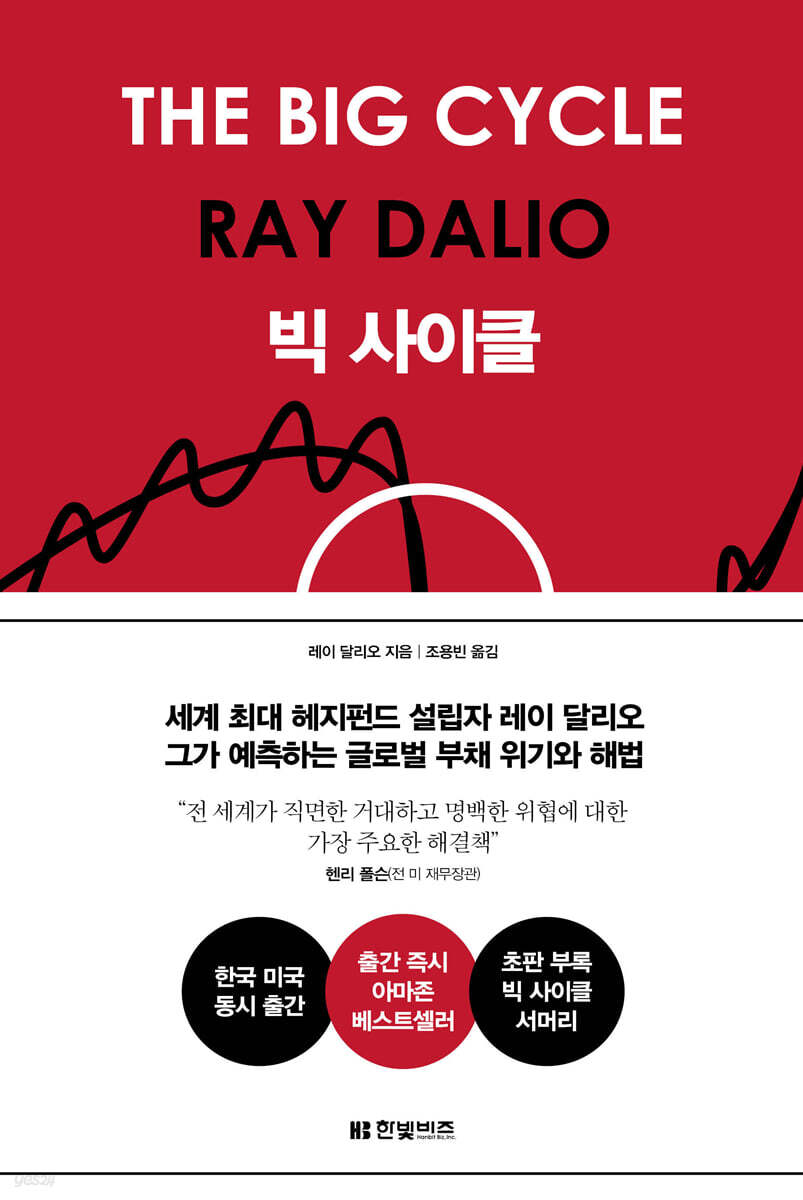
#1 Amazon bestseller immediately after publication The definitive edition of Ray Dalio's "Principles" series "Big Cycle" published simultaneously in Korea and the US “Founder of the world’s largest hedge fund,” “the world’s most influential person,” “advisor to top policymakers,” “the Steve Jobs of the investment world,” “bestselling author.” These are the words that describe Ray Dalio, the greatest investor of our time. His words and writings are listened to by investors, policymakers, and politicians around the world, and three YouTube videos summarizing his thoughts have garnered over 250 million views. In Korea, many investors and influencers, including Kim Bong-jin, CEO of Woowa Brothers, Kim Dante, and Shuka, claim to be his fans. Ray Dalio's new book, "The Big Cycle," published four years after "The Changing World Order," is the first commentary on the final stage of the "Great Debt Cycle," which became the basis for his predictions of the 2008 global financial crisis that led him to become a "Wall Street guru" and the 2010-2012 European debt crisis. It is also a great guide for anyone navigating the Big Cycle. We hope that readers will reap rich rewards from this book, which contains Ray Dalio's timeless knowledge, principles, and sharp predictions. |
- You can preview some of the book's contents.
Preview
index
Why I wrote this book
Acknowledgements
How to read this book
introduction
Part 1: Overview of the Massive Debt Cycle
Chapter 1: Summary of the Massive Debt Cycle
Chapter 2: How the System Works Explained in Words and Concepts
Chapter 3: How Debt Works: Seen Through Numbers and Equations
Part 2: A typical sequence leading to the bankruptcy of the central government and central bank
Chapter 4 Typical Sequence
Chapter 5: Private Sector and Central Government Debt Crisis (Stages 1-4)
Chapter 6: Crisis Spread to Central Banks (Stages 5-6)
Chapter 7: The previous large-scale debt crisis subsides, a new equilibrium is reached, and a new cycle begins (Stages 7-9).
Chapter 8: Overall Big Cycle
Part 3: Reflections on the Past
Looking at the past can help you understand the future.
Chapter 9 Summary: 1865 to 1945
Chapter 10: Summary of the Great Debt Cycle from 1945 to the Present
Chapter 11: 1945 to 1971 - The Pegged (Hard Currency) Currency System
Chapter 12: 1971–2008 - Fiat Currency and Interest-Rate Monetary Policy
Chapter 13: 2008 to 2020 - Fiat Money and Debt Monetization
Chapter 14: 2020 and Beyond - The Pandemic and the Monetization of Massive Fiscal Deficits
Chapter 15: An Overview of China's Big Cycle from 1945 to 1949
Chapter 16: Cases and Lessons from Japan
Part 4: Future Prospects
The Meaning of My Indicators in Chapter 17
Chapter 18: My 3% 3-Step Solution
Chapter 19: The Future I See
About the Author
Acknowledgements
How to read this book
introduction
Part 1: Overview of the Massive Debt Cycle
Chapter 1: Summary of the Massive Debt Cycle
Chapter 2: How the System Works Explained in Words and Concepts
Chapter 3: How Debt Works: Seen Through Numbers and Equations
Part 2: A typical sequence leading to the bankruptcy of the central government and central bank
Chapter 4 Typical Sequence
Chapter 5: Private Sector and Central Government Debt Crisis (Stages 1-4)
Chapter 6: Crisis Spread to Central Banks (Stages 5-6)
Chapter 7: The previous large-scale debt crisis subsides, a new equilibrium is reached, and a new cycle begins (Stages 7-9).
Chapter 8: Overall Big Cycle
Part 3: Reflections on the Past
Looking at the past can help you understand the future.
Chapter 9 Summary: 1865 to 1945
Chapter 10: Summary of the Great Debt Cycle from 1945 to the Present
Chapter 11: 1945 to 1971 - The Pegged (Hard Currency) Currency System
Chapter 12: 1971–2008 - Fiat Currency and Interest-Rate Monetary Policy
Chapter 13: 2008 to 2020 - Fiat Money and Debt Monetization
Chapter 14: 2020 and Beyond - The Pandemic and the Monetization of Massive Fiscal Deficits
Chapter 15: An Overview of China's Big Cycle from 1945 to 1949
Chapter 16: Cases and Lessons from Japan
Part 4: Future Prospects
The Meaning of My Indicators in Chapter 17
Chapter 18: My 3% 3-Step Solution
Chapter 19: The Future I See
About the Author
Detailed image

Into the book
The massive debt cycle is just one of several interconnected forces that I call the "overall big cycle."
1) Large-scale debt cycles influence and are influenced by important cycles of domestic political and social harmony and conflict, with which they coincide.
This cycle also influences, in turn, 3) the cycle of geopolitical harmony and conflict between nations, 4) major natural disasters such as droughts, floods, and epidemics, and 5) the development of new technologies.
Ultimately, these forces combine to form an overall big cycle, with peace and prosperity, conflict and recession moving from one 'order' to the next.
--- p.14~15
Debt is a promise to pay money.
A debt crisis occurs when more debt is pledged than is available to service it.
In such a situation, the central bank is forced to either a) print large amounts of money and devalue it, or b) refrain from printing money and risk a serious default crisis.
And the central bank always chooses to devalue by printing money.
But regardless of the outcome, whether default or write-down, excessive debt ultimately reduces the value of debt assets (e.g., bonds).
--- p.24
The five most important ones are:
1) the money/credit/debt/market/economic cycles; 2) the social and political order and disorder cycles that occur within nations; 3) the order and disorder cycles that occur during times of peace or war between nations; 4) the impact of natural disasters such as droughts, floods, and epidemics; and 5) human creativity such as new technologies that increase productivity.
The interaction of these various forces determines the change in conditions.
--- p.81
The easiest, though not the best, way to ensure the long-term health of the system is for the government to solve its debt problem by having the central bank print money and buy bonds, and then spend as it pleases.
This has the effect of lowering interest rates to manageable levels and injecting money into the system.
If the debt is denominated in the domestic currency, the government will undoubtedly do this.
--- p.104
There is usually optimism during the honeymoon period when a newly elected leader takes power (for example, during the first 100 days of a new president's term).
This is a time when dreams of great change and massive improvement exist, and criticism of how the new leader shapes and handles reality has yet to fully emerge.
Over time, the big promises leaders made to get elected typically become harder to keep, bad things happen, disappointment grows, critics and the opposition become more emboldened, and approval ratings decline.
All of this makes the fight to maintain power more difficult and often leads to more extreme actions to maintain power.
--- p.196
Typically, when a central bank wants to stimulate an economy, it either lowers interest rates or creates even more money and credit, leading to more spending and debt.
This stimulus has the effect of prolonging the expansionary phase of the business cycle, increasing debt assets and liabilities relative to income, making debt assets and debt burdens more unstable.
History shows that when central banks can no longer lower interest rates and want to stimulate the economy, they print money and buy debt, especially government bonds.
Then the government would have money and credit to prevent defaults and continue to borrow more than it takes in.
However, this situation will reach a point where the debt assets and liabilities become so large that it becomes difficult to balance them, at which point debt restructuring and/or debt monetization will inevitably occur.
--- p.222
I hope that seeing this situation will make people concerned and do what they can to improve the situation.
So my final rule is this:
“If you don’t worry, you should worry, and if you do worry, you don’t have to worry.” Because worrying about what could go wrong will protect you, and not worrying will leave you defenseless.
1) Large-scale debt cycles influence and are influenced by important cycles of domestic political and social harmony and conflict, with which they coincide.
This cycle also influences, in turn, 3) the cycle of geopolitical harmony and conflict between nations, 4) major natural disasters such as droughts, floods, and epidemics, and 5) the development of new technologies.
Ultimately, these forces combine to form an overall big cycle, with peace and prosperity, conflict and recession moving from one 'order' to the next.
--- p.14~15
Debt is a promise to pay money.
A debt crisis occurs when more debt is pledged than is available to service it.
In such a situation, the central bank is forced to either a) print large amounts of money and devalue it, or b) refrain from printing money and risk a serious default crisis.
And the central bank always chooses to devalue by printing money.
But regardless of the outcome, whether default or write-down, excessive debt ultimately reduces the value of debt assets (e.g., bonds).
--- p.24
The five most important ones are:
1) the money/credit/debt/market/economic cycles; 2) the social and political order and disorder cycles that occur within nations; 3) the order and disorder cycles that occur during times of peace or war between nations; 4) the impact of natural disasters such as droughts, floods, and epidemics; and 5) human creativity such as new technologies that increase productivity.
The interaction of these various forces determines the change in conditions.
--- p.81
The easiest, though not the best, way to ensure the long-term health of the system is for the government to solve its debt problem by having the central bank print money and buy bonds, and then spend as it pleases.
This has the effect of lowering interest rates to manageable levels and injecting money into the system.
If the debt is denominated in the domestic currency, the government will undoubtedly do this.
--- p.104
There is usually optimism during the honeymoon period when a newly elected leader takes power (for example, during the first 100 days of a new president's term).
This is a time when dreams of great change and massive improvement exist, and criticism of how the new leader shapes and handles reality has yet to fully emerge.
Over time, the big promises leaders made to get elected typically become harder to keep, bad things happen, disappointment grows, critics and the opposition become more emboldened, and approval ratings decline.
All of this makes the fight to maintain power more difficult and often leads to more extreme actions to maintain power.
--- p.196
Typically, when a central bank wants to stimulate an economy, it either lowers interest rates or creates even more money and credit, leading to more spending and debt.
This stimulus has the effect of prolonging the expansionary phase of the business cycle, increasing debt assets and liabilities relative to income, making debt assets and debt burdens more unstable.
History shows that when central banks can no longer lower interest rates and want to stimulate the economy, they print money and buy debt, especially government bonds.
Then the government would have money and credit to prevent defaults and continue to borrow more than it takes in.
However, this situation will reach a point where the debt assets and liabilities become so large that it becomes difficult to balance them, at which point debt restructuring and/or debt monetization will inevitably occur.
--- p.222
I hope that seeing this situation will make people concerned and do what they can to improve the situation.
So my final rule is this:
“If you don’t worry, you should worry, and if you do worry, you don’t have to worry.” Because worrying about what could go wrong will protect you, and not worrying will leave you defenseless.
--- p.438
Publisher's Review
It became a reality after the start of the Trump 2.0 era.
US-China conflict and global crisis
The world has already entered the final stages of the "big cycle."
“The current situation is extremely concerning.”
Ray Dalio, author of the global bestsellers Principles and The Changing World Order, begins his latest book, The Big Cycle, with a warning to the world.
His in-depth analysis of the numerous debt cycles he experienced firsthand in various countries over the past 50 years, as well as the large-scale debt cycles that have occurred over the past 500 years, has revealed that large-scale long-term debt cycles have always led to large-scale debt crises and collapses.
It has appeared repeatedly for thousands of years, repeatedly warning of the downfall of empires, nations, and regions.
In fact, only 20% of the approximately 750 foreign exchange and bond markets that existed since 1700 remain, and even those are severely undervalued.
As the original book's subtitle (How Countries Go Broke) suggests, major countries faced the risk of 'national bankruptcy' due to massive debt.
Ray Dalio defines a massive cycle of accumulated debt as a “big cycle,” and diagnoses the current situation in 2025 as entering the “fifth stage of the big cycle.”
At this stage, the country is heavily indebted, inefficiently managed, divided, and threatened by other countries, making it highly likely that leaders with populist, nationalist, protectionist, militaristic, and authoritarian approaches will emerge.
And his analysis is becoming increasingly real as the world faces a sovereign debt crisis and the global political reshuffle, including Trump's re-election.
What future awaits?
And how do we prepare for the future?
Pay attention to his predictions, which the whole world trusts!
"How does massive debt threaten our common well-being?" "What are the limits to debt growth?" "Can even a major reserve currency power like the United States fail? And if so, what will the consequences be?" "The Big Cycle" is Ray Dalio's answer to questions that have plagued politicians, policymakers, and investors for decades.
Ray Dalio shows how the debt problem is intertwined with other forces such as domestic politics, inter-state geopolitics, natural disasters (droughts, floods, pandemics), and technology (especially artificial intelligence), and explains how the “big cycle” of these five forces operating simultaneously is transforming the world order.
Part 1 provides a broad picture of the "great debt cycle," which has occurred repeatedly throughout history but is difficult to understand because major shifts within the cycle occur only about once in a lifetime.
Part 2 presents a model of a typical case and divides the bankruptcy cases of the central government and central bank into two major types, presenting the core causes of each type.
Part 3 shows how the most important events of the past 180 years, including the Big Cycles in the US, China, Japan, and around the world, unfolded. Part 4 uses the workings of the economic system to forecast the future, based on the current and future prospects of all the important forces that make up the overall Big Cycle.
Powerful nations that had vast empires lost their dominance when the massive debt cycle ended.
And today, major countries, including the United States, stand at the end of their 13th massive debt cycle.
Remember the final principle Ray Dalio emphasizes in this book:
“If you don’t worry, you should worry, and if you do, you don’t have to worry.” Worrying about what could go wrong will protect you, and not worrying will leave you defenseless.
US-China conflict and global crisis
The world has already entered the final stages of the "big cycle."
“The current situation is extremely concerning.”
Ray Dalio, author of the global bestsellers Principles and The Changing World Order, begins his latest book, The Big Cycle, with a warning to the world.
His in-depth analysis of the numerous debt cycles he experienced firsthand in various countries over the past 50 years, as well as the large-scale debt cycles that have occurred over the past 500 years, has revealed that large-scale long-term debt cycles have always led to large-scale debt crises and collapses.
It has appeared repeatedly for thousands of years, repeatedly warning of the downfall of empires, nations, and regions.
In fact, only 20% of the approximately 750 foreign exchange and bond markets that existed since 1700 remain, and even those are severely undervalued.
As the original book's subtitle (How Countries Go Broke) suggests, major countries faced the risk of 'national bankruptcy' due to massive debt.
Ray Dalio defines a massive cycle of accumulated debt as a “big cycle,” and diagnoses the current situation in 2025 as entering the “fifth stage of the big cycle.”
At this stage, the country is heavily indebted, inefficiently managed, divided, and threatened by other countries, making it highly likely that leaders with populist, nationalist, protectionist, militaristic, and authoritarian approaches will emerge.
And his analysis is becoming increasingly real as the world faces a sovereign debt crisis and the global political reshuffle, including Trump's re-election.
What future awaits?
And how do we prepare for the future?
Pay attention to his predictions, which the whole world trusts!
"How does massive debt threaten our common well-being?" "What are the limits to debt growth?" "Can even a major reserve currency power like the United States fail? And if so, what will the consequences be?" "The Big Cycle" is Ray Dalio's answer to questions that have plagued politicians, policymakers, and investors for decades.
Ray Dalio shows how the debt problem is intertwined with other forces such as domestic politics, inter-state geopolitics, natural disasters (droughts, floods, pandemics), and technology (especially artificial intelligence), and explains how the “big cycle” of these five forces operating simultaneously is transforming the world order.
Part 1 provides a broad picture of the "great debt cycle," which has occurred repeatedly throughout history but is difficult to understand because major shifts within the cycle occur only about once in a lifetime.
Part 2 presents a model of a typical case and divides the bankruptcy cases of the central government and central bank into two major types, presenting the core causes of each type.
Part 3 shows how the most important events of the past 180 years, including the Big Cycles in the US, China, Japan, and around the world, unfolded. Part 4 uses the workings of the economic system to forecast the future, based on the current and future prospects of all the important forces that make up the overall Big Cycle.
Powerful nations that had vast empires lost their dominance when the massive debt cycle ended.
And today, major countries, including the United States, stand at the end of their 13th massive debt cycle.
Remember the final principle Ray Dalio emphasizes in this book:
“If you don’t worry, you should worry, and if you do, you don’t have to worry.” Worrying about what could go wrong will protect you, and not worrying will leave you defenseless.
GOODS SPECIFICS
- Date of issue: June 3, 2025
- Format: Hardcover book binding method guide
- Page count, weight, size: 440 pages | 938g | 162*233*30mm
- ISBN13: 9791157848119
- ISBN10: 1157848117
You may also like
카테고리
korean


korean

![GQ KOREA Mark (Monthly): December [2025]](http://librairie.coreenne.fr/cdn/shop/files/8ef265dbbfbf186523ed75ba7319009d.jpg?v=1765340328&width=3840)


