

Native English Expression Dictionary
 |
Description
Book Introduction
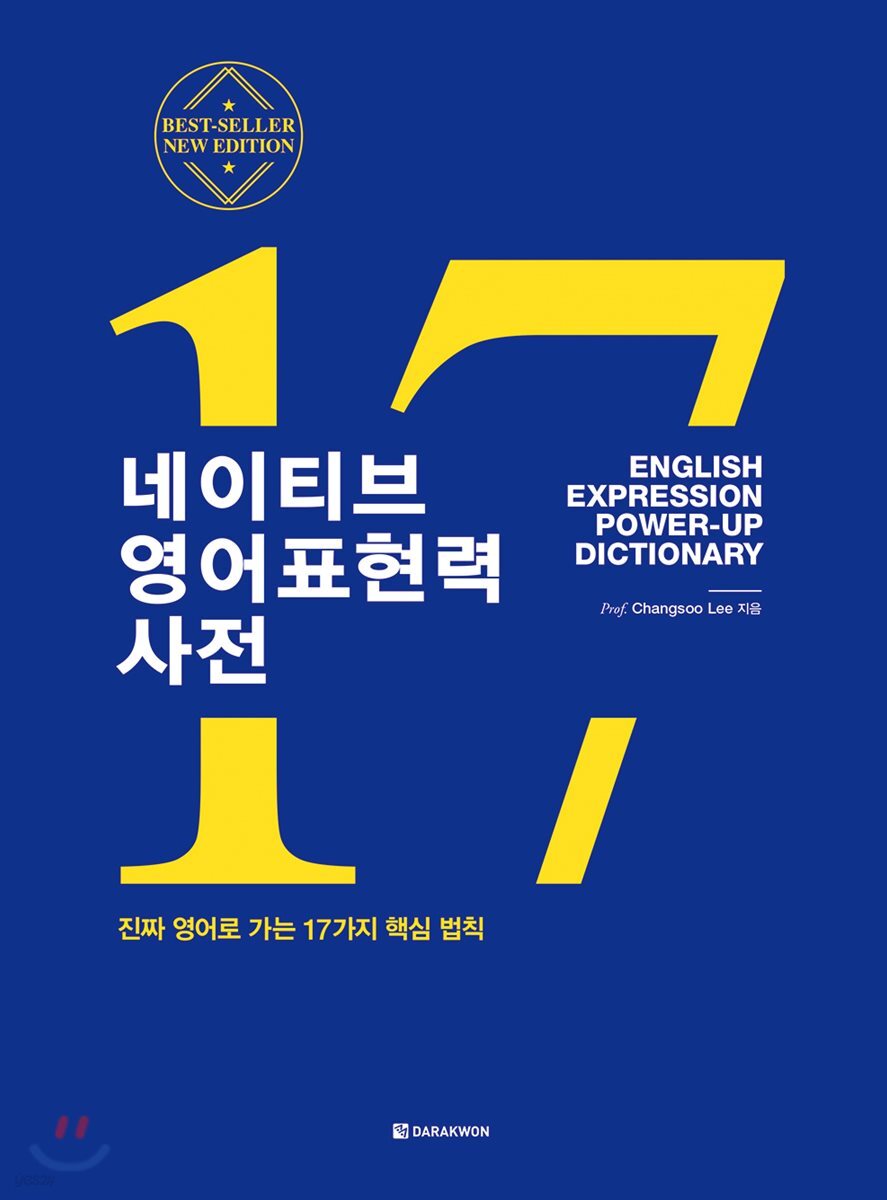
Your English knowledge will be completely turned upside down. This book systematically organizes 17 English expressions that define the difference between Konglish and native English! Professor Lee Chang-soo of the Korean-English Department at the Graduate School of Interpretation and Translation at Hankuk University of Foreign Studies selected these 17 expressions as essential to native English, and includes detailed explanations and examples. This book shows an example sentence in Konglish/direct translation/native expression so that you can compare them at a glance, and explains the differences between Konglish and direct translation in detail and in a friendly manner. It also includes other expressions that can be used in the same situation, allowing you to learn a wealth of native-style English expressions. You can find only the expressions you need by using the index that organizes Korean words in alphabetical order, and all native expressions and examples are provided in MP3 format by native speakers for free on the Darakwon website. * This book is an upgraded version of [Dictionary of Native English Expressions] published in 2010. This book, republished in response to strong requests from readers, retains the original content, corrects errors, and adds new content in Part 5. |
- You can preview some of the book's contents.
Preview
index
PART 1: Using Basic Vocabulary Like a Native
CHAPTER 1
Native speakers even use basic verbs to express things like this:
break call carry catch cut do drop fall
get go hit hold keep make 39 pull put
run see stand
Chapter 2
Prepositions are best written like this
above after against at
between beyond by from
for in into off
on out of over through
to under with without
CHAPTER 3
A single adverb can make difficult expressions easier to understand.
apart around away by
down in off out
on over through up
Chapter 4
After all, verbs are the key to expressive power.
across after along apart around aside away back by down for in into off on out over through to together up
PART 2: Getting Familiar with Verbs and Nouns
CHAPTER 5
If you don't know the compatibility between [verb + noun], your English will be messy for the rest of your life.
⑴ Perfect match [verb + noun]
⑵ Basic verb + noun (from verb)
Chapter 6
The way to English is through verbs
⑴ Expressing adverbs with verbs
⑵ Expressing comparative degrees with verbs
⑶ Expressing location with verbs
Chapter 7
In this case, the noun is more truthful than the verb.
⑴ Expressing with nouns instead of verbs
⑵ Expressing with nouns instead of adjectives
CHAPTER 8
Verbs from various parts of speech have a variety of uses.
⑴ Verbs from nouns
⑵ Verbs from adjectives/adverbs
PART3 Choosing a Subject
CHAPTER 9
English has a different way of looking at subjects.
Chapter 10
You must be able to use inanimate subjects to escape Konglish.
PART 4 Thinking in English
CHAPTER 11
English shines when spoken with English logic.
CHAPTER 12
Long, rambling expressions, let's settle it with one word.
CHAPTER 13
This is how the passive voice is used to demonstrate its true value.
CHAPTER 14
Let's speak English like English by using [with+noun] instead of adverbs.
PART 5 Adding flair to your sentences
CHAPTER 15
Native speakers also express 'no' like this:
⑴ Negative prefixes and suffixes
⑵ Prepositions with negative meanings
⑶ Verbs with negative meaning
⑷ Conveying negative meanings with last, far, and little
CHAPTER 16
Let's push and pull sentences with various emphasis techniques.
⑴ Positive emphasis
⑵ Negative emphasis
CHAPTER 17
Escape from dull English with sharp metaphors
⑴ a ~ of a ...
figurative expressions
⑵ Figurative adjectives connected by '-'
⑶ [with+noun+of] prepositional phrase
CHAPTER 1
Native speakers even use basic verbs to express things like this:
break call carry catch cut do drop fall
get go hit hold keep make 39 pull put
run see stand
Chapter 2
Prepositions are best written like this
above after against at
between beyond by from
for in into off
on out of over through
to under with without
CHAPTER 3
A single adverb can make difficult expressions easier to understand.
apart around away by
down in off out
on over through up
Chapter 4
After all, verbs are the key to expressive power.
across after along apart around aside away back by down for in into off on out over through to together up
PART 2: Getting Familiar with Verbs and Nouns
CHAPTER 5
If you don't know the compatibility between [verb + noun], your English will be messy for the rest of your life.
⑴ Perfect match [verb + noun]
⑵ Basic verb + noun (from verb)
Chapter 6
The way to English is through verbs
⑴ Expressing adverbs with verbs
⑵ Expressing comparative degrees with verbs
⑶ Expressing location with verbs
Chapter 7
In this case, the noun is more truthful than the verb.
⑴ Expressing with nouns instead of verbs
⑵ Expressing with nouns instead of adjectives
CHAPTER 8
Verbs from various parts of speech have a variety of uses.
⑴ Verbs from nouns
⑵ Verbs from adjectives/adverbs
PART3 Choosing a Subject
CHAPTER 9
English has a different way of looking at subjects.
Chapter 10
You must be able to use inanimate subjects to escape Konglish.
PART 4 Thinking in English
CHAPTER 11
English shines when spoken with English logic.
CHAPTER 12
Long, rambling expressions, let's settle it with one word.
CHAPTER 13
This is how the passive voice is used to demonstrate its true value.
CHAPTER 14
Let's speak English like English by using [with+noun] instead of adverbs.
PART 5 Adding flair to your sentences
CHAPTER 15
Native speakers also express 'no' like this:
⑴ Negative prefixes and suffixes
⑵ Prepositions with negative meanings
⑶ Verbs with negative meaning
⑷ Conveying negative meanings with last, far, and little
CHAPTER 16
Let's push and pull sentences with various emphasis techniques.
⑴ Positive emphasis
⑵ Negative emphasis
CHAPTER 17
Escape from dull English with sharp metaphors
⑴ a ~ of a ...
figurative expressions
⑵ Figurative adjectives connected by '-'
⑶ [with+noun+of] prepositional phrase
Detailed image

Publisher's Review
We're back, stronger than ever thanks to our readers' support!
A bestseller that continues to receive requests for reprinting even after going out of print! This book is an upgraded version of the 2010 book "Dictionary of Native English Expressions."
This upgraded edition, which was republished thanks to the support of numerous readers, corrects errors in the existing content and includes new content in Part 5.
Here are 17 key expressions that will help you create 'real' English expressions!
We've carefully selected 17 key expressions unique to English that are different from Korean.
It explains in detail, with abundant examples, 17 expressions that play a crucial role in speaking English properly.
As you turn the pages of the book, you will experience a complete overturning of your previous ideas and common sense about English.
Compare Konglish and native expressions at a glance!
By showing Konglish/direct translation/native expressions in one title, you can see the differences between the three expressions at a glance.
It points out the errors in Konglish and direct translations and explains in detail how to change them into native expressions.
It's overflowing with examples so they'll stick in your head!
This book contains numerous real-life examples across 624 pages, helping readers fully learn native English expressions.
You can naturally become familiar with native expressions through extensive examples.
It is not just a large quantity, but it also covers various aspects related to English expressions such as vocabulary, idioms, parts of speech, grammar, and sentence structure, so you will develop an eye for understanding English structurally.
Learn only educated, standard English expressions from trustworthy authors!
This book is a compilation of reliable English content written by the author, who graduated from the Graduate School of Interpretation and Translation at Hankuk University of Foreign Studies, received a doctorate from Boston University in the United States, and is currently a professor in the Department of Korean-English at the Graduate School of Interpretation and Translation at Hankuk University of Foreign Studies.
Slang and non-standard expressions, commonly known as "American English," do little to improve your English skills.
This book covers only standard, cultured, real-life English, not that kind of content.
Listen to MP3s right away with QR codes while studying!
You can check the MP3 audio files of all native expressions and examples recorded by native speakers by scanning the QR code with your smartphone while studying the book.
Or you can download it for free from the Darakwon website (darakwon.co.kr).
A bestseller that continues to receive requests for reprinting even after going out of print! This book is an upgraded version of the 2010 book "Dictionary of Native English Expressions."
This upgraded edition, which was republished thanks to the support of numerous readers, corrects errors in the existing content and includes new content in Part 5.
Here are 17 key expressions that will help you create 'real' English expressions!
We've carefully selected 17 key expressions unique to English that are different from Korean.
It explains in detail, with abundant examples, 17 expressions that play a crucial role in speaking English properly.
As you turn the pages of the book, you will experience a complete overturning of your previous ideas and common sense about English.
Compare Konglish and native expressions at a glance!
By showing Konglish/direct translation/native expressions in one title, you can see the differences between the three expressions at a glance.
It points out the errors in Konglish and direct translations and explains in detail how to change them into native expressions.
It's overflowing with examples so they'll stick in your head!
This book contains numerous real-life examples across 624 pages, helping readers fully learn native English expressions.
You can naturally become familiar with native expressions through extensive examples.
It is not just a large quantity, but it also covers various aspects related to English expressions such as vocabulary, idioms, parts of speech, grammar, and sentence structure, so you will develop an eye for understanding English structurally.
Learn only educated, standard English expressions from trustworthy authors!
This book is a compilation of reliable English content written by the author, who graduated from the Graduate School of Interpretation and Translation at Hankuk University of Foreign Studies, received a doctorate from Boston University in the United States, and is currently a professor in the Department of Korean-English at the Graduate School of Interpretation and Translation at Hankuk University of Foreign Studies.
Slang and non-standard expressions, commonly known as "American English," do little to improve your English skills.
This book covers only standard, cultured, real-life English, not that kind of content.
Listen to MP3s right away with QR codes while studying!
You can check the MP3 audio files of all native expressions and examples recorded by native speakers by scanning the QR code with your smartphone while studying the book.
Or you can download it for free from the Darakwon website (darakwon.co.kr).
GOODS SPECIFICS
- Date of publication: October 25, 2018
- Page count, weight, size: 624 pages | 990g | 168*227*35mm
- ISBN13: 9788927701057
- ISBN10: 8927701054
You may also like
카테고리
korean


korean

![GQ KOREA Mark (Monthly): December [2025]](http://librairie.coreenne.fr/cdn/shop/files/8ef265dbbfbf186523ed75ba7319009d.jpg?v=1765340328&width=3840)


