

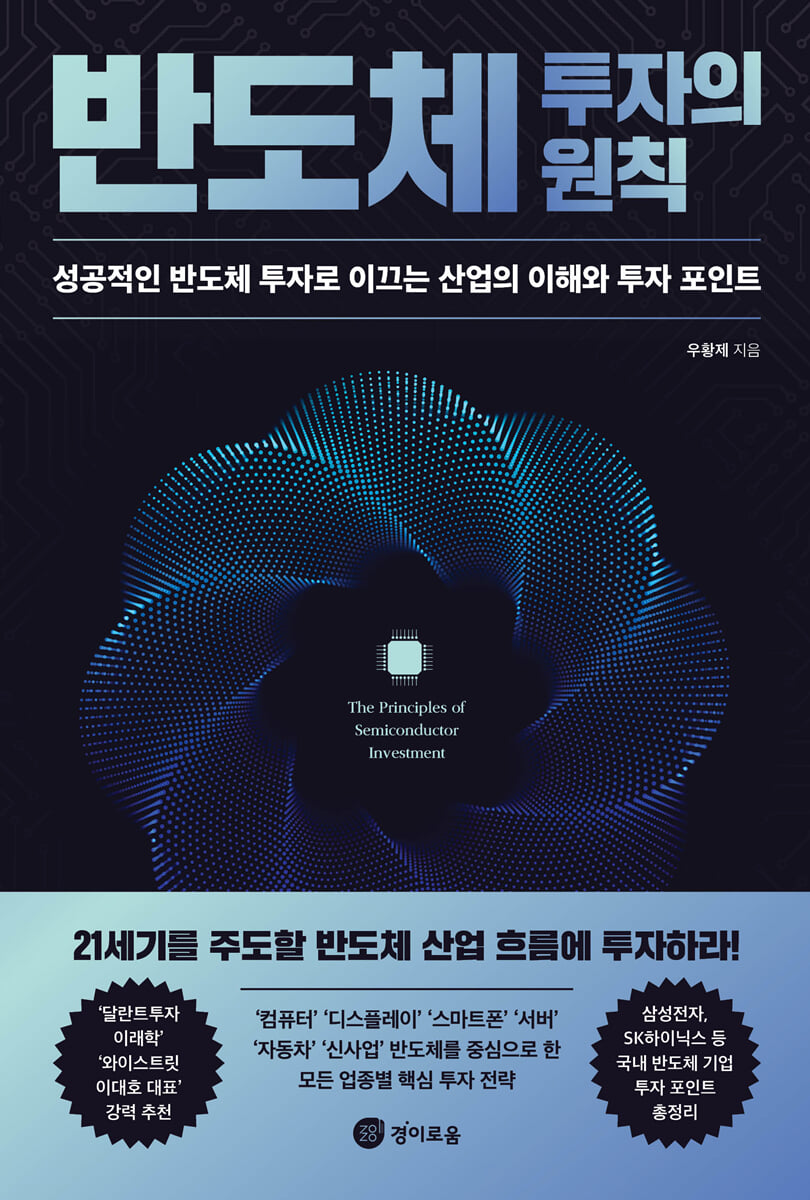
Principles of Semiconductor Investment
 |
Description
Book Introduction
“In the future, the capital market will change due to the megatrend of semiconductors.” Realizing next-generation technologies such as big data, autonomous driving, and artificial intelligence Understand the semiconductor industry and establish investment principles that are ahead of the times! In the era of the Fourth Industrial Revolution, semiconductors play a pivotal role. And in the semiconductor industry, where companies that will lead the future are born, a 'tenbagger' will emerge. A book has finally been published, incorporating the in-depth knowledge and extensive investment experience of CEO Woo Hwang-je, a PhD in semiconductor processes and materials and a professional investor in semiconductor companies. The author has included in this book all the investment points for the 'PC', 'display', 'smartphone', 'server', and 'automobile' industries that will lead the future, as well as the investment principles that semiconductor investors must know. To establish semiconductor investment principles that can lead to successful investments, we first explain the criteria for distinguishing between booms and busts in the semiconductor industry. Next, we will help you develop sharp investment judgment criteria by sharing the truth behind passing the quality test, investment strategies based on performance, and the technological hegemony of the semiconductor industry. Additionally, as an investment point by industry, the HBM, FPGA, PC, and server industries can consider investing when semiconductor technologies such as chiplets develop. As next-generation displays emerge and the metaverse and VR markets expand, the display and smartphone industries will benefit. Investors investing in AI technology should also keep an eye on companies developing automotive semiconductors, and especially on the market growth rates of emerging industries like quantum computers and space launch vehicles, which have the potential for explosive growth. The stock market experienced historic declines in the wake of the COVID-19 pandemic. And the semiconductor industry is a traditional cyclical industry. With the stock market recovering and next-generation semiconductor technology emerging simultaneously, now is the time to invest in semiconductors. I hope that by reading this book, which presents a smart semiconductor investment strategy, you will establish your own semiconductor investment principles. |
- You can preview some of the book's contents.
Preview
index
Introduction
Recommendation
PART 1: Overview of the Semiconductor Business
Why is the semiconductor industry growing?
Why do investment opportunities often arise in the semiconductor industry?
Another reason why semiconductor companies have low competition
National Structure of the Semiconductor Industry
PART 2 PC Industry and Semiconductors
The Background of Intel's Rebirth as the World's No. 1 Semiconductor Company
Why Intel is in crisis
Intel and AMD, who will seize the eternal victory?
Chiplets: The Background Behind AMD's Stock Price Rise
Who will benefit from the technological shift to chiplets?
If Apple develops its own CPU, will the domestic DRAM industry be at risk?
- Summary of major companies in the PC semiconductor industry
PART 3 Display Industry and Semiconductors
As the display industry takes the lead, semiconductor companies also smile brightly.
Changes in display technology present investment opportunities.
What are the investment points of LX Semicon?
Anapass's sluggish stock price and the semiconductor competition between Korea and China.
- Summary of major companies in the display semiconductor industry
PART 4: THE SMARTPHONE INDUSTRY AND SEMICONDUCTORS
Why Investing in Smartphone Stocks May Lead to Lower-Than-Expected Returns
What happened to Samsung Electronics, which dominated the AP market?
Why You Shouldn't Underestimate the Mid- to Low-Price Market
Watch for new investment opportunities coming to Qualcomm.
Diversification of the smartphone market and DB HiTek's growth
TSMC's technological prowess and the pursuit of domestic post-processing companies.
Why did Reno Industrial announce an earnings surprise?
- Summary of major companies in the smartphone semiconductor industry
PART 5: Server Industry and Semiconductors
Is Amazon really an e-commerce company?
Why is NVIDIA growing alongside the server market?
Intel and AMD's Rivalry in the Server Market
Why did Amazon start developing CPUs?
Why Direct Investment in the Promising FPGA Market Is Difficult
Don't doubt the growth potential of Samsung Electronics and SK Hynix.
- Summary of major companies in the server semiconductor industry
PART 6: The Automotive Industry and Semiconductors
The Core of Automotive Semiconductors and the Growth of the ECU Market
Don't Ignore the Growth of Low-Performance Chips
Why did Tesla develop its own automotive semiconductors?
Automotive infotainment semiconductors, with their significant benefits, are also fiercely competitive.
Why are Nvidia and Intel getting into the automotive semiconductor business?
Pay attention to Samsung Electronics' automotive semiconductor business.
- Summary of major companies in the automotive semiconductor industry
PART 7 New Businesses and Semiconductors
Who benefits from vertically stacking chips?
As the AI market grows, unexpected industries are growing alongside it.
What are the characteristics of semiconductors used in the space industry?
What should the quantum computing industry pay attention to?
PART 8: Investment Principles for Semiconductor Investors
Why You Shouldn't Buy Samsung Electronics Stock Based on Its Earnings
Why You Should Focus on Cheap Stocks Rather Than Market Madness
Will the stock price rise just by passing the quality test?
The Real Meaning of Semiconductor Technology Beneficiaries
Recommendation
PART 1: Overview of the Semiconductor Business
Why is the semiconductor industry growing?
Why do investment opportunities often arise in the semiconductor industry?
Another reason why semiconductor companies have low competition
National Structure of the Semiconductor Industry
PART 2 PC Industry and Semiconductors
The Background of Intel's Rebirth as the World's No. 1 Semiconductor Company
Why Intel is in crisis
Intel and AMD, who will seize the eternal victory?
Chiplets: The Background Behind AMD's Stock Price Rise
Who will benefit from the technological shift to chiplets?
If Apple develops its own CPU, will the domestic DRAM industry be at risk?
- Summary of major companies in the PC semiconductor industry
PART 3 Display Industry and Semiconductors
As the display industry takes the lead, semiconductor companies also smile brightly.
Changes in display technology present investment opportunities.
What are the investment points of LX Semicon?
Anapass's sluggish stock price and the semiconductor competition between Korea and China.
- Summary of major companies in the display semiconductor industry
PART 4: THE SMARTPHONE INDUSTRY AND SEMICONDUCTORS
Why Investing in Smartphone Stocks May Lead to Lower-Than-Expected Returns
What happened to Samsung Electronics, which dominated the AP market?
Why You Shouldn't Underestimate the Mid- to Low-Price Market
Watch for new investment opportunities coming to Qualcomm.
Diversification of the smartphone market and DB HiTek's growth
TSMC's technological prowess and the pursuit of domestic post-processing companies.
Why did Reno Industrial announce an earnings surprise?
- Summary of major companies in the smartphone semiconductor industry
PART 5: Server Industry and Semiconductors
Is Amazon really an e-commerce company?
Why is NVIDIA growing alongside the server market?
Intel and AMD's Rivalry in the Server Market
Why did Amazon start developing CPUs?
Why Direct Investment in the Promising FPGA Market Is Difficult
Don't doubt the growth potential of Samsung Electronics and SK Hynix.
- Summary of major companies in the server semiconductor industry
PART 6: The Automotive Industry and Semiconductors
The Core of Automotive Semiconductors and the Growth of the ECU Market
Don't Ignore the Growth of Low-Performance Chips
Why did Tesla develop its own automotive semiconductors?
Automotive infotainment semiconductors, with their significant benefits, are also fiercely competitive.
Why are Nvidia and Intel getting into the automotive semiconductor business?
Pay attention to Samsung Electronics' automotive semiconductor business.
- Summary of major companies in the automotive semiconductor industry
PART 7 New Businesses and Semiconductors
Who benefits from vertically stacking chips?
As the AI market grows, unexpected industries are growing alongside it.
What are the characteristics of semiconductors used in the space industry?
What should the quantum computing industry pay attention to?
PART 8: Investment Principles for Semiconductor Investors
Why You Shouldn't Buy Samsung Electronics Stock Based on Its Earnings
Why You Should Focus on Cheap Stocks Rather Than Market Madness
Will the stock price rise just by passing the quality test?
The Real Meaning of Semiconductor Technology Beneficiaries
Detailed image

Into the book
Semiconductor sales volumes inevitably vary depending on a company's business environment and interests.
Depending on the type of semiconductor, the variables that determine the business environment or stock price movement of a semiconductor company may vary.
If you understand the characteristics of semiconductor companies, you will be able to develop various cycle investment strategies.
--- p.25~27
The PC industry is already considered to have reached its peak growth in the 2000s.
However, as PC performance advances day by day, the performance of semiconductor chips is also steadily improving.
Therefore, let's focus on technological change rather than industrial growth potential.
It's also worth noting what new transistor structures and manufacturing processes Intel, AMD, and TSMC are developing.
--- p.102
In addition to Anapass, MagnaChip has been aggressively expanding its DDI business, and Wonik Group is expected to enter the DDI market starting in 2023, signaling fierce competition. The DDI market is expected to evolve toward rapid development of DDIs optimized for new displays to maintain the lead over rapidly catching up Chinese companies and avoid losing market share to domestic competitors.
--- p.140
The smartphone market expanded from focusing on high-end products to focusing on mid- to low-end products, and as the number of smartphones increased, the number of related semiconductors also increased.
Some companies, such as DB HiTek, benefited from this process.
These benefits could be repeated in the future as wearable devices that complement smartphones increase in number.
--- p.205
As non-memory semiconductors become more important, the role of memory semiconductors also grows. Just as the CPU, GPU, and FPGA markets are monopolized by Nvidia, Intel, and AMD, the memory semiconductor market is dominated by Samsung Electronics, SK Hynix, and US memory semiconductor manufacturer Micron.
These companies benefit significantly.
--- p.277
The automotive semiconductor industry must consider not only the companies that manufacture automotive semiconductors, but also the changes in vehicle functionality.
For example, in the past, even implementing the function of folding and unfolding side mirrors while parking required a dedicated processor. While the PC, smartphone, and server industries often see single companies developing semiconductors across these industries, the automotive semiconductor industry is uniquely characterized by a significant number of companies focused solely on automotive semiconductors.
This is why we need to pay more attention to changes in vehicle trends.
--- p.380
One of the most important trends in the semiconductor industry today is the vertical integration of multiple chips, centered around high-performance chips.
Efforts to address this will continue in the coming years, leading to rapid technological change.
Given the massive trend in the semiconductor industry, long-term investment may seem advantageous. However, in principle, the more rapidly technological change occurs in an area, the more advantageous it is to make mid-term investments rather than simply holding onto the stocks of related companies for the long term.
Depending on the type of semiconductor, the variables that determine the business environment or stock price movement of a semiconductor company may vary.
If you understand the characteristics of semiconductor companies, you will be able to develop various cycle investment strategies.
--- p.25~27
The PC industry is already considered to have reached its peak growth in the 2000s.
However, as PC performance advances day by day, the performance of semiconductor chips is also steadily improving.
Therefore, let's focus on technological change rather than industrial growth potential.
It's also worth noting what new transistor structures and manufacturing processes Intel, AMD, and TSMC are developing.
--- p.102
In addition to Anapass, MagnaChip has been aggressively expanding its DDI business, and Wonik Group is expected to enter the DDI market starting in 2023, signaling fierce competition. The DDI market is expected to evolve toward rapid development of DDIs optimized for new displays to maintain the lead over rapidly catching up Chinese companies and avoid losing market share to domestic competitors.
--- p.140
The smartphone market expanded from focusing on high-end products to focusing on mid- to low-end products, and as the number of smartphones increased, the number of related semiconductors also increased.
Some companies, such as DB HiTek, benefited from this process.
These benefits could be repeated in the future as wearable devices that complement smartphones increase in number.
--- p.205
As non-memory semiconductors become more important, the role of memory semiconductors also grows. Just as the CPU, GPU, and FPGA markets are monopolized by Nvidia, Intel, and AMD, the memory semiconductor market is dominated by Samsung Electronics, SK Hynix, and US memory semiconductor manufacturer Micron.
These companies benefit significantly.
--- p.277
The automotive semiconductor industry must consider not only the companies that manufacture automotive semiconductors, but also the changes in vehicle functionality.
For example, in the past, even implementing the function of folding and unfolding side mirrors while parking required a dedicated processor. While the PC, smartphone, and server industries often see single companies developing semiconductors across these industries, the automotive semiconductor industry is uniquely characterized by a significant number of companies focused solely on automotive semiconductors.
This is why we need to pay more attention to changes in vehicle trends.
--- p.380
One of the most important trends in the semiconductor industry today is the vertical integration of multiple chips, centered around high-performance chips.
Efforts to address this will continue in the coming years, leading to rapid technological change.
Given the massive trend in the semiconductor industry, long-term investment may seem advantageous. However, in principle, the more rapidly technological change occurs in an area, the more advantageous it is to make mid-term investments rather than simply holding onto the stocks of related companies for the long term.
--- p.400~401
Publisher's Review
All industries, including 'computers', 'displays', 'smartphones', 'servers', and 'automobiles', are paying attention to semiconductors.
Get on board the massive flow of capital into the rapidly developing semiconductor industry!
Most investors are investing in Samsung Electronics, SK Hynix, Apple, Tesla, and Nvidia.
And the key factor that determines the stock prices of these companies is semiconductors.
The technology that makes future technologies like Chat GPT, the metaverse, and autonomous driving possible is semiconductors, and semiconductors are also the industry that attracts global capital.
This is why the author recommends investing in semiconductors and why he is sharing his principles for semiconductor investment.
Because semiconductors are essential to all industries, understanding the entire semiconductor industry requires reading a vast amount of industry reports.
To alleviate this burden on investors, the author, who has invested in semiconductor-related companies for a long time, has summarized the characteristics and investment points of key semiconductors by industry.
First, it explains the history of each industry, including 'computer', 'display', 'smartphone', 'server', and 'automobile', and the semiconductor technology hegemony among companies, allowing for a three-dimensional view of the 21st century semiconductor industry.
Afterwards, it begins with an explanation of basic semiconductor concepts such as ‘chiplet,’ ‘HBM,’ and ‘wafer,’ and then broadly explains core semiconductor keywords for each industry such as ‘CPU,’ ‘image sensor,’ ‘pogo pin,’ and ‘ECU.’
After increasing the overall understanding of semiconductors, the author points out investment points such as market dominance, technological advancement, and growth prospects of semiconductor companies in each industry that he has been watching with interest.
The author's efforts help semiconductor investors establish sound semiconductor investment principles.
The semiconductor industry, a massive investment market attracting capital from around the world, presents a high barrier to entry for general investors.
The author aims to teach ordinary investors how to fish, rather than giving them fish.
By thoroughly reading this book, you will fully understand the author's story of the semiconductor industry and his successful investment strategies, and build unwavering investment skills.
Get on board the massive flow of capital into the rapidly developing semiconductor industry!
Most investors are investing in Samsung Electronics, SK Hynix, Apple, Tesla, and Nvidia.
And the key factor that determines the stock prices of these companies is semiconductors.
The technology that makes future technologies like Chat GPT, the metaverse, and autonomous driving possible is semiconductors, and semiconductors are also the industry that attracts global capital.
This is why the author recommends investing in semiconductors and why he is sharing his principles for semiconductor investment.
Because semiconductors are essential to all industries, understanding the entire semiconductor industry requires reading a vast amount of industry reports.
To alleviate this burden on investors, the author, who has invested in semiconductor-related companies for a long time, has summarized the characteristics and investment points of key semiconductors by industry.
First, it explains the history of each industry, including 'computer', 'display', 'smartphone', 'server', and 'automobile', and the semiconductor technology hegemony among companies, allowing for a three-dimensional view of the 21st century semiconductor industry.
Afterwards, it begins with an explanation of basic semiconductor concepts such as ‘chiplet,’ ‘HBM,’ and ‘wafer,’ and then broadly explains core semiconductor keywords for each industry such as ‘CPU,’ ‘image sensor,’ ‘pogo pin,’ and ‘ECU.’
After increasing the overall understanding of semiconductors, the author points out investment points such as market dominance, technological advancement, and growth prospects of semiconductor companies in each industry that he has been watching with interest.
The author's efforts help semiconductor investors establish sound semiconductor investment principles.
The semiconductor industry, a massive investment market attracting capital from around the world, presents a high barrier to entry for general investors.
The author aims to teach ordinary investors how to fish, rather than giving them fish.
By thoroughly reading this book, you will fully understand the author's story of the semiconductor industry and his successful investment strategies, and build unwavering investment skills.
GOODS SPECIFICS
- Date of issue: April 24, 2024
- Page count, weight, size: 448 pages | 152*225*30mm
- ISBN13: 9791192445717
- ISBN10: 1192445716
You may also like
카테고리
korean


korean

![GQ KOREA Mark (Monthly): December [2025]](http://librairie.coreenne.fr/cdn/shop/files/8ef265dbbfbf186523ed75ba7319009d.jpg?v=1765340328&width=3840)


