

Running with Lydiard
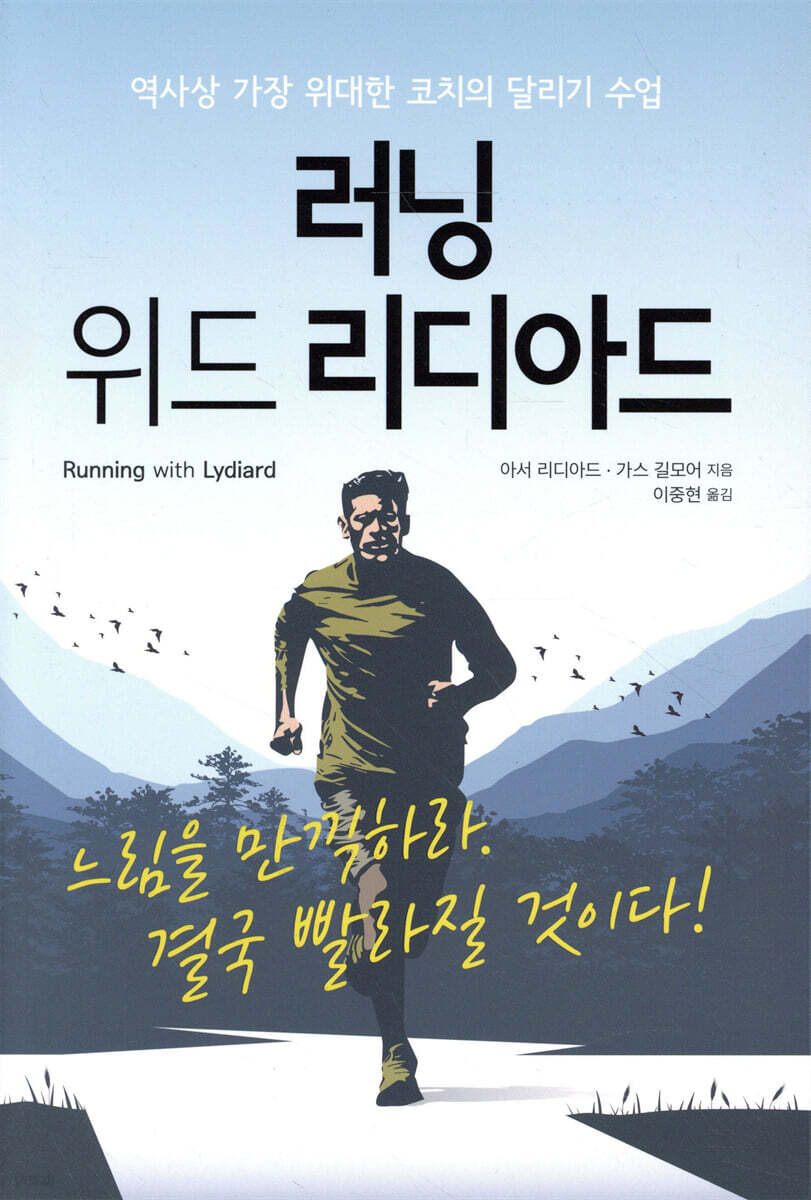 |
Description
Book Introduction
The first Korean edition of the famous book that changed the running paradigm, "Running with Lydiard," has been published!
The most definitive guide to the fundamentals of running in a world overflowing with information!
The Korean edition of 『Running with Lydiard』, the masterpiece of coach Arthur Lydiard, a mentor to countless runners around the world and a pioneer who changed the paradigm of running training, has finally been published.
This book provides detailed, accessible explanations of effective running training methods and the scientific basis for why they should be practiced, making it a valuable guide for runners of all levels, from beginners to experts.
Furthermore, the publication of this Korean edition will inspire Korean runners to go beyond simple physical training and enrich their lives as runners.
The most definitive guide to the fundamentals of running in a world overflowing with information!
The Korean edition of 『Running with Lydiard』, the masterpiece of coach Arthur Lydiard, a mentor to countless runners around the world and a pioneer who changed the paradigm of running training, has finally been published.
This book provides detailed, accessible explanations of effective running training methods and the scientific basis for why they should be practiced, making it a valuable guide for runners of all levels, from beginners to experts.
Furthermore, the publication of this Korean edition will inspire Korean runners to go beyond simple physical training and enrich their lives as runners.
- You can preview some of the book's contents.
Preview
index
On the publication of the Korean edition
Preview of Key Terms
Preview of Key Training
Recommendation
To begin with
Chapter 1: Lydiard's Exercise Physiology
Chapter 2: Marathon Conditioning Training to Increase Aerobic Capacity
Chapter 3: Hill Training for Speed and Good Posture
- In-depth study of hill training
Chapter 4: Track Training to Build Speed Endurance
Chapter 5 Cross-country running in nature, training various body parts
Chapter 6: Purpose and Method of Warming Up and Cooling Down
Chapter 7: How to Choose Clothing and Running Shoes
Chapter 8 Competition Strategy
Chapter 9: Precautions when running on hot or cold days
Chapter 10: Regarding the diet of runners
Chapter 11 Injury Prevention and Countermeasures
Chapter 12 Training Schedule
-Short and middle distance events
-Cross-country
-marathon
Chapter 13 Running for Youth
Chapter 14: About Women's Running
Preview of Key Terms
Preview of Key Training
Recommendation
To begin with
Chapter 1: Lydiard's Exercise Physiology
Chapter 2: Marathon Conditioning Training to Increase Aerobic Capacity
Chapter 3: Hill Training for Speed and Good Posture
- In-depth study of hill training
Chapter 4: Track Training to Build Speed Endurance
Chapter 5 Cross-country running in nature, training various body parts
Chapter 6: Purpose and Method of Warming Up and Cooling Down
Chapter 7: How to Choose Clothing and Running Shoes
Chapter 8 Competition Strategy
Chapter 9: Precautions when running on hot or cold days
Chapter 10: Regarding the diet of runners
Chapter 11 Injury Prevention and Countermeasures
Chapter 12 Training Schedule
-Short and middle distance events
-Cross-country
-marathon
Chapter 13 Running for Youth
Chapter 14: About Women's Running
Detailed image

Into the book
Running is not an exercise that simply moves muscles.
Running requires constant control of breathing, metabolic reactions, circulatory system, temperature regulation mechanisms, and kidney function.
The entire body is involved and affected by the act of running.
This is one of the reasons why running itself is such a great control device for the body.
--- p.30
The key is how fatigue affects your training, the intensity of your workouts, and consistency.
In broad strokes, most training programs are based on this principle.
However, many coaches and athletes train to extremes, putting their bodies in oxygen debt and overstimulating their metabolism to build up their tolerance to fatigue.
They are so impatient that they focus on high-intensity training, forgetting that anaerobic exercise is much less efficient and that their bodies need time to recover from fatigue.
--- p.35
Have you ever felt like you shouldn't slow down while running, trying to regain your rhythm or catch your breath? If so, that's a warning sign that your run has transitioned from aerobic to anaerobic.
This is inefficient and undesirable.
Even if you ignore this warning and do anaerobic exercise, you will not feel any changes in your body for several days.
But the effects begin to show gradually.
As your body's balance gradually collapses, you reach a point where you cannot continue exercising.
Before you find yourself in that situation, I recommend paying attention to your body's signals, slowing down, and running within your aerobic zone.
--- p.59
The key to marathon training is improving overall cardiopulmonary function.
This basically means improved oxygen uptake, oxygen transport and oxygen utilization capabilities.
With consistent training, your oxygen uptake and transport capacity will develop rapidly.
However, it takes longer for muscles to develop the ability to use oxygen.
This is because the development of muscular endurance can only be achieved by continuously stimulating muscle groups over a long period of time.
--- p.310
Even in sports, parental support is a tremendous strength for young athletes.
But it often retards growth or ruins talent.
Too many parents are more interested in seeing their children beat other children than in letting them enjoy sports.
They push their children because they want to feel superior through them.
But that karma will be paid not by the children who lost the game, but by the children who won the game.
--- p.326
For example, women, on average, have a higher body fat percentage than men, which gives them a slight advantage in marathon running.
Most male runners hit a high 'wall' around the 20-mile (32 km) mark when their energy (glycogen) stores run out.
However, because women have higher body fat than men, they can draw on their energy reserves even after 20 miles, so they often cross the finish line without experiencing that 'wall'.
In fact, if you look at the women who actually finish the race, you will see that they cross the finish line with much brighter expressions, and in mixed races, many women even take the top places.
Running requires constant control of breathing, metabolic reactions, circulatory system, temperature regulation mechanisms, and kidney function.
The entire body is involved and affected by the act of running.
This is one of the reasons why running itself is such a great control device for the body.
--- p.30
The key is how fatigue affects your training, the intensity of your workouts, and consistency.
In broad strokes, most training programs are based on this principle.
However, many coaches and athletes train to extremes, putting their bodies in oxygen debt and overstimulating their metabolism to build up their tolerance to fatigue.
They are so impatient that they focus on high-intensity training, forgetting that anaerobic exercise is much less efficient and that their bodies need time to recover from fatigue.
--- p.35
Have you ever felt like you shouldn't slow down while running, trying to regain your rhythm or catch your breath? If so, that's a warning sign that your run has transitioned from aerobic to anaerobic.
This is inefficient and undesirable.
Even if you ignore this warning and do anaerobic exercise, you will not feel any changes in your body for several days.
But the effects begin to show gradually.
As your body's balance gradually collapses, you reach a point where you cannot continue exercising.
Before you find yourself in that situation, I recommend paying attention to your body's signals, slowing down, and running within your aerobic zone.
--- p.59
The key to marathon training is improving overall cardiopulmonary function.
This basically means improved oxygen uptake, oxygen transport and oxygen utilization capabilities.
With consistent training, your oxygen uptake and transport capacity will develop rapidly.
However, it takes longer for muscles to develop the ability to use oxygen.
This is because the development of muscular endurance can only be achieved by continuously stimulating muscle groups over a long period of time.
--- p.310
Even in sports, parental support is a tremendous strength for young athletes.
But it often retards growth or ruins talent.
Too many parents are more interested in seeing their children beat other children than in letting them enjoy sports.
They push their children because they want to feel superior through them.
But that karma will be paid not by the children who lost the game, but by the children who won the game.
--- p.326
For example, women, on average, have a higher body fat percentage than men, which gives them a slight advantage in marathon running.
Most male runners hit a high 'wall' around the 20-mile (32 km) mark when their energy (glycogen) stores run out.
However, because women have higher body fat than men, they can draw on their energy reserves even after 20 miles, so they often cross the finish line without experiencing that 'wall'.
In fact, if you look at the women who actually finish the race, you will see that they cross the finish line with much brighter expressions, and in mixed races, many women even take the top places.
--- p.332
Publisher's Review
Arthur Lydiard, the greatest running coach in history!
In an age where grandiose praise is commonplace, the term GOAT (Greatest Of All Time) seems like a sensitive adjective that could quickly spark a heated debate if given to someone carelessly.
Yet, the reason we can freely praise Arthur Lydiard (1917-2004) as “the greatest running coach in history” is because he not only advocated a revolutionary running theory but also proved it with results.
Born in Auckland, New Zealand in 1917, Arthur Lydiard played rugby before becoming seriously interested in running as a way to manage his increasing weight.
At the time, most people thought that running more than 50km a week was excessive, but Lydiard discovered the excellent training effects of long-distance aerobic running, running up to 250km a week, and applied it to his own body. As a result, he broke his personal record in middle-distance events and became a member of the New Zealand marathon national team at an age well past his prime.
Afterwards, young people from around his house began to gather to receive his teachings, and five of them became New Zealand national team members, and three of them became medalists (two gold medals and one bronze medal) at the 1960 Rome Olympics.
All of this was a miraculous event that took place within a 20km radius of a small village called 'Owairaka'.
Lydiard's training method, which focuses on building basic fitness through continuous aerobic running and helps anyone prepare for long-distance racing, is beginning to have a profound impact not only on athletes but also on the lives of the general public.
In particular, in a time when the marathon was perceived as a sport only for those with emotional deficiencies, it became a natural sight for ordinary people to participate in marathons. This was thanks to Lydiard's efforts to provide the public with the joy of overcoming their own limits through continuous training rather than just blindly running.
Lydiard's masterwork, "Running with Lydiard," which encapsulates his training methods and philosophy, will continue to inspire many who consider running an important part of their lives, beyond mere exercise.
A book for runners looking for guidance they can trust and rely on!
As of 2024, South Korea is in the midst of a running craze.
New running shoes sell out in seconds, and even a single hesitation in the registration process for major marathons can lead to a sellout.
On the other hand, the nuisance of running crews monopolizing the walking trails and acting in groups is sometimes reported in the news.
In this chaos, information about running posture and training methods is also rampant, and people go beyond arguing about which is right and which is wrong, and even ridicule each other.
In this climate, the publication of the Korean edition of Running with Lydiard, a guidebook that beginners and runners who have constantly strived to overcome their limits can trust and rely on, will feel like a drop of rain in a drought.
In particular, this book explains the exercise physiology related to running in a very easy-to-understand way, allowing you to continue training on your own while understanding the answer to the question, "Why should I train this way?"
Another great thing about this book is that it awakens your sense of your own body.
Arthur Lydiard strongly emphasizes the importance of continuing long-distance cardio runs for as long as possible, but when it comes to hill training or speed training, he only provides a basic schedule and repeatedly recommends that each individual performs the training according to their own sensibilities.
This book explains step-by-step, through real-life examples, that if you have built up enough basic physical strength through aerobic running, you can find your own path that suits you.
In Japan, where research on running training methods is actively being conducted, it is said that the two masters, Jack Daniels of "Daniels' Running Formula" and Arthur Lydiard of "Running with Lydiard," are classified as data-oriented, with Jack Daniels as data-oriented and Arthur Lydiard as sensory-oriented.
If we break it down into the MBTI types that are popular these days, Jack Daniels would be a coach for “OOTJ” and Arthur Lydiard would be a coach for “OOFP.”
Of course, there are individual physical and emotional characteristics and given environments that cannot be categorized so simply.
If there are 100 runners in the world, there are 100 different types of running.
However, with Running with Lydiard, a book that serves as a compass to provide basic direction, we can move toward each goal more efficiently and with more enjoyment.
In an age where grandiose praise is commonplace, the term GOAT (Greatest Of All Time) seems like a sensitive adjective that could quickly spark a heated debate if given to someone carelessly.
Yet, the reason we can freely praise Arthur Lydiard (1917-2004) as “the greatest running coach in history” is because he not only advocated a revolutionary running theory but also proved it with results.
Born in Auckland, New Zealand in 1917, Arthur Lydiard played rugby before becoming seriously interested in running as a way to manage his increasing weight.
At the time, most people thought that running more than 50km a week was excessive, but Lydiard discovered the excellent training effects of long-distance aerobic running, running up to 250km a week, and applied it to his own body. As a result, he broke his personal record in middle-distance events and became a member of the New Zealand marathon national team at an age well past his prime.
Afterwards, young people from around his house began to gather to receive his teachings, and five of them became New Zealand national team members, and three of them became medalists (two gold medals and one bronze medal) at the 1960 Rome Olympics.
All of this was a miraculous event that took place within a 20km radius of a small village called 'Owairaka'.
Lydiard's training method, which focuses on building basic fitness through continuous aerobic running and helps anyone prepare for long-distance racing, is beginning to have a profound impact not only on athletes but also on the lives of the general public.
In particular, in a time when the marathon was perceived as a sport only for those with emotional deficiencies, it became a natural sight for ordinary people to participate in marathons. This was thanks to Lydiard's efforts to provide the public with the joy of overcoming their own limits through continuous training rather than just blindly running.
Lydiard's masterwork, "Running with Lydiard," which encapsulates his training methods and philosophy, will continue to inspire many who consider running an important part of their lives, beyond mere exercise.
A book for runners looking for guidance they can trust and rely on!
As of 2024, South Korea is in the midst of a running craze.
New running shoes sell out in seconds, and even a single hesitation in the registration process for major marathons can lead to a sellout.
On the other hand, the nuisance of running crews monopolizing the walking trails and acting in groups is sometimes reported in the news.
In this chaos, information about running posture and training methods is also rampant, and people go beyond arguing about which is right and which is wrong, and even ridicule each other.
In this climate, the publication of the Korean edition of Running with Lydiard, a guidebook that beginners and runners who have constantly strived to overcome their limits can trust and rely on, will feel like a drop of rain in a drought.
In particular, this book explains the exercise physiology related to running in a very easy-to-understand way, allowing you to continue training on your own while understanding the answer to the question, "Why should I train this way?"
Another great thing about this book is that it awakens your sense of your own body.
Arthur Lydiard strongly emphasizes the importance of continuing long-distance cardio runs for as long as possible, but when it comes to hill training or speed training, he only provides a basic schedule and repeatedly recommends that each individual performs the training according to their own sensibilities.
This book explains step-by-step, through real-life examples, that if you have built up enough basic physical strength through aerobic running, you can find your own path that suits you.
In Japan, where research on running training methods is actively being conducted, it is said that the two masters, Jack Daniels of "Daniels' Running Formula" and Arthur Lydiard of "Running with Lydiard," are classified as data-oriented, with Jack Daniels as data-oriented and Arthur Lydiard as sensory-oriented.
If we break it down into the MBTI types that are popular these days, Jack Daniels would be a coach for “OOTJ” and Arthur Lydiard would be a coach for “OOFP.”
Of course, there are individual physical and emotional characteristics and given environments that cannot be categorized so simply.
If there are 100 runners in the world, there are 100 different types of running.
However, with Running with Lydiard, a book that serves as a compass to provide basic direction, we can move toward each goal more efficiently and with more enjoyment.
GOODS SPECIFICS
- Date of issue: November 5, 2024
- Page count, weight, size: 344 pages | 510g | 152*225*17mm
- ISBN13: 9788993784848
- ISBN10: 8993784841
You may also like
카테고리
korean


korean

![ELLE 엘르 스페셜 에디션 A형 : 12월 [2025]](http://librairie.coreenne.fr/cdn/shop/files/b8e27a3de6c9538896439686c6b0e8fb.jpg?v=1766436872&width=3840)


