

sugar addiction
 |
Description
Book Introduction
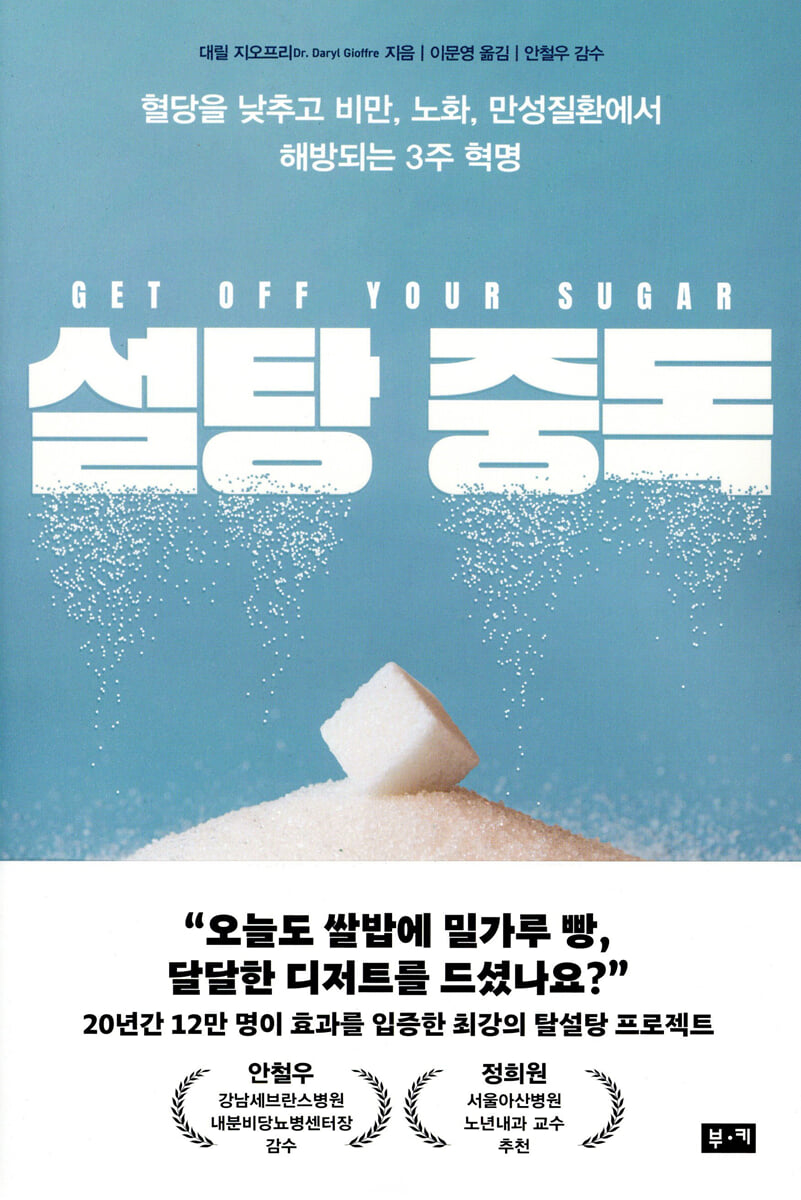
The most effective sugar-free project, proven effective by 120,000 people over 20 years. Supervised by Ahn Cheol-woo, Director of the Endocrine Diabetes Center at Gangnam Severance Hospital Recommended by Professor Jeong Hee-won of the Department of Geriatrics at Seoul Asan Medical Center ‘Blood sugar’ has emerged as a keyword for the health of the entire nation. The 'slow aging' diet, which is gaining popularity among people in their 20s and 30s who have become aware of the importance of health management early on, focuses on preventing blood sugar spikes by avoiding simple sugars such as high fructose corn syrup and refined grains such as flour and white rice. But trends are trends, and what you know in your head is just knowledge, and there are still countless people who can't give up a bowl of carbohydrates that instantly lifts their tired energy and a slice of cake that sweetly soothes their bitter stomach. Why can't we quit sugar even though we know it's bad for us? The answer in this book is clear. Because I'm already addicted to sugar. It is safe to say that sugar is modern man's favorite drug. Hidden in almost all foods, it overpowers our brains and hormones, triggering cravings and making it eight times more addictive than cocaine. So it's not your fault if you decide to quit sugar today and fail over and over again. The author was also a serious sugar addict, reaching for the candy jar next to his bed even in his sleep. As a doctor, I was a bundle of contradictions, advising patients to quit sugar because it was bad for them, and then going to my room alone and eating a chocolate bar. But after much trial and error, I finally figured out how to break free from my lifelong addiction. In just three and a half months, I lost 40 pounds and felt more energetic than ever before. Using the methods he personally learned, he helped 120,000 people quit sugar and regain their health over the past 20 years. The secret is contained in this book. |
- You can preview some of the book's contents.
Preview
index
Recommendation
Editor's Note: A Warning for the Age of Sugar Addiction
Prologue: A Battle You Can't Win Through Will Alone
Chapter 1: Why It's Easy to Get Hooked on Sugar, But Hard to Quit
A Life Robbed of Sugar│Addiction is Not a Weakness, It's a Natural Physiological Reaction│Why Does Willpower Short-Lasting?│Six Truths About Sugar│How to Become a Sugar Detective│What Are Net Carbs?│Tracking Sugars for Real│Why Have My Previous Diets Failed│What's Different About Sugar-Free Programs
Chapter 2: How Sugar Hurts Our Bodies
Sugar that destroys gut health│It's not you who craves sugar, it's your gut microbes│Inflammation and aging│The brain controlled by sugar│Alzheimer's, called the diabetes of the brain│Fructose, as deadly to the liver as alcohol│Sugar and hormones│Cancer cells thrive on sugar│The main culprit of heart disease│Health priority: Stay away from sugar
Chapter 3 What is the Sugar Free Program?
Three Numbers That Will Change Your Life│Three Principles│Ignite Your Fat-Burning Engine│When and How Often You Eat Matters│Self-Assessment in Ketosis│The Sugar-Related Numbers You Need to Know
Chapter 4: Calming Your Cravings
Cravings are caused by hormones│Your taste buds can change│Add smart snacks│The 3-step snacking strategy│What cravings really mean│The most dangerous forms of sugar│Fruit is okay, but avoid juice│Fiber is a strong ally│Are natural sweeteners better?│The truth about artificial sweeteners
Part 1: Pulling Weeds
Chapter 5: Preparation: Detoxing Your Body, Mind, and Pantry
DAY 1-3 Detoxify Your Mind│DAY 4 Detoxify Your Pantry│DAY 5-7 Purify Your Body with an Alkaline Detox│What to Do Next
Part 2: Sowing the Seeds
Chapter 6, Step 1 (Days 1-3) Supplement your minerals.
Why Minerals Are Important│The Four Essential Minerals│Small but Powerful Trace Minerals│Six Signs You're Deficient│Fiber: A Bonus for Your Body│Top 10 Mineral-Rich Foods│How to Supplement Your Minerals
Chapter 7, Step 2 (Days 4-6) Add Healthy Fats
The Benefits of Healthy Fats│Healing Fats vs. Killing Fats│Fat to Start Eating Now│How to Add More Fat
Chapter 8, Step 3 (Days 7-9) Eat Protein Wisely
The dangers of excessive animal protein consumption│Calculate your protein needs│Consume the highest quality animal protein│Why plant-based protein is preferable│How to consume protein smartly│10 recommended plant-based proteins│What you eat with protein is also important
Chapter 9, Step 4 (Days 10-12) Add spices
10 Herbs and Spices to Help You Decathe Your Blood Sugar
Chapter 10, Step 5 (Days 13-15) Regulate Meal Times
The Benefits of Diet Diversification and Fasting│Why You Should Go to Bed Hungry│Step-by-Step Guide to Intermittent Fasting│When to Avoid Fasting
Chapter 11, Step 6 (Days 16-18) Take supplements
Why You Need Supplements Even If You Eat Healthy│5 Supplements to Replenish Nutrient Deficiencies│Useful Supporters
Chapter 12, Step 7 (Days 19-21) Increase your exercise volume
Manage Stress by Moving More | Aerobic vs. Anaerobic Exercise | Mix It Up | The Most Effective Workout for Busy People | Frequently Asked Questions About Exercise
Part 3: Water Cycle
Chapter 13: Creating a Sugar-Free Lifestyle
The Sustainable 80:20 Principle│Optimal Diet Diversification Strategy│Prepare for Potential Disruptions│If You Don't Manage Stress, It Will Control You│Get More Sleep│Don't Wait for the Day to Change
Appendix 1 Sugar Liberation Diary │Appendix 2 Recipe Notes │ Note
Editor's Note: A Warning for the Age of Sugar Addiction
Prologue: A Battle You Can't Win Through Will Alone
Chapter 1: Why It's Easy to Get Hooked on Sugar, But Hard to Quit
A Life Robbed of Sugar│Addiction is Not a Weakness, It's a Natural Physiological Reaction│Why Does Willpower Short-Lasting?│Six Truths About Sugar│How to Become a Sugar Detective│What Are Net Carbs?│Tracking Sugars for Real│Why Have My Previous Diets Failed│What's Different About Sugar-Free Programs
Chapter 2: How Sugar Hurts Our Bodies
Sugar that destroys gut health│It's not you who craves sugar, it's your gut microbes│Inflammation and aging│The brain controlled by sugar│Alzheimer's, called the diabetes of the brain│Fructose, as deadly to the liver as alcohol│Sugar and hormones│Cancer cells thrive on sugar│The main culprit of heart disease│Health priority: Stay away from sugar
Chapter 3 What is the Sugar Free Program?
Three Numbers That Will Change Your Life│Three Principles│Ignite Your Fat-Burning Engine│When and How Often You Eat Matters│Self-Assessment in Ketosis│The Sugar-Related Numbers You Need to Know
Chapter 4: Calming Your Cravings
Cravings are caused by hormones│Your taste buds can change│Add smart snacks│The 3-step snacking strategy│What cravings really mean│The most dangerous forms of sugar│Fruit is okay, but avoid juice│Fiber is a strong ally│Are natural sweeteners better?│The truth about artificial sweeteners
Part 1: Pulling Weeds
Chapter 5: Preparation: Detoxing Your Body, Mind, and Pantry
DAY 1-3 Detoxify Your Mind│DAY 4 Detoxify Your Pantry│DAY 5-7 Purify Your Body with an Alkaline Detox│What to Do Next
Part 2: Sowing the Seeds
Chapter 6, Step 1 (Days 1-3) Supplement your minerals.
Why Minerals Are Important│The Four Essential Minerals│Small but Powerful Trace Minerals│Six Signs You're Deficient│Fiber: A Bonus for Your Body│Top 10 Mineral-Rich Foods│How to Supplement Your Minerals
Chapter 7, Step 2 (Days 4-6) Add Healthy Fats
The Benefits of Healthy Fats│Healing Fats vs. Killing Fats│Fat to Start Eating Now│How to Add More Fat
Chapter 8, Step 3 (Days 7-9) Eat Protein Wisely
The dangers of excessive animal protein consumption│Calculate your protein needs│Consume the highest quality animal protein│Why plant-based protein is preferable│How to consume protein smartly│10 recommended plant-based proteins│What you eat with protein is also important
Chapter 9, Step 4 (Days 10-12) Add spices
10 Herbs and Spices to Help You Decathe Your Blood Sugar
Chapter 10, Step 5 (Days 13-15) Regulate Meal Times
The Benefits of Diet Diversification and Fasting│Why You Should Go to Bed Hungry│Step-by-Step Guide to Intermittent Fasting│When to Avoid Fasting
Chapter 11, Step 6 (Days 16-18) Take supplements
Why You Need Supplements Even If You Eat Healthy│5 Supplements to Replenish Nutrient Deficiencies│Useful Supporters
Chapter 12, Step 7 (Days 19-21) Increase your exercise volume
Manage Stress by Moving More | Aerobic vs. Anaerobic Exercise | Mix It Up | The Most Effective Workout for Busy People | Frequently Asked Questions About Exercise
Part 3: Water Cycle
Chapter 13: Creating a Sugar-Free Lifestyle
The Sustainable 80:20 Principle│Optimal Diet Diversification Strategy│Prepare for Potential Disruptions│If You Don't Manage Stress, It Will Control You│Get More Sleep│Don't Wait for the Day to Change
Appendix 1 Sugar Liberation Diary │Appendix 2 Recipe Notes │ Note
Detailed image

Into the book
Chapter 1: Why It's Easy to Get Hooked on Sugar, But Hard to Quit
Our bodies can naturally burn either sugar (in the form of glycogen) or fat for fuel.
But because we consume excessive amounts of sugar all day every day and rarely go more than a few hours without eating, our bodies have become reliant on sugar for fuel and have lost their ability to burn fat.
Sugar is like burning fuel, and just a few hours after eating, your body signals you to refuel.
Then you reach for high-carb, high-sugar foods in search of more glucose.
--- pp.32~33
The food industry knows that we have a physiological and emotional attachment to sugar, and they work tirelessly to exploit this.
(…) “Food companies don’t put heavenly sweetness into things you expect to be sweet, like soda, ice cream, or cookies.
They went around grocery stores, adding sugar to previously unsweetened products to create a heavenly sweetness.
Now, even bread boasts a heavenly sweetness with added sugar.
Some yogurt products are as sweet as ice cream.
“Hey, some brands of pasta sauce have as much sugar in 1/2 cup as two Oreo cookies.”
--- pp.34~35
Chapter 2: How Sugar Hurts Our Bodies
Have you ever heard the saying, "Cancer loves sugar"? Unlike other cells in the body, cancer cannot use fat as fuel and relies solely on sugar to survive.
This is because they rely on fermentation, known as anaerobic respiration, for energy instead of the oxygen that healthy cells use.
In this process, only sugar is fermented, not fat.
(…) eliminating sugar from your diet could make it much harder for cancer to spread, much like cutting off terrorist funding.
In short, the party is not our friend, it is cancer's friend.
--- pp.69~70
Chapter 4: Calming Your Cravings
Anyone who wants to suppress hunger, lose weight, and overcome cravings needs to regulate their leptin levels.
Otherwise, you'll be tempted to continue eating foods that trigger dopamine release, far exceeding your body's calorie needs.
This pattern of eating purely for pleasure is so common that a new term has recently been coined: "hedonic hunger."
Longing is not a need to sustain life.
It is an addiction to pleasure.
Leptin resistance is also the reason why people who are addicted to sugar always crave sweets.
--- pp.88~89
Just as cells can become desensitized to insulin and leptin, taste buds can also become desensitized to sweetness.
Have you ever felt like you needed to eat more and more sugar to satisfy your cravings? This is because your taste buds have become dulled, requiring you to eat more to re-experience the sweetness you crave.
(…) When the sensitivity of the taste buds is restored, the taste of food changes.
Bad food tastes bad and good food tastes much better.
When I was addicted to sugar, I could drink three glasses of cola a day and it tasted good, but if you gave me broccoli, I would throw up.
Now the situation is the opposite.
It's not that the cola recipe has changed, it's that my taste has changed.
(…) I guarantee you that if you cut out sugar, healthy foods will taste just as good, or even better, than sweets and carbs!
--- pp.89~90
Chapter 6 Step 1: Supplement Your Minerals
I believe that maintaining adequate mineral levels is paramount to good health.
Unfortunately, most of us are severely deficient in minerals, and sugar is a major contributor to this problem.
This is because when you consume sugar, your body has to use its mineral reserves to recover.
Consuming more minerals every day will ensure your body has the nutrients it needs to heal itself and function efficiently.
Plus, by suppressing your sugar cravings, you'll be able to move through the remaining six steps of the program much more easily.
Few people can endure withdrawal symptoms for long on willpower alone without first supplementing with minerals.
--- pp.135~136
Chapter 7 Step 2: Add Healthy Fats
Just as eating sugar burns sugar and makes you crave more sugar, eating fat burns fat and makes you crave more fat.
The average person's fat cells store tens of thousands of calories.
When we start feeding our bodies healthy fats, our bodies think, 'Oh, I'm getting good calories here.
You might think, 'I'm sure more calories will come in, so it's okay to let go of the extra calories I've stored up.'
Therefore, you can lose weight by burning body fat.
--- pp.156~157
Chapter 8: Step 3: Eat Protein Smartly
The amount of protein needed to maintain and repair the human body is much less than you might think.
If you consume more protein than that, it will be converted into glucose through gluconeogenesis in the liver.
This means that any unused protein raises blood sugar and insulin levels and triggers fat storage.
This is also why high protein intake is associated with weight gain.
--- pp.167~168
A common lunch item, the ham sandwich, is terribly harmful to your health.
It's almost like putting cancer between two sugar tsunamis.
Why is that? As mentioned earlier, processed meats have been linked to colon cancer.
Additionally, wheat bread is high in gluten, as well as amylopectin A, a carbohydrate that is unusually difficult for pancreatic and stomach enzymes to digest, which can cause blood sugar levels to rise very high.
--- p.176
Chapter 10, Step 5: Regulate Meal Times
The most important thing you can do right now to reduce the number of meals you eat is to finish eating at least three hours before bedtime.
That means if you go to bed at 10 PM, you should finish eating by 7 PM.
Why is that?
Our bodies don't need energy before we fall asleep.
Since muscles do not need glucose, all food consumed is stored as fat.
Forcing your body to metabolize food during these low-energy times causes your mitochondria to produce more free radicals, causing more damage.
Also, because it takes several hours for the stomach to completely empty, lying down to sleep on a full stomach can easily cause stomach acid reflux.
Moreover, when your body focuses on digestion while you sleep, it takes away energy from other things it should be doing at that time: repair and detoxification.
--- p.199
Chapter 12 Step 7 Increase your exercise volume
To borrow a phrase I like, motion is emotion.
Movement makes me feel better.
When you feel good, you make healthier choices.
You might want to eat a salad or drink a vegetable drink.
On the other hand, if you don't move around much and don't have healthy ways to reduce stress, you'll find yourself reaching for junk carbs to comfort yourself.
--- p.221
Chapter 13: Creating a Sugar-Free Lifestyle
The relationship between sugar and sleep goes beyond simple energy supplementation.
Studies have shown that four consecutive days of sleep deprivation (4.5 hours of sleep per night) can impact insulin sensitivity, particularly in fat cells.
This means that if you don't get enough sleep, you become insulin resistant.
Fat cells also need sleep to stay in optimal condition.
A 2010 study found that sleeping only four hours for two consecutive nights reduced leptin, a hormone that regulates hunger.
This helps explain why we crave sweets when we're tired.
When your body doesn't properly secrete leptin, your hunger and satiety signals become dulled, leaving you feeling constantly hungry and never full.
--- pp.252~253
Health is our most precious asset, too important to be left to chance or managed carelessly.
Sugar robs us of this precious gift and causes millions of cases of cancer, diabetes, Alzheimer's disease, and dementia every year.
You now have a weapon in your hands: a clear goal and action plan to break free from the sugar addiction that threatens your life and the lives of your loved ones, and to use your time, energy, and resources for health instead of disease.
It is now your turn to use this weapon.
Our bodies can naturally burn either sugar (in the form of glycogen) or fat for fuel.
But because we consume excessive amounts of sugar all day every day and rarely go more than a few hours without eating, our bodies have become reliant on sugar for fuel and have lost their ability to burn fat.
Sugar is like burning fuel, and just a few hours after eating, your body signals you to refuel.
Then you reach for high-carb, high-sugar foods in search of more glucose.
--- pp.32~33
The food industry knows that we have a physiological and emotional attachment to sugar, and they work tirelessly to exploit this.
(…) “Food companies don’t put heavenly sweetness into things you expect to be sweet, like soda, ice cream, or cookies.
They went around grocery stores, adding sugar to previously unsweetened products to create a heavenly sweetness.
Now, even bread boasts a heavenly sweetness with added sugar.
Some yogurt products are as sweet as ice cream.
“Hey, some brands of pasta sauce have as much sugar in 1/2 cup as two Oreo cookies.”
--- pp.34~35
Chapter 2: How Sugar Hurts Our Bodies
Have you ever heard the saying, "Cancer loves sugar"? Unlike other cells in the body, cancer cannot use fat as fuel and relies solely on sugar to survive.
This is because they rely on fermentation, known as anaerobic respiration, for energy instead of the oxygen that healthy cells use.
In this process, only sugar is fermented, not fat.
(…) eliminating sugar from your diet could make it much harder for cancer to spread, much like cutting off terrorist funding.
In short, the party is not our friend, it is cancer's friend.
--- pp.69~70
Chapter 4: Calming Your Cravings
Anyone who wants to suppress hunger, lose weight, and overcome cravings needs to regulate their leptin levels.
Otherwise, you'll be tempted to continue eating foods that trigger dopamine release, far exceeding your body's calorie needs.
This pattern of eating purely for pleasure is so common that a new term has recently been coined: "hedonic hunger."
Longing is not a need to sustain life.
It is an addiction to pleasure.
Leptin resistance is also the reason why people who are addicted to sugar always crave sweets.
--- pp.88~89
Just as cells can become desensitized to insulin and leptin, taste buds can also become desensitized to sweetness.
Have you ever felt like you needed to eat more and more sugar to satisfy your cravings? This is because your taste buds have become dulled, requiring you to eat more to re-experience the sweetness you crave.
(…) When the sensitivity of the taste buds is restored, the taste of food changes.
Bad food tastes bad and good food tastes much better.
When I was addicted to sugar, I could drink three glasses of cola a day and it tasted good, but if you gave me broccoli, I would throw up.
Now the situation is the opposite.
It's not that the cola recipe has changed, it's that my taste has changed.
(…) I guarantee you that if you cut out sugar, healthy foods will taste just as good, or even better, than sweets and carbs!
--- pp.89~90
Chapter 6 Step 1: Supplement Your Minerals
I believe that maintaining adequate mineral levels is paramount to good health.
Unfortunately, most of us are severely deficient in minerals, and sugar is a major contributor to this problem.
This is because when you consume sugar, your body has to use its mineral reserves to recover.
Consuming more minerals every day will ensure your body has the nutrients it needs to heal itself and function efficiently.
Plus, by suppressing your sugar cravings, you'll be able to move through the remaining six steps of the program much more easily.
Few people can endure withdrawal symptoms for long on willpower alone without first supplementing with minerals.
--- pp.135~136
Chapter 7 Step 2: Add Healthy Fats
Just as eating sugar burns sugar and makes you crave more sugar, eating fat burns fat and makes you crave more fat.
The average person's fat cells store tens of thousands of calories.
When we start feeding our bodies healthy fats, our bodies think, 'Oh, I'm getting good calories here.
You might think, 'I'm sure more calories will come in, so it's okay to let go of the extra calories I've stored up.'
Therefore, you can lose weight by burning body fat.
--- pp.156~157
Chapter 8: Step 3: Eat Protein Smartly
The amount of protein needed to maintain and repair the human body is much less than you might think.
If you consume more protein than that, it will be converted into glucose through gluconeogenesis in the liver.
This means that any unused protein raises blood sugar and insulin levels and triggers fat storage.
This is also why high protein intake is associated with weight gain.
--- pp.167~168
A common lunch item, the ham sandwich, is terribly harmful to your health.
It's almost like putting cancer between two sugar tsunamis.
Why is that? As mentioned earlier, processed meats have been linked to colon cancer.
Additionally, wheat bread is high in gluten, as well as amylopectin A, a carbohydrate that is unusually difficult for pancreatic and stomach enzymes to digest, which can cause blood sugar levels to rise very high.
--- p.176
Chapter 10, Step 5: Regulate Meal Times
The most important thing you can do right now to reduce the number of meals you eat is to finish eating at least three hours before bedtime.
That means if you go to bed at 10 PM, you should finish eating by 7 PM.
Why is that?
Our bodies don't need energy before we fall asleep.
Since muscles do not need glucose, all food consumed is stored as fat.
Forcing your body to metabolize food during these low-energy times causes your mitochondria to produce more free radicals, causing more damage.
Also, because it takes several hours for the stomach to completely empty, lying down to sleep on a full stomach can easily cause stomach acid reflux.
Moreover, when your body focuses on digestion while you sleep, it takes away energy from other things it should be doing at that time: repair and detoxification.
--- p.199
Chapter 12 Step 7 Increase your exercise volume
To borrow a phrase I like, motion is emotion.
Movement makes me feel better.
When you feel good, you make healthier choices.
You might want to eat a salad or drink a vegetable drink.
On the other hand, if you don't move around much and don't have healthy ways to reduce stress, you'll find yourself reaching for junk carbs to comfort yourself.
--- p.221
Chapter 13: Creating a Sugar-Free Lifestyle
The relationship between sugar and sleep goes beyond simple energy supplementation.
Studies have shown that four consecutive days of sleep deprivation (4.5 hours of sleep per night) can impact insulin sensitivity, particularly in fat cells.
This means that if you don't get enough sleep, you become insulin resistant.
Fat cells also need sleep to stay in optimal condition.
A 2010 study found that sleeping only four hours for two consecutive nights reduced leptin, a hormone that regulates hunger.
This helps explain why we crave sweets when we're tired.
When your body doesn't properly secrete leptin, your hunger and satiety signals become dulled, leaving you feeling constantly hungry and never full.
--- pp.252~253
Health is our most precious asset, too important to be left to chance or managed carelessly.
Sugar robs us of this precious gift and causes millions of cases of cancer, diabetes, Alzheimer's disease, and dementia every year.
You now have a weapon in your hands: a clear goal and action plan to break free from the sugar addiction that threatens your life and the lives of your loved ones, and to use your time, energy, and resources for health instead of disease.
It is now your turn to use this weapon.
--- p.255
Publisher's Review
Fatigue, inflammation, diabetes, cancer, dementia, insomnia, depression…
A more addictive substance than drugs that causes all of this,
I have to cut out sugar to survive!
Winning the war against the drug known as sugar requires more than just willpower; it requires a sound strategy.
Professor Jeong Hee-won (Department of Geriatrics, Seoul Asan Medical Center), who wrote the recommendation, commented that the book “contains the trinity of such strategies.”
The first of his trinity strategies is to provide a powerful motivation to quit sugar by calmly and soberly explaining the negative effects of sugar on our brain and organs.
There are few people who don't know that sugar is bad for your health.
The problem is that it is much more harmful than people think.
Advanced glycation end products (AGEs), also known as sugar toxins, are lethal substances that destroy normal cell structure and function, causing various diseases and aging.
It has been discovered that cancer cells thrive on sugar, and harmful gut microbes also rely on sugar to survive.
It is natural that if the intestinal environment, which accounts for 80% of the immune system, is damaged, a red light will be turned on for the health of the entire body.
Among sugars, fructose, which is particularly harmful, is metabolized in the liver into toxic substances like alcohol, so consuming too much sugar can cause fatty liver disease even without drinking alcohol.
Sugar causes hormonal imbalances, which can lead to polycystic ovary syndrome, endometriosis, and infertility in women.
In short, it is no exaggeration to say that sugar is the biggest enemy threatening our health.
As I listen to the latest research findings, detailing the harmful effects of sugar, I can't help but reach for the bag of chips.
A 3-Step Sugar-Free Program to Save You from the Worm of Simple Sugars and Refined Grains
“Add, don’t subtract.”
The second in the Trinity Strategy, this book provides a compelling, step-by-step approach that you'll want to follow immediately.
From the preparatory phase (weeding) to detoxing your body, mind, and pantry from sugar and its side effects, to the three weeks of planting the seeds to create healthy eating habits, to the maintenance phase (watering) to ensure your new habits take firm root in your life, you can simply follow along step by step without worrying about the complexities.
Above all, what differentiates the sugar-free program presented in this book from other diet plans is the principle of “add, don’t subtract.”
As the author has seen with countless patients and in his own experience, even the best diet plan is doomed to failure if you don't keep in mind that sugar is addictive.
You need to provide your body with what it needs to break its sugar addiction: minerals to suppress cravings, healthy fats to switch to fat-burning mode and reduce carbohydrate cravings, high-quality protein to provide sustained energy, and alternatives that provide satisfaction and reward without sugar.
As you do this, you will naturally develop the habit of not giving up sugar.
When the author said that to reduce sugar intake and lose weight, people 'need to eat more fat', at first people looked at him like he was a monster.
But the truth is that when you eat fat, you burn fat, and when you eat sugar, you burn sugar.
Using fat instead of sugar as an energy source can reduce inflammation and oxidation throughout the body and restore the body's natural healing power.
Another important strategy for transforming your body into a fat-burning one is intermittent fasting, which involves varying your meal times. Adding effective exercise to the mix is even better.
Exercise not only burns fat and lowers blood sugar, it also stimulates the production of neurotransmitters (like endorphins, serotonin, and dopamine) that help you cope with stress, a major trigger of sugar addiction.
Another reason the author adheres to the "add, don't subtract" principle is that fear and deprivation are never a long-term strategy, whether you're trying to cut out sugar for weight loss, health improvement, or whatever else.
Adding good foods to your diet can naturally help you eliminate bad sugars and carbohydrates.
When you reset your taste buds, you'll automatically crave healthy foods.
So it is sustainable and doesn't yo-yo.
In as little as three weeks or as long as three months, you can break free from sugar addiction, regain your health, and prevent aging and chronic diseases.
“Sugar addiction is not your fault.”
How to Lower Your Blood Sugar and Get Your Health Back Without Guilt, Pain, or Yo-Yo Dieting
The third reason Professor Jeong Hee-won recommends this book, and what he considers its greatest strength, is that it reminds readers that they have the power to break free from sugar addiction without instilling guilt.
Again, sugar addiction is not your fault.
Craving sugar when we're stressed is a natural physiological response, and the food industry cleverly adds sweetness to all kinds of foods to reinforce this attachment we feel to sugar.
The World Health Organization recommends a daily intake of six teaspoons of sugar, which can be achieved by drinking just one glass of orange juice.
In particular, processed foods are often sugar bombs disguised under various names.
Who knew that half a cup of pasta sauce contains as much sugar as two Oreo cookies?
As someone who has tried and failed at sugar reduction many times, the author provides a wealth of practical tips to help readers avoid giving up or giving up halfway through the process. He even includes recipe notes as an appendix.
He also emphasizes that we should take things slowly, one step at a time, according to our individual circumstances.
Start by making even just one small change, like not eating three hours before bed or drinking green juice before diet cola.
As small changes accumulate, they will eventually accelerate like a snowball rolling down a hill.
A more addictive substance than drugs that causes all of this,
I have to cut out sugar to survive!
Winning the war against the drug known as sugar requires more than just willpower; it requires a sound strategy.
Professor Jeong Hee-won (Department of Geriatrics, Seoul Asan Medical Center), who wrote the recommendation, commented that the book “contains the trinity of such strategies.”
The first of his trinity strategies is to provide a powerful motivation to quit sugar by calmly and soberly explaining the negative effects of sugar on our brain and organs.
There are few people who don't know that sugar is bad for your health.
The problem is that it is much more harmful than people think.
Advanced glycation end products (AGEs), also known as sugar toxins, are lethal substances that destroy normal cell structure and function, causing various diseases and aging.
It has been discovered that cancer cells thrive on sugar, and harmful gut microbes also rely on sugar to survive.
It is natural that if the intestinal environment, which accounts for 80% of the immune system, is damaged, a red light will be turned on for the health of the entire body.
Among sugars, fructose, which is particularly harmful, is metabolized in the liver into toxic substances like alcohol, so consuming too much sugar can cause fatty liver disease even without drinking alcohol.
Sugar causes hormonal imbalances, which can lead to polycystic ovary syndrome, endometriosis, and infertility in women.
In short, it is no exaggeration to say that sugar is the biggest enemy threatening our health.
As I listen to the latest research findings, detailing the harmful effects of sugar, I can't help but reach for the bag of chips.
A 3-Step Sugar-Free Program to Save You from the Worm of Simple Sugars and Refined Grains
“Add, don’t subtract.”
The second in the Trinity Strategy, this book provides a compelling, step-by-step approach that you'll want to follow immediately.
From the preparatory phase (weeding) to detoxing your body, mind, and pantry from sugar and its side effects, to the three weeks of planting the seeds to create healthy eating habits, to the maintenance phase (watering) to ensure your new habits take firm root in your life, you can simply follow along step by step without worrying about the complexities.
Above all, what differentiates the sugar-free program presented in this book from other diet plans is the principle of “add, don’t subtract.”
As the author has seen with countless patients and in his own experience, even the best diet plan is doomed to failure if you don't keep in mind that sugar is addictive.
You need to provide your body with what it needs to break its sugar addiction: minerals to suppress cravings, healthy fats to switch to fat-burning mode and reduce carbohydrate cravings, high-quality protein to provide sustained energy, and alternatives that provide satisfaction and reward without sugar.
As you do this, you will naturally develop the habit of not giving up sugar.
When the author said that to reduce sugar intake and lose weight, people 'need to eat more fat', at first people looked at him like he was a monster.
But the truth is that when you eat fat, you burn fat, and when you eat sugar, you burn sugar.
Using fat instead of sugar as an energy source can reduce inflammation and oxidation throughout the body and restore the body's natural healing power.
Another important strategy for transforming your body into a fat-burning one is intermittent fasting, which involves varying your meal times. Adding effective exercise to the mix is even better.
Exercise not only burns fat and lowers blood sugar, it also stimulates the production of neurotransmitters (like endorphins, serotonin, and dopamine) that help you cope with stress, a major trigger of sugar addiction.
Another reason the author adheres to the "add, don't subtract" principle is that fear and deprivation are never a long-term strategy, whether you're trying to cut out sugar for weight loss, health improvement, or whatever else.
Adding good foods to your diet can naturally help you eliminate bad sugars and carbohydrates.
When you reset your taste buds, you'll automatically crave healthy foods.
So it is sustainable and doesn't yo-yo.
In as little as three weeks or as long as three months, you can break free from sugar addiction, regain your health, and prevent aging and chronic diseases.
“Sugar addiction is not your fault.”
How to Lower Your Blood Sugar and Get Your Health Back Without Guilt, Pain, or Yo-Yo Dieting
The third reason Professor Jeong Hee-won recommends this book, and what he considers its greatest strength, is that it reminds readers that they have the power to break free from sugar addiction without instilling guilt.
Again, sugar addiction is not your fault.
Craving sugar when we're stressed is a natural physiological response, and the food industry cleverly adds sweetness to all kinds of foods to reinforce this attachment we feel to sugar.
The World Health Organization recommends a daily intake of six teaspoons of sugar, which can be achieved by drinking just one glass of orange juice.
In particular, processed foods are often sugar bombs disguised under various names.
Who knew that half a cup of pasta sauce contains as much sugar as two Oreo cookies?
As someone who has tried and failed at sugar reduction many times, the author provides a wealth of practical tips to help readers avoid giving up or giving up halfway through the process. He even includes recipe notes as an appendix.
He also emphasizes that we should take things slowly, one step at a time, according to our individual circumstances.
Start by making even just one small change, like not eating three hours before bed or drinking green juice before diet cola.
As small changes accumulate, they will eventually accelerate like a snowball rolling down a hill.
GOODS SPECIFICS
- Date of issue: June 28, 2024
- Page count, weight, size: 288 pages | 494g | 152*224*17mm
- ISBN13: 9791193528150
- ISBN10: 1193528151
You may also like
카테고리
korean


korean

![ELLE 엘르 스페셜 에디션 A형 : 12월 [2025]](http://librairie.coreenne.fr/cdn/shop/files/b8e27a3de6c9538896439686c6b0e8fb.jpg?v=1766436872&width=3840)


