

Beyond Disruption, Beyond Destructive Innovation
 |
Description
Book Introduction
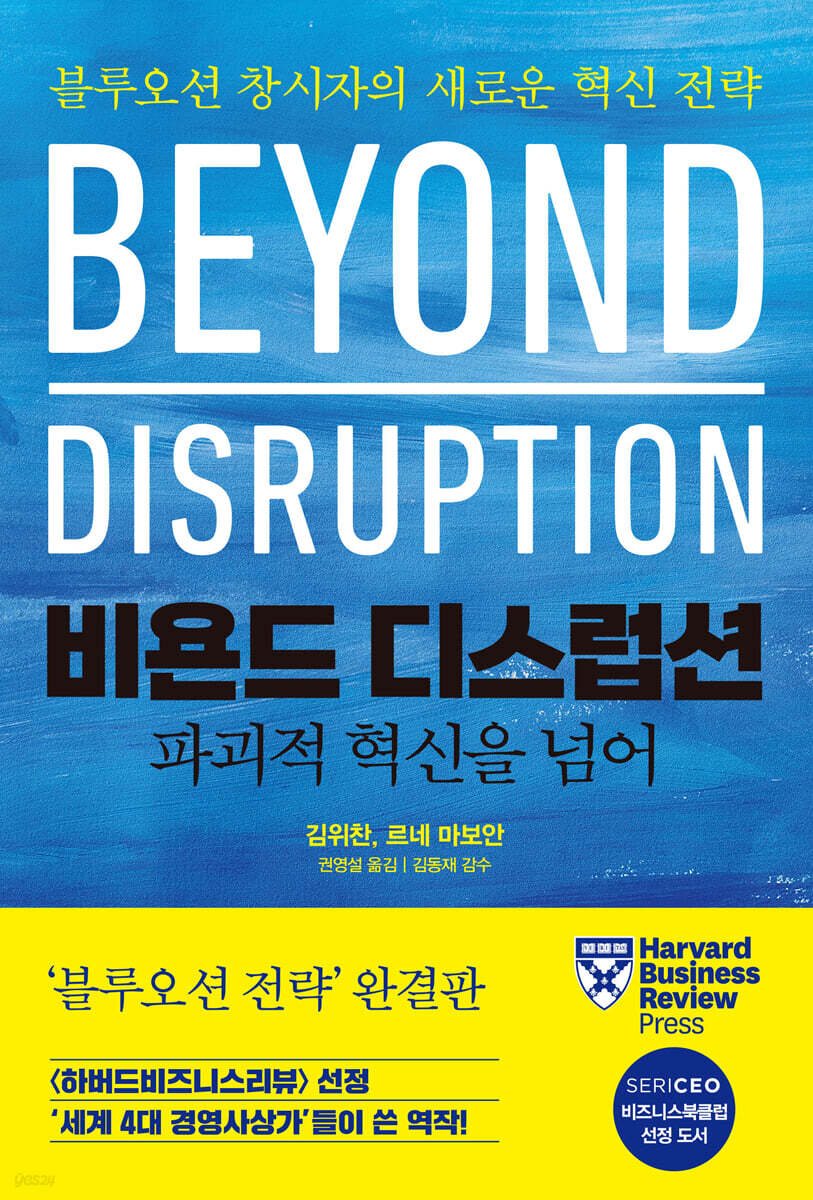
Two giants of management thought The ultimate blue ocean strategy! “Innovation doesn’t have to be disruptive!” One of the most read business books of this century Another masterpiece from the authors of "Blue Ocean Strategy"! _ Financial Times “Move fast, break things” is the motto Mark Zuckerberg put forward when he created Facebook. For the past two decades, "disruption" has been the battle cry of the business world. 'Destroy this. 'If you don't destroy, you perish.' Business leaders have consistently believed that disrupting existing industries and companies is the only way to grow. Many people have taken 'destruction' as synonymous with 'innovation'. Is destruction really the only way to innovation and growth? Professors W. Chan Kim and René Mauborgne, the two authors of Blue Ocean Strategy, which has sold over 4 million copies worldwide and is recognized as one of the most iconic and influential strategy books in history, have been exploring this question for a long time. The two authors, who were recently selected as one of the 'world's four greatest management thinkers' by Harvard Business Review (HBR) in commemoration of their 100th anniversary, have returned with this book, 'Beyond Disruption' after six years, and have introduced a new concept called 'nondisruptive creation'. Non-disruptive creation, simply put, means creating new markets, products, or services without destroying existing industries. The "disruptive creation" that people have been focusing on so much has provided consumers with irresistible value, but it has also created social adjustment costs, such as destroying or replacing existing industries and eliminating jobs. In other words, it brought about not only positive but also negative effects. "Non-destructive creation," a concept evolved from Blue Ocean, is about innovating without destroying or breaking existing ones, thereby building a business world in harmony with society. If "Blue Ocean Strategy" redefined creation, not competition, as the essence of strategy, this book, "Beyond Disruption," redefines and expands existing perspectives on innovation, offering a groundbreaking opportunity to open our eyes to new approaches to innovation and unlock new markets. |
- You can preview some of the book's contents.
Preview
index
Preface to the Korean Edition - The Path of Creation Where Everyone Wins
A Reviewer's Note: Sustainable Growth Through Non-Disruptive Innovation and Value Creation
preface
Part 1.
Why Nondestructive Creation Matters
Chapter 1.
Innovation and growth without destruction
Three ideas that changed the world
What can you learn
Non-destructive creation has always been around us.
The Spectrum of Market-Creating Innovation
Why Common Understanding and Theory Are Needed
Let's take a broader view of innovation and growth.
From Blue Ocean Strategy to Non-Disruptive Creation
The future is what we create
Chapter 2.
The economic and social impact of non-destructive creation
When market-creating innovations produce positive outcomes
Destructive Creation vs.
Non-destructive creation
side effects or secondary effects
Hope or fear
Chapter 3.
Four Sources of Business Advantage in Nondisruptive Creation
Avoiding Confrontation with Incumbents: The Case of Square and GoPro
Coping with Total Destruction: The Case of Cunard and Laposte
Active Support from Internal Stakeholders: The Case of 3M and Pfizer
The Implicit Acceptance of External Stakeholders: The Failure of Tada and S DC
There is no industry where non-destructive creation is impossible.
The amazing achievements of non-destructive creation
From 'far over there' to 'close here'
Chapter 4.
Why Nondestructive Creation is Growing in Importance
The Challenges of the Fourth Industrial Revolution
double-edged sword
Where do new jobs come from?
From supply-side preparation to demand-side jobs
Advice for Government Policymakers
You have to understand to act
Chapter 5.
Three Paths to Market-Creating Innovation and Growth
Three Pathways to Market-Creating Innovation and Their Growth Outcomes
The path of destructive creation
The Path of Non-Destructive Creation
The path of blue ocean strategy
Part 2.
How to Achieve Non-Destructive Creation
Chapter 6.
Lead to the right perspective
Jump out of the chessboard
Don't confuse means with ends.
Creativity isn't the preserve of the few.
Chapter 7.
Find non-disruptive opportunities
First, clarify your goals.
Two Approaches to Nondestructive Creation
Three Ways to Discover Non-Disruptive Opportunities
Evaluating and Structuring Opportunities
Chapter 8.
Figure out how to seize the opportunity
Find the families that missed out on opportunities.
Identify the business implications of missed opportunities.
Reconfigure your home to seize opportunities.
Why did banks miss this opportunity?
Reinventing the Indian Cricket Market
Be true to your beliefs
Chapter 9.
Turn opportunities into reality
Three support elements
Confidence and competence that lead to success
Chapter 10.
Let's create a better world together
Acknowledgements
Translator's Note
main
Search
A Reviewer's Note: Sustainable Growth Through Non-Disruptive Innovation and Value Creation
preface
Part 1.
Why Nondestructive Creation Matters
Chapter 1.
Innovation and growth without destruction
Three ideas that changed the world
What can you learn
Non-destructive creation has always been around us.
The Spectrum of Market-Creating Innovation
Why Common Understanding and Theory Are Needed
Let's take a broader view of innovation and growth.
From Blue Ocean Strategy to Non-Disruptive Creation
The future is what we create
Chapter 2.
The economic and social impact of non-destructive creation
When market-creating innovations produce positive outcomes
Destructive Creation vs.
Non-destructive creation
side effects or secondary effects
Hope or fear
Chapter 3.
Four Sources of Business Advantage in Nondisruptive Creation
Avoiding Confrontation with Incumbents: The Case of Square and GoPro
Coping with Total Destruction: The Case of Cunard and Laposte
Active Support from Internal Stakeholders: The Case of 3M and Pfizer
The Implicit Acceptance of External Stakeholders: The Failure of Tada and S DC
There is no industry where non-destructive creation is impossible.
The amazing achievements of non-destructive creation
From 'far over there' to 'close here'
Chapter 4.
Why Nondestructive Creation is Growing in Importance
The Challenges of the Fourth Industrial Revolution
double-edged sword
Where do new jobs come from?
From supply-side preparation to demand-side jobs
Advice for Government Policymakers
You have to understand to act
Chapter 5.
Three Paths to Market-Creating Innovation and Growth
Three Pathways to Market-Creating Innovation and Their Growth Outcomes
The path of destructive creation
The Path of Non-Destructive Creation
The path of blue ocean strategy
Part 2.
How to Achieve Non-Destructive Creation
Chapter 6.
Lead to the right perspective
Jump out of the chessboard
Don't confuse means with ends.
Creativity isn't the preserve of the few.
Chapter 7.
Find non-disruptive opportunities
First, clarify your goals.
Two Approaches to Nondestructive Creation
Three Ways to Discover Non-Disruptive Opportunities
Evaluating and Structuring Opportunities
Chapter 8.
Figure out how to seize the opportunity
Find the families that missed out on opportunities.
Identify the business implications of missed opportunities.
Reconfigure your home to seize opportunities.
Why did banks miss this opportunity?
Reinventing the Indian Cricket Market
Be true to your beliefs
Chapter 9.
Turn opportunities into reality
Three support elements
Confidence and competence that lead to success
Chapter 10.
Let's create a better world together
Acknowledgements
Translator's Note
main
Search
Detailed image
Into the book
All the disruption that has occurred in the world in the past has left us and our organizations wounded and exhausted, and we are constantly feeling anxious and uneasy.
So we've been longing for a new, less destructive and more hopeful path forward for business and the economy.
A path that transcends the conflict between economic growth and social benefits, clashing and ultimately dividing them, will allow business and society to move in lockstep and prosper together.
In this book, we aim to suggest a path that can achieve both innovation and growth.
It's the path to new industries, new jobs, and profitable growth.
A path where no companies close, no communities are hurt, and no jobs are lost in the aftermath of destruction.
We call this path 'nondisruptive creation.'
On this path, everyone can innovate and grow without experiencing destruction or social suffering.
---From the "Preface"
So our authors dug deeper.
For the past two decades, "disruption" has been the battle cry in the business world.
'Destroy this.
Destroy that.
'If you don't destroy, you perish.' This call for destruction resonated throughout Silicon Valley, in the boardrooms of major corporations, in the media, and at business conferences around the world.
Corporate leaders have been warned time and again that disrupting their industries, even their own companies, is the only way to survive and grow.
Naturally, many people came to think of 'destruction' as synonymous with 'innovation'.
But is disruption the only way to innovate and grow? Is it the best way? Our research and various innovation cases suggest otherwise.
Many people talk about destruction.
Destruction is certainly important and is widespread around us.
But the over-focus on destruction has led us to neglect other avenues of innovation and growth.
We believe that another path is just as important as destruction.
That path means creating new markets without destruction or replacement.
We came to think of this as 'non-destructive' creation.
Non-disruptive creation creates new industries without putting companies out of business, eliminating jobs, or disrupting markets.
It offers tremendous potential to create new markets that never existed before.
If we better understand the innovations that create new markets and how they work, we can better prepare to achieve them.
---From "Innovation and Growth Without Destruction"
Microfinance changed that.
In 1983, Yunus officially founded Grameen Bank.
The world's first microcredit bank, it provided very small loans to the poor.
By solving a problem long ignored, microcredit has enabled people who previously had no access to capital to create new small businesses, new jobs, higher living standards, and hope.
This non-disruptive move (in blue ocean strategy, the object of analysis is not a company or a person, but a strategic move - translator's note) created a new market called microfinance without replacing other industries.
Microfinance has grown into a multi-billion dollar industry with a current loan repayment rate of 98%, and there is significant potential for future growth.
As Yunus said, microcredit cannot eliminate all poverty.
But by lifting many out of severe poverty, it is helping build a fairer and more prosperous future for all.
---From "Three Ideas That Changed the World"
Disruptive and non-disruptive creation are at opposite ends of the innovation spectrum of creation and growth, which creates and grows new markets.
Non-disruptive creation means creating a new market 'outside' or 'beyond' the boundaries of existing industries, while disruptive creation means creating and expanding a new market 'within' the boundaries of existing industries.
A key factor that distinguishes the two is their impact on the economy and society.
Disruptive creation can result in either a winner-takes-most economic outcome or a win-lose game where new things emerge to replace existing companies and jobs.
Here, growth through the creation of new markets leads to industrial and social destruction, such as the replacement of existing markets and the businesses and jobs within them.
And this destruction forces economic and social interests into a trade-off as the world adapts to this replacement.
In contrast, non-disruptive creation creates something new without disrupting existing markets and the businesses and jobs associated with them.
It creates positive-sum growth because there are no winners and no market participant is disadvantaged.
That is, it does not cause destruction or suffering to industry and society, and helps to narrow the gap between economic and social benefits.
---“Among the spectrum of innovations that create markets,
Consider the following example:
Netflix vs. Blockbuster, Amazon vs. bookstores or the retail industry, Uber vs. taxis, airplanes vs. transatlantic ships.
There are many other examples across different industries and time periods.
They have three main elements in common:
First, they are all examples of destructive creation.
If you read articles, reports, executive interviews, or investment analysis reports about these companies, the word most often used to describe this dynamic is "disruption."
Second, they all reflect a clear winner-loser situation.
Third, even when it benefits consumers, it imposes painful adjustment costs on society.
---From "The Economic and Social Impact of Nondestructive Creation"
First, like destruction, non-destructive creation provides attractive value to buyers, whether individual consumers or corporate customers.
It changes lives in a positive way, and a new market is created when people buy or use the product or service.
But if you don't provide attractive value, new markets won't form.
This is a prerequisite, as is destructive creation.
For example, the non-disruptive movement created by [Sesame Street] presented new opportunities for families.
It allows preschool children to learn important skills like colors, shapes, the alphabet, and listening while watching the program, all from the comfort of their own home.
Parents can now take a short break from worrying about their children and take a shower or do housework.
The mix of fantasy and reality, exciting songs and playfulness, and the colorful and lovable Muppets also captured the hearts of children.
Children naturally entered the world of early education.
Look at 3M's Post-it notes.
People find Post-it notes to be a very attractive product.
These little pastel-colored memos not only stick well anywhere, but once they're stuck, they're unlikely to fall off.
However, when you try to remove it, it can be removed without any effort and does not leave any marks.
It's common to see people using Post-it notes for the first time being amazed as they stick them on, take them off, look at the paper from the front and back, and stick them on again.
We all know because we've all done it.
Post-it notes, used for reminders and notes, have become an essential tool in companies, schools, and homes.
So we've been longing for a new, less destructive and more hopeful path forward for business and the economy.
A path that transcends the conflict between economic growth and social benefits, clashing and ultimately dividing them, will allow business and society to move in lockstep and prosper together.
In this book, we aim to suggest a path that can achieve both innovation and growth.
It's the path to new industries, new jobs, and profitable growth.
A path where no companies close, no communities are hurt, and no jobs are lost in the aftermath of destruction.
We call this path 'nondisruptive creation.'
On this path, everyone can innovate and grow without experiencing destruction or social suffering.
---From the "Preface"
So our authors dug deeper.
For the past two decades, "disruption" has been the battle cry in the business world.
'Destroy this.
Destroy that.
'If you don't destroy, you perish.' This call for destruction resonated throughout Silicon Valley, in the boardrooms of major corporations, in the media, and at business conferences around the world.
Corporate leaders have been warned time and again that disrupting their industries, even their own companies, is the only way to survive and grow.
Naturally, many people came to think of 'destruction' as synonymous with 'innovation'.
But is disruption the only way to innovate and grow? Is it the best way? Our research and various innovation cases suggest otherwise.
Many people talk about destruction.
Destruction is certainly important and is widespread around us.
But the over-focus on destruction has led us to neglect other avenues of innovation and growth.
We believe that another path is just as important as destruction.
That path means creating new markets without destruction or replacement.
We came to think of this as 'non-destructive' creation.
Non-disruptive creation creates new industries without putting companies out of business, eliminating jobs, or disrupting markets.
It offers tremendous potential to create new markets that never existed before.
If we better understand the innovations that create new markets and how they work, we can better prepare to achieve them.
---From "Innovation and Growth Without Destruction"
Microfinance changed that.
In 1983, Yunus officially founded Grameen Bank.
The world's first microcredit bank, it provided very small loans to the poor.
By solving a problem long ignored, microcredit has enabled people who previously had no access to capital to create new small businesses, new jobs, higher living standards, and hope.
This non-disruptive move (in blue ocean strategy, the object of analysis is not a company or a person, but a strategic move - translator's note) created a new market called microfinance without replacing other industries.
Microfinance has grown into a multi-billion dollar industry with a current loan repayment rate of 98%, and there is significant potential for future growth.
As Yunus said, microcredit cannot eliminate all poverty.
But by lifting many out of severe poverty, it is helping build a fairer and more prosperous future for all.
---From "Three Ideas That Changed the World"
Disruptive and non-disruptive creation are at opposite ends of the innovation spectrum of creation and growth, which creates and grows new markets.
Non-disruptive creation means creating a new market 'outside' or 'beyond' the boundaries of existing industries, while disruptive creation means creating and expanding a new market 'within' the boundaries of existing industries.
A key factor that distinguishes the two is their impact on the economy and society.
Disruptive creation can result in either a winner-takes-most economic outcome or a win-lose game where new things emerge to replace existing companies and jobs.
Here, growth through the creation of new markets leads to industrial and social destruction, such as the replacement of existing markets and the businesses and jobs within them.
And this destruction forces economic and social interests into a trade-off as the world adapts to this replacement.
In contrast, non-disruptive creation creates something new without disrupting existing markets and the businesses and jobs associated with them.
It creates positive-sum growth because there are no winners and no market participant is disadvantaged.
That is, it does not cause destruction or suffering to industry and society, and helps to narrow the gap between economic and social benefits.
---“Among the spectrum of innovations that create markets,
Consider the following example:
Netflix vs. Blockbuster, Amazon vs. bookstores or the retail industry, Uber vs. taxis, airplanes vs. transatlantic ships.
There are many other examples across different industries and time periods.
They have three main elements in common:
First, they are all examples of destructive creation.
If you read articles, reports, executive interviews, or investment analysis reports about these companies, the word most often used to describe this dynamic is "disruption."
Second, they all reflect a clear winner-loser situation.
Third, even when it benefits consumers, it imposes painful adjustment costs on society.
---From "The Economic and Social Impact of Nondestructive Creation"
First, like destruction, non-destructive creation provides attractive value to buyers, whether individual consumers or corporate customers.
It changes lives in a positive way, and a new market is created when people buy or use the product or service.
But if you don't provide attractive value, new markets won't form.
This is a prerequisite, as is destructive creation.
For example, the non-disruptive movement created by [Sesame Street] presented new opportunities for families.
It allows preschool children to learn important skills like colors, shapes, the alphabet, and listening while watching the program, all from the comfort of their own home.
Parents can now take a short break from worrying about their children and take a shower or do housework.
The mix of fantasy and reality, exciting songs and playfulness, and the colorful and lovable Muppets also captured the hearts of children.
Children naturally entered the world of early education.
Look at 3M's Post-it notes.
People find Post-it notes to be a very attractive product.
These little pastel-colored memos not only stick well anywhere, but once they're stuck, they're unlikely to fall off.
However, when you try to remove it, it can be removed without any effort and does not leave any marks.
It's common to see people using Post-it notes for the first time being amazed as they stick them on, take them off, look at the paper from the front and back, and stick them on again.
We all know because we've all done it.
Post-it notes, used for reminders and notes, have become an essential tool in companies, schools, and homes.
---From "When Market-Creating Innovation Produces Positive-Sum Results"
Publisher's Review
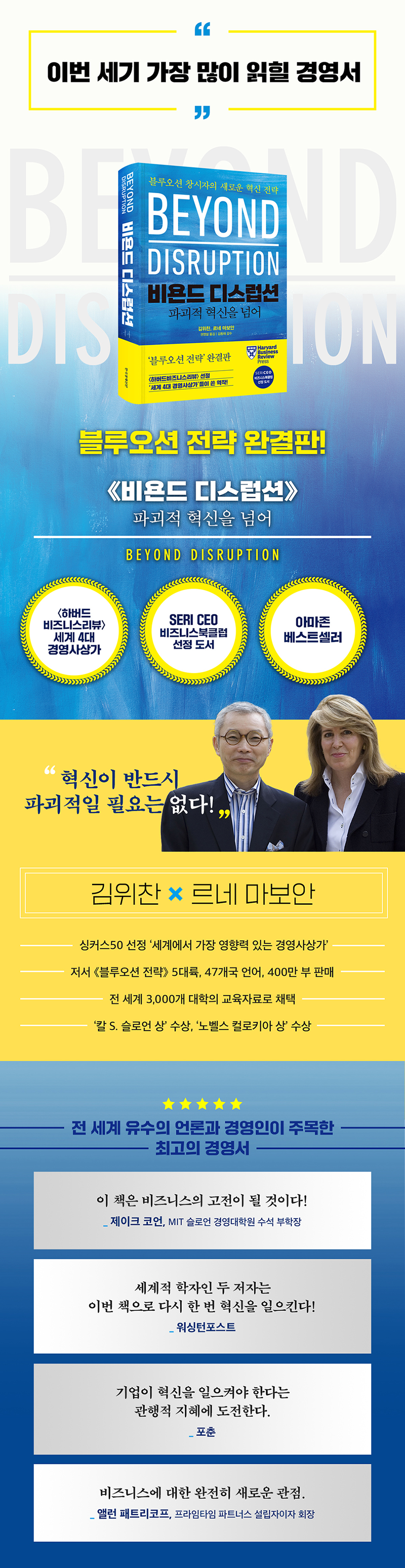
“This book will become a business classic!”
- Jake Cohen, Associate Dean, MIT Sloan School of Management
New strategies and ideas from authors who changed the horizons of global management history.
Professors W. Chan Kim and René Mauborgne, the founders of the "Blue Ocean" and world-renowned management thinkers, forever changed the world's way of thinking about strategy when they published the iconic and influential book "Blue Ocean Strategy" over 20 years ago.
And with Beyond Disruption, they once again present a bold new idea that challenges conventional thinking about innovation and growth.
What is the "nondisruptive creation" they talk about in this book, and why is it important? Why do you think nondisruptive creation will become increasingly important over time? And, most importantly, how can we achieve nondisruptive creation?
Innovation doesn't have to be disruptive!
For the past two decades, "disruption" has been the battle cry of the business world.
'Destroy this.
Destroy that.
'If you don't destroy, you perish.' Business leaders have consistently believed that disrupting existing industries and companies is the only way to grow.
Many people have taken 'destruction' as synonymous with 'innovation'.
Is destruction really the only way to innovation and growth?
The authors of this book found through new research that this is not the case.
And we found that growth and innovation are possible without destroying the market, and we called this 'non-destructive creation.'
Non-disruptive ideas that changed the world
Let me give you an example.
In 2018, Las Vegas hosted a show unlike any other the world had ever seen.
There was something very special about the event, hosted by the venture company Church of Rock 'n' Roll and featuring rock group Greta Van Fleet.
About half of the audience were hearing impaired.
Who, and how, pulled off this show? It was a company called Music Not Impossible (M:NI).
M:NI's creators developed a wearable vibration sensor for the hearing impaired, allowing them to enjoy music through vibrations transmitted to the brain.
The innovation that M:NI achieved had nothing to do with ‘destruction.’
They created opportunities for people who never imagined they would have access to music.
Without invading, destroying or replacing existing markets or industries.
The market was created 'without destruction'.
A strategy that combines market creation and social prosperity.
The reason the authors of this book focused on non-destructive creation is because, unlike conventional destructive creation, it creates 'positive-sum' growth.
Disruptive creation has resulted in a 'winner-loser' game or winner-take-all economic outcome, with new things replacing existing companies or jobs.
As is widely known, we can see examples of Netflix vs. Blockbuster, Amazon vs. bookstores or retail, Uber vs. taxis.
Non-destructive creation, on the other hand, brings something new to life without affecting existing markets and the businesses and jobs associated with them.
In addition to the M:NI discussed above, examples include the US credit card micropayment market, GoPro, which created the action camera market, Park24, a Japanese downtown parking lot operator, and Winia Mando's kimchi refrigerator and postpartum care center in Korea.
The Fourth Industrial Revolution: The Answer to New Jobs
The importance of non-destructive creation to our society is multifaceted.
It creates opportunities in the market without causing suffering in society, and helps to narrow the gap between economic and social benefits.
In addition, it has several elements that can help solve the employment problem.
The Fourth Industrial Revolution is expected to bring about unprecedented efficiency through smart devices and AI, but this will require the replacement of many existing jobs, and many jobs will inevitably disappear.
In fact, many large companies today employ fewer employees than they used to.
So where do new jobs come from?
The authors say that non-disruptive creation is not the answer to jobs, but it could help solve the problem.
Windshield wipers created a new market without any destruction and made our lives safer.
Life coaching has pioneered a new industry, creating opportunities for people to improve their professional and personal lives that previously did not exist.
Non-disruptive creation like this delivers powerful, profitable growth and thousands of new jobs.
Without destroying anything.
Destruction and non-destructive creation play complementary roles.
The authors are not saying that destructive creation is bad.
He emphasizes that each has a unique role and characteristic, and that they can complement each other and create new opportunities.
For example, when an organization manages its portfolio to secure current profits and future growth, nondisruptive and disruptive creation can be complementary approaches to achieving this.
Organizations can maximize growth in a variety of ways, such as pursuing disruptive creation in certain businesses and non-disruptive creation in others.
For example, SpaceX is pursuing disruptive innovations such as reusable rockets and reusable Starships (space probes), while also pursuing non-disruptive creations such as commercial space travel and building communities on Mars.
What Successful Non-Destructive Creators Have in Common
Non-destructive creation is bound to be a crucial concept for the leaders and innovators who will lead the future.
Because it is an innovative way for business and society to move forward in harmony.
This is also the point that the authors of this book want to emphasize.
“We believe that non-destructive creation can serve as a socially equitable economic force, whether in small or large ways.
This is because while the domestic and global economies aspire to grow, they are also confronted with rapid changes in technologies that will displace existing key players, key markets, and current jobs.
Given the numerous challenges facing the planet and humanity, innovative market-creating solutions are needed.
“I believe that if we can find solutions that are not only disruptive but also non-disruptive, we have a better chance of bridging the gap between business and society and uniting people.”
This book is divided into two parts.
Part 1 expands our perspective on traditional innovation and growth to include non-disruptive creation, while also elucidating the strengths of non-disruptive creation.
In Part 2, we change direction and discuss 'how to achieve non-destructive creation.'
Successful nondisruptive creators share a common thread, and this perspective provides a compass for the process and actions needed to identify and realize nondisruptive opportunities.
- Jake Cohen, Associate Dean, MIT Sloan School of Management
New strategies and ideas from authors who changed the horizons of global management history.
Professors W. Chan Kim and René Mauborgne, the founders of the "Blue Ocean" and world-renowned management thinkers, forever changed the world's way of thinking about strategy when they published the iconic and influential book "Blue Ocean Strategy" over 20 years ago.
And with Beyond Disruption, they once again present a bold new idea that challenges conventional thinking about innovation and growth.
What is the "nondisruptive creation" they talk about in this book, and why is it important? Why do you think nondisruptive creation will become increasingly important over time? And, most importantly, how can we achieve nondisruptive creation?
Innovation doesn't have to be disruptive!
For the past two decades, "disruption" has been the battle cry of the business world.
'Destroy this.
Destroy that.
'If you don't destroy, you perish.' Business leaders have consistently believed that disrupting existing industries and companies is the only way to grow.
Many people have taken 'destruction' as synonymous with 'innovation'.
Is destruction really the only way to innovation and growth?
The authors of this book found through new research that this is not the case.
And we found that growth and innovation are possible without destroying the market, and we called this 'non-destructive creation.'
Non-disruptive ideas that changed the world
Let me give you an example.
In 2018, Las Vegas hosted a show unlike any other the world had ever seen.
There was something very special about the event, hosted by the venture company Church of Rock 'n' Roll and featuring rock group Greta Van Fleet.
About half of the audience were hearing impaired.
Who, and how, pulled off this show? It was a company called Music Not Impossible (M:NI).
M:NI's creators developed a wearable vibration sensor for the hearing impaired, allowing them to enjoy music through vibrations transmitted to the brain.
The innovation that M:NI achieved had nothing to do with ‘destruction.’
They created opportunities for people who never imagined they would have access to music.
Without invading, destroying or replacing existing markets or industries.
The market was created 'without destruction'.
A strategy that combines market creation and social prosperity.
The reason the authors of this book focused on non-destructive creation is because, unlike conventional destructive creation, it creates 'positive-sum' growth.
Disruptive creation has resulted in a 'winner-loser' game or winner-take-all economic outcome, with new things replacing existing companies or jobs.
As is widely known, we can see examples of Netflix vs. Blockbuster, Amazon vs. bookstores or retail, Uber vs. taxis.
Non-destructive creation, on the other hand, brings something new to life without affecting existing markets and the businesses and jobs associated with them.
In addition to the M:NI discussed above, examples include the US credit card micropayment market, GoPro, which created the action camera market, Park24, a Japanese downtown parking lot operator, and Winia Mando's kimchi refrigerator and postpartum care center in Korea.
The Fourth Industrial Revolution: The Answer to New Jobs
The importance of non-destructive creation to our society is multifaceted.
It creates opportunities in the market without causing suffering in society, and helps to narrow the gap between economic and social benefits.
In addition, it has several elements that can help solve the employment problem.
The Fourth Industrial Revolution is expected to bring about unprecedented efficiency through smart devices and AI, but this will require the replacement of many existing jobs, and many jobs will inevitably disappear.
In fact, many large companies today employ fewer employees than they used to.
So where do new jobs come from?
The authors say that non-disruptive creation is not the answer to jobs, but it could help solve the problem.
Windshield wipers created a new market without any destruction and made our lives safer.
Life coaching has pioneered a new industry, creating opportunities for people to improve their professional and personal lives that previously did not exist.
Non-disruptive creation like this delivers powerful, profitable growth and thousands of new jobs.
Without destroying anything.
Destruction and non-destructive creation play complementary roles.
The authors are not saying that destructive creation is bad.
He emphasizes that each has a unique role and characteristic, and that they can complement each other and create new opportunities.
For example, when an organization manages its portfolio to secure current profits and future growth, nondisruptive and disruptive creation can be complementary approaches to achieving this.
Organizations can maximize growth in a variety of ways, such as pursuing disruptive creation in certain businesses and non-disruptive creation in others.
For example, SpaceX is pursuing disruptive innovations such as reusable rockets and reusable Starships (space probes), while also pursuing non-disruptive creations such as commercial space travel and building communities on Mars.
What Successful Non-Destructive Creators Have in Common
Non-destructive creation is bound to be a crucial concept for the leaders and innovators who will lead the future.
Because it is an innovative way for business and society to move forward in harmony.
This is also the point that the authors of this book want to emphasize.
“We believe that non-destructive creation can serve as a socially equitable economic force, whether in small or large ways.
This is because while the domestic and global economies aspire to grow, they are also confronted with rapid changes in technologies that will displace existing key players, key markets, and current jobs.
Given the numerous challenges facing the planet and humanity, innovative market-creating solutions are needed.
“I believe that if we can find solutions that are not only disruptive but also non-disruptive, we have a better chance of bridging the gap between business and society and uniting people.”
This book is divided into two parts.
Part 1 expands our perspective on traditional innovation and growth to include non-disruptive creation, while also elucidating the strengths of non-disruptive creation.
In Part 2, we change direction and discuss 'how to achieve non-destructive creation.'
Successful nondisruptive creators share a common thread, and this perspective provides a compass for the process and actions needed to identify and realize nondisruptive opportunities.
GOODS SPECIFICS
- Date of issue: July 25, 2023
- Format: Hardcover book binding method guide
- Page count, weight, size: 306 pages | 654g | 148*220*23mm
- ISBN13: 9788947549059
- ISBN10: 8947549053
You may also like
카테고리
korean


korean

![GQ KOREA Mark (Monthly): December [2025]](http://librairie.coreenne.fr/cdn/shop/files/8ef265dbbfbf186523ed75ba7319009d.jpg?v=1765340328&width=3840)


