

Feminism's challenge again
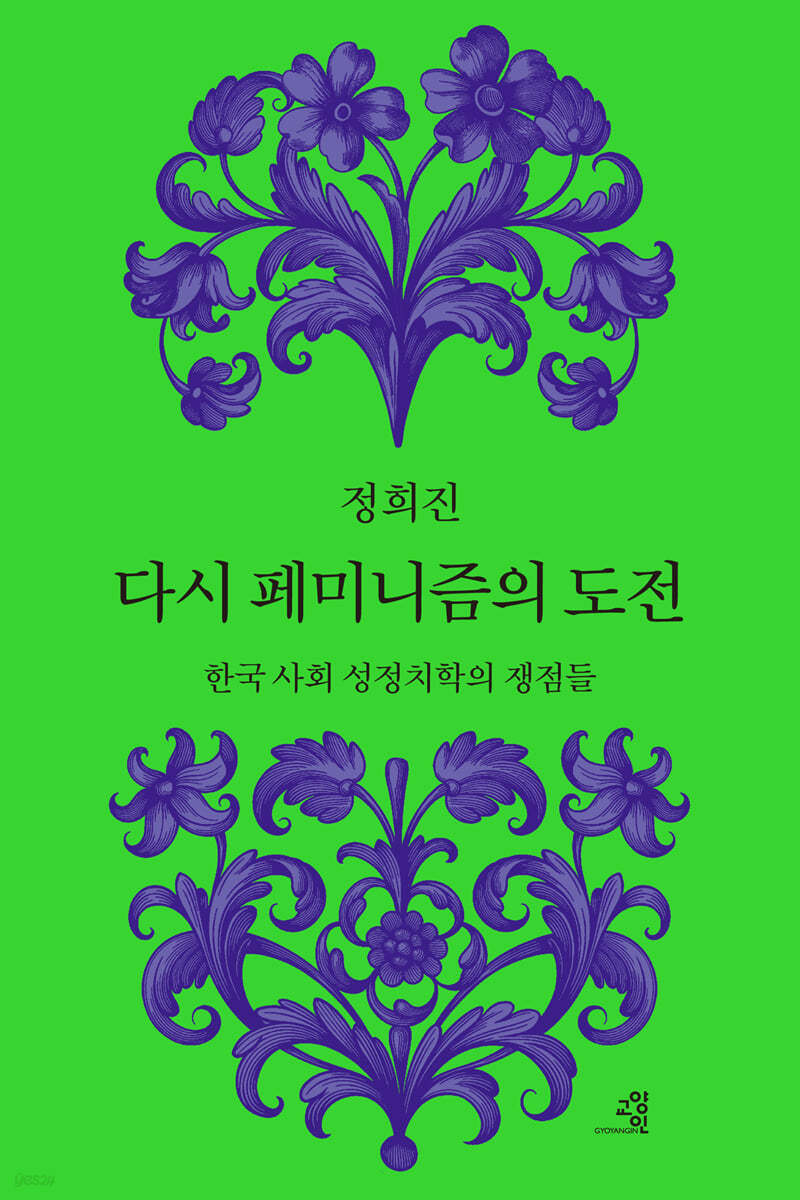 |
Description
Book Introduction
In an era where the differentiation of women's language and the counterattack of male power are intertwined,
A new challenge to find the path of Korean feminism!
"Now is the time to revolutionize feminist discourse."
Jeong Hee-jin, who is once again at the forefront of feminism
A provocative and radical debate on sexual politics!
Heejin Jeong, a pioneering feminist scholar, multidisciplinary researcher, and provocative book critic, reframes the issues of sexual politics that permeate everyday Korean society and asks what path feminism should take.
The author, who brought about a shift in the feminist paradigm by creating a rift in Korean society, which had been tamed by male language, through the 2005 feminist textbook “The Challenge of Feminism,” is once again unfolding a subversive perspective on feminist discourse after 18 years.
Since the popularization of feminism in 2015, feminism has become a basic part of women's lives. However, male culture has not been able to let go of the outdated discourse of power in Korean society, and is launching a counterattack bordering on "hate."
Meanwhile, within the women's movement, those who emphasize the identity of "women" and exclude other minorities, including transgender people, refugees, and people with disabilities, have emerged in the name of feminism.
In an age of deepening discord and disparity, what should the language of feminism say, and how should it change reality?
"The Challenge of Feminism Again" analyzes the increasingly complex gender power and feminist discourse in Korean society in the Anthropocene era, where each individual survives amidst the rush of capital.
From sharp issues of "gender conflict" such as sexism, femicide, the world's lowest birth rate, and female quotas, to feminist discourses such as "victim-centeredness," "sexual self-determination," and "resourceization of femininity," it sharply criticizes and reinterprets the debates in contemporary sexual politics.
A new challenge for feminism begins: to break down the dichotomy of right and wrong, to think about boundaries, and to attempt a subversive reinterpretation of established discourse.
A new challenge to find the path of Korean feminism!
"Now is the time to revolutionize feminist discourse."
Jeong Hee-jin, who is once again at the forefront of feminism
A provocative and radical debate on sexual politics!
Heejin Jeong, a pioneering feminist scholar, multidisciplinary researcher, and provocative book critic, reframes the issues of sexual politics that permeate everyday Korean society and asks what path feminism should take.
The author, who brought about a shift in the feminist paradigm by creating a rift in Korean society, which had been tamed by male language, through the 2005 feminist textbook “The Challenge of Feminism,” is once again unfolding a subversive perspective on feminist discourse after 18 years.
Since the popularization of feminism in 2015, feminism has become a basic part of women's lives. However, male culture has not been able to let go of the outdated discourse of power in Korean society, and is launching a counterattack bordering on "hate."
Meanwhile, within the women's movement, those who emphasize the identity of "women" and exclude other minorities, including transgender people, refugees, and people with disabilities, have emerged in the name of feminism.
In an age of deepening discord and disparity, what should the language of feminism say, and how should it change reality?
"The Challenge of Feminism Again" analyzes the increasingly complex gender power and feminist discourse in Korean society in the Anthropocene era, where each individual survives amidst the rush of capital.
From sharp issues of "gender conflict" such as sexism, femicide, the world's lowest birth rate, and female quotas, to feminist discourses such as "victim-centeredness," "sexual self-determination," and "resourceization of femininity," it sharply criticizes and reinterprets the debates in contemporary sexual politics.
A new challenge for feminism begins: to break down the dichotomy of right and wrong, to think about boundaries, and to attempt a subversive reinterpretation of established discourse.
- You can preview some of the book's contents.
Preview
index
Preface _ Again, Asking Feminism
Chapter 1: Reconstructing the Feminist Debate
Criticism of victim-centeredness
Reasons for avoiding marriage and childbirth
Is 'criticism of Kim Gun-hee' a misnomer?
It's not gender conflict, it's sexism
Whose sexual shame is it?
The Sexual Politics of Femicide
The illusion of the 'perfect victim'
Sexual violence is 'just' a crime.
You have to ask the perpetrator
Counterattack or regression?
Feminism against refugees?
MeToo is an unfinished revolution.
Chapter 2: The Politics of Sexuality
The boundary between sexual violence and love
The Bad Boys' Gift Economy
Women are flowers, men are people?
Is being a woman like living with a lion?
An uncontrollable instinct?
Textbooks should be a counter-example.
My body is my right to life
From lookism to public health issues
Prerequisites for sex education
The Politics of Tears and Urine
'Gomsin' management system
A 'male' superpower, a 'female' weak power?
Chapter 3 Genders
Is the player male or female?
Juphilia, in the case of zoophilia
Intersex, Bridging the Gap
Chapter 4 Beyond Sexual Self-Determination
Prostitution: Labor or Violence?
Sexual Violence and the Spatialization of Women's Bodies
Appendix _ The Human Rights of Women Who Must Die to Live - A History of the Korean Camptown Women's Movement, 1986-1998
annotation
Chapter 1: Reconstructing the Feminist Debate
Criticism of victim-centeredness
Reasons for avoiding marriage and childbirth
Is 'criticism of Kim Gun-hee' a misnomer?
It's not gender conflict, it's sexism
Whose sexual shame is it?
The Sexual Politics of Femicide
The illusion of the 'perfect victim'
Sexual violence is 'just' a crime.
You have to ask the perpetrator
Counterattack or regression?
Feminism against refugees?
MeToo is an unfinished revolution.
Chapter 2: The Politics of Sexuality
The boundary between sexual violence and love
The Bad Boys' Gift Economy
Women are flowers, men are people?
Is being a woman like living with a lion?
An uncontrollable instinct?
Textbooks should be a counter-example.
My body is my right to life
From lookism to public health issues
Prerequisites for sex education
The Politics of Tears and Urine
'Gomsin' management system
A 'male' superpower, a 'female' weak power?
Chapter 3 Genders
Is the player male or female?
Juphilia, in the case of zoophilia
Intersex, Bridging the Gap
Chapter 4 Beyond Sexual Self-Determination
Prostitution: Labor or Violence?
Sexual Violence and the Spatialization of Women's Bodies
Appendix _ The Human Rights of Women Who Must Die to Live - A History of the Korean Camptown Women's Movement, 1986-1998
annotation
Detailed image

Into the book
Does victim-centeredness benefit women?
As time goes by, the 'victim-centered' logic seems to gain more strength.
Some women believe that this is a kind of epistemological 'bonus' in a male-dominated society (the belief that the victim's position in gender-related cases is more objective) and that women's positions should be 'given' more consideration.
On the other hand, male society objects, saying that feminism is strange enough, and that it is ridiculous to call it 'victim-centered' when 'women = victims'.
What women who advocate victim-centeredness and men who oppose it have in common is that they make discussion impossible.
--- p.24
The argument that a woman's word must be unconditionally believed paradoxically shows how low women's status is.
Victim-centeredness is not only disadvantageous to women, it is also an unfeasible concept.
Everyone's speech, including that of the victim, can vary greatly depending on the other person and the situation.
However, victim-centeredness presupposes a normative image of the victim.
--- p.25
Why Women Avoid Marriage and Childbirth
The biggest cause of women's non-marriage is the awakening of women due to inequality between men and women, that is, the imbalance in consciousness between men and women.
Across the construction sector, women's workload and social experiences have changed dramatically and purposefully compared to previous eras, but men's views on women, society, and self-perception have not kept pace with women's changes.
In reality, discrimination against women occurs, but the imbalance of consciousness between men and women allows for the illusion that “men are victims” and a sense of victimization.
--- p.32
The problem is that men with more time on their hands do less housework because of their inferiority complex as they lack social resources and economic power.
This state of affairs among men is the most crucial reason why women avoid marriage and epitomizes the reality of gender discrimination.
There is no woman who does not know how much housework is looked down upon in our society ('driving the lid of the pot', 'go home and look after the kids'...) and how much the women who do housework are looked down upon.
Male culture portrays housework as a symbol of being a loser.
Women saw through this structure.
--- p.35
Is 'criticism of Kim Gun-hee' a misnomer?
Misogyny refers to a male culture that can even 'demote' the president to a 'woman'.
This is a case where Misojini attacked former President Park Geun-hye's mismanagement with her naked body.
At the time, I did not support former President Park, but I opposed the cultural phenomenon in which his public sphere status was reduced to a female gender role.
On the other hand, Mrs. Kim Kun-hee has secured resources by actively practicing the normative femininity desired by the patriarchal system based on her economic power.
--- p.49
Feminism is not the argument that “all women are good, women should not be blamed, and no matter how much crime women commit, they are weaker than men and should not be blamed.”
Quite the opposite.
Feminism is an ideology that pursues and aims for a society in which neither femininity nor masculinity is a resource.
--- p.50
How long do we have to prove that there is gender discrimination?
Male culture cites conscription, female quotas, and the fact that “women’s status has improved compared to before” as reasons why men are “discriminated against.”
But even if all this is true, it doesn't apply to older men.
That means it's not a gender issue.
It is useless to argue that not all men experience conscription in the same way, whether they serve, what their positions are, or how they work, and that conscription was not created by women.
There is no solution if we package the class struggle among men as a gender conflict and refuse to recognize reality ourselves.
The cries of “Reviving the military service bonus system” and “Women should also join the military” should be made only after reaching an agreement among men.
--- p.54
Because women's entry into 'society' is essentially double labor across the public and private sectors, women choose to remain single to avoid overwork and career interruptions, which leads to low birth rates and a life with animals.
How long do we have to prove that there is gender discrimination?
--- p.55
Korean men's 'problematic' gender perceptions
Flowers cannot move on their own, their purpose is to please the eyes of men, and they wither easily when broken.
It is not sexual harassment when both the woman and the man are people or flowers.
But if men are people and women are flowers, then it is a violation of human rights.
Because the fate of a flower depends on people.
--- p.121
Prostitution is at the core of not only sexual culture but also male-centered thought systems.
Sexual violence, sexual harassment, male sexual complex, and disparagement of women are all variant cultures that have prostitution as their apex.
All men are potential, indirect, and actual sex buyers.
There is no free man within that magnetic field.
Men can still attract women's attention even if they don't directly purchase sex or are merely sexually 'well-behaved'.
When there are too many 'bad guys', any guy who isn't a bit like them automatically becomes a 'good guy' without any effort.
It is the basis of male solidarity politics.
--- p.126
Feminism that opposes refugees and excludes transgender people?
Refugees are a mirror of ‘us’.
Because attitudes toward differences, such as acceptance or aversion, are a measure of democracy.
Citizens first? No, who are citizens? Look at the polarization everywhere.
No society is homogeneous.
Feminism is not identity politics.
It's just the most creative thinking among the many arguments for social justice.
--- p.89
Are transgender women not women? Are they taking away women's rights? Women-first feminism? No one has the right to define another's gender.
Until now, the women's movement has resisted male-centered social movements that have monopolized the concepts of nation/people/citizen and insisted on a hierarchical order of human rights (“women's issues come later”).
If feminism distinguishes between real and fake women and takes the lead in excluding them, why is such feminism necessary?
--- p.188
The controversial issue of 'sexual self-determination'
When women make the 'self-determination' to use their sexuality as a resource, it becomes a very controversial issue.
In other words, the right to sexual self-determination can be asserted not only for matters that violate sexual self-determination, such as sexual violence, but also as the right of women to use their bodies as resources, investments, 'punishments', and 'abuses' of their own free will (usually in ways demanded by male society), such as prostitution, dieting, appearance management, and female infant abortion.
--- p.17
When a woman's body becomes a space as an object of the subject, whether by men (the ideology of purity) or by women themselves (sexual self-determination), the body always becomes passive and subject to the rule of reason.
In this logic, the body is still subordinated to reason and consciousness-centeredness, and the resistance of individual women as bodies is difficult to give meaning to.
Beyond sexual self-determination, we need to explore new concepts of resistance to sexual violence that do not colonize the body.
--- p.269
Prostitution as an 'unfair exchange'
What is important in prostitution is not the act of buying or selling itself.
Anyone can buy or sell anything, including their own body.
The question is whether there is any industry where the gender separation between buyers and sellers is so absolute.
No matter what changes come, the gender of the sale is irreversible.
Gender does not change.
This is the problem.
--- p.227
Prostitution is 'not' a problem of commodification.
This is an era where all humans are commodities.
Many people work day and night on self-improvement to make themselves better and more attractive products in the labor market.
Why can't the feminist camp convince anyone by emphasizing that "sex" isn't the only thing that can be traded?
Because this debate is surprisingly difficult, feminism has emphasized only the "serious harm" to emphasize that prostitution is a violation of human rights and violence.
And other feminists who have reacted against this criticize that women in the sex industry are not 'one-sided victims'.
As time goes by, the 'victim-centered' logic seems to gain more strength.
Some women believe that this is a kind of epistemological 'bonus' in a male-dominated society (the belief that the victim's position in gender-related cases is more objective) and that women's positions should be 'given' more consideration.
On the other hand, male society objects, saying that feminism is strange enough, and that it is ridiculous to call it 'victim-centered' when 'women = victims'.
What women who advocate victim-centeredness and men who oppose it have in common is that they make discussion impossible.
--- p.24
The argument that a woman's word must be unconditionally believed paradoxically shows how low women's status is.
Victim-centeredness is not only disadvantageous to women, it is also an unfeasible concept.
Everyone's speech, including that of the victim, can vary greatly depending on the other person and the situation.
However, victim-centeredness presupposes a normative image of the victim.
--- p.25
Why Women Avoid Marriage and Childbirth
The biggest cause of women's non-marriage is the awakening of women due to inequality between men and women, that is, the imbalance in consciousness between men and women.
Across the construction sector, women's workload and social experiences have changed dramatically and purposefully compared to previous eras, but men's views on women, society, and self-perception have not kept pace with women's changes.
In reality, discrimination against women occurs, but the imbalance of consciousness between men and women allows for the illusion that “men are victims” and a sense of victimization.
--- p.32
The problem is that men with more time on their hands do less housework because of their inferiority complex as they lack social resources and economic power.
This state of affairs among men is the most crucial reason why women avoid marriage and epitomizes the reality of gender discrimination.
There is no woman who does not know how much housework is looked down upon in our society ('driving the lid of the pot', 'go home and look after the kids'...) and how much the women who do housework are looked down upon.
Male culture portrays housework as a symbol of being a loser.
Women saw through this structure.
--- p.35
Is 'criticism of Kim Gun-hee' a misnomer?
Misogyny refers to a male culture that can even 'demote' the president to a 'woman'.
This is a case where Misojini attacked former President Park Geun-hye's mismanagement with her naked body.
At the time, I did not support former President Park, but I opposed the cultural phenomenon in which his public sphere status was reduced to a female gender role.
On the other hand, Mrs. Kim Kun-hee has secured resources by actively practicing the normative femininity desired by the patriarchal system based on her economic power.
--- p.49
Feminism is not the argument that “all women are good, women should not be blamed, and no matter how much crime women commit, they are weaker than men and should not be blamed.”
Quite the opposite.
Feminism is an ideology that pursues and aims for a society in which neither femininity nor masculinity is a resource.
--- p.50
How long do we have to prove that there is gender discrimination?
Male culture cites conscription, female quotas, and the fact that “women’s status has improved compared to before” as reasons why men are “discriminated against.”
But even if all this is true, it doesn't apply to older men.
That means it's not a gender issue.
It is useless to argue that not all men experience conscription in the same way, whether they serve, what their positions are, or how they work, and that conscription was not created by women.
There is no solution if we package the class struggle among men as a gender conflict and refuse to recognize reality ourselves.
The cries of “Reviving the military service bonus system” and “Women should also join the military” should be made only after reaching an agreement among men.
--- p.54
Because women's entry into 'society' is essentially double labor across the public and private sectors, women choose to remain single to avoid overwork and career interruptions, which leads to low birth rates and a life with animals.
How long do we have to prove that there is gender discrimination?
--- p.55
Korean men's 'problematic' gender perceptions
Flowers cannot move on their own, their purpose is to please the eyes of men, and they wither easily when broken.
It is not sexual harassment when both the woman and the man are people or flowers.
But if men are people and women are flowers, then it is a violation of human rights.
Because the fate of a flower depends on people.
--- p.121
Prostitution is at the core of not only sexual culture but also male-centered thought systems.
Sexual violence, sexual harassment, male sexual complex, and disparagement of women are all variant cultures that have prostitution as their apex.
All men are potential, indirect, and actual sex buyers.
There is no free man within that magnetic field.
Men can still attract women's attention even if they don't directly purchase sex or are merely sexually 'well-behaved'.
When there are too many 'bad guys', any guy who isn't a bit like them automatically becomes a 'good guy' without any effort.
It is the basis of male solidarity politics.
--- p.126
Feminism that opposes refugees and excludes transgender people?
Refugees are a mirror of ‘us’.
Because attitudes toward differences, such as acceptance or aversion, are a measure of democracy.
Citizens first? No, who are citizens? Look at the polarization everywhere.
No society is homogeneous.
Feminism is not identity politics.
It's just the most creative thinking among the many arguments for social justice.
--- p.89
Are transgender women not women? Are they taking away women's rights? Women-first feminism? No one has the right to define another's gender.
Until now, the women's movement has resisted male-centered social movements that have monopolized the concepts of nation/people/citizen and insisted on a hierarchical order of human rights (“women's issues come later”).
If feminism distinguishes between real and fake women and takes the lead in excluding them, why is such feminism necessary?
--- p.188
The controversial issue of 'sexual self-determination'
When women make the 'self-determination' to use their sexuality as a resource, it becomes a very controversial issue.
In other words, the right to sexual self-determination can be asserted not only for matters that violate sexual self-determination, such as sexual violence, but also as the right of women to use their bodies as resources, investments, 'punishments', and 'abuses' of their own free will (usually in ways demanded by male society), such as prostitution, dieting, appearance management, and female infant abortion.
--- p.17
When a woman's body becomes a space as an object of the subject, whether by men (the ideology of purity) or by women themselves (sexual self-determination), the body always becomes passive and subject to the rule of reason.
In this logic, the body is still subordinated to reason and consciousness-centeredness, and the resistance of individual women as bodies is difficult to give meaning to.
Beyond sexual self-determination, we need to explore new concepts of resistance to sexual violence that do not colonize the body.
--- p.269
Prostitution as an 'unfair exchange'
What is important in prostitution is not the act of buying or selling itself.
Anyone can buy or sell anything, including their own body.
The question is whether there is any industry where the gender separation between buyers and sellers is so absolute.
No matter what changes come, the gender of the sale is irreversible.
Gender does not change.
This is the problem.
--- p.227
Prostitution is 'not' a problem of commodification.
This is an era where all humans are commodities.
Many people work day and night on self-improvement to make themselves better and more attractive products in the labor market.
Why can't the feminist camp convince anyone by emphasizing that "sex" isn't the only thing that can be traded?
Because this debate is surprisingly difficult, feminism has emphasized only the "serious harm" to emphasize that prostitution is a violation of human rights and violence.
And other feminists who have reacted against this criticize that women in the sex industry are not 'one-sided victims'.
--- p.228
Publisher's Review
If "The Challenge of Feminism" "introduced" feminism as social justice, this book analyzes the discourse of changed feminism, centered on the politics of identity.
In particular, we will examine the changing sexual culture (sexuality) of Korean society under the neoliberal system and raise questions about the existing debate structure.
… …
I hope this book will be a text that is not easy to read, but will spark debate.
Women's studies and the women's movement, like all discourses, cannot progress without productive conflict through the competition of language.
I hope that without progressing in Korean feminism, women's voices for survival will not be distorted and become targets of misogyny.
I believe that women's studies, other languages, languages that male society cannot understand, are the best resistance.
Instead of answering the questions of male society, let's speak to them in a new language they don't understand.
_ In the 'Preface'
“We all learn from discomfort.”
Critical Recommendations for Advancing Feminism
In Korean society today, the 'gender issue' is hotter than ever.
The gap in perception between men and women regarding gender discrimination, sexual crimes, and sexual culture is widening, with the Gangnam Station and Sindang Station incidents, the MeToo movement, the controversy over the existence of the Ministry of Gender Equality and Family, and the military draft system, and the days of conflict and confusion due to mutual misunderstanding continue.
Everyone is dissatisfied and complains about the pain, but in a reality that is polarized and polarized into “either you’re with me or you’re against me,” issues of gender and sexuality are either avoided for discussion or are used as tools for political strife.
《The Challenge of Feminism Again》 starts from this awareness of the problem and ignites the spark of a debate on the sexual politics of Korean society that has been at a standstill.
In this book, Jeong Hee-jin exposes the oppressive and deeply rooted gender power of Korean male culture, focusing on the controversial gender issues of the time.
At the same time, Jeong Hee-jin's gaze is directed within feminism and the women's movement, boldly raising questions about the stagnation and regression of feminist discourse that fails to change the reality of the socially vulnerable, including women and sexual minorities.
This book will serve as the most innovative starting point for creating a new discourse in a society where gender discrimination is disguised as "gender conflict" or "battle of the sexes," where both femininity and masculinity are mobilized as resources for individual survival, and where feminism is misunderstood as a "misandry" ideology or women's "identity politics."
“As the disagreements among feminists develop into active debates,
“Both men and society mature.”
Jeong Hee-jin views contemporary gender issues as a crisis in feminist discourse.
It strongly criticizes the attitude of reducing feminism to “identity politics” without acknowledging the differences between women, and the perception of some women that “one can become a feminist without studying because one was born a woman.”
In addition, it critically examines the core ideologies that have driven the women's movement to date, including 'victim-centeredness' and 'sexual self-determination.'
In sexual assault cases, we question whether “victim-centeredness” is a strategy that benefits female victims and whether it perpetuates the stereotype of women as victims.
The concept of 'sexual self-determination' is more controversial.
In particular, femininity, which was previously the 'cause' of discrimination and oppression, is now functioning as a resource for some women in the neoliberal era.
Jeong Hee-jin repeatedly emphasizes the need for an active female language that interprets and criticizes this.
In this book, Jeong Hee-jin's 'internal' critique of women and feminism sometimes seems harsh.
However, paradoxically, this questioning is based on his strong belief that “the more active the disagreements among feminists become in debate, the more both individual men and society mature.”
Jeong Hee-jin dreams of the possibility of changing reality through innovation in feminist discourse.
The imbalance in the perception of sexuality between men and women is a serious social problem that causes unnecessary social conflict.
Women are tired of trying to convince men to oppress their sexuality.
In this process, she is judged as a “feminist” and suffers from difficult interrogations and questioning.
'Feminism' has become the new red complex.
_ In the 'Preface'
“Women’s studies and the women’s movement, like all discourses,
“There is no progress without productive conflict.”
《The Challenge of Feminism Again》 is composed of four chapters.
Chapter 1 examines the most controversial issues, focusing on the relationship between gender power and sexuality.
We examine what the visualization of the 2016 Gangnam Station incident and the 2022 Sindang Station incident means, whether criticizing President Yoon Seok-yeol's wife, Kim Kun-hee, constitutes misogyny, and the achievements and limitations of the Me Too movement that shook Korean society in 2018.
In particular, it is evaluated as a conscious response of women who have to take on 'double labor' in the public sphere (workplace) and private sphere (home), moving away from the perspective of viewing low birth rate/low birth rate as a 'social problem'.
Chapter 2 addresses the overall issue of sexuality in ‘everyday life’, and particularly addresses gender stereotypes among Korean men.
It explains how 'real dolls', a sex substitute for men, repeat sexual stereotypes, why it is problematic to focus on the victim's 'consent' rather than the structural problems or the perpetrator's actions in sexual violence crimes, and why the degrading and hating of women to emphasize masculinity in a militaristic culture is important to men's human rights issues.
Chapter 3 contains an attempt to dismantle the existing gender identity discourse that regards heterosexuality and cisgender as norms.
It explains various sexualities on the continuum of asexuality and sexuality, and deals with the human rights of 'intersex' people and the gender controversy of sports players.
This raises the question of who is male and female and who determines the difference, and reminds us of the eternal truth that it is not difference that creates discrimination, but power that determines difference.
Chapter 4 analyzes the meaning of the concept of 'sexual self-determination' focusing on prostitution and sexual violence.
We examine how sexual self-determination operates differently across genders and how it connects to the history of spatializing women's bodies, while also examining why this concept fails to account for women's experiences and why the "right to life" versus "right to self-determination" dichotomy leads to a wasteful debate.
The appendix, “The Human Rights of Women Who Must Die to Live,” is a history of the Korean camptown women’s movement written by the author 25 years ago when she was a graduate student.
In this article, the author states that this is where the first identity and positioning as a 'feminist' began, and shares that awareness of the problem.
In particular, we will examine the changing sexual culture (sexuality) of Korean society under the neoliberal system and raise questions about the existing debate structure.
… …
I hope this book will be a text that is not easy to read, but will spark debate.
Women's studies and the women's movement, like all discourses, cannot progress without productive conflict through the competition of language.
I hope that without progressing in Korean feminism, women's voices for survival will not be distorted and become targets of misogyny.
I believe that women's studies, other languages, languages that male society cannot understand, are the best resistance.
Instead of answering the questions of male society, let's speak to them in a new language they don't understand.
_ In the 'Preface'
“We all learn from discomfort.”
Critical Recommendations for Advancing Feminism
In Korean society today, the 'gender issue' is hotter than ever.
The gap in perception between men and women regarding gender discrimination, sexual crimes, and sexual culture is widening, with the Gangnam Station and Sindang Station incidents, the MeToo movement, the controversy over the existence of the Ministry of Gender Equality and Family, and the military draft system, and the days of conflict and confusion due to mutual misunderstanding continue.
Everyone is dissatisfied and complains about the pain, but in a reality that is polarized and polarized into “either you’re with me or you’re against me,” issues of gender and sexuality are either avoided for discussion or are used as tools for political strife.
《The Challenge of Feminism Again》 starts from this awareness of the problem and ignites the spark of a debate on the sexual politics of Korean society that has been at a standstill.
In this book, Jeong Hee-jin exposes the oppressive and deeply rooted gender power of Korean male culture, focusing on the controversial gender issues of the time.
At the same time, Jeong Hee-jin's gaze is directed within feminism and the women's movement, boldly raising questions about the stagnation and regression of feminist discourse that fails to change the reality of the socially vulnerable, including women and sexual minorities.
This book will serve as the most innovative starting point for creating a new discourse in a society where gender discrimination is disguised as "gender conflict" or "battle of the sexes," where both femininity and masculinity are mobilized as resources for individual survival, and where feminism is misunderstood as a "misandry" ideology or women's "identity politics."
“As the disagreements among feminists develop into active debates,
“Both men and society mature.”
Jeong Hee-jin views contemporary gender issues as a crisis in feminist discourse.
It strongly criticizes the attitude of reducing feminism to “identity politics” without acknowledging the differences between women, and the perception of some women that “one can become a feminist without studying because one was born a woman.”
In addition, it critically examines the core ideologies that have driven the women's movement to date, including 'victim-centeredness' and 'sexual self-determination.'
In sexual assault cases, we question whether “victim-centeredness” is a strategy that benefits female victims and whether it perpetuates the stereotype of women as victims.
The concept of 'sexual self-determination' is more controversial.
In particular, femininity, which was previously the 'cause' of discrimination and oppression, is now functioning as a resource for some women in the neoliberal era.
Jeong Hee-jin repeatedly emphasizes the need for an active female language that interprets and criticizes this.
In this book, Jeong Hee-jin's 'internal' critique of women and feminism sometimes seems harsh.
However, paradoxically, this questioning is based on his strong belief that “the more active the disagreements among feminists become in debate, the more both individual men and society mature.”
Jeong Hee-jin dreams of the possibility of changing reality through innovation in feminist discourse.
The imbalance in the perception of sexuality between men and women is a serious social problem that causes unnecessary social conflict.
Women are tired of trying to convince men to oppress their sexuality.
In this process, she is judged as a “feminist” and suffers from difficult interrogations and questioning.
'Feminism' has become the new red complex.
_ In the 'Preface'
“Women’s studies and the women’s movement, like all discourses,
“There is no progress without productive conflict.”
《The Challenge of Feminism Again》 is composed of four chapters.
Chapter 1 examines the most controversial issues, focusing on the relationship between gender power and sexuality.
We examine what the visualization of the 2016 Gangnam Station incident and the 2022 Sindang Station incident means, whether criticizing President Yoon Seok-yeol's wife, Kim Kun-hee, constitutes misogyny, and the achievements and limitations of the Me Too movement that shook Korean society in 2018.
In particular, it is evaluated as a conscious response of women who have to take on 'double labor' in the public sphere (workplace) and private sphere (home), moving away from the perspective of viewing low birth rate/low birth rate as a 'social problem'.
Chapter 2 addresses the overall issue of sexuality in ‘everyday life’, and particularly addresses gender stereotypes among Korean men.
It explains how 'real dolls', a sex substitute for men, repeat sexual stereotypes, why it is problematic to focus on the victim's 'consent' rather than the structural problems or the perpetrator's actions in sexual violence crimes, and why the degrading and hating of women to emphasize masculinity in a militaristic culture is important to men's human rights issues.
Chapter 3 contains an attempt to dismantle the existing gender identity discourse that regards heterosexuality and cisgender as norms.
It explains various sexualities on the continuum of asexuality and sexuality, and deals with the human rights of 'intersex' people and the gender controversy of sports players.
This raises the question of who is male and female and who determines the difference, and reminds us of the eternal truth that it is not difference that creates discrimination, but power that determines difference.
Chapter 4 analyzes the meaning of the concept of 'sexual self-determination' focusing on prostitution and sexual violence.
We examine how sexual self-determination operates differently across genders and how it connects to the history of spatializing women's bodies, while also examining why this concept fails to account for women's experiences and why the "right to life" versus "right to self-determination" dichotomy leads to a wasteful debate.
The appendix, “The Human Rights of Women Who Must Die to Live,” is a history of the Korean camptown women’s movement written by the author 25 years ago when she was a graduate student.
In this article, the author states that this is where the first identity and positioning as a 'feminist' began, and shares that awareness of the problem.
GOODS SPECIFICS
- Publication date: November 27, 2023
- Page count, weight, size: 360 pages | 466g | 140*210*20mm
- ISBN13: 9791193154168
- ISBN10: 1193154162
You may also like
카테고리
korean


korean

![GQ KOREA Mark (Monthly): December [2025]](http://librairie.coreenne.fr/cdn/shop/files/8ef265dbbfbf186523ed75ba7319009d.jpg?v=1765340328&width=3840)


