

The Birth of Monster Parents
 |
Description
Book Introduction
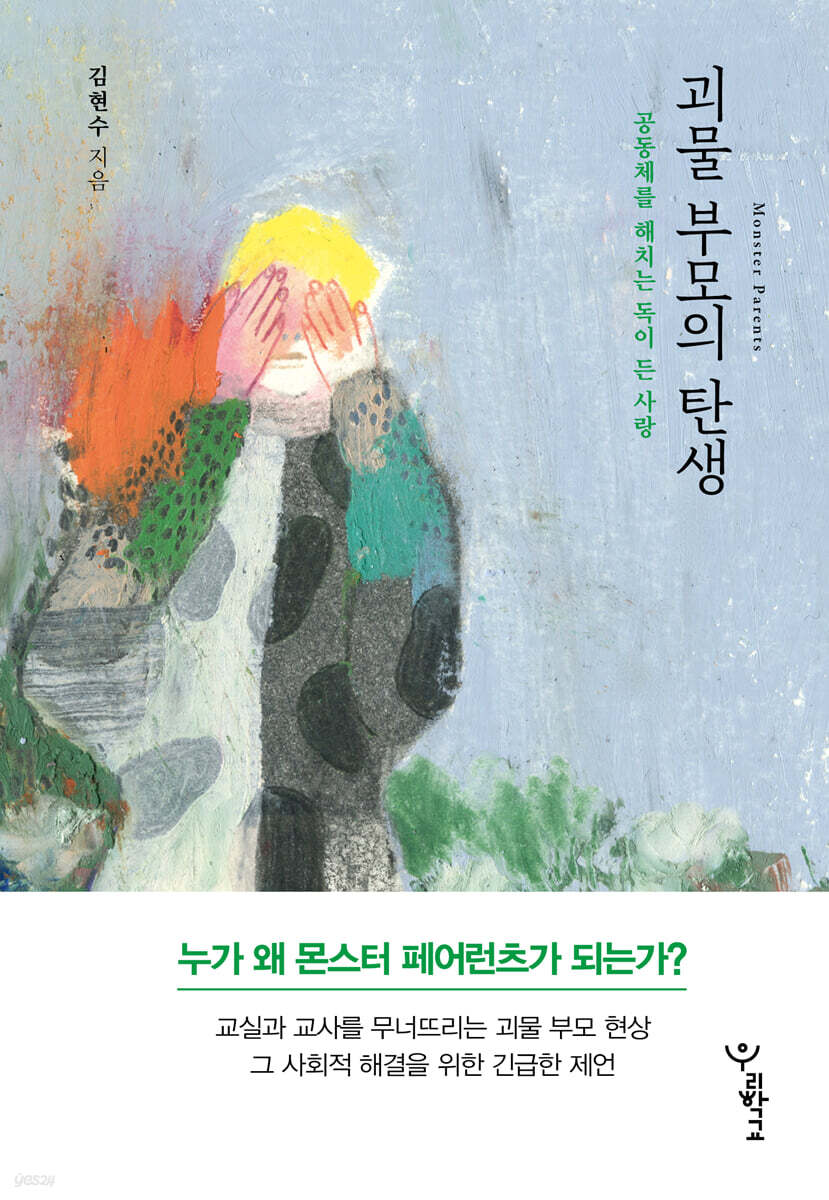
Who becomes a Monster Parent and why? The phenomenon of monster parents destroying classrooms and teachers Urgent suggestions for social solutions The Seoi Elementary School incident brought to light the serious crisis facing our education system. A series of tragic incidents led teachers to take to the streets. What's shaking schools and classrooms today? Psychiatrist Kim Hyun-soo, a social trauma expert, a guardian of teachers, and an interpreter of children's hearts, identifies the core of the problem as the "monster parent phenomenon." In this book, he proposes a timely and urgent solution. Parents who file malicious complaints demanding special treatment for their children at school are called "monster parents" and have already become a major social problem in places like Japan and Hong Kong. Based on these cases, the author clearly dissects the background of the emergence of monster parents in our country, their psychological and cognitive structures, and their destructive influence. He examines the causes of how ordinary citizens become monster parents from various angles and seeks solutions. 'For the one and only classroom where we can learn and teach without any worries', Monster Parents is a self-portrait that we all must painfully accept now. |
- You can preview some of the book's contents.
Preview
index
prolog.
The desire to destroy the world, the desire to care for the world
Part 1.
The Phenomenology of Monster Parents
1.
The Birth and Origin of Monster Parents
2.
What Monster Parents Claim
3.
Characteristics of Monster Parents
4.
Characteristics of children with monster parents
5.
A socio-psychological analysis of the emergence of monster parents
6.
The cognition and beliefs of monster parents
Part 2.
Poisoned Love: Why Parents Become Monsters
1.
Self-hatred and self-pity
2.
Pathological narcissism and infantile omnipotence
3.
Excessive anxiety, trauma, and 'curling parents'
4.
Integration and coexistence of parents and children
5.
Fear of rejection and exclusion, and a sense of victimization
6.
The Price of Sacrifice and Conditional Love
7.
Finding a target for blame
Part 3.
Suggestions for a Social Solution to the Monster Parent Phenomenon
1.
Before the suggestion: The process of creating monster parents
2.
The monstrous transformation of society and what is lost in the process
3.
Some suggestions for social solutions
Epilogue.
Children who escaped the idolization of their monster parents and the aftermath
A story of gratitude and promise
Notes and References
The desire to destroy the world, the desire to care for the world
Part 1.
The Phenomenology of Monster Parents
1.
The Birth and Origin of Monster Parents
2.
What Monster Parents Claim
3.
Characteristics of Monster Parents
4.
Characteristics of children with monster parents
5.
A socio-psychological analysis of the emergence of monster parents
6.
The cognition and beliefs of monster parents
Part 2.
Poisoned Love: Why Parents Become Monsters
1.
Self-hatred and self-pity
2.
Pathological narcissism and infantile omnipotence
3.
Excessive anxiety, trauma, and 'curling parents'
4.
Integration and coexistence of parents and children
5.
Fear of rejection and exclusion, and a sense of victimization
6.
The Price of Sacrifice and Conditional Love
7.
Finding a target for blame
Part 3.
Suggestions for a Social Solution to the Monster Parent Phenomenon
1.
Before the suggestion: The process of creating monster parents
2.
The monstrous transformation of society and what is lost in the process
3.
Some suggestions for social solutions
Epilogue.
Children who escaped the idolization of their monster parents and the aftermath
A story of gratitude and promise
Notes and References
Detailed image
Into the book
Monster parents are parents who are very authoritarian and overprotective towards their children.
They also complain and make unreasonable demands on their children's kindergartens and schools, disrupting operations, lowering morale, and causing teacher burnout.
--- p.19
Monster parents demand that others treat their children like gods, princes, or princesses, while they themselves treat their children without restraint.
This duality divides children.
Children raised by monster parents fall into great confusion when they reach adolescence.
Because it is difficult to accept the duality of parents.
Should they resist or identify with it? This question presents a significant dilemma for children.
--- p.31~32
Contact me after school.
“I have something to do, so please take my child to school.
“It’s an academy close to school, so can’t they do that too?”
A fight broke out on the playground in the evening after school.
"The children are fighting. Why don't you notice this? You need to mediate."
Call during class.
“My child’s stool is not good in the morning and he is not feeling well, so please adjust it well.
Otherwise it will explode.”
--- p.39
For monster parents to stop being toxic, healing from self-hatred and self-pity is necessary.
If left untreated, everything connected to your child will become a cesspool of the wrath and pity of their monstrous parents.
And there will be teachers and children's friends who are sadly collapsing because of that poison.
--- p.89
The reason parents place expectations on their children is because those expectations serve as a means of regenerating the parents' narcissism, especially their wounded narcissism.
When your child jumps in with the belief that he or she can do it and achieves his or her dream, it is healing for the parents themselves.
Children are expected to act as their parents' healers without even knowing what's going on.
--- p.85
If you raise your child to be the most vulnerable being, send him to school, and then ask him to never see any hurt, failure, or disappointment, that is an impossible request.
Unless school is a sterile space for leukemia patients, social interaction is impossible without failure, pain, suffering, scolding, and rejection.
--- p.98
In that sense, it is difficult for monster parents to make a sincere apology.
Because he did nothing wrong.
Even when they need to apologize, they only talk about what they were wronged or wronged because they didn't know what to do, and they are unclear about what they actually did wrong.
Therefore, in the relationship with monster parents, the fault must lie with the school and the teachers.
Monster parents are people who have a rigid, thick defense system that makes it impossible for them to be hurt.
--- p.125
In the process of becoming a monster, I gained cynicism and lost my sincerity.
What freedom and competition without community gave us was cynicism about community.
The community was seen as nothing more than a profit cartel.
We must re-recognize that while selfishness is part of our nature, altruism is also an important part of our nature, and re-enter the process of restoring community.
We must regain sincerity and community.
--- p.148
When monster parents become harsh, chronic, overt child abuse often occurs.
It is hoped that maintaining sensitivity to child abuse and providing parental education will help prevent parents from becoming monsters.
To do so, we first need to deeply study the social disasters associated with monster parents.
It is necessary for experts from various fields, including psychologists, doctors, sociologists, and educators, to examine cases in detail and share them widely with society.
I believe that if this work is carried out, social awareness of the monster parent phenomenon will also be raised.
They also complain and make unreasonable demands on their children's kindergartens and schools, disrupting operations, lowering morale, and causing teacher burnout.
--- p.19
Monster parents demand that others treat their children like gods, princes, or princesses, while they themselves treat their children without restraint.
This duality divides children.
Children raised by monster parents fall into great confusion when they reach adolescence.
Because it is difficult to accept the duality of parents.
Should they resist or identify with it? This question presents a significant dilemma for children.
--- p.31~32
Contact me after school.
“I have something to do, so please take my child to school.
“It’s an academy close to school, so can’t they do that too?”
A fight broke out on the playground in the evening after school.
"The children are fighting. Why don't you notice this? You need to mediate."
Call during class.
“My child’s stool is not good in the morning and he is not feeling well, so please adjust it well.
Otherwise it will explode.”
--- p.39
For monster parents to stop being toxic, healing from self-hatred and self-pity is necessary.
If left untreated, everything connected to your child will become a cesspool of the wrath and pity of their monstrous parents.
And there will be teachers and children's friends who are sadly collapsing because of that poison.
--- p.89
The reason parents place expectations on their children is because those expectations serve as a means of regenerating the parents' narcissism, especially their wounded narcissism.
When your child jumps in with the belief that he or she can do it and achieves his or her dream, it is healing for the parents themselves.
Children are expected to act as their parents' healers without even knowing what's going on.
--- p.85
If you raise your child to be the most vulnerable being, send him to school, and then ask him to never see any hurt, failure, or disappointment, that is an impossible request.
Unless school is a sterile space for leukemia patients, social interaction is impossible without failure, pain, suffering, scolding, and rejection.
--- p.98
In that sense, it is difficult for monster parents to make a sincere apology.
Because he did nothing wrong.
Even when they need to apologize, they only talk about what they were wronged or wronged because they didn't know what to do, and they are unclear about what they actually did wrong.
Therefore, in the relationship with monster parents, the fault must lie with the school and the teachers.
Monster parents are people who have a rigid, thick defense system that makes it impossible for them to be hurt.
--- p.125
In the process of becoming a monster, I gained cynicism and lost my sincerity.
What freedom and competition without community gave us was cynicism about community.
The community was seen as nothing more than a profit cartel.
We must re-recognize that while selfishness is part of our nature, altruism is also an important part of our nature, and re-enter the process of restoring community.
We must regain sincerity and community.
--- p.148
When monster parents become harsh, chronic, overt child abuse often occurs.
It is hoped that maintaining sensitivity to child abuse and providing parental education will help prevent parents from becoming monsters.
To do so, we first need to deeply study the social disasters associated with monster parents.
It is necessary for experts from various fields, including psychologists, doctors, sociologists, and educators, to examine cases in detail and share them widely with society.
I believe that if this work is carried out, social awareness of the monster parent phenomenon will also be raised.
--- p.155
Publisher's Review
The 'Seo-i-cho' incident brought to light the serious crisis facing our education system.
A series of tragic incidents led teachers to take to the streets.
What's shaking schools and classrooms today? This book by psychiatrist Kim Hyun-soo, an expert on social trauma, a guardian of teachers, and an interpreter of children's hearts, diagnoses the core of the problem as the "monster parent phenomenon" and proposes urgent and timely solutions.
The expression 'monster parents' originated in Japan.
In July 2023, in a strikingly similar incident to the Seoicho incident in South Korea, a 23-year-old new teacher at a public elementary school in Shinjuku committed suicide after being harassed by a parent in June 2006.
In Japan, this incident sparked the recognition of the "monster parent phenomenon" as a social problem, and research began on parents who make unreasonable demands and file malicious complaints against teachers.
The author reports that a similar phenomenon has been appearing in earnest in Korea since the mid-2010s, and analyzes cases and research on monster parents in Japan and Hong Kong to dissect the 'monster parent phenomenon.'
“I don’t have enough pictures of my child, so please go on another school trip!”
The scars left by twisted love on schools and society,
Tracing the Origins and Psychology of "Monster Parents"
The cases of monster parents in Japan and Hong Kong, and the so-called "true parents" in our country, are so self-centered that they defy common sense.
“My child wants to be an idol, so don’t let him sit by the window.”
“My child got sunburned while on a field trip. Please help restore his skin to its original condition.”
“There is a child in my child’s class who doesn’t get along with my child and doesn’t want to go to school. Please transfer that child to another school.”
There was even an incident where, after complaining about a photo taken after a school trip, the student filed a complaint with the school and received an apology from the teacher, asking the student to go on another school trip.
In Japan, these parents who demand teacher replacement for trivial reasons and drive teachers to social death through filing complaints, threats, and lawsuits were called “teacher attack squads” and “teacher hunters.”
The behavior of some parents in our country, who we commonly call ‘true parents,’ is no different.
Call me on the phone late at night.
“Teacher, please make sure to praise me at least once a day.
“I heard your child didn’t get any praise today?”
I marked a mistake in the dictation and went to the principal's office.
“Don’t slash the child, it will hurt his feelings.”
On the first day of the new semester, a child is absent and a parent calls the school.
“Have you fixed our child’s seat? Towards the front.”
When a child is not invited to a friend's birthday party.
"Why wasn't my child invited? Please make sure he or she is well-informed about his or her peer relationships."
Let's discipline the child who swears.
“Have you ever thought about why your child swears?”
When a child is identified as a perpetrator of school violence, a text message is sent citing child abuse laws.
"You know what, teacher? What on earth did you do? Should I go to the school like other fathers and make a mess of it?"
Why and for what purpose do these parents engage in such bizarre behavior? Where do these parents originate? The author synthesizes the opinions of various experts and his own clinical experience to clearly analyze the psychiatric, psychological, and social backgrounds that give rise to the emergence of monstrous parents.
You shouldn't drive your parents into monsters.
however,
No one should destroy schools and communities with poisoned love.
You can't leave it alone
In Part 1, the author introduced the main characteristics and origins of the monster parent phenomenon, and in Part 2, he begins to analyze the distorted psychology of monster parents in earnest.
Understanding the psychology of these parents is key to solving this problem.
By adding his own research and insights to the work of scholars who have primarily explored this issue, such as New York University psychologist Michael Eigen and Japanese psychiatrist Tamami Katada, the author analyzes the psychological structure of monster parents from seven major aspects.
First, there is the self-hatred and self-pity that the parents themselves have.
There are parents who idolize their children due to a distorted psychology that stems from not being recognized by their parents or not meeting their expectations.
Also, the childish sense of omnipotence and pathological narcissism that should have been broken as the child grew up are the main psychological mechanisms of monster parents.
Parents' expectations that their children can do it because they did it, and the conviction that they will do better because they are in a better environment are also the things that children of monster parents find most difficult.
The author also analyzes the various psychological factors that make up the inner self of monster parents, such as excessive anxiety, trauma, and the desire to make sacrifices, to help us understand them.
For the sole purpose of creating a classroom where students can learn and teach without worry.
To stop being a monster parent and move towards social solutions
Although the author delves into the psychology of monster parents, he never reduces it to a problem of a deviant individual or to a problem of a specific individual.
Rather, I am more concerned about the social system that triggers such a distorted psychology that turns ordinary citizens into monster parents.
The social atmosphere that causes parents to become monsters, such as the slow change in patriarchal culture, the absence of a social system that supports childcare, excessive competition for study, the obsession with success, and the tense atmosphere of each person living for themselves due to the shrinking community, are also common factors in East Asian regions such as Japan, Hong Kong, and Korea, where the phenomenon of monster parents has appeared.
In the final part of Part 3, the author criticizes the process of ‘monstrization of society’ and rediscovers what we have lost in the process.
We also propose specific measures to address the social problem of monster parents.
"The Birth of a Monster Parent" is a book filled with the earnest hope that the sorrow of the classroom will not remain a school problem, but will lead to social solutions and positive changes in the community.
Would monster parents, while destroying others, truly nurture their own children? The book concludes with a narrative of the profound pain and aftereffects of children raised by monster parents. It starkly reminds readers of the choices we must make now to stop becoming monster parents.
A series of tragic incidents led teachers to take to the streets.
What's shaking schools and classrooms today? This book by psychiatrist Kim Hyun-soo, an expert on social trauma, a guardian of teachers, and an interpreter of children's hearts, diagnoses the core of the problem as the "monster parent phenomenon" and proposes urgent and timely solutions.
The expression 'monster parents' originated in Japan.
In July 2023, in a strikingly similar incident to the Seoicho incident in South Korea, a 23-year-old new teacher at a public elementary school in Shinjuku committed suicide after being harassed by a parent in June 2006.
In Japan, this incident sparked the recognition of the "monster parent phenomenon" as a social problem, and research began on parents who make unreasonable demands and file malicious complaints against teachers.
The author reports that a similar phenomenon has been appearing in earnest in Korea since the mid-2010s, and analyzes cases and research on monster parents in Japan and Hong Kong to dissect the 'monster parent phenomenon.'
“I don’t have enough pictures of my child, so please go on another school trip!”
The scars left by twisted love on schools and society,
Tracing the Origins and Psychology of "Monster Parents"
The cases of monster parents in Japan and Hong Kong, and the so-called "true parents" in our country, are so self-centered that they defy common sense.
“My child wants to be an idol, so don’t let him sit by the window.”
“My child got sunburned while on a field trip. Please help restore his skin to its original condition.”
“There is a child in my child’s class who doesn’t get along with my child and doesn’t want to go to school. Please transfer that child to another school.”
There was even an incident where, after complaining about a photo taken after a school trip, the student filed a complaint with the school and received an apology from the teacher, asking the student to go on another school trip.
In Japan, these parents who demand teacher replacement for trivial reasons and drive teachers to social death through filing complaints, threats, and lawsuits were called “teacher attack squads” and “teacher hunters.”
The behavior of some parents in our country, who we commonly call ‘true parents,’ is no different.
Call me on the phone late at night.
“Teacher, please make sure to praise me at least once a day.
“I heard your child didn’t get any praise today?”
I marked a mistake in the dictation and went to the principal's office.
“Don’t slash the child, it will hurt his feelings.”
On the first day of the new semester, a child is absent and a parent calls the school.
“Have you fixed our child’s seat? Towards the front.”
When a child is not invited to a friend's birthday party.
"Why wasn't my child invited? Please make sure he or she is well-informed about his or her peer relationships."
Let's discipline the child who swears.
“Have you ever thought about why your child swears?”
When a child is identified as a perpetrator of school violence, a text message is sent citing child abuse laws.
"You know what, teacher? What on earth did you do? Should I go to the school like other fathers and make a mess of it?"
Why and for what purpose do these parents engage in such bizarre behavior? Where do these parents originate? The author synthesizes the opinions of various experts and his own clinical experience to clearly analyze the psychiatric, psychological, and social backgrounds that give rise to the emergence of monstrous parents.
You shouldn't drive your parents into monsters.
however,
No one should destroy schools and communities with poisoned love.
You can't leave it alone
In Part 1, the author introduced the main characteristics and origins of the monster parent phenomenon, and in Part 2, he begins to analyze the distorted psychology of monster parents in earnest.
Understanding the psychology of these parents is key to solving this problem.
By adding his own research and insights to the work of scholars who have primarily explored this issue, such as New York University psychologist Michael Eigen and Japanese psychiatrist Tamami Katada, the author analyzes the psychological structure of monster parents from seven major aspects.
First, there is the self-hatred and self-pity that the parents themselves have.
There are parents who idolize their children due to a distorted psychology that stems from not being recognized by their parents or not meeting their expectations.
Also, the childish sense of omnipotence and pathological narcissism that should have been broken as the child grew up are the main psychological mechanisms of monster parents.
Parents' expectations that their children can do it because they did it, and the conviction that they will do better because they are in a better environment are also the things that children of monster parents find most difficult.
The author also analyzes the various psychological factors that make up the inner self of monster parents, such as excessive anxiety, trauma, and the desire to make sacrifices, to help us understand them.
For the sole purpose of creating a classroom where students can learn and teach without worry.
To stop being a monster parent and move towards social solutions
Although the author delves into the psychology of monster parents, he never reduces it to a problem of a deviant individual or to a problem of a specific individual.
Rather, I am more concerned about the social system that triggers such a distorted psychology that turns ordinary citizens into monster parents.
The social atmosphere that causes parents to become monsters, such as the slow change in patriarchal culture, the absence of a social system that supports childcare, excessive competition for study, the obsession with success, and the tense atmosphere of each person living for themselves due to the shrinking community, are also common factors in East Asian regions such as Japan, Hong Kong, and Korea, where the phenomenon of monster parents has appeared.
In the final part of Part 3, the author criticizes the process of ‘monstrization of society’ and rediscovers what we have lost in the process.
We also propose specific measures to address the social problem of monster parents.
"The Birth of a Monster Parent" is a book filled with the earnest hope that the sorrow of the classroom will not remain a school problem, but will lead to social solutions and positive changes in the community.
Would monster parents, while destroying others, truly nurture their own children? The book concludes with a narrative of the profound pain and aftereffects of children raised by monster parents. It starkly reminds readers of the choices we must make now to stop becoming monster parents.
GOODS SPECIFICS
- Date of issue: September 25, 2023
- Format: Hardcover book binding method guide
- Page count, weight, size: 172 pages | 268g | 128*188*15mm
- ISBN13: 9791167552273
- ISBN10: 116755227X
You may also like
카테고리
korean


korean

![GQ KOREA Mark (Monthly): December [2025]](http://librairie.coreenne.fr/cdn/shop/files/8ef265dbbfbf186523ed75ba7319009d.jpg?v=1765340328&width=3840)


