

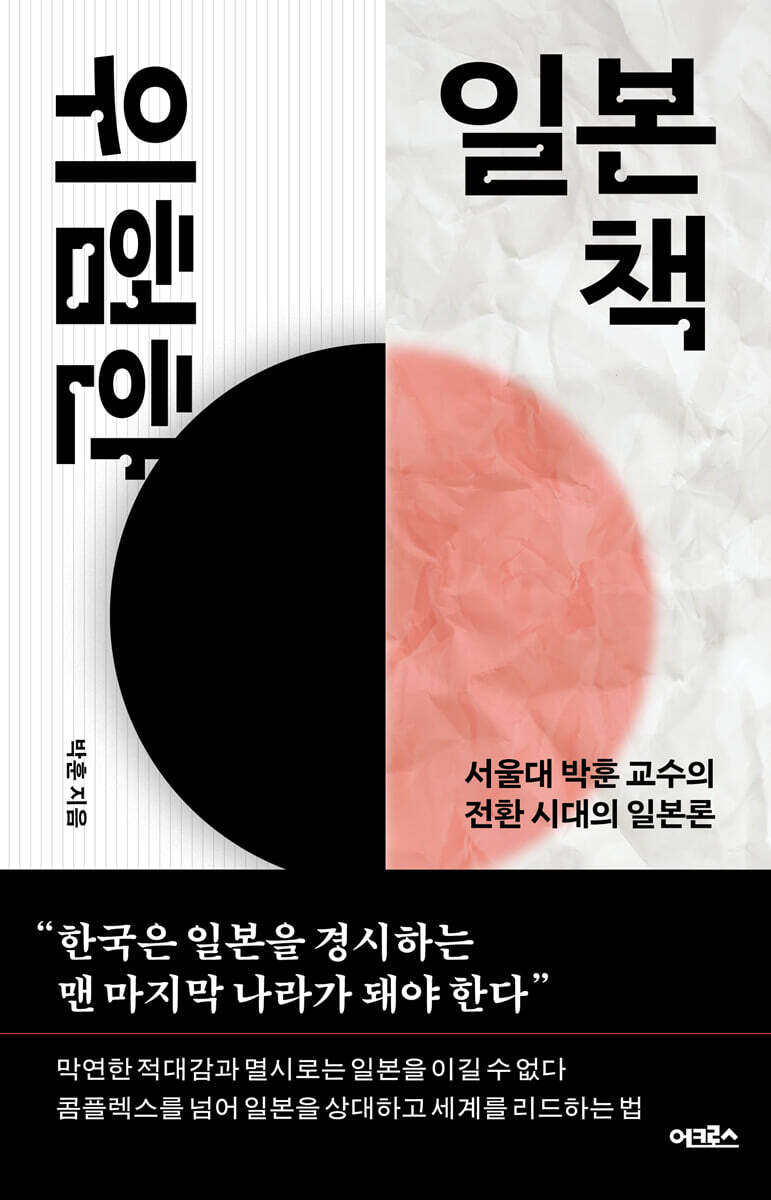
Dangerous Japanese Book
 |
Description
Book Introduction
There is no country that is as interested in Japan as Korea. In almost every field, they are fiercely competitive with Japan, paying close attention to its trends and frequently comparing themselves to it. However, compared to the excessive 'interest', there is a lack of systematic understanding based on abundant knowledge and information. Because of this, sometimes we look down on Japan excessively, and at other times we see Japan as an excessively scary country. Professor Park Hoon says that at the root of this psychology lies a complex of fear of the unknown and contempt for those one mistakenly believes one knows. For this reason, debates about Japan always end up being about anti-Japanese or pro-Japanese sentiments and taking sides. The author argues that with this kind of Japanese perception, it will be difficult to wisely resolve the complex historical issues between Korea and Japan, nor to maintain cooperation and competition as partners in a rapidly changing regional order. In "Dangerous Japanese Book," Professor Park Hoon sets aside the distorted lens of anti-Korean and anti-Japanese sentiments and coolly and meticulously presents the content and meaning of the actual history of Korea and Japan, including modern times, nationalism, imperialism, and even the issue of the imperial system. How did Korea and Japan, neighboring countries with vastly different cultures, end up taking different paths? What obstacles hinder mutual understanding between Korea and Japan? Is there a way to overcome complexes, approach Japan, and lead the world? Through Professor Park Hoon's insights, readers will be able to find their own answers to these questions. A theory of Japan written with the determination to shout “No!” unconditionally when it comes to Japan and be cursed by those who say “If you’re anti-Japanese, you’re innocent!” |
- You can preview some of the book's contents.
Preview
index
Prologue To those who always shout “No!” when it comes to Japan
Part 1: Close Countries, Distinct Cultures - A Crossroads in Korean and Japanese History
Chapter 1 Korea and Japan: Similar Yet Different
Korea in a Whirlwind, Japan in a Box
Urban Japan, Rural Joseon
Korea, the land of inquiry, Japan, the land of nothingness?
Korean individuals, Japanese individuals
Japan without civil unrest, Korea a country of popular sentiment
Japanese people who like to rank things
Japan's Yakuza, Korea's Leadership
Geopolitical hell of Korea, geological hell of Japan
The Korean Peninsula and the 'Geopolitical Tsunami'
Chapter 2: The Forces That Made Meiji Japan Strong
How to Appreciate Japanese History 1
How to Appreciate Japanese History 2
The Meiji Restoration and the 586 Restoration
Competition for reform and openness between the shogunate and anti-shogunate factions
The Meiji Restoration: The Action of Politicians Who Crossed Factions
The Secret to Meiji Japan's Success
What Masayoshi Son learned from Ryoma
Chapter 3: Korea, a Land of Improvisation and Obedience
How to appreciate Korean history
Sejong's Creation of a "Civilized Subject"
Korean Revolution
The regret of Joseon's self-reliance
Heungseon Daewongun, the 'hot potato'
Diplomatic warfare between Korea, China, and Japan in the late Joseon Dynasty
Kim Ok-gyun and Miyazaki Doten drinking on board
Ah! 1898
The world-historical specificity of Joseon's colonization
Let's add 'Myeonjongbokbae' to the preamble of the Constitution.
Korean Revolution
Part 2: Between Ignorance and Fear: The Trap of Mutual Perception between Korea and Japan
Chapter 4: Joseon's Fall Was Not Due to a Lack of Anti-Japanese Sentiment
How to deal with Japan
What is anti-Japanese sentiment for?
We must be the last country to look down on Japan.
From 'No Japan' to Japan's downfall?
In search of Korean history in ancient Japan
Alchemy is our enemy
Did you ever want 'Korean nationalism'?
Chapter 5: The Strange Psychology of Korea Being Under Japan
Japanese people's 'Korea complex(?)'
Japan's growing anti-Korean sentiment
Japanese people have become unfriendly
Do the Japanese really know war?
Buried Voices of Modern Japan
Self-awareness of Japanese people at a crossroads
Beyond the Complex Part 3: Towards the Future - How to Deal with Japan
Chapter 6: Subjects of the Emperor, Citizens of the Republic
Are ‘nation’ and ‘freedom’ also remnants of Japanese imperialism?
Emperor or King?
The Emperor and Impeachment
Is history education turning into a frog in a well again?
Overcoming the "Trap of Japanese Perception" among Korean and Japanese University Students
Lee Sang-hwa's 'biased commentary'
Chapter 7: Imagining the Outside of Nationalism
Is the colony a 'problem known to heaven and earth'?
An unexpected clue to resolving the conflict
Japanese History Citizens' Lecture
Korea-Japan relations, like in 1998
Dancing with Japan in the 21st century?
Epilogue: Japan, a country that leads the world
Appendix: Seeing you reminds me of my old days - A review of Shiba Ryotaryo's "Travels in Han Country"
An Jung-geun, Ito Hirobumi, and the Railroad - A Review of Kim Hoon's "Harbin"
Part 1: Close Countries, Distinct Cultures - A Crossroads in Korean and Japanese History
Chapter 1 Korea and Japan: Similar Yet Different
Korea in a Whirlwind, Japan in a Box
Urban Japan, Rural Joseon
Korea, the land of inquiry, Japan, the land of nothingness?
Korean individuals, Japanese individuals
Japan without civil unrest, Korea a country of popular sentiment
Japanese people who like to rank things
Japan's Yakuza, Korea's Leadership
Geopolitical hell of Korea, geological hell of Japan
The Korean Peninsula and the 'Geopolitical Tsunami'
Chapter 2: The Forces That Made Meiji Japan Strong
How to Appreciate Japanese History 1
How to Appreciate Japanese History 2
The Meiji Restoration and the 586 Restoration
Competition for reform and openness between the shogunate and anti-shogunate factions
The Meiji Restoration: The Action of Politicians Who Crossed Factions
The Secret to Meiji Japan's Success
What Masayoshi Son learned from Ryoma
Chapter 3: Korea, a Land of Improvisation and Obedience
How to appreciate Korean history
Sejong's Creation of a "Civilized Subject"
Korean Revolution
The regret of Joseon's self-reliance
Heungseon Daewongun, the 'hot potato'
Diplomatic warfare between Korea, China, and Japan in the late Joseon Dynasty
Kim Ok-gyun and Miyazaki Doten drinking on board
Ah! 1898
The world-historical specificity of Joseon's colonization
Let's add 'Myeonjongbokbae' to the preamble of the Constitution.
Korean Revolution
Part 2: Between Ignorance and Fear: The Trap of Mutual Perception between Korea and Japan
Chapter 4: Joseon's Fall Was Not Due to a Lack of Anti-Japanese Sentiment
How to deal with Japan
What is anti-Japanese sentiment for?
We must be the last country to look down on Japan.
From 'No Japan' to Japan's downfall?
In search of Korean history in ancient Japan
Alchemy is our enemy
Did you ever want 'Korean nationalism'?
Chapter 5: The Strange Psychology of Korea Being Under Japan
Japanese people's 'Korea complex(?)'
Japan's growing anti-Korean sentiment
Japanese people have become unfriendly
Do the Japanese really know war?
Buried Voices of Modern Japan
Self-awareness of Japanese people at a crossroads
Beyond the Complex Part 3: Towards the Future - How to Deal with Japan
Chapter 6: Subjects of the Emperor, Citizens of the Republic
Are ‘nation’ and ‘freedom’ also remnants of Japanese imperialism?
Emperor or King?
The Emperor and Impeachment
Is history education turning into a frog in a well again?
Overcoming the "Trap of Japanese Perception" among Korean and Japanese University Students
Lee Sang-hwa's 'biased commentary'
Chapter 7: Imagining the Outside of Nationalism
Is the colony a 'problem known to heaven and earth'?
An unexpected clue to resolving the conflict
Japanese History Citizens' Lecture
Korea-Japan relations, like in 1998
Dancing with Japan in the 21st century?
Epilogue: Japan, a country that leads the world
Appendix: Seeing you reminds me of my old days - A review of Shiba Ryotaryo's "Travels in Han Country"
An Jung-geun, Ito Hirobumi, and the Railroad - A Review of Kim Hoon's "Harbin"
Publisher's Review
"Korea should be the last country to look down on Japan."
If it's Japan, I would definitely shout "No!"
A theory of Japan written with the determination to be cursed by those who say, "If you're anti-Japanese, you're innocent."
Professor Park Hoon of Seoul National University, a leading authority on modern Japanese history, proposes a new paradigm for looking at Japan and Korea-Japan relations, dispelling vague feelings of hatred and hostility.
There is no country that is as interested in Japan as Korea.
In almost every field, they are fiercely competitive with Japan, paying close attention to its trends and frequently comparing themselves to it.
However, compared to the excessive 'interest', there is a lack of systematic understanding based on abundant knowledge and information.
Because of this, sometimes we look down on Japan excessively, and at other times we see Japan as an excessively scary country.
Professor Park Hoon says that at the root of this psychology lies a complex of fear of the unknown and contempt for those one mistakenly believes one knows.
For this reason, debates about Japan always end up being about anti-Japanese or pro-Japanese sentiments and taking sides.
The author argues that with this kind of Japanese perception, it will be difficult to wisely resolve the complex historical issues between Korea and Japan, nor to maintain cooperation and competition as partners in a rapidly changing regional order.
In "Dangerous Japanese Book," Professor Park Hoon sets aside the distorted lens of anti-Korean and anti-Japanese sentiments and coolly and meticulously presents the content and meaning of the actual history of Korea and Japan, including modern times, nationalism, imperialism, and even the issue of the imperial system.
How did Korea and Japan, neighboring countries with vastly different cultures, end up taking different paths? What obstacles hinder mutual understanding between Korea and Japan? Is there a way to overcome complexes, approach Japan, and lead the world?
Through Professor Park Hoon's insights, readers will be able to find their own answers to these questions.
A theory of Japan written with the determination to shout “No!” unconditionally when it comes to Japan and be cursed by those who say “If you’re anti-Japanese, you’re innocent!”
What was the difference between Joseon's great failure and Japan's great success?
A sharp reflection on the success and failure of Korea and Japan in modern history.
'Historically, Japan has always received advanced civilization from the Korean Peninsula.
Such an underdeveloped island nation was fortunate enough to transform through the Meiji Restoration, and suddenly rose to prosper and become wealthy.
At this time, Joseon, which had fallen behind Japan, was unable to cross the threshold of modernization and later suffered the humiliation of losing its sovereignty. This is the history we are all familiar with.
But was it really true that Joseon was so far behind Japan at the time, and that Japan's success was just a stroke of luck?
The early modern era, a period of great success for Japan and a period of great failure for Korea, was different between the two countries. What differences existed in their political, socioeconomic, and diplomatic capabilities?
Professor Park Hoon takes a cool-headed and objective look at this period and sees what we can learn from it.
(Part 1: Close Countries, Different Cultures - Crossroads in Korean and Japanese History) The author looks back at the major scenes and figures in modern Korean and Japanese history, from the Ganghwa Island Treaty to the Meiji Restoration, from Kim Ok-gyun to Sakamoto Ryoma, and sharply reflects on the success and failure of the two countries.
“The Japanese at that time were more sensitive than anything to world trends.
I read diligently, listened seriously, and studied fiercely.
And we minimized the conflict and united.
At the same time, Korea was probably at its most disarrayed in its 2,000-year history.
It was a sad time.
Perhaps because of this trauma, Korean citizens were reluctant to face this period.
“They only condemned Japan’s aggression and stopped at slogans like ‘Let’s not end up like the late Joseon Dynasty,’ but they did not have enough of an attitude to face the truth of history head-on.”
Between disregard and fear, a complex perception of Japan
When seeking new relationships beyond anti-Japan and anti-Korean sentiments
As the term 'waenom' shows, Koreans' contempt and distrust of Japan has a long history.
However, the word 'Japanese' also carries strong feelings of fear and anxiety.
It is common to see people who look down on Japan by calling it a "Japanese" giving long speeches about the excellence of Japanese products.
Japanese people's feelings toward Koreans are also complex.
Most Japanese people felt sorry about the past and showed an attitude of giving in to Korea, but as the 'lost decade' turned into 20 years and then 30 years, and Korea caught up with them, they began to show a mentality that 'Korea still has to stay under Japan'.
Professor Park Hoon discusses the mutual perception between Korea and Japan, which is bound by complexes of ignorance and fear, in light of history and reality.
(Part 2 Between Ignorance and Fear - The Trap of Mutual Perception between Korea and Japan) Introducing the book "Unmasking Japan" by Syngman Rhee, a nationalist who was completely forgotten due to the great mistake of dictatorship, we ask what the "anti-Japan" that Koreans talk about today is for.
Meanwhile, the movement to revise Japan's pacifist constitution, which prohibits military force and war, sharply asks whether the Japanese, who were not the target of wars of aggression but rather the leaders of them, understand the horrors of war and whether they can say they want to return to the foolish era of arms race and war.
As an emotional and ahistorical anti-Japanese and anti-Korean atmosphere becomes the air of both countries, the author suggests that citizens of both countries question the way of thinking they have taken for granted and relativize their own experiences and histories.
“The fall of Joseon in 1910 was not due to a lack of anti-Japanese sentiment.
People who hated and condemned Japan were overflowing throughout the country, and people who looked down on and despised Japan were also densely packed everywhere.
What was lacking was someone who could properly understand how Japan had changed over the 40 years since the Meiji Restoration and what that meant for our destiny.
Since liberation, the gap in national power between Korea and Japan has never been narrower than it is now.
But being too proud is poison.
Even if the day comes when we truly surpass Japan, we must be the last country to look down on Japan.”
We can't defeat Japan with vague hostility and contempt.
How to overcome complexes, deal with Japan, and lead the world
Finally, Professor Park Hoon discusses the path our nationalism should take and what goals it should pursue beyond nationalism (Part 3: Beyond the Complex and Toward the Future - How to Deal with Japan). He argues that blindly excessive nationalism can be detrimental to the nation, and perhaps we are now at that stage.
The author argues that while criticizing the history of colonial rule is necessary, unconditional demonization of Japan is nothing more than intellectual laziness, exaggeration, and concealment.
Instead, the author suggests that criticism of Japan should be a bone-chilling critique, not a powerless scare bomb.
To do so, we must reject simplification and face uncomfortable truths.
This means that we must know not only Ito Hirobumi, who was assassinated by Ahn Jung-geun, but also Ito Hirobumi, who designed and implemented modern Japan.
The author says that only then can our nationalism move beyond chauvinism and toward a global nationalism, and that on this basis, Korea can become a leading country in the world.
“We must constantly criticize the past actions of Japanese imperialism.
However, its purpose must be for Korea and Japan to move towards a world of freedom, democracy, rule of law, and peace.
It is time to stop criticizing Japan for the sake of nationalism, business, or political gain, whether it be through media, publishing, or civic groups.
Dosan Ahn Chang-ho in his many sayings, Baekbeom Kim Gu in Baekbeom Ilji, Unam Rhee Syngman in Unmasking Japan, and above all, in the March 1st Movement, our great ancestors did not unconditionally reject Japan.
He advises Japan that it is on the wrong path and urges it to turn away from it and join hands to advance toward a greater world and greater values.
“Our attitude toward Japan should also be like this.”
If it's Japan, I would definitely shout "No!"
A theory of Japan written with the determination to be cursed by those who say, "If you're anti-Japanese, you're innocent."
Professor Park Hoon of Seoul National University, a leading authority on modern Japanese history, proposes a new paradigm for looking at Japan and Korea-Japan relations, dispelling vague feelings of hatred and hostility.
There is no country that is as interested in Japan as Korea.
In almost every field, they are fiercely competitive with Japan, paying close attention to its trends and frequently comparing themselves to it.
However, compared to the excessive 'interest', there is a lack of systematic understanding based on abundant knowledge and information.
Because of this, sometimes we look down on Japan excessively, and at other times we see Japan as an excessively scary country.
Professor Park Hoon says that at the root of this psychology lies a complex of fear of the unknown and contempt for those one mistakenly believes one knows.
For this reason, debates about Japan always end up being about anti-Japanese or pro-Japanese sentiments and taking sides.
The author argues that with this kind of Japanese perception, it will be difficult to wisely resolve the complex historical issues between Korea and Japan, nor to maintain cooperation and competition as partners in a rapidly changing regional order.
In "Dangerous Japanese Book," Professor Park Hoon sets aside the distorted lens of anti-Korean and anti-Japanese sentiments and coolly and meticulously presents the content and meaning of the actual history of Korea and Japan, including modern times, nationalism, imperialism, and even the issue of the imperial system.
How did Korea and Japan, neighboring countries with vastly different cultures, end up taking different paths? What obstacles hinder mutual understanding between Korea and Japan? Is there a way to overcome complexes, approach Japan, and lead the world?
Through Professor Park Hoon's insights, readers will be able to find their own answers to these questions.
A theory of Japan written with the determination to shout “No!” unconditionally when it comes to Japan and be cursed by those who say “If you’re anti-Japanese, you’re innocent!”
What was the difference between Joseon's great failure and Japan's great success?
A sharp reflection on the success and failure of Korea and Japan in modern history.
'Historically, Japan has always received advanced civilization from the Korean Peninsula.
Such an underdeveloped island nation was fortunate enough to transform through the Meiji Restoration, and suddenly rose to prosper and become wealthy.
At this time, Joseon, which had fallen behind Japan, was unable to cross the threshold of modernization and later suffered the humiliation of losing its sovereignty. This is the history we are all familiar with.
But was it really true that Joseon was so far behind Japan at the time, and that Japan's success was just a stroke of luck?
The early modern era, a period of great success for Japan and a period of great failure for Korea, was different between the two countries. What differences existed in their political, socioeconomic, and diplomatic capabilities?
Professor Park Hoon takes a cool-headed and objective look at this period and sees what we can learn from it.
(Part 1: Close Countries, Different Cultures - Crossroads in Korean and Japanese History) The author looks back at the major scenes and figures in modern Korean and Japanese history, from the Ganghwa Island Treaty to the Meiji Restoration, from Kim Ok-gyun to Sakamoto Ryoma, and sharply reflects on the success and failure of the two countries.
“The Japanese at that time were more sensitive than anything to world trends.
I read diligently, listened seriously, and studied fiercely.
And we minimized the conflict and united.
At the same time, Korea was probably at its most disarrayed in its 2,000-year history.
It was a sad time.
Perhaps because of this trauma, Korean citizens were reluctant to face this period.
“They only condemned Japan’s aggression and stopped at slogans like ‘Let’s not end up like the late Joseon Dynasty,’ but they did not have enough of an attitude to face the truth of history head-on.”
Between disregard and fear, a complex perception of Japan
When seeking new relationships beyond anti-Japan and anti-Korean sentiments
As the term 'waenom' shows, Koreans' contempt and distrust of Japan has a long history.
However, the word 'Japanese' also carries strong feelings of fear and anxiety.
It is common to see people who look down on Japan by calling it a "Japanese" giving long speeches about the excellence of Japanese products.
Japanese people's feelings toward Koreans are also complex.
Most Japanese people felt sorry about the past and showed an attitude of giving in to Korea, but as the 'lost decade' turned into 20 years and then 30 years, and Korea caught up with them, they began to show a mentality that 'Korea still has to stay under Japan'.
Professor Park Hoon discusses the mutual perception between Korea and Japan, which is bound by complexes of ignorance and fear, in light of history and reality.
(Part 2 Between Ignorance and Fear - The Trap of Mutual Perception between Korea and Japan) Introducing the book "Unmasking Japan" by Syngman Rhee, a nationalist who was completely forgotten due to the great mistake of dictatorship, we ask what the "anti-Japan" that Koreans talk about today is for.
Meanwhile, the movement to revise Japan's pacifist constitution, which prohibits military force and war, sharply asks whether the Japanese, who were not the target of wars of aggression but rather the leaders of them, understand the horrors of war and whether they can say they want to return to the foolish era of arms race and war.
As an emotional and ahistorical anti-Japanese and anti-Korean atmosphere becomes the air of both countries, the author suggests that citizens of both countries question the way of thinking they have taken for granted and relativize their own experiences and histories.
“The fall of Joseon in 1910 was not due to a lack of anti-Japanese sentiment.
People who hated and condemned Japan were overflowing throughout the country, and people who looked down on and despised Japan were also densely packed everywhere.
What was lacking was someone who could properly understand how Japan had changed over the 40 years since the Meiji Restoration and what that meant for our destiny.
Since liberation, the gap in national power between Korea and Japan has never been narrower than it is now.
But being too proud is poison.
Even if the day comes when we truly surpass Japan, we must be the last country to look down on Japan.”
We can't defeat Japan with vague hostility and contempt.
How to overcome complexes, deal with Japan, and lead the world
Finally, Professor Park Hoon discusses the path our nationalism should take and what goals it should pursue beyond nationalism (Part 3: Beyond the Complex and Toward the Future - How to Deal with Japan). He argues that blindly excessive nationalism can be detrimental to the nation, and perhaps we are now at that stage.
The author argues that while criticizing the history of colonial rule is necessary, unconditional demonization of Japan is nothing more than intellectual laziness, exaggeration, and concealment.
Instead, the author suggests that criticism of Japan should be a bone-chilling critique, not a powerless scare bomb.
To do so, we must reject simplification and face uncomfortable truths.
This means that we must know not only Ito Hirobumi, who was assassinated by Ahn Jung-geun, but also Ito Hirobumi, who designed and implemented modern Japan.
The author says that only then can our nationalism move beyond chauvinism and toward a global nationalism, and that on this basis, Korea can become a leading country in the world.
“We must constantly criticize the past actions of Japanese imperialism.
However, its purpose must be for Korea and Japan to move towards a world of freedom, democracy, rule of law, and peace.
It is time to stop criticizing Japan for the sake of nationalism, business, or political gain, whether it be through media, publishing, or civic groups.
Dosan Ahn Chang-ho in his many sayings, Baekbeom Kim Gu in Baekbeom Ilji, Unam Rhee Syngman in Unmasking Japan, and above all, in the March 1st Movement, our great ancestors did not unconditionally reject Japan.
He advises Japan that it is on the wrong path and urges it to turn away from it and join hands to advance toward a greater world and greater values.
“Our attitude toward Japan should also be like this.”
GOODS SPECIFICS
- Date of issue: August 24, 2023
- Page count, weight, size: 284 pages | 527g | 135*210*20mm
- ISBN13: 9791167741141
- ISBN10: 1167741145
You may also like
카테고리
korean


korean

![GQ KOREA Mark (Monthly): December [2025]](http://librairie.coreenne.fr/cdn/shop/files/8ef265dbbfbf186523ed75ba7319009d.jpg?v=1765340328&width=3840)


