

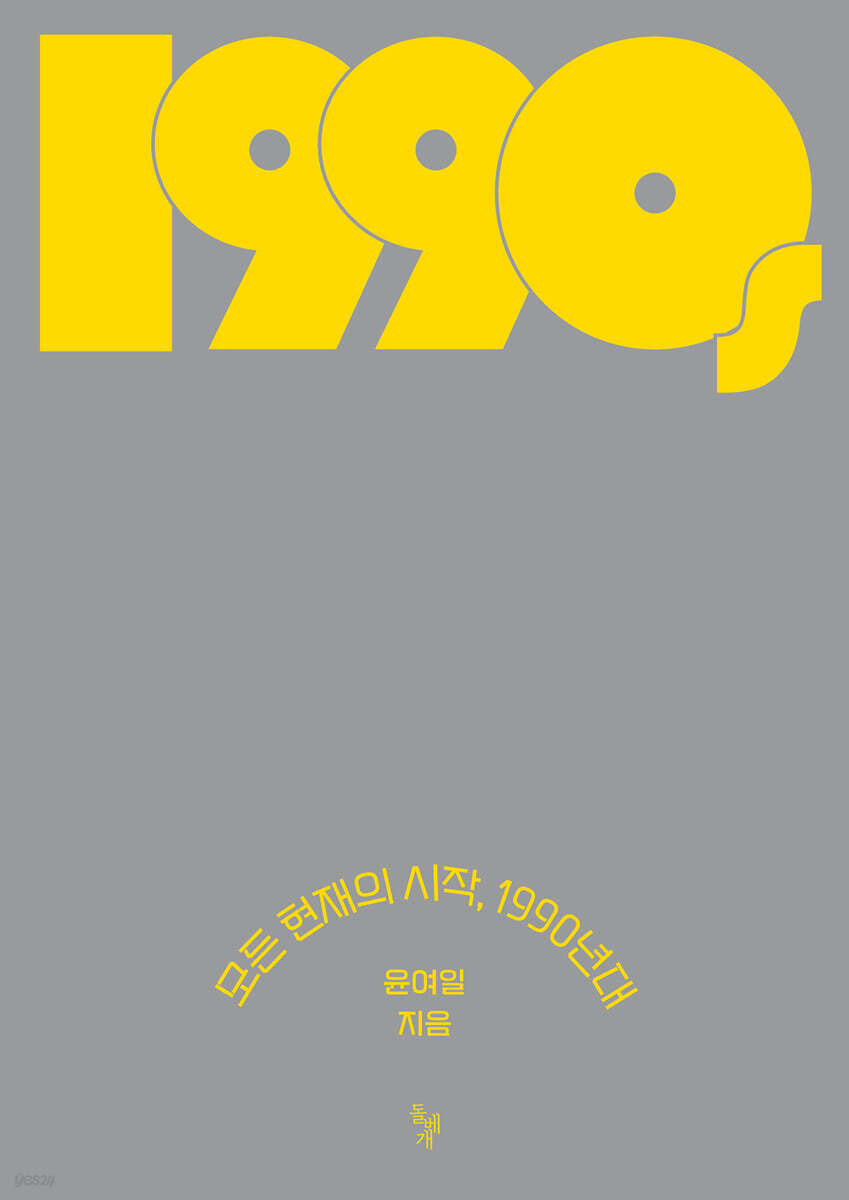
The beginning of all present, the 1990s
 |
Description
Book Introduction
"The present of Korean society is often mistaken for the 1990s."
A golden age of thought and culture, yet a problematic era
The 1990s, remembered by some as a time of freedom and nostalgia, and by others as a time of frustration and crisis.
─What can we learn and reflect on from the thoughts of the times?
Literature, thought, culture, generation, digital, intellectuals, progress, state, control, feminism, ecology, crisis, masses…
─Following the spiritual path of the 1990s, we gauge the coordinates of the present era!
"The Beginning of All Presents, the 1990s" depicts the intellectual history of the 1990s, a period of change that shaped current Korean society, through literature published in magazine formats such as literary journals, academic journals, quarterly journals, and popular culture magazines. It assesses the meaning and direction of intellectual history that continues from the 2000s to the present era.
This book deals with topics that are still relevant and closely related to our times: ‘literature,’ ‘ideology,’ ‘culture,’ ‘generation,’ ‘digital,’ ‘intellectuals,’ ‘progress,’ ‘state,’ ‘control,’ ‘women’ (feminism), ‘ecology,’ ‘crisis,’ and ‘the public.’
A golden age of thought and culture, yet a problematic era
The 1990s, remembered by some as a time of freedom and nostalgia, and by others as a time of frustration and crisis.
─What can we learn and reflect on from the thoughts of the times?
Literature, thought, culture, generation, digital, intellectuals, progress, state, control, feminism, ecology, crisis, masses…
─Following the spiritual path of the 1990s, we gauge the coordinates of the present era!
"The Beginning of All Presents, the 1990s" depicts the intellectual history of the 1990s, a period of change that shaped current Korean society, through literature published in magazine formats such as literary journals, academic journals, quarterly journals, and popular culture magazines. It assesses the meaning and direction of intellectual history that continues from the 2000s to the present era.
This book deals with topics that are still relevant and closely related to our times: ‘literature,’ ‘ideology,’ ‘culture,’ ‘generation,’ ‘digital,’ ‘intellectuals,’ ‘progress,’ ‘state,’ ‘control,’ ‘women’ (feminism), ‘ecology,’ ‘crisis,’ and ‘the public.’
- You can preview some of the book's contents.
Preview
index
1.
prolog
The present age and the past age
1990s, still alive and moving
How to enter the 1990s
Connecting past worries to the present
2.
The 1990s as a problematic era
What was the 1990s?
When did the 1990s begin?
The magazine industry in the 1990s
1990s and 1980s
1990s and 2000s
3.
Literature, from the battlefield to the marketplace
The formation of a literary field after the ordeal
The Advent of Literaryism and the "Crisis of Literature"
The inside story of literary criticism
Can literature also be a form of power?
Collusion between the literary and literary worlds and literary politics
What the Literary Power Debate Left Behind
4.
Thought, the whereabouts of a person who has lost his center
The Age of Revolution, the Idea of Transcendence
What the Sasangji declared
After the collapse of the real socialist bloc
After the emergence of postmodernism
Intellectual Subjectivity and Decolonization
Diverging ideologies
5.
Between culture, popularity and experimentation
Is this the age of culture?
Overflowing pop culture
new cultural territory
Reasons to Go Beyond Literature
Popular culture is a battlefield
Outside the mainstream cultural center
6.
Generation, a category of confusion
The emergence of a new generation debate
Between freedom and deviation
Behold, the new generation
The Beginning of Generational Theories
The short-lived new generation theory, the long-term 386 generation theory
7.
Digital: What's Enabled and What's Hidden
The Light and Darkness of Information
Digital Writing and Communication Literature
Is a 'new literature' coming?
Where Cyber Literature Theory Stopped
The beginning of internet newspapers and portals
8.
Intellectuals, shaken and divided
Intellectuals in an era when enemies disappeared
Why has the intellectual image changed?
Market competitiveness and new intellectuals
The emergence of traditional intellectuals
The Fate of Intellectuals in a Knowledge-Based Society
Is this the death of the intellectual?
9.
Progress, Reload, and Division
Progress and Revolution
Progress and reform
middle-class ideology
Reloading Progress
Anti-Joseon and division in the face of the enemy
The words of progress being stolen
10.
The state, oppressed and desired
Globalization, first-class nationhood, and dependency
What the Park Chung-hee Syndrome Means
Desiring nationalism
Migrant labor system, Korea's version of slavery
The United States and Japan in Korean society
The other side of North Korea's perception
11.
Control, from thought to daily life
Garrison State and Conscientious Objection
Persistent anti-communism and the National Security Act
Discipline for 'obscenity'
Protect the youth
The Fascism Debate Within Us
Is everyday life a front line of fascism?
12.
Women/Gender, the most intense political territory
The first feminist boom
Questions Raised by Feminist Magazines
Feminine writing and feminist literature
The Politics of Coming Out
The scene where the blatant gender conflict begins
Feminism, between equality and fairness
13.
Ecology, things I had already thought about back then
Awakening to the pollution of our daily lives
Phenol discharge and the Rio Summit
Developmentalist government and real estateization of national land
throwaway society
Ecological Issues: From Specific to General
How is a circular world possible?
14.
Crisis, the foundation on which our present era stands
The advent of the 'flexibility' era
A society where individuals must be armed
What is required of women
Against the decline of the spiritual world
The End of the 1990s
15.
The public, have they ushered in the next era?
World Cup debate
erupting subcultural activities
The emergence of candlelight protests
The Roh Moo-hyun administration, impeachment, and the era of 'only the economy'
The masses as a flow
State, Capital, Civil Society and the Public
16.
Epilogue
Disappearing Magazines
The Fate of Magazines in the Internet Age
Leaving the 1990s
For social and contemporary thinking
Americas
Search
prolog
The present age and the past age
1990s, still alive and moving
How to enter the 1990s
Connecting past worries to the present
2.
The 1990s as a problematic era
What was the 1990s?
When did the 1990s begin?
The magazine industry in the 1990s
1990s and 1980s
1990s and 2000s
3.
Literature, from the battlefield to the marketplace
The formation of a literary field after the ordeal
The Advent of Literaryism and the "Crisis of Literature"
The inside story of literary criticism
Can literature also be a form of power?
Collusion between the literary and literary worlds and literary politics
What the Literary Power Debate Left Behind
4.
Thought, the whereabouts of a person who has lost his center
The Age of Revolution, the Idea of Transcendence
What the Sasangji declared
After the collapse of the real socialist bloc
After the emergence of postmodernism
Intellectual Subjectivity and Decolonization
Diverging ideologies
5.
Between culture, popularity and experimentation
Is this the age of culture?
Overflowing pop culture
new cultural territory
Reasons to Go Beyond Literature
Popular culture is a battlefield
Outside the mainstream cultural center
6.
Generation, a category of confusion
The emergence of a new generation debate
Between freedom and deviation
Behold, the new generation
The Beginning of Generational Theories
The short-lived new generation theory, the long-term 386 generation theory
7.
Digital: What's Enabled and What's Hidden
The Light and Darkness of Information
Digital Writing and Communication Literature
Is a 'new literature' coming?
Where Cyber Literature Theory Stopped
The beginning of internet newspapers and portals
8.
Intellectuals, shaken and divided
Intellectuals in an era when enemies disappeared
Why has the intellectual image changed?
Market competitiveness and new intellectuals
The emergence of traditional intellectuals
The Fate of Intellectuals in a Knowledge-Based Society
Is this the death of the intellectual?
9.
Progress, Reload, and Division
Progress and Revolution
Progress and reform
middle-class ideology
Reloading Progress
Anti-Joseon and division in the face of the enemy
The words of progress being stolen
10.
The state, oppressed and desired
Globalization, first-class nationhood, and dependency
What the Park Chung-hee Syndrome Means
Desiring nationalism
Migrant labor system, Korea's version of slavery
The United States and Japan in Korean society
The other side of North Korea's perception
11.
Control, from thought to daily life
Garrison State and Conscientious Objection
Persistent anti-communism and the National Security Act
Discipline for 'obscenity'
Protect the youth
The Fascism Debate Within Us
Is everyday life a front line of fascism?
12.
Women/Gender, the most intense political territory
The first feminist boom
Questions Raised by Feminist Magazines
Feminine writing and feminist literature
The Politics of Coming Out
The scene where the blatant gender conflict begins
Feminism, between equality and fairness
13.
Ecology, things I had already thought about back then
Awakening to the pollution of our daily lives
Phenol discharge and the Rio Summit
Developmentalist government and real estateization of national land
throwaway society
Ecological Issues: From Specific to General
How is a circular world possible?
14.
Crisis, the foundation on which our present era stands
The advent of the 'flexibility' era
A society where individuals must be armed
What is required of women
Against the decline of the spiritual world
The End of the 1990s
15.
The public, have they ushered in the next era?
World Cup debate
erupting subcultural activities
The emergence of candlelight protests
The Roh Moo-hyun administration, impeachment, and the era of 'only the economy'
The masses as a flow
State, Capital, Civil Society and the Public
16.
Epilogue
Disappearing Magazines
The Fate of Magazines in the Internet Age
Leaving the 1990s
For social and contemporary thinking
Americas
Search
Detailed image
Publisher's Review
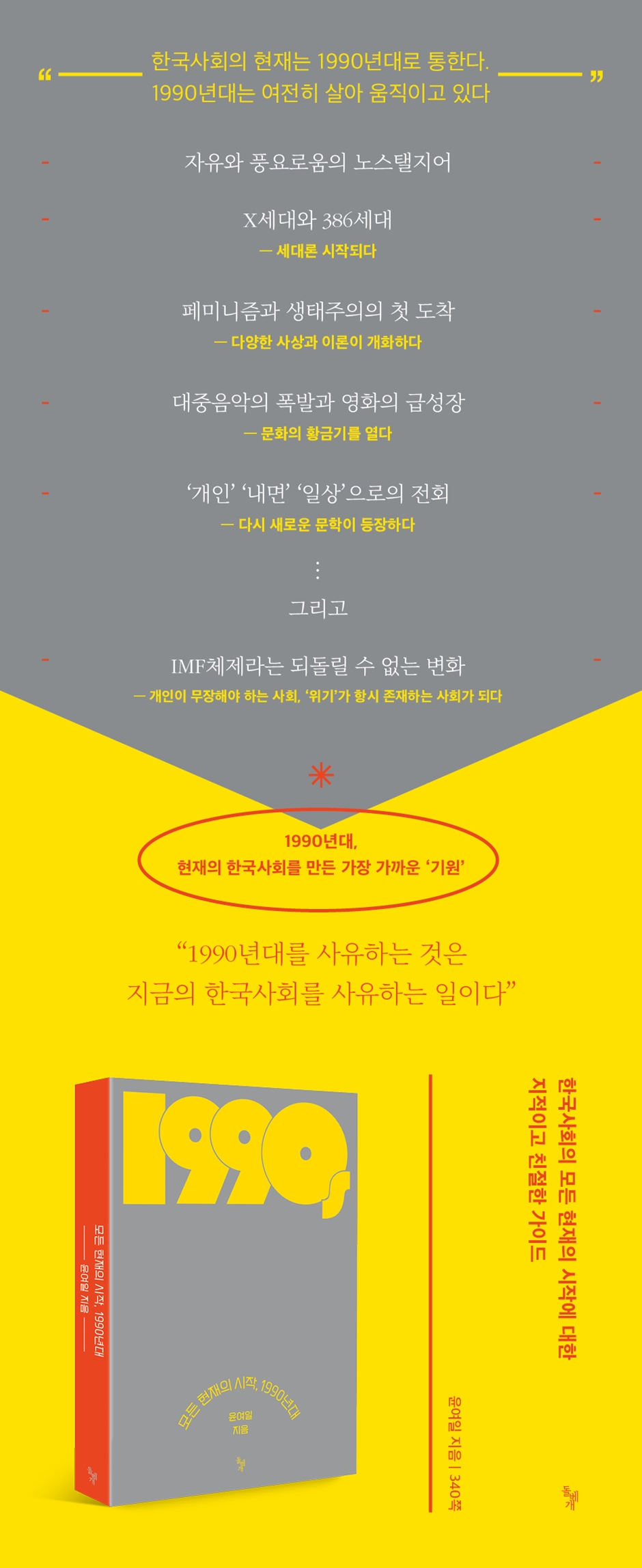
Thinking about the 1990s means thinking about the era and society together.
The 1990s are interesting in that they were a time characterized by both epochal discontinuity, change, and continuity.
This was the era in which the current structure of Korean society was formed, with economic liberalism advancing rapidly alongside formal democratization.
Therefore, thinking about the 1990s is not only an act of reflecting on the recent past or the present, but also an act of exploring and thinking about current Korean society.
Various thoughts and theories speak out
Marxist theory, which was widely spread in universities as an alternative to the political reality of the 1980s, was quickly replaced by post-modernism, postcolonialism, and other post-modern theories.
Meanwhile, voices calling for 'intellectual subjectivity' or intellectual decolonization are being raised within the intellectual community in response to the indiscriminate acceptance of foreign theories (Kim Young-min and Jo Han-hye-jeong).
In the 1990s, the Korean ideological world branched into various currents, which the author summarizes as "Ideology, the Lost Path of the Center" (Chapter 4).
Ushering in a golden age of culture
Culture, including movies and popular music, has blossomed, and teenagers have become mainstream consumers of popular culture (Chapter 6.
(Between culture, popularity and experimentation).
Korean films and popular music that grew in the 1990s became the foundation for the Korean Wave or K-culture that would develop thereafter.
As a magazine editorial board member with a fresh style, 'Shin Se Dae' has simultaneously kept popularity and experimental spirit in mind, and has sometimes presented bold and new ideas.
It was a challenging declaration that rejected the lifestyle and dogma instilled by the older generation.
A Turn to the 'Individual,' the 'Inner Self,' and the 'Everyday' - Literature of the 1990s
Literature of the 1990s, as if taking the literature of the 1980s as a negative example, shows a characteristic of turning to the 'individual', 'inner self', and 'daily life'.
It goes deeper into specific realities rather than a general ideology.
Along with 『Creation and Criticism』, a stronghold of national literature theory, and 『Literature and Society』, which pursued literary modernism, the quarterly magazine 『Munhakdongne』, which came to represent the Korean literary world, emerged and led the 'literaryism' that focused on 'writers' and 'works' themselves.
『Munhakdongne』 serves as a forward base for the publishing company of the same name to lead Korean literature (Chapter 3.
Literature, from the battlefield to the marketplace).
A society where individuals must be armed, a society where crisis is always present
The 1997 IMF crisis, an essential part of any discussion of Korean society, served as a decisive moment for transforming the entire Korean social system. Following the IMF crisis, the neoliberal order took full effect, leading to labor "flexibility" and the widespread adoption of non-regular employment. Korean society became a society where individuals had to arm themselves and where "crisis" was a constant presence. Although the IMF bailout ended, Korean society remains within the system laid out by the IMF (Chapter 14).
Crisis, the foundation on which the present era stands).
The Beginning of Generationalism, Feminism, and Ecology
The 1990s also marked the beginning of generationalism, feminism, and ecology.
Generation X, the first true 'new generation,' grew up in a time of relative material abundance, valued freedom and individuality more than previous generations, and was the first generation to benefit from popular culture.
This is the beginning of many expressions that have emerged since then to refer to a new generation.
The current expression “MZ generation” is also another variation of “Generation X.”
The generational theory that sought to define the younger generation was quickly forgotten over time, but the 386 generation maintained its tenacity by upgrading to the 486 and 586 generations.
The author believes that this is not unrelated to the political and social hegemony that the 386 generation has in Korean society (Chapter 6.
Generation, category of confusion).
A feminism boom has been shaking Korean society for several years now, with the first feminism boom occurring in the 1990s.
Pioneering magazines like "If" led the trend, and in the literary world, female writers born in the 1960s attempted to create works depicting women's lives and daily lives and to create "feminine writing."
Feminism of this period also gave rise to numerous debates ‘between equality and fairness’ (Chapter 12.
Women/gender, the most acute political territory).
Awareness of environmental pollution gave rise to the emergence of ecology.
In 1991, following the Nakdong River phenol discharge incident, environmental groups such as the Korean Federation for Environmental Movements were established, and in March of that year, the Green Review, led by publisher Kim Jong-cheol, began to send its own message to the Korean intellectual community, leading the ecological movement for a long period of 30 years.
Author Yoon Yeo-il evaluates that the value and vision of Green Review shine even brighter in today's times (Chapter 13.
Ecology, things I had already thought about back then).
In addition, the civilizational transformation brought about by digital technology (Chapter 7.
Digital, what is possible and what is hidden), the new face of intellectuals (Chapter 8.
Intellectuals, Shaky and Divided), Nationalism and Ethnicity (Chapter 10.
The identity of the 'public', which has a dual nature (the state, oppressing and also being desired) (Chapter 15.
The public explores whether they have ushered in the next era.
The 1990s are interesting in that they were a time characterized by both epochal discontinuity, change, and continuity.
This was the era in which the current structure of Korean society was formed, with economic liberalism advancing rapidly alongside formal democratization.
Therefore, thinking about the 1990s is not only an act of reflecting on the recent past or the present, but also an act of exploring and thinking about current Korean society.
Various thoughts and theories speak out
Marxist theory, which was widely spread in universities as an alternative to the political reality of the 1980s, was quickly replaced by post-modernism, postcolonialism, and other post-modern theories.
Meanwhile, voices calling for 'intellectual subjectivity' or intellectual decolonization are being raised within the intellectual community in response to the indiscriminate acceptance of foreign theories (Kim Young-min and Jo Han-hye-jeong).
In the 1990s, the Korean ideological world branched into various currents, which the author summarizes as "Ideology, the Lost Path of the Center" (Chapter 4).
Ushering in a golden age of culture
Culture, including movies and popular music, has blossomed, and teenagers have become mainstream consumers of popular culture (Chapter 6.
(Between culture, popularity and experimentation).
Korean films and popular music that grew in the 1990s became the foundation for the Korean Wave or K-culture that would develop thereafter.
As a magazine editorial board member with a fresh style, 'Shin Se Dae' has simultaneously kept popularity and experimental spirit in mind, and has sometimes presented bold and new ideas.
It was a challenging declaration that rejected the lifestyle and dogma instilled by the older generation.
A Turn to the 'Individual,' the 'Inner Self,' and the 'Everyday' - Literature of the 1990s
Literature of the 1990s, as if taking the literature of the 1980s as a negative example, shows a characteristic of turning to the 'individual', 'inner self', and 'daily life'.
It goes deeper into specific realities rather than a general ideology.
Along with 『Creation and Criticism』, a stronghold of national literature theory, and 『Literature and Society』, which pursued literary modernism, the quarterly magazine 『Munhakdongne』, which came to represent the Korean literary world, emerged and led the 'literaryism' that focused on 'writers' and 'works' themselves.
『Munhakdongne』 serves as a forward base for the publishing company of the same name to lead Korean literature (Chapter 3.
Literature, from the battlefield to the marketplace).
A society where individuals must be armed, a society where crisis is always present
The 1997 IMF crisis, an essential part of any discussion of Korean society, served as a decisive moment for transforming the entire Korean social system. Following the IMF crisis, the neoliberal order took full effect, leading to labor "flexibility" and the widespread adoption of non-regular employment. Korean society became a society where individuals had to arm themselves and where "crisis" was a constant presence. Although the IMF bailout ended, Korean society remains within the system laid out by the IMF (Chapter 14).
Crisis, the foundation on which the present era stands).
The Beginning of Generationalism, Feminism, and Ecology
The 1990s also marked the beginning of generationalism, feminism, and ecology.
Generation X, the first true 'new generation,' grew up in a time of relative material abundance, valued freedom and individuality more than previous generations, and was the first generation to benefit from popular culture.
This is the beginning of many expressions that have emerged since then to refer to a new generation.
The current expression “MZ generation” is also another variation of “Generation X.”
The generational theory that sought to define the younger generation was quickly forgotten over time, but the 386 generation maintained its tenacity by upgrading to the 486 and 586 generations.
The author believes that this is not unrelated to the political and social hegemony that the 386 generation has in Korean society (Chapter 6.
Generation, category of confusion).
A feminism boom has been shaking Korean society for several years now, with the first feminism boom occurring in the 1990s.
Pioneering magazines like "If" led the trend, and in the literary world, female writers born in the 1960s attempted to create works depicting women's lives and daily lives and to create "feminine writing."
Feminism of this period also gave rise to numerous debates ‘between equality and fairness’ (Chapter 12.
Women/gender, the most acute political territory).
Awareness of environmental pollution gave rise to the emergence of ecology.
In 1991, following the Nakdong River phenol discharge incident, environmental groups such as the Korean Federation for Environmental Movements were established, and in March of that year, the Green Review, led by publisher Kim Jong-cheol, began to send its own message to the Korean intellectual community, leading the ecological movement for a long period of 30 years.
Author Yoon Yeo-il evaluates that the value and vision of Green Review shine even brighter in today's times (Chapter 13.
Ecology, things I had already thought about back then).
In addition, the civilizational transformation brought about by digital technology (Chapter 7.
Digital, what is possible and what is hidden), the new face of intellectuals (Chapter 8.
Intellectuals, Shaky and Divided), Nationalism and Ethnicity (Chapter 10.
The identity of the 'public', which has a dual nature (the state, oppressing and also being desired) (Chapter 15.
The public explores whether they have ushered in the next era.
GOODS SPECIFICS
- Date of issue: July 24, 2023
- Page count, weight, size: 340 pages | 145*205*30mm
- ISBN13: 9791192836195
- ISBN10: 1192836197
You may also like
카테고리
korean


korean

![GQ KOREA Mark (Monthly): December [2025]](http://librairie.coreenne.fr/cdn/shop/files/8ef265dbbfbf186523ed75ba7319009d.jpg?v=1765340328&width=3840)


