

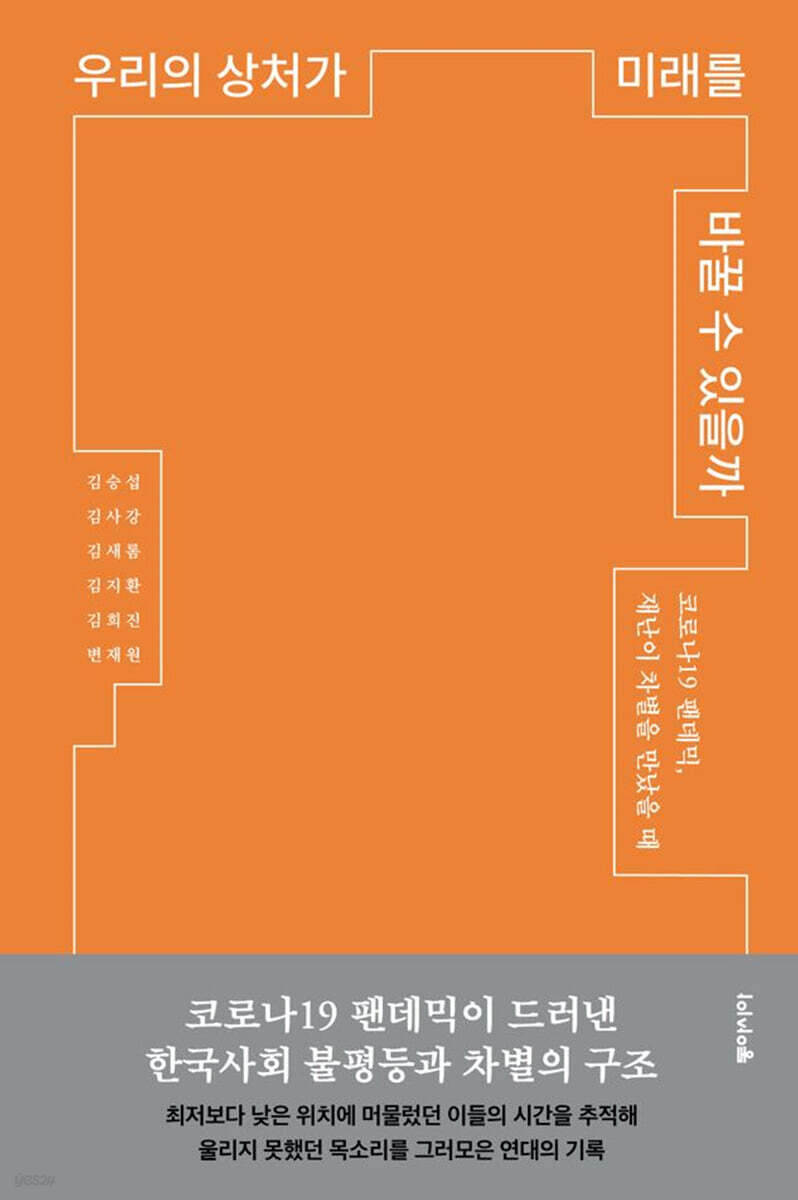
Can our wounds change the future?
 |
Description
Book Introduction
"For Pain to Become a Path" by Professor Seungseop Kim
Questions for Korean society after the COVID-19 pandemic!
Who was left to pay the cost of disaster in the shadow of K-quarantine?
A Time of Discrimination During the Pandemic, Recorded by Six Researchers
The world's lowest mortality rate: K-Quarantine, made possible by citizen participation.
But those who could not enter the fence
On May 5, 2023, the World Health Organization (WHO) announced that the declaration of a Public Health Emergency of International Concern had been lifted.
It has been three and a half years since the outbreak of pneumonia of unknown cause on December 31, 2019, and approximately three years and four months since the WHO declared a Public Health Emergency of International Concern on January 30, 2020.
For over three years, Korea and the world have been in a time of pain, sorrow, and tragedy.
Meanwhile, South Korea was praised for its "successful" quarantine efforts, achieved through a rapid initial response and medical and social support for confirmed cases.
This is ‘K-Quarantine’ that has caught the world’s attention.
In fact, a comparative study conducted by Johns Hopkins University School of Medicine among 20 countries significantly affected by the pandemic found that Korea had the lowest COVID-19 mortality rate (deaths per 100,000 people) and fatality rate (deaths per 100 confirmed cases).
This figure is overwhelmingly low compared to Peru, which has the highest mortality and fatality rates, as well as the United States, France, and Canada.
No one can belittle this achievement.
South Korea was able to minimize casualties through proactive and rapid responses over a period of more than three years.
This achievement was made possible by the government, medical professionals, and citizens working together in the face of numerous uncertainties and limited resources.
So, now that the COVID-19 pandemic has "ended," should we simply celebrate our past successes and dismiss this disaster? Professor Seung-Seop Kim (Graduate School of Public Health, Seoul National University), who has consistently explored the relationship between illness and society and the impact of social context on individual health through his personal writings, including "For Pain to Become a Path" and "If Our Body is the World," poses this question.
And talk.
It is “dangerous” to remember the past three years only as a “successful quarantine.”
"What language do we need after the COVID-19 pandemic?
It is dangerous to remember the past three years as a "successful quarantine" by focusing only on the number of confirmed cases and deaths.
This kind of memory makes us forget that we have experienced the pandemic differently in our respective social spaces over the past three years, and it erases the voices of those who first bore the brunt of the danger rising from below.
And above all, it is a missed opportunity for Korean society to learn from their experiences and change."
Based on this awareness of the problem, Professor Seungseop Kim brought together five researchers who each study different vulnerable groups in Korean society.
Women, children, people with disabilities, irregular workers, and immigrants.
These people were already in a relatively vulnerable position in Korean society even before the disaster struck.
But how did the existing structures of inequality and discrimination they faced interact when disaster struck? Ulrich Beck, in "Risk Society," stated, "Wealth is concentrated at the top, and risk is concentrated at the bottom."
Since the beginning of the COVID-19 pandemic, many people have been saying, “The virus doesn’t discriminate,” but that statement has only been half true.
Viruses don't discriminate, but we weren't exposed to them in a vacuum laboratory.
Was the pandemic we all faced truly the same? Six researchers, led by Professor Seungseop Kim, ask and answer this question in this book.
Questions for Korean society after the COVID-19 pandemic!
Who was left to pay the cost of disaster in the shadow of K-quarantine?
A Time of Discrimination During the Pandemic, Recorded by Six Researchers
The world's lowest mortality rate: K-Quarantine, made possible by citizen participation.
But those who could not enter the fence
On May 5, 2023, the World Health Organization (WHO) announced that the declaration of a Public Health Emergency of International Concern had been lifted.
It has been three and a half years since the outbreak of pneumonia of unknown cause on December 31, 2019, and approximately three years and four months since the WHO declared a Public Health Emergency of International Concern on January 30, 2020.
For over three years, Korea and the world have been in a time of pain, sorrow, and tragedy.
Meanwhile, South Korea was praised for its "successful" quarantine efforts, achieved through a rapid initial response and medical and social support for confirmed cases.
This is ‘K-Quarantine’ that has caught the world’s attention.
In fact, a comparative study conducted by Johns Hopkins University School of Medicine among 20 countries significantly affected by the pandemic found that Korea had the lowest COVID-19 mortality rate (deaths per 100,000 people) and fatality rate (deaths per 100 confirmed cases).
This figure is overwhelmingly low compared to Peru, which has the highest mortality and fatality rates, as well as the United States, France, and Canada.
No one can belittle this achievement.
South Korea was able to minimize casualties through proactive and rapid responses over a period of more than three years.
This achievement was made possible by the government, medical professionals, and citizens working together in the face of numerous uncertainties and limited resources.
So, now that the COVID-19 pandemic has "ended," should we simply celebrate our past successes and dismiss this disaster? Professor Seung-Seop Kim (Graduate School of Public Health, Seoul National University), who has consistently explored the relationship between illness and society and the impact of social context on individual health through his personal writings, including "For Pain to Become a Path" and "If Our Body is the World," poses this question.
And talk.
It is “dangerous” to remember the past three years only as a “successful quarantine.”
"What language do we need after the COVID-19 pandemic?
It is dangerous to remember the past three years as a "successful quarantine" by focusing only on the number of confirmed cases and deaths.
This kind of memory makes us forget that we have experienced the pandemic differently in our respective social spaces over the past three years, and it erases the voices of those who first bore the brunt of the danger rising from below.
And above all, it is a missed opportunity for Korean society to learn from their experiences and change."
Based on this awareness of the problem, Professor Seungseop Kim brought together five researchers who each study different vulnerable groups in Korean society.
Women, children, people with disabilities, irregular workers, and immigrants.
These people were already in a relatively vulnerable position in Korean society even before the disaster struck.
But how did the existing structures of inequality and discrimination they faced interact when disaster struck? Ulrich Beck, in "Risk Society," stated, "Wealth is concentrated at the top, and risk is concentrated at the bottom."
Since the beginning of the COVID-19 pandemic, many people have been saying, “The virus doesn’t discriminate,” but that statement has only been half true.
Viruses don't discriminate, but we weren't exposed to them in a vacuum laboratory.
Was the pandemic we all faced truly the same? Six researchers, led by Professor Seungseop Kim, ask and answer this question in this book.
- You can preview some of the book's contents.
Preview
index
Entering
: Are our wounds changing the future?
Chapter 1: People Who Fear Deportation More Than Infection
: COVID-19 and Immigrants
Chapter 2: I had to survive on my own.
: COVID-19 and the Disabled
Chapter 3: The Displaced, the Risks Passed On
: COVID-19 and Labor
Chapter 4: The Deprived Time of Invisible Children
: COVID-19 and Children
Chapter 5: People on the Front Lines of Care
: COVID-19 and Women
Going out
: COVID-19 and the Competition of Memory
main
: Are our wounds changing the future?
Chapter 1: People Who Fear Deportation More Than Infection
: COVID-19 and Immigrants
Chapter 2: I had to survive on my own.
: COVID-19 and the Disabled
Chapter 3: The Displaced, the Risks Passed On
: COVID-19 and Labor
Chapter 4: The Deprived Time of Invisible Children
: COVID-19 and Children
Chapter 5: People on the Front Lines of Care
: COVID-19 and Women
Going out
: COVID-19 and the Competition of Memory
main
Into the book
From the beginning of this project, I thought that we shouldn't just delegate the writing to experts in each field and have them edit it separately.
Starting in the summer of 2022, the authors met weekly at a set time to study for the book, sharing their findings and concerns from their respective areas of responsibility, and even participated in the writing process together.
(…) Another common ground was Korean society.
The five groups covered in this book were people who lived in Korean society during the same period.
Studies to understand the suffering of migrants during the pandemic have also provided a foundation for studies in the fields of disability and women's issues.
I believed that by sharing and revealing the worlds each of the six researchers had built through their individual studies and activities, they would gain insights that they could not have gained by studying and writing alone.
---From "Entering"
There may be room for debate as to how far a state should guarantee the rights of non-citizens.
However, if the basis for guaranteeing rights is contribution to the country, then excluding immigrants is not justified.
This is because immigrants are also producers and consumers who engage in economic activities in Korean society, and through this, they pay taxes and contribute to social insurance.
However, this does not mean that the Constitution of the Republic of Korea imposes on the state the obligation to guarantee only the rights of its citizens.
This is because the constitution also includes provisions that guarantee the fundamental human rights stipulated in international law and treaties to foreigners residing within the jurisdiction of a country.
Even if the majority of immigrants block the opportunity to become citizens by setting conditions for naturalization that are beyond their reach, such as education, age, and income, no matter how hard they try, the state cannot deny its obligation to guarantee the minimum rights to non-citizens.
This is especially true when it comes to the right to health and safety, which are essential for everyone's coexistence during a pandemic like COVID-19.
---From "People Who Fear Expulsion More Than Infection"
The fact that COVID-19 has been more severe for people with disabilities has already been pointed out in several related studies and reports.
From a non-disabled person's perspective, it may be difficult to intuitively understand why people with disabilities who use assistive devices, such as crutches or wheelchairs, are more vulnerable to COVID-19.
At first glance, it doesn't seem like using a hearing aid would make you more vulnerable to COVID-19.
However, the physical difficulties experienced by people with disabilities are not limited to visible discomfort.
People with disabilities are at risk for various complications due to reduced physical function, are vulnerable to infections due to low immunity, and face difficulties in recovery due to poor basic physical fitness.
(…) Although the disabilities of those who walk with assistive devices may seem unrelated to COVID-19, considering that even localized physical disabilities can directly or indirectly affect the entire body, it is natural that their health is relatively vulnerable.
---From "I had to survive on my own"
The COVID-19 pandemic has been a painful time for everyone.
However, the nature and magnitude of the pain varied for each person.
In a situation where quarantine has become a national goal and following government-established quarantine guidelines has become an absolute priority, the lives of field workers, especially irregular workers who have had difficulty making their voices heard, have had to be unilaterally molded into quarantine policies.
The policy of closing break rooms where people could gather to ensure social distancing took away dining space from hospital cleaning workers, who were forced to eat in the restrooms.
At a time when people were extremely wary of strangers due to fear of infection, it was difficult for gas meter readers to visit customers' homes, but subcontractors were asked to take responsibility for quarantine measures and to deliver results through visits.
A manager at a subcontracted call center had to continue working on a laptop even while hospitalized with an infection, but the main contractor responded that it was “voluntary labor.”
After-school teachers who had to renew their contracts next year were unable to take vaccine leave due to administrative difficulties such as finding replacements, fearing they would be disliked by the school.
Caregivers working under split contracts were not recognized for their work even though they participated in cohort isolation to care for patients.
---From "The Pushed Away, the Risks Passed On"
It was no different during the pandemic.
The double standards applied to children have not carefully examined the impact of COVID-19 on their lives.
Quarantine guidelines did not take into account the special needs of pediatric patients, and children were the most representative group excluded from quarantine information.
Abuse increased during the period when children were forced to stay at home.
(…) The irresponsible state turned a blind eye to the lives of children who were in more danger.
In a world where youth's choice to leave home is viewed as a flight, youth who took to the streets to survive were put in an even greater danger.
Migrant children face overlapping challenges across multiple dimensions: education, care, livelihoods, and access to healthcare.
Children in institutional care were confined in the facility under the pretext of ‘protection.’
Quarantine guidelines were not inclusive, leaving children who needed more sensitive considerations out of society's sight.
---From "The Deprived Time of Invisible Children"
The 'distance' thus created has shaken someone's well-being more strongly, especially the lives of those who need daily care.
We all grow into adults who could not survive without careful care, and we all hope to die with dignity, protected by care.
Even during a time when quarantine guidelines to keep our distance and limit contact and encounters for everyone's safety were being echoed as if they were the principles of life, this proposition remained unchanged.
Even during the most stringent social distancing measures, many people couldn't stop feeding and caring for others, many of whom were women.
The spaces that were subject to quarantine were always someone's workplace and home, and those who struggled to carry out quarantine were also our fellow citizens and family.
---From "People on the Front Lines of Care"
I was talking to a historian who studies the massacres that occurred in East Timor and Indonesia.
Even decades after the massacre, there is still debate among researchers about how to view the event.
He described the situation as a "competition of memory," saying that there are various competing views on who should record and how the tragedy that took the lives of so many people should be mourned.
Only then was I able to name the concerns that had been on my mind throughout the planning, research, and writing of this book.
A competition of memories.
How should we remember the COVID-19 pandemic?
Starting in the summer of 2022, the authors met weekly at a set time to study for the book, sharing their findings and concerns from their respective areas of responsibility, and even participated in the writing process together.
(…) Another common ground was Korean society.
The five groups covered in this book were people who lived in Korean society during the same period.
Studies to understand the suffering of migrants during the pandemic have also provided a foundation for studies in the fields of disability and women's issues.
I believed that by sharing and revealing the worlds each of the six researchers had built through their individual studies and activities, they would gain insights that they could not have gained by studying and writing alone.
---From "Entering"
There may be room for debate as to how far a state should guarantee the rights of non-citizens.
However, if the basis for guaranteeing rights is contribution to the country, then excluding immigrants is not justified.
This is because immigrants are also producers and consumers who engage in economic activities in Korean society, and through this, they pay taxes and contribute to social insurance.
However, this does not mean that the Constitution of the Republic of Korea imposes on the state the obligation to guarantee only the rights of its citizens.
This is because the constitution also includes provisions that guarantee the fundamental human rights stipulated in international law and treaties to foreigners residing within the jurisdiction of a country.
Even if the majority of immigrants block the opportunity to become citizens by setting conditions for naturalization that are beyond their reach, such as education, age, and income, no matter how hard they try, the state cannot deny its obligation to guarantee the minimum rights to non-citizens.
This is especially true when it comes to the right to health and safety, which are essential for everyone's coexistence during a pandemic like COVID-19.
---From "People Who Fear Expulsion More Than Infection"
The fact that COVID-19 has been more severe for people with disabilities has already been pointed out in several related studies and reports.
From a non-disabled person's perspective, it may be difficult to intuitively understand why people with disabilities who use assistive devices, such as crutches or wheelchairs, are more vulnerable to COVID-19.
At first glance, it doesn't seem like using a hearing aid would make you more vulnerable to COVID-19.
However, the physical difficulties experienced by people with disabilities are not limited to visible discomfort.
People with disabilities are at risk for various complications due to reduced physical function, are vulnerable to infections due to low immunity, and face difficulties in recovery due to poor basic physical fitness.
(…) Although the disabilities of those who walk with assistive devices may seem unrelated to COVID-19, considering that even localized physical disabilities can directly or indirectly affect the entire body, it is natural that their health is relatively vulnerable.
---From "I had to survive on my own"
The COVID-19 pandemic has been a painful time for everyone.
However, the nature and magnitude of the pain varied for each person.
In a situation where quarantine has become a national goal and following government-established quarantine guidelines has become an absolute priority, the lives of field workers, especially irregular workers who have had difficulty making their voices heard, have had to be unilaterally molded into quarantine policies.
The policy of closing break rooms where people could gather to ensure social distancing took away dining space from hospital cleaning workers, who were forced to eat in the restrooms.
At a time when people were extremely wary of strangers due to fear of infection, it was difficult for gas meter readers to visit customers' homes, but subcontractors were asked to take responsibility for quarantine measures and to deliver results through visits.
A manager at a subcontracted call center had to continue working on a laptop even while hospitalized with an infection, but the main contractor responded that it was “voluntary labor.”
After-school teachers who had to renew their contracts next year were unable to take vaccine leave due to administrative difficulties such as finding replacements, fearing they would be disliked by the school.
Caregivers working under split contracts were not recognized for their work even though they participated in cohort isolation to care for patients.
---From "The Pushed Away, the Risks Passed On"
It was no different during the pandemic.
The double standards applied to children have not carefully examined the impact of COVID-19 on their lives.
Quarantine guidelines did not take into account the special needs of pediatric patients, and children were the most representative group excluded from quarantine information.
Abuse increased during the period when children were forced to stay at home.
(…) The irresponsible state turned a blind eye to the lives of children who were in more danger.
In a world where youth's choice to leave home is viewed as a flight, youth who took to the streets to survive were put in an even greater danger.
Migrant children face overlapping challenges across multiple dimensions: education, care, livelihoods, and access to healthcare.
Children in institutional care were confined in the facility under the pretext of ‘protection.’
Quarantine guidelines were not inclusive, leaving children who needed more sensitive considerations out of society's sight.
---From "The Deprived Time of Invisible Children"
The 'distance' thus created has shaken someone's well-being more strongly, especially the lives of those who need daily care.
We all grow into adults who could not survive without careful care, and we all hope to die with dignity, protected by care.
Even during a time when quarantine guidelines to keep our distance and limit contact and encounters for everyone's safety were being echoed as if they were the principles of life, this proposition remained unchanged.
Even during the most stringent social distancing measures, many people couldn't stop feeding and caring for others, many of whom were women.
The spaces that were subject to quarantine were always someone's workplace and home, and those who struggled to carry out quarantine were also our fellow citizens and family.
---From "People on the Front Lines of Care"
I was talking to a historian who studies the massacres that occurred in East Timor and Indonesia.
Even decades after the massacre, there is still debate among researchers about how to view the event.
He described the situation as a "competition of memory," saying that there are various competing views on who should record and how the tragedy that took the lives of so many people should be mourned.
Only then was I able to name the concerns that had been on my mind throughout the planning, research, and writing of this book.
A competition of memories.
How should we remember the COVID-19 pandemic?
---From "Going Out"
Publisher's Review
The COVID-19 pandemic: A disaster "created" in Korean society
The Faces of the Pandemic Faced by Each Socially Underprivileged Person
Amidst the national success of K-quarantine, the COVID-19 pandemic has been a constant reminder to immigrants that they are not citizens.
Migrants came to Korea as migrant workers and married women who would take on dangerous, low-wage labor and reproduction, but throughout the disaster, they were excluded or treated as non-existent.
The message delivered to them during the COVID-19 pandemic, who were “more afraid of deportation than infection,” was extremely clear.
“Stay here if you need to, but survive on your own.”
Children's rights have regressed.
During the quarantine process, the existence of children was forgotten or pushed to the back burner.
Quarantine policies have not taken into account the vulnerability of children during their developmental stages and the fact that physical, mental, psychological, and emotional changes occur rapidly.
Children's lives have been unilaterally forced into quarantine policies that are solely based on adults.
Being unable to attend school often meant that both academic and social experiences were disrupted, and in these circumstances, children's experiences were bound to vary significantly depending on their parents' social and economic resources.
Naturally, the resulting inequality grew further.
Women had hard times both at work and at home.
Although the majority of healthcare workers, including caregivers, were women, they often worked as frontline workers rather than managers in their organizations, making it difficult for their opinions to be reflected in the organizations' quarantine measures.
They were forced to take on additional quarantine duties, such as disinfection, without even the minimum safety equipment necessary.
The service industry, where women are more prevalent, has been significantly impacted by the pandemic, and unemployment among women has skyrocketed.
With childcare facilities and schools often closed, the burden of caring for children at home has often fallen on women, resulting in female workers who shoulder this responsibility for care and safety at home dropping out of the job market.
The 'outsourcing of risk', which shifts dangerous tasks to the weakest workers, continued to occur during this period.
Compared to regular workers, non-regular workers worked in workplaces that put them at higher risk of COVID-19 infection during the pandemic and were more likely to experience reduced income or job loss.
In case of contact with a confirmed case, infection control, including self-quarantine, was the responsibility of the individual worker, and any resulting health deterioration or unemployment was also the responsibility of the individual worker.
Non-regular workers were more likely than regular workers to not use paid vaccine leave.
The right to rest when sick, which was a key element of workplace quarantine, was not granted to them.
The deeply ingrained non-disabledism in Korean society was also revealed during the quarantine process, exacerbating the suffering of people with disabilities during the pandemic.
In residential facilities for people with disabilities designated as preventive cohort isolation facilities, most residents were only allowed to engage in minimal activities such as eating and washing, and were deprived of basic rights, including human interaction.
Even in a situation where it was clear that the actual infection was spread not by the disabled people who were under control, but by workers at the facility who were commuting to and from work, and that this quarantine policy had no legitimacy or effectiveness, it was difficult to find voices of self-reflection on the cohort quarantine measures.
People with severe disabilities who were diagnosed with or suspected of having COVID-19 and had to self-quarantine or receive treatment at home were forced to endure the impossible task of carrying out all daily activities alone.
In this situation, the COVID-19 mortality rate for people with kidney disease was found to be extremely high, at 8.8 times higher than that of people without disabilities.
The COVID-19 pandemic was not a disaster purely caused by a virus.
It was a landscape created by the encounter between the COVID-19 virus and Korean society.
Vulnerable groups, including women, children, people with disabilities, non-regular workers, and immigrants, have been living with a history of discrimination and inequality, including patriarchy, ageism, discrimination against non-regular workers, ableism, and racism, even before the COVID-19 pandemic. These poor and dangerous living conditions have been reproduced and amplified by the COVID-19 pandemic.
They lacked sufficient social resources to endure the difficulties brought about by the pandemic, such as social isolation and economic crisis, and lacked power in organizational decision-making processes, leaving them unable to voice their opinions regarding quarantine efforts.
Women, children, people with disabilities, irregular workers, immigrants… .
Disaster strikes at the intersection of vulnerable groups.
In "Can Our Wounds Change the Future?", six researchers examine the suffering endured by five vulnerable groups during the pandemic: women, children, people with disabilities, irregular workers, and immigrants.
The main body of this book consists of five chapters that focus on each of these vulnerable groups.
But there is no 'name' in this article.
This means that the names of the six co-authors are listed in parallel, but no one's name is listed separately in each chapter.
This is because the work of writing this book was more than just a simple collection of 'writings written by each person in their respective fields of expertise.'
The authors felt that this type of co-authorship was insufficient to capture the past three years of Korean society.
"It was for two reasons.
One was intersectionality.
Some of the children we encountered were disabled people with autism, many of the women and immigrants were irregular workers, and some were immigrant women with disabilities.
In this way, the identities of the socially disadvantaged in Korean society overlapped, and that overlap could not be mechanically divided and analyzed.
(…) Another common ground was Korean society.
The five groups covered in this book were people who lived in Korean society during the same period.
Studies to understand the suffering of migrants during the pandemic have also provided a foundation for research in the areas of disability and women's issues.
I believed that by sharing and revealing the worlds each of the six researchers had built through their individual studies and activities, they would gain insights that they could not have gained by studying and writing alone.
The authors have been meeting together at a set time each week since the summer of 2022, when they began this work, to share their studies with one another.
We planned the interview together, shared the interview content, and discussed our concerns together.
The actual writing process was the same.
We wrote together, gave each other feedback, and completed the research and manuscript.
Through this process, we were able to influence each other more than we had originally intended.
Although they claim to be studying the 'vulnerable class,' the 'socially disadvantaged,' and 'minority groups,' their knowledge and concerns are so different that when they collide, new concerns arise that never existed before.
Seeing someone use the expression "our country," the immigrant researcher pointed out that the Republic of Korea may not be "our country" for all readers of this book.
While studying protective facilities, the researcher for the disabled realized that the problems of the facilities were also connected to the problems of children, and wrote a new article on children's rights.
While reading the interviews with 'immigrant women' collected by researchers, there were moments when I realized that this was not a problem only faced by women in Korea, but by all women.
The authors shared their research and compiled interviews with 37 people working in the fields of women, children, disability, labor, and migration into a book that chronicles the experiences of the socially vulnerable during the pandemic.
Through this arduous process, I was able to reflect on how the social structures that burden the vulnerable in Korean society are established, and how these discriminatory structures transform and impact individuals in times of national and global disaster.
There are many points that have not been covered.
Sexual minorities, the elderly, and those living in rural areas outside the metropolitan area…
This seemingly solid society harbors countless cracks, large and small, through which infections, disasters, and inequality find their way.
As naturally as water flows downward.
Nevertheless, I believe that this study, which sought to highlight and challenge this influx, will undoubtedly serve as a guide for preventing the recurrence of "disaster inequality" in the event of another infectious disease disaster and, further, for correcting the structure of social inequality.
Those who wanted to be citizens together but could never be citizens
Three Years into the COVID-19 Pandemic: Gathering the Unsung Voices
"She was a married immigrant woman of Thai nationality who obtained permanent residency, and the local government where she lived distributed masks to each household.
They gave three or five masks per person, but when we counted the masks that came to the house, we found that one mask was missing.
So the mother-in-law of that house called the local government office and said that one person was missing, and they said that there was no way that could be true and asked to confirm.
Then he said that his daughter-in-law was a foreigner, so he left… "
It was a natural thing.
Because permanent residents were not citizens.
In the early days of the pandemic, when COVID-19 was being referred to with the derogatory term "Wuhan pneumonia," signs reading "No entry for foreigners" or "No entry for Chinese" were posted in many public facilities.
Rather than responding to discrimination here, immigrants had to keep quiet to avoid revealing their "foreign" status as much as possible.
Even when I was hospitalized, I had to strongly discourage relatives from coming to visit me for fear that they might find out that I was a foreigner.
It wasn't surprising.
Because it was “the people first.”
Most government-provided information, such as guidance texts and quarantine guidelines, was provided only in Korean, and by the time they were translated into a language that immigrants could understand, the guidelines had already changed.
Immigrants, who had difficulty even understanding what the current quarantine rules were, had to live in fear that they might unknowingly break the rules and be deported.
But there was no problem.
Because “the people come first” before people.
"There may be room for debate as to how far a state should guarantee the rights of immigrants who are not citizens.
However, if the basis for guaranteeing rights is contribution to the country, then excluding immigrants is not justified.
This is because immigrants are also producers and consumers who engage in economic activities in Korean society, and through this, they pay taxes and contribute to social insurance.
However, this does not mean that the Constitution of the Republic of Korea imposes on the state the obligation to guarantee only the rights of its citizens.
This is because the constitution also includes provisions that guarantee the fundamental human rights stipulated in international law and treaties to foreigners residing within the jurisdiction of the state.
During the pandemic, many immigrants embraced the idea of "people first," yet still wanted to be "citizens" of their communities.
Migrant workers persevered despite prolonged business closures and delayed wages, refusing to blame employers for suffering due to COVID-19.
But the South Korean government responded by providing unemployment benefits and disaster relief funds, which are only available to Koreans.
The Biafran community, which fled the threat from Nigeria and migrated to Korea, raised funds to support the local community, donating hand sanitizer and masks, and participating in group blood drives.
But Korean society responded to them only with exclusion.
Because he was not a citizen.
On June 29, 2023, the Ministry of Justice of Korea announced that it would increase the standard investment amount for the investment immigration system from KRW 500 million to KRW 1.5 billion.
It is a much higher amount than the US investment immigration standard of $800,000 (approximately 1.05 billion won).
The threshold for Korean citizenship is high.
The conditions for naturalization are education, age, and income, which most immigrants cannot achieve no matter how hard they try.
In such a situation, how should we interpret the fact that Korea is failing to fulfill even the minimum obligation to guarantee rights to "non-citizens"? Through the eyes of "immigrants," we once again ask ourselves what kind of society Koreans are aiming for.
The Faces of the Pandemic Faced by Each Socially Underprivileged Person
Amidst the national success of K-quarantine, the COVID-19 pandemic has been a constant reminder to immigrants that they are not citizens.
Migrants came to Korea as migrant workers and married women who would take on dangerous, low-wage labor and reproduction, but throughout the disaster, they were excluded or treated as non-existent.
The message delivered to them during the COVID-19 pandemic, who were “more afraid of deportation than infection,” was extremely clear.
“Stay here if you need to, but survive on your own.”
Children's rights have regressed.
During the quarantine process, the existence of children was forgotten or pushed to the back burner.
Quarantine policies have not taken into account the vulnerability of children during their developmental stages and the fact that physical, mental, psychological, and emotional changes occur rapidly.
Children's lives have been unilaterally forced into quarantine policies that are solely based on adults.
Being unable to attend school often meant that both academic and social experiences were disrupted, and in these circumstances, children's experiences were bound to vary significantly depending on their parents' social and economic resources.
Naturally, the resulting inequality grew further.
Women had hard times both at work and at home.
Although the majority of healthcare workers, including caregivers, were women, they often worked as frontline workers rather than managers in their organizations, making it difficult for their opinions to be reflected in the organizations' quarantine measures.
They were forced to take on additional quarantine duties, such as disinfection, without even the minimum safety equipment necessary.
The service industry, where women are more prevalent, has been significantly impacted by the pandemic, and unemployment among women has skyrocketed.
With childcare facilities and schools often closed, the burden of caring for children at home has often fallen on women, resulting in female workers who shoulder this responsibility for care and safety at home dropping out of the job market.
The 'outsourcing of risk', which shifts dangerous tasks to the weakest workers, continued to occur during this period.
Compared to regular workers, non-regular workers worked in workplaces that put them at higher risk of COVID-19 infection during the pandemic and were more likely to experience reduced income or job loss.
In case of contact with a confirmed case, infection control, including self-quarantine, was the responsibility of the individual worker, and any resulting health deterioration or unemployment was also the responsibility of the individual worker.
Non-regular workers were more likely than regular workers to not use paid vaccine leave.
The right to rest when sick, which was a key element of workplace quarantine, was not granted to them.
The deeply ingrained non-disabledism in Korean society was also revealed during the quarantine process, exacerbating the suffering of people with disabilities during the pandemic.
In residential facilities for people with disabilities designated as preventive cohort isolation facilities, most residents were only allowed to engage in minimal activities such as eating and washing, and were deprived of basic rights, including human interaction.
Even in a situation where it was clear that the actual infection was spread not by the disabled people who were under control, but by workers at the facility who were commuting to and from work, and that this quarantine policy had no legitimacy or effectiveness, it was difficult to find voices of self-reflection on the cohort quarantine measures.
People with severe disabilities who were diagnosed with or suspected of having COVID-19 and had to self-quarantine or receive treatment at home were forced to endure the impossible task of carrying out all daily activities alone.
In this situation, the COVID-19 mortality rate for people with kidney disease was found to be extremely high, at 8.8 times higher than that of people without disabilities.
The COVID-19 pandemic was not a disaster purely caused by a virus.
It was a landscape created by the encounter between the COVID-19 virus and Korean society.
Vulnerable groups, including women, children, people with disabilities, non-regular workers, and immigrants, have been living with a history of discrimination and inequality, including patriarchy, ageism, discrimination against non-regular workers, ableism, and racism, even before the COVID-19 pandemic. These poor and dangerous living conditions have been reproduced and amplified by the COVID-19 pandemic.
They lacked sufficient social resources to endure the difficulties brought about by the pandemic, such as social isolation and economic crisis, and lacked power in organizational decision-making processes, leaving them unable to voice their opinions regarding quarantine efforts.
Women, children, people with disabilities, irregular workers, immigrants… .
Disaster strikes at the intersection of vulnerable groups.
In "Can Our Wounds Change the Future?", six researchers examine the suffering endured by five vulnerable groups during the pandemic: women, children, people with disabilities, irregular workers, and immigrants.
The main body of this book consists of five chapters that focus on each of these vulnerable groups.
But there is no 'name' in this article.
This means that the names of the six co-authors are listed in parallel, but no one's name is listed separately in each chapter.
This is because the work of writing this book was more than just a simple collection of 'writings written by each person in their respective fields of expertise.'
The authors felt that this type of co-authorship was insufficient to capture the past three years of Korean society.
"It was for two reasons.
One was intersectionality.
Some of the children we encountered were disabled people with autism, many of the women and immigrants were irregular workers, and some were immigrant women with disabilities.
In this way, the identities of the socially disadvantaged in Korean society overlapped, and that overlap could not be mechanically divided and analyzed.
(…) Another common ground was Korean society.
The five groups covered in this book were people who lived in Korean society during the same period.
Studies to understand the suffering of migrants during the pandemic have also provided a foundation for research in the areas of disability and women's issues.
I believed that by sharing and revealing the worlds each of the six researchers had built through their individual studies and activities, they would gain insights that they could not have gained by studying and writing alone.
The authors have been meeting together at a set time each week since the summer of 2022, when they began this work, to share their studies with one another.
We planned the interview together, shared the interview content, and discussed our concerns together.
The actual writing process was the same.
We wrote together, gave each other feedback, and completed the research and manuscript.
Through this process, we were able to influence each other more than we had originally intended.
Although they claim to be studying the 'vulnerable class,' the 'socially disadvantaged,' and 'minority groups,' their knowledge and concerns are so different that when they collide, new concerns arise that never existed before.
Seeing someone use the expression "our country," the immigrant researcher pointed out that the Republic of Korea may not be "our country" for all readers of this book.
While studying protective facilities, the researcher for the disabled realized that the problems of the facilities were also connected to the problems of children, and wrote a new article on children's rights.
While reading the interviews with 'immigrant women' collected by researchers, there were moments when I realized that this was not a problem only faced by women in Korea, but by all women.
The authors shared their research and compiled interviews with 37 people working in the fields of women, children, disability, labor, and migration into a book that chronicles the experiences of the socially vulnerable during the pandemic.
Through this arduous process, I was able to reflect on how the social structures that burden the vulnerable in Korean society are established, and how these discriminatory structures transform and impact individuals in times of national and global disaster.
There are many points that have not been covered.
Sexual minorities, the elderly, and those living in rural areas outside the metropolitan area…
This seemingly solid society harbors countless cracks, large and small, through which infections, disasters, and inequality find their way.
As naturally as water flows downward.
Nevertheless, I believe that this study, which sought to highlight and challenge this influx, will undoubtedly serve as a guide for preventing the recurrence of "disaster inequality" in the event of another infectious disease disaster and, further, for correcting the structure of social inequality.
Those who wanted to be citizens together but could never be citizens
Three Years into the COVID-19 Pandemic: Gathering the Unsung Voices
"She was a married immigrant woman of Thai nationality who obtained permanent residency, and the local government where she lived distributed masks to each household.
They gave three or five masks per person, but when we counted the masks that came to the house, we found that one mask was missing.
So the mother-in-law of that house called the local government office and said that one person was missing, and they said that there was no way that could be true and asked to confirm.
Then he said that his daughter-in-law was a foreigner, so he left… "
It was a natural thing.
Because permanent residents were not citizens.
In the early days of the pandemic, when COVID-19 was being referred to with the derogatory term "Wuhan pneumonia," signs reading "No entry for foreigners" or "No entry for Chinese" were posted in many public facilities.
Rather than responding to discrimination here, immigrants had to keep quiet to avoid revealing their "foreign" status as much as possible.
Even when I was hospitalized, I had to strongly discourage relatives from coming to visit me for fear that they might find out that I was a foreigner.
It wasn't surprising.
Because it was “the people first.”
Most government-provided information, such as guidance texts and quarantine guidelines, was provided only in Korean, and by the time they were translated into a language that immigrants could understand, the guidelines had already changed.
Immigrants, who had difficulty even understanding what the current quarantine rules were, had to live in fear that they might unknowingly break the rules and be deported.
But there was no problem.
Because “the people come first” before people.
"There may be room for debate as to how far a state should guarantee the rights of immigrants who are not citizens.
However, if the basis for guaranteeing rights is contribution to the country, then excluding immigrants is not justified.
This is because immigrants are also producers and consumers who engage in economic activities in Korean society, and through this, they pay taxes and contribute to social insurance.
However, this does not mean that the Constitution of the Republic of Korea imposes on the state the obligation to guarantee only the rights of its citizens.
This is because the constitution also includes provisions that guarantee the fundamental human rights stipulated in international law and treaties to foreigners residing within the jurisdiction of the state.
During the pandemic, many immigrants embraced the idea of "people first," yet still wanted to be "citizens" of their communities.
Migrant workers persevered despite prolonged business closures and delayed wages, refusing to blame employers for suffering due to COVID-19.
But the South Korean government responded by providing unemployment benefits and disaster relief funds, which are only available to Koreans.
The Biafran community, which fled the threat from Nigeria and migrated to Korea, raised funds to support the local community, donating hand sanitizer and masks, and participating in group blood drives.
But Korean society responded to them only with exclusion.
Because he was not a citizen.
On June 29, 2023, the Ministry of Justice of Korea announced that it would increase the standard investment amount for the investment immigration system from KRW 500 million to KRW 1.5 billion.
It is a much higher amount than the US investment immigration standard of $800,000 (approximately 1.05 billion won).
The threshold for Korean citizenship is high.
The conditions for naturalization are education, age, and income, which most immigrants cannot achieve no matter how hard they try.
In such a situation, how should we interpret the fact that Korea is failing to fulfill even the minimum obligation to guarantee rights to "non-citizens"? Through the eyes of "immigrants," we once again ask ourselves what kind of society Koreans are aiming for.
GOODS SPECIFICS
- Date of issue: July 7, 2023
- Format: Hardcover book binding method guide
- Page count, weight, size: 324 pages | 634g | 145*210*25mm
- ISBN13: 9788962624991
- ISBN10: 8962624990
You may also like
카테고리
korean


korean

![GQ KOREA Mark (Monthly): December [2025]](http://librairie.coreenne.fr/cdn/shop/files/8ef265dbbfbf186523ed75ba7319009d.jpg?v=1765340328&width=3840)


