

Jami
 |
Description
Book Introduction
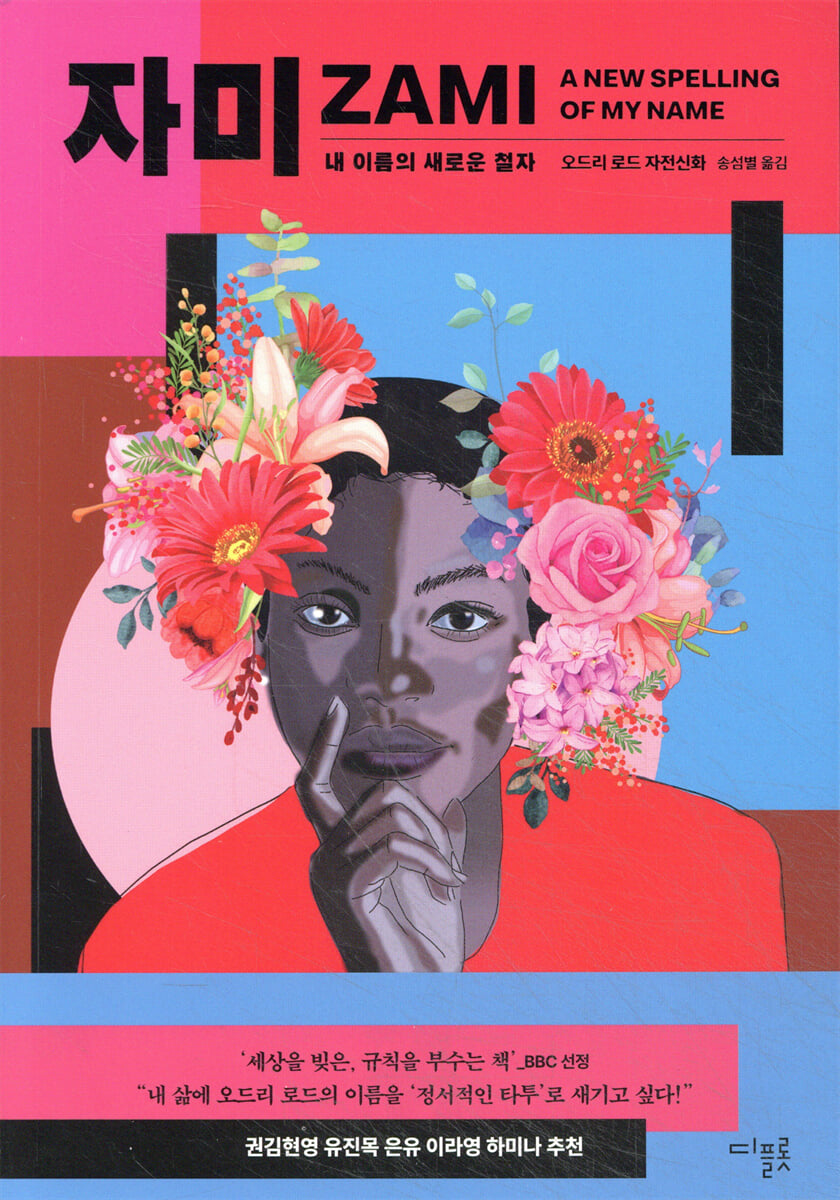
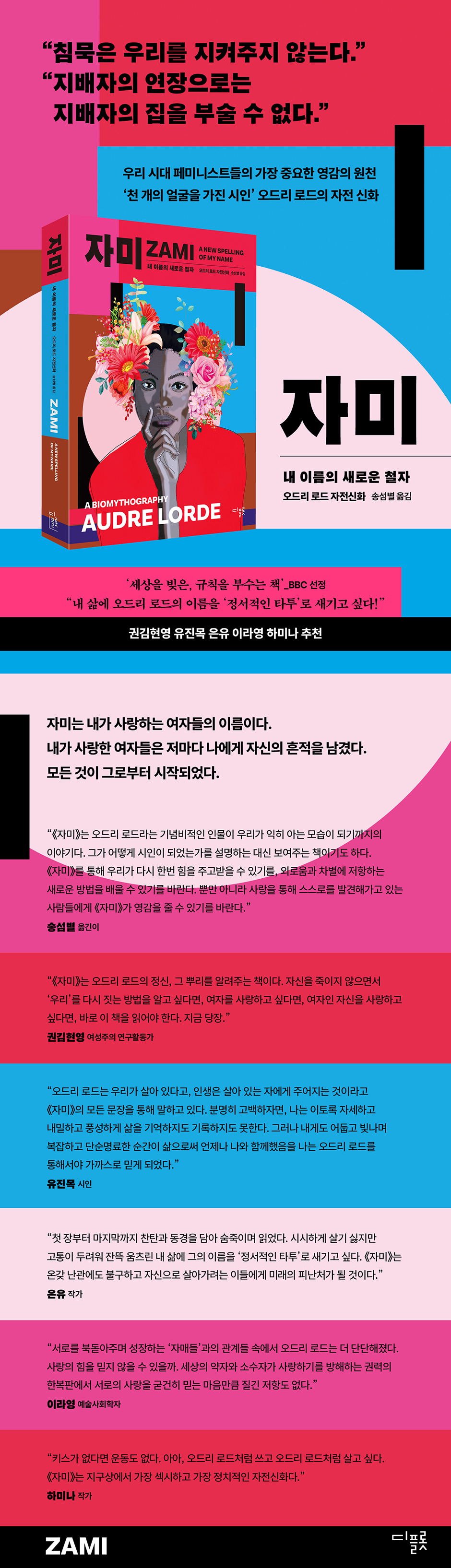
“Each woman I have loved has left her mark on me.”
As a woman, a black woman, a feminist, a lesbian, and a poet,
Audre Lorde's autobiographical story of writing the new name she identified herself with.
“I want to get Audre Lorde’s name tattooed on my life as an ‘emotional tattoo’!”
Recommended by Kwon Kim Hyun-young, Yoo Jin-mok, Eun-yu, Lee Ra-young, and Ha Mina
"Jamie" is the autobiographical account of Audre Lorde, one of the most important sources and voices of feminism in our time, and tells the story of how this monumental figure became the person we know so well.
'Zami' is a word used to refer to women who work together as friends and lovers on the island of Carriacou in the West Indies.
Born to West Indian immigrants, poet Audre Lorde reveals in a new genre of writing called "biomythography," a story about the origins of self-identity that straddles the line between fact and fiction, that she was born from the countless women who identified themselves with the word "Jamie" and left their mark on her.
Harlem, New York in the 1950s, when McCarthyism was on the rise, was by no means a beautiful setting for Audre Lorde, a black woman and lesbian. However, even in that time and space, Audre Lorde used the stigma of being called a subversive name as the beginning of her own narrative, and she lived her life uprightly and willingly, recording it.
This is the book that was selected by the BBC in 2019 as a ‘book that broke the rules and shaped the world’, and the book that Roxane Gay, author of ‘Bad Feminist’, turns to whenever she witnesses violence and hatred against minorities. It is also the book that Kwon Kim Hyun-young, Yoo Jin-mok, Eun-yu, Lee Ra-young, and Ha Mina, who are fighting on the front lines of the Korean feminist camp, admired and expressed solidarity with.
As a woman, a black woman, a feminist, a lesbian, and a poet,
Audre Lorde's autobiographical story of writing the new name she identified herself with.
“I want to get Audre Lorde’s name tattooed on my life as an ‘emotional tattoo’!”
Recommended by Kwon Kim Hyun-young, Yoo Jin-mok, Eun-yu, Lee Ra-young, and Ha Mina
"Jamie" is the autobiographical account of Audre Lorde, one of the most important sources and voices of feminism in our time, and tells the story of how this monumental figure became the person we know so well.
'Zami' is a word used to refer to women who work together as friends and lovers on the island of Carriacou in the West Indies.
Born to West Indian immigrants, poet Audre Lorde reveals in a new genre of writing called "biomythography," a story about the origins of self-identity that straddles the line between fact and fiction, that she was born from the countless women who identified themselves with the word "Jamie" and left their mark on her.
Harlem, New York in the 1950s, when McCarthyism was on the rise, was by no means a beautiful setting for Audre Lorde, a black woman and lesbian. However, even in that time and space, Audre Lorde used the stigma of being called a subversive name as the beginning of her own narrative, and she lived her life uprightly and willingly, recording it.
This is the book that was selected by the BBC in 2019 as a ‘book that broke the rules and shaped the world’, and the book that Roxane Gay, author of ‘Bad Feminist’, turns to whenever she witnesses violence and hatred against minorities. It is also the book that Kwon Kim Hyun-young, Yoo Jin-mok, Eun-yu, Lee Ra-young, and Ha Mina, who are fighting on the front lines of the Korean feminist camp, admired and expressed solidarity with.
- You can preview some of the book's contents.
Preview
Detailed image
Into the book
Between me and the chaos, images of women burning like torches stand like dykes, decorating and demarcating the boundaries of my journey.
The images of these kind and cruel women brought me home.
--- p.13
At one time, home was a very distant place, a place I had never been to, but knew well from what I had heard from my mother.
My mother hummed, breathing in and exhaling the fruity scents of the crisp mornings and hot noondays of Noel's Hill, but I had to imagine sapodillas and mangoes hanging like nets over the sweaty darkness of Harlem tenements, filled with snoring and nightmares.
But I could endure it because I believed that this was not all there was.
Although it had required tremendous energy and focus, I imagined that this place was just a temporary stopover, not a place I would think about forever, not a place that completely captivated me or defined me.
If we live rightly and frugally, and look both ways before crossing the street, then one day we will be able to return to that sweet place, to our home.
--- p.28
My mother was a very strong woman.
In the everyday speech of white Americans at that time, the combination of the two words "woman" and "strong" was nearly impossible unless it was followed by deviant adjectives like blind, hunched, crazy, or black.
So when I was young, the term 'strong woman' meant something completely different from an ordinary woman, or just 'a woman'.
However, it was not equal to ‘men’.
So what was it? What did this third estate mean?
--- p.31
I am a mirror that reflects not only my mother's hidden anger but also her secret poetry.
--- p.59
It was in high school that I realized I was different from my white friends, not because I was black, but because I was me.
--- p.141
Perhaps courage is just a more intense fear of not being brave.
--- p.160
Things I've never done with Genevieve.
Touching each other's bodies and expressing the passion we feel.
Go to the lesbian bar in the village, no, any bar.
Smoke the Ripper.
Derail a freight train headed to Florida carrying circus animals.
Take a class to learn swear words from around the world.
Learn Swahili.
See a performance by the Martha Graham Dance Company.
Meet Pearl Primus.
Next time, let's go to Africa together.
Write that book.
Share the love.
--- p.167
I never questioned where my knowledge of his body and his desires came from.
Loving Ginger that night was like going home and experiencing the joy of secretly thinking about how I had managed to live without knowing that it was mine in the first place.
--- p.240
During my first few weeks in Mexico City, I began to break the lifelong habit of looking down at my feet as I walked.
There was so much to see, so many interesting and innocent faces to read, that I practiced looking up as I walked, feeling the warm sunlight on my face.
Wherever I went, I encountered faces of all shades of brown, and seeing countless people of my own skin color on the street, confirming my existence, was a completely new and thrilling experience.
Until then, I had never felt like I was a visible being, and I didn't even know that I was invisible.
--- pp.269~270
We, young, black, okay, gay, we had to deal with our first heartbreak without any school friends or coworkers to confide in during lunch.
Just as there was no ring that could make the reason for our happy, secret smiles into something concrete and real, so there was no name or reason given or shared for the tears that stain our laboratory reports or library documents.
--- p.306
Being lesbians and not performing fixed roles was the one difference we could show each other and connect with each other.
Because we didn't belong to another world in the first place, we wanted to believe that we were free from other worldly problems like capitalism, greed, racism, and classism.
But that wasn't the case.
Yet, we continued to visit each other's homes, eat together, and share our lives and resources, as if we were actually free from such problems.
--- pp.355~356
Whether we're black, white, queer, butch, or femme, the one thing we all have in common, sometimes in varying proportions, is that we dare to connect with one another under the name of woman, and that we see that as our strength, not our problem.
--- p.390
Just being women together wasn't enough.
We were different.
Being lesbians together wasn't enough.
We were different.
Being black together wasn't enough.
We were different.
Being a Black woman together wasn't enough.
We were different.
Being black lesbians together wasn't enough.
We were different.
--- p.391
It took time to learn that our place was not the security that came from any one particular difference, but the house of difference itself.
(And often we become cowards in the face of learning.) It was only later that we learned to use the strength we gained from surviving each day, that fear does not necessarily lead to helplessness, and that we can accept each other even if we are not necessarily the same.
--- p.392
There are truths in the world that we rely on and that do not disappear.
That the sun moves north in summer, that ice gets smaller when it melts, and that bent bananas are sweeter.
Aprekete taught me my roots, a new definition of the female body that we have, and up until now, I have only been training to learn that definition.
--- p.432
Aprekete, Aprekete, drive me to that crossroads where we can fall asleep, wrapped in the power of women.
The sound of our bodies touching is the prayer of all strangers and sisters, so the demons abandoned and discarded at every intersection will not be able to pursue our journey.
--- p.436
Home was once a very distant place, a place I had never been to, a place I only knew about through my mother's words.
It was only after it was no longer my home that I learned the latitude of Carriacou.
They say that lying down with other women there is something that runs through my mother's bloodline.
The images of these kind and cruel women brought me home.
--- p.13
At one time, home was a very distant place, a place I had never been to, but knew well from what I had heard from my mother.
My mother hummed, breathing in and exhaling the fruity scents of the crisp mornings and hot noondays of Noel's Hill, but I had to imagine sapodillas and mangoes hanging like nets over the sweaty darkness of Harlem tenements, filled with snoring and nightmares.
But I could endure it because I believed that this was not all there was.
Although it had required tremendous energy and focus, I imagined that this place was just a temporary stopover, not a place I would think about forever, not a place that completely captivated me or defined me.
If we live rightly and frugally, and look both ways before crossing the street, then one day we will be able to return to that sweet place, to our home.
--- p.28
My mother was a very strong woman.
In the everyday speech of white Americans at that time, the combination of the two words "woman" and "strong" was nearly impossible unless it was followed by deviant adjectives like blind, hunched, crazy, or black.
So when I was young, the term 'strong woman' meant something completely different from an ordinary woman, or just 'a woman'.
However, it was not equal to ‘men’.
So what was it? What did this third estate mean?
--- p.31
I am a mirror that reflects not only my mother's hidden anger but also her secret poetry.
--- p.59
It was in high school that I realized I was different from my white friends, not because I was black, but because I was me.
--- p.141
Perhaps courage is just a more intense fear of not being brave.
--- p.160
Things I've never done with Genevieve.
Touching each other's bodies and expressing the passion we feel.
Go to the lesbian bar in the village, no, any bar.
Smoke the Ripper.
Derail a freight train headed to Florida carrying circus animals.
Take a class to learn swear words from around the world.
Learn Swahili.
See a performance by the Martha Graham Dance Company.
Meet Pearl Primus.
Next time, let's go to Africa together.
Write that book.
Share the love.
--- p.167
I never questioned where my knowledge of his body and his desires came from.
Loving Ginger that night was like going home and experiencing the joy of secretly thinking about how I had managed to live without knowing that it was mine in the first place.
--- p.240
During my first few weeks in Mexico City, I began to break the lifelong habit of looking down at my feet as I walked.
There was so much to see, so many interesting and innocent faces to read, that I practiced looking up as I walked, feeling the warm sunlight on my face.
Wherever I went, I encountered faces of all shades of brown, and seeing countless people of my own skin color on the street, confirming my existence, was a completely new and thrilling experience.
Until then, I had never felt like I was a visible being, and I didn't even know that I was invisible.
--- pp.269~270
We, young, black, okay, gay, we had to deal with our first heartbreak without any school friends or coworkers to confide in during lunch.
Just as there was no ring that could make the reason for our happy, secret smiles into something concrete and real, so there was no name or reason given or shared for the tears that stain our laboratory reports or library documents.
--- p.306
Being lesbians and not performing fixed roles was the one difference we could show each other and connect with each other.
Because we didn't belong to another world in the first place, we wanted to believe that we were free from other worldly problems like capitalism, greed, racism, and classism.
But that wasn't the case.
Yet, we continued to visit each other's homes, eat together, and share our lives and resources, as if we were actually free from such problems.
--- pp.355~356
Whether we're black, white, queer, butch, or femme, the one thing we all have in common, sometimes in varying proportions, is that we dare to connect with one another under the name of woman, and that we see that as our strength, not our problem.
--- p.390
Just being women together wasn't enough.
We were different.
Being lesbians together wasn't enough.
We were different.
Being black together wasn't enough.
We were different.
Being a Black woman together wasn't enough.
We were different.
Being black lesbians together wasn't enough.
We were different.
--- p.391
It took time to learn that our place was not the security that came from any one particular difference, but the house of difference itself.
(And often we become cowards in the face of learning.) It was only later that we learned to use the strength we gained from surviving each day, that fear does not necessarily lead to helplessness, and that we can accept each other even if we are not necessarily the same.
--- p.392
There are truths in the world that we rely on and that do not disappear.
That the sun moves north in summer, that ice gets smaller when it melts, and that bent bananas are sweeter.
Aprekete taught me my roots, a new definition of the female body that we have, and up until now, I have only been training to learn that definition.
--- p.432
Aprekete, Aprekete, drive me to that crossroads where we can fall asleep, wrapped in the power of women.
The sound of our bodies touching is the prayer of all strangers and sisters, so the demons abandoned and discarded at every intersection will not be able to pursue our journey.
--- p.436
Home was once a very distant place, a place I had never been to, a place I only knew about through my mother's words.
It was only after it was no longer my home that I learned the latitude of Carriacou.
They say that lying down with other women there is something that runs through my mother's bloodline.
--- p.440
Publisher's Review
“As much as I need life,
“I grew up as a black person, needing validation, love, and sharing.”
Born in Harlem, New York in the 1920s, Audre Lorde was born to an African immigrant family.
He suffered from severe myopia to the point where he could not see without glasses, and he was a child who began to speak later than his peers.
Audrey's mother, who was forced to be a minority in New York, hoped that Audrey, who was in the same situation as her, would learn and adapt to the rules of the world faster than anyone else. However, Audrey has been fighting to survive against the rules of the world since she first learned to read in a classroom for the blind.
Audrey wears a hood, a symbol of underachievement, and sits in the "brownie" group, which carries racist connotations; she is warned by a nun that black people have a distinct body odor; she is rejected for class president because she is black; and she is kicked out of an ice cream parlor in Washington, D.C., during her summer vacation with her family.
The parents feel guilty only for not having anticipated the possibility of Audrey being subjected to racism in the first place, and demand that Audrey quietly integrate into the world's order.
So Audrey says she identifies as "white" without even hearing the precise meaning of the word "colored," or doesn't hear of Crispus Attucks, the first black martyr of the American Revolution, until she's eighteen, or grows up among geographic maps that don't even mark her mother's homeland, Carriacou Island in the West Indies, without ever revealing her origins, her appearance, or her identity.
But Audre Lorde does not remain hidden or discriminated against.
Just as she had decided to do when listening to her older sisters' stories as a child, Audrey creates her own story.
At Hunter High School, where there were only three black students, Audrey identifies herself as a "stigmatized" among her friends who were once marginalized, and discovers love when she meets Jenny, who leads her to a lifelong friendship.
At Stamford's factory, he meets Ginger and realizes his sexual identity, and in Mexico, the first place he chose to stay, he meets Eudora and is loved for who he is.
And then, back in New York, he meets Muriel and Aprekete, who have left emotionally deep tattoos, and finds new answers even in despair.
Audrey, who constantly searches for and creates a place for herself, leaves her mother's home to create her own narrative, and even makes the streets of Harlem, filled with discrimination and hatred, her 'home', creating an autobiographical myth as a black person, a woman, and a sexual minority.
Women who gave me a place to rest when I needed it
The women who pushed me out into the sun, still dyed black
"Jamie" is a story about the women Audre Lorde loved.
Before she was labeled a black feminist poet, Audrey was a woman who loved women.
The first woman Audrey loved was Jenny, whom she met when she was in deep conflict with her mother.
Jenny and Audrey, who were like loose women, swearing, smoking cigarettes on the street, stealing money from their mother's purse, and singing union songs together as they wandered the streets.
But in 1948, when the winds of change were blowing across the world, Jenny committed suicide.
Without ever having shared their passions, written a book together, or made love, Audrey helplessly lets Jenny go.
After that, Audrey leaves home and attempts to stand on her own two feet.
Her first relationship resulted in an abortion, and Audrey, unable to find suitable work, moved to Stamford.
And here she meets Ginger and becomes aware of her identity as a lesbian for the first time.
Audrey, who had “no idea what it meant to make love to a woman,” feels a wave of joy and satisfaction wash over her, vaguely sensing that “I wanted it to happen, and that it was different from anything I had ever done before.”
But seeing Ginger not taking relationships seriously, Audrey decides not to love anyone and not to get close to anyone.
That resolve is shattered when he meets an older woman, Eudora, in Cuernavaca, Mexico, a city of unfamiliar sounds, smells, and experiences.
Eudora, a journalist who had immigrated to Mexico to escape McCarthyism, was “someone who had spent her life thinking, someone who could understand me no matter what I said,” and Audrey, who had spent many days talking endlessly at Eudora’s house, embraced him and suggested for the first time that she wanted to make love to him.
To that suggestion, Yudo responds like this:
“You are so beautiful and brown.” In Mexico, where she feels “in the place she wanted to be and chose to be,” and “a definite being with a clear social profile,” Audrey finds self-affirmation through love.
The woman who taught me the omnipotence of love was Muriel, whom I met back in New York.
Muriel, who was Audrey's senior at the factory where she worked and wrote poetry.
From the moment she first met him, Audrey felt that Muriel “seemed to understand everything I said, without any explanation, not only my words but also the countless things I could not express because of the weight of my pain.”
The letters they exchanged with Muriel contained their hunger and isolation, yet a humorous yet clear perspective on the world, and they were convinced that their loneliness and even their dreams were similar to each other.
Together they feed cats, pick up old furniture from the street, sneak fruit and drinks, and make love, Audrey makes space for Muriel to seep deep into her life.
They arranged their worlds in their own way, offering each other certainty, magic, and the wonder that comes from hard work, and Audrey discovers that all of this is a legitimate feeling that comes with being in a relationship with someone you love.
At the same time, Audrey realizes that Muriel is not her creation.
That Muriel had always been herself, that she had only helped shape him, just as Muriel had done for Audrey.
“Only after that place was no longer my home
“I learned the latitude of Carriacou.”
"Jamie" is also about Audre Lorde's journey to find "home" while exploring her identity in her relationships with women.
As a child, Audrey's dream home was an island in the West Indies, "a place far away, a place I had never been to, but knew well from my mother's word of mouth."
Where there were songs about everything, where the white-browed honeyeater flew swiftly, where Linda's mother, Mary Liz, inherited the teachings of her grandmother, Ma Maria, who looked out over the crashing waves of the Caribbean Sea from the shores of Noel's Hill.
And the island where Mother Linda was born amidst the thick scent of lime, and where “women who survived without their husbands who went out to sea, and who came to love each other even when their husbands never returned.”
“The way the Carriacou women love each other is the legend of Grenadine, as is their strength and beauty.” Like her mother who grew up dreaming of Carriacou, Audrey grew up dreaming of Grenada, and the Grenadian dialect that formed her mother’s language became Audrey’s own, and like her mother, Audrey became a “strong woman.”
Audrey wasn't "trying to be loved or approved."
I tried to “just stay alive” or “remain human.”
To do that, I had to become a ‘strong woman.’
But even in the Villages of New York in the 1950s, it wasn't easy for a black lesbian to become a strong woman.
Black lesbians were the "exotic sister outsiders" who had no real advantage in coming together, and finding a place where someone like Audrey, who didn't define herself as either femme or butch, was acceptable was especially difficult.
Moreover, at the lesbian bar, Audrey was treated as a “closet college student” and “invisible,” and at Hunter College, she was treated as a “closet lesbian” and “intruder.”
Even though lesbians, black or white, were the only ones making real efforts to connect with women at the time, Audrey felt alienated from them, and even in her relationship with Muriel, who wasn't black, she felt an insurmountable difference.
For those like Audrey, who were not given a 'place' or a 'home', they "clung to any place that offered space, comfort, silence, a smile, or a non-judgmental attitude."
And then, on a sad and lonely spring day, Audrey finally meets Aprekete, who leaves another mark on her life “as an emotional tattoo.”
Aprechete was someone who knew only “my own life”, someone who could share the fire without confining or suffocating each other, someone who brought “the most authentic things from the most ancient times, from the farthest places, yet close to home”, someone who redefines the female body and rediscovers Audrey’s roots, and thus shares countless dreams.
Audrey, who has navigated the turbulent waves of emotions, reconnects with her emotional roots through Aprechette, rediscovers love as the answer to despair, and begins to build her own 'home' solely on her own.
Although their time together was brief, Audrey leaves Aprekete, reforms, and reshapes herself to become a better exchanger.
He buys a few boxes of salt and a new broom to take to his new apartment, finds a new job, and starts living his new life in a new way.
At the same time, carrying on the traditions of women who came from their mothers' roots who had dark skin.
And “creating again in language the women who gave him his essence.”
“I grew up as a black person, needing validation, love, and sharing.”
Born in Harlem, New York in the 1920s, Audre Lorde was born to an African immigrant family.
He suffered from severe myopia to the point where he could not see without glasses, and he was a child who began to speak later than his peers.
Audrey's mother, who was forced to be a minority in New York, hoped that Audrey, who was in the same situation as her, would learn and adapt to the rules of the world faster than anyone else. However, Audrey has been fighting to survive against the rules of the world since she first learned to read in a classroom for the blind.
Audrey wears a hood, a symbol of underachievement, and sits in the "brownie" group, which carries racist connotations; she is warned by a nun that black people have a distinct body odor; she is rejected for class president because she is black; and she is kicked out of an ice cream parlor in Washington, D.C., during her summer vacation with her family.
The parents feel guilty only for not having anticipated the possibility of Audrey being subjected to racism in the first place, and demand that Audrey quietly integrate into the world's order.
So Audrey says she identifies as "white" without even hearing the precise meaning of the word "colored," or doesn't hear of Crispus Attucks, the first black martyr of the American Revolution, until she's eighteen, or grows up among geographic maps that don't even mark her mother's homeland, Carriacou Island in the West Indies, without ever revealing her origins, her appearance, or her identity.
But Audre Lorde does not remain hidden or discriminated against.
Just as she had decided to do when listening to her older sisters' stories as a child, Audrey creates her own story.
At Hunter High School, where there were only three black students, Audrey identifies herself as a "stigmatized" among her friends who were once marginalized, and discovers love when she meets Jenny, who leads her to a lifelong friendship.
At Stamford's factory, he meets Ginger and realizes his sexual identity, and in Mexico, the first place he chose to stay, he meets Eudora and is loved for who he is.
And then, back in New York, he meets Muriel and Aprekete, who have left emotionally deep tattoos, and finds new answers even in despair.
Audrey, who constantly searches for and creates a place for herself, leaves her mother's home to create her own narrative, and even makes the streets of Harlem, filled with discrimination and hatred, her 'home', creating an autobiographical myth as a black person, a woman, and a sexual minority.
Women who gave me a place to rest when I needed it
The women who pushed me out into the sun, still dyed black
"Jamie" is a story about the women Audre Lorde loved.
Before she was labeled a black feminist poet, Audrey was a woman who loved women.
The first woman Audrey loved was Jenny, whom she met when she was in deep conflict with her mother.
Jenny and Audrey, who were like loose women, swearing, smoking cigarettes on the street, stealing money from their mother's purse, and singing union songs together as they wandered the streets.
But in 1948, when the winds of change were blowing across the world, Jenny committed suicide.
Without ever having shared their passions, written a book together, or made love, Audrey helplessly lets Jenny go.
After that, Audrey leaves home and attempts to stand on her own two feet.
Her first relationship resulted in an abortion, and Audrey, unable to find suitable work, moved to Stamford.
And here she meets Ginger and becomes aware of her identity as a lesbian for the first time.
Audrey, who had “no idea what it meant to make love to a woman,” feels a wave of joy and satisfaction wash over her, vaguely sensing that “I wanted it to happen, and that it was different from anything I had ever done before.”
But seeing Ginger not taking relationships seriously, Audrey decides not to love anyone and not to get close to anyone.
That resolve is shattered when he meets an older woman, Eudora, in Cuernavaca, Mexico, a city of unfamiliar sounds, smells, and experiences.
Eudora, a journalist who had immigrated to Mexico to escape McCarthyism, was “someone who had spent her life thinking, someone who could understand me no matter what I said,” and Audrey, who had spent many days talking endlessly at Eudora’s house, embraced him and suggested for the first time that she wanted to make love to him.
To that suggestion, Yudo responds like this:
“You are so beautiful and brown.” In Mexico, where she feels “in the place she wanted to be and chose to be,” and “a definite being with a clear social profile,” Audrey finds self-affirmation through love.
The woman who taught me the omnipotence of love was Muriel, whom I met back in New York.
Muriel, who was Audrey's senior at the factory where she worked and wrote poetry.
From the moment she first met him, Audrey felt that Muriel “seemed to understand everything I said, without any explanation, not only my words but also the countless things I could not express because of the weight of my pain.”
The letters they exchanged with Muriel contained their hunger and isolation, yet a humorous yet clear perspective on the world, and they were convinced that their loneliness and even their dreams were similar to each other.
Together they feed cats, pick up old furniture from the street, sneak fruit and drinks, and make love, Audrey makes space for Muriel to seep deep into her life.
They arranged their worlds in their own way, offering each other certainty, magic, and the wonder that comes from hard work, and Audrey discovers that all of this is a legitimate feeling that comes with being in a relationship with someone you love.
At the same time, Audrey realizes that Muriel is not her creation.
That Muriel had always been herself, that she had only helped shape him, just as Muriel had done for Audrey.
“Only after that place was no longer my home
“I learned the latitude of Carriacou.”
"Jamie" is also about Audre Lorde's journey to find "home" while exploring her identity in her relationships with women.
As a child, Audrey's dream home was an island in the West Indies, "a place far away, a place I had never been to, but knew well from my mother's word of mouth."
Where there were songs about everything, where the white-browed honeyeater flew swiftly, where Linda's mother, Mary Liz, inherited the teachings of her grandmother, Ma Maria, who looked out over the crashing waves of the Caribbean Sea from the shores of Noel's Hill.
And the island where Mother Linda was born amidst the thick scent of lime, and where “women who survived without their husbands who went out to sea, and who came to love each other even when their husbands never returned.”
“The way the Carriacou women love each other is the legend of Grenadine, as is their strength and beauty.” Like her mother who grew up dreaming of Carriacou, Audrey grew up dreaming of Grenada, and the Grenadian dialect that formed her mother’s language became Audrey’s own, and like her mother, Audrey became a “strong woman.”
Audrey wasn't "trying to be loved or approved."
I tried to “just stay alive” or “remain human.”
To do that, I had to become a ‘strong woman.’
But even in the Villages of New York in the 1950s, it wasn't easy for a black lesbian to become a strong woman.
Black lesbians were the "exotic sister outsiders" who had no real advantage in coming together, and finding a place where someone like Audrey, who didn't define herself as either femme or butch, was acceptable was especially difficult.
Moreover, at the lesbian bar, Audrey was treated as a “closet college student” and “invisible,” and at Hunter College, she was treated as a “closet lesbian” and “intruder.”
Even though lesbians, black or white, were the only ones making real efforts to connect with women at the time, Audrey felt alienated from them, and even in her relationship with Muriel, who wasn't black, she felt an insurmountable difference.
For those like Audrey, who were not given a 'place' or a 'home', they "clung to any place that offered space, comfort, silence, a smile, or a non-judgmental attitude."
And then, on a sad and lonely spring day, Audrey finally meets Aprekete, who leaves another mark on her life “as an emotional tattoo.”
Aprechete was someone who knew only “my own life”, someone who could share the fire without confining or suffocating each other, someone who brought “the most authentic things from the most ancient times, from the farthest places, yet close to home”, someone who redefines the female body and rediscovers Audrey’s roots, and thus shares countless dreams.
Audrey, who has navigated the turbulent waves of emotions, reconnects with her emotional roots through Aprechette, rediscovers love as the answer to despair, and begins to build her own 'home' solely on her own.
Although their time together was brief, Audrey leaves Aprekete, reforms, and reshapes herself to become a better exchanger.
He buys a few boxes of salt and a new broom to take to his new apartment, finds a new job, and starts living his new life in a new way.
At the same time, carrying on the traditions of women who came from their mothers' roots who had dark skin.
And “creating again in language the women who gave him his essence.”
GOODS SPECIFICS
- Date of issue: January 25, 2023
- Page count, weight, size: 484 pages | 504g | 140*200*25mm
- ISBN13: 9791197918179
- ISBN10: 1197918175
You may also like
카테고리
korean


korean

![GQ KOREA Mark (Monthly): December [2025]](http://librairie.coreenne.fr/cdn/shop/files/8ef265dbbfbf186523ed75ba7319009d.jpg?v=1765340328&width=3840)


