

Clash of Empires
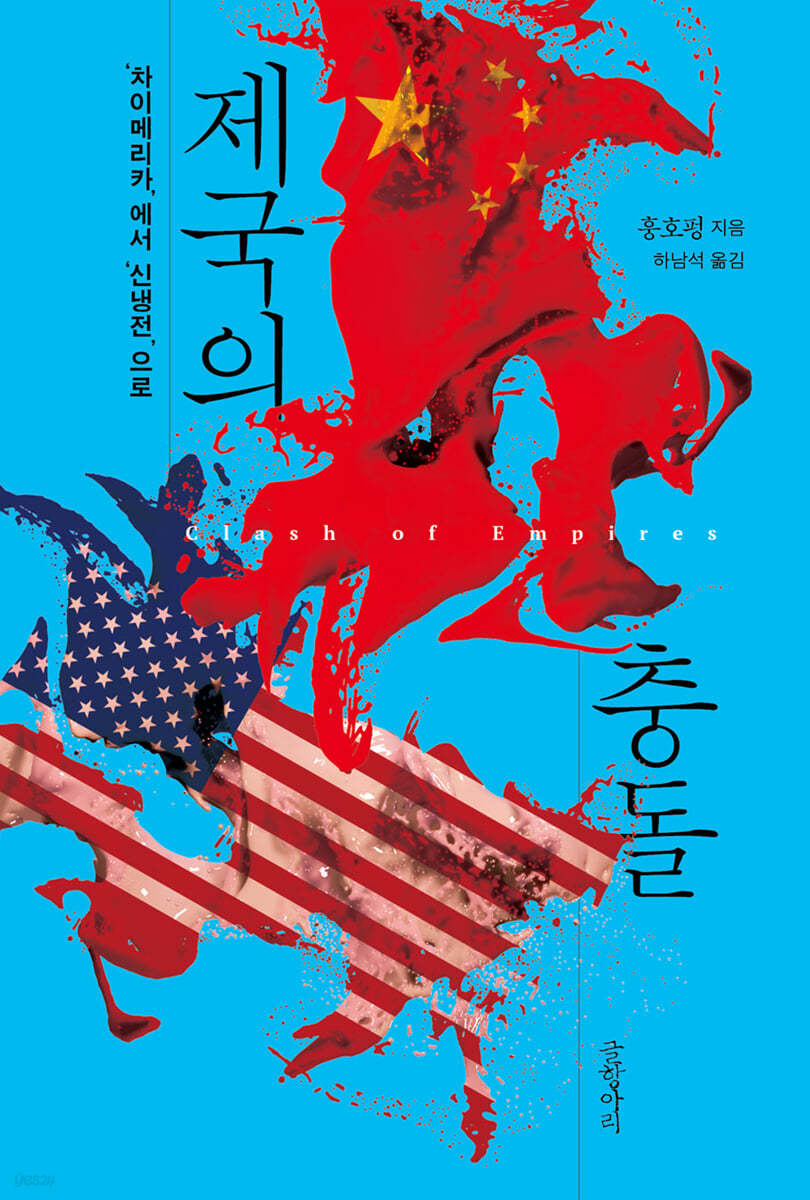 |
Description
Book Introduction
Hong Ho-feng, a leading expert in Chinese political economy
Analysis of US-China relations, which are heading toward a "new Cold War" in all aspects.
The cause is never ideological differences.
How Competition Between Capital Fuels Geopolitical Conflict
Professor Hong Ho-feng of Johns Hopkins University, a leading expert on Chinese political economy, has published a new book analyzing the dynamics of U.S.-China relations.
According to the author, the cause of the current situation in which the United States and China are heading toward a “new Cold War” in all matters does not lie in ideological conflict.
This clearly stems from competition between capitals, which is fueling geopolitical conflict.
The author previously analyzed that the US-China relationship has changed from a honeymoon relationship to a more competitive one since the Obama administration.
In "Clash of Empires," he argues that the shift in corporate relations between American and Chinese companies underlies the shift in political relations between the two countries.
This is a point of difference from the many explanations appearing in the public domain that explain the deterioration of US-China relations as a conflict between democratic and authoritarian systems.
The author provides a multifaceted analysis of which actors are more important in the United States and China from a Marxist-Weberian perspective.
In particular, the United States, driven by its Weberian obsession with maintaining global power and international prestige, sees China as a geopolitical competitor among its foreign policy elites, while the Treasury, the National Economic Council, and Congress view it as more open to the influence of big business.
But in 2010, the geopolitical interests of the United States and corporations began to align, leading to a joint confrontation with China.
The author places the shifting power dynamics within a historical context to sketch possible future scenarios and anticipates ways to avoid the worst of imperial conflict.
Analysis of US-China relations, which are heading toward a "new Cold War" in all aspects.
The cause is never ideological differences.
How Competition Between Capital Fuels Geopolitical Conflict
Professor Hong Ho-feng of Johns Hopkins University, a leading expert on Chinese political economy, has published a new book analyzing the dynamics of U.S.-China relations.
According to the author, the cause of the current situation in which the United States and China are heading toward a “new Cold War” in all matters does not lie in ideological conflict.
This clearly stems from competition between capitals, which is fueling geopolitical conflict.
The author previously analyzed that the US-China relationship has changed from a honeymoon relationship to a more competitive one since the Obama administration.
In "Clash of Empires," he argues that the shift in corporate relations between American and Chinese companies underlies the shift in political relations between the two countries.
This is a point of difference from the many explanations appearing in the public domain that explain the deterioration of US-China relations as a conflict between democratic and authoritarian systems.
The author provides a multifaceted analysis of which actors are more important in the United States and China from a Marxist-Weberian perspective.
In particular, the United States, driven by its Weberian obsession with maintaining global power and international prestige, sees China as a geopolitical competitor among its foreign policy elites, while the Treasury, the National Economic Council, and Congress view it as more open to the influence of big business.
But in 2010, the geopolitical interests of the United States and corporations began to align, leading to a joint confrontation with China.
The author places the shifting power dynamics within a historical context to sketch possible future scenarios and anticipates ways to avoid the worst of imperial conflict.
- You can preview some of the book's contents.
Preview
index
Chapter 1: Introduction: The Political Sociology of Global Conflict
Chapter 2 Symbiosis
Chapter 3 Competition among Capitals
Chapter 4: Spheres of Influence
Chapter 5 Conclusion: The Return of Inter-Imperial Rivalry
supplement
1.
China's growth model in crisis
2.
Bold: It's too early to declare the Chinese century has begun.
3.
Clash of Empires: A Conversation with Hong Ho-feng
Translator's Note
Chapter 2 Symbiosis
Chapter 3 Competition among Capitals
Chapter 4: Spheres of Influence
Chapter 5 Conclusion: The Return of Inter-Imperial Rivalry
supplement
1.
China's growth model in crisis
2.
Bold: It's too early to declare the Chinese century has begun.
3.
Clash of Empires: A Conversation with Hong Ho-feng
Translator's Note
Into the book
Beyond the nationalist and economic perspectives, there are more nuanced theories of international politics that view competition between states and competition between corporate organizations, or transnational connections, as two autonomous spheres that interact to shape world order and conflict.
Building on the insights of these theories, in this book I will connect the geopolitical competition between nations with the capitalist relationships between corporations, examining the symbiotic relationship between the United States and China in the 1990s and 2000s and the reasons why that symbiotic relationship transformed into competition in the 2010s.
And against the backdrop of macro-structural changes in the global political economy, we will focus on mid-level interactions between companies and states, particularly between the United States and China.
--- p.16
Clinton's position linking China's renewal of MFN status to human rights issues can be attributed to the rise of human rights idealists in the diplomatic establishment after the 1989 Tiananmen Square crackdown.
But that stance was, above all, a response to the economic concerns of labor unions, which were essential supporters of the Democratic Party's presidential victory.
American unions have long been concerned about increasing competition from China's union-free, low-wage labor.
Thus, the pledge to link China's MFN status to human rights conditions was a subtle mask of protectionist opposition to trade liberalization between the United States and China.
--- pp.31~32
Many companies, like Detroit automakers, that don't yet have a vested interest in China but could benefit from US-China trade liberalization have been quite proactive, as China could become a large export market.
Companies already dependent on U.S.-China trade, particularly shoe and apparel retailers that outsourced to Chinese manufacturers early on, were not among the most active lobbying groups.
What's most puzzling is that the most active lobbying groups were companies that had nothing to do with China trade and certainly wouldn't directly benefit from lower tariffs on Chinese exports in the U.S. market—telecommunications companies like AT&T, satellite manufacturers like Hughes Electronics, and energy companies like ExxonMobil.
Boeing and other aircraft manufacturers also fall into this category.
--- pp.37~38
As Wall Street's views gained traction in the White House, the voices of business, which built a coalition to expand trade with China, grew louder, replacing foreign policy elites who sought to leverage trade policy to weaken China's authoritarian regime.
(…) In the end, the power of corporations and Wall Street prevailed.
On May 26, 1994, Clinton announced that he would renew China's MFN status without considering any improvements in China's human rights record.
This was a reversal of his 1993 policy of linking China's human rights record to the annual update process.
--- p.41
Democratic lawmakers noted that a lobbying firm hired by the Chinese embassy had increased its activity in the U.S. Congress.
However, such direct lobbying efforts by the Chinese government were ineffective and could have led to a public backlash.
The most important means by which the Chinese government sought to shift the balance of power in Washington in favor of lifting the sanctions was to attract major American companies.
In early 1990, Huang Wenjun, an economic advisor at the Chinese Embassy in the United States, sent letters to all major American companies, asking them to “demonstrate your influence with the U.S. government, Congress, and the media, and to work to maintain China’s MFN status to prevent losses to both countries.”
--- p.44
In short, during the first year of the Clinton administration, Washington's foreign policy elite prioritized trade as a means to improve human rights in China.
The Chinese Communist Party and the state have mobilized some of the most powerful American corporations to act as their "proxy lobbyists" to sway U.S. policy and force the Democratic administration to prioritize free trade with China over political liberalization.
As a post-facto justification, the Clinton administration put forward the theory of "constructive engagement," which argued that free trade with China would empower Chinese private enterprises and the middle class, which would ultimately lead to political liberalization.
In any case, China successfully invited itself into the US-led global free trade order without damaging its authoritarian one-party rule.
Building on the insights of these theories, in this book I will connect the geopolitical competition between nations with the capitalist relationships between corporations, examining the symbiotic relationship between the United States and China in the 1990s and 2000s and the reasons why that symbiotic relationship transformed into competition in the 2010s.
And against the backdrop of macro-structural changes in the global political economy, we will focus on mid-level interactions between companies and states, particularly between the United States and China.
--- p.16
Clinton's position linking China's renewal of MFN status to human rights issues can be attributed to the rise of human rights idealists in the diplomatic establishment after the 1989 Tiananmen Square crackdown.
But that stance was, above all, a response to the economic concerns of labor unions, which were essential supporters of the Democratic Party's presidential victory.
American unions have long been concerned about increasing competition from China's union-free, low-wage labor.
Thus, the pledge to link China's MFN status to human rights conditions was a subtle mask of protectionist opposition to trade liberalization between the United States and China.
--- pp.31~32
Many companies, like Detroit automakers, that don't yet have a vested interest in China but could benefit from US-China trade liberalization have been quite proactive, as China could become a large export market.
Companies already dependent on U.S.-China trade, particularly shoe and apparel retailers that outsourced to Chinese manufacturers early on, were not among the most active lobbying groups.
What's most puzzling is that the most active lobbying groups were companies that had nothing to do with China trade and certainly wouldn't directly benefit from lower tariffs on Chinese exports in the U.S. market—telecommunications companies like AT&T, satellite manufacturers like Hughes Electronics, and energy companies like ExxonMobil.
Boeing and other aircraft manufacturers also fall into this category.
--- pp.37~38
As Wall Street's views gained traction in the White House, the voices of business, which built a coalition to expand trade with China, grew louder, replacing foreign policy elites who sought to leverage trade policy to weaken China's authoritarian regime.
(…) In the end, the power of corporations and Wall Street prevailed.
On May 26, 1994, Clinton announced that he would renew China's MFN status without considering any improvements in China's human rights record.
This was a reversal of his 1993 policy of linking China's human rights record to the annual update process.
--- p.41
Democratic lawmakers noted that a lobbying firm hired by the Chinese embassy had increased its activity in the U.S. Congress.
However, such direct lobbying efforts by the Chinese government were ineffective and could have led to a public backlash.
The most important means by which the Chinese government sought to shift the balance of power in Washington in favor of lifting the sanctions was to attract major American companies.
In early 1990, Huang Wenjun, an economic advisor at the Chinese Embassy in the United States, sent letters to all major American companies, asking them to “demonstrate your influence with the U.S. government, Congress, and the media, and to work to maintain China’s MFN status to prevent losses to both countries.”
--- p.44
In short, during the first year of the Clinton administration, Washington's foreign policy elite prioritized trade as a means to improve human rights in China.
The Chinese Communist Party and the state have mobilized some of the most powerful American corporations to act as their "proxy lobbyists" to sway U.S. policy and force the Democratic administration to prioritize free trade with China over political liberalization.
As a post-facto justification, the Clinton administration put forward the theory of "constructive engagement," which argued that free trade with China would empower Chinese private enterprises and the middle class, which would ultimately lead to political liberalization.
In any case, China successfully invited itself into the US-led global free trade order without damaging its authoritarian one-party rule.
--- p.51
Publisher's Review
American companies become proxy lobbyists for the Chinese government.
In examining US-China relations, this book analyzes how the two actors have evolved over the course of the major turning points of the 1990s, 2000s, and 2010s.
China adopted an open-door policy after the Tiananmen Square incident in 1989, and in the United States, the Democratic Party became the ruling party after 10 years with the election of Bill Clinton in 1993.
As a result, human rights idealists gained influence in American diplomacy, and they attached a condition to China's improvement of human rights records in order to renew its most-favored-nation trade agreement (there was also a hidden ulterior motive for the United States to pursue protectionism to avoid labor unions).
While this provision was a key Democratic presidential campaign promise, the situation was not so simple. If MFN status was not renewed, American companies operating in China faced significant retaliation. Meanwhile, the Chinese government, faced with the economic crisis of 1992-1994, adopted export-oriented growth policies, and both countries desperately needed free trade with each other.
At this time, the Chinese government overcame the crisis by using American companies as proxy lobbyists.
Detroit automakers, for example, had high hopes for the benefits they would receive from US-China trade liberalization.
The Chinese government coaxed these companies, allowing American companies to begin exerting influence on Congress on China's behalf.
However, there was one unexpected point.
As we might easily imagine, it was not American shoe and apparel companies manufacturing in China that became proxy lobbyists, but rather companies that had nothing to do with China trade and did not directly benefit from tariffs, such as telecommunications companies like AT&T, satellite manufacturers like Hughes Electronics, energy companies like ExxonMobil, and aircraft manufacturers like Boeing.
The author's analysis of the data shows that during this period, the Chinese government encouraged prominent U.S. companies to call or send individual letters to the White House and members of Congress, urging them to "not link China's human rights provisions to trade liberalization."
Moreover, many of these companies were campaign donors who influenced the president and members of Congress.
For example, AT&T was the largest corporate donor to the 1992 election, giving more than $2 million.
Hughes Electronics was also a staunch Clinton donor, with its CEO sending two blunt letters to the president.
This was a request to reconsider sanctions against China, including the MFN issue, as they had provided financial support during the election campaign.
On May 26, 1994, Clinton announced that he would renew MFN status regardless of China's human rights improvements, a reversal of trade policy toward China that was a victory for a business coalition over a coalition of labor unions, human rights advocates, foreign policy elites who had aimed to improve human rights, and American labor-intensive industries.
According to the author, the Chinese state actively recruited and coordinated American companies as proxy lobbyists.
It is difficult to find specific evidence from US sources that China was enlisting American companies to lobby the White House and Congress at this time.
But some reports show how Chinese officials used coercive tactics to direct American companies to lobby Washington on China's behalf.
For example, Chinese officials have warned that Chinese state-owned airlines will halt aircraft orders unless Boeing demonstrates a commitment to lobbying for policies favorable to China.
In other words, the continued interaction between the Chinese state and American political and economic elites has restrained America's impulse to view China as a geopolitical competitor.
What's Changed US-China Relations Since 2010
But the era of US-China trade liberalization is coming to an end.
Faced with a crisis of over-accumulation following the Great Recession of 2008, the Chinese Communist Party and state-owned enterprises aggressively pressured foreign companies, including American ones, in the U.S. market to restore profitability.
This competition between capitals on the world stage has intensified the geopolitical rivalry between the United States and China by encouraging the Chinese state to expand its sphere of influence in Asia and beyond.
Faced with this confrontation, American companies, which had previously been proactive in ensuring friendly US-China relations, backed down and did nothing to intervene when conflicts arose between US and Chinese foreign policy elites.
Instead, American companies began asking the government for help in the face of fierce competition from Chinese companies.
This shift in attitudes among American companies toward China suggests that animosity between the United States and China has been rising on almost every issue since around 2010.
Washington's policy toward China changed markedly, especially during the second term of the Obama administration.
At this time, the pivot to Asia policy was prominent, and the US military deployed aircraft carriers and naval units to the South China Sea to counter China's territorial claims to neighboring countries.
At the same time, Obama accelerated the Trans-Pacific Partnership agreement.
The Obama administration used polite and soft rhetoric, but its rhetoric clearly concealed a willingness to align America's allies.
The clash between the two empires also intensified competition between capitals from other European and Japanese companies.
As the world's first and second largest economies, their combined GDP accounts for nearly 40 percent of global GDP and over 50 percent of defense spending, making them likely to bring about the most significant shifts in global politics in the future, determining the future world order or chaos of the 21st century.
However, the author says it is wrong to predict that China will overtake the United States in the global economy.
Statistics show that while China is a successful economy, it lags far behind the United States in many areas.
Of course, under Xi Jinping, the Chinese Communist Party's confidence has greatly increased, as evidenced by the fact that it has let diplomats off the hook to directly insult American leaders.
But China's current problems are more structural, with the same problems of overcapacity and debt that arose at many state-owned enterprises after the 2008 financial crisis.
To this end, the Xi Jinping government has launched more aggressive competition with foreign companies, but this is actually a strong indication of China's insecurity.
The author examines the state's control and instability as he examines China's economic history from the 18th century onward.
Competition between capital between the United States and China is bound to increase, and as a result, geopolitical competition will inevitably intensify in the coming years.
However, the author believes there are grounds for not losing optimism.
By comparison, the current rivalry between the two empires bears a striking resemblance to the rivalry between Britain and Germany in the early 20th century. Fortunately, even though China is becoming increasingly militarized and aggressive, it is far less militaristic than Germany was at the time.
The author argues that while relations between the US and China will undoubtedly deteriorate, this is more likely to lead to competition within global governance institutions such as the WHO, WTO, and the UN than to direct military conflict.
In examining US-China relations, this book analyzes how the two actors have evolved over the course of the major turning points of the 1990s, 2000s, and 2010s.
China adopted an open-door policy after the Tiananmen Square incident in 1989, and in the United States, the Democratic Party became the ruling party after 10 years with the election of Bill Clinton in 1993.
As a result, human rights idealists gained influence in American diplomacy, and they attached a condition to China's improvement of human rights records in order to renew its most-favored-nation trade agreement (there was also a hidden ulterior motive for the United States to pursue protectionism to avoid labor unions).
While this provision was a key Democratic presidential campaign promise, the situation was not so simple. If MFN status was not renewed, American companies operating in China faced significant retaliation. Meanwhile, the Chinese government, faced with the economic crisis of 1992-1994, adopted export-oriented growth policies, and both countries desperately needed free trade with each other.
At this time, the Chinese government overcame the crisis by using American companies as proxy lobbyists.
Detroit automakers, for example, had high hopes for the benefits they would receive from US-China trade liberalization.
The Chinese government coaxed these companies, allowing American companies to begin exerting influence on Congress on China's behalf.
However, there was one unexpected point.
As we might easily imagine, it was not American shoe and apparel companies manufacturing in China that became proxy lobbyists, but rather companies that had nothing to do with China trade and did not directly benefit from tariffs, such as telecommunications companies like AT&T, satellite manufacturers like Hughes Electronics, energy companies like ExxonMobil, and aircraft manufacturers like Boeing.
The author's analysis of the data shows that during this period, the Chinese government encouraged prominent U.S. companies to call or send individual letters to the White House and members of Congress, urging them to "not link China's human rights provisions to trade liberalization."
Moreover, many of these companies were campaign donors who influenced the president and members of Congress.
For example, AT&T was the largest corporate donor to the 1992 election, giving more than $2 million.
Hughes Electronics was also a staunch Clinton donor, with its CEO sending two blunt letters to the president.
This was a request to reconsider sanctions against China, including the MFN issue, as they had provided financial support during the election campaign.
On May 26, 1994, Clinton announced that he would renew MFN status regardless of China's human rights improvements, a reversal of trade policy toward China that was a victory for a business coalition over a coalition of labor unions, human rights advocates, foreign policy elites who had aimed to improve human rights, and American labor-intensive industries.
According to the author, the Chinese state actively recruited and coordinated American companies as proxy lobbyists.
It is difficult to find specific evidence from US sources that China was enlisting American companies to lobby the White House and Congress at this time.
But some reports show how Chinese officials used coercive tactics to direct American companies to lobby Washington on China's behalf.
For example, Chinese officials have warned that Chinese state-owned airlines will halt aircraft orders unless Boeing demonstrates a commitment to lobbying for policies favorable to China.
In other words, the continued interaction between the Chinese state and American political and economic elites has restrained America's impulse to view China as a geopolitical competitor.
What's Changed US-China Relations Since 2010
But the era of US-China trade liberalization is coming to an end.
Faced with a crisis of over-accumulation following the Great Recession of 2008, the Chinese Communist Party and state-owned enterprises aggressively pressured foreign companies, including American ones, in the U.S. market to restore profitability.
This competition between capitals on the world stage has intensified the geopolitical rivalry between the United States and China by encouraging the Chinese state to expand its sphere of influence in Asia and beyond.
Faced with this confrontation, American companies, which had previously been proactive in ensuring friendly US-China relations, backed down and did nothing to intervene when conflicts arose between US and Chinese foreign policy elites.
Instead, American companies began asking the government for help in the face of fierce competition from Chinese companies.
This shift in attitudes among American companies toward China suggests that animosity between the United States and China has been rising on almost every issue since around 2010.
Washington's policy toward China changed markedly, especially during the second term of the Obama administration.
At this time, the pivot to Asia policy was prominent, and the US military deployed aircraft carriers and naval units to the South China Sea to counter China's territorial claims to neighboring countries.
At the same time, Obama accelerated the Trans-Pacific Partnership agreement.
The Obama administration used polite and soft rhetoric, but its rhetoric clearly concealed a willingness to align America's allies.
The clash between the two empires also intensified competition between capitals from other European and Japanese companies.
As the world's first and second largest economies, their combined GDP accounts for nearly 40 percent of global GDP and over 50 percent of defense spending, making them likely to bring about the most significant shifts in global politics in the future, determining the future world order or chaos of the 21st century.
However, the author says it is wrong to predict that China will overtake the United States in the global economy.
Statistics show that while China is a successful economy, it lags far behind the United States in many areas.
Of course, under Xi Jinping, the Chinese Communist Party's confidence has greatly increased, as evidenced by the fact that it has let diplomats off the hook to directly insult American leaders.
But China's current problems are more structural, with the same problems of overcapacity and debt that arose at many state-owned enterprises after the 2008 financial crisis.
To this end, the Xi Jinping government has launched more aggressive competition with foreign companies, but this is actually a strong indication of China's insecurity.
The author examines the state's control and instability as he examines China's economic history from the 18th century onward.
Competition between capital between the United States and China is bound to increase, and as a result, geopolitical competition will inevitably intensify in the coming years.
However, the author believes there are grounds for not losing optimism.
By comparison, the current rivalry between the two empires bears a striking resemblance to the rivalry between Britain and Germany in the early 20th century. Fortunately, even though China is becoming increasingly militarized and aggressive, it is far less militaristic than Germany was at the time.
The author argues that while relations between the US and China will undoubtedly deteriorate, this is more likely to lead to competition within global governance institutions such as the WHO, WTO, and the UN than to direct military conflict.
GOODS SPECIFICS
- Publication date: October 21, 2022
- Page count, weight, size: 224 pages | 316g | 135*200*20mm
- ISBN13: 9791169090452
- ISBN10: 1169090451
You may also like
카테고리
korean


korean

![GQ KOREA Mark (Monthly): December [2025]](http://librairie.coreenne.fr/cdn/shop/files/8ef265dbbfbf186523ed75ba7319009d.jpg?v=1765340328&width=3840)


