

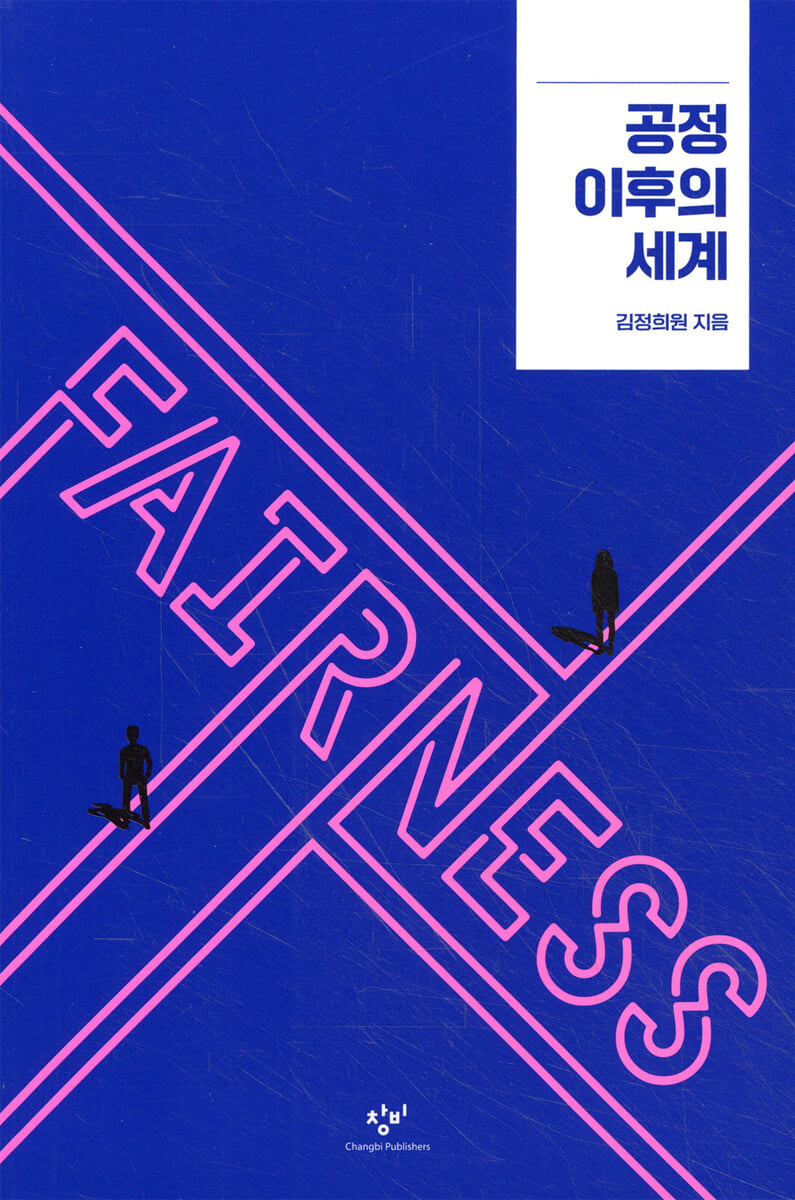
The world after the fair
 |
Description
Book Introduction
Why do they want “perfectly fair competition”?
The Other Side of the "MZ Generation Fair Trade Fever"
The keyword that has recently heated up Korean society the most is ‘fairness.’
Especially in matters such as employment and college entrance exams, the younger generation's desire for "perfectly fair competition" has become a powerful dominant discourse that is difficult to express simply as an expectation or wish.
Fairness was the most controversial issue that determined the direction of the 20th presidential election, and now that the new administration has taken office, personnel issues are the biggest reason for the decline in approval ratings.
In Korean society, fairness is prioritized as a top priority, but at the same time, its meaning is distorted.
Why has Korean society become so obsessed with "fairness"? Kim Jeong-hee-won (Professor of Communication Studies, Arizona State University), who has sharply analyzed the discourse of fairness in Korean society, has published her first solo book, "The World After Fairness."
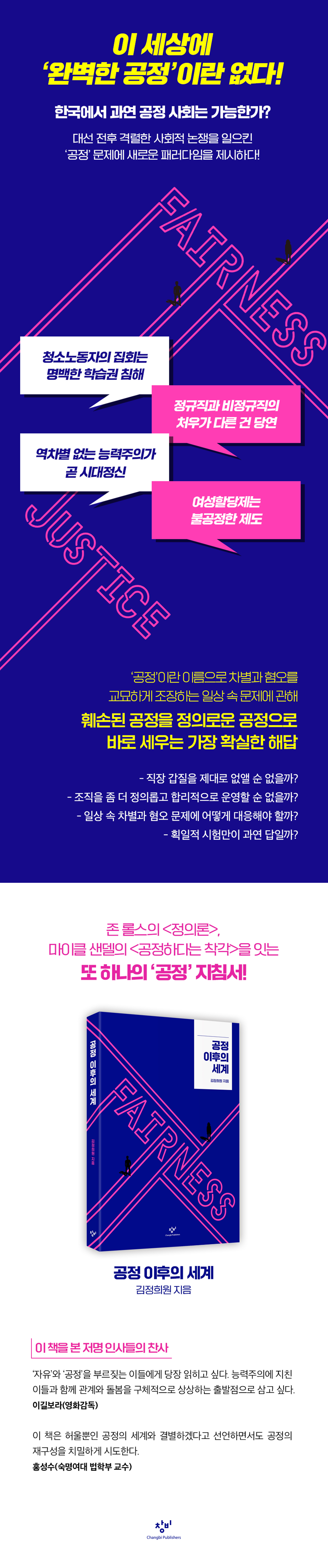
Through familiar cases such as the conversion of Incheon International Airport Corporation to regular employment, the female quota system, and the "Lee Dae-nam" controversy, this book provides a starting point for understanding the younger generation's demands for fairness. It also meticulously analyzes how fairness meets meritocracy to foster discrimination and hatred, and who actively exploits this.
It presents an alternative vision that goes beyond the structural context and ideological background implicit in the discourse on fairness, and goes beyond the exhausting debate on fairness.
For those who have grown weary of the uniform discourse on fairness and those who have felt dizzy by the confusing concept of fairness, "The World After Fairness" will open new perspectives.
The Other Side of the "MZ Generation Fair Trade Fever"
The keyword that has recently heated up Korean society the most is ‘fairness.’
Especially in matters such as employment and college entrance exams, the younger generation's desire for "perfectly fair competition" has become a powerful dominant discourse that is difficult to express simply as an expectation or wish.
Fairness was the most controversial issue that determined the direction of the 20th presidential election, and now that the new administration has taken office, personnel issues are the biggest reason for the decline in approval ratings.
In Korean society, fairness is prioritized as a top priority, but at the same time, its meaning is distorted.
Why has Korean society become so obsessed with "fairness"? Kim Jeong-hee-won (Professor of Communication Studies, Arizona State University), who has sharply analyzed the discourse of fairness in Korean society, has published her first solo book, "The World After Fairness."
Through familiar cases such as the conversion of Incheon International Airport Corporation to regular employment, the female quota system, and the "Lee Dae-nam" controversy, this book provides a starting point for understanding the younger generation's demands for fairness. It also meticulously analyzes how fairness meets meritocracy to foster discrimination and hatred, and who actively exploits this.
It presents an alternative vision that goes beyond the structural context and ideological background implicit in the discourse on fairness, and goes beyond the exhausting debate on fairness.
For those who have grown weary of the uniform discourse on fairness and those who have felt dizzy by the confusing concept of fairness, "The World After Fairness" will open new perspectives.
- You can preview some of the book's contents.
Preview
index
Prologue: Drawing a Different World
Part 1 | Dismantling and Reconstructing the Process
Chapter 1 | What Happened Before We Longed for "Perfectly Fair Competition"
The zeitgeist of "fairness" / An unstable society, anxious youth / An individualistic counterattack against instability / Each for himself and the colonized life
Chapter 2 | Dissecting the Unfair "Discourse of Fairness"
Can I Become a Full-Time Employee at Incheon International Airport? / The Lotto Employment Prevention Act? / The Closed Discourse of "Fairness" / The Harmfulness of a Closed World
Chapter 3 | What It Means to Say "Meritocracy Is a Fiction"
Exams are fair to everyone / I recognize the winners of meritocracy / Beyond Michael Sandel: The Problem of Structural Inequality / The Critique of Meritocracy We Need Now
Chapter 4 | The Society of the Haves: Discrimination and Hatred Hidden in "Fairness"
Abolish the quota system in the name of 'fairness' / Backlash and the collusion of ignorance / Ability and meritocracy, complicit in discrimination / Beyond discrimination and hatred: Redistribution of recognition
Part 2 | Rewriting Justice
Chapter 5 | Care for All: Me and Us in Solidarity Without Fear
When You Feel Burnout / The Ethics of Care and Relational Ontology / Radical Self-Care
Chapter 6 | Universal Justice: A World Where Everyone is Completely Equal
The Fraud Called "Freedom": Infinite Competition, Round 1 / The Hierarchy of Comparison and Selection: Infinite Competition, Round 2 / Beyond the Spectrum of Infinite Competition: Justice for All
Chapter 7 | Just Organizations: A Place Where Everyone Can Work with Humanity
Why is bullying so common? / Just organizations are possible / Sustainable work, organizations, and life
Chapter 8 | A Vision of Transformative Justice: A Better World Is Possible
A Future Forever Delayed / Politics of Example at odds with the times / Grassroots Power: We Make Our Future
Acknowledgements
main
Part 1 | Dismantling and Reconstructing the Process
Chapter 1 | What Happened Before We Longed for "Perfectly Fair Competition"
The zeitgeist of "fairness" / An unstable society, anxious youth / An individualistic counterattack against instability / Each for himself and the colonized life
Chapter 2 | Dissecting the Unfair "Discourse of Fairness"
Can I Become a Full-Time Employee at Incheon International Airport? / The Lotto Employment Prevention Act? / The Closed Discourse of "Fairness" / The Harmfulness of a Closed World
Chapter 3 | What It Means to Say "Meritocracy Is a Fiction"
Exams are fair to everyone / I recognize the winners of meritocracy / Beyond Michael Sandel: The Problem of Structural Inequality / The Critique of Meritocracy We Need Now
Chapter 4 | The Society of the Haves: Discrimination and Hatred Hidden in "Fairness"
Abolish the quota system in the name of 'fairness' / Backlash and the collusion of ignorance / Ability and meritocracy, complicit in discrimination / Beyond discrimination and hatred: Redistribution of recognition
Part 2 | Rewriting Justice
Chapter 5 | Care for All: Me and Us in Solidarity Without Fear
When You Feel Burnout / The Ethics of Care and Relational Ontology / Radical Self-Care
Chapter 6 | Universal Justice: A World Where Everyone is Completely Equal
The Fraud Called "Freedom": Infinite Competition, Round 1 / The Hierarchy of Comparison and Selection: Infinite Competition, Round 2 / Beyond the Spectrum of Infinite Competition: Justice for All
Chapter 7 | Just Organizations: A Place Where Everyone Can Work with Humanity
Why is bullying so common? / Just organizations are possible / Sustainable work, organizations, and life
Chapter 8 | A Vision of Transformative Justice: A Better World Is Possible
A Future Forever Delayed / Politics of Example at odds with the times / Grassroots Power: We Make Our Future
Acknowledgements
main
Detailed image
Publisher's Review
The zeitgeist of 'fairness'
Is the 'Each for himself counterattack' right?
The model of fairness that is repeatedly discussed in Korean society today is an atomistic model that believes that structural and historical inequalities can be nullified and that everything can be solved through individual effort and competition alone.
The demand for fairness—that everyone should be evaluated by the same standards and therefore not be unfairly disadvantaged (in other words, that everyone should be compensated or treated equally)—seems at first glance to be just and uncontroversial.
However, this kind of 'fairness' is far from being a universal value that should be applied throughout society, or a fairness as an essential principle for securing social justice.
The cry of “it’s not fair” is often used as a means to justify feelings of injustice, resentment, and deprivation.
The author points out that the reason the younger generation is so enthusiastic about fair competition and the myth of meritocracy is not unrelated to their socioeconomic background.
It is part of an individual counterattack against instability in an era where each person must survive on their own.
However, the blind faith in “perfectly fair competition” actually ignores and exacerbates structural and systematic discrimination and inequality.
Part 1 of the book examines what the powerful waves of fairness discourse, which have been considered core values in Korean society in recent years, have left us with.
It points out in detail the mechanisms of fairness and discursive closure as individual counterattacks against instability, and how the myth of meritocracy blinds us to discrimination resulting from the complex intersection of class and identity.
The keyword that runs through this is individualistic ontology that believes only in the logic of each for himself without any consideration of the possibility of coexistence with others.
While examining the existing discourse on fairness, the author also points out the limitations of Michael Sandel's position, which has exerted a strong influence on the meritocracy debate.
While acknowledging the limitations of meritocracy, Sandel's argument, which proposes a humble individual attitude and a lottery system as alternatives, is not simply moderate in that it individualizes structural problems, but rather leads to a conservatism in the critical discourse on meritocracy.
Beyond fairness to justice
A better world is possible
Following Part 1, which dismantled and reconstructed 'fairness' piece by piece, Part 2 presents a vision that goes beyond fairness to justice and a better world.
It presents a definition of the values necessary to overcome the limitations of individualistic ontology.
The definition presented here differs from the traditional philosophical theory of justice, which emphasizes the objective judgment of pure reason and the independent subjectivity of the individual.
The definition discussed here is based on a relational ontology and is closely intertwined with alternative values necessary for a sustainable future.
Building on the twin pillars of universal justice and care, the author introduces a practical horizon through the principles of organizational fairness most closely related to our lives and examples of transformative justice movements in everyday life.
A fair and just society can be achieved through politics based on relationships and community, not individualized interests, and politics with a long-term perspective that we practice in our lives, rather than politics based on temporary efficacy.
There is nothing wrong with the process itself.
There is nothing wrong with the desire for a fair and just society.
But the current discourse on fairness is just going around in circles wondering whether it is fair or not.
"The World After Fairness" puts the brakes on that hamster wheel and introduces the concept and discussion of justice that Korean society, obsessed with interpreting and exploiting "fairness" in a flat way, has been missing.
"The World After Fairness" will shake up our outdated thinking and lead us beyond the world of mere fairness into a new world.
Is the 'Each for himself counterattack' right?
The model of fairness that is repeatedly discussed in Korean society today is an atomistic model that believes that structural and historical inequalities can be nullified and that everything can be solved through individual effort and competition alone.
The demand for fairness—that everyone should be evaluated by the same standards and therefore not be unfairly disadvantaged (in other words, that everyone should be compensated or treated equally)—seems at first glance to be just and uncontroversial.
However, this kind of 'fairness' is far from being a universal value that should be applied throughout society, or a fairness as an essential principle for securing social justice.
The cry of “it’s not fair” is often used as a means to justify feelings of injustice, resentment, and deprivation.
The author points out that the reason the younger generation is so enthusiastic about fair competition and the myth of meritocracy is not unrelated to their socioeconomic background.
It is part of an individual counterattack against instability in an era where each person must survive on their own.
However, the blind faith in “perfectly fair competition” actually ignores and exacerbates structural and systematic discrimination and inequality.
Part 1 of the book examines what the powerful waves of fairness discourse, which have been considered core values in Korean society in recent years, have left us with.
It points out in detail the mechanisms of fairness and discursive closure as individual counterattacks against instability, and how the myth of meritocracy blinds us to discrimination resulting from the complex intersection of class and identity.
The keyword that runs through this is individualistic ontology that believes only in the logic of each for himself without any consideration of the possibility of coexistence with others.
While examining the existing discourse on fairness, the author also points out the limitations of Michael Sandel's position, which has exerted a strong influence on the meritocracy debate.
While acknowledging the limitations of meritocracy, Sandel's argument, which proposes a humble individual attitude and a lottery system as alternatives, is not simply moderate in that it individualizes structural problems, but rather leads to a conservatism in the critical discourse on meritocracy.
Beyond fairness to justice
A better world is possible
Following Part 1, which dismantled and reconstructed 'fairness' piece by piece, Part 2 presents a vision that goes beyond fairness to justice and a better world.
It presents a definition of the values necessary to overcome the limitations of individualistic ontology.
The definition presented here differs from the traditional philosophical theory of justice, which emphasizes the objective judgment of pure reason and the independent subjectivity of the individual.
The definition discussed here is based on a relational ontology and is closely intertwined with alternative values necessary for a sustainable future.
Building on the twin pillars of universal justice and care, the author introduces a practical horizon through the principles of organizational fairness most closely related to our lives and examples of transformative justice movements in everyday life.
A fair and just society can be achieved through politics based on relationships and community, not individualized interests, and politics with a long-term perspective that we practice in our lives, rather than politics based on temporary efficacy.
There is nothing wrong with the process itself.
There is nothing wrong with the desire for a fair and just society.
But the current discourse on fairness is just going around in circles wondering whether it is fair or not.
"The World After Fairness" puts the brakes on that hamster wheel and introduces the concept and discussion of justice that Korean society, obsessed with interpreting and exploiting "fairness" in a flat way, has been missing.
"The World After Fairness" will shake up our outdated thinking and lead us beyond the world of mere fairness into a new world.
GOODS SPECIFICS
- Publication date: July 25, 2022
- Page count, weight, size: 264 pages | 422g | 140*210*15mm
- ISBN13: 9788936486822
- ISBN10: 8936486829
You may also like
카테고리
korean


korean

![GQ KOREA Mark (Monthly): December [2025]](http://librairie.coreenne.fr/cdn/shop/files/8ef265dbbfbf186523ed75ba7319009d.jpg?v=1765340328&width=3840)


