

First summer, Wanju
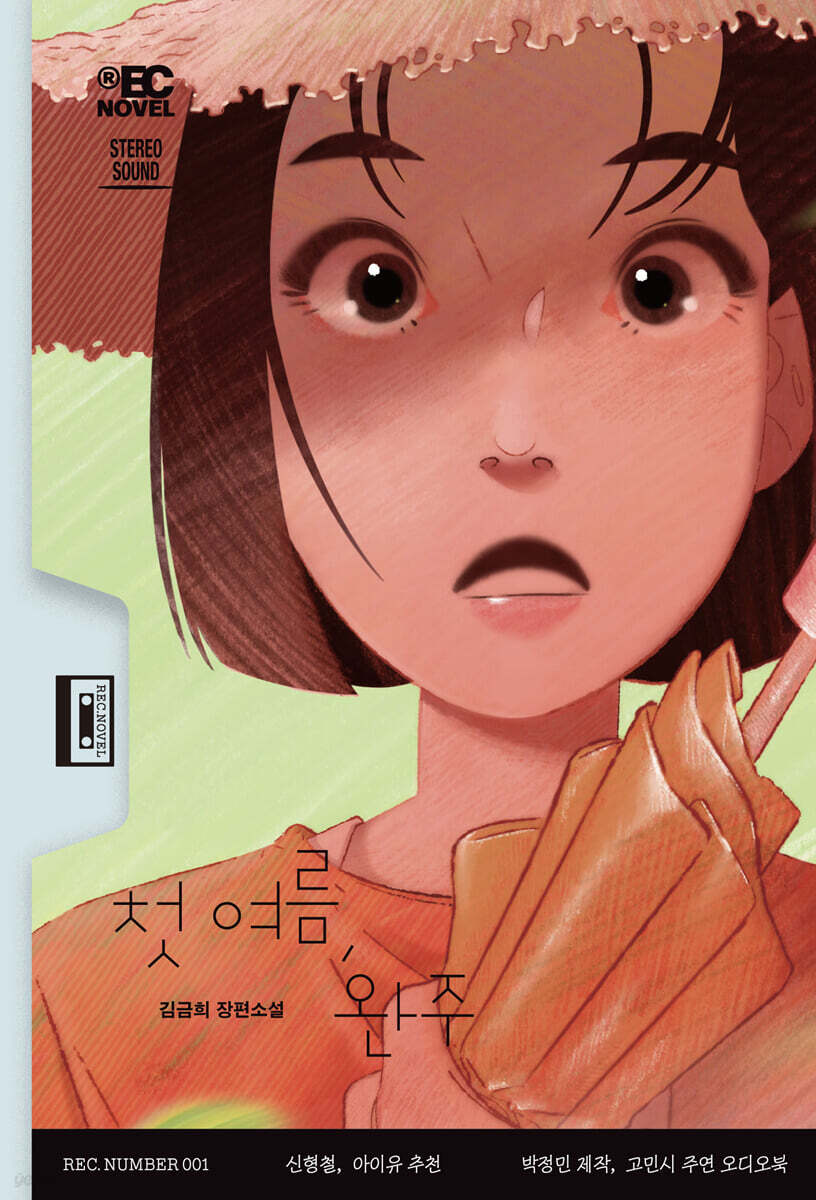 |
Description
Book Introduction
- A word from MD
-
Things you see when you complete a certain periodThe protagonist, Son Yeol-mae, who was scammed by her close senior, sets out for her senior's hometown, Wanju Village, as if chasing or being chased by him.
There, you will spend a midsummer with people with their own stories, and face both the light and shadow of life.
The first volume of the untitled Listening Novel series, in which novelist Kim Geum-hee's prose shines even brighter.
May 2, 2025. Novel/Poetry PD Kim Yu-ri
A new full-length novel by Kim Geum-hee, a contemporary writer who creates a world of meticulous warmth.
Son Yeol-mae, a voice actor, visits the hometown of his senior, Go Soo-mi, who disappeared without paying her debt, and ends up staying at the house of Soo-mi's mother, who runs a joint funeral home and store.
With nowhere to go and even a strange voice, Yeolmae works at Sumi's mother's store and meets all kinds of neighborhood people.
A mysterious alien-like young man named 'Ajuk' Kang Dong-kyung, a middle school student next door who likes to dance but hates sad stories, and actress Jeong Ae-ra who lives with a Sigorjabre dog named Chanel, are vivid and unique characters who continue to complete their summer journeys together with the fruit.
This novel, the first volume of the "Audible Novel" project published by actor Park Jung-min's untitled publishing company, was written with audiobooks for the visually impaired in mind. Despite being a full-length novel, it is written in a unique way that makes the dialogue and text come alive, adding to the enjoyment of reading.
This story by author Kim Geum-hee, which depicts both the sadness contained in laughter and the laughter contained in sadness with deep affection, brightens the hearts of readers like the summer light that soon sets in, and draws us toward “something true in a completely different way.”
Son Yeol-mae, a voice actor, visits the hometown of his senior, Go Soo-mi, who disappeared without paying her debt, and ends up staying at the house of Soo-mi's mother, who runs a joint funeral home and store.
With nowhere to go and even a strange voice, Yeolmae works at Sumi's mother's store and meets all kinds of neighborhood people.
A mysterious alien-like young man named 'Ajuk' Kang Dong-kyung, a middle school student next door who likes to dance but hates sad stories, and actress Jeong Ae-ra who lives with a Sigorjabre dog named Chanel, are vivid and unique characters who continue to complete their summer journeys together with the fruit.
This novel, the first volume of the "Audible Novel" project published by actor Park Jung-min's untitled publishing company, was written with audiobooks for the visually impaired in mind. Despite being a full-length novel, it is written in a unique way that makes the dialogue and text come alive, adding to the enjoyment of reading.
This story by author Kim Geum-hee, which depicts both the sadness contained in laughter and the laughter contained in sadness with deep affection, brightens the hearts of readers like the summer light that soon sets in, and draws us toward “something true in a completely different way.”
- You can preview some of the book's contents.
Preview
index
First summer, Wanju
Author's Note - The Joy of Bringing Summer Home
Note
Recommendation
Author's Note - The Joy of Bringing Summer Home
Note
Recommendation
Detailed image

Into the book
The first person Son Yeol-mae imitated was Stanley Ipkiss.
He is the main character of the movie "The Mask" played by Jim Carrey. When he puts on an ancient wooden mask, he transforms into a completely different being than usual.
If he's a hero, he could be classified as a type of hero, but that thick green buttercream face that's packaged like that brings chaos like a tornado and turns reality into a mess.
The world we knew becomes something completely different.
So it's true in a completely different way.
--- p.7
Yangmi: Hey, Gandhi, stop asking if you're sad.
Yulia: Why?
Yang Mi: (Suppressing her anger) Because I hate that word so much.
--- pp.66-67
The fruit was a source of self-destruction.
As I took more even breaths, my thoughts finally flew away.
The feeling of things being noisy disappeared and only standing still remained.
Next to him stands a depressed diaper suffering from excess black bile, a problem student who fiercely resists the mere mention of the word sadness, and spring is just spring.
The weeping willow seeds flew around them like a blizzard.
--- p.87
Son Yeol-mae: So, that's what it means to be a piece of fish with no head or tail, that's what alien life is like, right?
Ajumma: Another alien… … And I don’t really like the word life either.
Isn't something so lumpy and materialistic, and simply "effective," more appropriate for describing a living state? It can capture the subtle forms of human beings, tree leaves, water droplets, even stardust, all of which come and go.
--- p.102
The fruit that was looking at Sumi's face together changed the words that her classmates had jeered at her a while ago into news of her current situation.
Looking at the person I saw in Yeouido, I wonder where he got a job.
A look of relief crossed Sumi's face for a moment, but Sumi's mother hid her expression.
Instead of things like joy, pleasure, relief and optimism, we quickly become more comfortable with feelings of sadness, fatigue, anxiety, discomfort and silence.
--- p.110
Slow tempo music flows.
Loneliness and loss, a longing for the source of purity, a reciprocal love that one does not want to give up even in the midst of helplessness and weakness - such delicate beliefs were contained in Shin Hae-chul's music of that time.
--- p.117
The fruit was something that everyone, who encountered it hundreds of times a day, was curious about.
Why are you wearing such wrinkled sneakers? Where are you going? Will you be welcomed? What's being said on your phone? Are there any only ㅎㅎㅎ or ㅋㅋㅋ images?
I now know that the urge to ask that question has to do with the loneliness of the fruit.
That question was ultimately what he himself wanted.
--- p.152
Being in the pit, the fruit smelled and sounded more clearly than before.
In addition to the original night forest's embrace of the clear tones of summer chants, the fluttering wings of night birds that move from branch to branch, and the valley wind that descends after shaking the tender branches and deafens the ears,
The sound of ripples in a pond that has become darker to reflect the moon.
The transparent slash of sharp fir leaves in the air.
The sound of earthworms finding their way through the dirt.
The sound of mushrooms cracking through the bark of a decayed tree.
The sound of the night fog moving widely like a blanket being spread out.
Then the sound of it landing on the diaper and fruit.
That's the sound of the night existing.
--- p.155
Son Yeolmae: What was that just now? Was it static electricity or something?
Ajugeo: If I had to explain it, I would say it is a friendly assistance.
The desire of living things to help other living things.
--- p.157
Shin Hae-chul: (…) Well, when I think about it later, it seems dramatic, but when I think about the sadness they and their families went through, I think there are no dramatic accidents in the world.
An accident is an accident.
Death is sad.
We'll close with Lynyrd Skynyrd's "Simple Man."
To the listener who sent us their story from Wanpyeong County today, I know it feels so helpless to hear these words, but I hope you find strength.
Because we each have to complete our own share.
--- pp.168-169
After the final exams, Yangmi completed the transfer process.
Regardless of the development, the parents decided that they would no longer leave Yangmi alone.
Even after that, Yangmi was still found on the school playground.
I was running around the playground alone, then stopped, took a deep breath, and looked into the distance.
That sharp gaze, as if trying to wrestle with the misfortune that was blocking him, most resembled the light of summer.
--- p.186
Son Yeolmae: I lost love, not a person, love.
Grandfather: Love? Love isn't something you lose.
How can I lose what I have built in my heart?
--- p.212
The longing for something swept through my heart.
Something different, something true in a completely different way, like that spring that went in search of perfection.
Even in this city, where there are no trees and no sense of community in the forest, wouldn't such a miracle sometimes happen?
He is the main character of the movie "The Mask" played by Jim Carrey. When he puts on an ancient wooden mask, he transforms into a completely different being than usual.
If he's a hero, he could be classified as a type of hero, but that thick green buttercream face that's packaged like that brings chaos like a tornado and turns reality into a mess.
The world we knew becomes something completely different.
So it's true in a completely different way.
--- p.7
Yangmi: Hey, Gandhi, stop asking if you're sad.
Yulia: Why?
Yang Mi: (Suppressing her anger) Because I hate that word so much.
--- pp.66-67
The fruit was a source of self-destruction.
As I took more even breaths, my thoughts finally flew away.
The feeling of things being noisy disappeared and only standing still remained.
Next to him stands a depressed diaper suffering from excess black bile, a problem student who fiercely resists the mere mention of the word sadness, and spring is just spring.
The weeping willow seeds flew around them like a blizzard.
--- p.87
Son Yeol-mae: So, that's what it means to be a piece of fish with no head or tail, that's what alien life is like, right?
Ajumma: Another alien… … And I don’t really like the word life either.
Isn't something so lumpy and materialistic, and simply "effective," more appropriate for describing a living state? It can capture the subtle forms of human beings, tree leaves, water droplets, even stardust, all of which come and go.
--- p.102
The fruit that was looking at Sumi's face together changed the words that her classmates had jeered at her a while ago into news of her current situation.
Looking at the person I saw in Yeouido, I wonder where he got a job.
A look of relief crossed Sumi's face for a moment, but Sumi's mother hid her expression.
Instead of things like joy, pleasure, relief and optimism, we quickly become more comfortable with feelings of sadness, fatigue, anxiety, discomfort and silence.
--- p.110
Slow tempo music flows.
Loneliness and loss, a longing for the source of purity, a reciprocal love that one does not want to give up even in the midst of helplessness and weakness - such delicate beliefs were contained in Shin Hae-chul's music of that time.
--- p.117
The fruit was something that everyone, who encountered it hundreds of times a day, was curious about.
Why are you wearing such wrinkled sneakers? Where are you going? Will you be welcomed? What's being said on your phone? Are there any only ㅎㅎㅎ or ㅋㅋㅋ images?
I now know that the urge to ask that question has to do with the loneliness of the fruit.
That question was ultimately what he himself wanted.
--- p.152
Being in the pit, the fruit smelled and sounded more clearly than before.
In addition to the original night forest's embrace of the clear tones of summer chants, the fluttering wings of night birds that move from branch to branch, and the valley wind that descends after shaking the tender branches and deafens the ears,
The sound of ripples in a pond that has become darker to reflect the moon.
The transparent slash of sharp fir leaves in the air.
The sound of earthworms finding their way through the dirt.
The sound of mushrooms cracking through the bark of a decayed tree.
The sound of the night fog moving widely like a blanket being spread out.
Then the sound of it landing on the diaper and fruit.
That's the sound of the night existing.
--- p.155
Son Yeolmae: What was that just now? Was it static electricity or something?
Ajugeo: If I had to explain it, I would say it is a friendly assistance.
The desire of living things to help other living things.
--- p.157
Shin Hae-chul: (…) Well, when I think about it later, it seems dramatic, but when I think about the sadness they and their families went through, I think there are no dramatic accidents in the world.
An accident is an accident.
Death is sad.
We'll close with Lynyrd Skynyrd's "Simple Man."
To the listener who sent us their story from Wanpyeong County today, I know it feels so helpless to hear these words, but I hope you find strength.
Because we each have to complete our own share.
--- pp.168-169
After the final exams, Yangmi completed the transfer process.
Regardless of the development, the parents decided that they would no longer leave Yangmi alone.
Even after that, Yangmi was still found on the school playground.
I was running around the playground alone, then stopped, took a deep breath, and looked into the distance.
That sharp gaze, as if trying to wrestle with the misfortune that was blocking him, most resembled the light of summer.
--- p.186
Son Yeolmae: I lost love, not a person, love.
Grandfather: Love? Love isn't something you lose.
How can I lose what I have built in my heart?
--- p.212
The longing for something swept through my heart.
Something different, something true in a completely different way, like that spring that went in search of perfection.
Even in this city, where there are no trees and no sense of community in the forest, wouldn't such a miracle sometimes happen?
--- p.213
Publisher's Review
A world of meticulous warmth created by Kim Geum-hee, a contemporary writer.
The first volume of the Untitled Listening Novel series published by the publisher
Critic Shin Hyeong-cheol recommends singer IU!
“As the title suggests, this novel deals with summer, but we feel as if we have experienced all four seasons.
“The four seasons, that is, another name for the polyhedron called life.”
- Shin Hyeong-cheol (literary critic)
“There isn’t a single scene that makes me laugh out loud, but somehow doesn’t make me feel a little sad.
On the contrary, even in a single leaf or a line of cheerful dialogue from the late Shin Hae-chul flowing from the radio, there is an inevitable sadness, but strangely enough, as if intoxicated by the forest of diapers, I keep laughing out loud.”
- IU (singer)
The new full-length novel, "First Summer, Wanju," by Kim Geum-hee, a contemporary writer who creates a world of meticulous warmth, has been published as the first volume in the Listening Novel series by publisher Muje.
This work is a touching story of Son Yeol-mae, who arrives in Wanju village with a dejected heart and wounds, and finds the courage to step out into the world again through the “reciprocal love” between people. Author Kim Geum-hee’s penmanship shines as she thoughtfully portrays both human sorrow and warmth.
When her close senior, Go Soo-mi, disappears without paying off the debt she incurred from a failed investment, Yeolmae heads to Wanju Village, Soo-mi's hometown, to find her.
With no money, no place to go, and even a voice actor with a strange voice, Yeolmae ends up staying at the house of Sumi's mother, who is a joint funeral director and store owner.
In this way, the fruit guards the store and meets the colorful neighbors of Wanju Village, where a giant Wanju tree stands.
A mysterious alien-like young man named 'Ajuk' Kang Dong-kyung, a middle school student next door who likes to dance but hates sad stories, and actress Jeong Ae-ra who lives with a Sigorjabre dog named Chanel, are vivid and unique characters who continue to complete their own summer journeys together with the fruit.
The audible novel series presented by publisher Muje is a unique series that first publishes audiobooks for visually impaired readers and then publishes paper books.
While other books can be read by the visually impaired, the goal of audio novels is to make them readable by the non-visually impaired as well.
The first volume, "First Summer, Wanju," was written primarily for audiobook use, and features a mix of dialogue and text, much like a play. This not only enhances the quality of the audiobook, but also provides a unique experience for readers of paper books, allowing them to imagine the audio while reading.
The delicious flavor of the dialogue and the delicate, flowing text add to the joy of encountering a special novel.
The audiobook produced by actor Park Jung-min himself attracted attention with its stellar cast including Go Min-si, Kim Do-hoon, Choi Yang-rak, and Yeom Jeong-ah.
“Okay, let’s not talk about such sad stories anymore.”
People who complete their own share of the race, even when they are sad or broken.
Son Yeol-mae began her career as a voice actor when she read subtitles for her illiterate grandfather as a child.
While establishing herself as a voice actress, Yeolmae suddenly loses her way when her roommate and senior, Go Soo-mi, whom she has known for over ten years, disappears, leaving her with debt from an investment loss, and her voice changes due to depression.
A fruit that suddenly came to mind and headed towards Summi's mother's house.
The fruit that arrived in Wanju Village was a hopeless situation where people had lost their money and jobs.
Sumi's mother, who understood the situation of such a child, said, "If you have somewhere else to go, you can stay here," and gave her a place to stay.
Not only these fruits, but also the villagers each have their own circumstances.
The diaper, who is somewhat strange and mysterious, cries out “loss of humanity” because she is tired of humans, and Han Yang-mi, a middle school student next door, practices dancing and dreams of becoming a star, but the reality of being left alone without a single guardian to properly look after her is not easy.
Soo-mi's mother, who is carrying her missing daughter in her heart, works as a funeral director and fights cancer alone, and actress Jeong Ae-ra, who has become less active, lives alone here with her dog for some reason.
In addition, the village of Wanju is vividly filled with people who are like our real neighbors, such as children from multicultural families who face discrimination and misunderstanding, and Yong-un's mother who cannot forget the pain of losing her child in a major disaster.
Although these characters all harbor sadness on one side, the novel does not look at them with a pitiful gaze.
Rather, it seems to be saying that life is originally like that, and that everyone lives with their own pain and wounds.
And yet, we can laugh, we can love, we can get up again and move forward.
This novel, which deeply examines the disappointments and failures that everyone experiences at least once, warmly depicts the truth of life where light and shadow coexist, embracing both the sadness contained in laughter and the laughter contained in sadness.
A heart that supports each other even in times of discouragement and hurt
An ordinary miracle that comes like the dazzling summer light
“Grandfather: Love? Love isn’t something you lose.
“How can I lose what I have built in my heart?” (p. 212)
The grandfather of the fruit who passed away appears in the dream and answers the fruit who says she lost love by saying, “Love is not something to be lost,” and “How can you lose what you built in your heart?”
You can lose something in the reality right in front of you, but you can't lose the love you built in your heart.
This story is not limited to love between lovers.
For the fruit that experiences connection with nature, the ajumbo explains it as “communionary assistance,” that is, “the desire of living things to help living things.”
This desire to share not only with people but with all living things in this world, once formed, cannot be lost.
The novel illuminates the things built up in our hearts and conveys the comfort and hope of living by sharing those feelings.
Sometimes our reality goes awry and “the world we knew becomes something else entirely.”
“So it’s true in a completely different way.”
The fruit hopes that, like the spring that came to Wanju Village after returning to Seoul, “something true in a completely different way” will miraculously come to the city.
It is not certain whether the wind of the fruit will come true, but readers will be able to encounter 'something true in a different way' in this novel, and some miracle that the novel unfolds.
Author's Note
The truth, the absolute truth, is sometimes too narrow to accommodate life.
Rather, something more receptive, long-lasting, and persistent is needed.
It's like a summer visit that lands on each other's shoulders before we even realize it.
(…) I have many thoughts, but this is my completion.
And even if it is a 'lacking' finish, I am happy and not disappointed.
While working on the book, I started thinking about the state of being “true in a completely different way.”
― From the author’s note
The first volume of the Untitled Listening Novel series published by the publisher
Critic Shin Hyeong-cheol recommends singer IU!
“As the title suggests, this novel deals with summer, but we feel as if we have experienced all four seasons.
“The four seasons, that is, another name for the polyhedron called life.”
- Shin Hyeong-cheol (literary critic)
“There isn’t a single scene that makes me laugh out loud, but somehow doesn’t make me feel a little sad.
On the contrary, even in a single leaf or a line of cheerful dialogue from the late Shin Hae-chul flowing from the radio, there is an inevitable sadness, but strangely enough, as if intoxicated by the forest of diapers, I keep laughing out loud.”
- IU (singer)
The new full-length novel, "First Summer, Wanju," by Kim Geum-hee, a contemporary writer who creates a world of meticulous warmth, has been published as the first volume in the Listening Novel series by publisher Muje.
This work is a touching story of Son Yeol-mae, who arrives in Wanju village with a dejected heart and wounds, and finds the courage to step out into the world again through the “reciprocal love” between people. Author Kim Geum-hee’s penmanship shines as she thoughtfully portrays both human sorrow and warmth.
When her close senior, Go Soo-mi, disappears without paying off the debt she incurred from a failed investment, Yeolmae heads to Wanju Village, Soo-mi's hometown, to find her.
With no money, no place to go, and even a voice actor with a strange voice, Yeolmae ends up staying at the house of Sumi's mother, who is a joint funeral director and store owner.
In this way, the fruit guards the store and meets the colorful neighbors of Wanju Village, where a giant Wanju tree stands.
A mysterious alien-like young man named 'Ajuk' Kang Dong-kyung, a middle school student next door who likes to dance but hates sad stories, and actress Jeong Ae-ra who lives with a Sigorjabre dog named Chanel, are vivid and unique characters who continue to complete their own summer journeys together with the fruit.
The audible novel series presented by publisher Muje is a unique series that first publishes audiobooks for visually impaired readers and then publishes paper books.
While other books can be read by the visually impaired, the goal of audio novels is to make them readable by the non-visually impaired as well.
The first volume, "First Summer, Wanju," was written primarily for audiobook use, and features a mix of dialogue and text, much like a play. This not only enhances the quality of the audiobook, but also provides a unique experience for readers of paper books, allowing them to imagine the audio while reading.
The delicious flavor of the dialogue and the delicate, flowing text add to the joy of encountering a special novel.
The audiobook produced by actor Park Jung-min himself attracted attention with its stellar cast including Go Min-si, Kim Do-hoon, Choi Yang-rak, and Yeom Jeong-ah.
“Okay, let’s not talk about such sad stories anymore.”
People who complete their own share of the race, even when they are sad or broken.
Son Yeol-mae began her career as a voice actor when she read subtitles for her illiterate grandfather as a child.
While establishing herself as a voice actress, Yeolmae suddenly loses her way when her roommate and senior, Go Soo-mi, whom she has known for over ten years, disappears, leaving her with debt from an investment loss, and her voice changes due to depression.
A fruit that suddenly came to mind and headed towards Summi's mother's house.
The fruit that arrived in Wanju Village was a hopeless situation where people had lost their money and jobs.
Sumi's mother, who understood the situation of such a child, said, "If you have somewhere else to go, you can stay here," and gave her a place to stay.
Not only these fruits, but also the villagers each have their own circumstances.
The diaper, who is somewhat strange and mysterious, cries out “loss of humanity” because she is tired of humans, and Han Yang-mi, a middle school student next door, practices dancing and dreams of becoming a star, but the reality of being left alone without a single guardian to properly look after her is not easy.
Soo-mi's mother, who is carrying her missing daughter in her heart, works as a funeral director and fights cancer alone, and actress Jeong Ae-ra, who has become less active, lives alone here with her dog for some reason.
In addition, the village of Wanju is vividly filled with people who are like our real neighbors, such as children from multicultural families who face discrimination and misunderstanding, and Yong-un's mother who cannot forget the pain of losing her child in a major disaster.
Although these characters all harbor sadness on one side, the novel does not look at them with a pitiful gaze.
Rather, it seems to be saying that life is originally like that, and that everyone lives with their own pain and wounds.
And yet, we can laugh, we can love, we can get up again and move forward.
This novel, which deeply examines the disappointments and failures that everyone experiences at least once, warmly depicts the truth of life where light and shadow coexist, embracing both the sadness contained in laughter and the laughter contained in sadness.
A heart that supports each other even in times of discouragement and hurt
An ordinary miracle that comes like the dazzling summer light
“Grandfather: Love? Love isn’t something you lose.
“How can I lose what I have built in my heart?” (p. 212)
The grandfather of the fruit who passed away appears in the dream and answers the fruit who says she lost love by saying, “Love is not something to be lost,” and “How can you lose what you built in your heart?”
You can lose something in the reality right in front of you, but you can't lose the love you built in your heart.
This story is not limited to love between lovers.
For the fruit that experiences connection with nature, the ajumbo explains it as “communionary assistance,” that is, “the desire of living things to help living things.”
This desire to share not only with people but with all living things in this world, once formed, cannot be lost.
The novel illuminates the things built up in our hearts and conveys the comfort and hope of living by sharing those feelings.
Sometimes our reality goes awry and “the world we knew becomes something else entirely.”
“So it’s true in a completely different way.”
The fruit hopes that, like the spring that came to Wanju Village after returning to Seoul, “something true in a completely different way” will miraculously come to the city.
It is not certain whether the wind of the fruit will come true, but readers will be able to encounter 'something true in a different way' in this novel, and some miracle that the novel unfolds.
Author's Note
The truth, the absolute truth, is sometimes too narrow to accommodate life.
Rather, something more receptive, long-lasting, and persistent is needed.
It's like a summer visit that lands on each other's shoulders before we even realize it.
(…) I have many thoughts, but this is my completion.
And even if it is a 'lacking' finish, I am happy and not disappointed.
While working on the book, I started thinking about the state of being “true in a completely different way.”
― From the author’s note
GOODS SPECIFICS
- Date of issue: May 8, 2025
- Page count, weight, size: 224 pages | 124*182*20mm
- ISBN13: 9791197221989
- ISBN10: 1197221980
You may also like
카테고리
korean


korean

![GQ KOREA Mark (Monthly): December [2025]](http://librairie.coreenne.fr/cdn/shop/files/8ef265dbbfbf186523ed75ba7319009d.jpg?v=1765340328&width=3840)


