

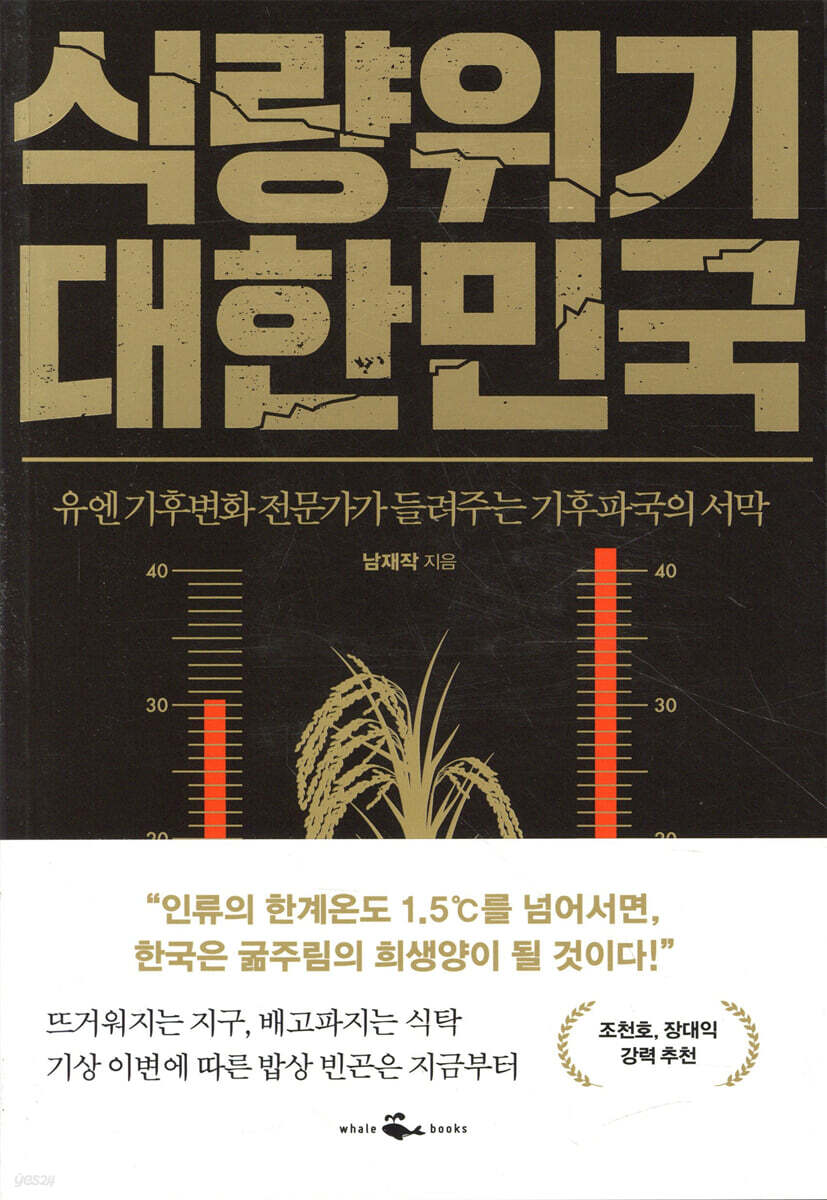
Food crisis in South Korea
 |
Description
Book Introduction
Food crisis, rising fuel prices... The beginning of an unprecedented climate catastrophe. A first in Korea, solved from the perspective of food security! “The United States, Europe, and Australia have already prepared for food shortages… “Korea wasn’t even prepared.” * Strongly recommended by Jang Dae-ik, Jo Cheon-ho, and Lee Yu-jin Every day, news comes out that threatens our dinner tables: India's restrictions on wheat and sugar exports, the war between Ukraine and Russia causing crop yields to decline, and the severe drought in the American Southwest and rising grain prices. Even if the war is not prolonged, the world will inevitably face increasingly serious food shortages due to climate change and population growth. Our country, which imports 80 percent of its grain, is particularly dependent on foreign countries. It is clear that Korea will be the first OECD country to be hit hardest when a large-scale food shortage occurs. The United States, Europe, Australia, and other countries have already prepared for food shortages, and China has also begun preparing for them. What preparations are we making? Dr. Nam Jae-jak, a UN climate change expert and KOICA agricultural ODA expert, says, “We cannot discuss a better future without carbon neutrality and food security.” In particular, they argue that South Korea, with its very low food self-sufficiency rate, is the most vulnerable to this crisis and yet is completely unprepared. "Food Crisis in Korea," the first in Korea to address both climate change and food shortages, seeks solutions to escape the sixth mass extinction, along with accurate knowledge about the climate crisis we often ignore. It provides insightful insights into how a 1.5-degree rise in global temperature will affect us, how we should address the food crisis caused by climate change, and whether Korea can achieve carbon neutrality. The next 30 years will be a completely different Earth than any human has ever experienced before, and there is no going back to the past. Still, if the world works together, if Korea discusses alternatives, and if individuals recognize the crisis, there is still hope. |
- You can preview some of the book's contents.
Preview
index
Recommendation
Prologue: Hot Earth, Hungry Table
Chapter 1: Food shortage imminent, what on earth is happening on Earth?
Don't look up at the sky │ Asking when things that have already changed will change │ The meaning of the IPCC 6th Assessment Report │ The process by which the world has acknowledged climate change │ The future average global temperature as seen from a 1.1-degree Earth │ Understanding climate change scenarios │ Small differences, big impacts: 1.5 degrees vs. 2 degrees │ Climate change attacks the weakest link first │ Climate refugees caused by rising sea levels │ Climate change in our daily lives │ Preparing for the next journey: Standing at the crossroads
Chapter 2: The Footsteps of the Climate Crisis We've Created
The population dilemma │ Who owns the Earth? │ The sigmoid curve │ Making bread out of air │ Unbridled population and agricultural development │ The law of diminishing returns │ Soil and civilization │ The sustainability crisis │ Earth's homeostasis and the Gaia theory │ Earth's carbon cycle │ Positive feedback and tipping points │ The minefield of Earth's climate │ Is nitrogen fertilizer the cause of climate change? │ An excuse for chemical fertilizers │ Changes in Korea's nitrogen cycle │ The green revolution │ DDT and the birth of the environmental movement │ The impact of increased meat consumption │ Is cow the new coal? │ A moving target │ The fourth wave │ The collapse of biodiversity
Chapter 3: Can Korea Keep Its Carbon Neutrality Promise?
Until we recognize the crisis │ Carbon clock and carbon budget │ Understanding greenhouse gas emissions sources │ Emissions by industry and renewable energy production │ Impact of land use changes │ The beginning of the renewable energy era │ Can electricity rates be raised? │ The frustrating transition to renewable energy │ Conflicts surrounding renewable energy │ Energy transition │ Efforts to overcome intermittency │ Microgrid, the power grid of the future │ Will the heart that beats for black smoke beat for black panels as well? │ Methane, a stepping stone 1 │ Can we reduce methane in the agriculture and livestock sector? │ Aging forests │ Forest management at the center of controversy │ Wildfires, both a consequence and a cause of climate change │ Stabilization and sustainability of the food supply chain │ Carbon neutrality in our agriculture │ Dilemma, will we reach carbon neutrality?
Chapter 4: No Future Without Food Security
The Future That Came First │ Climate and Food │ Food and the End of Civilization │ Rice Farming in Crisis │ Rice Encountered in Africa │ Abundant Table, Food in Crisis │ The Economics of Food │ Can Food Self-Sufficiency Be Increased? │ Open or Isolated Food Structure │ Catastrophe Caused by the Food Crisis │ Forget Fine Dust, Climate is the Real Problem │ Diversification of the Global Food Supply Chain │ Agricultural Cooperation Projects between Japan and Australia │ New Production, Reduce Food Waste │ Efforts to Recognize Food Waste │ Conditions for Food Security
Chapter 5: There is still a chance for a better future.
The climate has changed │ There is still opportunity │ What should we do? │ Inequality worsens the climate │ Can we reduce carbon emissions? │ Climate justice and a just transition │ Dunkirk and Normandy │ Kissing the earth │ Good soil makes good food │ Native species and biodiversity │ Efforts for agricultural diversity │ The future of food from a European perspective │ Ariadne's thread │ An excuse for the future │ What we must do │ For a better future
Epilogue: The world today and the world 30 years from now will not be the same.
main
Prologue: Hot Earth, Hungry Table
Chapter 1: Food shortage imminent, what on earth is happening on Earth?
Don't look up at the sky │ Asking when things that have already changed will change │ The meaning of the IPCC 6th Assessment Report │ The process by which the world has acknowledged climate change │ The future average global temperature as seen from a 1.1-degree Earth │ Understanding climate change scenarios │ Small differences, big impacts: 1.5 degrees vs. 2 degrees │ Climate change attacks the weakest link first │ Climate refugees caused by rising sea levels │ Climate change in our daily lives │ Preparing for the next journey: Standing at the crossroads
Chapter 2: The Footsteps of the Climate Crisis We've Created
The population dilemma │ Who owns the Earth? │ The sigmoid curve │ Making bread out of air │ Unbridled population and agricultural development │ The law of diminishing returns │ Soil and civilization │ The sustainability crisis │ Earth's homeostasis and the Gaia theory │ Earth's carbon cycle │ Positive feedback and tipping points │ The minefield of Earth's climate │ Is nitrogen fertilizer the cause of climate change? │ An excuse for chemical fertilizers │ Changes in Korea's nitrogen cycle │ The green revolution │ DDT and the birth of the environmental movement │ The impact of increased meat consumption │ Is cow the new coal? │ A moving target │ The fourth wave │ The collapse of biodiversity
Chapter 3: Can Korea Keep Its Carbon Neutrality Promise?
Until we recognize the crisis │ Carbon clock and carbon budget │ Understanding greenhouse gas emissions sources │ Emissions by industry and renewable energy production │ Impact of land use changes │ The beginning of the renewable energy era │ Can electricity rates be raised? │ The frustrating transition to renewable energy │ Conflicts surrounding renewable energy │ Energy transition │ Efforts to overcome intermittency │ Microgrid, the power grid of the future │ Will the heart that beats for black smoke beat for black panels as well? │ Methane, a stepping stone 1 │ Can we reduce methane in the agriculture and livestock sector? │ Aging forests │ Forest management at the center of controversy │ Wildfires, both a consequence and a cause of climate change │ Stabilization and sustainability of the food supply chain │ Carbon neutrality in our agriculture │ Dilemma, will we reach carbon neutrality?
Chapter 4: No Future Without Food Security
The Future That Came First │ Climate and Food │ Food and the End of Civilization │ Rice Farming in Crisis │ Rice Encountered in Africa │ Abundant Table, Food in Crisis │ The Economics of Food │ Can Food Self-Sufficiency Be Increased? │ Open or Isolated Food Structure │ Catastrophe Caused by the Food Crisis │ Forget Fine Dust, Climate is the Real Problem │ Diversification of the Global Food Supply Chain │ Agricultural Cooperation Projects between Japan and Australia │ New Production, Reduce Food Waste │ Efforts to Recognize Food Waste │ Conditions for Food Security
Chapter 5: There is still a chance for a better future.
The climate has changed │ There is still opportunity │ What should we do? │ Inequality worsens the climate │ Can we reduce carbon emissions? │ Climate justice and a just transition │ Dunkirk and Normandy │ Kissing the earth │ Good soil makes good food │ Native species and biodiversity │ Efforts for agricultural diversity │ The future of food from a European perspective │ Ariadne's thread │ An excuse for the future │ What we must do │ For a better future
Epilogue: The world today and the world 30 years from now will not be the same.
main
Detailed image

Into the book
Countless scientists and activists wait breathlessly outside conference halls every time this report is released.
How much has the Earth's climate changed in the meantime? I feel nervous, like a student waiting for exam results to be announced.
I was the same way.
On August 9, 2021, the BBC News headline finally appeared.
“Red alert for humanity”.
The severity of the climate crisis seemed to be conveyed.
The global average temperature has risen by 1.09 degrees Celsius compared to pre-industrial times, the past five years have been the hottest on record, and sea levels are rising at nearly three times the rate.
Heat waves and high temperatures have become more severe, while cold spells have eased.
We will see the Arctic ice melt completely by 2050.
---From “The Meaning of the IPCC 6th Assessment Report”
Unlike creatures that are closely related to our lives, such as anchovies and bees, we still don't know what the disappearing species will mean to us.
It could cause chaos in the complex food chain that makes up the ecosystem, leading to catastrophe.
Just because we don't know doesn't mean the threat goes away.
In this way, the climate crisis is closely linked to the food crisis as well as the biodiversity crisis.
Even if carbon neutrality is achieved and the climate returns to its previous state, we cannot be certain that humanity will return to its previous life.
It all depends on how well we preserve biodiversity.
---From "The Collapse of Biodiversity"
Twenty thousand years ago, during the Earth's last ice age, the Earth's average temperature was about 4 degrees lower than it is now.
From 20,000 years ago to 10,000 years ago, rapid global warming began, the average temperature of the Earth rose by 4 degrees, and humans entered the agricultural age.
However, over the past 100 years, the average global temperature has risen by 1 degree.
This is 25 times faster than nature's maximum speed. The IPCC estimates that if we continue at this rate, temperatures could rise by 4 to 5 degrees within 100 years.
It is 100 times faster than in nature.
Humans have been able to establish themselves as the top predators in the Earth's ecosystem thanks to global warming.
So, if it rises another 4-5 degrees, will it be a problem?
---From "The Future That Came First"
What we need to think about going forward is how we can do better.
We were obsessed with growth and valued speed.
However, from now on, it is more important to recognize the complexity of the problem, distinguish the hierarchy and levels of the problems that need to be solved, and find a rational approach to alleviating climate inequality.
The private sector has also begun efforts to find the most reasonable path to carbon neutrality in our country.
The government will also respond to this movement and create a synergy effect.
This approach will reduce overall resource consumption and conflict, and shorten the time to reach the goal.
By following a path that leads to carbon neutrality and increased biodiversity, we can create a better future.
How much has the Earth's climate changed in the meantime? I feel nervous, like a student waiting for exam results to be announced.
I was the same way.
On August 9, 2021, the BBC News headline finally appeared.
“Red alert for humanity”.
The severity of the climate crisis seemed to be conveyed.
The global average temperature has risen by 1.09 degrees Celsius compared to pre-industrial times, the past five years have been the hottest on record, and sea levels are rising at nearly three times the rate.
Heat waves and high temperatures have become more severe, while cold spells have eased.
We will see the Arctic ice melt completely by 2050.
---From “The Meaning of the IPCC 6th Assessment Report”
Unlike creatures that are closely related to our lives, such as anchovies and bees, we still don't know what the disappearing species will mean to us.
It could cause chaos in the complex food chain that makes up the ecosystem, leading to catastrophe.
Just because we don't know doesn't mean the threat goes away.
In this way, the climate crisis is closely linked to the food crisis as well as the biodiversity crisis.
Even if carbon neutrality is achieved and the climate returns to its previous state, we cannot be certain that humanity will return to its previous life.
It all depends on how well we preserve biodiversity.
---From "The Collapse of Biodiversity"
Twenty thousand years ago, during the Earth's last ice age, the Earth's average temperature was about 4 degrees lower than it is now.
From 20,000 years ago to 10,000 years ago, rapid global warming began, the average temperature of the Earth rose by 4 degrees, and humans entered the agricultural age.
However, over the past 100 years, the average global temperature has risen by 1 degree.
This is 25 times faster than nature's maximum speed. The IPCC estimates that if we continue at this rate, temperatures could rise by 4 to 5 degrees within 100 years.
It is 100 times faster than in nature.
Humans have been able to establish themselves as the top predators in the Earth's ecosystem thanks to global warming.
So, if it rises another 4-5 degrees, will it be a problem?
---From "The Future That Came First"
What we need to think about going forward is how we can do better.
We were obsessed with growth and valued speed.
However, from now on, it is more important to recognize the complexity of the problem, distinguish the hierarchy and levels of the problems that need to be solved, and find a rational approach to alleviating climate inequality.
The private sector has also begun efforts to find the most reasonable path to carbon neutrality in our country.
The government will also respond to this movement and create a synergy effect.
This approach will reduce overall resource consumption and conflict, and shorten the time to reach the goal.
By following a path that leads to carbon neutrality and increased biodiversity, we can create a better future.
---From "For a Better Future"
Publisher's Review
Food shortage red alert issued,
Will Korea be the first victim?
“Our tables are never safe either!”
In the future, the world will compete for grain, which could lead to food wars in the worst cases.
The population will soon reach 10 billion, but the problem is that we will need to produce 30 percent more than we do now, to feed everyone, as the world struggles with food shortages.
Even though it was something that had been anticipated, it took a long time to recognize the crisis.
The author, who preaches the importance of food security and food sovereignty in the face of climate change, seeks to find a sustainable future with readers through this book.
Drawing on insights gleaned from over a decade of international experience, including attending UN international conferences and working as a KOICA agricultural ODA expert, this paper examines the biodiversity collapse and food crisis brought about by climate change and explores alternative paths.
Chapter 1 discusses the current phenomena occurring on Earth and clearly shows the difference between a 1.5 degree and 2 degree increase in the Earth's average temperature.
Chapter 2 reveals how we created the climate crisis and the true nature of the resulting food shortage, while Chapter 3 explores Korea's journey to carbon neutrality and how to overcome the ecological collapse triggered by greenhouse gases.
Chapter 4 emphasizes the importance of food security and agricultural development in the face of the crisis facing Korea.
The final five chapters explain what climate justice is and present viable alternatives for achieving carbon neutrality.
"Food Crisis in Korea" is the first book to make us aware that the climate crisis and food issues are interconnected.
It also shows that how we respond to a crisis can vary depending on how we predict the future.
This is a must-read to protect our dining table in an increasingly hot planet and to overcome the crisis of climate change.
Promise to reduce greenhouse gases by 40% by 2030,
Can Korea keep its carbon neutrality promise?
“If we fail to achieve carbon neutrality, humanity will wither and die!”
If greenhouse gas emissions continue at the current rate, what kind of Earth will we face? We'll experience more extreme heat and cold, and droughts and typhoons will become more frequent.
And the world will experience a significant increase in food shortages as two or more of the world's largest food exporting regions experience crop failures for two or more years.
“We will work together to keep the increase in the global average temperature well below 2 degrees Celsius above pre-industrial levels and to further limit the temperature increase to 1.5 degrees Celsius.”
-Agreements of the Paris Agreement
Unlike the failed Kyoto Protocol, the Paris Agreement did not impose separate reduction obligations on developed countries, but rather required each country to voluntarily pledge to reduce greenhouse gas emissions.
It is left to the conscience of mankind, not to duty.
South Korea has pledged to reduce greenhouse gas emissions by 40 percent by 2030 and achieve carbon neutrality by 2050.
“The journey to carbon neutrality is certainly not easy,” the author says.
This is because appealing to individual conscience alone has its limits, such as reducing meat consumption, reducing air travel, and reducing water use.
Carbon neutrality is crucial, as future jobs and the economy depend on how we embrace this transition.
The author continues to emphasize this and provides clear solutions in this book.
Climate change and the food crisis, which we didn't take seriously before, are now felt on our skin.
Just as a country's policies change only when people's perceptions change, we must continue to look at the crisis and plan for the future.
This book will guide us to avoid a future where we cannot even choose the lesser of two evils.
Will Korea be the first victim?
“Our tables are never safe either!”
In the future, the world will compete for grain, which could lead to food wars in the worst cases.
The population will soon reach 10 billion, but the problem is that we will need to produce 30 percent more than we do now, to feed everyone, as the world struggles with food shortages.
Even though it was something that had been anticipated, it took a long time to recognize the crisis.
The author, who preaches the importance of food security and food sovereignty in the face of climate change, seeks to find a sustainable future with readers through this book.
Drawing on insights gleaned from over a decade of international experience, including attending UN international conferences and working as a KOICA agricultural ODA expert, this paper examines the biodiversity collapse and food crisis brought about by climate change and explores alternative paths.
Chapter 1 discusses the current phenomena occurring on Earth and clearly shows the difference between a 1.5 degree and 2 degree increase in the Earth's average temperature.
Chapter 2 reveals how we created the climate crisis and the true nature of the resulting food shortage, while Chapter 3 explores Korea's journey to carbon neutrality and how to overcome the ecological collapse triggered by greenhouse gases.
Chapter 4 emphasizes the importance of food security and agricultural development in the face of the crisis facing Korea.
The final five chapters explain what climate justice is and present viable alternatives for achieving carbon neutrality.
"Food Crisis in Korea" is the first book to make us aware that the climate crisis and food issues are interconnected.
It also shows that how we respond to a crisis can vary depending on how we predict the future.
This is a must-read to protect our dining table in an increasingly hot planet and to overcome the crisis of climate change.
Promise to reduce greenhouse gases by 40% by 2030,
Can Korea keep its carbon neutrality promise?
“If we fail to achieve carbon neutrality, humanity will wither and die!”
If greenhouse gas emissions continue at the current rate, what kind of Earth will we face? We'll experience more extreme heat and cold, and droughts and typhoons will become more frequent.
And the world will experience a significant increase in food shortages as two or more of the world's largest food exporting regions experience crop failures for two or more years.
“We will work together to keep the increase in the global average temperature well below 2 degrees Celsius above pre-industrial levels and to further limit the temperature increase to 1.5 degrees Celsius.”
-Agreements of the Paris Agreement
Unlike the failed Kyoto Protocol, the Paris Agreement did not impose separate reduction obligations on developed countries, but rather required each country to voluntarily pledge to reduce greenhouse gas emissions.
It is left to the conscience of mankind, not to duty.
South Korea has pledged to reduce greenhouse gas emissions by 40 percent by 2030 and achieve carbon neutrality by 2050.
“The journey to carbon neutrality is certainly not easy,” the author says.
This is because appealing to individual conscience alone has its limits, such as reducing meat consumption, reducing air travel, and reducing water use.
Carbon neutrality is crucial, as future jobs and the economy depend on how we embrace this transition.
The author continues to emphasize this and provides clear solutions in this book.
Climate change and the food crisis, which we didn't take seriously before, are now felt on our skin.
Just as a country's policies change only when people's perceptions change, we must continue to look at the crisis and plan for the future.
This book will guide us to avoid a future where we cannot even choose the lesser of two evils.
GOODS SPECIFICS
- Publication date: June 20, 2022
- Page count, weight, size: 340 pages | 560g | 145*210*30mm
- ISBN13: 9791192097237
- ISBN10: 1192097238
You may also like
카테고리
korean


korean

![GQ KOREA Mark (Monthly): December [2025]](http://librairie.coreenne.fr/cdn/shop/files/8ef265dbbfbf186523ed75ba7319009d.jpg?v=1765340328&width=3840)


