

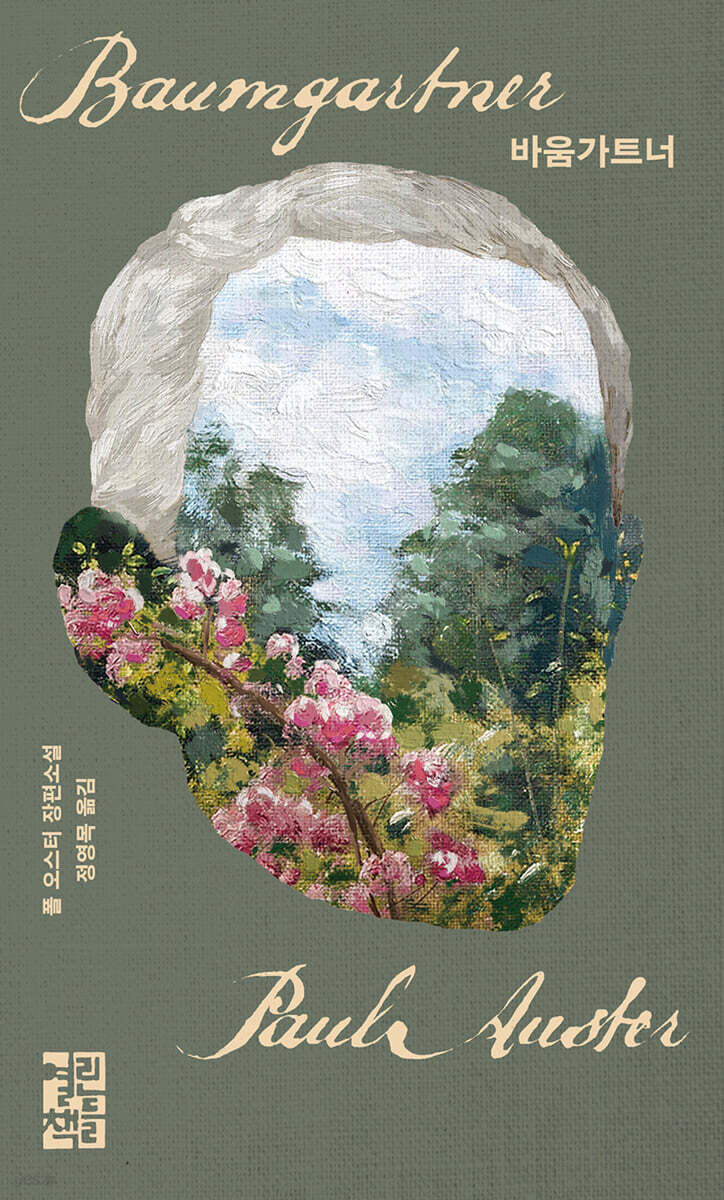
Baumgartner
 |
Description
Book Introduction
- A word from MD
-
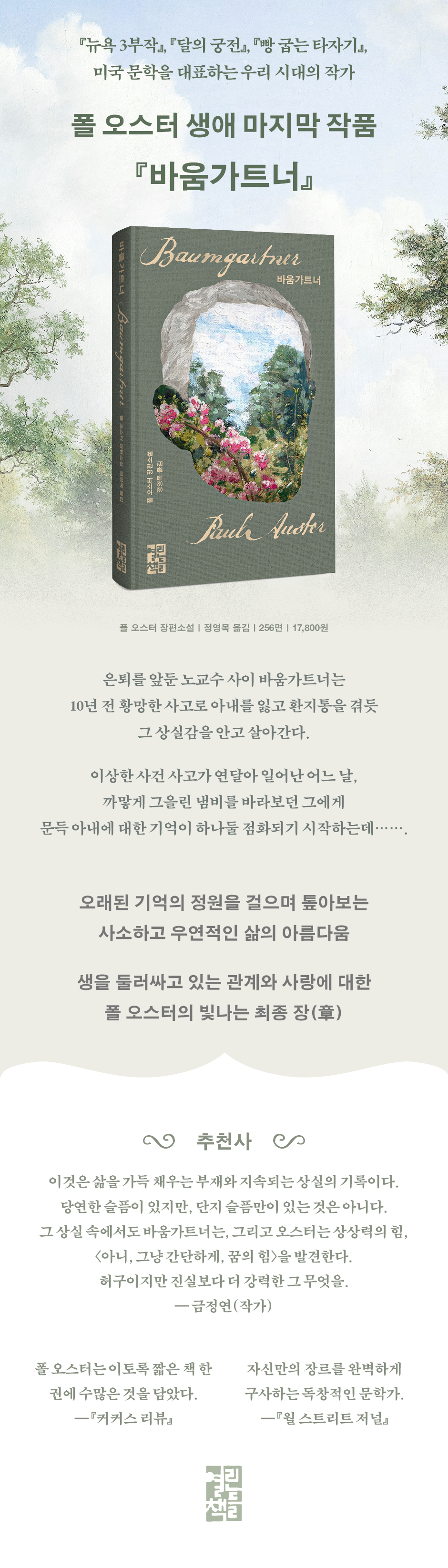
A final goodbye only Paul Austerlitz could writeHis last novel, published to coincide with the first anniversary of Paul Auster's death.
Although it is an unusually small amount, one can feel his passionate love for 'language' and 'literature', which he has been trying to talk about all his life.
A novel that shows how an old professor mourns the loss of his beloved wife and searches for meaning in life at the end of his days.
May 2, 2025. Novel/Poetry PD Kim Yu-ri
April 30, 2024, after Paul Auster passed away.
His final work, published to coincide with the first anniversary of his death
Weaving together memory and life, loss and mourning, coincidence and moments
A heartbreaking story about the relationships and love that surround life.
Paul Auster's brilliant final chapter
It is a record of the absences and enduring losses that fill life.
There is natural sadness, but it is not just sadness.
Even in that loss, Baumgartner and Auster discover the power of imagination, or rather, the power of dreams.
Something that is fiction, but more powerful than the truth.
― Geum Jeong-yeon (author)
Paul Auster, who debuted with acclaim as a "rising American star," has solidified his position as a representative writer of American literature, demonstrating outstanding skills in both novels and prose for over half a century.
His last full-length novel, Baumgartner, written while he was battling an illness and anticipating the end, was published by Open Books with a translation by Jeong Yeong-mok.
Published to coincide with the first anniversary of Paul Auster's death, this work captures loss and mourning, memory and the present, the flow of time, and the meaning of life through the eyes of Professor Sai Baumgartner, who is nearing retirement.
This novel, which is reminiscent of his early works while also showing the mature thoughts of an author nearing the end of his life, begins when Baumgartner, while looking at a charred pot one day after a series of strange incidents, is suddenly reminded of his wife, the love of his life.
Like his surname, which means "gardener," Baumgartner searches for fragments of life, intertwined like tree branches in the garden of memory.
The novel follows the man's inner narrative, tracing his life from the time he first met his wife as a poor aspiring writer in New York in 1968 to the forty years they have been together, from his childhood in Newark to his recollections of his father, a tailor and failed revolutionary.
This final work, a concise and delicate condensation of Paul Auster's lifelong reflections on the truth and power created by writing and fiction, as well as the aesthetics of chance, is all the more poignant and powerful because it is a novel about loss and memory written in the face of death.
To readers who have now parted ways with the novelist Paul Auster, Baumgartner speaks:
"That's the power of imagination, or rather, the power of dreams."
His final work, published to coincide with the first anniversary of his death
Weaving together memory and life, loss and mourning, coincidence and moments
A heartbreaking story about the relationships and love that surround life.
Paul Auster's brilliant final chapter
It is a record of the absences and enduring losses that fill life.
There is natural sadness, but it is not just sadness.
Even in that loss, Baumgartner and Auster discover the power of imagination, or rather, the power of dreams.
Something that is fiction, but more powerful than the truth.
― Geum Jeong-yeon (author)
Paul Auster, who debuted with acclaim as a "rising American star," has solidified his position as a representative writer of American literature, demonstrating outstanding skills in both novels and prose for over half a century.
His last full-length novel, Baumgartner, written while he was battling an illness and anticipating the end, was published by Open Books with a translation by Jeong Yeong-mok.
Published to coincide with the first anniversary of Paul Auster's death, this work captures loss and mourning, memory and the present, the flow of time, and the meaning of life through the eyes of Professor Sai Baumgartner, who is nearing retirement.
This novel, which is reminiscent of his early works while also showing the mature thoughts of an author nearing the end of his life, begins when Baumgartner, while looking at a charred pot one day after a series of strange incidents, is suddenly reminded of his wife, the love of his life.
Like his surname, which means "gardener," Baumgartner searches for fragments of life, intertwined like tree branches in the garden of memory.
The novel follows the man's inner narrative, tracing his life from the time he first met his wife as a poor aspiring writer in New York in 1968 to the forty years they have been together, from his childhood in Newark to his recollections of his father, a tailor and failed revolutionary.
This final work, a concise and delicate condensation of Paul Auster's lifelong reflections on the truth and power created by writing and fiction, as well as the aesthetics of chance, is all the more poignant and powerful because it is a novel about loss and memory written in the face of death.
To readers who have now parted ways with the novelist Paul Auster, Baumgartner speaks:
"That's the power of imagination, or rather, the power of dreams."
- You can preview some of the book's contents.
Preview
Detailed image
Into the book
It's the first beautiful spring day - the best day of the year.
Enjoy it while you can, Molly.
Because you never know what will happen next.
--- p.9
Where are we?
Where? Hmm, of course we are here, where we always are—each of us is trapped within our own here from the moment we are born until the day we die.
--- p.25
But to be honest, I don't feel sorry for myself, to the extent that I can understand what I'm going through right now.
I don't wallow in self-pity, nor do I moan to the heavens, "Why me?"
Why shouldn't it be me? People are dying.
Die young, die old, die at fifty-eight.
I just miss Anna, that's all.
Anna was the only person I ever loved in the world, and now I have to find a way to live without her.
--- p.41
To live is to feel pain, he told himself.
To live in fear of pain is to refuse to live.
--- p.68
What actually happens after death is that we enter a vast place called “nowhere.”
It is a black space where nothing can be seen, a silent vacuum of nothingness, a void of oblivion.
--- p.75
That's the power of imagination, he says to himself.
No, just simply, the power of dreams.
Just as a person can be transformed by the fictional events unfolding in a work of fiction, Baumgartner was transformed by the stories he told himself in his dreams.
So now that a window has appeared in a room that was previously windowless, who knows, maybe in the not-too-distant future, the bars will disappear and we can finally crawl out into the open air.
--- p.80
If he imagined an alternative world where she could think of him thinking of her, who could say there wasn't some truth in that? Perhaps not scientific truth, perhaps not verifiable truth, but there would be an emotional truth, and ultimately, that's all that matters—what this person feels, and how they feel it.
--- pp.80-81
Loneliness kills, Judith.
It eats away at every part of a person, piece by piece, until it finally devours the entire body.
For someone who is not connected to other people, life is like no life.
When you're lucky enough to connect deeply with someone, to the point where that other person becomes as important as you are, life becomes not only possible, but good.
--- p.123
I raise my head, squint my eyes, and look into the sky, when a bird flies overhead.
What white clouds are like that?
(……) The earth is on fire, the world is burning, but still, since we have days like this right now, we might as well enjoy them while we can.
Who knows, this might be the last good day he'll ever see.
--- p.132
Or, perhaps more appropriately, why fleeting moments, encountered by chance, persist in our memories while other, more significant moments fade away forever.
--- p.141
At that moment he realizes how small he is.
A small thing connected to countless other small things that make up the universe.
How good it feels to leave yourself behind for a moment and become part of the vast, floating puzzle called life.
--- p.151
Soon, as the sun begins to tilt closer to the ground, the ghostly beauty of things that glow and breathe, things that fade and disappear into the darkness as night falls, will saturate the sunlit world.
--- p.180
Contrary to what the great rationalists have told us for ages, the gods are happiest and most themselves when they are playing dice with the universe.
--- p.219
I don't remember the details now, but I do remember stopping the car somewhere, having a picnic lunch, spreading a blanket on the sandy ground, and looking over at Anna's beautiful, radiant face.
Then, as a flood of intense happiness washed over him, tears began to well up in his eyes, and he said to himself:
Remember this moment, my child, remember it for the rest of your life, because nothing that happens to you in the future will be more important than this moment.
Enjoy it while you can, Molly.
Because you never know what will happen next.
--- p.9
Where are we?
Where? Hmm, of course we are here, where we always are—each of us is trapped within our own here from the moment we are born until the day we die.
--- p.25
But to be honest, I don't feel sorry for myself, to the extent that I can understand what I'm going through right now.
I don't wallow in self-pity, nor do I moan to the heavens, "Why me?"
Why shouldn't it be me? People are dying.
Die young, die old, die at fifty-eight.
I just miss Anna, that's all.
Anna was the only person I ever loved in the world, and now I have to find a way to live without her.
--- p.41
To live is to feel pain, he told himself.
To live in fear of pain is to refuse to live.
--- p.68
What actually happens after death is that we enter a vast place called “nowhere.”
It is a black space where nothing can be seen, a silent vacuum of nothingness, a void of oblivion.
--- p.75
That's the power of imagination, he says to himself.
No, just simply, the power of dreams.
Just as a person can be transformed by the fictional events unfolding in a work of fiction, Baumgartner was transformed by the stories he told himself in his dreams.
So now that a window has appeared in a room that was previously windowless, who knows, maybe in the not-too-distant future, the bars will disappear and we can finally crawl out into the open air.
--- p.80
If he imagined an alternative world where she could think of him thinking of her, who could say there wasn't some truth in that? Perhaps not scientific truth, perhaps not verifiable truth, but there would be an emotional truth, and ultimately, that's all that matters—what this person feels, and how they feel it.
--- pp.80-81
Loneliness kills, Judith.
It eats away at every part of a person, piece by piece, until it finally devours the entire body.
For someone who is not connected to other people, life is like no life.
When you're lucky enough to connect deeply with someone, to the point where that other person becomes as important as you are, life becomes not only possible, but good.
--- p.123
I raise my head, squint my eyes, and look into the sky, when a bird flies overhead.
What white clouds are like that?
(……) The earth is on fire, the world is burning, but still, since we have days like this right now, we might as well enjoy them while we can.
Who knows, this might be the last good day he'll ever see.
--- p.132
Or, perhaps more appropriately, why fleeting moments, encountered by chance, persist in our memories while other, more significant moments fade away forever.
--- p.141
At that moment he realizes how small he is.
A small thing connected to countless other small things that make up the universe.
How good it feels to leave yourself behind for a moment and become part of the vast, floating puzzle called life.
--- p.151
Soon, as the sun begins to tilt closer to the ground, the ghostly beauty of things that glow and breathe, things that fade and disappear into the darkness as night falls, will saturate the sunlit world.
--- p.180
Contrary to what the great rationalists have told us for ages, the gods are happiest and most themselves when they are playing dice with the universe.
--- p.219
I don't remember the details now, but I do remember stopping the car somewhere, having a picnic lunch, spreading a blanket on the sandy ground, and looking over at Anna's beautiful, radiant face.
Then, as a flood of intense happiness washed over him, tears began to well up in his eyes, and he said to himself:
Remember this moment, my child, remember it for the rest of your life, because nothing that happens to you in the future will be more important than this moment.
--- p.242
Publisher's Review
Weaving together memory and life, loss and mourning, coincidence and moments
A heartbreaking story about the relationships and love that surround life.
Paul Auster's brilliant final chapter
It is a record of the absences and enduring losses that fill life.
There is natural sadness, but it is not just sadness.
Even in that loss, Baumgartner and Auster discover the power of imagination, or rather, the power of dreams.
Something that is fiction, but more powerful than the truth.
- Geum Jeong-yeon (writer)
Paul Auster, with his magical literary skills, sparkling wit, keen observation, and profound intellect, portrays the diverse facets of human history.
He debuted with acclaim as a "rising American star," and has solidified his position as a representative writer of American literature, demonstrating outstanding skills in both novels and prose for over half a century.
He has also been praised as “the greatest writer of our time” and “the greatest writer of words” for his unique originality, boldness, and brilliant sense of humor, enough to be called a literary genius.
The novels 『New York Trilogy』, 『Palace of the Moon』, 『4 3 2 1』, and the essay 『The Typewriter That Bakes Bread』.
Representative works include “Talking to Strangers.”
This novel, written by Paul Auster while battling an illness and anticipating the end of his life, and published on the first anniversary of his death, captures loss and mourning, memory and the present, the flow of time, and the meaning of life through the eyes of Professor Sai Baumgartner, who is nearing retirement.
This is a full-length novel published six years after 『4 3 2 1』(Open Books, 2023), but in contrast, it is a short work of about 200 pages. This novel concisely and delicately condenses Paul Auster's thoughts on the truth and power created by writing and fiction, and the aesthetics of coincidence, the themes he has dealt with throughout his life. It was praised by the press for "packing so much into such a short book," and was evaluated as reminiscent of his early works while also showing the mature thoughts of the author nearing the end of his life.
Professor Baumgartner, who lost his wife in a tragic accident ten years ago, lives with the loss as if suffering from phantom limb pain.
One day, as a series of strange incidents occur, he stares blankly at a blackened pot, and memories of his wife suddenly begin to flash back to him.
His wife's lifelong but never-published writings and the manuscripts Baumgartner was working on became intimately and naturally intertwined with his inner journey, and Baumgartner, who was finally able to look back on the past without fear through fiction, fantasy, and story, felt that he was finally able to break free from the past and enter a new realm of life.
A new lover who makes him decide to propose to a man who thinks he should be completely faithful to the present, and a young female scholar who wants to study his wife's unpublished manuscript appear one after another, adding new stories to his life... ... .
Standing at the end of life, I look into the loss and emptiness.
The dazzling fragments of memories brought up there
Or why fleeting moments, encountered by chance, remain persistently in our memories, while other, more significant moments fade away forever.
- Page 141
Like his surname, which means "gardener," Baumgartner begins to explore the fragments of life that are intertwined like branches in the garden of memory.
The novel spans several scenes and episodes, from the time he first met his wife as a poor aspiring writer in New York in 1968, to their 40 years together, and from their childhood in Newark to his recollections of his father, a tailor and failed revolutionary.
By closely following one character's inner narrative, Paul Auster quickly draws readers into a tangled web of coincidences.
One of the most important themes that runs through the novel is “loss” and “memories” that come to us at unexpected moments.
From the burnt pots and old coffee cups, the birds in the yard, and the pure white clouds, the “floats of memory” that have drifted from the past that has already disappeared slowly flow into Baumgartner, and Baumgartner calmly watches as the time that has passed, the changed body, and the memories slowly disperse and disappear within him.
At the end of such passage of time and loss, what Baumgartner gains is not simply the disappearance of all things, but the sparkle of the remains remaining in the empty space, and the power to accept the “change” itself that passes through a long time.
Through Baumgartner, who experienced the immense loss of his wife's death, this novel tells the story of how we can mourn the loss of a loved one and move on with our lives, and of the many things that still exist at the end of our lives, breathing life into the meaning of life given to us in a dry yet warm way, akin to Paul Auster.
The love and relationships that make up life are like trees.
Existence is a small thing that is connected to the countless things that make up the universe.
For someone who is not connected to other people, life is like no life.
When you're lucky enough to connect deeply with someone, to the point where that other person becomes as important as you are, life becomes not only possible, but good.
- Page 123
In his last novel, Baumgartner, written with a premonition of the end, Paul Auster goes beyond the constant theme of death in his work, and, in the face of that very imminence, conveys “the importance of our relationships with other people and each individual to our lives” (The Guardian). He says, “You have to think of love as a kind of tree or a plant,” and focuses on the incomprehensibility of love and relationships and the other in life, and the complex “entanglement” of it all.
It says that in order for us to sustain love, we need that very entanglement, that all relationships are “connected,” and that, even though the other is a complex, unfamiliar, confusing, and “never fully understandable” being, we must organically “change” while being entangled with it.
According to Oster, we are small things, but “small things connected to countless other small things that make up the universe.”
In the dice-like game of God, what we can confirm in that mystery is that we are colorfully and clearly 〈connected〉.
Through this tree-like connection, which is also a grand metaphor that runs through the work, Auster powerfully pushes forward and unfolds the possibility of connecting not only with the typist but also with the dead, a core theme he has long explored: the power of story.
From it he salvages what might be called a recovery from emptiness and emptiness.
Auster's "Story" is an alternative world that can be covered by the inevitable death and loss, and it touches on the most important emotional truth of human beings, and as the author Geum Jeong-yeon said, it is a matter of discovering "something that is fiction but better than the truth."
In his final work, where the power of the stories he has dedicated his life to shines more strongly than ever, Paul Auster captures the beauty of life's trivial, accidental, yet true moments, and sends us a final farewell that will remain with us for a long time.
A word from the translator
It is worth noting that the feeling that we are just “small things” that are “part of a great puzzle,” that is, that we are small things that have to live in a puzzle, is not painful, but that we do not know “how good it is.”
Perhaps it is because we are “small things” and yet part of something, “small things” yet “small things connected to countless other small things,” and this too is the secret of Auster’s ultimately affirmative voice from which we find solace.
At first glance, it looks small, but if you go under the branches, you will find a surprisingly wide shade. As you delve deep into this novel, which is like a tree, and listen to Paul Auster's final farewell message, which is devoid of sentimentality or humor, I hope that readers will gain the strength to live their own small lives.
A heartbreaking story about the relationships and love that surround life.
Paul Auster's brilliant final chapter
It is a record of the absences and enduring losses that fill life.
There is natural sadness, but it is not just sadness.
Even in that loss, Baumgartner and Auster discover the power of imagination, or rather, the power of dreams.
Something that is fiction, but more powerful than the truth.
- Geum Jeong-yeon (writer)
Paul Auster, with his magical literary skills, sparkling wit, keen observation, and profound intellect, portrays the diverse facets of human history.
He debuted with acclaim as a "rising American star," and has solidified his position as a representative writer of American literature, demonstrating outstanding skills in both novels and prose for over half a century.
He has also been praised as “the greatest writer of our time” and “the greatest writer of words” for his unique originality, boldness, and brilliant sense of humor, enough to be called a literary genius.
The novels 『New York Trilogy』, 『Palace of the Moon』, 『4 3 2 1』, and the essay 『The Typewriter That Bakes Bread』.
Representative works include “Talking to Strangers.”
This novel, written by Paul Auster while battling an illness and anticipating the end of his life, and published on the first anniversary of his death, captures loss and mourning, memory and the present, the flow of time, and the meaning of life through the eyes of Professor Sai Baumgartner, who is nearing retirement.
This is a full-length novel published six years after 『4 3 2 1』(Open Books, 2023), but in contrast, it is a short work of about 200 pages. This novel concisely and delicately condenses Paul Auster's thoughts on the truth and power created by writing and fiction, and the aesthetics of coincidence, the themes he has dealt with throughout his life. It was praised by the press for "packing so much into such a short book," and was evaluated as reminiscent of his early works while also showing the mature thoughts of the author nearing the end of his life.
Professor Baumgartner, who lost his wife in a tragic accident ten years ago, lives with the loss as if suffering from phantom limb pain.
One day, as a series of strange incidents occur, he stares blankly at a blackened pot, and memories of his wife suddenly begin to flash back to him.
His wife's lifelong but never-published writings and the manuscripts Baumgartner was working on became intimately and naturally intertwined with his inner journey, and Baumgartner, who was finally able to look back on the past without fear through fiction, fantasy, and story, felt that he was finally able to break free from the past and enter a new realm of life.
A new lover who makes him decide to propose to a man who thinks he should be completely faithful to the present, and a young female scholar who wants to study his wife's unpublished manuscript appear one after another, adding new stories to his life... ... .
Standing at the end of life, I look into the loss and emptiness.
The dazzling fragments of memories brought up there
Or why fleeting moments, encountered by chance, remain persistently in our memories, while other, more significant moments fade away forever.
- Page 141
Like his surname, which means "gardener," Baumgartner begins to explore the fragments of life that are intertwined like branches in the garden of memory.
The novel spans several scenes and episodes, from the time he first met his wife as a poor aspiring writer in New York in 1968, to their 40 years together, and from their childhood in Newark to his recollections of his father, a tailor and failed revolutionary.
By closely following one character's inner narrative, Paul Auster quickly draws readers into a tangled web of coincidences.
One of the most important themes that runs through the novel is “loss” and “memories” that come to us at unexpected moments.
From the burnt pots and old coffee cups, the birds in the yard, and the pure white clouds, the “floats of memory” that have drifted from the past that has already disappeared slowly flow into Baumgartner, and Baumgartner calmly watches as the time that has passed, the changed body, and the memories slowly disperse and disappear within him.
At the end of such passage of time and loss, what Baumgartner gains is not simply the disappearance of all things, but the sparkle of the remains remaining in the empty space, and the power to accept the “change” itself that passes through a long time.
Through Baumgartner, who experienced the immense loss of his wife's death, this novel tells the story of how we can mourn the loss of a loved one and move on with our lives, and of the many things that still exist at the end of our lives, breathing life into the meaning of life given to us in a dry yet warm way, akin to Paul Auster.
The love and relationships that make up life are like trees.
Existence is a small thing that is connected to the countless things that make up the universe.
For someone who is not connected to other people, life is like no life.
When you're lucky enough to connect deeply with someone, to the point where that other person becomes as important as you are, life becomes not only possible, but good.
- Page 123
In his last novel, Baumgartner, written with a premonition of the end, Paul Auster goes beyond the constant theme of death in his work, and, in the face of that very imminence, conveys “the importance of our relationships with other people and each individual to our lives” (The Guardian). He says, “You have to think of love as a kind of tree or a plant,” and focuses on the incomprehensibility of love and relationships and the other in life, and the complex “entanglement” of it all.
It says that in order for us to sustain love, we need that very entanglement, that all relationships are “connected,” and that, even though the other is a complex, unfamiliar, confusing, and “never fully understandable” being, we must organically “change” while being entangled with it.
According to Oster, we are small things, but “small things connected to countless other small things that make up the universe.”
In the dice-like game of God, what we can confirm in that mystery is that we are colorfully and clearly 〈connected〉.
Through this tree-like connection, which is also a grand metaphor that runs through the work, Auster powerfully pushes forward and unfolds the possibility of connecting not only with the typist but also with the dead, a core theme he has long explored: the power of story.
From it he salvages what might be called a recovery from emptiness and emptiness.
Auster's "Story" is an alternative world that can be covered by the inevitable death and loss, and it touches on the most important emotional truth of human beings, and as the author Geum Jeong-yeon said, it is a matter of discovering "something that is fiction but better than the truth."
In his final work, where the power of the stories he has dedicated his life to shines more strongly than ever, Paul Auster captures the beauty of life's trivial, accidental, yet true moments, and sends us a final farewell that will remain with us for a long time.
A word from the translator
It is worth noting that the feeling that we are just “small things” that are “part of a great puzzle,” that is, that we are small things that have to live in a puzzle, is not painful, but that we do not know “how good it is.”
Perhaps it is because we are “small things” and yet part of something, “small things” yet “small things connected to countless other small things,” and this too is the secret of Auster’s ultimately affirmative voice from which we find solace.
At first glance, it looks small, but if you go under the branches, you will find a surprisingly wide shade. As you delve deep into this novel, which is like a tree, and listen to Paul Auster's final farewell message, which is devoid of sentimentality or humor, I hope that readers will gain the strength to live their own small lives.
GOODS SPECIFICS
- Date of issue: April 30, 2025
- Page count, weight, size: 256 pages | 120*188*20mm
- ISBN13: 9788932925042
- ISBN10: 8932925046
You may also like
카테고리
korean


korean

![GQ KOREA Mark (Monthly): December [2025]](http://librairie.coreenne.fr/cdn/shop/files/8ef265dbbfbf186523ed75ba7319009d.jpg?v=1765340328&width=3840)


