

martial law
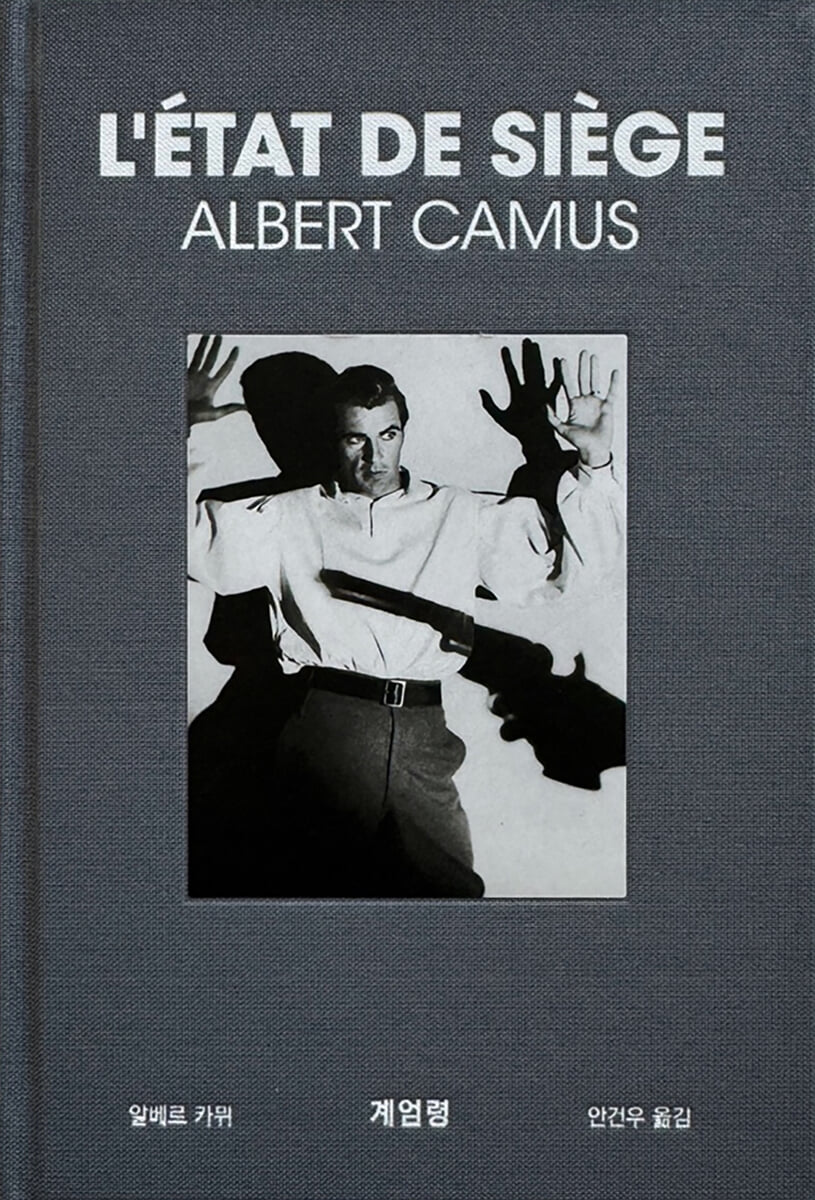 |
Description
Book Introduction
If even one person overcomes his fear and resists violence, the system begins to creak.
In 1947, the novel The Plague was praised by both critics and readers, placing Albert Camus among the greatest writers.
Although he had already garnered enthusiastic responses with "The Stranger," "The Plague" was his first major commercial success, and expectations for his next work were therefore at an all-time high.
Albert Camus's next work, which many had been waiting for, was not a novel, but a play.
This play, titled "Martial Law," was first staged on October 27, 1948.
The central plot of this play is about a dictator who suddenly appears in the small town of Cádiz, Spain, after an ominous comet appears, declares martial law, and takes control of the city.
However, the critical response after its premiere was not favorable.
Accordingly, the audience's response was not great.
This was in contrast to the commercial success of another play, Caligula, which he began writing in 1939 and performed in 1947.
This is because criticism of “Martial Law” mainly involved a political perspective.
The main criticism focused on the question, "Why is the play set in Spain, rather than a communist country (such as the Soviet Union or Eastern European countries) where the people were actually oppressed?" Camus even wrote a column responding to this question, saying, "Such a criticism is a departure from the point."
Camus's message through this work was about how violent and dangerous totalitarianism can be, so questions like "where is the city in which the work is set?" seem to have been of little importance.
Camus was actually aware of the dangers of totalitarianism early on, and was equally critical of Nazism and communism (especially the Soviet Union under Stalin).
The power of good literature ultimately transcends time.
Although the initial reaction was lukewarm, "Martial Law" continues to be performed on stage in many countries to this day, due to its metaphors for violence and totalitarianism.
It is also a work that is often mentioned when political oppression occurs.
More than half a century has passed since Camus's death, and even though the 21st century has arrived, the reality we face is that violence caused by ideologies that have become powerful continues unabated around the world.
Camus's message that no matter how well-intentioned an ideology may be, it inevitably produces absurdity the moment it gains power remains valid even today.
The fears of the people and the selfishness of the leaders of various sectors depicted in "Martial Law" are quite similar to the human figures we witness in real life today.
Throughout history, humans have suffered continuous oppression and the resulting feelings of hatred under martial law (actual martial law or various censorships metaphorically referred to as martial law) cleverly implemented by ideologies with different faces.
That feeling of disgust is sometimes directed at fellow citizens rather than the ideology that triggered it.
When these feelings intensify, disgust and hatred can manifest in unexpected forms of violence.
This is not a history of the past, but a history that is 'ongoing', and it is also a potential danger that is firmly entrenched within our society, invisible to the eye.
“Do not submit to hatred.
The moment we forget Camus' words, "Never give anything to violence," we may lose the freedom we have taken for granted and enjoyed.
In 1947, the novel The Plague was praised by both critics and readers, placing Albert Camus among the greatest writers.
Although he had already garnered enthusiastic responses with "The Stranger," "The Plague" was his first major commercial success, and expectations for his next work were therefore at an all-time high.
Albert Camus's next work, which many had been waiting for, was not a novel, but a play.
This play, titled "Martial Law," was first staged on October 27, 1948.
The central plot of this play is about a dictator who suddenly appears in the small town of Cádiz, Spain, after an ominous comet appears, declares martial law, and takes control of the city.
However, the critical response after its premiere was not favorable.
Accordingly, the audience's response was not great.
This was in contrast to the commercial success of another play, Caligula, which he began writing in 1939 and performed in 1947.
This is because criticism of “Martial Law” mainly involved a political perspective.
The main criticism focused on the question, "Why is the play set in Spain, rather than a communist country (such as the Soviet Union or Eastern European countries) where the people were actually oppressed?" Camus even wrote a column responding to this question, saying, "Such a criticism is a departure from the point."
Camus's message through this work was about how violent and dangerous totalitarianism can be, so questions like "where is the city in which the work is set?" seem to have been of little importance.
Camus was actually aware of the dangers of totalitarianism early on, and was equally critical of Nazism and communism (especially the Soviet Union under Stalin).
The power of good literature ultimately transcends time.
Although the initial reaction was lukewarm, "Martial Law" continues to be performed on stage in many countries to this day, due to its metaphors for violence and totalitarianism.
It is also a work that is often mentioned when political oppression occurs.
More than half a century has passed since Camus's death, and even though the 21st century has arrived, the reality we face is that violence caused by ideologies that have become powerful continues unabated around the world.
Camus's message that no matter how well-intentioned an ideology may be, it inevitably produces absurdity the moment it gains power remains valid even today.
The fears of the people and the selfishness of the leaders of various sectors depicted in "Martial Law" are quite similar to the human figures we witness in real life today.
Throughout history, humans have suffered continuous oppression and the resulting feelings of hatred under martial law (actual martial law or various censorships metaphorically referred to as martial law) cleverly implemented by ideologies with different faces.
That feeling of disgust is sometimes directed at fellow citizens rather than the ideology that triggered it.
When these feelings intensify, disgust and hatred can manifest in unexpected forms of violence.
This is not a history of the past, but a history that is 'ongoing', and it is also a potential danger that is firmly entrenched within our society, invisible to the eye.
“Do not submit to hatred.
The moment we forget Camus' words, "Never give anything to violence," we may lose the freedom we have taken for granted and enjoyed.
- You can preview some of the book's contents.
Preview
index
At the beginning of the book
martial law
commentary
Minor Resistance: Speaking Loosely but Strongly About Definitions
Albert Camus Chronology
martial law
commentary
Minor Resistance: Speaking Loosely but Strongly About Definitions
Albert Camus Chronology
Detailed image
.jpg)
Into the book
From now on, lights will be turned off every night at 9 p.m.
Anyone without an official pass, regardless of the reason, may not stay in public places or use city roads.
Passes are issued at random and only in extremely exceptional cases.
Any violation of this measure will be subject to severe punishment according to the law.
--- p.68
I am the ruler.
This is true and it is a natural right.
It is an indisputable right, so you must adapt accordingly.
(Omitted) You all have to learn everything from scratch.
Your king has black grime on his fingernails and wears a stiff uniform.
Instead of sitting on a throne, he just sits on an ordinary chair.
The barracks stand in for the palace, and the tents in the hunting grounds stand in for the court.
Martial law was declared.
--- pp.74-75
"record."
“I don’t know.”
“You are asked to write down the important things that have happened to you in your life.
That's how I know what kind of person you are!”
“My life is my own.
It's personal, it has nothing to do with anyone else."
"Private! That kind of talk doesn't work for us.
From now on, what matters is your public life.
Besides, that's the only thing you're allowed to do.
“Please ask specifically, sir.”
--- p.86
"They forbade love! Ah! They're remembering you with all their might!"
“No! No! Please! I know what they want.
Their intention is to make love impossible.
But I will overcome it.”
“I don’t think I can overcome it.
“It wasn’t this feeling of defeat that I wanted to share with you!”
"I'm fine! I know nothing but love! I'm not afraid of anything. Even if the sky splits in two, if I can just hold your hand, I'll shout for happiness and willingly give my whole body."
--- p.117
Damn bitch.
I'm telling you straight, you guys are finished.
In the midst of the most obvious victory you could possibly enjoy, you have already lost.
Because in man - look into my eyes - there is a power which you cannot subdue, a pure passion mixed with fear and courage, reckless but always victorious.
That very power will arise, and then you will realize that your might was nothing more than smoke dissipating into thin air.
--- p.130
I thought some kind of revolution was happening, really! As you all know, the situation isn't such that it could happen.
Besides, these are not the times when the people are making revolutions, so that's completely outdated thinking.
Revolution no longer requires a popular uprising.
Even if you want to overthrow the government, the police are enough these days.
Isn't this actually better? A few insightful people will think on behalf of the people and determine an appropriate level of happiness that will satisfy them, so the people can just relax.
--- p.145
I hate your simple joys.
I feel sick when I think of this country where people shamelessly demand freedom even though they can't even afford to eat their fill.
My hands hold prisons, executioners, power, and blood! This city will soon be destroyed.
The history of the city will finally disappear from this world completely, while the perfect society built on its ruins sits beautifully silent.
So be quiet, or I'll trample you all to death.
--- p.149
no.
I know that way too.
To eliminate murder, one must kill; to right injustice, one must become lawless.
This kind of logic has endured for hundreds of years! For centuries, those in power like you have, under the guise of healing the world's wounds, only worsened them.
And they exalted that way as if it were something great, because no one had ever laughed to their faces!
Anyone without an official pass, regardless of the reason, may not stay in public places or use city roads.
Passes are issued at random and only in extremely exceptional cases.
Any violation of this measure will be subject to severe punishment according to the law.
--- p.68
I am the ruler.
This is true and it is a natural right.
It is an indisputable right, so you must adapt accordingly.
(Omitted) You all have to learn everything from scratch.
Your king has black grime on his fingernails and wears a stiff uniform.
Instead of sitting on a throne, he just sits on an ordinary chair.
The barracks stand in for the palace, and the tents in the hunting grounds stand in for the court.
Martial law was declared.
--- pp.74-75
"record."
“I don’t know.”
“You are asked to write down the important things that have happened to you in your life.
That's how I know what kind of person you are!”
“My life is my own.
It's personal, it has nothing to do with anyone else."
"Private! That kind of talk doesn't work for us.
From now on, what matters is your public life.
Besides, that's the only thing you're allowed to do.
“Please ask specifically, sir.”
--- p.86
"They forbade love! Ah! They're remembering you with all their might!"
“No! No! Please! I know what they want.
Their intention is to make love impossible.
But I will overcome it.”
“I don’t think I can overcome it.
“It wasn’t this feeling of defeat that I wanted to share with you!”
"I'm fine! I know nothing but love! I'm not afraid of anything. Even if the sky splits in two, if I can just hold your hand, I'll shout for happiness and willingly give my whole body."
--- p.117
Damn bitch.
I'm telling you straight, you guys are finished.
In the midst of the most obvious victory you could possibly enjoy, you have already lost.
Because in man - look into my eyes - there is a power which you cannot subdue, a pure passion mixed with fear and courage, reckless but always victorious.
That very power will arise, and then you will realize that your might was nothing more than smoke dissipating into thin air.
--- p.130
I thought some kind of revolution was happening, really! As you all know, the situation isn't such that it could happen.
Besides, these are not the times when the people are making revolutions, so that's completely outdated thinking.
Revolution no longer requires a popular uprising.
Even if you want to overthrow the government, the police are enough these days.
Isn't this actually better? A few insightful people will think on behalf of the people and determine an appropriate level of happiness that will satisfy them, so the people can just relax.
--- p.145
I hate your simple joys.
I feel sick when I think of this country where people shamelessly demand freedom even though they can't even afford to eat their fill.
My hands hold prisons, executioners, power, and blood! This city will soon be destroyed.
The history of the city will finally disappear from this world completely, while the perfect society built on its ruins sits beautifully silent.
So be quiet, or I'll trample you all to death.
--- p.149
no.
I know that way too.
To eliminate murder, one must kill; to right injustice, one must become lawless.
This kind of logic has endured for hundreds of years! For centuries, those in power like you have, under the guise of healing the world's wounds, only worsened them.
And they exalted that way as if it were something great, because no one had ever laughed to their faces!
--- p.157
GOODS SPECIFICS
- Date of issue: March 14, 2025
- Format: Hardcover book binding method guide
- Page count, weight, size: 212 pages | 230g | 135*195*20mm
- ISBN13: 9791198375346
- ISBN10: 1198375345
You may also like
카테고리
korean


korean

![GQ KOREA Mark (Monthly): December [2025]](http://librairie.coreenne.fr/cdn/shop/files/8ef265dbbfbf186523ed75ba7319009d.jpg?v=1765340328&width=3840)


