

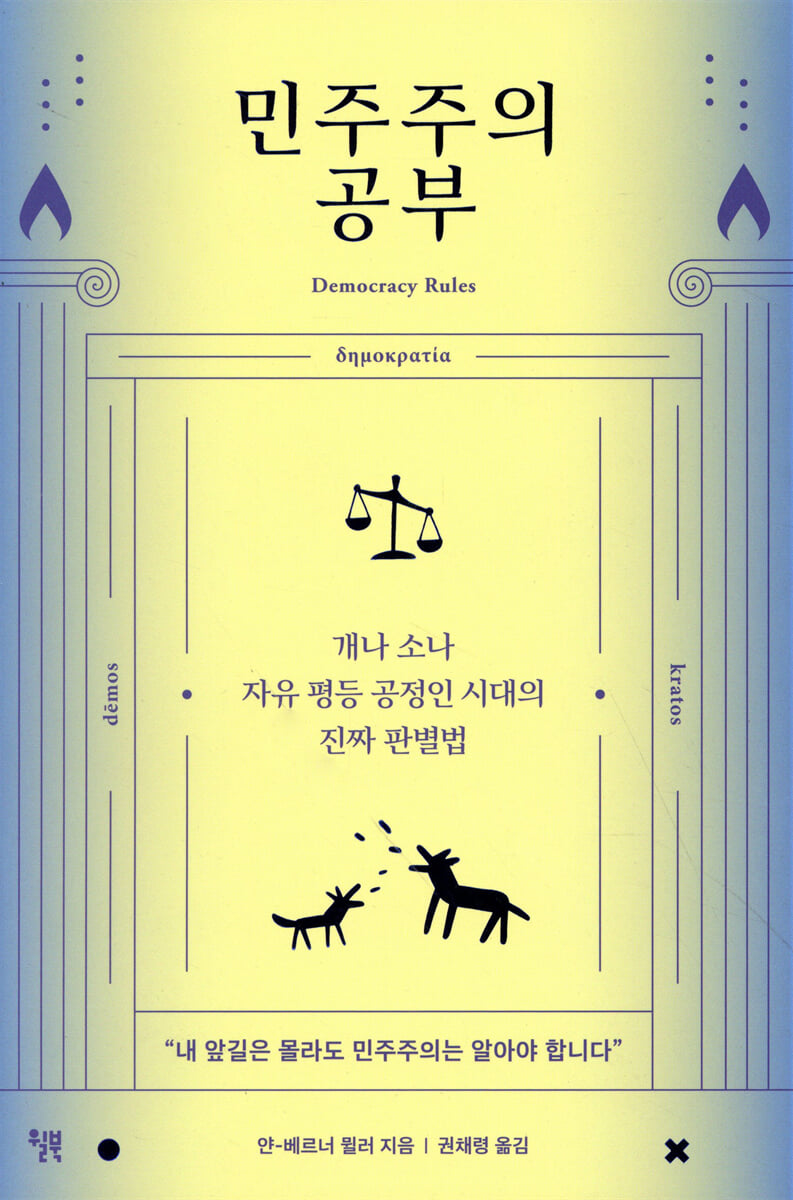
Studying democracy
 |
Description
Book Introduction
★ Is there a solution to democracy in this age that seems broken no matter how you look at it? ★ A comprehensive and concise political analysis by Jan-Werner Müller, author of "Who is a Populist?" ★ Recommended by Professor Yoo Hye-young of the Department of Political Science at New York University and political commentator Kim Min-ha This book examines the global political situation and examines the current state of democracy. It explains in concise language how democracy works, something that citizens who yearn for better politics should know. In an era where the global rise of authoritarianism and populism has led to an increasingly frequent mention of a "crisis of democracy," Can democracy truly overcome this crisis and be reborn? Jan-Werner Müller, a Princeton University political science professor renowned for his critical examination of populism, offers a stark rebuke of the "chaos" in global politics and lays out a vision for the "future of democracy." While delving into controversial topics, it revisits the fundamental concepts of democracy, such as 'populism,' 'citizens,' 'representative system,' 'political parties,' and 'media,' one by one, and shows 'how democracy is misused or strengthened in real-world politics.' If we read today's turbulent political situation through the lens of democracy, the causal relationship becomes clearly evident. Within it, the ability to discern what is real naturally arises. In the midst of frustrating politics, incomprehensible choices, and a reality without answers, listen to the voice of this seasoned scholar who emphasizes the "dynamism of democracy." Each page is filled with refreshing sentences that offer deep insight to "democratic citizens" who are seeking a breakthrough when faced with a difficult task. This is a book in which not a single line can be thrown away. |
- You can preview some of the book's contents.
Preview
index
introduction
Chapter 1: Fake Democracy: There is no grave without an excuse.
By the way, what exactly is right-wing populism? And what is left-wing populism?
The Art of Governing
the will of the people
double separation phenomenon
uncompromising boundaries
Chapter 2: Real Democracy: Freedom, Equality, and Uncertainty
Becoming president for a day?
Representation or democracy?
Democracy for the losers
Expect the unexpected?
Praising the 'Agitator'
Why not replace the representative system with a lottery system?
Chapter 3 Essential Infrastructure
The significance of the mediating mechanism
Infrastructure planning and payment
A world where only predictable things happen
Are political parties really over?
Chapter 4: Reopening Democracy
Democracy's closure to save democracy?
What if all else fails? The answer is democratic disobedience.
Conclusion: Five Reasons to Be Hopeful for Democracy (though Not Optimistic)
annotation
Acknowledgements
Chapter 1: Fake Democracy: There is no grave without an excuse.
By the way, what exactly is right-wing populism? And what is left-wing populism?
The Art of Governing
the will of the people
double separation phenomenon
uncompromising boundaries
Chapter 2: Real Democracy: Freedom, Equality, and Uncertainty
Becoming president for a day?
Representation or democracy?
Democracy for the losers
Expect the unexpected?
Praising the 'Agitator'
Why not replace the representative system with a lottery system?
Chapter 3 Essential Infrastructure
The significance of the mediating mechanism
Infrastructure planning and payment
A world where only predictable things happen
Are political parties really over?
Chapter 4: Reopening Democracy
Democracy's closure to save democracy?
What if all else fails? The answer is democratic disobedience.
Conclusion: Five Reasons to Be Hopeful for Democracy (though Not Optimistic)
annotation
Acknowledgements
Detailed image

Into the book
It seems clear that millions of people around the world are dissatisfied with the democracy in their countries.
However, this does not mean that they have turned their backs on democracy itself as an ideology.
(…) In reality, citizens still believe that they live in a democratic society, even though democracy has regressed or is completely broken.
This kind of hypocrisy gives us hope.
Today's authoritarian leaders still pay lip service to democracy.
--- p.215
Some citizens today accept a kind of trade-off between what might benefit them, or what might help their children's future, and the undermining of democracy.
The impulse to trade democracy for something else is not just felt by the majority suffering from economic and racial insecurity or by a fear-stricken middle class.
The privileged class at the top claims to be ardent defenders of democracy, but only if their taxes don't rise.
--- p.54~55
It is difficult to see the existence of political equality or political freedom simply because the ruling party changes periodically.
Political equality is not guaranteed simply because there are no right-wing populists who openly denigrate sections of the population or who suggest that some are not "real citizens" but rather second-class citizens at best.
Even robust anti-discrimination laws can easily coexist with the political disenfranchisement of some citizens.
In short, something more is needed.
--- p.102
Representative democracy and participation should not be understood as opposing concepts.
The opposite of representation is exclusion, and the opposite of participation is separation from or abstention from political life.
Perhaps the best thing we can say to losers is that they still have the freedom to assert themselves and are not excluded or structurally disadvantaged.
This is impossible under authoritarian populist rule.
--- p.114
The shape of the system can vary greatly from country to country, and which system is created is determined by what American sociologist Paul Starr calls "constitutive selection."
(…) In 1842, the United States adopted a system of electing the candidate with the most votes in the composition of the Congress.
In other words, it is a system where the winner takes everything and the loser loses everything.
As the United States adopted this single-member district system and direct presidential election system, a two-party system became virtually unavoidable.
--- p.137~138
Algorithms make predictions based on the assumption that our future behavior will be very similar to our past behavior, and guide our actions in ways that increase the likelihood that those predictions will come true.
This is in complete contradiction with one of the core characteristics of democracy discussed earlier: ‘institutionalized uncertainty.’
(…) the dynamism, openness, and beneficial randomness of democratic politics disappear.
It becomes a situation where you can only expect what is expected.
--- p.155
Democracy is not free.
There has never been anything free in history.
The Athenians invented complex lottery machines and built an amphitheater in which to hold their assemblies.
They even thought it was okay to pay to encourage participation (this outraged anti-democratic philosophers who considered democracy the most expensive institution, when in fact the annual cost of running a parliament was comparable to feeding a thousand cavalry).
Even today's democracy costs a lot of money.
--- p.175~176
Theorists who conceived of militant democracy believed that such parties would openly express their desire to undermine the fundamental rights of citizens.
But today, such parties are rare.
It's different from the Weimar era.
Of course, right-wing populists do imply that some citizens are not "real citizens," but even they choose their words carefully.
The threats facing democracy today do not publicly declare themselves.
--- p.202~203
Democracy needs rules.
Rules are meant to both enable and limit democracy.
In representative democracy, rules institutionalize uncertainty.
(…) Who on earth likes uncertainty? Yet, the uncertainty of outcomes based on certain rules is directly linked to the dynamic and creative aspects of democracy.
Democracy must always be open to the emergence of new representatives of ideas, interests, and identities.
Democracy exists within possibility.
However, this does not mean that they have turned their backs on democracy itself as an ideology.
(…) In reality, citizens still believe that they live in a democratic society, even though democracy has regressed or is completely broken.
This kind of hypocrisy gives us hope.
Today's authoritarian leaders still pay lip service to democracy.
--- p.215
Some citizens today accept a kind of trade-off between what might benefit them, or what might help their children's future, and the undermining of democracy.
The impulse to trade democracy for something else is not just felt by the majority suffering from economic and racial insecurity or by a fear-stricken middle class.
The privileged class at the top claims to be ardent defenders of democracy, but only if their taxes don't rise.
--- p.54~55
It is difficult to see the existence of political equality or political freedom simply because the ruling party changes periodically.
Political equality is not guaranteed simply because there are no right-wing populists who openly denigrate sections of the population or who suggest that some are not "real citizens" but rather second-class citizens at best.
Even robust anti-discrimination laws can easily coexist with the political disenfranchisement of some citizens.
In short, something more is needed.
--- p.102
Representative democracy and participation should not be understood as opposing concepts.
The opposite of representation is exclusion, and the opposite of participation is separation from or abstention from political life.
Perhaps the best thing we can say to losers is that they still have the freedom to assert themselves and are not excluded or structurally disadvantaged.
This is impossible under authoritarian populist rule.
--- p.114
The shape of the system can vary greatly from country to country, and which system is created is determined by what American sociologist Paul Starr calls "constitutive selection."
(…) In 1842, the United States adopted a system of electing the candidate with the most votes in the composition of the Congress.
In other words, it is a system where the winner takes everything and the loser loses everything.
As the United States adopted this single-member district system and direct presidential election system, a two-party system became virtually unavoidable.
--- p.137~138
Algorithms make predictions based on the assumption that our future behavior will be very similar to our past behavior, and guide our actions in ways that increase the likelihood that those predictions will come true.
This is in complete contradiction with one of the core characteristics of democracy discussed earlier: ‘institutionalized uncertainty.’
(…) the dynamism, openness, and beneficial randomness of democratic politics disappear.
It becomes a situation where you can only expect what is expected.
--- p.155
Democracy is not free.
There has never been anything free in history.
The Athenians invented complex lottery machines and built an amphitheater in which to hold their assemblies.
They even thought it was okay to pay to encourage participation (this outraged anti-democratic philosophers who considered democracy the most expensive institution, when in fact the annual cost of running a parliament was comparable to feeding a thousand cavalry).
Even today's democracy costs a lot of money.
--- p.175~176
Theorists who conceived of militant democracy believed that such parties would openly express their desire to undermine the fundamental rights of citizens.
But today, such parties are rare.
It's different from the Weimar era.
Of course, right-wing populists do imply that some citizens are not "real citizens," but even they choose their words carefully.
The threats facing democracy today do not publicly declare themselves.
--- p.202~203
Democracy needs rules.
Rules are meant to both enable and limit democracy.
In representative democracy, rules institutionalize uncertainty.
(…) Who on earth likes uncertainty? Yet, the uncertainty of outcomes based on certain rules is directly linked to the dynamic and creative aspects of democracy.
Democracy must always be open to the emergence of new representatives of ideas, interests, and identities.
Democracy exists within possibility.
--- p.217
Publisher's Review
The outcome of an election is not the end!
Now is the time to study how democracy works.
We live in an era where the polarization of political judgment is evident.
This was clearly revealed in the 20th presidential election, where the winner was decided by an extremely small margin of votes.
But even in the midst of such sharp criticism, it is difficult to find someone who says, "I am against democracy."
There is a strong consensus that it is the most desirable form of political system invented by mankind, and there is a belief that in a 'true democracy', everyone's opinion will be reflected in the world.
Although everyone supports democracy and calls themselves a democrat, the diagnosis that we are in a state of crisis is also widespread.
Especially when elections, the flower of democracy, produce unsatisfactory results and the world seems to be stagnating or getting worse, pessimistic predictions follow.
Whether the side I support wins or loses this time, I worry that democracy will be abused by those who should not be in power at any time to ruin society.
This is a consideration that is widely shared regardless of so-called progressives and conservatives, left and right, class, gender, or generation.
Is democracy, once a good thing, broken? Or is democracy itself not such a good system to begin with? Whether you blame the ignorant masses or the greedy vested interests, there's ample reason for people to question democracy itself.
The book 『Democracy Rules』 published in this context is a book that points out facts that citizens who want to live in a truly democratic society must know.
Is this "clownfish board" the best democracy can be? Why do elections always turn out like this? Has the judgment been properly made? Is the world going in the right direction? Could a war break out if we make a small move? What on earth is wrong with everyone? For those worried that a dark future awaits behind the facade of democracy, this book offers the analysis and insight most needed at this very moment.
The witty writing of a Princeton political scientist who has made a name for himself with his "populist analysis."
Sharp political analysis for today
"Studying Democracy" is full of content that resonates with us, so much so that we can immediately focus and read it, even if we just open it to any random page.
This is because it contains the concerns we feel while watching the news and political issues on a daily basis.
While delving into controversial topics, it provides helpful information and concise descriptions of key concepts and theoretical frameworks, including populism, the people, representative democracy, play parties, and militant democracy.
The author's unique and core point that he lists 'uncertainty' along with freedom and equality as the three elements of democracy provides a new perspective on democracy.
It enhances readers' understanding of contemporary politics by clearly demonstrating that democracy is a system that means more than just 'free elections.'
Professor Jan-Werner Müller is a political theorist and researcher who created a stir by precisely defining and even providing a useful method of identifying the newly emerging terms “populism” and “populists” in the late 20th century.
Each sentence is concise and to the point, and is imbued with sharp wit.
In particular, the words and actions of populists regardless of left or right, and the myriad aspects of the global political landscape that calls itself a democratic society, give rise to the complex feeling, "Oh, we're not the only ones experiencing this."
Müller delves into the heart of what democracy is and can be, how it can be abused and strengthened, and how we should move forward.
As the New York Times said, “While dealing with urgent topics, this book reads like a pleasant stroll rather than a forced march,” this book is a delightful exercise in thinking, observation, and discernment.
A democratic infrastructure for both winners and losers
Media, Political Parties, and Elections - Understanding the Past
This book focuses particularly on the current state of the media and political parties, citing them as the "essential infrastructure" of democracy.
It is a well-known fact that traditional media today is in dire straits, rapidly losing its status and resources.
While diagnosing this as it is, Mueller painstakingly points out how important the media is to the maintenance and development of democracy and explores alternatives.
Political parties and the media go beyond opening the battlefield for democratic politics and securing pluralism to playing the role of ‘drawing the timetable of democratic politics’ (pp. 135-137).
Political parties hold primaries on a regular basis, and newspapers and broadcasters provide news and commentary on a set schedule, bringing "order in chaos" to countless voters.
The traditional media formats that once brought a significant portion of the nation together in the form of morning newspapers and evening news have been blurred, and the 24-hour news cycle and the constant barrage of information via the Internet have become widespread, completely reshaping society's "moment of political concentration."
This fact is also connected to the effectiveness of elections, which are a ritual that periodically reminds us of the importance of democracy by providing a common experience to all citizens on a specific date.
Elections are an institution that provides resources not only to the winners but also to the losers.
While the winners have the opportunity to implement their political projects, the losers, thanks to the electoral system, can also accurately prepare for their return.
This book addresses the challenges facing the media, political parties, and even the electoral system due to complex changes in the technological environment, stating, "It is not technology itself that threatens democracy; we need to organize sources of information and opinion, and political parties, in a different way than we do now."
This is because it is an issue where the unique development potential and variability of democracy must be fully demonstrated.
'We're not the only ones in this mess!'
A book to understand contemporary global politics beyond Korea.
The spatiotemporal objects covered by 『Study of Democracy』 are vast.
In terms of time, it goes back to the agora of the ancient Greek city-state, which is considered the origin of the democratic system, and in terms of space, it travels freely through the author's hometown of Europe, Asia, Africa, Central and South America, and, above all, the politics of the United States, where Trump has left a deep mark.
Around the world, countless "democracies" struggle with specific yet universal themes, and hundreds of millions of people are dissatisfied with the imperfections of their own democracy.
The 2016 election of Trump as US President and the Brexit referendum in the UK left behind intense issues in the global democratic political landscape.
Through this book, readers can broaden their perspective on the political landscape and gain insight into the future by understanding the democratic conflicts that permeate political realities around the world.
Almost every country in existence claims to be a "democratic" society, yet even in the oldest and most advanced democracies, polarization and populism are on the rise in the 21st century.
This book discusses the essence of democracy through a universal lens that connects the political realities of different regions of the world at the same time. It starts with the fundamental principles that distinguish true democracy and precisely points out how the populist political forces rampant around the world today are gradually destroying the foundations of democracy.
Yet, it also subtly suggests why democracy is still valid and where to find a glimmer of hope.
With two crucial elections taking place in 2022, every page is filled with useful insights for Korean readers who are experiencing the "hope" and "despair" of a relatively short democratic history.
There is not a single sentence to be discarded.
Rather than a formal democracy that is constantly swayed by the outcome of elections and then leads to the indignation, "It's the same old story!" or "The world is only getting worse!", we seek a path forward toward hope by maximizing the essence and potential of the democratic system.
This is a must-read for those who are frustrated by the lack of hope in our current politics and want to find solutions.
Now is the time to study how democracy works.
We live in an era where the polarization of political judgment is evident.
This was clearly revealed in the 20th presidential election, where the winner was decided by an extremely small margin of votes.
But even in the midst of such sharp criticism, it is difficult to find someone who says, "I am against democracy."
There is a strong consensus that it is the most desirable form of political system invented by mankind, and there is a belief that in a 'true democracy', everyone's opinion will be reflected in the world.
Although everyone supports democracy and calls themselves a democrat, the diagnosis that we are in a state of crisis is also widespread.
Especially when elections, the flower of democracy, produce unsatisfactory results and the world seems to be stagnating or getting worse, pessimistic predictions follow.
Whether the side I support wins or loses this time, I worry that democracy will be abused by those who should not be in power at any time to ruin society.
This is a consideration that is widely shared regardless of so-called progressives and conservatives, left and right, class, gender, or generation.
Is democracy, once a good thing, broken? Or is democracy itself not such a good system to begin with? Whether you blame the ignorant masses or the greedy vested interests, there's ample reason for people to question democracy itself.
The book 『Democracy Rules』 published in this context is a book that points out facts that citizens who want to live in a truly democratic society must know.
Is this "clownfish board" the best democracy can be? Why do elections always turn out like this? Has the judgment been properly made? Is the world going in the right direction? Could a war break out if we make a small move? What on earth is wrong with everyone? For those worried that a dark future awaits behind the facade of democracy, this book offers the analysis and insight most needed at this very moment.
The witty writing of a Princeton political scientist who has made a name for himself with his "populist analysis."
Sharp political analysis for today
"Studying Democracy" is full of content that resonates with us, so much so that we can immediately focus and read it, even if we just open it to any random page.
This is because it contains the concerns we feel while watching the news and political issues on a daily basis.
While delving into controversial topics, it provides helpful information and concise descriptions of key concepts and theoretical frameworks, including populism, the people, representative democracy, play parties, and militant democracy.
The author's unique and core point that he lists 'uncertainty' along with freedom and equality as the three elements of democracy provides a new perspective on democracy.
It enhances readers' understanding of contemporary politics by clearly demonstrating that democracy is a system that means more than just 'free elections.'
Professor Jan-Werner Müller is a political theorist and researcher who created a stir by precisely defining and even providing a useful method of identifying the newly emerging terms “populism” and “populists” in the late 20th century.
Each sentence is concise and to the point, and is imbued with sharp wit.
In particular, the words and actions of populists regardless of left or right, and the myriad aspects of the global political landscape that calls itself a democratic society, give rise to the complex feeling, "Oh, we're not the only ones experiencing this."
Müller delves into the heart of what democracy is and can be, how it can be abused and strengthened, and how we should move forward.
As the New York Times said, “While dealing with urgent topics, this book reads like a pleasant stroll rather than a forced march,” this book is a delightful exercise in thinking, observation, and discernment.
A democratic infrastructure for both winners and losers
Media, Political Parties, and Elections - Understanding the Past
This book focuses particularly on the current state of the media and political parties, citing them as the "essential infrastructure" of democracy.
It is a well-known fact that traditional media today is in dire straits, rapidly losing its status and resources.
While diagnosing this as it is, Mueller painstakingly points out how important the media is to the maintenance and development of democracy and explores alternatives.
Political parties and the media go beyond opening the battlefield for democratic politics and securing pluralism to playing the role of ‘drawing the timetable of democratic politics’ (pp. 135-137).
Political parties hold primaries on a regular basis, and newspapers and broadcasters provide news and commentary on a set schedule, bringing "order in chaos" to countless voters.
The traditional media formats that once brought a significant portion of the nation together in the form of morning newspapers and evening news have been blurred, and the 24-hour news cycle and the constant barrage of information via the Internet have become widespread, completely reshaping society's "moment of political concentration."
This fact is also connected to the effectiveness of elections, which are a ritual that periodically reminds us of the importance of democracy by providing a common experience to all citizens on a specific date.
Elections are an institution that provides resources not only to the winners but also to the losers.
While the winners have the opportunity to implement their political projects, the losers, thanks to the electoral system, can also accurately prepare for their return.
This book addresses the challenges facing the media, political parties, and even the electoral system due to complex changes in the technological environment, stating, "It is not technology itself that threatens democracy; we need to organize sources of information and opinion, and political parties, in a different way than we do now."
This is because it is an issue where the unique development potential and variability of democracy must be fully demonstrated.
'We're not the only ones in this mess!'
A book to understand contemporary global politics beyond Korea.
The spatiotemporal objects covered by 『Study of Democracy』 are vast.
In terms of time, it goes back to the agora of the ancient Greek city-state, which is considered the origin of the democratic system, and in terms of space, it travels freely through the author's hometown of Europe, Asia, Africa, Central and South America, and, above all, the politics of the United States, where Trump has left a deep mark.
Around the world, countless "democracies" struggle with specific yet universal themes, and hundreds of millions of people are dissatisfied with the imperfections of their own democracy.
The 2016 election of Trump as US President and the Brexit referendum in the UK left behind intense issues in the global democratic political landscape.
Through this book, readers can broaden their perspective on the political landscape and gain insight into the future by understanding the democratic conflicts that permeate political realities around the world.
Almost every country in existence claims to be a "democratic" society, yet even in the oldest and most advanced democracies, polarization and populism are on the rise in the 21st century.
This book discusses the essence of democracy through a universal lens that connects the political realities of different regions of the world at the same time. It starts with the fundamental principles that distinguish true democracy and precisely points out how the populist political forces rampant around the world today are gradually destroying the foundations of democracy.
Yet, it also subtly suggests why democracy is still valid and where to find a glimmer of hope.
With two crucial elections taking place in 2022, every page is filled with useful insights for Korean readers who are experiencing the "hope" and "despair" of a relatively short democratic history.
There is not a single sentence to be discarded.
Rather than a formal democracy that is constantly swayed by the outcome of elections and then leads to the indignation, "It's the same old story!" or "The world is only getting worse!", we seek a path forward toward hope by maximizing the essence and potential of the democratic system.
This is a must-read for those who are frustrated by the lack of hope in our current politics and want to find solutions.
GOODS SPECIFICS
- Date of issue: April 1, 2022
- Page count, weight, size: 284 pages | 408g | 145*220*20mm
- ISBN13: 9791155814567
- ISBN10: 1155814568
You may also like
카테고리
korean


korean

![GQ KOREA Mark (Monthly): December [2025]](http://librairie.coreenne.fr/cdn/shop/files/8ef265dbbfbf186523ed75ba7319009d.jpg?v=1765340328&width=3840)


