

You are a person, customer
 |
Description
Book Introduction
- A word from MD
-
What Makes Call Center Work HardCall centers are widely operated by banks, public institutions, credit card companies, telecommunication companies, etc.
There is a person working on the other side of the phone.
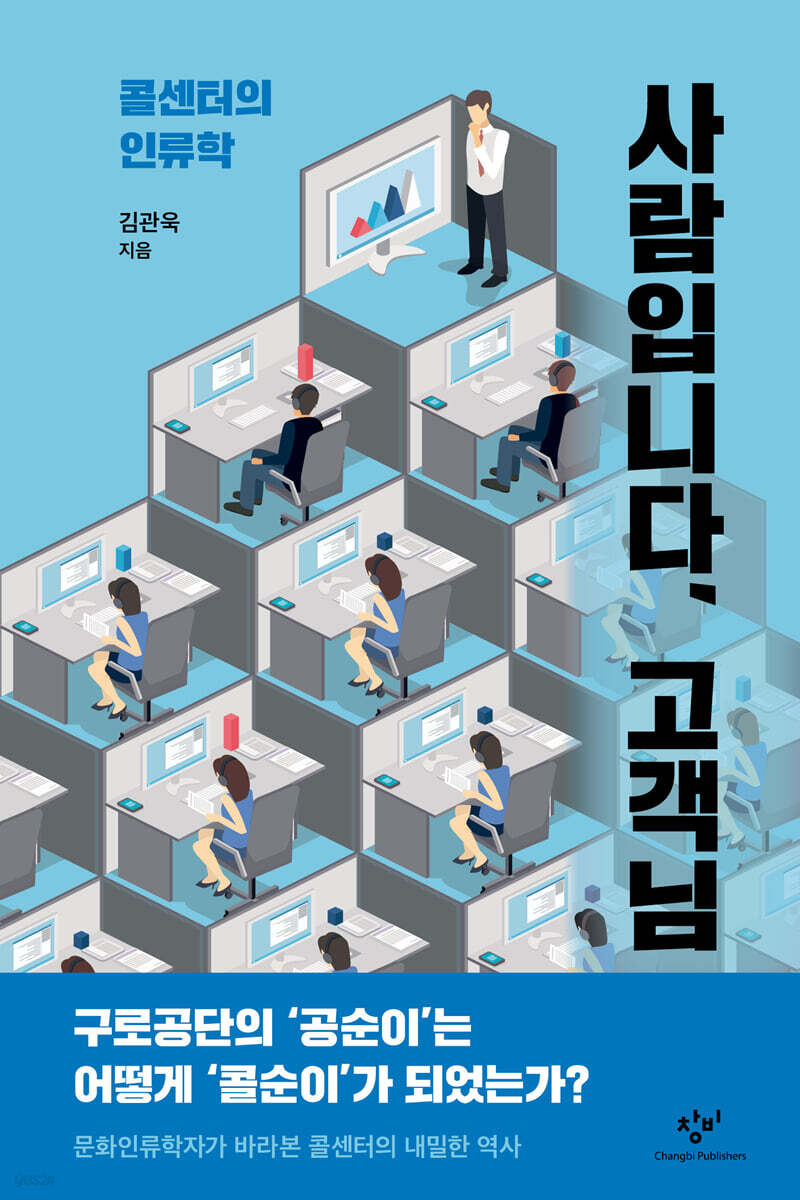
"You Are Human, Customer" is a book about call center labor.
We discussed the structure that allows low-wage, high-intensity labor to continue and the workers who suffer within this structure.
February 4, 2022. Social and Political PD Son Min-gyu
How Guro Industrial Complex's "Gongsooni" Became the Digital Complex's "Callsooni"
The Intimate History of Call Centers as Seen by a Cultural Anthropologist
What Makes Call Center Agents Sick?
In March 2020, a cluster infection of COVID-19 occurred at a call center in Seoul.
The first cluster infection case in Seoul drew media attention to the working conditions at call centers, revealing that the fundamental problem lay in the poor working conditions and subcontracting structure faced by counselors.
Kim Kwan-wook, a cultural anthropologist and family medicine specialist who has long studied emotional labor, health, smoking, and addiction, has published "You Are Human, Customers: Anthropology of Call Centers," which reveals the intimate reality of call centers.
This book is a compilation of findings from the past 10 years of field research, in-depth interviews, and theoretical studies to answer the question, "What makes call center counselors sick?" It vividly portrays the unreasonable working conditions and unfair treatment of call center counselors and delves into the social issues surrounding them from various angles.
From the reality of Guro Industrial Complex's "Gongsooni" becoming Seoul Digital Industrial Complex's "Callsooni," to the COVID-19 cluster infection situation, to the vivid voices of counselors and various efforts to improve treatment, we comprehensively examine the past and present of call centers.
In particular, the author points out that discussions about call centers have been limited to the controversy over abusive behavior by malicious customers and the emotional labor of counselors, and calls for a broader perspective to include the structural problems inherent in the call center industry itself.
Based on a wealth of interviews, photographs, and meticulous research, this book highlights that the call center issue is fundamentally a problem of women's labor and human rights.
The questions raised by "You Are Human, Customer" will serve as an important opportunity to reflect on the subcontracting work of women in Korean society.
The Intimate History of Call Centers as Seen by a Cultural Anthropologist
What Makes Call Center Agents Sick?
In March 2020, a cluster infection of COVID-19 occurred at a call center in Seoul.
The first cluster infection case in Seoul drew media attention to the working conditions at call centers, revealing that the fundamental problem lay in the poor working conditions and subcontracting structure faced by counselors.
Kim Kwan-wook, a cultural anthropologist and family medicine specialist who has long studied emotional labor, health, smoking, and addiction, has published "You Are Human, Customers: Anthropology of Call Centers," which reveals the intimate reality of call centers.
This book is a compilation of findings from the past 10 years of field research, in-depth interviews, and theoretical studies to answer the question, "What makes call center counselors sick?" It vividly portrays the unreasonable working conditions and unfair treatment of call center counselors and delves into the social issues surrounding them from various angles.
From the reality of Guro Industrial Complex's "Gongsooni" becoming Seoul Digital Industrial Complex's "Callsooni," to the COVID-19 cluster infection situation, to the vivid voices of counselors and various efforts to improve treatment, we comprehensively examine the past and present of call centers.
In particular, the author points out that discussions about call centers have been limited to the controversy over abusive behavior by malicious customers and the emotional labor of counselors, and calls for a broader perspective to include the structural problems inherent in the call center industry itself.
Based on a wealth of interviews, photographs, and meticulous research, this book highlights that the call center issue is fundamentally a problem of women's labor and human rights.
The questions raised by "You Are Human, Customer" will serve as an important opportunity to reflect on the subcontracting work of women in Korean society.
- You can preview some of the book's contents.
Preview
index
Prologue Hello, I am an anthropologist studying call centers.
Part 1: The Birth of the Call Center
Chapter 1: From Gongsoon to Colesoon
Chapter 2: The Grave of Sighs in Cigarette Smoke
Headset with 2-part helmet
Chapter 3: The Call Center: A Workplace Beyond Emotion
Chapter 4: A Day in the Life of a Counselor
Chapter 5: The Current State of Call Centers Revealed by the COVID-19 Pandemic
Part 3: In Search of a New Body
Chapter 6: Counselor's Challenges in the Labor Movement
Chapter 7: Let's start by stretching and talking.
Chapter 8: The Age of Cybertaria, the Birth of the Colkeeper
Epilogue Callkeeper Declaration
main
References
Image source
Part 1: The Birth of the Call Center
Chapter 1: From Gongsoon to Colesoon
Chapter 2: The Grave of Sighs in Cigarette Smoke
Headset with 2-part helmet
Chapter 3: The Call Center: A Workplace Beyond Emotion
Chapter 4: A Day in the Life of a Counselor
Chapter 5: The Current State of Call Centers Revealed by the COVID-19 Pandemic
Part 3: In Search of a New Body
Chapter 6: Counselor's Challenges in the Labor Movement
Chapter 7: Let's start by stretching and talking.
Chapter 8: The Age of Cybertaria, the Birth of the Colkeeper
Epilogue Callkeeper Declaration
main
References
Image source
Detailed image

Into the book
Unlike the factory work sites of the past, information is provided through electronic communication devices in modern buildings, but the social standards for judging the value of counselors' labor still seem to have not moved one step beyond the prejudice that women are 'instinctively' suited to low-wage, high-intensity labor.
To me, who was trying to find even the slightest change, the field was constantly giving me the same answer.
As one feminist scholar put it, female workers have been observed in low-wage, high-intensity labor settings for a 'shockingly long time'.
--- p.8
If someone were to ask, “Why did you want to write a book on call center anthropology?” I would say it was because I didn’t want to lose.
The people I don't want to lose to are not abusive customers, a boss who is pushy, or colleagues who ignore me.
It means that we do not want to be swayed by a society and culture that gradually spreads these individuals.
(…) While conducting research, I met people who were going through difficult times, and sometimes heard stories of truly unfortunate choices, and as a researcher, I felt a great sense of helplessness and frustration.
But I didn't want to lose like this.
--- p.12
The saying, 'the customer is king' is truly frightening.
It means that inequality of power is acceptable for a moment if you can afford to pay the cost.
Is this an overinterpretation, or does it only apply to a select few? (…) The important thing is that we live in an age where such inequality is possible.
Call centers are at the forefront.
Excessive kindness and smiling are expected of female counselors as if it were a given.
Is it truly natural to impose a specific emotion excessively on a specific target? Is the mere fact of paying a price sufficient? But if you think about it, haven't women already been receiving the same treatment within the home, unpaid, for a long time?
I wonder if the location of gender role distinction has moved from the home to the call center.
Could it be that the long-standing inequality between men and women in domestic care has extended into the workplace?
--- p.142~143
Even though times changed and women were able to leave the house, they were ultimately unable to leave the house.
The husband and father have simply become customers and bosses, and the traditional norms for women within the home have shifted to discipline and control within the business.
You could say she is a modern-day 'digital wife and wise mother.'
The 'house' keeper, who looked after the house during work hours, was temporarily switched to a 'call' keeper, who looked after counseling calls.
--- p.341
The concept of emotional labor, which represents the work style of call center counselors, has brought attention to the difficulties counselors face, but it has not been enough to capture everything.
But at some point, before the counselors could even properly protest, it felt like their lives were completely understood within the term and explanation of emotional labor, as if they had been thrown aside and abandoned like a workbook that had already been solved.
I felt that I had to at least break away from the flow that the term emotional labor had created.
I wanted to represent the life of a female counselor in a new language.
To me, who was trying to find even the slightest change, the field was constantly giving me the same answer.
As one feminist scholar put it, female workers have been observed in low-wage, high-intensity labor settings for a 'shockingly long time'.
--- p.8
If someone were to ask, “Why did you want to write a book on call center anthropology?” I would say it was because I didn’t want to lose.
The people I don't want to lose to are not abusive customers, a boss who is pushy, or colleagues who ignore me.
It means that we do not want to be swayed by a society and culture that gradually spreads these individuals.
(…) While conducting research, I met people who were going through difficult times, and sometimes heard stories of truly unfortunate choices, and as a researcher, I felt a great sense of helplessness and frustration.
But I didn't want to lose like this.
--- p.12
The saying, 'the customer is king' is truly frightening.
It means that inequality of power is acceptable for a moment if you can afford to pay the cost.
Is this an overinterpretation, or does it only apply to a select few? (…) The important thing is that we live in an age where such inequality is possible.
Call centers are at the forefront.
Excessive kindness and smiling are expected of female counselors as if it were a given.
Is it truly natural to impose a specific emotion excessively on a specific target? Is the mere fact of paying a price sufficient? But if you think about it, haven't women already been receiving the same treatment within the home, unpaid, for a long time?
I wonder if the location of gender role distinction has moved from the home to the call center.
Could it be that the long-standing inequality between men and women in domestic care has extended into the workplace?
--- p.142~143
Even though times changed and women were able to leave the house, they were ultimately unable to leave the house.
The husband and father have simply become customers and bosses, and the traditional norms for women within the home have shifted to discipline and control within the business.
You could say she is a modern-day 'digital wife and wise mother.'
The 'house' keeper, who looked after the house during work hours, was temporarily switched to a 'call' keeper, who looked after counseling calls.
--- p.341
The concept of emotional labor, which represents the work style of call center counselors, has brought attention to the difficulties counselors face, but it has not been enough to capture everything.
But at some point, before the counselors could even properly protest, it felt like their lives were completely understood within the term and explanation of emotional labor, as if they had been thrown aside and abandoned like a workbook that had already been solved.
I felt that I had to at least break away from the flow that the term emotional labor had created.
I wanted to represent the life of a female counselor in a new language.
--- p.352
Publisher's Review
From the birth of call centers to today
The Vivid Voices of Female Workers Encountered by Anthropologists
The industrial sectors centered on the Guro Industrial Complex, a symbol of Korea's industrial modernization, have changed over time, and naturally, the jobs of female workers within the complex have also changed.
If there were female workers called 'Gongsuni' in the past Guro Industrial Complex, today in the same place and renamed Seoul Digital Industrial Complex (hereafter referred to as Digital Complex), there are call center counselors who call themselves 'Callsuni'.
Part 1, "The Birth of the Call Center," traces the current state of women's labor and human rights, going back 50 years to the Guro Industrial Complex, as the author sets out to find a call center in the digital complex.
This reveals that the lives of today's female call center counselors are not much different from the lives of the female workers who were called 'Gongsoon-i'.
The author, who has studied smoking and addiction for a long time, notes that call centers are often called "smokers' paradises" among counselors.
Counselors, burdened by abusive customers, pressured to perform by managers, and controlled by the call center's physical and electronic surveillance systems, often chose smoking rooms as a refuge.
There are even some counselors who go so far as to say that the smoking room at the call center is a “graveyard of sighs” and that the only choice is “either smoke here or jump.”
This book details how the high smoking rate among female counselors stems from poor working conditions and how surveillance and control of workers harms their health.
Hidden behind ‘kindness, accuracy, and speed’
The call center: a workplace beyond emotion
The call center is always backed up with calls.
The physical and mental health of counselors who always answer calls with a smile and shout "Kind, Accurate, and Quick" are often pushed aside by the onslaught of calls.
Part 2, "The Headset That Became a Helmet," clearly conveys the specific problems counselors face in the field through vivid interviews and various materials.
Counselors are often so busy with work that they can't even get out of their desks in the morning, and they have to get permission from their supervisors to even go to the bathroom.
Every word you say during the consultation process is evaluated, and based on your score, you are assigned a 'grade' and paid a different salary.
Since the COVID-19 pandemic, there has been discussion about whether call center agents should be treated as essential workers. However, while COVID-19-related work has surged, the reality has not improved at all.
Counselors who describe themselves as "dried squid on a grill" and "disposable batteries" face conflicts not only with malicious clients, but also with bosses who meticulously manage and pressure performance, employees of the main contractor who mistreat consultants working at subcontractors, and even with colleagues who have become potential competitors.
This reality contributes to the physical and mental health of counselors. In fact, call center counselors have a significantly higher prevalence of almost all illnesses than service workers in other occupations.
However, most counselors accept illness as something unavoidable, like a tax.
The reality is that due to the chronic subcontracting structure, it is unclear who will be held accountable for the problem.
The author explains counseling work, which is difficult to fully explain with just the term “emotional labor,” using a new term, “affective labor.”
Counselors are not only having to regulate their emotions, but are also being trained to accept and resign themselves to the abusive and unfair situation itself.
"Hello. I'm a counselor, a human being."
Speaking of life beyond the receiver
The author confesses that while conducting field research, he encountered the deep-rooted prejudice in Korean society that women are 'instinctively' suited to low-wage, high-intensity work.
No matter how much times have changed, women still find it difficult to be free from care work, and the majority of counselors (94.1% of female members of the Korean Confederation of Trade Unions Call Center Union, as of 2021) are also required to fulfill the traditional gender role of kindly caring for customers.
But not everyone accepted reality helplessly.
The author finds the clue in the final part of the book, Part 3, “In Search of a New Body.” He introduces cases in which counselors formed a labor union to demand improved working conditions and fought against management, and cases in which they actively improved their bodies and their attitudes toward work by running lifestyle exercise groups.
Finally, we compare and analyze the cases of the UK and India, where call centers developed early, with those of Korea, providing a broad overview of the global reality facing female subcontracted workers.
Call centers are ubiquitous across every industry, but the human agent on the other end of the line is often forgotten.
We've all received a call from an unknown number saying, "Hello, how are you?" or dialed a customer service number and waited to be connected to a representative.
The author laments the reality that counselors who greet people hundreds of times a day with "hello" are unable to take care of their own well-being, but does not lose hope for a better future.
The long journey of a cultural anthropologist who dreams of a society where the value of labor is properly recognized and where no one suffers from illness due to work now reaches readers.
The Vivid Voices of Female Workers Encountered by Anthropologists
The industrial sectors centered on the Guro Industrial Complex, a symbol of Korea's industrial modernization, have changed over time, and naturally, the jobs of female workers within the complex have also changed.
If there were female workers called 'Gongsuni' in the past Guro Industrial Complex, today in the same place and renamed Seoul Digital Industrial Complex (hereafter referred to as Digital Complex), there are call center counselors who call themselves 'Callsuni'.
Part 1, "The Birth of the Call Center," traces the current state of women's labor and human rights, going back 50 years to the Guro Industrial Complex, as the author sets out to find a call center in the digital complex.
This reveals that the lives of today's female call center counselors are not much different from the lives of the female workers who were called 'Gongsoon-i'.
The author, who has studied smoking and addiction for a long time, notes that call centers are often called "smokers' paradises" among counselors.
Counselors, burdened by abusive customers, pressured to perform by managers, and controlled by the call center's physical and electronic surveillance systems, often chose smoking rooms as a refuge.
There are even some counselors who go so far as to say that the smoking room at the call center is a “graveyard of sighs” and that the only choice is “either smoke here or jump.”
This book details how the high smoking rate among female counselors stems from poor working conditions and how surveillance and control of workers harms their health.
Hidden behind ‘kindness, accuracy, and speed’
The call center: a workplace beyond emotion
The call center is always backed up with calls.
The physical and mental health of counselors who always answer calls with a smile and shout "Kind, Accurate, and Quick" are often pushed aside by the onslaught of calls.
Part 2, "The Headset That Became a Helmet," clearly conveys the specific problems counselors face in the field through vivid interviews and various materials.
Counselors are often so busy with work that they can't even get out of their desks in the morning, and they have to get permission from their supervisors to even go to the bathroom.
Every word you say during the consultation process is evaluated, and based on your score, you are assigned a 'grade' and paid a different salary.
Since the COVID-19 pandemic, there has been discussion about whether call center agents should be treated as essential workers. However, while COVID-19-related work has surged, the reality has not improved at all.
Counselors who describe themselves as "dried squid on a grill" and "disposable batteries" face conflicts not only with malicious clients, but also with bosses who meticulously manage and pressure performance, employees of the main contractor who mistreat consultants working at subcontractors, and even with colleagues who have become potential competitors.
This reality contributes to the physical and mental health of counselors. In fact, call center counselors have a significantly higher prevalence of almost all illnesses than service workers in other occupations.
However, most counselors accept illness as something unavoidable, like a tax.
The reality is that due to the chronic subcontracting structure, it is unclear who will be held accountable for the problem.
The author explains counseling work, which is difficult to fully explain with just the term “emotional labor,” using a new term, “affective labor.”
Counselors are not only having to regulate their emotions, but are also being trained to accept and resign themselves to the abusive and unfair situation itself.
"Hello. I'm a counselor, a human being."
Speaking of life beyond the receiver
The author confesses that while conducting field research, he encountered the deep-rooted prejudice in Korean society that women are 'instinctively' suited to low-wage, high-intensity work.
No matter how much times have changed, women still find it difficult to be free from care work, and the majority of counselors (94.1% of female members of the Korean Confederation of Trade Unions Call Center Union, as of 2021) are also required to fulfill the traditional gender role of kindly caring for customers.
But not everyone accepted reality helplessly.
The author finds the clue in the final part of the book, Part 3, “In Search of a New Body.” He introduces cases in which counselors formed a labor union to demand improved working conditions and fought against management, and cases in which they actively improved their bodies and their attitudes toward work by running lifestyle exercise groups.
Finally, we compare and analyze the cases of the UK and India, where call centers developed early, with those of Korea, providing a broad overview of the global reality facing female subcontracted workers.
Call centers are ubiquitous across every industry, but the human agent on the other end of the line is often forgotten.
We've all received a call from an unknown number saying, "Hello, how are you?" or dialed a customer service number and waited to be connected to a representative.
The author laments the reality that counselors who greet people hundreds of times a day with "hello" are unable to take care of their own well-being, but does not lose hope for a better future.
The long journey of a cultural anthropologist who dreams of a society where the value of labor is properly recognized and where no one suffers from illness due to work now reaches readers.
GOODS SPECIFICS
- Publication date: January 20, 2022
- Page count, weight, size: 388 pages | 566g | 140*210*30mm
- ISBN13: 9788936479022
- ISBN10: 8936479024
You may also like
카테고리
korean


korean

![GQ KOREA Mark (Monthly): December [2025]](http://librairie.coreenne.fr/cdn/shop/files/8ef265dbbfbf186523ed75ba7319009d.jpg?v=1765340328&width=3840)


