

townhouse
 |
Description
Book Introduction
- A word from MD
-
The culmination of a bold vision presented by a young writerThe first novel collection by novelist Jeon Ji-young, winner of the 2023 New Year's Literary Contest.
It stands out for its fierce gaze that seeks out the leaks hidden beneath the smooth surface of modern society, such as school violence, class, and social inequality.
Above all, this is an impressive collection of novels in which the characters endure and move forward in their lives even in despair and humiliation.
December 20, 2024. Novel/Poetry PD Kim Yu-ri
Jeon Ji-young, winner of the Young Writer's Award and winner of the New Year's Literary Contest, presents her first novel collection.
The boldness to confront modern society head-on, and the skillful writing style that digs into the cracks of everyday life.
Novelist Jeon Ji-young, who garnered attention as a "double winner of the New Year's Literary Contest" by winning the 2023 Hankook Ilbo and Chosun Ilbo New Year's Literary Contests, has published her first short story collection, "Townhouse," just over a year after her debut.
The author, who began his career with praise for his careful and mature perspective and his ability to maintain tension until the very end, depicts aspects of modern society with a neat and skillful writing style that makes it hard to believe he is a new writer.
This book contains a total of eight works, including the New Year's literary contest winners "Rat" and "The Rain That Hit the Railing Flowed Into the House" and the Young Writer's Award winner "Uncanny Valley."
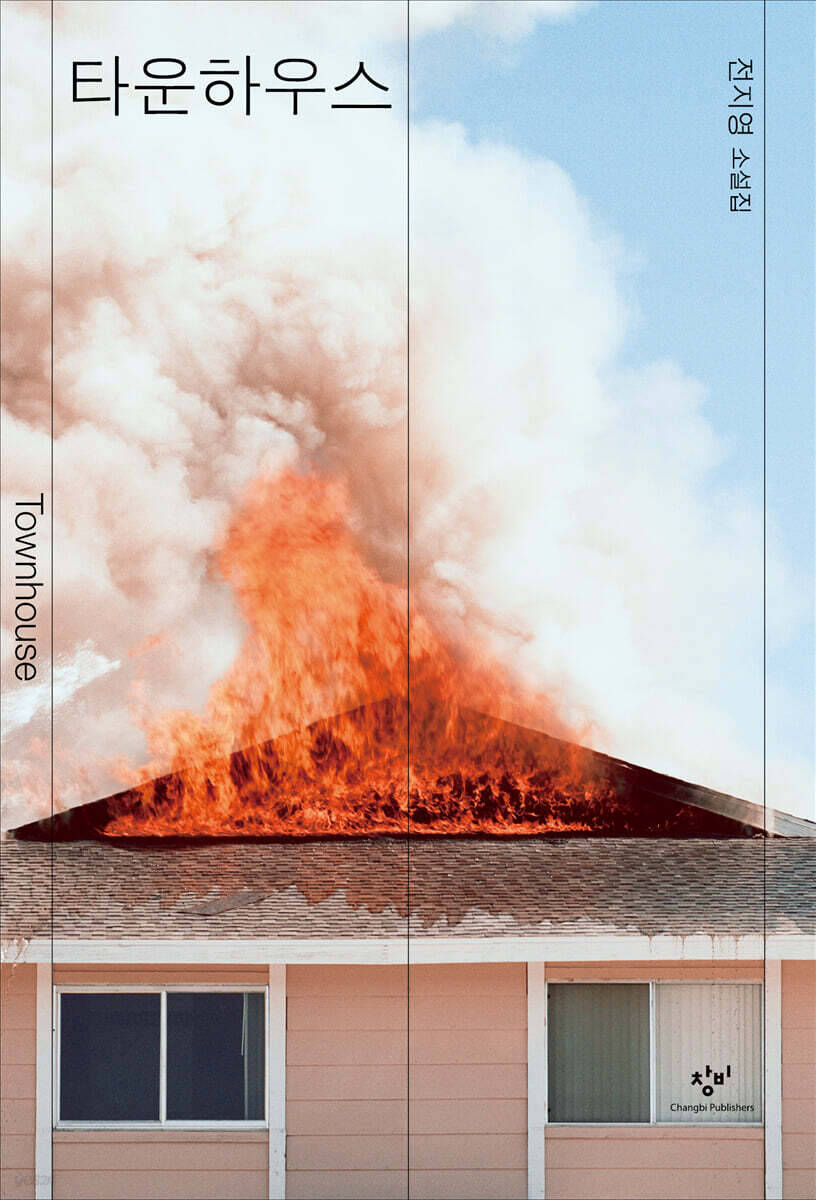
'Townhouse' is a space that appears to be good on the outside, but symbolizes signs of collapse that started from a small crack.
Jeon Ji-young demonstrates her unique ability to calmly and composurely describe the voices of characters who struggle to hide the rupture even though something is breaking, or who feel anxious as they anticipate the cracks in their daily lives.
The author's tenacity in delving head-on into subtle and complex issues that cannot be easily categorized as good or evil, such as the parents of children who are perpetrators or victims of school violence, or wives whose husbands are involved in covering up incidents within the military, is admirable.
The boldness to confront modern society head-on, and the skillful writing style that digs into the cracks of everyday life.
Novelist Jeon Ji-young, who garnered attention as a "double winner of the New Year's Literary Contest" by winning the 2023 Hankook Ilbo and Chosun Ilbo New Year's Literary Contests, has published her first short story collection, "Townhouse," just over a year after her debut.
The author, who began his career with praise for his careful and mature perspective and his ability to maintain tension until the very end, depicts aspects of modern society with a neat and skillful writing style that makes it hard to believe he is a new writer.
This book contains a total of eight works, including the New Year's literary contest winners "Rat" and "The Rain That Hit the Railing Flowed Into the House" and the Young Writer's Award winner "Uncanny Valley."
'Townhouse' is a space that appears to be good on the outside, but symbolizes signs of collapse that started from a small crack.
Jeon Ji-young demonstrates her unique ability to calmly and composurely describe the voices of characters who struggle to hide the rupture even though something is breaking, or who feel anxious as they anticipate the cracks in their daily lives.
The author's tenacity in delving head-on into subtle and complex issues that cannot be easily categorized as good or evil, such as the parents of children who are perpetrators or victims of school violence, or wives whose husbands are involved in covering up incidents within the military, is admirable.
- You can preview some of the book's contents.
Preview
index
Horse's Eye
mouse
The rain that hit the railing poured into the house,
blind spot
Uncanny Valley
Without a sound or rumor
bone and flesh
The remaining child
Commentary | Electrification
Author's Note
Announcement page of included works
mouse
The rain that hit the railing poured into the house,
blind spot
Uncanny Valley
Without a sound or rumor
bone and flesh
The remaining child
Commentary | Electrification
Author's Note
Announcement page of included works
Detailed image
Into the book
Suyeon didn't believe it.
The real threat isn't caught on camera.
Rumors, threats, persuasion… the isolation was worth it compared to the invisible threats.
The real problem that was bothering Suyeon was inside the townhouse.
---pp.10~11
Seo-ah will soon be twelve years old.
As you go through puberty, you will realize that there are feelings that cannot be explained by the words you have learned so far.
I'm talking about the shame that a person feels when they are being watched.
And the shame will become a greater guilt than relief, and will make him chase after Seo-ah more persistently.
---p.26
"babe.
Recently, a civilian fishing boat collided with a warship and sank.
“How many people do you think died?”
"yes?"
“They announced that there were no casualties?”
Yunjin was speechless at the sudden question.
It was a question I had never thought about or doubted.
“There was a similar incident when I lived in this neighborhood.
My husband was a captain when he was in the army.
“Such accidents often occur when there is heavy fog or a typhoon comes.”
The child was lying half-asleep with his body twisted.
The child's sweaty bangs were blowing in the wind from the portable fan.
“Rescue everyone.
I said the same thing back then.
Here, such flaws are buried without a care.
It's a place where cause and prestige are important.
---p.57
When I last saw her, there was a liveliness in her eyes that I hadn't seen in a decade.
It was a gaze that held a cold aura somewhere.
“Sister, have you ever shot a gun?”
"gun?"
“Try shooting a gun.”
A's wife leaned close to Hye-kyung and whispered softly.
“Sister, isn’t there anyone you want to kill?”
Hye-kyung looked at her in surprise.
A's wife looked Hye-kyung straight in the eye and laughed out loud.
---p.95
What kind of life does Samo dream of?
Eun-ae didn't know the reality of that life, but she wasn't particularly envious.
For Eun-ae, a leisurely life was not living.
Such a life was insulting to those who did their best to prove their worth.
Everyone has a use.
A life that finds no use is an unhappy one.
---p.125
I liked you from the beginning.
You are definitely a beauty.
But not all beauties became models for good paintings.
The model needed a lack.
It added naturalness to the picture.
You have a hunched neck and severe asymmetry between your shoulders.
His posture clearly showed that he was tired and worn out.
Of course, it wasn't because of that appearance that I was attracted to you.
What caught my eye were your eyes, your eyes wide open trying to bear the fatigue.
Your pupils resemble an owl's.
The color was dark and transparent.
While doing the croquis, I tried my best to capture the savagery in your eyes.
And I hoped that one day you would betray me.
The work that exhausts you and the passion you harbor for it.
---p.163
“I went to my senior’s first solo exhibition every day.”
"everyday?"
"everyday.
A house made of blue silk.
“I stood there for a long time.”
It seemed to be referring to the 'silk house' in the lobby of the news agency building.
Because it was hung from the gallery ceiling like a mobile, anyone could enter and exit the work.
“It was warm.
Even though I don't know my senior well, I trust his work.
I believe that because my senior is a warm person, his work is also warm.
We must not forget that.”
"warmth?"
"no.
“What makes us warm.”
---p.227
Facing a child's back is like answering the question without a hint.
Adults are put in the difficult position of having to ask questions and find answers for themselves.
The child punishes the adults who interfere in his life in that way.
The real threat isn't caught on camera.
Rumors, threats, persuasion… the isolation was worth it compared to the invisible threats.
The real problem that was bothering Suyeon was inside the townhouse.
---pp.10~11
Seo-ah will soon be twelve years old.
As you go through puberty, you will realize that there are feelings that cannot be explained by the words you have learned so far.
I'm talking about the shame that a person feels when they are being watched.
And the shame will become a greater guilt than relief, and will make him chase after Seo-ah more persistently.
---p.26
"babe.
Recently, a civilian fishing boat collided with a warship and sank.
“How many people do you think died?”
"yes?"
“They announced that there were no casualties?”
Yunjin was speechless at the sudden question.
It was a question I had never thought about or doubted.
“There was a similar incident when I lived in this neighborhood.
My husband was a captain when he was in the army.
“Such accidents often occur when there is heavy fog or a typhoon comes.”
The child was lying half-asleep with his body twisted.
The child's sweaty bangs were blowing in the wind from the portable fan.
“Rescue everyone.
I said the same thing back then.
Here, such flaws are buried without a care.
It's a place where cause and prestige are important.
---p.57
When I last saw her, there was a liveliness in her eyes that I hadn't seen in a decade.
It was a gaze that held a cold aura somewhere.
“Sister, have you ever shot a gun?”
"gun?"
“Try shooting a gun.”
A's wife leaned close to Hye-kyung and whispered softly.
“Sister, isn’t there anyone you want to kill?”
Hye-kyung looked at her in surprise.
A's wife looked Hye-kyung straight in the eye and laughed out loud.
---p.95
What kind of life does Samo dream of?
Eun-ae didn't know the reality of that life, but she wasn't particularly envious.
For Eun-ae, a leisurely life was not living.
Such a life was insulting to those who did their best to prove their worth.
Everyone has a use.
A life that finds no use is an unhappy one.
---p.125
I liked you from the beginning.
You are definitely a beauty.
But not all beauties became models for good paintings.
The model needed a lack.
It added naturalness to the picture.
You have a hunched neck and severe asymmetry between your shoulders.
His posture clearly showed that he was tired and worn out.
Of course, it wasn't because of that appearance that I was attracted to you.
What caught my eye were your eyes, your eyes wide open trying to bear the fatigue.
Your pupils resemble an owl's.
The color was dark and transparent.
While doing the croquis, I tried my best to capture the savagery in your eyes.
And I hoped that one day you would betray me.
The work that exhausts you and the passion you harbor for it.
---p.163
“I went to my senior’s first solo exhibition every day.”
"everyday?"
"everyday.
A house made of blue silk.
“I stood there for a long time.”
It seemed to be referring to the 'silk house' in the lobby of the news agency building.
Because it was hung from the gallery ceiling like a mobile, anyone could enter and exit the work.
“It was warm.
Even though I don't know my senior well, I trust his work.
I believe that because my senior is a warm person, his work is also warm.
We must not forget that.”
"warmth?"
"no.
“What makes us warm.”
---p.227
Facing a child's back is like answering the question without a hint.
Adults are put in the difficult position of having to ask questions and find answers for themselves.
The child punishes the adults who interfere in his life in that way.
---p.272
Publisher's Review
“Here, you see.
“What you see is not the answer.”
A harmony of tension and anxiety quietly exploding from within
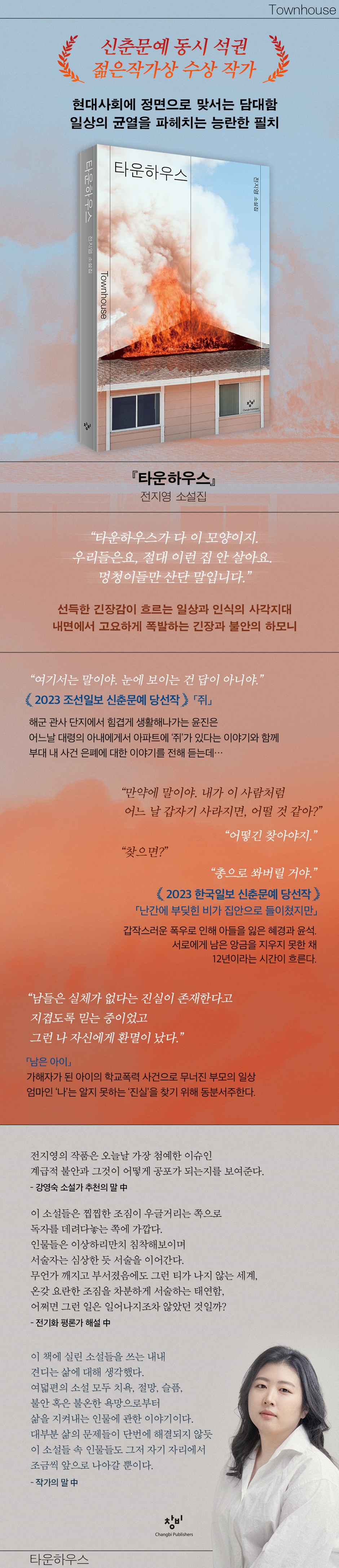
The author delicately depicts the everyday life filled with a sense of tension and the individual emotions that lie in the blind spots of perception, and creates a deep sense of immersion with a dramatic development that instantly shakes up the situation.
"The Horse's Eyes," placed at the very beginning of the book, is told from the perspective of Su-yeon, who moves to a townhouse on an unfamiliar island to help her daughter, Seo-ah, recover from school violence.
While living on the island, the mother and daughter gradually recover, but anxiety grows when Ji-hee's daughter, who helped Soo-yeon settle down on the island, gets involved in a school violence incident and Seo-ah is pointed out as the only witness to the incident.
One day, when a typhoon is predicted to move north, water begins to leak from the roof of Suyeon's house, and the situation only gets worse as thunder, lightning, and wind and rain begin to pour down.
The repairman who came to fix the roof said, “All townhouses are like this.
We would never live in a house like this.
He reveals his hostility toward those who have immigrated from the mainland with the words, “Only idiots live here” (page 29), and Suyeon is precariously burdened by the leaky roof and the anxiety triggered by Jihee demanding that Seoah testify at the school violence committee.
"The Leftover Child," a story told from the perspective of a mother whose daily life is shattered by a school violence incident involving her child who becomes the perpetrator, can be read in a similar way to "The Horse's Eyes" in that it realistically depicts the psychology of parents whose positions change depending on whether their child is the perpetrator or the victim.
While the speaker of "The Horse's Eyes" struggles to maintain the daily life that is just beginning to recover, the speaker of "The Leftover Child" struggles to find out the truth that he does not know.
He confesses, “I was tired of believing that there was a truth that others did not have, and I became disillusioned with myself” (page 276), but he does not stop his journey to find that hidden truth.
"Rat," which shows the extreme of anxiety that foreshadows the collapse of everyday life, is the story of Yunjin, a wife whose husband is a naval officer.
In the naval residence complex, where the husbands' hierarchy is reflected among the wives, Yunjin struggles to raise her two children alone.
One day, while feeling frustrated because her husband returned home earlier than scheduled and did not tell her the reason, Yunjin hears from the colonel's wife that there are rats in the apartment, and also a story about how accidents that occur in the unit are covered up, and how those who are not involved in the cover-up have disappeared.
In the novel, the rat does not appear until the very end.
A rat reveals its presence only through sounds or movements.
In fact, the author seems to be saying that the anxiety and threats that shake our lives are invisible.
"Uncanny Valley" and "Without a Sound" are works set in a fictional wealthy neighborhood called "Cheonghan-dong."
In this secret space, symbolized by the 'mansion', the people who work there every day and the people who belong to it coexist.
First, the 'I' in "Uncanny Valley" is a croquis artist who makes a living as a taxi driver.
When he hears from the police that a female passenger he has admired has become a victim of an acid attack, he suspects the old lady who lives in the mansion where she worked as the culprit.
At the end of the novel, 'I' climbs up the wall of the mansion, which feels like a huge castle wall, and tries to get closer to the truth.
"Without a Sound" shows what happens to 'I', a piano major at an arts high school, while living in a boarding house in Cheonghan-dong.
'I' wants to distinguish myself from the housekeeper who lives there and does housework, but on the day of the house party held at the mansion, the professor who is the landlord asks me to pretend not to exist, and I become coldly aware of my position.
This kind of covert and insidious discrimination that social inequality creates pushes those who do not belong in the "townhouse" out of the boundaries, causing fear and shame.
Meanwhile, "The Rain That Hit the Railing Poured Into the House," which tells the story of a couple who lost their son in a sudden downpour, unable to erase the ill feelings they held for each other, but finally showing signs of recovery; "Blind Spot," which shows an ophthalmologist who has made money by exploiting the blind spots of the law, facing the blind spots in his own life and moving forward; and "Bone and Flesh," which tells the story of an artist who once framed a junior out of jealousy of his talent, but eventually finds his own path by keeping him by his side. These are masterpieces that show Jeon Ji-young's outstanding sense of balance in life and the complex inner world of humans with her own solid prose.
In this way, rather than trying to heal the conflicts and wounds that the characters experience in situations where they are on either side of the fence, Jeon Ji-young focuses on revealing the distorted perceptions and prejudices that emerge in the process.
In the process, a cross-section of deeply buried old emotions is revealed, and the bitter hardships of modern people living with doubts and anxieties are revealed.
Additionally, the author's skill in fitting unique and distinctive elements into a realistic world with a smooth plot adds tension and appeal to the work, piqueing readers' curiosity.
The speaker of “The Leftover Child,” who was doggedly pursuing the truth, said, “I am doing what I can do.
To look at what you see as it is.
“I finally accept that this is the only truth that has been bestowed upon me” (page 278).
Perhaps this realization is nothing other than the writer's attitude toward accepting life and the writer's novelistic attitude toward writing the scenes and stories of ordinary daily life.
Even so, what will the weak gestures of the person who struggles to climb the wall of the mansion to see the hidden side unfold before our eyes?
It's time to take a look at the new world of Jeon Ji-young, who possesses a solid writing style, a well-crafted narrative structure, a sharp intellect, and a thoughtful eye.
“What you see is not the answer.”
A harmony of tension and anxiety quietly exploding from within
The author delicately depicts the everyday life filled with a sense of tension and the individual emotions that lie in the blind spots of perception, and creates a deep sense of immersion with a dramatic development that instantly shakes up the situation.
"The Horse's Eyes," placed at the very beginning of the book, is told from the perspective of Su-yeon, who moves to a townhouse on an unfamiliar island to help her daughter, Seo-ah, recover from school violence.
While living on the island, the mother and daughter gradually recover, but anxiety grows when Ji-hee's daughter, who helped Soo-yeon settle down on the island, gets involved in a school violence incident and Seo-ah is pointed out as the only witness to the incident.
One day, when a typhoon is predicted to move north, water begins to leak from the roof of Suyeon's house, and the situation only gets worse as thunder, lightning, and wind and rain begin to pour down.
The repairman who came to fix the roof said, “All townhouses are like this.
We would never live in a house like this.
He reveals his hostility toward those who have immigrated from the mainland with the words, “Only idiots live here” (page 29), and Suyeon is precariously burdened by the leaky roof and the anxiety triggered by Jihee demanding that Seoah testify at the school violence committee.
"The Leftover Child," a story told from the perspective of a mother whose daily life is shattered by a school violence incident involving her child who becomes the perpetrator, can be read in a similar way to "The Horse's Eyes" in that it realistically depicts the psychology of parents whose positions change depending on whether their child is the perpetrator or the victim.
While the speaker of "The Horse's Eyes" struggles to maintain the daily life that is just beginning to recover, the speaker of "The Leftover Child" struggles to find out the truth that he does not know.
He confesses, “I was tired of believing that there was a truth that others did not have, and I became disillusioned with myself” (page 276), but he does not stop his journey to find that hidden truth.
"Rat," which shows the extreme of anxiety that foreshadows the collapse of everyday life, is the story of Yunjin, a wife whose husband is a naval officer.
In the naval residence complex, where the husbands' hierarchy is reflected among the wives, Yunjin struggles to raise her two children alone.
One day, while feeling frustrated because her husband returned home earlier than scheduled and did not tell her the reason, Yunjin hears from the colonel's wife that there are rats in the apartment, and also a story about how accidents that occur in the unit are covered up, and how those who are not involved in the cover-up have disappeared.
In the novel, the rat does not appear until the very end.
A rat reveals its presence only through sounds or movements.
In fact, the author seems to be saying that the anxiety and threats that shake our lives are invisible.
"Uncanny Valley" and "Without a Sound" are works set in a fictional wealthy neighborhood called "Cheonghan-dong."
In this secret space, symbolized by the 'mansion', the people who work there every day and the people who belong to it coexist.
First, the 'I' in "Uncanny Valley" is a croquis artist who makes a living as a taxi driver.
When he hears from the police that a female passenger he has admired has become a victim of an acid attack, he suspects the old lady who lives in the mansion where she worked as the culprit.
At the end of the novel, 'I' climbs up the wall of the mansion, which feels like a huge castle wall, and tries to get closer to the truth.
"Without a Sound" shows what happens to 'I', a piano major at an arts high school, while living in a boarding house in Cheonghan-dong.
'I' wants to distinguish myself from the housekeeper who lives there and does housework, but on the day of the house party held at the mansion, the professor who is the landlord asks me to pretend not to exist, and I become coldly aware of my position.
This kind of covert and insidious discrimination that social inequality creates pushes those who do not belong in the "townhouse" out of the boundaries, causing fear and shame.
Meanwhile, "The Rain That Hit the Railing Poured Into the House," which tells the story of a couple who lost their son in a sudden downpour, unable to erase the ill feelings they held for each other, but finally showing signs of recovery; "Blind Spot," which shows an ophthalmologist who has made money by exploiting the blind spots of the law, facing the blind spots in his own life and moving forward; and "Bone and Flesh," which tells the story of an artist who once framed a junior out of jealousy of his talent, but eventually finds his own path by keeping him by his side. These are masterpieces that show Jeon Ji-young's outstanding sense of balance in life and the complex inner world of humans with her own solid prose.
In this way, rather than trying to heal the conflicts and wounds that the characters experience in situations where they are on either side of the fence, Jeon Ji-young focuses on revealing the distorted perceptions and prejudices that emerge in the process.
In the process, a cross-section of deeply buried old emotions is revealed, and the bitter hardships of modern people living with doubts and anxieties are revealed.
Additionally, the author's skill in fitting unique and distinctive elements into a realistic world with a smooth plot adds tension and appeal to the work, piqueing readers' curiosity.
The speaker of “The Leftover Child,” who was doggedly pursuing the truth, said, “I am doing what I can do.
To look at what you see as it is.
“I finally accept that this is the only truth that has been bestowed upon me” (page 278).
Perhaps this realization is nothing other than the writer's attitude toward accepting life and the writer's novelistic attitude toward writing the scenes and stories of ordinary daily life.
Even so, what will the weak gestures of the person who struggles to climb the wall of the mansion to see the hidden side unfold before our eyes?
It's time to take a look at the new world of Jeon Ji-young, who possesses a solid writing style, a well-crafted narrative structure, a sharp intellect, and a thoughtful eye.
GOODS SPECIFICS
- Date of issue: December 3, 2024
- Page count, weight, size: 300 pages | 320g | 128*188*18mm
- ISBN13: 9788936439675
You may also like
카테고리
korean


korean

![GQ KOREA Mark (Monthly): December [2025]](http://librairie.coreenne.fr/cdn/shop/files/8ef265dbbfbf186523ed75ba7319009d.jpg?v=1765340328&width=3840)


