![[YesRecover] Career and Family](http://librairie.coreenne.fr/cdn/shop/files/1ba37e05dd61b1991b9739a17bdd776f.jpg?v=1765427030&width=3840)

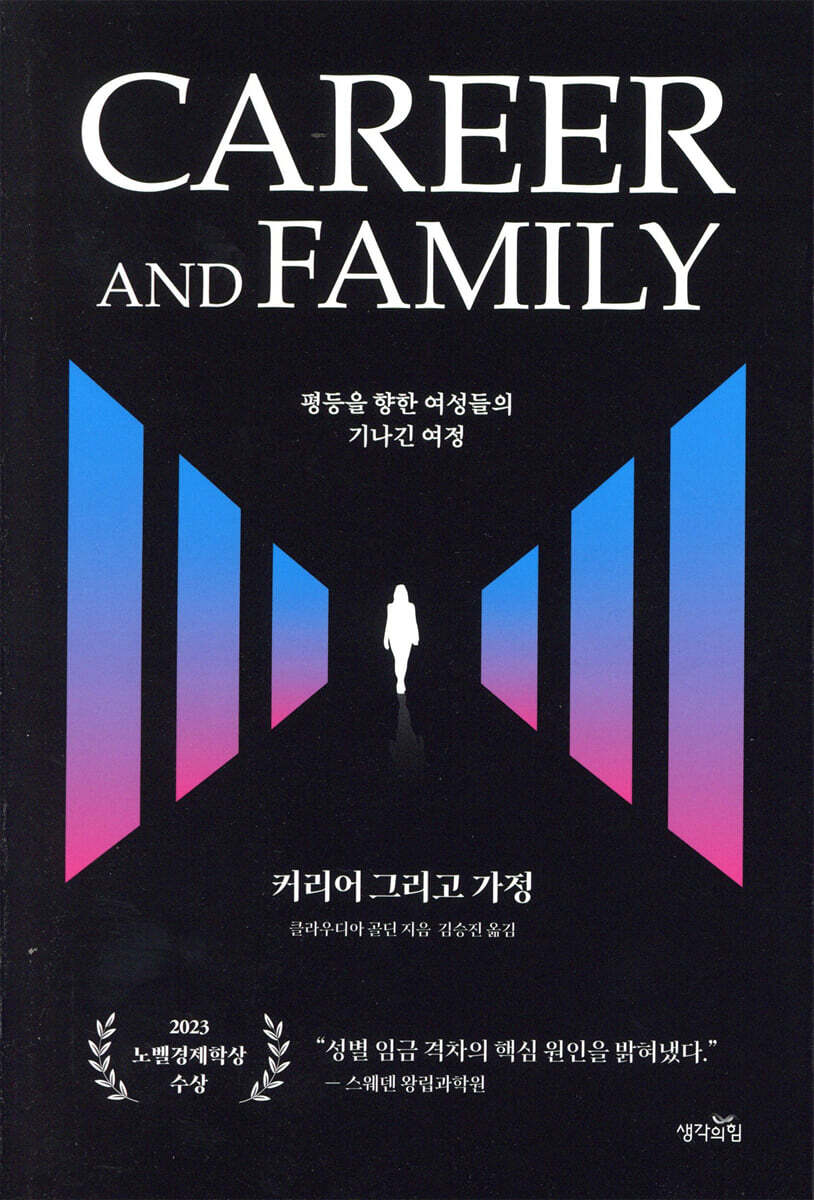
[YesRecover] Career and Family
 |
Description
Book Introduction
Claudia Goldin, winner of the 2023 Nobel Prize in Economics, has made a major contribution.
- A word from MD
- A masterpiece by Claudia Goldin, winner of the 2023 Nobel Prize in Economics! Women excel academically and actively participate in society.
So why do women still earn less? This book, addressing gender income inequality, argues that it's because men have an advantage in long hours of work, which guarantees higher incomes.
When family and work collide, it is often women who have to make the sacrifices.
- Son Min-gyu, Social and Political MD
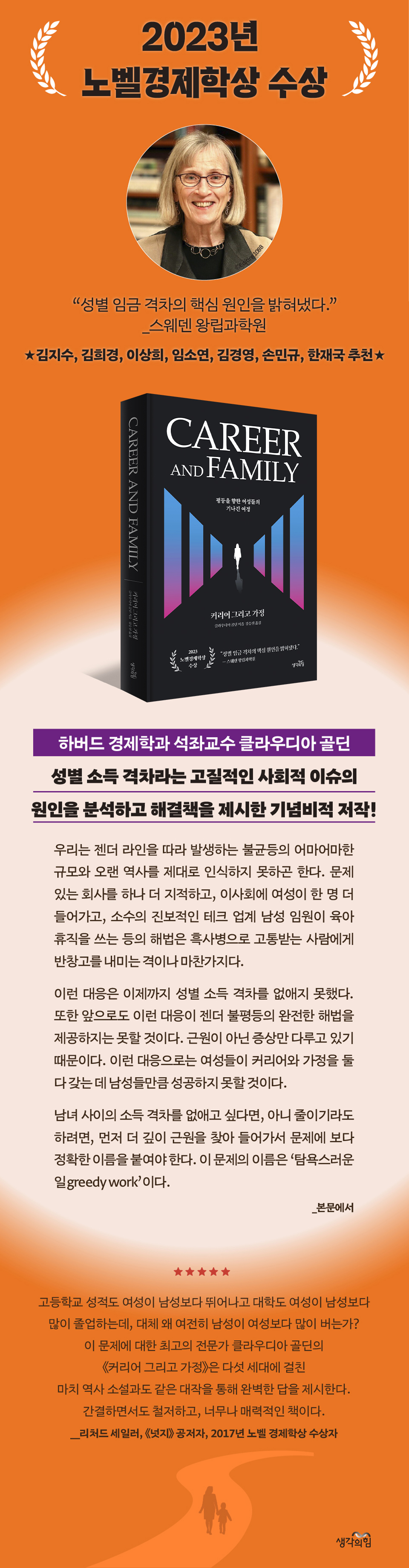
Claudia Goldin, winner of the 2023 Nobel Prize in Economics, has made a major contribution.
The chronic social issue of gender wage gap
A monumental work that analyzes the cause and suggests solutions!
Claudia Goldin, the first woman to be tenured professor of economics at Harvard, has published her latest book, Career and Family.
Although he is an economist who is always mentioned as a candidate for the Nobel Prize in Economics, this is the first time that his books have been translated and introduced in Korea.
Professor Goldin primarily explores the origins of current issues through historical review, and has researched a wide range of topics, including the gender income gap, women in the workforce, income inequality, technological change, education, and immigration.
In the recently published book, Career and Family, I uncover the causes of the gender income gap, a problem I have been researching my entire life, and suggest solutions.
The author analyzes American college-educated women over the past 100 years, dividing them into five generations, and pursues the gender wage gap. Richard Thaler, the 2017 Nobel Prize winner in economics and co-author of Nudge, praised this work, saying, “It presents a perfect answer through a masterpiece like a historical novel.”
The chronic social issue of gender wage gap
A monumental work that analyzes the cause and suggests solutions!
Claudia Goldin, the first woman to be tenured professor of economics at Harvard, has published her latest book, Career and Family.
Although he is an economist who is always mentioned as a candidate for the Nobel Prize in Economics, this is the first time that his books have been translated and introduced in Korea.
Professor Goldin primarily explores the origins of current issues through historical review, and has researched a wide range of topics, including the gender income gap, women in the workforce, income inequality, technological change, education, and immigration.
In the recently published book, Career and Family, I uncover the causes of the gender income gap, a problem I have been researching my entire life, and suggest solutions.
The author analyzes American college-educated women over the past 100 years, dividing them into five generations, and pursues the gender wage gap. Richard Thaler, the 2017 Nobel Prize winner in economics and co-author of Nudge, praised this work, saying, “It presents a perfect answer through a masterpiece like a historical novel.”
- You can preview some of the book's contents.
Preview
index
Chapter 1: Another "Nameless Problem"… 7
Chapter 2 Passing the Baton… 37
Chapter 3: The Fork in the Road… 79
Chapter 4: Middle Bridge Group… 107
Chapter 5: What Betty Friedan Got Wrong and What She Got Right… 141
Chapter 6: The Quiet Revolution… 181
Chapter 7: Assisted Reproductive Technologies Aid the Revolution… 219
Chapter 8: The Unending Gap… 249
Chapter 9: Lawyers and Pharmacists… 289
Chapter 10 Oncall … 319
Epilogue: What the Corona Magnifying Glass Revealed: Why the Journey Must Continue… 359
Acknowledgments … 387
List of charts … 394
Online charts and source list … 396
Appendix 1: Diagram Description: Sources and Notes … 399
Appendix 2: Source Description … 407
Note … 414
References … 468
Search … 480
Chapter 2 Passing the Baton… 37
Chapter 3: The Fork in the Road… 79
Chapter 4: Middle Bridge Group… 107
Chapter 5: What Betty Friedan Got Wrong and What She Got Right… 141
Chapter 6: The Quiet Revolution… 181
Chapter 7: Assisted Reproductive Technologies Aid the Revolution… 219
Chapter 8: The Unending Gap… 249
Chapter 9: Lawyers and Pharmacists… 289
Chapter 10 Oncall … 319
Epilogue: What the Corona Magnifying Glass Revealed: Why the Journey Must Continue… 359
Acknowledgments … 387
List of charts … 394
Online charts and source list … 396
Appendix 1: Diagram Description: Sources and Notes … 399
Appendix 2: Source Description … 407
Note … 414
References … 468
Search … 480
Detailed image
Into the book
I once asked students in an undergraduate seminar class what they wanted from marriage.
One student answered immediately.
“I want a man who wants what I want.” The student’s honest expression of her desire for fairness between spouses was truly impressive.
Many students and my friends have told me similar stories since then, but no one has expressed it so concisely.
The problem is that even if you marry a man who “want[s] what you want,” it is impossible for both of you to have demanding careers, and you will continue to be in a dilemma where you have to give up equity between spouses for household income, and vice versa.
---From "Chapter 1: Another 'Nameless Problem'"
Time is the great equalizer.
Everyone has the same amount of time and has to make difficult decisions about how to allocate it.
Fundamentally, the challenge faced by struggling women trying to balance a successful career and a happy family life is one of time conflict.
Investing in your career usually means devoting a significant amount of time to work when you are young.
However, this is also the age when women 'must not miss out' on having children.
Moreover, it takes a lot of time to have children and start a family.
These choices will greatly influence your future life, and once you make them, they cannot be undone or changed.
Fifty years ago, a female executive and mother of three offered career advice to young women, saying:
“It’s very difficult.
“Do it anyway.”
---From "Chapter 1: Another 'Nameless Problem'"
Over the past century, American college-educated women have fallen into five strikingly distinct groups.
Women within each group are largely homogeneous in terms of the constraints imposed on them and the aspirations they form under (and sometimes despite) those constraints.
Age at marriage, age at first birth, likelihood of being married, and likelihood of having children are also similar within each group and differ between groups.
---From "Chapter 2 Passing the Baton"
The college-educated women in Cohort 1 embarked on a century-long journey toward both career and family.
In many ways, they worked and lived in a magical moment.
They established social welfare centers and served as public officials, doctors, prison administrators, and in many other roles.
They fought for the right to vote, they fought to end sweatshops and child labor, they fought for minimum wages and shorter working hours, and they fought for birth control.
But the only reason most of them were able to succeed was because they made choices (often at a young age).
They chose to pursue their passions, formed groups, and supported each other.
At the university, I taught young women with similar aspirations and provided them with a place to stay.
Their stories are so diverse that it is difficult to tell them as a single representative example.
---From "Chapter 3: The Fork in the Road"
Even before the Great Depression, there were laws prohibiting the employment of married women in many occupations, especially teaching.
But in the early 1930s, as unemployment soared, food ration lines grew longer, and economic frustration and despair grew, the enforcement of these systems became even more stringent.
The decade-long Great Depression led to more widespread and more aggressive enforcement of "married women employment bans" to exclude married women from good jobs.
The "ban on hiring married women" was a hiring and firing policy applied by businesses and government agencies (most importantly, school districts), and there were two types.
One is the 'recruitment ban', which excludes married women from employment, and the other is the 'retention ban' [marriage retirement], which fires unmarried employees who get married.
---From "Chapter 4: Middle Bridge Group"
We, the young women in Group 4, thought we could do much better.
We had a new vision for the future.
By prioritizing career over family, we hoped to increase our chances of achieving self-fulfillment, earning a high income, and entering long-term professional careers.
We would advance into higher social status and higher-paying jobs, occupations traditionally held by men, in greater numbers than any previous generation.
This meant that a significant investment of time was required immediately after graduating from college.
Again, this meant postponing marriage and, more importantly, childbirth.
We, a group of four, were able to do this.
This is because the women in Group 3 had something they didn't have: oral contraceptives.
---From "Chapter 6: The Quiet Revolution"
One day in 1998, someone who supported Lily left a piece of paper with very important information in her mailbox.
This information led to Lily's second, more infamous EEOC lawsuit.
The paper listed the wages other managers received.
Lily had no idea how much lower wages she was receiving compared to her male colleagues.
I only heard that it was slightly below the middle.
“Everything was top secret at Goodyear,” Lilly wrote in her autobiography years later.
Male managers who joined the same year as Lily started at the same wage.
But 20 years later, Lily was earning 15-40% less than them.
---From "Chapter 8: The Undisappearing Gap"
For 20 years, starting in 1960, women's income remained at 60% of men's.
This is the part that makes you realize why the “59 cents” slogan was so powerful.
But since then, this proportion has begun to increase, reaching 70% around 1990 and 75% around 2000 (again, this figure is based on median full-time worker earnings).
It's currently 81%.
The period when the ratio of women's income to men's income increased the fastest [and the gap narrowed the fastest] was the 1980s.
One student answered immediately.
“I want a man who wants what I want.” The student’s honest expression of her desire for fairness between spouses was truly impressive.
Many students and my friends have told me similar stories since then, but no one has expressed it so concisely.
The problem is that even if you marry a man who “want[s] what you want,” it is impossible for both of you to have demanding careers, and you will continue to be in a dilemma where you have to give up equity between spouses for household income, and vice versa.
---From "Chapter 1: Another 'Nameless Problem'"
Time is the great equalizer.
Everyone has the same amount of time and has to make difficult decisions about how to allocate it.
Fundamentally, the challenge faced by struggling women trying to balance a successful career and a happy family life is one of time conflict.
Investing in your career usually means devoting a significant amount of time to work when you are young.
However, this is also the age when women 'must not miss out' on having children.
Moreover, it takes a lot of time to have children and start a family.
These choices will greatly influence your future life, and once you make them, they cannot be undone or changed.
Fifty years ago, a female executive and mother of three offered career advice to young women, saying:
“It’s very difficult.
“Do it anyway.”
---From "Chapter 1: Another 'Nameless Problem'"
Over the past century, American college-educated women have fallen into five strikingly distinct groups.
Women within each group are largely homogeneous in terms of the constraints imposed on them and the aspirations they form under (and sometimes despite) those constraints.
Age at marriage, age at first birth, likelihood of being married, and likelihood of having children are also similar within each group and differ between groups.
---From "Chapter 2 Passing the Baton"
The college-educated women in Cohort 1 embarked on a century-long journey toward both career and family.
In many ways, they worked and lived in a magical moment.
They established social welfare centers and served as public officials, doctors, prison administrators, and in many other roles.
They fought for the right to vote, they fought to end sweatshops and child labor, they fought for minimum wages and shorter working hours, and they fought for birth control.
But the only reason most of them were able to succeed was because they made choices (often at a young age).
They chose to pursue their passions, formed groups, and supported each other.
At the university, I taught young women with similar aspirations and provided them with a place to stay.
Their stories are so diverse that it is difficult to tell them as a single representative example.
---From "Chapter 3: The Fork in the Road"
Even before the Great Depression, there were laws prohibiting the employment of married women in many occupations, especially teaching.
But in the early 1930s, as unemployment soared, food ration lines grew longer, and economic frustration and despair grew, the enforcement of these systems became even more stringent.
The decade-long Great Depression led to more widespread and more aggressive enforcement of "married women employment bans" to exclude married women from good jobs.
The "ban on hiring married women" was a hiring and firing policy applied by businesses and government agencies (most importantly, school districts), and there were two types.
One is the 'recruitment ban', which excludes married women from employment, and the other is the 'retention ban' [marriage retirement], which fires unmarried employees who get married.
---From "Chapter 4: Middle Bridge Group"
We, the young women in Group 4, thought we could do much better.
We had a new vision for the future.
By prioritizing career over family, we hoped to increase our chances of achieving self-fulfillment, earning a high income, and entering long-term professional careers.
We would advance into higher social status and higher-paying jobs, occupations traditionally held by men, in greater numbers than any previous generation.
This meant that a significant investment of time was required immediately after graduating from college.
Again, this meant postponing marriage and, more importantly, childbirth.
We, a group of four, were able to do this.
This is because the women in Group 3 had something they didn't have: oral contraceptives.
---From "Chapter 6: The Quiet Revolution"
One day in 1998, someone who supported Lily left a piece of paper with very important information in her mailbox.
This information led to Lily's second, more infamous EEOC lawsuit.
The paper listed the wages other managers received.
Lily had no idea how much lower wages she was receiving compared to her male colleagues.
I only heard that it was slightly below the middle.
“Everything was top secret at Goodyear,” Lilly wrote in her autobiography years later.
Male managers who joined the same year as Lily started at the same wage.
But 20 years later, Lily was earning 15-40% less than them.
---From "Chapter 8: The Undisappearing Gap"
For 20 years, starting in 1960, women's income remained at 60% of men's.
This is the part that makes you realize why the “59 cents” slogan was so powerful.
But since then, this proportion has begun to increase, reaching 70% around 1990 and 75% around 2000 (again, this figure is based on median full-time worker earnings).
It's currently 81%.
The period when the ratio of women's income to men's income increased the fastest [and the gap narrowed the fastest] was the 1980s.
---From "Chapter 8: The Undisappearing Gap"
Publisher's Review
High school girls have better grades and there are more female college graduates.
Why, after all, do women still earn less than men?
In 1963, American feminist writer and social activist Betty Friedan (1921-2006) described the frustrations college-educated women felt as they became stay-at-home moms, stating that they were suffering from a “problem without a name.”
Today, nearly 60 years later, most college-educated women are employed, but they lag far behind their college-educated male counterparts in earnings and promotions.
Women still suffer from a 'nameless problem'.
There was a time in the past when it was difficult for women to even receive a college education.
But now, more women than men graduate from college, their academic performance is far superior, and companies are hiring women with higher grades as new employees.
But why is the gender income gap still not narrowing?
Some people explain this problem as 'occupational segregation'.
Women and men choose occupations based on gender stereotypes, and this leads to wage gaps between gender-patterned occupations (e.g., nurses-doctors, teachers-professors).
But the truth that the data tells us is quite different.
A look at the roughly 500 occupations listed in the U.S. Census reveals that two-thirds of the gender wage gap is due to factors within occupations, not between them.
For example, even if women became as many doctors as men and men became as many nurses as women, it would only eliminate about a third of the current income gap.
A closer look at U.S. Census and American Community Survey data reveals that immediately after graduation (from college or graduate school), women and men have surprisingly similar wages.
Among recent college graduates or MBAs with one or two years of work experience, the gender earnings gap was relatively small, and could largely be explained by differences in the majors and career fields chosen by women and men in college.
That is, women and men start from roughly the same starting line.
However, they make somewhat different choices in very similar situations, which is where the initial wage gap arises.
Then, about 10 years after graduation, a significant wage gap between men and women becomes apparent.
Moreover, women and men now work in different parts of the labor market and in different companies.
And as expected, this change usually begins a year or two after the child is born, and it always has a negative impact on the woman's career.
The gender income gap isn't just due to discrimination or women's inaction.
The most important reason is 'greedy work'!
We've been told time and again that it's their fault that they earn less than their male colleagues and lag behind in their careers.
This is because they do not aggressively rush into competition, they are not able to negotiate skillfully, they do not assert their position actively, and even if they do assert their position, they do not demand it sufficiently.
At the same time, women have repeatedly heard that it is not their fault.
Because women are being taken advantage of, backstabbed, discriminated against, sexually harassed, and excluded from 'boys' clubs'.
All of these factors are true.
But is this the root of the problem? Do these factors, taken together, explain almost all of the differences in earnings and career prospects between men and women?
We often fail to recognize the enormous scale and long history of inequality along gender lines.
Pointing out one more problematic company, adding one more woman to the board, and allowing a handful of progressive tech male executives to take parental leave are like putting a Band-Aid on someone suffering from the Black Death.
This response has so far failed to eliminate the gender income gap.
Moreover, this response will not provide a complete solution to gender inequality in the future.
Because we are only dealing with the symptoms and not the cause.
This response will prevent women from being as successful as men in balancing careers and families.
If we want to eliminate, or even reduce, the income gap between men and women, we need to dig deeper into its roots and give the problem a more precise name.
The name of this problem is 'greedy work'.
Reducing the gender income gap is not just about gender equality,
It is also important for economic growth!
The gender income gap is closely related not only to gender conflict and gender equality between women and men, but also to the issue of economic growth.
If capable women across society are unable to work, it is not only a personal loss, but also an economic and social loss.
For example, in the United States alone, at the end of the Great Depression, women made up a small portion of the total workforce, but today they make up half of the total workforce.
The economy cannot function with only half the workforce (some studies show that 20% of the US economic growth since the 1960s is due to the increased economic participation of women).
Professor Goldin, author of Career and Family, argues that our society must change the way work is structured to achieve greater gender equality and eliminate the gender income gap.
As we've seen in the concrete examples of pharmacists transforming the profession in the United States, we need to reduce the excessive compensation given to only coveted jobs, create more flexible jobs and make those jobs more productive, and in the process, support care at a societal level so that parents and other caregivers can become more productive members of our economy.
This book, Career and Family, tells the story of how the desire for career, family, and equitable relationships emerged over the past century and how it can be achieved today.
There is no single simple solution.
But if we properly understand the problem and give it the right name, we can set it on a path toward a better future.
So that more women can have careers and meet “men who want what they want.”
Why, after all, do women still earn less than men?
In 1963, American feminist writer and social activist Betty Friedan (1921-2006) described the frustrations college-educated women felt as they became stay-at-home moms, stating that they were suffering from a “problem without a name.”
Today, nearly 60 years later, most college-educated women are employed, but they lag far behind their college-educated male counterparts in earnings and promotions.
Women still suffer from a 'nameless problem'.
There was a time in the past when it was difficult for women to even receive a college education.
But now, more women than men graduate from college, their academic performance is far superior, and companies are hiring women with higher grades as new employees.
But why is the gender income gap still not narrowing?
Some people explain this problem as 'occupational segregation'.
Women and men choose occupations based on gender stereotypes, and this leads to wage gaps between gender-patterned occupations (e.g., nurses-doctors, teachers-professors).
But the truth that the data tells us is quite different.
A look at the roughly 500 occupations listed in the U.S. Census reveals that two-thirds of the gender wage gap is due to factors within occupations, not between them.
For example, even if women became as many doctors as men and men became as many nurses as women, it would only eliminate about a third of the current income gap.
A closer look at U.S. Census and American Community Survey data reveals that immediately after graduation (from college or graduate school), women and men have surprisingly similar wages.
Among recent college graduates or MBAs with one or two years of work experience, the gender earnings gap was relatively small, and could largely be explained by differences in the majors and career fields chosen by women and men in college.
That is, women and men start from roughly the same starting line.
However, they make somewhat different choices in very similar situations, which is where the initial wage gap arises.
Then, about 10 years after graduation, a significant wage gap between men and women becomes apparent.
Moreover, women and men now work in different parts of the labor market and in different companies.
And as expected, this change usually begins a year or two after the child is born, and it always has a negative impact on the woman's career.
The gender income gap isn't just due to discrimination or women's inaction.
The most important reason is 'greedy work'!
We've been told time and again that it's their fault that they earn less than their male colleagues and lag behind in their careers.
This is because they do not aggressively rush into competition, they are not able to negotiate skillfully, they do not assert their position actively, and even if they do assert their position, they do not demand it sufficiently.
At the same time, women have repeatedly heard that it is not their fault.
Because women are being taken advantage of, backstabbed, discriminated against, sexually harassed, and excluded from 'boys' clubs'.
All of these factors are true.
But is this the root of the problem? Do these factors, taken together, explain almost all of the differences in earnings and career prospects between men and women?
We often fail to recognize the enormous scale and long history of inequality along gender lines.
Pointing out one more problematic company, adding one more woman to the board, and allowing a handful of progressive tech male executives to take parental leave are like putting a Band-Aid on someone suffering from the Black Death.
This response has so far failed to eliminate the gender income gap.
Moreover, this response will not provide a complete solution to gender inequality in the future.
Because we are only dealing with the symptoms and not the cause.
This response will prevent women from being as successful as men in balancing careers and families.
If we want to eliminate, or even reduce, the income gap between men and women, we need to dig deeper into its roots and give the problem a more precise name.
The name of this problem is 'greedy work'.
Reducing the gender income gap is not just about gender equality,
It is also important for economic growth!
The gender income gap is closely related not only to gender conflict and gender equality between women and men, but also to the issue of economic growth.
If capable women across society are unable to work, it is not only a personal loss, but also an economic and social loss.
For example, in the United States alone, at the end of the Great Depression, women made up a small portion of the total workforce, but today they make up half of the total workforce.
The economy cannot function with only half the workforce (some studies show that 20% of the US economic growth since the 1960s is due to the increased economic participation of women).
Professor Goldin, author of Career and Family, argues that our society must change the way work is structured to achieve greater gender equality and eliminate the gender income gap.
As we've seen in the concrete examples of pharmacists transforming the profession in the United States, we need to reduce the excessive compensation given to only coveted jobs, create more flexible jobs and make those jobs more productive, and in the process, support care at a societal level so that parents and other caregivers can become more productive members of our economy.
This book, Career and Family, tells the story of how the desire for career, family, and equitable relationships emerged over the past century and how it can be achieved today.
There is no single simple solution.
But if we properly understand the problem and give it the right name, we can set it on a path toward a better future.
So that more women can have careers and meet “men who want what they want.”
GOODS SPECIFICS
- Publication date: October 25, 2021
- Page count, weight, size: 488 pages | 564g | 145*215*24mm
- ISBN13: 9791190955423
- ISBN10: 1190955423
You may also like
카테고리
korean


korean

![GQ KOREA Mark (Monthly): December [2025]](http://librairie.coreenne.fr/cdn/shop/files/8ef265dbbfbf186523ed75ba7319009d.jpg?v=1765340328&width=3840)


