

The illusion of fairness
 |
Description
Book Introduction
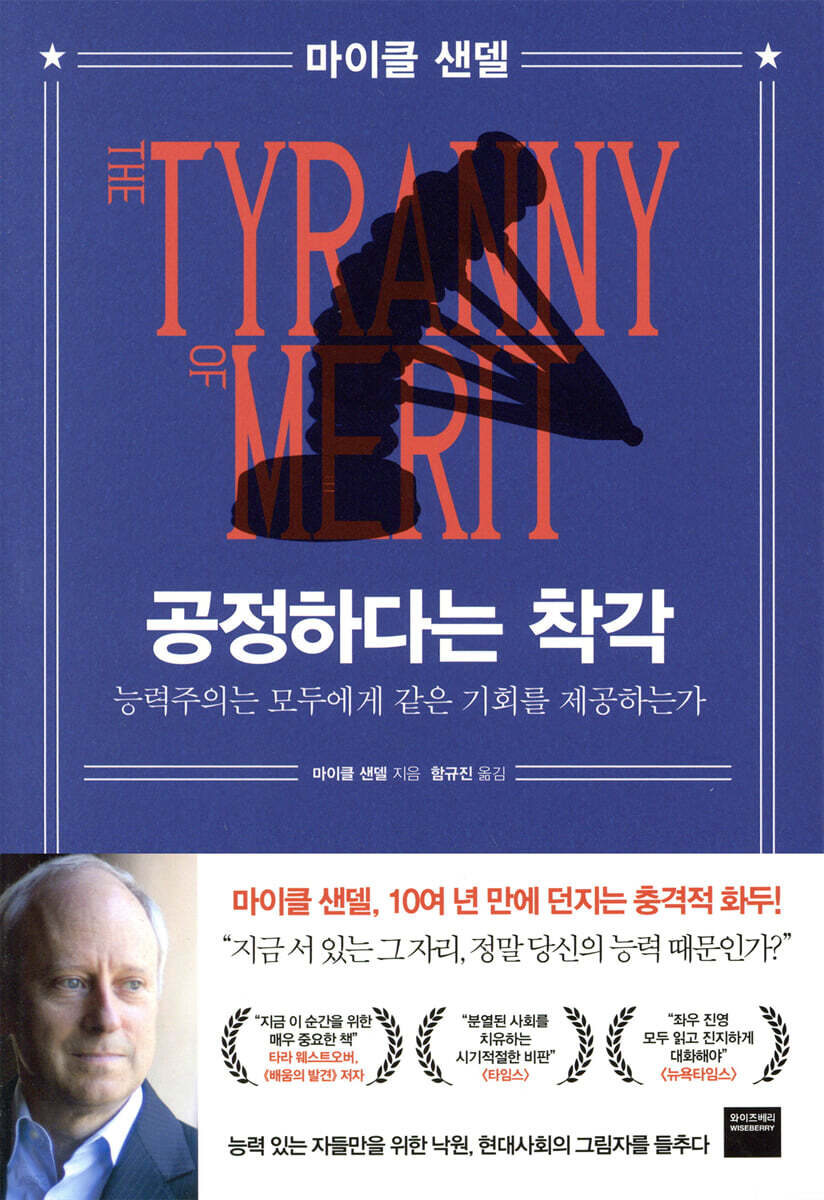
Michael Sandel's first new book in over a decade, "The Illusion of Fairness," is out! Sandel: Dismantling the "meritocracy trap" lurking behind our skewed social structure. Once again, ‘fairness’ is the topic of conversation. It is constantly pouring out through the media, from the rich and the poor, from the young and the middle-aged, from politicians. Companies are in turmoil over the issue of "fair hiring," stemming from the debate over whether regular or non-regular workers should be considered. Political circles are abuzz with differing interpretations of the "Three Fair Economy Laws" and "Disaster Relief Funds." The president also expressed his difficulties, saying, “One fairness leads to another unfairness.” In this situation where people from all walks of life are clashing over the single topic of 'fairness', Harvard University Professor Michael Sandel's new book, 'The Illusion of Fairness', written eight years after 'What Money Can't Buy', has been published. This book was published in the United States in September 2020 under the original title, 『The Tyranny of Merit: What's Become of the Common Good?』 and has received a hot response. A direct translation would be 'The Tyranny of Meritocracy: What Really Creates the Common Good?' In this book, Sandel argues that “the meritocratic ideal that prioritizes and rewards individual ability, which we have taken for granted as ‘if you work hard, you can succeed,’ is fundamentally and deeply flawed.” Let's seriously reflect on whether this meritocracy is functioning properly and fairly, and whether the equation 'fairness = justice' is truly correct. |
- You can preview some of the book's contents.
Preview
index
Introduction: College Admissions and Meritocracy
Ethics in College Admissions | Obtaining Ability Indexes
CHAPTER 1.
Winners and Losers
Diagnosing Populist Discontent | 'Technocracy' and Market-Friendly Globalization | How to Plausibly Explain the Inequality Between Rich and Poor | Meritocracy Ethics | The Politics of Humiliation | Technocratic Ability and Organizational Judgment | The Movement of Populism
CHAPTER 2.
A Short History of Meritocracy: "Being Good Makes You Great"
Why Ability Matters | Cosmic Meritocracy | Salvation and Self-Salvation | Providence Past and Present | Wealth and Health | Liberal Providence | The Right Side of History | The Trajectory of the Moral World
CHAPTER 3.
How to Package Social Ascension into Words
Hard work and legitimate qualifications | The market and ability | The discourse of self-responsibility | As far as talent and effort allow | Getting what you deserve | The populist counterattack | Is "If you try, you can do it" really true? | Seeing and believing
CHAPTER 4.
The ultimate excuse for bias: academic credentials
University Signs Weaponized | Is Education the Answer to Inequality? | Top Talent | Work to Become Smart | Elites Looking Down on the Masses | Degrees Require Governance | The Academic Crack | Technocratic Discourse | Technocracy or Democracy? | Climate Change Debate
CHAPTER 5.
The Ethics of Success
Rule of technocrats or rule of aristocracy | The dark side of meritocracy | Rethinking meritocracy | Is a perfect meritocracy just? | Is talent your own? | Does effort create value? | Two alternatives to meritocracy | Rejecting meritocracy | Market and ability | Market value or moral value | Earned qualifications or rights recognized? | Attitudes toward success | Luck and choice | Calculating talent | The rise of meritocracy
CHAPTER 6.
Universities as 'Talent Selection Machines'
The Meritocracy Coup | The Tyranny of Meritocracy, Slowly Revealing Its Face | Conant's Legacy of Meritocracy | SAT Scores That Follow the Money | Meritocracy Further Strengthens the Foundation of Inequality | Why Elite Universities Fail to Be Engines of Social Mobility | Making Meritocracy Fairer | Talent Selection and the Distribution of Social Presence | Wounded Winners | Climbing Another Burning Ring | Arrogance and Humiliation | The Lottery for Merit | Destroying the Talent Selection Machine | The Hierarchy of Presence | Disciplining Arrogance Based on Ability
CHAPTER 7.
The dignity of work
The Decline of Dignity in Work | Death at the End of Despair | The Causes of Anger | Restoring the Dignity of Work | Work as Social Recognition | Contributory Justice | Let's Debate the Dignity of Work | The Arrogance of the 'Open Agenda' | Finance, Speculation, and the Common Good | Makers and Takers
Conclusion: Competence and the Common Good
Ethics in College Admissions | Obtaining Ability Indexes
CHAPTER 1.
Winners and Losers
Diagnosing Populist Discontent | 'Technocracy' and Market-Friendly Globalization | How to Plausibly Explain the Inequality Between Rich and Poor | Meritocracy Ethics | The Politics of Humiliation | Technocratic Ability and Organizational Judgment | The Movement of Populism
CHAPTER 2.
A Short History of Meritocracy: "Being Good Makes You Great"
Why Ability Matters | Cosmic Meritocracy | Salvation and Self-Salvation | Providence Past and Present | Wealth and Health | Liberal Providence | The Right Side of History | The Trajectory of the Moral World
CHAPTER 3.
How to Package Social Ascension into Words
Hard work and legitimate qualifications | The market and ability | The discourse of self-responsibility | As far as talent and effort allow | Getting what you deserve | The populist counterattack | Is "If you try, you can do it" really true? | Seeing and believing
CHAPTER 4.
The ultimate excuse for bias: academic credentials
University Signs Weaponized | Is Education the Answer to Inequality? | Top Talent | Work to Become Smart | Elites Looking Down on the Masses | Degrees Require Governance | The Academic Crack | Technocratic Discourse | Technocracy or Democracy? | Climate Change Debate
CHAPTER 5.
The Ethics of Success
Rule of technocrats or rule of aristocracy | The dark side of meritocracy | Rethinking meritocracy | Is a perfect meritocracy just? | Is talent your own? | Does effort create value? | Two alternatives to meritocracy | Rejecting meritocracy | Market and ability | Market value or moral value | Earned qualifications or rights recognized? | Attitudes toward success | Luck and choice | Calculating talent | The rise of meritocracy
CHAPTER 6.
Universities as 'Talent Selection Machines'
The Meritocracy Coup | The Tyranny of Meritocracy, Slowly Revealing Its Face | Conant's Legacy of Meritocracy | SAT Scores That Follow the Money | Meritocracy Further Strengthens the Foundation of Inequality | Why Elite Universities Fail to Be Engines of Social Mobility | Making Meritocracy Fairer | Talent Selection and the Distribution of Social Presence | Wounded Winners | Climbing Another Burning Ring | Arrogance and Humiliation | The Lottery for Merit | Destroying the Talent Selection Machine | The Hierarchy of Presence | Disciplining Arrogance Based on Ability
CHAPTER 7.
The dignity of work
The Decline of Dignity in Work | Death at the End of Despair | The Causes of Anger | Restoring the Dignity of Work | Work as Social Recognition | Contributory Justice | Let's Debate the Dignity of Work | The Arrogance of the 'Open Agenda' | Finance, Speculation, and the Common Good | Makers and Takers
Conclusion: Competence and the Common Good
Detailed image
Into the book
[Pride to the winner, humiliation to the loser]
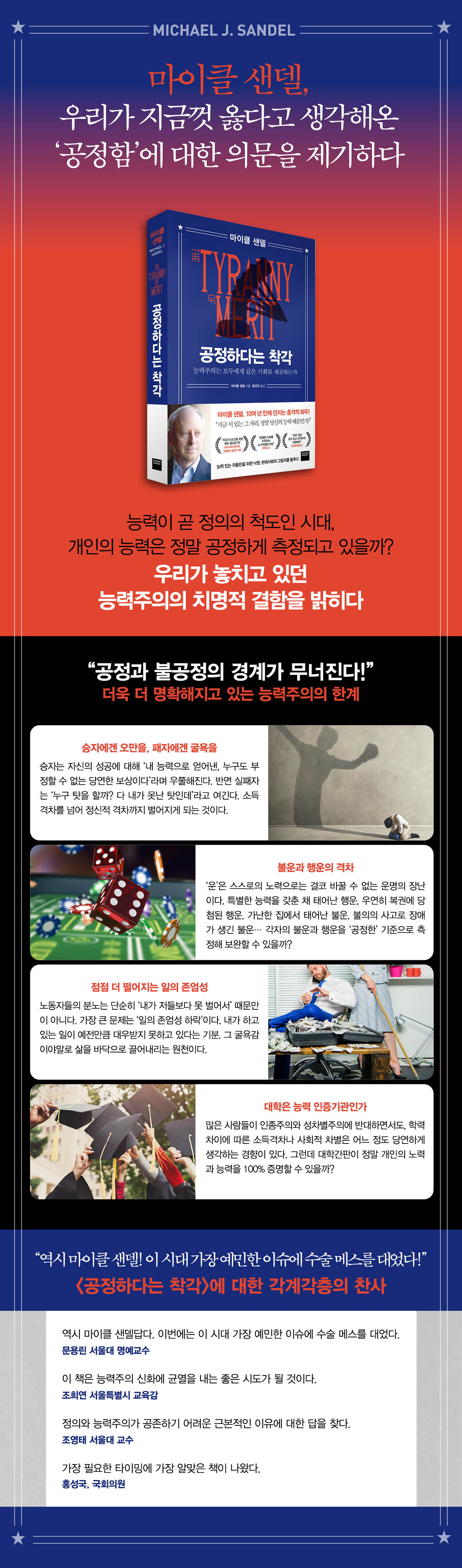
Meritocracy inevitably spreads arrogance to the winners and humiliation to the losers.
The winner attributes his victory to 'my ability'.
I see it as a natural reward for the undeniable achievements I have achieved through my own efforts.
And they start to look down on people who are less successful than them.
And the loser ends up thinking, 'Who should I blame? It's all my fault.'
[Will it really necessarily lead to 'justice'?]
Barack Obama held that belief and expressed it often.
He was fond of quoting Martin Luther King, Jr.:
“The trajectory of the moral world is long.
But it must bend toward justice.” He loved this saying so much that after becoming president, he quoted it 33 times in speeches and declarations and even had it engraved on the carpet in his office.
[I came up through my own abilities]
Meritocracy intuitions were widespread across political affiliations.
That intuition has been particularly strong in discussions surrounding affirmative action in college admissions.
Whether students were for or against affirmative action, they believed they had worked hard to get to Harvard and that their status was justified by their abilities.
There was a strong backlash against suggestions that they were admitted due to luck or other uncontrollable factors.
[Even life is proven by 'wealth', so ability is the shadow of libertarianism]
After reading a recent newspaper article about a Chinese teenager who sold his kidney to buy an iPhone and iPad, I asked my students what they thought about it.
In the ensuing discussion, many students expressed libertarian views.
If the teenage student had decided to sell his kidney of his own free will, without coercion or threats, there would be no problem.
Some students opposed this position, arguing that it was unfair for the rich to buy kidneys from the poor to extend their lives.
After the lecture, one student gave me an informal answer.
Those who have achieved wealth have proven their ability and therefore deserve to have their lives extended.
[The underprivileged are not even worthy of help]
Like Reagan, they subtly distinguished between the poor who deserved help and the poor who did not.
Anyone who fought against forces beyond their control was eligible for government assistance.
However, those who were poor due to hardship were not eligible.
[The only difference is that the targets of prejudice are different: opposing environmental, racial, and gender discrimination, but prejudicing against the less educated]
The highly educated elite are no less prejudiced than the less educated masses.
“It’s just that the targets of their prejudice are different.” Moreover, elites are not embarrassed about such prejudice.
They may oppose racism and sexism.
However, the prevailing attitude towards prejudice against low-educated people is 'so what?'
Is social mobility easier in China than in the US?
Let's say you make a bet.
There are two eighteen-year-old boys.
One person lives in China and the other lives in the United States.
Both are poor and the prospects for improvement in their situation are bleak.
Okay, let's pick one of the two boys.
Which one has a better chance of social advancement?
Who did the reader choose?
Until recently, the answer was obvious.
Anyway, “American Dream”.
In America, it was believed that anyone who worked hard could achieve a better life.
But today the answer is baffling.
China is achieving improvements in individual living standards much faster than the United States.
[CSAT scores that follow the money]
The SAT is being shown to not be a test that measures innate intelligence, regardless of math ability or socioeconomic background.
Conversely, SAT scores are strongly correlated with the applicant's family wealth.
As you climb higher on the income ladder, your average SAT score goes up.
This gap is particularly large when looking at the scores of students aiming for the most competitive universities.
If you come from a wealthy family (income over $200,000), you have a one in five chance of scoring over 1,400 out of 1,600.
For those from poor families (income less than $20,000 per year), the odds are one in fifty.
High scorers also overwhelmingly have parents who hold college degrees.
Meritocracy inevitably spreads arrogance to the winners and humiliation to the losers.
The winner attributes his victory to 'my ability'.
I see it as a natural reward for the undeniable achievements I have achieved through my own efforts.
And they start to look down on people who are less successful than them.
And the loser ends up thinking, 'Who should I blame? It's all my fault.'
[Will it really necessarily lead to 'justice'?]
Barack Obama held that belief and expressed it often.
He was fond of quoting Martin Luther King, Jr.:
“The trajectory of the moral world is long.
But it must bend toward justice.” He loved this saying so much that after becoming president, he quoted it 33 times in speeches and declarations and even had it engraved on the carpet in his office.
[I came up through my own abilities]
Meritocracy intuitions were widespread across political affiliations.
That intuition has been particularly strong in discussions surrounding affirmative action in college admissions.
Whether students were for or against affirmative action, they believed they had worked hard to get to Harvard and that their status was justified by their abilities.
There was a strong backlash against suggestions that they were admitted due to luck or other uncontrollable factors.
[Even life is proven by 'wealth', so ability is the shadow of libertarianism]
After reading a recent newspaper article about a Chinese teenager who sold his kidney to buy an iPhone and iPad, I asked my students what they thought about it.
In the ensuing discussion, many students expressed libertarian views.
If the teenage student had decided to sell his kidney of his own free will, without coercion or threats, there would be no problem.
Some students opposed this position, arguing that it was unfair for the rich to buy kidneys from the poor to extend their lives.
After the lecture, one student gave me an informal answer.
Those who have achieved wealth have proven their ability and therefore deserve to have their lives extended.
[The underprivileged are not even worthy of help]
Like Reagan, they subtly distinguished between the poor who deserved help and the poor who did not.
Anyone who fought against forces beyond their control was eligible for government assistance.
However, those who were poor due to hardship were not eligible.
[The only difference is that the targets of prejudice are different: opposing environmental, racial, and gender discrimination, but prejudicing against the less educated]
The highly educated elite are no less prejudiced than the less educated masses.
“It’s just that the targets of their prejudice are different.” Moreover, elites are not embarrassed about such prejudice.
They may oppose racism and sexism.
However, the prevailing attitude towards prejudice against low-educated people is 'so what?'
Is social mobility easier in China than in the US?
Let's say you make a bet.
There are two eighteen-year-old boys.
One person lives in China and the other lives in the United States.
Both are poor and the prospects for improvement in their situation are bleak.
Okay, let's pick one of the two boys.
Which one has a better chance of social advancement?
Who did the reader choose?
Until recently, the answer was obvious.
Anyway, “American Dream”.
In America, it was believed that anyone who worked hard could achieve a better life.
But today the answer is baffling.
China is achieving improvements in individual living standards much faster than the United States.
[CSAT scores that follow the money]
The SAT is being shown to not be a test that measures innate intelligence, regardless of math ability or socioeconomic background.
Conversely, SAT scores are strongly correlated with the applicant's family wealth.
As you climb higher on the income ladder, your average SAT score goes up.
This gap is particularly large when looking at the scores of students aiming for the most competitive universities.
If you come from a wealthy family (income over $200,000), you have a one in five chance of scoring over 1,400 out of 1,600.
For those from poor families (income less than $20,000 per year), the odds are one in fifty.
High scorers also overwhelmingly have parents who hold college degrees.
--- From the text
Publisher's Review
Does meritocracy work fairly?
And is the equation ‘fairness = justice’ really correct?
As time goes by, social mobility becomes more difficult and inequality becomes more entrenched.
While we pursue fairness by valuing individual ability as an inviolable value, why is the situation worsening? In this book, Sandel argues that the "attitude toward success and failure" entrenched under meritocracy is causing significant negative consequences in modern society.
He starkly exposes the arrogance that meritocracy breeds among the winners and the harsh standards imposed on those left behind.
Below is a brief summary of the examples of 'aristocratic societies' and 'meritocracy societies' presented by Sandel in his book.
The essence of the problem is compressed.
Let's say there are two countries.
Both are 'very' unequal in wealth and income (the degree of inequality is the same in both countries).
A society is an aristocracy, and income and wealth depend on the family one is born into and are inherited.
Another society is a meritocratic society.
Inequality of wealth and income is not due to hereditary privilege, but is the result of each person's effort and talent.
Of course, the latter seems more just.
So, if you were born into a wealthy or poor family and didn't know whether you'd be born into one, which society would you rather be born into? If you were wealthy, the answer would likely be an aristocratic society where you could pass on your wealth to your descendants.
If I were poor, I would prefer a society where people have the opportunity to rise socially through hard work.
But in both cases, there is something to think about in the opposite way.
The rich in an aristocratic society will recognize that their privileges are 'luck, not achievement,' and the poor will think that their misfortunes are 'bad luck, not my fault.'
Even though life is hard, it's just a matter of 'being born this way', so there's no need to blame yourself and feel inferior.
Conversely, in a meritocratic society, the rich will proudly recognize that their success is "achievement, not luck," while the poor will fall into deep frustration, cursing their own lack of ability and effort.
So, in this situation, which society would you choose? Which society can you be sure is "better" (or more just)?
- CHAPTER 5.
Abridged excerpts from The Ethics of Success
The true face of meritocracy: arrogance for winners and humiliation for losers.
A paradise for the powerful, exposing the shadows of modern society.
Sandel also seeks solutions.
I am pondering how to fundamentally overcome the current situation in which the common belief that “you can do it” is being mercilessly shaken.
Basically, it argues that we must acknowledge the fruits of our labor beyond our abilities, show solidarity with a humble mind, and value the dignity of work itself more.
Along with these arguments, Sandel offers several alternatives, the following specific suggestions, particularly in the area of education, are both shocking and ingenious in their conception.
“Out of 40,000 applicants, we weed out only those who seem unlikely to attend Harvard or Stanford, and those who seem unlikely to get along with their fellow students.
That leaves maybe 30,000, or 25,000, or 20,000 applicants, and whoever passes will likely do well.
Then, rather than going through the extremely difficult and uncertain process of selecting them again, we will select the final successful candidates by drawing lots.
In other words, they throw away their application forms and just pick 2,000 random people.
This alternative does not completely reject meritocracy.
Only those who are capable can pass.
However, rather than seeing it as an ideal that should maximize one's abilities, it is seen only as a condition for passing a certain threshold.
What makes this alternative meaningful is, above all, its practical feasibility.
Even the most savvy admissions officer, no matter how hard they try, would struggle to determine which 18-year-old has the better track record.
Even if we value talent highly, in the context of college admissions, talent becomes a vague and dull concept.
It would probably be easy to identify a math prodigy.
“However, the general assessment of talent is a more complex and less predictable task.”
- CHAPTER 6.
Universities as 'Talent Selection Machines'
While making such a "radical" proposal, Sandel goes a step further, anticipating counterarguments (such as a decline in academic ability, securing diversity, preferential treatment for alumni and donation-based admissions, and tarnishing the university's reputation) and preparing his own responses.
Readers will experience an unbelievable logical experience where issues they took for granted are shaken out in an unexpected direction.
Not only in education.
Sandel also offers alternatives to work and real life.
He argues that we should "rethink and debate the dignity of work," citing examples such as the income (compensation) gap between casino kings and high school teachers, which are incomparable in terms of social contribution.
It also suggests that we should challenge the arrogance of competence by acknowledging that 'some areas of life can be determined by luck.'
And is the equation ‘fairness = justice’ really correct?
As time goes by, social mobility becomes more difficult and inequality becomes more entrenched.
While we pursue fairness by valuing individual ability as an inviolable value, why is the situation worsening? In this book, Sandel argues that the "attitude toward success and failure" entrenched under meritocracy is causing significant negative consequences in modern society.
He starkly exposes the arrogance that meritocracy breeds among the winners and the harsh standards imposed on those left behind.
Below is a brief summary of the examples of 'aristocratic societies' and 'meritocracy societies' presented by Sandel in his book.
The essence of the problem is compressed.
Let's say there are two countries.
Both are 'very' unequal in wealth and income (the degree of inequality is the same in both countries).
A society is an aristocracy, and income and wealth depend on the family one is born into and are inherited.
Another society is a meritocratic society.
Inequality of wealth and income is not due to hereditary privilege, but is the result of each person's effort and talent.
Of course, the latter seems more just.
So, if you were born into a wealthy or poor family and didn't know whether you'd be born into one, which society would you rather be born into? If you were wealthy, the answer would likely be an aristocratic society where you could pass on your wealth to your descendants.
If I were poor, I would prefer a society where people have the opportunity to rise socially through hard work.
But in both cases, there is something to think about in the opposite way.
The rich in an aristocratic society will recognize that their privileges are 'luck, not achievement,' and the poor will think that their misfortunes are 'bad luck, not my fault.'
Even though life is hard, it's just a matter of 'being born this way', so there's no need to blame yourself and feel inferior.
Conversely, in a meritocratic society, the rich will proudly recognize that their success is "achievement, not luck," while the poor will fall into deep frustration, cursing their own lack of ability and effort.
So, in this situation, which society would you choose? Which society can you be sure is "better" (or more just)?
- CHAPTER 5.
Abridged excerpts from The Ethics of Success
The true face of meritocracy: arrogance for winners and humiliation for losers.
A paradise for the powerful, exposing the shadows of modern society.
Sandel also seeks solutions.
I am pondering how to fundamentally overcome the current situation in which the common belief that “you can do it” is being mercilessly shaken.
Basically, it argues that we must acknowledge the fruits of our labor beyond our abilities, show solidarity with a humble mind, and value the dignity of work itself more.
Along with these arguments, Sandel offers several alternatives, the following specific suggestions, particularly in the area of education, are both shocking and ingenious in their conception.
“Out of 40,000 applicants, we weed out only those who seem unlikely to attend Harvard or Stanford, and those who seem unlikely to get along with their fellow students.
That leaves maybe 30,000, or 25,000, or 20,000 applicants, and whoever passes will likely do well.
Then, rather than going through the extremely difficult and uncertain process of selecting them again, we will select the final successful candidates by drawing lots.
In other words, they throw away their application forms and just pick 2,000 random people.
This alternative does not completely reject meritocracy.
Only those who are capable can pass.
However, rather than seeing it as an ideal that should maximize one's abilities, it is seen only as a condition for passing a certain threshold.
What makes this alternative meaningful is, above all, its practical feasibility.
Even the most savvy admissions officer, no matter how hard they try, would struggle to determine which 18-year-old has the better track record.
Even if we value talent highly, in the context of college admissions, talent becomes a vague and dull concept.
It would probably be easy to identify a math prodigy.
“However, the general assessment of talent is a more complex and less predictable task.”
- CHAPTER 6.
Universities as 'Talent Selection Machines'
While making such a "radical" proposal, Sandel goes a step further, anticipating counterarguments (such as a decline in academic ability, securing diversity, preferential treatment for alumni and donation-based admissions, and tarnishing the university's reputation) and preparing his own responses.
Readers will experience an unbelievable logical experience where issues they took for granted are shaken out in an unexpected direction.
Not only in education.
Sandel also offers alternatives to work and real life.
He argues that we should "rethink and debate the dignity of work," citing examples such as the income (compensation) gap between casino kings and high school teachers, which are incomparable in terms of social contribution.
It also suggests that we should challenge the arrogance of competence by acknowledging that 'some areas of life can be determined by luck.'
GOODS SPECIFICS
- Date of issue: December 1, 2020
- Page count, weight, size: 420 pages | 764g | 153*224*30mm
- ISBN13: 9791164136452
- ISBN10: 1164136453
You may also like
카테고리
korean


korean

![GQ KOREA Mark (Monthly): December [2025]](http://librairie.coreenne.fr/cdn/shop/files/8ef265dbbfbf186523ed75ba7319009d.jpg?v=1765340328&width=3840)


