

Colditz
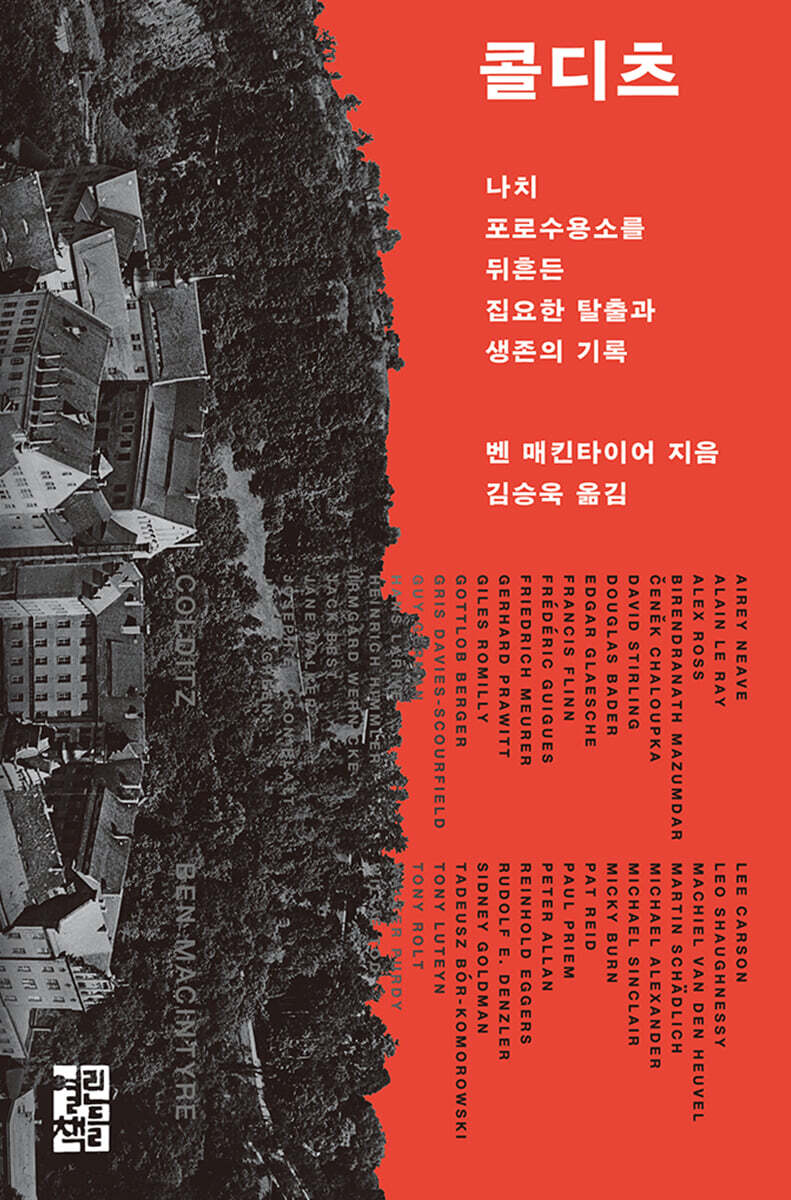 |
Description
Book Introduction
A gloomy castle perched high on a mountain in Germany was used as a prisoner of war camp during World War II.
Used as a prison to hold the most difficult prisoners, Colditz Castle was the site of countless daring escape attempts, and has long been remembered as a legendary symbol of resistance against the Nazis.
But this myth is only half the truth.
Based on thorough historical research and a true story more dramatic than a movie, Ben McIntyre dynamically reconstructs the diverse world of human figures hidden behind the heroic tales we know.
The prisoners attempted to escape in bizarre ways, and the guards watched them closely under strict control and tension.
But they were all very ordinary people, strong yet weak, brave yet terrified.
Between them, class conflict and secret relationships, solidarity and betrayal, desire and madness, play and despair were intricately intertwined.
It was as if another war was breaking out.
This book leaves a more powerful impression than any other war narrative by brilliantly capturing the human condition in extreme situations.
Used as a prison to hold the most difficult prisoners, Colditz Castle was the site of countless daring escape attempts, and has long been remembered as a legendary symbol of resistance against the Nazis.
But this myth is only half the truth.
Based on thorough historical research and a true story more dramatic than a movie, Ben McIntyre dynamically reconstructs the diverse world of human figures hidden behind the heroic tales we know.
The prisoners attempted to escape in bizarre ways, and the guards watched them closely under strict control and tension.
But they were all very ordinary people, strong yet weak, brave yet terrified.
Between them, class conflict and secret relationships, solidarity and betrayal, desire and madness, play and despair were intricately intertwined.
It was as if another war was breaking out.
This book leaves a more powerful impression than any other war narrative by brilliantly capturing the human condition in extreme situations.
- You can preview some of the book's contents.
Preview
index
preface
Before we begin: Franz Josef
1940
1 Original
1941
2 Leray's Escape
3 Bad Guys' Camp
4. Bullying the Idiot
5 Ballet Nonsense
1942
6 Le Metro
7 MI9's Clutch
8 Finding the Way
9 Dogsbody
1943
10 Prominente Club
11 Shabashi
1944
12 Dentist Spy
13 Madness
14 sparrows
15 red fox
1945
16 line virgin
17 Siege
18 End Game
Epilogue
Appendix: 5-6-O Code
Acknowledgements
References
Photo source
Search
Before we begin: Franz Josef
1940
1 Original
1941
2 Leray's Escape
3 Bad Guys' Camp
4. Bullying the Idiot
5 Ballet Nonsense
1942
6 Le Metro
7 MI9's Clutch
8 Finding the Way
9 Dogsbody
1943
10 Prominente Club
11 Shabashi
1944
12 Dentist Spy
13 Madness
14 sparrows
15 red fox
1945
16 line virgin
17 Siege
18 End Game
Epilogue
Appendix: 5-6-O Code
Acknowledgements
References
Photo source
Search
Detailed image

Into the book
The prisoners of war imprisoned in Colditz as soldiers displayed remarkable imagination and courage as they tried to escape from the heavily guarded camp, which housed the most troublesome of the Third Reich's prisoners.
Of all the camps, Colditz had the most escape attempts.
But life in Colditz wasn't all about escape attempts.
Because the prisoners there, portrayed as unrealistic saints in popular culture, were actually more complex and far more interesting people.
--- p.7
While the SS, a paramilitary organization, ran the concentration camps with an inhumane disregard for international law, the highest-ranking German officers in the military-run prisoner-of-war camps viewed compliance with the Geneva Conventions as a matter of military pride.
So when someone tells them they are not complying with the agreement, they get angry.
Even in the midst of an increasingly brutal war, German guards still maintained the rules.
A British prisoner of war wrote:
"They do not resort to narrow-minded tyranny, but after taking all measures to prevent escape, they treat us as gentlemen who know the meaning of honor and have the dignity of a gentleman."
--- p.36
Because security was so tight outside Colditz, the most logical way to escape without being detected was underground.
Digging a hole required patience, planning, and manpower.
And Colditz had these three things in abundance.
By the spring of 1941, the British, Poles, and French were each digging their own tunnels in different sections of the camp.
They didn't even tell each other that fact.
Although no one publicly declared it, a secret competition was taking place in the Colditz basement.
--- p.56
Prisoners responded in a variety of ways to the psychological and physical trauma caused by their detention.
There was anger, resistance, and courage, but also discouragement, guilt, and silent obedience.
Some people found ways to entertain themselves or study, or to calm their minds and find a kind of peace within the enemy's prison.
Some people went crazy, while others completely lost their minds.
There are many unconscious defense mechanisms, one of which is to act as if life, being trapped in a gloomy medieval castle with hundreds of bored, mostly middle-class men, is not at all unusual.
Of course, there was nothing even remotely ordinary about Colditz.
Because it was an isolated place with no women, no work, no children, no news, no money, no freedom, no predictable future.
--- pp.106-107
Romilly was the first person whom Germany referred to as Prominente, or "prominent person."
The term "prominent person" referred to those who were brought to Colditz because of their birthright or social standing and were subjected to the strictest surveillance.
The Nazis viewed these VIP prisoners as kidnappers viewed their victims.
This means that they were seen as objects to be ransomed through transactions, objects to be carefully guarded, and objects to be disposed of when their use was no longer there.
They were the best of the prisoners of war, and could not be allowed to escape under any circumstances.
--- p.118
Whether real or imagined, the camps had spies of a more excellent kind than just the swindlers who acted as spies.
A person who collects confidential information and sends it to England.
Even if the prisoners were isolated from the world, being in enemy territory gave them access to important (or at least interesting) intelligence.
Moreover, the steady influx of prisoners into Colditz, including newly captured officers and those transferred from other camps, steadily increased the amount of useful information.
Information on German troop movements, defensive capabilities, bomb damage, locations of potential targets, morale of civilians and prisoners, and food supplies.
--- pp.161-162
Like many Germans, Eggers had until then dismissed accounts of Nazi atrocities and mass murder as Allied propaganda.
So I was deeply shocked.
“It was the first time I heard this information directly from someone who had experienced it firsthand.
"Stories like this were just rumors to me until then." Eggers was austere, but not ruthless or foolish.
A little bug called doubt burrowed into his soul.
It wasn't just a suspicion that Germany might lose the war, but that perhaps it was a suspicion that it deserved to lose.
--- p.226
After the war, those who had been imprisoned in Colditz tended to describe the prisoners there as being close-knit, like brothers, regardless of rank.
Thanks to the common determination to escape, the differences and discord that divide people outside become meaningless.
But the truth was exactly the opposite.
“Colditz’s class structure was the same as the class structure of the time.
The common soldier was a working class soldier who had to work on duty.
The middle class consisted of officers from various private schools, and above them were the upper class, such as the Prominente and the "Yongju."
--- pp.257-258
Even within Colditz, the Nazis' tightening of control was felt, big and small.
Some measures were merely symbolic, while others were highly significant.
From now on, it was mandatory to salute with arms outstretched stiffly and say "Heil Hitler."
Not only German soldiers, but also prisoners and guards had to greet each other in this way.
The bloodshed following the July Plot brought about an unprecedented level of paranoia in German canteens.
The more dedicated a person was to the Nazis, the more he viewed some of his colleagues with distrust.
"No one wanted to make eye contact with each other."
--- p.326
Despite the growing possibility of liberation, or perhaps precisely because of it, some prisoners found the wait psychologically unbearable.
It was not despair but hope that finally caused a few people to cross the line and lose their minds.
--- p.368
Many outrageous performances have taken place at the Colditz Theatre over the years, but none as bizarre as the drama unfolding now.
The German garrison pretended to guard a camp already outside their jurisdiction, and the prisoners were still imprisoned, while in fact they were protecting the guards against the SS and American forces.
Pravit played the role of Commandant, but now the role effectively belongs to Lt. Col. Todd.
Those who guard become prisoners, and the prisoners guard them.
Of all the camps, Colditz had the most escape attempts.
But life in Colditz wasn't all about escape attempts.
Because the prisoners there, portrayed as unrealistic saints in popular culture, were actually more complex and far more interesting people.
--- p.7
While the SS, a paramilitary organization, ran the concentration camps with an inhumane disregard for international law, the highest-ranking German officers in the military-run prisoner-of-war camps viewed compliance with the Geneva Conventions as a matter of military pride.
So when someone tells them they are not complying with the agreement, they get angry.
Even in the midst of an increasingly brutal war, German guards still maintained the rules.
A British prisoner of war wrote:
"They do not resort to narrow-minded tyranny, but after taking all measures to prevent escape, they treat us as gentlemen who know the meaning of honor and have the dignity of a gentleman."
--- p.36
Because security was so tight outside Colditz, the most logical way to escape without being detected was underground.
Digging a hole required patience, planning, and manpower.
And Colditz had these three things in abundance.
By the spring of 1941, the British, Poles, and French were each digging their own tunnels in different sections of the camp.
They didn't even tell each other that fact.
Although no one publicly declared it, a secret competition was taking place in the Colditz basement.
--- p.56
Prisoners responded in a variety of ways to the psychological and physical trauma caused by their detention.
There was anger, resistance, and courage, but also discouragement, guilt, and silent obedience.
Some people found ways to entertain themselves or study, or to calm their minds and find a kind of peace within the enemy's prison.
Some people went crazy, while others completely lost their minds.
There are many unconscious defense mechanisms, one of which is to act as if life, being trapped in a gloomy medieval castle with hundreds of bored, mostly middle-class men, is not at all unusual.
Of course, there was nothing even remotely ordinary about Colditz.
Because it was an isolated place with no women, no work, no children, no news, no money, no freedom, no predictable future.
--- pp.106-107
Romilly was the first person whom Germany referred to as Prominente, or "prominent person."
The term "prominent person" referred to those who were brought to Colditz because of their birthright or social standing and were subjected to the strictest surveillance.
The Nazis viewed these VIP prisoners as kidnappers viewed their victims.
This means that they were seen as objects to be ransomed through transactions, objects to be carefully guarded, and objects to be disposed of when their use was no longer there.
They were the best of the prisoners of war, and could not be allowed to escape under any circumstances.
--- p.118
Whether real or imagined, the camps had spies of a more excellent kind than just the swindlers who acted as spies.
A person who collects confidential information and sends it to England.
Even if the prisoners were isolated from the world, being in enemy territory gave them access to important (or at least interesting) intelligence.
Moreover, the steady influx of prisoners into Colditz, including newly captured officers and those transferred from other camps, steadily increased the amount of useful information.
Information on German troop movements, defensive capabilities, bomb damage, locations of potential targets, morale of civilians and prisoners, and food supplies.
--- pp.161-162
Like many Germans, Eggers had until then dismissed accounts of Nazi atrocities and mass murder as Allied propaganda.
So I was deeply shocked.
“It was the first time I heard this information directly from someone who had experienced it firsthand.
"Stories like this were just rumors to me until then." Eggers was austere, but not ruthless or foolish.
A little bug called doubt burrowed into his soul.
It wasn't just a suspicion that Germany might lose the war, but that perhaps it was a suspicion that it deserved to lose.
--- p.226
After the war, those who had been imprisoned in Colditz tended to describe the prisoners there as being close-knit, like brothers, regardless of rank.
Thanks to the common determination to escape, the differences and discord that divide people outside become meaningless.
But the truth was exactly the opposite.
“Colditz’s class structure was the same as the class structure of the time.
The common soldier was a working class soldier who had to work on duty.
The middle class consisted of officers from various private schools, and above them were the upper class, such as the Prominente and the "Yongju."
--- pp.257-258
Even within Colditz, the Nazis' tightening of control was felt, big and small.
Some measures were merely symbolic, while others were highly significant.
From now on, it was mandatory to salute with arms outstretched stiffly and say "Heil Hitler."
Not only German soldiers, but also prisoners and guards had to greet each other in this way.
The bloodshed following the July Plot brought about an unprecedented level of paranoia in German canteens.
The more dedicated a person was to the Nazis, the more he viewed some of his colleagues with distrust.
"No one wanted to make eye contact with each other."
--- p.326
Despite the growing possibility of liberation, or perhaps precisely because of it, some prisoners found the wait psychologically unbearable.
It was not despair but hope that finally caused a few people to cross the line and lose their minds.
--- p.368
Many outrageous performances have taken place at the Colditz Theatre over the years, but none as bizarre as the drama unfolding now.
The German garrison pretended to guard a camp already outside their jurisdiction, and the prisoners were still imprisoned, while in fact they were protecting the guards against the SS and American forces.
Pravit played the role of Commandant, but now the role effectively belongs to Lt. Col. Todd.
Those who guard become prisoners, and the prisoners guard them.
--- p.414
Publisher's Review
Sunday Times Bestseller / New York Times Bestseller
Those who want to escape and those who want to watch,
Another war breaks out in the most infamous prison, "Colditz"!
Ben McIntyre, a writer renowned for his captivating portrayal of history's most dramatic moments, has published a new book.
While the previous work, "Spy and Traitor," dealt with the life of double spy Oleg Gordievsky, this work, "Colditz," sheds light on the tenacious escape and survival story that shook the Nazi concentration camp, "Colditz."
A gloomy castle perched high on a mountain in Germany was used as a prisoner of war camp during World War II.
Used as a prison to hold the most difficult prisoners, Colditz Castle was the site of countless daring escape attempts, and has long been remembered as a legendary symbol of resistance against the Nazis.
But this myth is only half the truth.
Based on thorough historical research and a true story more dramatic than a movie, Ben McIntyre dynamically reconstructs the diverse world of human figures hidden behind the heroic tales we know.
The prisoners attempted to escape in bizarre ways, and the guards watched them closely under strict control and tension.
But they were all very ordinary people, strong yet weak, brave yet terrified.
Between them, class conflict and secret relationships, solidarity and betrayal, desire and madness, play and despair were intricately intertwined.
It was as if another war was breaking out.
This book leaves a more powerful impression than any other war narrative by brilliantly capturing the human condition in extreme situations.
Ordinary people in extraordinary circumstances
Colditz was not just a prisoner of war camp.
This place, where prisoners branded as "unfriendly to Germany" were gathered, was home to people of various nationalities, including British, French, Polish, Dutch, and Belgian, and German guards were also part of the community.
This made the camps complex places where class, status, political leanings, and ethnic conflicts intersected.
Unlike other camps notorious for their inhumane practices, Colditz displayed a commitment to soldierly pride and adherence to the Geneva Convention.
But because it was essentially a prison, latent darkness always stirred beneath the surface.
MacIntyre portrays the colorful characters gathered in this special place in three dimensions.
People of various inclinations and backgrounds, such as “communists, scientists, homosexuals, women, aesthetes and vulgarians, aristocrats, spies, workers, poets, and traitors,” sometimes clashed with each other and sometimes coexisted.
There were Reinhold Eggers, who was far from the typical brutal Nazi but was enthusiastic about preventing prisoners from escaping; Pat Reed, who considered escapes to be his officer's duty; Douglas Bader, a soldier who lost both legs but was touted as a symbol of indomitable spirit; Airy Neave, who emerged on the post-war British political stage; Alain LeRay, who led the first successful escape; Michael Sinclair, whose obsession with escape led to a tragic end; Julius Green, who disguised himself as an ordinary dentist but was actually a secret agent for the British intelligence service; and Walter Purdy, who turned traitor.
There was also the Indian doctor Virendranath Majumdar, who had to face discrimination and prejudice, and the so-called "prominentes", such as Giles Romilly and Michael Alexander.
In the midst of a war where nothing could be predicted, they were caught up in countless emotions, moving between discord and cooperation, and between division and conflict, turning the entire POW camp into a complex and multifaceted battlefield.
Events not recorded in history
Colditz's daily life was largely filled with repetition and boredom, but occasional significant events occurred.
Among them, the escape was an urgent and symbolic event.
In fact, of all the POW camps, Colditz had the most escape attempts, and the methods were ingenious and elaborate.
Despite the harsh conditions, the prisoners dug dozens of tunnels, prepared fake IDs and disguises, made their own escape tools, and employed ingenious deception techniques.
He even made plans to build a glider and fly through the sky.
But escape wasn't all there was to their lives.
The prisoners performed plays, taught each other's languages, sometimes held sports competitions, and even brewed moonshine to keep themselves energized.
The childish prank of "playing the fool" to get the German guards into trouble and the act of listening to BBC broadcasts on a secretly hidden radio to learn about the outside world were forms of resistance.
The interior of Colditz was a microcosm of pre-war European society, and its attributes and contradictions were faithfully reproduced.
The social divide was so severe that lower-ranking soldiers were not even given a chance to escape.
There were even orderlies who performed odd jobs and served as servants to the officer prisoners.
The situation in Europe at the time was similar to that in Europe, where homosexuality was taboo and hidden, or where countries were united only in name.
As the war progressed and the German system began to disintegrate, its repercussions spread even within Colditz, ironically reaching a point where the castle was considered safer than the outside.
"Colditz" is a book that precisely reconstructs the history of the POW camp from 1940 to 1945, and is a non-fiction work intertwined with psychological warfare and drama.
By showing people who try to remain human even in the midst of great upheaval, or who lose their humanity, Ben McIntyre poses a question to his readers.
"What would I, or you, do?"
Those who want to escape and those who want to watch,
Another war breaks out in the most infamous prison, "Colditz"!
Ben McIntyre, a writer renowned for his captivating portrayal of history's most dramatic moments, has published a new book.
While the previous work, "Spy and Traitor," dealt with the life of double spy Oleg Gordievsky, this work, "Colditz," sheds light on the tenacious escape and survival story that shook the Nazi concentration camp, "Colditz."
A gloomy castle perched high on a mountain in Germany was used as a prisoner of war camp during World War II.
Used as a prison to hold the most difficult prisoners, Colditz Castle was the site of countless daring escape attempts, and has long been remembered as a legendary symbol of resistance against the Nazis.
But this myth is only half the truth.
Based on thorough historical research and a true story more dramatic than a movie, Ben McIntyre dynamically reconstructs the diverse world of human figures hidden behind the heroic tales we know.
The prisoners attempted to escape in bizarre ways, and the guards watched them closely under strict control and tension.
But they were all very ordinary people, strong yet weak, brave yet terrified.
Between them, class conflict and secret relationships, solidarity and betrayal, desire and madness, play and despair were intricately intertwined.
It was as if another war was breaking out.
This book leaves a more powerful impression than any other war narrative by brilliantly capturing the human condition in extreme situations.
Ordinary people in extraordinary circumstances
Colditz was not just a prisoner of war camp.
This place, where prisoners branded as "unfriendly to Germany" were gathered, was home to people of various nationalities, including British, French, Polish, Dutch, and Belgian, and German guards were also part of the community.
This made the camps complex places where class, status, political leanings, and ethnic conflicts intersected.
Unlike other camps notorious for their inhumane practices, Colditz displayed a commitment to soldierly pride and adherence to the Geneva Convention.
But because it was essentially a prison, latent darkness always stirred beneath the surface.
MacIntyre portrays the colorful characters gathered in this special place in three dimensions.
People of various inclinations and backgrounds, such as “communists, scientists, homosexuals, women, aesthetes and vulgarians, aristocrats, spies, workers, poets, and traitors,” sometimes clashed with each other and sometimes coexisted.
There were Reinhold Eggers, who was far from the typical brutal Nazi but was enthusiastic about preventing prisoners from escaping; Pat Reed, who considered escapes to be his officer's duty; Douglas Bader, a soldier who lost both legs but was touted as a symbol of indomitable spirit; Airy Neave, who emerged on the post-war British political stage; Alain LeRay, who led the first successful escape; Michael Sinclair, whose obsession with escape led to a tragic end; Julius Green, who disguised himself as an ordinary dentist but was actually a secret agent for the British intelligence service; and Walter Purdy, who turned traitor.
There was also the Indian doctor Virendranath Majumdar, who had to face discrimination and prejudice, and the so-called "prominentes", such as Giles Romilly and Michael Alexander.
In the midst of a war where nothing could be predicted, they were caught up in countless emotions, moving between discord and cooperation, and between division and conflict, turning the entire POW camp into a complex and multifaceted battlefield.
Events not recorded in history
Colditz's daily life was largely filled with repetition and boredom, but occasional significant events occurred.
Among them, the escape was an urgent and symbolic event.
In fact, of all the POW camps, Colditz had the most escape attempts, and the methods were ingenious and elaborate.
Despite the harsh conditions, the prisoners dug dozens of tunnels, prepared fake IDs and disguises, made their own escape tools, and employed ingenious deception techniques.
He even made plans to build a glider and fly through the sky.
But escape wasn't all there was to their lives.
The prisoners performed plays, taught each other's languages, sometimes held sports competitions, and even brewed moonshine to keep themselves energized.
The childish prank of "playing the fool" to get the German guards into trouble and the act of listening to BBC broadcasts on a secretly hidden radio to learn about the outside world were forms of resistance.
The interior of Colditz was a microcosm of pre-war European society, and its attributes and contradictions were faithfully reproduced.
The social divide was so severe that lower-ranking soldiers were not even given a chance to escape.
There were even orderlies who performed odd jobs and served as servants to the officer prisoners.
The situation in Europe at the time was similar to that in Europe, where homosexuality was taboo and hidden, or where countries were united only in name.
As the war progressed and the German system began to disintegrate, its repercussions spread even within Colditz, ironically reaching a point where the castle was considered safer than the outside.
"Colditz" is a book that precisely reconstructs the history of the POW camp from 1940 to 1945, and is a non-fiction work intertwined with psychological warfare and drama.
By showing people who try to remain human even in the midst of great upheaval, or who lose their humanity, Ben McIntyre poses a question to his readers.
"What would I, or you, do?"
GOODS SPECIFICS
- Date of issue: September 20, 2025
- Page count, weight, size: 536 pages | 760g | 146*220*31mm
- ISBN13: 9788932925424
- ISBN10: 8932925429
You may also like
카테고리
korean


korean

![GQ KOREA Mark (Monthly): December [2025]](http://librairie.coreenne.fr/cdn/shop/files/8ef265dbbfbf186523ed75ba7319009d.jpg?v=1765340328&width=3840)


