

east longitude
 |
Description
Book Introduction
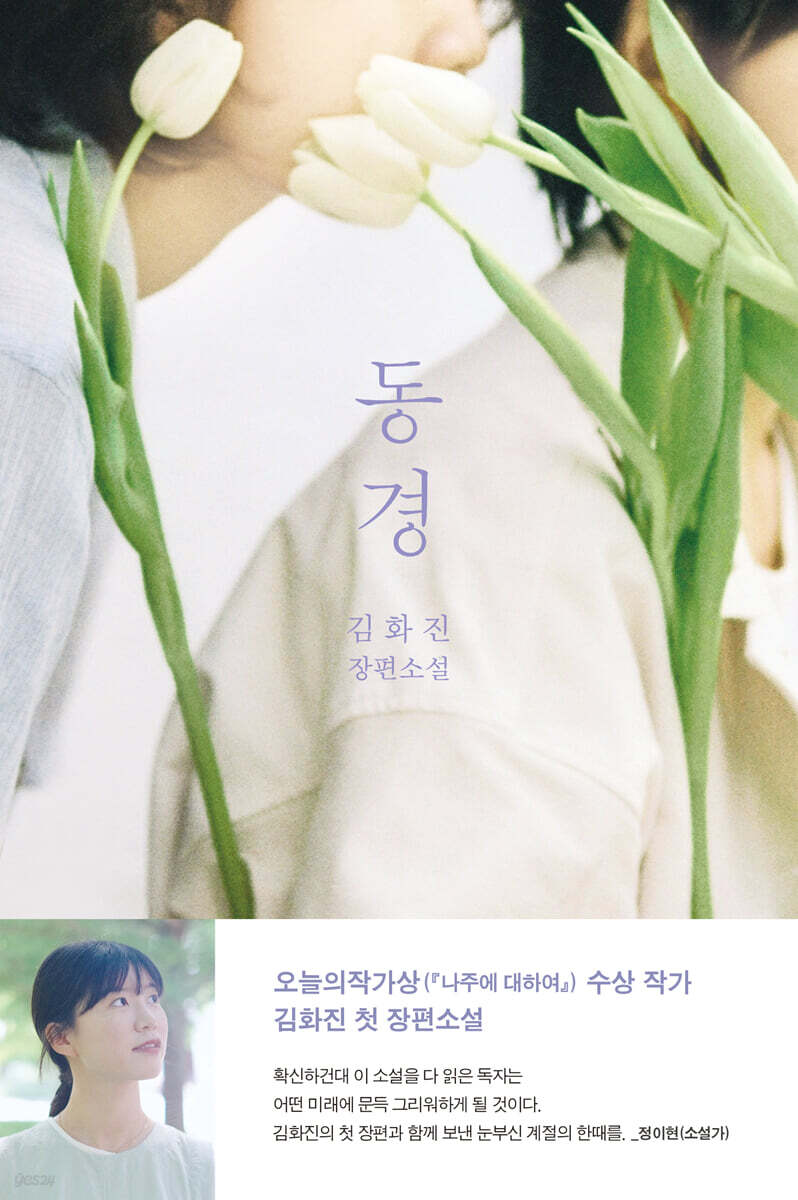
“There are things in the world that are surprising and precious only to me. “How many little things are there?” The seasons of youth that sway and shine The triangle of hearts drawn by three different people facing each other Today's Writer Award Winner Kim Hwa-jin's first full-length novel, "About Naju" and "The Dinosaur's Migration Path" I am sure that readers who finish this novel will suddenly find themselves longing for some future. A dazzling season spent with Kim Hwa-jin's first feature film. Jeong I-hyeon (novelist) Kim Hwa-jin's first full-length novel was published by Munhakdongne. Beginning with her first collection of short stories, "About Naju," published a year and a half after her debut in 2021, and continuing with the serial novel "The Dinosaur's Migration Path," Kim Hwa-jin has solidified her own world of works, which can be described as "a detailed painting of the heart" (Pyeon Hye-young). He has captured the hearts of many literary readers by vividly portraying the diverse and multi-layered textures of the mind, and has also clearly proven his literary achievements by winning the Today's Writer Award in 2023 for "About Naju." As the judges said, “Kim Hwa-jin’s sentences that trace the whereabouts of emotions are surprisingly accurate and delicate” (Pyeon Hye-young) and “a writer with his own unique style of sentences who knows how to handle emotions accurately” (Lee Ki-ho), he is ‘sincere’ in persistently exploring the eternal unknown of other people’s hearts and narrating it with precise sentences. Since one's heart contains an entire life, it is only natural that Kim Hwa-jin, a writer and 'mind explorer', chose a longer story format rather than a short story. In "Tokyo," three women waver in the face of life's major issues: work, dreams, themselves as individuals, and their families. They are now in their early thirties, neither young nor mature adults. They met at a crossroads in their lives that were often confusing and sometimes painful. They grew up in different environments and have different personalities, but they are drawn to each other. The three people, who repeatedly become closer and further apart due to the gravitational pull created by their 'longing' for each other, learn and grow within the triangle of relationships that are difficult to organize or understand. The growing pains of the seasons that are not always beautiful, but that we will surely miss in the future. Kim Hwa-jin portrays the complex and colorful triangle of hearts formed by these three characters through the sparkling moments of youth. Novelist Jeong I-hyeon said, “Kim Hwa-jin always tries to write about the ‘real thing.’ As he wrote, “About real friends, real dreams, real feelings, and real hearts,” “Tokyo” doesn’t have any special stories or surprising twists, but instead, it contains dazzlingly vivid moments of the lives we have truly lived, are living, and will live. So, when reading his novels, we often come across sentences that seem to have been drawn from the depths of our hearts. And through those sentences, we harbor a faint hope that perhaps we will not remain strangers to each other forever, and this becomes the powerful comfort that Kim Hwa-jin's novels give us. Is it just my dream to want a beautiful triangle? It seemed like I always lived imagining triangles. Because two is too few and four is too many. To me, two meant lover, and four meant family. The three were friends. I've always wanted three, not two or four. Page 23 |
- You can preview some of the book's contents.
Preview
index
Part 1
Summer - Hanareum, the Hesitant One
Autumn - Choi Min-ah, The Person Who Hates Dreams
Winter - Lee Hae-deun, who doesn't go to Everland
Cold Winter - Why We Huddle Up
Part 2
New Year - A Little Brighter Light
Spring - When the spring rain washes away the dust
Summer again - the river is rising
Author's Note
Summer - Hanareum, the Hesitant One
Autumn - Choi Min-ah, The Person Who Hates Dreams
Winter - Lee Hae-deun, who doesn't go to Everland
Cold Winter - Why We Huddle Up
Part 2
New Year - A Little Brighter Light
Spring - When the spring rain washes away the dust
Summer again - the river is rising
Author's Note
Into the book
The anxiety of waiting for the pictures to develop was the best anxiety I've ever experienced.
The joy I felt when I discovered that such a thing existed is still vivid.
--- p.33
You know, what was my mom's dream? I never asked.
I don't know what my mother's dream was.
You loved your mom a lot, didn't you? Were you two inseparable friends? You walked the streets arm in arm, sharing secrets? I have friends like that, too.
--- p.91
Three different minds.
Three hearts.
I imagine the three hearts to be somehow round.
It might be three dumplings with different flavors, but sometimes I imagine myself juggling them with that round heart.
A scene where you throw your heart and receive it.
A heart floating in the air and a heart held in hand, a heart being thrown and a heart falling, a heart leaving and a heart returning… … If I keep the rhythm well, the hearts will take their places one by one and arrive, but the moment the rhythm is broken, three hearts will fall into my arms in a rush.
--- p.113
And then one day, after a long time had passed, the role-playing suddenly ended.
Role-playing becomes boring in an instant, even though no one tells you what's more exciting.
Neither Arumdo nor her friends can enjoy the game of imagining and imitating characters that do not exist in reality, characters from fairy tales, or favorite celebrities.
But the role-playing isn't completely over.
From then on, a completely different role-playing begins.
The role of myself.
--- p.139~140
When did Mom change so much?
How long will the mother I knew be my mother?
And how many times throughout my life will I misunderstand the people close to me?
--- p.168
It's surprising to realize that it's not just people that I miss.
As I live, I learn things like that.
This realization is both obvious and shocking.
How many more small things in the world are there that are surprising and precious only to me?
--- p.176
I am changing without even knowing it.
I am always one step behind in noticing my changes.
If you can face the moment when you realize it, you are in a fortunate position.
Maybe I could have lived my whole life without even knowing that I had changed.
I stand between the past and the future.
I'm standing here and there, and I can only reach it by stepping in either direction.
I always feel like I'm going to meet myself.
--- p.177
The time I spent growing up was filled with things like that.
Waiting time.
A heart that endures.
A patient look.
Swallowing words.
A look that pretends not to know.
Without pretending to know, we only receive what the other person has given us, and even if the other person has received more without our knowledge, we endure gratitude, offer something else, and finally give and receive, becoming another us.
--- p.196
Sitting on a park bench in the wind, Araum thought about what it was that bound us, especially me, to them.
That's what I like.
I hope that what you don't have, I have, and what I don't have, you have.
Or the willingness to be mistaken in that way.
The joy I felt when I discovered that such a thing existed is still vivid.
--- p.33
You know, what was my mom's dream? I never asked.
I don't know what my mother's dream was.
You loved your mom a lot, didn't you? Were you two inseparable friends? You walked the streets arm in arm, sharing secrets? I have friends like that, too.
--- p.91
Three different minds.
Three hearts.
I imagine the three hearts to be somehow round.
It might be three dumplings with different flavors, but sometimes I imagine myself juggling them with that round heart.
A scene where you throw your heart and receive it.
A heart floating in the air and a heart held in hand, a heart being thrown and a heart falling, a heart leaving and a heart returning… … If I keep the rhythm well, the hearts will take their places one by one and arrive, but the moment the rhythm is broken, three hearts will fall into my arms in a rush.
--- p.113
And then one day, after a long time had passed, the role-playing suddenly ended.
Role-playing becomes boring in an instant, even though no one tells you what's more exciting.
Neither Arumdo nor her friends can enjoy the game of imagining and imitating characters that do not exist in reality, characters from fairy tales, or favorite celebrities.
But the role-playing isn't completely over.
From then on, a completely different role-playing begins.
The role of myself.
--- p.139~140
When did Mom change so much?
How long will the mother I knew be my mother?
And how many times throughout my life will I misunderstand the people close to me?
--- p.168
It's surprising to realize that it's not just people that I miss.
As I live, I learn things like that.
This realization is both obvious and shocking.
How many more small things in the world are there that are surprising and precious only to me?
--- p.176
I am changing without even knowing it.
I am always one step behind in noticing my changes.
If you can face the moment when you realize it, you are in a fortunate position.
Maybe I could have lived my whole life without even knowing that I had changed.
I stand between the past and the future.
I'm standing here and there, and I can only reach it by stepping in either direction.
I always feel like I'm going to meet myself.
--- p.177
The time I spent growing up was filled with things like that.
Waiting time.
A heart that endures.
A patient look.
Swallowing words.
A look that pretends not to know.
Without pretending to know, we only receive what the other person has given us, and even if the other person has received more without our knowledge, we endure gratitude, offer something else, and finally give and receive, becoming another us.
--- p.196
Sitting on a park bench in the wind, Araum thought about what it was that bound us, especially me, to them.
That's what I like.
I hope that what you don't have, I have, and what I don't have, you have.
Or the willingness to be mistaken in that way.
--- p.205~206
Publisher's Review
“Sometimes I get addicted to medicine.
There are times like that.
Even good intentions can stumble.
How could we know all that?
“We’re only in our thirties.”
There are three narrators in Part 1 of the novel.
Arum, Minah, and Haeden.
The first speaker, Areum, is a hesitant person.
But he is also the character who, while hesitating, most sincerely pursues self-discovery.
Areum and Haeden met while taking a doll repainting class taught by Minah, and the three became close during the class and remained friends even after the class.
After that, Areum starts working at the repainting company that Minah started, and she feels a sense of accomplishment in her work and gains some fame as her work is shared on social media. However, after taking pictures at Haeden's suggestion, she realizes that what she really loves is photography.
As Areum finds herself becoming increasingly insincere at work, struggling between what she is good at and what she wants to do, she eventually tells Min-ah that she wants to quit the company, but she is not sure if that is the right choice.
And by doing so, he wondered if he could accept leaving Mina.
The feeling of liking something and wanting to do it again is so heavy.
That could be the case.
_Page 40
Meanwhile, Mina is someone who has found exactly where she belongs.
To escape from her mother, who instilled in her a sense of shame as a daughter, and to become financially independent, she wanted to pursue art, but she looked for a job that would make her money as quickly as possible.
She is a “woman with a cold appearance and nimble hands” who stands at the podium and organizes teaching materials without a single fuss, but she is also a person with wounds that no one knows about, like the scars on her arms that she herself made.
Min-ah wants to be a person who is unwavering in all aspects, but when Areum leaves her company to pursue her passion, and when she hears news of her mother's illness, she finds herself gradually wavering.
Sadness exists in a corner of the heart in the form of a solid resin, and then melts and flows away at a certain melting point.
It can turn into liquid and spread throughout the body, or it can even spill out as tears.
The melting point of sadness can be someone's word, a body heat, a bus stop at sunset, or a long weekend day spent alone in a daze.
Pages 66-67
Haden is a person who quietly does what he wants to do.
During her wandering days, she took Min-ah's doll repainting class with Areum to calm her mind, but she realized early on that what she originally wanted to do was photography and started her own work.
He resents his violent father, who worked at a construction site, while trying hard to deny that he misses him.
So he works with unfinished buildings that are either collapsing or under construction.
He ridicules his own contradictory self, eating only tomatoes, which are supposedly good for his health, and smoking cigarettes while doing squats, but he also knows very well that this is just who he is.
Haden begins to work with Areum and discovers both good qualities and difficult aspects about her, but he also feels that Areum, who has a transparent heart unlike his own, is becoming an important person to him.
But you know what?
There are people who cannot express what is on their minds.
Even if you can't speak, there's something in your heart.
Some people know that feeling, and some don't.
There are people who know but can't say, and there are people who don't know but say similar things.
Even if I don't say it, what I feel is real.
Page 112
Although they are three people who met through work and entered society, their relationship, which had been a balanced triangle as friends and colleagues, begins to strangely waver when Areum leaves Minah's company and starts working with Haeden in photography.
For those who have reached a turning point in their lives, many things happen at once.
In Part 2, as the seasons unfold, Areum changes careers, Minah heads to the operating room with the same illness as her mother, and Haeden experiences the death of his father and prepares his first photo book.
They rely on each other, but also hurt each other, misunderstand each other, and miss each other. At Haeden's words that they need a "white color" for their photo album, they head to Sapporo in the middle of winter.
And the trip becomes a turning point in their relationship.
A record of the times depicted in delicate sentences
A coming-of-age story of our time, seeking connection through new relationships.
『Tokyo』 vividly portrays the lives of young people in their twenties and thirties living today.
In the past century, when family was the primary focus of our relationships, today, as complete individuals, relationships with others have become increasingly important.
The story begins with a seemingly innocent question: can people you meet through work become friends?
The story begins with such concerns and progresses as it seeks to connect with others in modern society, expanding into a story of growth for the youth of this era who mature through relationships.
The three people in 『Tokyo』 live through the course of a year, from summer to fall, winter, spring, and then back to summer, and are recorded in Kim Hwa-jin's delicate and lyrical sentences.
“I am sure that readers who finish this novel will suddenly long for some future.
As Jeong I-hyeon said, “A dazzling moment of season spent with Kim Hwa-jin’s first novel,” reading Kim Hwa-jin’s novel is not just about listening to a story, but rather like spending time with real people.
The reason Kim Hwa-jin can portray such a 'real' life is probably because of his love for others and his upright perspective.
He senses people's minds like a sensitive photosensitive plate and writes them down as if he were developing them.
An interest in others, perhaps even called persistence.
If literature ultimately leads to an understanding of humanity, isn't an interest in others a talent more crucial than any other in literature? This unfounded affection for people is author Kim Hwa-jin's exceptional talent, and it's why his future novels are so anticipated.
When people who are not good at expressing their worries and sorrows gather to read novels, I sometimes witness moments when they unconsciously pour out their suppressed worries and sorrows, even though they didn't intend to.
I like those moments that novels create, when they let out the tightly sealed feelings.
_From the author's note
There are times like that.
Even good intentions can stumble.
How could we know all that?
“We’re only in our thirties.”
There are three narrators in Part 1 of the novel.
Arum, Minah, and Haeden.
The first speaker, Areum, is a hesitant person.
But he is also the character who, while hesitating, most sincerely pursues self-discovery.
Areum and Haeden met while taking a doll repainting class taught by Minah, and the three became close during the class and remained friends even after the class.
After that, Areum starts working at the repainting company that Minah started, and she feels a sense of accomplishment in her work and gains some fame as her work is shared on social media. However, after taking pictures at Haeden's suggestion, she realizes that what she really loves is photography.
As Areum finds herself becoming increasingly insincere at work, struggling between what she is good at and what she wants to do, she eventually tells Min-ah that she wants to quit the company, but she is not sure if that is the right choice.
And by doing so, he wondered if he could accept leaving Mina.
The feeling of liking something and wanting to do it again is so heavy.
That could be the case.
_Page 40
Meanwhile, Mina is someone who has found exactly where she belongs.
To escape from her mother, who instilled in her a sense of shame as a daughter, and to become financially independent, she wanted to pursue art, but she looked for a job that would make her money as quickly as possible.
She is a “woman with a cold appearance and nimble hands” who stands at the podium and organizes teaching materials without a single fuss, but she is also a person with wounds that no one knows about, like the scars on her arms that she herself made.
Min-ah wants to be a person who is unwavering in all aspects, but when Areum leaves her company to pursue her passion, and when she hears news of her mother's illness, she finds herself gradually wavering.
Sadness exists in a corner of the heart in the form of a solid resin, and then melts and flows away at a certain melting point.
It can turn into liquid and spread throughout the body, or it can even spill out as tears.
The melting point of sadness can be someone's word, a body heat, a bus stop at sunset, or a long weekend day spent alone in a daze.
Pages 66-67
Haden is a person who quietly does what he wants to do.
During her wandering days, she took Min-ah's doll repainting class with Areum to calm her mind, but she realized early on that what she originally wanted to do was photography and started her own work.
He resents his violent father, who worked at a construction site, while trying hard to deny that he misses him.
So he works with unfinished buildings that are either collapsing or under construction.
He ridicules his own contradictory self, eating only tomatoes, which are supposedly good for his health, and smoking cigarettes while doing squats, but he also knows very well that this is just who he is.
Haden begins to work with Areum and discovers both good qualities and difficult aspects about her, but he also feels that Areum, who has a transparent heart unlike his own, is becoming an important person to him.
But you know what?
There are people who cannot express what is on their minds.
Even if you can't speak, there's something in your heart.
Some people know that feeling, and some don't.
There are people who know but can't say, and there are people who don't know but say similar things.
Even if I don't say it, what I feel is real.
Page 112
Although they are three people who met through work and entered society, their relationship, which had been a balanced triangle as friends and colleagues, begins to strangely waver when Areum leaves Minah's company and starts working with Haeden in photography.
For those who have reached a turning point in their lives, many things happen at once.
In Part 2, as the seasons unfold, Areum changes careers, Minah heads to the operating room with the same illness as her mother, and Haeden experiences the death of his father and prepares his first photo book.
They rely on each other, but also hurt each other, misunderstand each other, and miss each other. At Haeden's words that they need a "white color" for their photo album, they head to Sapporo in the middle of winter.
And the trip becomes a turning point in their relationship.
A record of the times depicted in delicate sentences
A coming-of-age story of our time, seeking connection through new relationships.
『Tokyo』 vividly portrays the lives of young people in their twenties and thirties living today.
In the past century, when family was the primary focus of our relationships, today, as complete individuals, relationships with others have become increasingly important.
The story begins with a seemingly innocent question: can people you meet through work become friends?
The story begins with such concerns and progresses as it seeks to connect with others in modern society, expanding into a story of growth for the youth of this era who mature through relationships.
The three people in 『Tokyo』 live through the course of a year, from summer to fall, winter, spring, and then back to summer, and are recorded in Kim Hwa-jin's delicate and lyrical sentences.
“I am sure that readers who finish this novel will suddenly long for some future.
As Jeong I-hyeon said, “A dazzling moment of season spent with Kim Hwa-jin’s first novel,” reading Kim Hwa-jin’s novel is not just about listening to a story, but rather like spending time with real people.
The reason Kim Hwa-jin can portray such a 'real' life is probably because of his love for others and his upright perspective.
He senses people's minds like a sensitive photosensitive plate and writes them down as if he were developing them.
An interest in others, perhaps even called persistence.
If literature ultimately leads to an understanding of humanity, isn't an interest in others a talent more crucial than any other in literature? This unfounded affection for people is author Kim Hwa-jin's exceptional talent, and it's why his future novels are so anticipated.
When people who are not good at expressing their worries and sorrows gather to read novels, I sometimes witness moments when they unconsciously pour out their suppressed worries and sorrows, even though they didn't intend to.
I like those moments that novels create, when they let out the tightly sealed feelings.
_From the author's note
GOODS SPECIFICS
- Date of issue: June 20, 2024
- Page count, weight, size: 224 pages | 133*200*20mm
- ISBN13: 9791141600785
- ISBN10: 1141600781
You may also like
카테고리
korean


korean

![GQ KOREA Mark (Monthly): December [2025]](http://librairie.coreenne.fr/cdn/shop/files/8ef265dbbfbf186523ed75ba7319009d.jpg?v=1765340328&width=3840)


