

Memoirs of Jeong Se-hyun, the Panmunjom negotiator
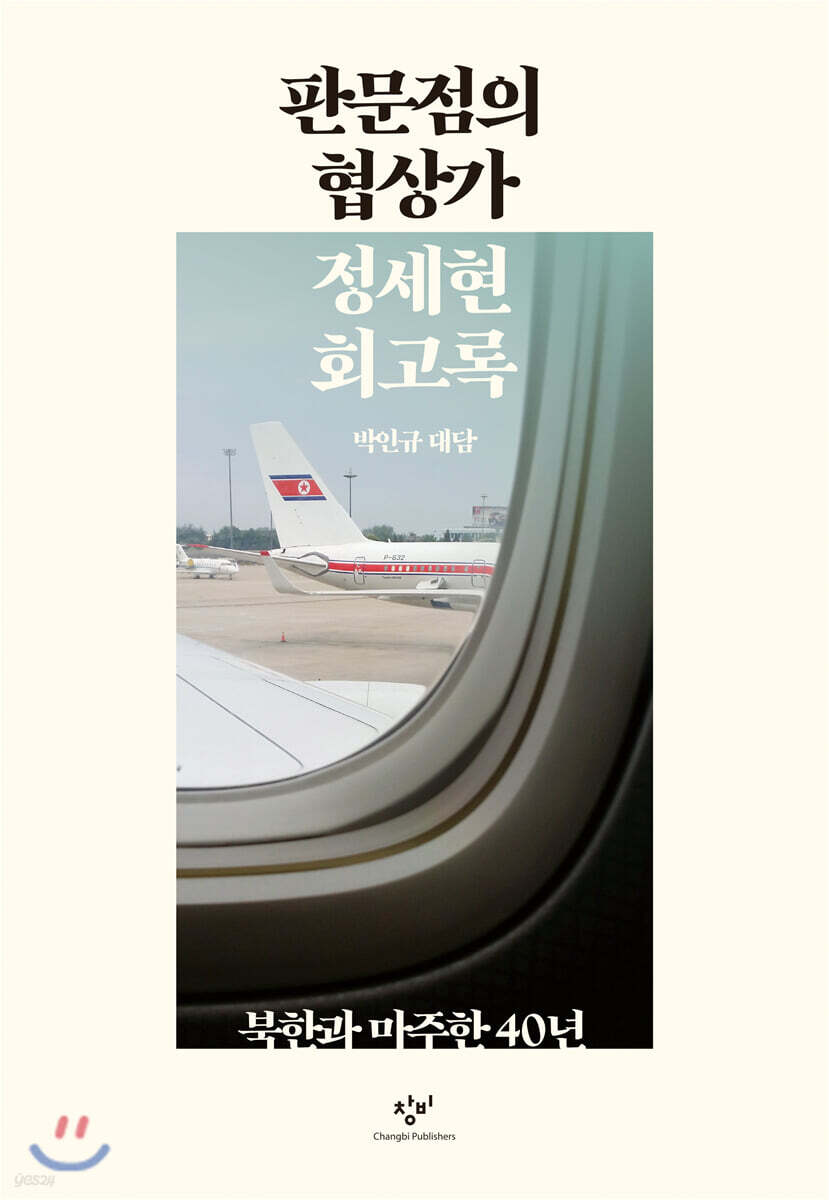 |
Description
Book Introduction
With the head of a scholar, the eyes of an administrator, and the heart of a citizen
A Lifelong Record of Views on North Korea
The memoir of Jeong Se-hyun, who has been active on the front lines of inter-Korean relations for the past 40 years, has been published, with the comment, “There are many experts on North Korea, but only one possesses both expertise and leadership.”
The story of how he was born in Manchuria during the Japanese colonial period, returned to his father's hometown after liberation and endured hardships, went through a rebellious youth, and grew into a promising international politics student, and how, through a special opportunity and struggle during his youth when he was torn between being a researcher and a civil servant, he established himself as a negotiator who presented clear solutions at the center of the North-South problem, is introduced through several significant episodes.
In particular, the book's highlight is his journey through the critical moments on the Korean Peninsula during the North Korean nuclear crisis in the 1990s, when he served as the Blue House Unification Secretary, and then as the Minister of Unification during the Six-Party Talks in the 2000s.
The author, who is still actively involved in inter-Korean affairs, offers a strong yet flexible guide to how to live under a divided system.
Rather than focusing on retracing past events as a memoir, the greatest virtue of this book is that it allows us to look at our current situation and think about the future through the wisdom gained from past experiences.
At a time when we must usher in a new era in inter-Korean relations, the wisdom of a "sage" who has faced North Korea throughout his life is even more weighty and valuable to us.
A Lifelong Record of Views on North Korea
The memoir of Jeong Se-hyun, who has been active on the front lines of inter-Korean relations for the past 40 years, has been published, with the comment, “There are many experts on North Korea, but only one possesses both expertise and leadership.”
The story of how he was born in Manchuria during the Japanese colonial period, returned to his father's hometown after liberation and endured hardships, went through a rebellious youth, and grew into a promising international politics student, and how, through a special opportunity and struggle during his youth when he was torn between being a researcher and a civil servant, he established himself as a negotiator who presented clear solutions at the center of the North-South problem, is introduced through several significant episodes.
In particular, the book's highlight is his journey through the critical moments on the Korean Peninsula during the North Korean nuclear crisis in the 1990s, when he served as the Blue House Unification Secretary, and then as the Minister of Unification during the Six-Party Talks in the 2000s.
The author, who is still actively involved in inter-Korean affairs, offers a strong yet flexible guide to how to live under a divided system.
Rather than focusing on retracing past events as a memoir, the greatest virtue of this book is that it allows us to look at our current situation and think about the future through the wisdom gained from past experiences.
At a time when we must usher in a new era in inter-Korean relations, the wisdom of a "sage" who has faced North Korea throughout his life is even more weighty and valuable to us.
- You can preview some of the book's contents.
Preview
index
Introductory remarks - Jeong Se-hyeon
Prologue: Memories of Pyongyang: Childhood
Chapter 1: The First Resistance in High School and Its Aftermath
Chapter 2: A Professor's Frustrated Dream Between the Path of Scholar and the Path of Bureaucrat
Chapter 3: My Time as a Civil Servant at the Ministry of Unification 1. On the Front Line of North Korea Policy
Chapter 4: During my time as a civil servant at the Ministry of Unification 2: The Aung San terrorist attack and inter-Korean relations
Chapter 5: The Ilhae Research Institute and the Institute for Unification Studies
Chapter 6: The Unfulfilled Meeting with Chairman Kim Il-sung
Chapter 7: During the Unification Secretary's Day 2: Controversy over Rice Aid and Distribution to North Korea
Chapter 8: Kim Dae-jung's Sunshine Policy during his time as Vice Minister of Unification
Chapter 9: During his time as Minister of Unification, Bush's "axis of evil" remarks
Chapter 10: Minister of Unification 2: The North Korean Nuclear Issue and the Six-Party Talks
Chapter 11: The Cheonan Incident and the Death of Chairman Kim Jong-il: The Lee Myung-bak Administration
Chapter 12: The Era of "Unification is a Jackpot": The Park Geun-hye Administration
Chapter 13: The Launch of the Moon Jae-in Administration and Rapid Progress in Inter-Korean Relations
Chapter 14: The Path to Peace and Unification
Outgoing Words - Park In-gyu
Prologue: Memories of Pyongyang: Childhood
Chapter 1: The First Resistance in High School and Its Aftermath
Chapter 2: A Professor's Frustrated Dream Between the Path of Scholar and the Path of Bureaucrat
Chapter 3: My Time as a Civil Servant at the Ministry of Unification 1. On the Front Line of North Korea Policy
Chapter 4: During my time as a civil servant at the Ministry of Unification 2: The Aung San terrorist attack and inter-Korean relations
Chapter 5: The Ilhae Research Institute and the Institute for Unification Studies
Chapter 6: The Unfulfilled Meeting with Chairman Kim Il-sung
Chapter 7: During the Unification Secretary's Day 2: Controversy over Rice Aid and Distribution to North Korea
Chapter 8: Kim Dae-jung's Sunshine Policy during his time as Vice Minister of Unification
Chapter 9: During his time as Minister of Unification, Bush's "axis of evil" remarks
Chapter 10: Minister of Unification 2: The North Korean Nuclear Issue and the Six-Party Talks
Chapter 11: The Cheonan Incident and the Death of Chairman Kim Jong-il: The Lee Myung-bak Administration
Chapter 12: The Era of "Unification is a Jackpot": The Park Geun-hye Administration
Chapter 13: The Launch of the Moon Jae-in Administration and Rapid Progress in Inter-Korean Relations
Chapter 14: The Path to Peace and Unification
Outgoing Words - Park In-gyu
Publisher's Review
A country boy's awakening to life as a non-mainstream
: A Minority Report from the late 1960s to the early 1980s
Jeong Se-hyeon was born in June 1945, just two months before the liberation on August 15, to parents who had immigrated to northern Manchuria to make a living.
Immediately after liberation, he returned to his hometown of Jangsu, Jeollabuk-do with his family, and thanks to his excellent academic performance as a child, he went on to attend Gyeonggi High School.
His life was strangely 'non-mainstream'. In middle school, he was often excluded from his peer group because he was from a remote mountain village, and in high school, because he was not from 'Gyeonggi Middle School'.
Then one day, when the school principal was appointed through an unusual process under the Yushin regime, he organized a protest, but this was discovered through internal reporting and he was suspended indefinitely.
This incident had a great impact on Jeong Se-hyeon's worldview.
“At that time, I was very disappointed in the opportunistic attitude of my classmates, people who were considered smart and people who grew up in the city.
“Because of the shock I received at that time, I continued to live with the thought that ‘standing on the other side is justice’ throughout my social life.” (Page 44)
During his time as a repeat student, he led a protest against the Korea-Japan Agreement, which was remembered with a placard that read, "Is this national democracy?" After failing to pass the entrance exam, he vaguely decided on his future after hearing a professor's words during a freshman orientation at the university he entered.
“This is not a place that helps you study for the diplomatic exam.
(…) There is one reason for learning and teaching international politics in a divided country.
It's because of the unification issue.
(…) While studying international politics, it is necessary to develop the habit of always thinking in connection with the issue of unification.” (pp. 65-66)
After deciding on a career in international politics, he came into direct contact with inter-Korean issues through his mentors' external activities.
For example, Professor Park Jun-gyu of the Department of Diplomacy at Seoul National University attended the first inter-Korean Red Cross talks (1971) after the division as a South Korean representative and was able to hear vividly about the reality of North Korea from him.
When Professor Lee Yong-hee, who was his master's thesis advisor, took office as the Minister of Unification, Jeong Se-hyun also took his first steps into public service as an aide to the Minister of Unification in 1977.
However, he did not dream of becoming a civil servant from the beginning.
Jeong Se-hyeon, who originally wanted to become a university professor, achieved outstanding results, including being selected as a full-time lecturer by achieving first place in a thesis at the Free Academy, which was established as a training institute for researchers in the communist bloc at the time.
Jeong Se-hyeon, who had entered the life of 'Unification Ministry by day, graduate school by night', eventually received a doctorate in Chinese communism in 1982, becoming a prominent Chinese researcher.
In the 1980s, as the economic gap between the North and South widened and South Korea gained a clear advantage in all sectors, concrete plans for the unification of the Korean Peninsula began to be discussed.
Jeong Se-hyun distinguished himself by demonstrating his outstanding capabilities as a policy official while drafting the "National Reconciliation and Democratic Unification Plan," South Korea's first unification plan to counter North Korea's "Plan for the Establishment of the Democratic Federal Republic of Koryo" announced in 1980.
Where there is conflict, there is negotiation.
: Life as a negotiator from the late 1980s to the late 1990s
The early 1980s, when Jeong Se-hyun worked as a unification policy official, was a time when the competition between the North and South was creating incidents and accidents at every moment.
In September 1983, tragic events occurred one after another: the shooting down of Korean Air Flight 007 from the United States and the Aung San terrorist attack in Burma in October. In this situation, Jeong Se-hyun took charge of preparing for inter-Korean sports talks to form a unified team for the 1984 LA Olympics.
The unified team, which was promoted for dialogue and exchange, collapsed due to the cold atmosphere between the South and the North, and the action that unfolded during the process was both exciting and heartbreaking.
In August 1984, record-breaking heavy rains in South Korea caused a major disaster that flooded the entire city center along the Han River.
At the time, Jeong Se-hyun changed the mind of the Blue House, which had rejected the North's unusual offer to deliver relief supplies.
Thanks to the sudden acceptance, the delivery of flood relief supplies from North Korea at the time became a major event that will be remembered for generations to come, and it also led to the achievement of the South and North holding a program the following year to exchange separated families' hometowns and art troupes.
It was a moment when Jeong Se-hyun's qualities as a negotiator shone once again.
In 1986, he left the Ministry of Unification and moved to the position of senior researcher at the Ilhae Institute (now the Sejong Institute).
During this period, civil society's unification movement became very active after democratization in 1987.
The later accounts of the time, as testified by Jeong Se-hyeon, show that there were significant differences in views on unification not only between the South and the North, but also between the government and the private sector, and even within various civil society movements.
It is worth listening to the part where, as a government official, he hoped that civil society would have a broader perspective on the unification movement that shook the Korean Peninsula at the time.
“The Roh Tae-woo administration’s Northern Policy itself was moving toward coexistence with North Korea.
(…) Although diplomatic relations between North Korea and the US/North Korea and Japan have not been established, we have been looking at the need to first establish diplomatic relations between South Korea and China and then revitalize inter-Korean exchanges and cooperation.
However, since the private sector hastily attempted to contact North Korea, the government may have felt the burden instead.” (Page 202)
When the civilian government came into power in 1993, Jeong Se-hyun began working as the Blue House Unification Secretary.
The first North Korean nuclear crisis broke out in the same year when North Korea declared its withdrawal from the NPT.
Accordingly, the Clinton administration in the United States at the time actively engaged in dialogue with North Korea, which concluded with the 1994 Geneva Agreement.
Faced with this situation, Jeong Se-hyun realizes how significant an impact a single president's North Korea policy can have on inter-Korean relations.
At the time, President Kim Young-sam boasted in his inaugural address that “no ally can be better than our own people,” but in reality, he was convinced of North Korea’s collapse and pursued a hostile policy toward North Korea throughout his term.
Jeong Se-hyun expressed regret, wondering what would have happened if the president had prioritized cooperation between the South and the North, as he had stated in his inaugural address.
Throughout the civilian government, there were repeated instances of unfortunate diplomatic failures stemming from the president's North Korea policy, such as the 1994 Kim Il-sung condolences scandal, the 1995 controversy over "giveaway" rice aid to North Korea, and the 1997 defection of Hwang Jang-yop, the Workers' Party's international secretary.
Isn't support for the North a matter of duty, not a matter of giving?
: From the early 2000s to the present
In the late 1990s, the North Korean economy was in dire straits, and the theory of North Korea's collapse was considered an established theory.
As humanitarian aid to North Korea increases worldwide, South Korea is also stepping in to provide food and other aid.
However, as the two countries had been enemies for over 70 years under the division system, there was considerable opposition within South Korea.
Regarding this, Jeong Se-hyun emphasized that we must calmly recognize the realistic limitations of unification policy, as follows:
“It is difficult to get 90 or 100 percent of the people to agree on North Korea policy.
Even if it's 51 to 49, there could be momentum in North Korea policy.
(…) When it comes to inter-Korean issues, we can’t expect 100 percent bipartisan cooperation. We can only achieve results through the Sunshine Policy or inter-Korean reconciliation and cooperation policies, thereby making peace tangible and increasing the number of people who feel that this is not a bad thing.” (pp. 547-48)
Jeong Se-hyun's realist side shone through when he was appointed Vice Minister of Unification in the Kim Dae-jung administration.
It was highly unusual to appoint Jeong Se-hyun, who was Vice Minister of Unification in the previous administration, to the same position in the next administration.
This unprecedented personnel action is understood through a memo made public after Kim Dae-jung's death.
“There are many experts on North Korea, but only one possesses both expertise and leadership.” (p. 313)
The Kim Dae-jung administration's North Korea policy, represented by the Sunshine Policy, was plunged into a labyrinth of tensions following the Geumchang-ri underground cave (nuclear test) incident that occurred immediately after his inauguration.
Despite numerous difficulties, Jeong Se-hyun spearheaded the Kim Dae-jung administration's unification policy, actively pursuing a policy of prioritizing the people over the government, including significantly easing conditions for civilians to visit North Korea and abolishing caps on private companies' investments in North Korea.
January 29, 2002, was the day that Jeong Se-hyun was inaugurated as Minister of Unification under the Kim Dae-jung administration, and also the day that US President Bush designated North Korea as part of the "axis of evil" in his speech to Congress.
It was also a time when only unfavorable external conditions were being created, with North Korea also conducting missile launch tests one after another.
In this harsh environment, Jeong Se-hyun is focusing on the Geumgangsan tourism project and attracting the Kaesong Industrial Complex.
At a time when the majority of public opinion was arguing that international capital, namely the United States and Japan, should intervene first before South Korea can, rather than the South and North pursuing economic cooperation independently, Jeong Se-hyun resolved the issue within the capabilities of the two countries at the time.
Jeong Se-hyun's consistent stance even swayed North Korean officials, ultimately contributing significantly to the stable maintenance of the Mount Kumgang tourism project and the Kaesong Industrial Complex under the Kim Dae-jung and Roh Moo-hyun administrations.
Standing in the 'maze of unification'
It was around the fall of 2018 when Changbi first planned Jeong Se-hyeon's memoir.
At the time, it seemed as if peace on the Korean Peninsula would arrive at any moment, with the April 27 Panmunjom Inter-Korean Summit, the June 12 Singapore North Korea-U.S. Summit, and the September 19 Pyongyang Inter-Korean Summit following each other.
Thus, reflecting the expectations and hopes of the time, it was decided to publish this book in June 2020, the 70th anniversary of the outbreak of the Korean War and the 20th anniversary of the first inter-Korean summit.
Unfortunately, the Hanoi summit between North Korea and the United States in February 2019 collapsed without any results, and the subsequent working-level talks in Stockholm in October failed to produce any agreement, leading to a sharp deterioration in the situation on the Korean Peninsula.
In early 2020, North Korea declared a "new path" toward self-reliance, and the deadlock and standoff between North Korea and the United States has continued for over a year.
As interlocutor Park In-gyu said, “It is highly unlikely that a breakthrough will be made in North Korea-US negotiations within 2020, when the US presidential election will take place” (p. 651).
What can we do in these dark times?
In the life of Jeong Se-hyun, as depicted in "The Negotiator at Panmunjom," we can find clues to a solution.
If North Korea-US relations are deadlocked, a breakthrough must be found in inter-Korean relations, and in particular, if there are things that the two Koreas can do without hesitation, they must be able to actively pursue them.
Through his life, the author urges us not to forget that when it comes to the Korean Peninsula, we, and no one else, hold the key to its direction.
This book is more than just one person's memoir; it is also a work that testifies to an era in the history of inter-Korean relations.
Through this book, readers will gain a clear perspective on facing the chaotic unification issue and the wisdom to prepare for a new era of peace.
: A Minority Report from the late 1960s to the early 1980s
Jeong Se-hyeon was born in June 1945, just two months before the liberation on August 15, to parents who had immigrated to northern Manchuria to make a living.
Immediately after liberation, he returned to his hometown of Jangsu, Jeollabuk-do with his family, and thanks to his excellent academic performance as a child, he went on to attend Gyeonggi High School.
His life was strangely 'non-mainstream'. In middle school, he was often excluded from his peer group because he was from a remote mountain village, and in high school, because he was not from 'Gyeonggi Middle School'.
Then one day, when the school principal was appointed through an unusual process under the Yushin regime, he organized a protest, but this was discovered through internal reporting and he was suspended indefinitely.
This incident had a great impact on Jeong Se-hyeon's worldview.
“At that time, I was very disappointed in the opportunistic attitude of my classmates, people who were considered smart and people who grew up in the city.
“Because of the shock I received at that time, I continued to live with the thought that ‘standing on the other side is justice’ throughout my social life.” (Page 44)
During his time as a repeat student, he led a protest against the Korea-Japan Agreement, which was remembered with a placard that read, "Is this national democracy?" After failing to pass the entrance exam, he vaguely decided on his future after hearing a professor's words during a freshman orientation at the university he entered.
“This is not a place that helps you study for the diplomatic exam.
(…) There is one reason for learning and teaching international politics in a divided country.
It's because of the unification issue.
(…) While studying international politics, it is necessary to develop the habit of always thinking in connection with the issue of unification.” (pp. 65-66)
After deciding on a career in international politics, he came into direct contact with inter-Korean issues through his mentors' external activities.
For example, Professor Park Jun-gyu of the Department of Diplomacy at Seoul National University attended the first inter-Korean Red Cross talks (1971) after the division as a South Korean representative and was able to hear vividly about the reality of North Korea from him.
When Professor Lee Yong-hee, who was his master's thesis advisor, took office as the Minister of Unification, Jeong Se-hyun also took his first steps into public service as an aide to the Minister of Unification in 1977.
However, he did not dream of becoming a civil servant from the beginning.
Jeong Se-hyeon, who originally wanted to become a university professor, achieved outstanding results, including being selected as a full-time lecturer by achieving first place in a thesis at the Free Academy, which was established as a training institute for researchers in the communist bloc at the time.
Jeong Se-hyeon, who had entered the life of 'Unification Ministry by day, graduate school by night', eventually received a doctorate in Chinese communism in 1982, becoming a prominent Chinese researcher.
In the 1980s, as the economic gap between the North and South widened and South Korea gained a clear advantage in all sectors, concrete plans for the unification of the Korean Peninsula began to be discussed.
Jeong Se-hyun distinguished himself by demonstrating his outstanding capabilities as a policy official while drafting the "National Reconciliation and Democratic Unification Plan," South Korea's first unification plan to counter North Korea's "Plan for the Establishment of the Democratic Federal Republic of Koryo" announced in 1980.
Where there is conflict, there is negotiation.
: Life as a negotiator from the late 1980s to the late 1990s
The early 1980s, when Jeong Se-hyun worked as a unification policy official, was a time when the competition between the North and South was creating incidents and accidents at every moment.
In September 1983, tragic events occurred one after another: the shooting down of Korean Air Flight 007 from the United States and the Aung San terrorist attack in Burma in October. In this situation, Jeong Se-hyun took charge of preparing for inter-Korean sports talks to form a unified team for the 1984 LA Olympics.
The unified team, which was promoted for dialogue and exchange, collapsed due to the cold atmosphere between the South and the North, and the action that unfolded during the process was both exciting and heartbreaking.
In August 1984, record-breaking heavy rains in South Korea caused a major disaster that flooded the entire city center along the Han River.
At the time, Jeong Se-hyun changed the mind of the Blue House, which had rejected the North's unusual offer to deliver relief supplies.
Thanks to the sudden acceptance, the delivery of flood relief supplies from North Korea at the time became a major event that will be remembered for generations to come, and it also led to the achievement of the South and North holding a program the following year to exchange separated families' hometowns and art troupes.
It was a moment when Jeong Se-hyun's qualities as a negotiator shone once again.
In 1986, he left the Ministry of Unification and moved to the position of senior researcher at the Ilhae Institute (now the Sejong Institute).
During this period, civil society's unification movement became very active after democratization in 1987.
The later accounts of the time, as testified by Jeong Se-hyeon, show that there were significant differences in views on unification not only between the South and the North, but also between the government and the private sector, and even within various civil society movements.
It is worth listening to the part where, as a government official, he hoped that civil society would have a broader perspective on the unification movement that shook the Korean Peninsula at the time.
“The Roh Tae-woo administration’s Northern Policy itself was moving toward coexistence with North Korea.
(…) Although diplomatic relations between North Korea and the US/North Korea and Japan have not been established, we have been looking at the need to first establish diplomatic relations between South Korea and China and then revitalize inter-Korean exchanges and cooperation.
However, since the private sector hastily attempted to contact North Korea, the government may have felt the burden instead.” (Page 202)
When the civilian government came into power in 1993, Jeong Se-hyun began working as the Blue House Unification Secretary.
The first North Korean nuclear crisis broke out in the same year when North Korea declared its withdrawal from the NPT.
Accordingly, the Clinton administration in the United States at the time actively engaged in dialogue with North Korea, which concluded with the 1994 Geneva Agreement.
Faced with this situation, Jeong Se-hyun realizes how significant an impact a single president's North Korea policy can have on inter-Korean relations.
At the time, President Kim Young-sam boasted in his inaugural address that “no ally can be better than our own people,” but in reality, he was convinced of North Korea’s collapse and pursued a hostile policy toward North Korea throughout his term.
Jeong Se-hyun expressed regret, wondering what would have happened if the president had prioritized cooperation between the South and the North, as he had stated in his inaugural address.
Throughout the civilian government, there were repeated instances of unfortunate diplomatic failures stemming from the president's North Korea policy, such as the 1994 Kim Il-sung condolences scandal, the 1995 controversy over "giveaway" rice aid to North Korea, and the 1997 defection of Hwang Jang-yop, the Workers' Party's international secretary.
Isn't support for the North a matter of duty, not a matter of giving?
: From the early 2000s to the present
In the late 1990s, the North Korean economy was in dire straits, and the theory of North Korea's collapse was considered an established theory.
As humanitarian aid to North Korea increases worldwide, South Korea is also stepping in to provide food and other aid.
However, as the two countries had been enemies for over 70 years under the division system, there was considerable opposition within South Korea.
Regarding this, Jeong Se-hyun emphasized that we must calmly recognize the realistic limitations of unification policy, as follows:
“It is difficult to get 90 or 100 percent of the people to agree on North Korea policy.
Even if it's 51 to 49, there could be momentum in North Korea policy.
(…) When it comes to inter-Korean issues, we can’t expect 100 percent bipartisan cooperation. We can only achieve results through the Sunshine Policy or inter-Korean reconciliation and cooperation policies, thereby making peace tangible and increasing the number of people who feel that this is not a bad thing.” (pp. 547-48)
Jeong Se-hyun's realist side shone through when he was appointed Vice Minister of Unification in the Kim Dae-jung administration.
It was highly unusual to appoint Jeong Se-hyun, who was Vice Minister of Unification in the previous administration, to the same position in the next administration.
This unprecedented personnel action is understood through a memo made public after Kim Dae-jung's death.
“There are many experts on North Korea, but only one possesses both expertise and leadership.” (p. 313)
The Kim Dae-jung administration's North Korea policy, represented by the Sunshine Policy, was plunged into a labyrinth of tensions following the Geumchang-ri underground cave (nuclear test) incident that occurred immediately after his inauguration.
Despite numerous difficulties, Jeong Se-hyun spearheaded the Kim Dae-jung administration's unification policy, actively pursuing a policy of prioritizing the people over the government, including significantly easing conditions for civilians to visit North Korea and abolishing caps on private companies' investments in North Korea.
January 29, 2002, was the day that Jeong Se-hyun was inaugurated as Minister of Unification under the Kim Dae-jung administration, and also the day that US President Bush designated North Korea as part of the "axis of evil" in his speech to Congress.
It was also a time when only unfavorable external conditions were being created, with North Korea also conducting missile launch tests one after another.
In this harsh environment, Jeong Se-hyun is focusing on the Geumgangsan tourism project and attracting the Kaesong Industrial Complex.
At a time when the majority of public opinion was arguing that international capital, namely the United States and Japan, should intervene first before South Korea can, rather than the South and North pursuing economic cooperation independently, Jeong Se-hyun resolved the issue within the capabilities of the two countries at the time.
Jeong Se-hyun's consistent stance even swayed North Korean officials, ultimately contributing significantly to the stable maintenance of the Mount Kumgang tourism project and the Kaesong Industrial Complex under the Kim Dae-jung and Roh Moo-hyun administrations.
Standing in the 'maze of unification'
It was around the fall of 2018 when Changbi first planned Jeong Se-hyeon's memoir.
At the time, it seemed as if peace on the Korean Peninsula would arrive at any moment, with the April 27 Panmunjom Inter-Korean Summit, the June 12 Singapore North Korea-U.S. Summit, and the September 19 Pyongyang Inter-Korean Summit following each other.
Thus, reflecting the expectations and hopes of the time, it was decided to publish this book in June 2020, the 70th anniversary of the outbreak of the Korean War and the 20th anniversary of the first inter-Korean summit.
Unfortunately, the Hanoi summit between North Korea and the United States in February 2019 collapsed without any results, and the subsequent working-level talks in Stockholm in October failed to produce any agreement, leading to a sharp deterioration in the situation on the Korean Peninsula.
In early 2020, North Korea declared a "new path" toward self-reliance, and the deadlock and standoff between North Korea and the United States has continued for over a year.
As interlocutor Park In-gyu said, “It is highly unlikely that a breakthrough will be made in North Korea-US negotiations within 2020, when the US presidential election will take place” (p. 651).
What can we do in these dark times?
In the life of Jeong Se-hyun, as depicted in "The Negotiator at Panmunjom," we can find clues to a solution.
If North Korea-US relations are deadlocked, a breakthrough must be found in inter-Korean relations, and in particular, if there are things that the two Koreas can do without hesitation, they must be able to actively pursue them.
Through his life, the author urges us not to forget that when it comes to the Korean Peninsula, we, and no one else, hold the key to its direction.
This book is more than just one person's memoir; it is also a work that testifies to an era in the history of inter-Korean relations.
Through this book, readers will gain a clear perspective on facing the chaotic unification issue and the wisdom to prepare for a new era of peace.
GOODS SPECIFICS
- Date of issue: June 5, 2020
- Format: Hardcover book binding method guide
- Page count, weight, size: 688 pages | 1,106g | 153*224*35mm
- ISBN13: 9788936486600
- ISBN10: 8936486608
You may also like
카테고리
korean


korean

![GQ KOREA Mark (Monthly): December [2025]](http://librairie.coreenne.fr/cdn/shop/files/8ef265dbbfbf186523ed75ba7319009d.jpg?v=1765340328&width=3840)


