

Inseparable
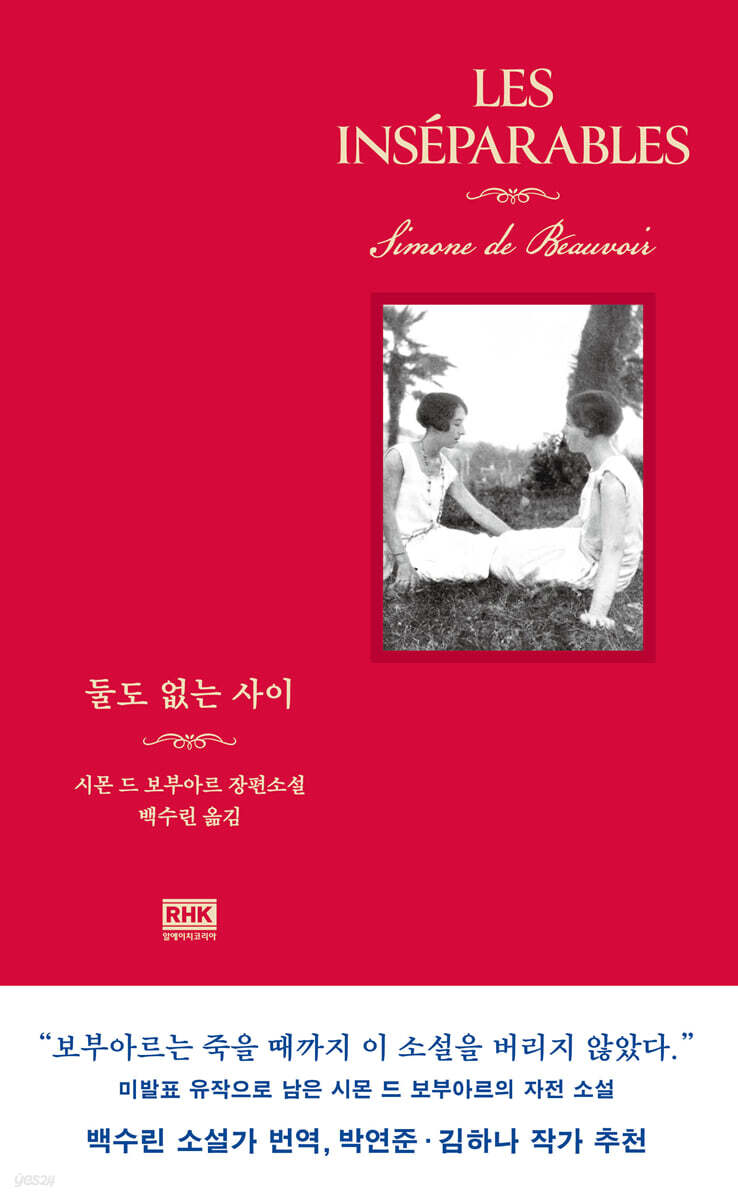 |
Description
Book Introduction
- A word from MD
- An emotional adventure that freely flows between love and friendship.The unpublished posthumous work of Simone de Beauvoir, who lived a fiery life.
This autobiographical novel, which tells the story of a friend, Ja Ja, who was the object of love and admiration, has finally been published in Korea through the first complete translation by novelist Baek Su-rin.
It delicately captures moments of friendship and love that transcend time and space.
A work that includes rare pictorials and handwritten letters.
-May 28, 2024. Novel/Poetry PD Kim Yu-ri
“Until Beauvoir died
“I didn’t throw this novel away.”
An autobiographical novel about an emotional adventure that freely sways between love and friendship.
Recommended by authors Kim Ha-na, Park Yeon-jun, Margaret Atwood, and Deborah Levy
★Includes handwritten letters and rare pictorials exchanged between real people★
Simone de Beauvoir's unpublished posthumous work, "Inseparable," has been published in translation by novelist Baek Su-rin.
Simone de Beauvoir, the writer remembered for the classic feminist proposition that “one is not born, but becomes a woman,” is also well known in Korea for her representative work, “The Second Sex,” and “Les Mandarins,” which won the Prix Goncourt, France’s highest literary award.
"Inseparable" was not published during Beauvoir's lifetime, but was finally released to the world in 2020 by her adopted daughter, Sylvie Le Bon de Beauvoir, and became a hot topic.
Nearly 40 years after Beauvoir's death, her work has finally reached Korean readers through the first complete translation by novelist Baek Su-rin.
As this is an autobiographical novel that tells the story of Beauvoir's friend 'Zaza', who was the object of her love and admiration, the original book's composition was preserved as much as possible, with rare pictures and handwritten letters of real people included as appendices.
“I didn’t throw this novel away.”
An autobiographical novel about an emotional adventure that freely sways between love and friendship.
Recommended by authors Kim Ha-na, Park Yeon-jun, Margaret Atwood, and Deborah Levy
★Includes handwritten letters and rare pictorials exchanged between real people★
Simone de Beauvoir's unpublished posthumous work, "Inseparable," has been published in translation by novelist Baek Su-rin.
Simone de Beauvoir, the writer remembered for the classic feminist proposition that “one is not born, but becomes a woman,” is also well known in Korea for her representative work, “The Second Sex,” and “Les Mandarins,” which won the Prix Goncourt, France’s highest literary award.
"Inseparable" was not published during Beauvoir's lifetime, but was finally released to the world in 2020 by her adopted daughter, Sylvie Le Bon de Beauvoir, and became a hot topic.
Nearly 40 years after Beauvoir's death, her work has finally reached Korean readers through the first complete translation by novelist Baek Su-rin.
As this is an autobiographical novel that tells the story of Beauvoir's friend 'Zaza', who was the object of her love and admiration, the original book's composition was preserved as much as possible, with rare pictures and handwritten letters of real people included as appendices.
- You can preview some of the book's contents.
Preview
Detailed image

Into the book
All the kids I know bore me.
But as we walked across the playground between the classrooms, André made me laugh.
There was even one time when I burst out laughing so hard that I would have been kicked out of the classroom if I hadn't been a model student.
--- p.18
That summer I went for a lot of walks.
I walked through the oak forest, cutting my fingers in the bushes, and strolled along the sunken paths, picking bunches of honeysuckle and hollyhock, and tasting the sour fruits of the berries of the azalea, the dogwood, and the jujube.
I breathed in the fragrant scent of buckwheat in bloom, and lay on the ground to smell the familiar scent of heather.
Then I would sit under the silver poplars in the wide meadow and open a Fenimore Cooper novel.
When the wind blew, the poplar trees swayed.
The wind excited me.
From one end of the earth to the other, I felt the trees talking to each other and to God.
It was music and prayer that dug into my heart before ascending to heaven.
There were countless things that brought me joy, but it was difficult to put them into words.
I sent André only short postcards, and André rarely wrote to me.
André had a great time riding horses while staying with his grandmother in the Landes region.
She was not scheduled to return to Paris until mid-October.
I didn't think of André often.
During the holidays I hardly thought about my life in Paris.
I shed a few tears when I said goodbye to the poplar tree.
I've grown older and have become more sentimental.
But as I got on the train, I remembered how much I loved the new semester.
My father was waiting for us on the train station platform in his blue-gray uniform, and he told us that the war would soon be over.
The textbooks looked much newer than in other years.
It was bigger and had a nicer shape.
Every time I turned the page, it made a rustling sound under my fingertips and smelled good.
The scent of burning grass and fallen leaves in the Luxembourg Gardens was moving.
The teachers hugged me tightly and praised me for doing my vacation homework well.
But why did I feel unhappy?
--- p.25
“Children don’t talk about things they don’t understand.”
Andre didn't answer and just laughed again.
I looked at Andre's face with embarrassment.
What was he trying to say? There was only one kind of love I understood.
The love I had for Andre.
--- p.46
“Please push me.”
Andre was pushed.
As the swing gained speed, Andre stood up and kicked his legs without hesitation, and soon the swing was flying towards the treetops.
“Don’t ride so high!” I yelled.
Andre did not answer.
It flew up, fell, and then flew higher.
The twins, who had been playing with the sawdust that had fallen into the woodshed next to the doghouse, looked up with interest.
In the distance, the faint sound of a tennis racket hitting a ball could be heard.
Andre brushed against the leaves of the maple tree, and I began to get scared.
I heard the iron ring groaning.
“Andre!”
The whole house was quiet.
A faint murmur came from the kitchen through the skylight.
The trumpet vines and lunarias embroidered on the wall swayed ever so slightly.
I was scared.
I didn't have the courage to grab onto her swing or plead loudly.
But I was worried that the swing might tip over, or that Andre might get dizzy and lose the rope.
Just looking at Andre, swinging like a crazy pendulum from one side of the sky to the other, made me feel nauseous.
Why did André stay on the swing for so long? As she passed me, standing upright in her white one-piece dress, André stared intently ahead, her lips pursed tightly.
Maybe something was wrong with my head and I couldn't stop anymore.
The bell rang for dinner time and Mirza started barking.
Andre continued to fly towards the tree.
'Andre is going to die,' I thought.
--- p.67
Andre went into the house, and I sat down in the middle of the lawn with my book.
A little later, I saw André picking roses with the Satnet sisters.
Then Andre went to the woodshed to chop firewood, and heard the dull sound of an axe being struck.
The sun was high in the sky, and reading wasn't the least bit enjoyable.
I was no longer confident that Madame Galar would decide favorably.
Although her dowry was modest, just like her sister Malu, André was much prettier and smarter than her sister, so her mother probably had even greater ambitions for him.
Suddenly a loud scream was heard.
It was Andre.
I ran towards the woodshed.
Madame Galard was bending over André, who was lying on the sawdust, eyes closed, his feet bleeding, the axe blade stained with blood.
--- p.141
'If Andre gets pregnant, it's going to be like that,' I thought.
I could imagine André getting married for the first time and becoming a mother without any worries.
André would be surrounded by beautiful, glossy furniture like this house.
People would feel comfortable in Andre's house.
But André wasn't going to spend hours polishing tins or wrapping jam jars in parchment.
I was secretly convinced that André would play the violin and write a book.
Because Andre always loved books and writing.
'How well happiness suits André!' I thought as André chatted with a young woman about her soon-to-be-born baby and her teething baby.
“It was a wonderful day!” I said an hour later, as the car pulled up in front of a flower bed of zinnias.
“That’s true,” said Andre.
I was sure that André, too, had thought about the future.
--- p.151
André was buried in a very small cemetery in Betari, where the remains of his ancestors were also found.
Madame Galar sobbed.
“We were just tools in God’s hands,” Mr. Galar said to his wife.
The grave was covered with pure white flowers.
I vaguely understood that Andre had died because he had been suffocated by this pure whiteness.
Before I left to board the train, I placed three bright red roses on a pile of pure, spotless flowers.
But as we walked across the playground between the classrooms, André made me laugh.
There was even one time when I burst out laughing so hard that I would have been kicked out of the classroom if I hadn't been a model student.
--- p.18
That summer I went for a lot of walks.
I walked through the oak forest, cutting my fingers in the bushes, and strolled along the sunken paths, picking bunches of honeysuckle and hollyhock, and tasting the sour fruits of the berries of the azalea, the dogwood, and the jujube.
I breathed in the fragrant scent of buckwheat in bloom, and lay on the ground to smell the familiar scent of heather.
Then I would sit under the silver poplars in the wide meadow and open a Fenimore Cooper novel.
When the wind blew, the poplar trees swayed.
The wind excited me.
From one end of the earth to the other, I felt the trees talking to each other and to God.
It was music and prayer that dug into my heart before ascending to heaven.
There were countless things that brought me joy, but it was difficult to put them into words.
I sent André only short postcards, and André rarely wrote to me.
André had a great time riding horses while staying with his grandmother in the Landes region.
She was not scheduled to return to Paris until mid-October.
I didn't think of André often.
During the holidays I hardly thought about my life in Paris.
I shed a few tears when I said goodbye to the poplar tree.
I've grown older and have become more sentimental.
But as I got on the train, I remembered how much I loved the new semester.
My father was waiting for us on the train station platform in his blue-gray uniform, and he told us that the war would soon be over.
The textbooks looked much newer than in other years.
It was bigger and had a nicer shape.
Every time I turned the page, it made a rustling sound under my fingertips and smelled good.
The scent of burning grass and fallen leaves in the Luxembourg Gardens was moving.
The teachers hugged me tightly and praised me for doing my vacation homework well.
But why did I feel unhappy?
--- p.25
“Children don’t talk about things they don’t understand.”
Andre didn't answer and just laughed again.
I looked at Andre's face with embarrassment.
What was he trying to say? There was only one kind of love I understood.
The love I had for Andre.
--- p.46
“Please push me.”
Andre was pushed.
As the swing gained speed, Andre stood up and kicked his legs without hesitation, and soon the swing was flying towards the treetops.
“Don’t ride so high!” I yelled.
Andre did not answer.
It flew up, fell, and then flew higher.
The twins, who had been playing with the sawdust that had fallen into the woodshed next to the doghouse, looked up with interest.
In the distance, the faint sound of a tennis racket hitting a ball could be heard.
Andre brushed against the leaves of the maple tree, and I began to get scared.
I heard the iron ring groaning.
“Andre!”
The whole house was quiet.
A faint murmur came from the kitchen through the skylight.
The trumpet vines and lunarias embroidered on the wall swayed ever so slightly.
I was scared.
I didn't have the courage to grab onto her swing or plead loudly.
But I was worried that the swing might tip over, or that Andre might get dizzy and lose the rope.
Just looking at Andre, swinging like a crazy pendulum from one side of the sky to the other, made me feel nauseous.
Why did André stay on the swing for so long? As she passed me, standing upright in her white one-piece dress, André stared intently ahead, her lips pursed tightly.
Maybe something was wrong with my head and I couldn't stop anymore.
The bell rang for dinner time and Mirza started barking.
Andre continued to fly towards the tree.
'Andre is going to die,' I thought.
--- p.67
Andre went into the house, and I sat down in the middle of the lawn with my book.
A little later, I saw André picking roses with the Satnet sisters.
Then Andre went to the woodshed to chop firewood, and heard the dull sound of an axe being struck.
The sun was high in the sky, and reading wasn't the least bit enjoyable.
I was no longer confident that Madame Galar would decide favorably.
Although her dowry was modest, just like her sister Malu, André was much prettier and smarter than her sister, so her mother probably had even greater ambitions for him.
Suddenly a loud scream was heard.
It was Andre.
I ran towards the woodshed.
Madame Galard was bending over André, who was lying on the sawdust, eyes closed, his feet bleeding, the axe blade stained with blood.
--- p.141
'If Andre gets pregnant, it's going to be like that,' I thought.
I could imagine André getting married for the first time and becoming a mother without any worries.
André would be surrounded by beautiful, glossy furniture like this house.
People would feel comfortable in Andre's house.
But André wasn't going to spend hours polishing tins or wrapping jam jars in parchment.
I was secretly convinced that André would play the violin and write a book.
Because Andre always loved books and writing.
'How well happiness suits André!' I thought as André chatted with a young woman about her soon-to-be-born baby and her teething baby.
“It was a wonderful day!” I said an hour later, as the car pulled up in front of a flower bed of zinnias.
“That’s true,” said Andre.
I was sure that André, too, had thought about the future.
--- p.151
André was buried in a very small cemetery in Betari, where the remains of his ancestors were also found.
Madame Galar sobbed.
“We were just tools in God’s hands,” Mr. Galar said to his wife.
The grave was covered with pure white flowers.
I vaguely understood that Andre had died because he had been suffocated by this pure whiteness.
Before I left to board the train, I placed three bright red roses on a pile of pure, spotless flowers.
--- p.182
Publisher's Review
Resurrected with the sentences of novelist Baek Su-rin
Simone de Beauvoir's unpublished posthumous work is now available in its first complete translation in Korea!
The story of Zaza, the soulmate Beauvoir had long wanted to write about.
"Tonight, tears well up in my eyes. Is it because you're dead, or because I'm alive? I want to dedicate this story to you, but I know you're no longer anywhere.
I'm speaking to you here through literary devices.
Besides, this is not your real story, it is just a story inspired by us.” (From the text)
Simone de Beauvoir lived a life more intense than anyone else's as an existentialist philosopher, social activist, and writer until the day she passed away.
It is already well known that she entered into a contractual marriage with existentialist philosopher Jean-Paul Sartre, whom she met while attending the Sorbonne University, and that they remained lovers and intellectual companions for the rest of their lives without any binding on each other.
But not many people know that before meeting Sartre, there was one person in particular who was Beauvoir.
Her name is Elizabeth Lacoin.
Born a few days before Beauvoir, she was nicknamed 'Zaza'.
As Sylvie Le Bon de Beauvoir, Beauvoir's adopted daughter who published "Inseparable," described their relationship in the preface to the original book as "the first adventure of love experienced by a little girl of ten," Zza Zza, with her unpretentious, witty, and lively personality and diverse talents, immediately captured the heart of the young Beauvoir.
Zaza, portrayed as 'André' in the novel, was Beauvoir's close friend from the time they first met at the prestigious and strict Catholic school, Desir, until her sudden death at the young age of twenty-one in 1929.
The friend who perished in a family that followed the rigid traditions of the Catholic bourgeoisie “because he wanted to be himself and was persuaded that it was wrong to do so” was a lifelong theme for Beauvoir.
Beauvoir tried to resurrect Zaza four times, including unpublished novels from her youth, the short story collection When Spirituality Prevails, and the deleted pages from Les Mandarins, which won her the Prix Goncourt, but failed.
Finally, the manuscript of Beauvoir's autobiographical novel, Inseparable, which was left untitled by her and was only published to the world in 2020 by her adopted daughter, is the one that repeats the story of Jaja in the form of a short story.
Beauvoir's resurrected words and gestures through the genre of the novel, and her records of events that had a decisive impact on the lives of women of her time, truly shine with the free and elegant thought of a writer.
At the center of this novel is the friendship, or rather the love, that is close to friendship, between André (the name in Zaza's novel) and Sylvie (the name in Beauvoir's novel).
The two were inseparable from the moment they first met at school at the age of nine, but at some point they went their separate ways and met completely different endings.
Why did Beauvoir, who would even discard manuscripts she wasn't satisfied with, keep this novel until her death? Translator Baek Su-rin notes that Beauvoir repeatedly wrote about her friend Zsa Zsa's death in literary form, and reports:
“Zaza, portrayed as André in ‘Inseparable,’ was Beauvoir’s close friend from the time they first met at the Desir school until her sudden death at the young age of twenty-one in 1929.
The sudden death of a close friend is painful for anyone, and as a writer, it feels like a natural desire to want to write about such things.
But Beauvoir's continued attempts to write about Zsa Zsa's death were not simply out of longing for her friend.
(…) Beauvoir wrote as if she agreed with Sartre's words, but she did not abandon this novel until her death.
When I learned that Beauvoir, who even threw away manuscripts she was not satisfied with, had kept the manuscript of this novel, I became curious about this novel.
For a writer, no matter what he writes, there are always stories he must return to, and there are some stories that he cannot throw away, no matter how bad others may think they are.
And thanks to that, we have the opportunity to encounter a new novel that is so necessary and interesting for us today.”
Simone de Beauvoir's unpublished posthumous work is now available in its first complete translation in Korea!
The story of Zaza, the soulmate Beauvoir had long wanted to write about.
"Tonight, tears well up in my eyes. Is it because you're dead, or because I'm alive? I want to dedicate this story to you, but I know you're no longer anywhere.
I'm speaking to you here through literary devices.
Besides, this is not your real story, it is just a story inspired by us.” (From the text)
Simone de Beauvoir lived a life more intense than anyone else's as an existentialist philosopher, social activist, and writer until the day she passed away.
It is already well known that she entered into a contractual marriage with existentialist philosopher Jean-Paul Sartre, whom she met while attending the Sorbonne University, and that they remained lovers and intellectual companions for the rest of their lives without any binding on each other.
But not many people know that before meeting Sartre, there was one person in particular who was Beauvoir.
Her name is Elizabeth Lacoin.
Born a few days before Beauvoir, she was nicknamed 'Zaza'.
As Sylvie Le Bon de Beauvoir, Beauvoir's adopted daughter who published "Inseparable," described their relationship in the preface to the original book as "the first adventure of love experienced by a little girl of ten," Zza Zza, with her unpretentious, witty, and lively personality and diverse talents, immediately captured the heart of the young Beauvoir.
Zaza, portrayed as 'André' in the novel, was Beauvoir's close friend from the time they first met at the prestigious and strict Catholic school, Desir, until her sudden death at the young age of twenty-one in 1929.
The friend who perished in a family that followed the rigid traditions of the Catholic bourgeoisie “because he wanted to be himself and was persuaded that it was wrong to do so” was a lifelong theme for Beauvoir.
Beauvoir tried to resurrect Zaza four times, including unpublished novels from her youth, the short story collection When Spirituality Prevails, and the deleted pages from Les Mandarins, which won her the Prix Goncourt, but failed.
Finally, the manuscript of Beauvoir's autobiographical novel, Inseparable, which was left untitled by her and was only published to the world in 2020 by her adopted daughter, is the one that repeats the story of Jaja in the form of a short story.
Beauvoir's resurrected words and gestures through the genre of the novel, and her records of events that had a decisive impact on the lives of women of her time, truly shine with the free and elegant thought of a writer.
At the center of this novel is the friendship, or rather the love, that is close to friendship, between André (the name in Zaza's novel) and Sylvie (the name in Beauvoir's novel).
The two were inseparable from the moment they first met at school at the age of nine, but at some point they went their separate ways and met completely different endings.
Why did Beauvoir, who would even discard manuscripts she wasn't satisfied with, keep this novel until her death? Translator Baek Su-rin notes that Beauvoir repeatedly wrote about her friend Zsa Zsa's death in literary form, and reports:
“Zaza, portrayed as André in ‘Inseparable,’ was Beauvoir’s close friend from the time they first met at the Desir school until her sudden death at the young age of twenty-one in 1929.
The sudden death of a close friend is painful for anyone, and as a writer, it feels like a natural desire to want to write about such things.
But Beauvoir's continued attempts to write about Zsa Zsa's death were not simply out of longing for her friend.
(…) Beauvoir wrote as if she agreed with Sartre's words, but she did not abandon this novel until her death.
When I learned that Beauvoir, who even threw away manuscripts she was not satisfied with, had kept the manuscript of this novel, I became curious about this novel.
For a writer, no matter what he writes, there are always stories he must return to, and there are some stories that he cannot throw away, no matter how bad others may think they are.
And thanks to that, we have the opportunity to encounter a new novel that is so necessary and interesting for us today.”
GOODS SPECIFICS
- Date of issue: May 20, 2024
- Page count, weight, size: 244 pages | 268g | 120*195*14mm
- ISBN13: 9788925575179
- ISBN10: 8925575175
You may also like
카테고리
korean


korean

![GQ KOREA Mark (Monthly): December [2025]](http://librairie.coreenne.fr/cdn/shop/files/8ef265dbbfbf186523ed75ba7319009d.jpg?v=1765340328&width=3840)


